
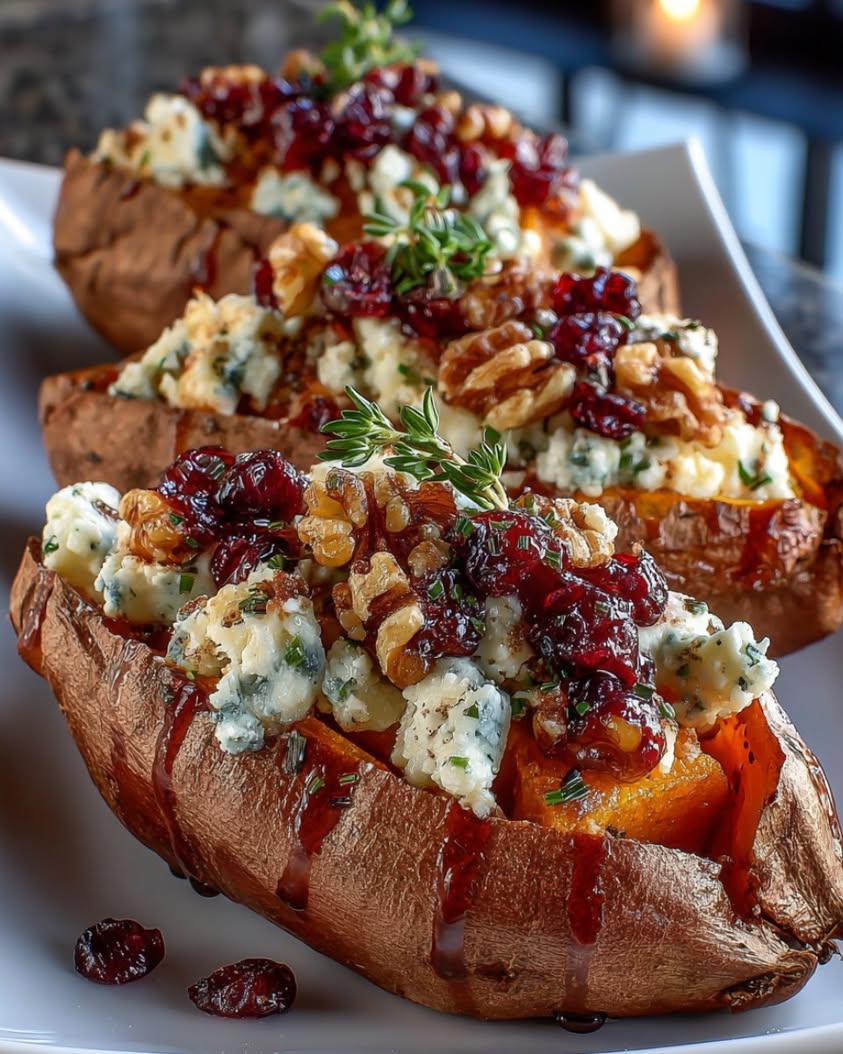
Pear & Gorgonzola Stuffed Sweet Potato with Walnut-Cranberry Glaze: A Gourmet Sweet and Savory Side
This Pear & Gorgonzola Stuffed Sweet Potato recipe elevates a humble root vegetable into a stunning gourmet side dish. Imagine a perfectly roasted sweet potato, its flesh fluffy and warm, generously stuffed with creamy Gorgonzola and sweet, tender pear. The final touch is a glossy walnut-cranberry glaze that adds a delightful crunch and a burst of tartness. This dish masterfully balances sweet and savory flavors, creating a complex taste profile that will impress any dinner guest. Furthermore, it transforms simple ingredients into an unforgettable culinary experience.
Perfect for holiday gatherings or a special weeknight dinner, this recipe offers both elegance and comfort. The aroma of roasting sweet potatoes and melting cheese will fill your kitchen with an inviting warmth. Each component complements the others, from the earthy sweetness of the potato to the sharp tang of the cheese and the fruity notes of the pear. Consequently, this dish is a true celebration of texture and flavor. It proves that with a few quality ingredients, you can create a restaurant-worthy meal at home.
This stuffed sweet potato is not just delicious but also visually spectacular. The vibrant orange flesh contrasted with the white cheese and red cranberry glaze makes for a beautiful presentation. It is a versatile dish that pairs wonderfully with various proteins or stands proudly as a vegetarian main course. Ultimately, it is a foolproof recipe that delivers maximum flavor with minimal effort. You will find yourself returning to this Pear & Gorgonzola Stuffed Sweet Potato time and again for its reliability and wow factor.
Quick Recipe Highlights
- Flavor Profile: This dish is a masterclass in balance, featuring the natural sweetness of roasted pear and sweet potato contrasted with the sharp, salty punch of Gorgonzola cheese. The walnut-cranberry glaze introduces a tangy and slightly bitter note that ties all the elements together harmoniously.
- Texture: You will experience a delightful spectrum of textures, from the incredibly fluffy and soft interior of the sweet potato to the creamy, melting Gorgonzola and the firm-yet-tender pieces of pear. The crunchy walnut topping provides a necessary contrast that makes every bite interesting.
- Aroma: As it bakes, the kitchen fills with the warm, sugary scent of caramelizing sweet potatoes and pears, which is beautifully cut by the earthy, pungent aroma of the melting blue cheese. The glaze adds a final note of toasted nuts and sweet-tart fruit.
- Visual Appeal: The presentation is stunning, with the bright orange potato halves serving as a vibrant canvas for the white and blue-veined cheese, the pale yellow pear pieces, and the deep red, glossy glaze studded with brown walnuts. It is a feast for the eyes.
- Skill Level Needed: This is an accessible recipe for cooks of all levels, from beginners to experts. The techniques involved are straightforward, primarily roasting and simple stuffing, requiring no advanced culinary skills to achieve a perfect result.
- Special Equipment: You need only basic kitchen tools: a baking sheet, a small saucepan for the glaze, and a spoon for scooping the potato flesh. There is no need for any fancy or specialized equipment, making this recipe easy to prepare in any kitchen.
Recipe Overview
- Difficulty Level: We classify this recipe as easy because it involves fundamental cooking techniques like roasting and simple stovetop simmering. The steps are sequential and hard to mess up, making it a great confidence-builder for novice cooks. Even the assembly is forgiving, allowing for personal touch and preference without compromising the final dish.
- Category: This dish shines brightest as a side dish, particularly for holiday feasts like Thanksgiving or Christmas dinners. However, its substantial nature also allows it to stand alone as a satisfying vegetarian main course, especially when served with a simple green salad on the side.
- Cuisine: While not tied to a single tradition, this recipe draws inspiration from modern American gourmet cooking and Italian influences, specifically through the use of Gorgonzola cheese. It is a fusion dish that prioritizes high-quality, complementary flavors over strict regional authenticity.
- Cost: The cost is moderate, largely dependent on the price of the Gorgonzola cheese and fresh pears. Sweet potatoes are an affordable base, and the walnuts and cranberries are typically used in small enough quantities to not significantly impact the overall cost. It offers gourmet appeal without a gourmet price tag.
- Season: This is an quintessential autumn and winter recipe, perfectly aligning with the harvest season for sweet potatoes and pears. Its warm, comforting nature is ideal for colder weather, though it can certainly be enjoyed year-round thanks to the general availability of its core ingredients.
- Occasion: It is perfect for formal occasions like Thanksgiving, Christmas, or dinner parties where you want to impress. Simultaneously, it is special enough for a date night at home or a comforting weekend family meal, demonstrating its wonderful versatility.
Why You’ll Love This Pear & Gorgonzola Stuffed Sweet Potato
First and foremost, the taste and texture appeal of this dish is undeniable. The combination of sweet, savory, creamy, and crunchy elements in every single bite is a truly sensational experience for your palate. The fluffy sweet potato acts as a perfect neutral base, allowing the bold Gorgonzola and the delicate pear to shine. Meanwhile, the walnut-cranberry glaze provides a final layer of complexity that makes the dish feel sophisticated and complete. You will love the harmonious dance of flavors that is both comforting and exciting.
From a convenience standpoint, this recipe is remarkably straightforward. The hands-on prep time is minimal, requiring only about fifteen minutes of active work before the oven takes over. This makes it an excellent choice for entertaining, as you can prepare your other dishes or socialize with guests while it bakes. Furthermore, the ingredients are simple to assemble, and the cooking process is largely hands-off. Consequently, you can achieve a gourmet-looking and tasting dish without spending hours slaving in the kitchen.
Nutritionally, this stuffed sweet potato offers several advantages. Sweet potatoes are a powerhouse of beta-carotene, vitamin A, and fiber. Pears contribute additional fiber and vitamin C, while walnuts provide healthy omega-3 fatty acids and protein. Even the Gorgonzola cheese adds a dose of calcium. While it is an indulgent dish, it is made from whole, real food ingredients. Therefore, you can feel good about serving it to your family and friends.
The social and entertaining value of this dish is incredibly high. Its beautiful, colorful presentation is guaranteed to draw compliments and become a talking point at any dinner table. It looks like you invested far more time and skill than you actually did, making you look like a culinary rockstar. Moreover, it is a fantastic alternative to more common side dishes, offering a welcome surprise for your guests’ taste buds. It is a recipe that people will remember and likely ask you for.
Finally, this recipe is cost-effective and accessible. Sweet potatoes are one of the most affordable vegetables available, providing a generous and satisfying base. The other ingredients, while potentially premium, are used in modest quantities, ensuring you get maximum impact for your money. You do not need any special equipment or hard-to-find items. Essentially, this dish delivers a five-star dining experience on a sensible budget, making gourmet eating accessible to everyone.
Historical Background and Cultural Significance
The story of the sweet potato is a long and global one, originating in Central or South America over 5,000 years ago. Christopher Columbus brought sweet potatoes to Europe after his first voyage, and from there, they spread across the world via trade routes. They became a crucial staple in many cultures, particularly in the American South, where they were (and remain) a centerpiece of holiday meals. The concept of stuffing vegetables, however, has roots in many ancient cultures as a practical way to extend meals and use available ingredients creatively.
In the United States, the sweet potato holds a place of cultural importance, especially in Southern and soul food traditions. Dishes like candied yams and sweet potato casserole are iconic Thanksgiving staples. This Pear & Gorgonzola Stuffed Sweet Potato recipe is a modern, gourmet evolution of those classic dishes. It reflects a contemporary culinary trend that emphasizes balancing flavors and elevating simple, comfort food ingredients into more refined creations. It honors tradition while confidently stepping into new, exciting territory.
The evolution of this specific recipe is a testament to the fusion nature of modern American cooking. The use of Gorgonzola, a Italian blue cheese, alongside a very American vegetable illustrates how global pantries have become. The addition of pear and a cranberry glaze shows a move towards incorporating fruit into savory dishes for complexity and brightness. This recipe did not appear from a single cultural vacuum but is rather a delicious product of culinary globalization and innovation.
Regional variations of stuffed vegetables are endless. In the Mediterranean, bell peppers and tomatoes are stuffed with rice and meat. In Latin America, chayote squash is often filled with cheese and spices. This stuffed sweet potato recipe is a North American contribution to that global tradition, using locally significant ingredients. While this particular combination is unique, the concept of a hollowed-out vegetable filled with a savory, cheesy mixture is a cooking technique shared by countless cultures throughout history.
Ingredient Deep Dive
Sweet Potatoes: Cultivated for millennia, sweet potatoes are native to the tropical Americas and are a member of the morning glory family, not related to the common potato. They are incredibly nutritious, packed with beta-carotene (which converts to Vitamin A), fiber, Vitamin C, and manganese. When selecting sweet potatoes, look for firm specimens with smooth, taut skin and no soft spots. Avoid any with signs of decay or excessive bruising. Store them in a cool, dark, well-ventilated place—not the refrigerator, as cold temperatures can negatively alter their taste and texture. For a substitution, you could use large russet potatoes, though the flavor profile will be entirely different and less sweet.
Gorgonzola Cheese: This iconic Italian blue cheese hails from the northern regions of Lombardy and Piedmont and has been produced since the early Middle Ages. It is made from unskimmed cow’s milk and gets its characteristic blue-green veins and sharp, tangy flavor from the Penicillium glaucum mold. Nutritionally, it provides protein, calcium, and phosphorus, but it is also high in saturated fat and sodium, so it should be used in moderation. For the best flavor, buy a piece from a cheese counter rather than pre-crumbled versions, which often contain anti-caking agents. If you are not a fan of blue cheese, a good substitute is feta cheese for a similar salty tang, or goat cheese for a creamy, less pungent alternative.
Pears: Pears have a long history dating back to prehistoric times and were cultivated by the Romans, who developed and spread many varieties across Europe. They are an excellent source of dietary fiber, particularly in the skin, and also provide Vitamin C and potassium. Choose pears that are firm but yield slightly to gentle pressure at the stem. For this recipe, Bosc or Anjou pears are ideal because they hold their shape well during cooking. Store ripe pears in the refrigerator and allow them to come to room temperature before using for the best flavor. If pears are unavailable, a firm apple like a Granny Smith would be a suitable substitute, offering a similar texture and a tart flavor contrast.
Walnuts: Walnuts are one of the oldest tree foods, with remnants found in Neolithic sites. They are revered for their brain-like shape and high concentration of Omega-3 fatty acids, specifically alpha-linolenic acid (ALA), which supports heart and brain health. They are also a good source of antioxidants and protein. For the best flavor, always taste your walnuts before using to ensure they are not rancid. Store them in an airtight container in the refrigerator or freezer to prevent their oils from spoiling. If you have a walnut allergy, pecans make a wonderful substitute, offering a similar rich, buttery crunch.
Cranberries: This native North American berry was used by Indigenous peoples for food, medicine, and dye long before the colonists arrived. They are famously high in Vitamin C and proanthocyanidins, which are linked to urinary tract health. Dried cranberries, used here for convenience and their sweet-tart flavor, are a concentrated source of sugar and should be enjoyed in moderation. When buying dried cranberries, check the label for added sugars. For a less sweet alternative, you could use chopped dried cherries or even raisins, though the distinct tartness of the cranberry is a key component of the glaze’s flavor profile.
Common Mistakes to Avoid
- Undercooking the Sweet Potatoes: Failing to roast the sweet potatoes until they are completely tender will make them difficult to scoop and mash. You should be able to easily pierce them with a fork all the way to the center. An undercooked potato will result in a lumpy, unpleasant filling and a frustrating preparation process.
- Overloading the Filling: While it is tempting to pack in as much filling as possible, overstuffing the potato skins can lead to a messy presentation and uneven heating. The filling may spill over the sides and burn in the oven. Aim for a generous but neat mound that heats through properly without overflowing.
- Using Overripe Pears: Extremely soft, overripe pears will turn to mush when mixed into the filling and baked a second time. You need pears that are firm-ripe so they soften during cooking but still maintain some structural integrity, providing pleasant bites within the creamy filling.
- Burning the Walnut-Cranberry Glaze: The glaze contains sugar from the maple syrup or honey and can burn easily if cooked over too high a heat. Always use a gentle simmer and stir frequently. The goal is to thicken it slightly and allow the flavors to meld, not to caramelize it into a hard candy.
- Skipping the Potato Skin Piercing: Forgetting to poke the sweet potatoes with a fork before their initial roast is a small step with potentially messy consequences. The steam building up inside can cause them to burst open in the oven, creating a cleanup nightmare and ruining their presentation for stuffing.
- Not Seasoning the Filling: Even though Gorgonzola is salty, the sweet potato and pear are both naturally sweet and benefit from seasoning. Do not forget to taste the mashed filling and add a pinch of salt and black pepper. This simple step enhances all the other flavors and prevents the dish from tasting one-dimensional.
- Using Pre-Crumbled Gorgonzola Exclusively: While convenient, pre-crumbled cheese often contains starches to prevent clumping, which can inhibit melting. For the creamiest texture, buy a wedge and crumble it yourself. The flavor is also typically superior and less metallic than the pre-packaged versions.
- Rushing the Final Bake: After stuffing, the potatoes need a final trip to the oven to heat the filling through and melt the cheese. Do not skip this step or cut it short. This final bake is crucial for marrying the flavors and achieving the ideal warm, gooey, and cohesive final product.
Essential Techniques
Roasting the Sweet Potatoes: Roasting is the foundational technique for this recipe, as it caramelizes the natural sugars in the sweet potatoes, deepening their flavor and creating a fluffy, dry-ish texture perfect for mashing. To master this, ensure your oven is fully preheated and place the potatoes directly on the oven rack or on a baking sheet. The common pitfall is under-roasting, which leaves the center hard. The visual cue for success is a skin that is slightly puckered and a flesh that offers no resistance to a fork. This technique is important because it builds the primary flavor base for the entire dish.
Creating a Flavorful Glaze: Simmering the glaze is a simple stovetop technique that concentrates flavors and achieves a syrupy consistency. The key is to cook it over medium-low heat, allowing the liquid to reduce gently without burning the sugars. Stirring frequently is crucial to prevent sticking and ensure even cooking. A common mistake is boiling it vigorously, which can cause it to become bitter or too thick. The visual cue for success is a glaze that coats the back of a spoon and easily drips off. This technique is vital for adding the final layer of sweet, tart, and nutty complexity that defines the dish.
Properly Stuffing the Potato Skins: The technique of stuffing involves carefully scooping out the flesh while leaving a stable shell. Use a sharp spoon to avoid tearing the skin. Leave a border of about a quarter-inch of flesh attached to the skin to maintain its structure. The common pitfall is being too aggressive and breaking the skin, which makes it difficult to hold the filling. The goal is to create an edible “boat” that is sturdy enough to be filled and eaten with a fork. This technique is important for presentation and portion control, turning the potato skin into a natural serving vessel.
Pro Tips for Perfect Pear & Gorgonzola Stuffed Sweet Potato
Choose sweet potatoes that are similar in size and shape to ensure they all cook at the same rate. This prevents a scenario where some are perfectly done while others are still hard. Uniformity is key for consistent results and timing.
Let the roasted potato halves cool for a few minutes before handling them. They will be extremely hot straight from the oven, and allowing them to cool slightly makes them safer and easier to handle when scooping out the flesh.
For an extra layer of flavor, you can toast the walnuts for the glaze in a dry skillet for a few minutes before adding them to the saucepan. Toasting enhances their nutty flavor and gives them a more robust crunch in the final dish.
If your mashed sweet potato filling seems too wet after mixing, you can add a tablespoon of breadcrumbs or panko to help absorb excess moisture. This will help create a fluffier filling that holds its shape better when stuffed back into the skins.
For a beautiful, restaurant-style finish, drizzle the walnut-cranberry glaze over the stuffed potatoes in a zig-zag pattern just before serving. This not only looks professional but also ensures every bite gets a bit of the flavorful glaze.
If you are making this for a dinner party, you can complete the first roast and scooping step up to a day in advance. Store the potato shells and filling separately in the fridge, then bring them to room temperature before stuffing and doing the final bake.
Variations and Adaptations
For regional variations, consider incorporating different cheeses. A Southern-inspired version might use pimento cheese instead of Gorgonzola. A French twist could feature Roquefort cheese and toasted hazelnuts. The basic formula of a starchy vegetable, a creamy/strong cheese, a sweet fruit, and a crunchy nut is incredibly adaptable to various culinary traditions.
Seasonal adaptations are easy to implement. In the spring, try using asparagus tips and fresh goat cheese. For a summer version, grilled peaches and basil would be delightful. In the heart of winter, a combination of diced apples, sharp cheddar, and a pecan-praline glaze would be wonderfully cozy and festive.
Dietary modifications are straightforward. For a vegan version, use a plant-based blue cheese alternative or creamy tahini, and substitute the honey or maple syrup in the glaze with agave nectar. To make it gluten-free, ensure all packaged ingredients like breadcrumbs (if used) are certified gluten-free; the base recipe is naturally gluten-free.
Flavor variations can take this dish in many directions. Add cooked and crumbled bacon or pancetta to the filling for a smoky, salty element. Incorporate fresh herbs like chopped rosemary or thyme into the mashed sweet potato for an aromatic earthiness. A pinch of cayenne pepper or smoked paprika can add a subtle, warming heat that contrasts beautifully with the sweetness.
Texture modifications can cater to personal preference. For a smoother filling, use a food processor or hand mixer to whip the sweet potato flesh. For more textural variety, reserve some of the diced pear to sprinkle on top of the filling before the final bake, so it retains more of its firmness.
Presentation alternatives include skipping the re-stuffing step altogether. Simply mix the mashed sweet potato with the Gorgonzola and pear, spread it into a baking dish, top with the walnut-cranberry mixture, and bake it as a casserole. This is a fantastic time-saver for large gatherings and offers the same great flavors in a different format.
Serving and Presentation Guide
Plating techniques for this dish should highlight its beautiful colors. Serve each stuffed potato half on a white or neutral-colored plate to make the vibrant orange, white, and red tones pop. You can place it slightly off-center for a more dynamic look. Alternatively, for a family-style presentation, arrange all the halves on a large wooden board or a beautiful ceramic platter, garnished with fresh thyme sprigs.
Garnishing ideas go beyond the glaze. A final sprinkle of flaky sea salt like Maldon over the top just before serving enhances all the flavors. Freshly chopped chives or parsley add a touch of green and freshness. For a special occasion, a few extra whole cranberries and walnut halves scattered around the plate elevate the visual appeal even further.
Traditional accompaniments for a dish like this include roasted or grilled meats. It pairs wonderfully with a herb-roasted turkey, a juicy pork loin, or a simple roasted chicken. The sweet and savory notes of the potato complement the savory, umami flavors of the meat perfectly, making it a standout side dish for a holiday table.
Modern serving suggestions might feature it as a vegetarian main course. In this case, serve it alongside a bright, acidic salad like an arugula salad with a lemon vinaigrette to cut through the richness. It also pairs beautifully with sautéed greens like kale or Swiss chard for a well-rounded, meat-free meal that feels substantial and satisfying.
Temperature considerations are important. This dish is best served warm, straight from the oven, when the cheese is melty and the potato is fluffy. If it sits for too long, the cheese will firm up and the potato will cool. If you need to hold it, a warm oven is your best friend. Avoid serving it piping hot, as this can mute the flavors; letting it rest for five minutes allows the components to settle.
Portion control is naturally built in, as each person typically receives one stuffed potato half. For a larger appetizer or a lighter meal, you could use smaller sweet potatoes and serve one per person. For a heartier main course, especially for big eaters, serving two halves per person is a generous and fulfilling option.
Wine and Beverage Pairing
Wine pairings for this dish need to navigate its sweet and savory nature. A slightly sweet white wine like a German Riesling or a Gewürztraminer is an excellent choice because their acidity and fruitiness complement the sweet potato and pear while standing up to the boldness of the Gorgonzola. For red wine lovers, a light-bodied, low-tannin red like a Pinot Noir works well. Its red fruit notes harmonize with the cranberry, and it will not overpower the dish. Avoid heavily oaked Chardonnays or bold, tannic reds like Cabernet Sauvignon, as they can clash with the sweetness.
Non-alcoholic alternatives can be just as sophisticated. A sparkling apple cider provides effervescence and apple notes that pair beautifully with the pear. For a warmer option, a ginger tea or a spiced apple cider would highlight the autumnal flavors in the dish. A tart cranberry spritzer made with club soda and a splash of cranberry juice would mirror the glaze’s flavor and cleanse the palate between bites.
Coffee and tea pairings are also worth considering. A medium-roast coffee with low acidity and notes of nut or caramel would complement the toasted walnuts and the caramelized notes of the roasted sweet potato. For tea, a classic Earl Grey’s bergamot flavor can be a surprising and delightful contrast to the richness of the cheese, while a simple Chamomile tea would provide a soothing, floral backdrop.
Temperature considerations for beverages are standard: white wines and non-alcoholic spritzers should be well-chilled, while red wines should be served slightly below room temperature. Teas and coffees, of course, are best served hot. Ensuring your drinks are at their ideal serving temperature maximizes their flavor and the overall pairing experience.
Serving suggestions for your chosen beverage are simple. Always offer water on the table to cleanse the palate. If serving wine, pour a small amount initially to allow guests to taste the pairing before committing to a full glass. For non-alcoholic options, consider serving them in elegant glassware to make the experience feel just as special as having wine.
Storage and Shelf Life
Storage methods for leftovers are straightforward. Allow any leftover stuffed sweet potatoes to cool completely to room temperature. Do not leave them out for more than two hours. Once cool, transfer them to an airtight container. You can store them in the refrigerator for up to 3-4 days. For best results, store the glaze separately if possible, as it can make the potato skin soggy over time.
Temperature requirements are crucial for food safety. The stuffed potatoes must be refrigerated at 40°F (4°C) or below. Do not attempt to store them at room temperature for extended periods, as the dairy and vegetable combination can spoil quickly. When reheating, ensure the internal temperature reaches 165°F (74°C) to ensure any potential bacteria are eliminated.
Container recommendations include glass or BPA-free plastic containers with tight-fitting lids. You can also wrap each potato half tightly in plastic wrap and then place them in a zip-top bag. The goal is to prevent air exposure, which can dry out the filling and accelerate staling, while also containing the smells within your refrigerator.
Signs of spoilage to watch for include an off or sour smell, visible mold growth (especially on the cheese component), or a slimy texture on the surface of the potato or filling. If you observe any of these signs, discard the leftovers immediately. Do not taste-test food you suspect has gone bad.
Reheating instructions are simple for best quality. The oven or toaster oven is preferred over the microwave. Preheat your oven to 350°F (175°C). Place the stuffed potatoes on a baking sheet and heat for 15-20 minutes, or until warmed through. If using a microwave, heat on high in 30-second intervals until hot, but be aware this may make the texture a bit softer.
Freezing guidelines are not generally recommended for this specific dish. The high water content in the sweet potatoes and pears can lead to a very watery, mushy texture upon thawing. The dairy in the Gorgonzola may also separate and become grainy. For the best eating experience, it is advisable to enjoy this dish fresh or refrigerated for a few days rather than freezing it.
Make Ahead Strategies
Prep timeline for this dish is very flexible. You can roast the sweet potatoes and prepare the filling up to 24 hours in advance. Simply complete the initial roasting and scooping steps, then mix the filling as directed. Store the empty potato skins and the prepared filling in separate airtight containers in the refrigerator. This breaks the recipe into manageable stages and reduces stress on the day you plan to serve it.
Storage between steps is simple. Place the potato skins in one container, laying them in a single layer if possible. The mashed filling can be stored in another container. Keep both in the refrigerator. About 30-60 minutes before you plan to bake them, remove both from the fridge to take the chill off. This helps them heat more evenly and quickly during the final bake.
Quality impact assessment of make-ahead prep is minimal if done correctly. The flavor may even improve as the ingredients have time to meld. The texture of the potato might be slightly less fluffy than when made entirely fresh, but the difference is negligible for most palates. The convenience far outweighs the minimal textural trade-off, especially when entertaining.
Assembly tips for pre-prepped components are easy. When ready to serve, simply stuff the cold potato skins with the cold filling, place them on a baking sheet, and proceed with the recipe as written. You may need to add a few extra minutes to the final baking time since you are starting with cold ingredients. Look for the same visual cues: bubbly edges and melted cheese.
Reheating guidelines for fully assembled and baked potatoes are the same as for leftovers. The oven method at 350°F (175°C) for 15-20 minutes will yield the best results, reviving the crispy skin and melty cheese. Avoid the microwave if you want to maintain the best possible texture, as it can make the potato skin leathery and the filling gummy.
Fresh element additions can be incorporated even when making ahead. For instance, you can prepare the walnut-cranberry glaze fresh on the day of serving. You could also reserve a little extra Gorgonzola to sprinkle on top just before the final bake, ensuring a beautiful cheesy top layer. Adding a fresh herb garnish after baking also brings a burst of freshness to the pre-prepped dish.
Scaling Instructions
Halving the recipe is straightforward if you are cooking for one or two. Use two medium sweet potatoes instead of four large ones. Simply divide all the other ingredient quantities in half. The cooking times will remain largely the same, as the roasting time for the potatoes is dependent on their individual size, not the quantity in the oven. Just keep a close eye on them and use the fork-tenderness test.
Doubling or tripling the recipe for a large crowd is easily done. Use multiple baking sheets to roast the sweet potatoes, and if your oven has hot spots, rotate the sheets halfway through cooking. You may need to work in batches if your oven space is limited. For the filling, mix everything in a very large bowl. The final bake time for the stuffed potatoes should be consistent, but again, oven crowding can affect air circulation, so a few extra minutes might be needed.
Equipment adjustments for scaling are minimal. When doubling, you will likely need a second baking sheet. For the glaze, if you are making a large batch, use a wider, heavy-bottomed saucepan to allow for quicker evaporation and to prevent boiling over. For tripling, you might need to make the glaze in two separate batches to ensure it reduces properly and does not burn.
Timing modifications are key when scaling up. Roasting a large batch of potatoes might take slightly longer than a single layer, so start checking for doneness at the original time but be prepared to add 5-10 minutes. When assembling a large number, the first potatoes you stuff will be at room temperature by the time the last ones go in the oven, which is fine and will not impact the final result.
Storage considerations for scaled-up recipes are important. If you have leftovers from a large batch, ensure you have enough appropriately sized containers to store them in the refrigerator without overcrowding. It is better to use several smaller containers than one giant one, as this allows for faster and more even cooling, which is crucial for food safety.
Nutritional Deep Dive
The macro breakdown of this dish is a balance of complex carbohydrates, healthy fats, and protein. The sweet potato provides the majority of the carbs, which are slow-digesting and high in fiber. The Gorgonzola and walnuts contribute a significant amount of fat, including both saturated fat from the cheese and unsaturated, heart-healthy fats from the nuts. The protein comes from the cheese and nuts as well, making this a relatively balanced dish from a macronutrient perspective.
A micronutrient analysis reveals a wealth of vitamins and minerals. Sweet potatoes are famously rich in Vitamin A (as beta-carotene), which is essential for vision and immune function. They also provide Vitamin C, potassium, and manganese. The walnuts add a boost of Vitamin E, an antioxidant, and important minerals like copper and magnesium. The cranberries contribute their unique phytonutrients, and the cheese provides calcium and phosphorus for bone health.
Health benefits are numerous when this dish is consumed as part of a balanced diet. The high fiber content supports digestive health and helps regulate blood sugar. The antioxidants from the sweet potatoes, cranberries, and walnuts combat oxidative stress and inflammation. The healthy fats from the walnuts support brain health and can help improve cholesterol levels. It is a nutrient-dense meal that provides sustained energy.
Dietary considerations are important to note. This dish is vegetarian but not vegan due to the cheese. It is naturally gluten-free, but those with celiac disease should confirm that all packaged ingredients are certified gluten-free. It is not suitable for a low-carb or keto diet due to the high carbohydrate content of the sweet potatoes and the sugar in the glaze. Those with lactose intolerance may need to be cautious with the Gorgonzola, though aged cheeses often have less lactose.
Portion analysis shows that one stuffed potato half is a satisfying serving. It provides a substantial amount of food that is filling without being overly heavy for most people. The combination of fiber, fat, and protein promotes satiety, which can help prevent overeating. It is a calorically dense dish, so mindful eating is encouraged, especially if you are watching your calorie intake.
Weight management tips for enjoying this dish include being mindful of the portion size as mentioned. You can also make slight modifications to reduce the calorie density, such as using a light hand with the cheese or reducing the amount of maple syrup/honey in the glaze. Pairing it with a large, low-calorie side salad can also help fill you up with fewer calories from the main dish, creating a more balanced meal for weight management goals.
Dietary Adaptations
Gluten-free: This recipe is naturally gluten-free, as none of the core ingredients—sweet potatoes, pears, Gorgonzola, walnuts, cranberries—contain gluten. However, you must be vigilant about cross-contamination and hidden ingredients. Always check the labels on your dried cranberries and maple syrup, as some brands may use processing aids or additives that contain gluten. If you are using any packaged breadcrumbs for texture, ensure they are certified gluten-free.
Dairy-free: To make this dish dairy-free, you need to replace the Gorgonzola
Print
Pear & Gorgonzola Stuffed Sweet Potato with Walnut-Cranberry Glaze
Description
A savory-sweet stuffed sweet potato featuring tender pears, tangy Gorgonzola, and a rich walnut-cranberry glaze.
Ingredients
For the Crust:
- 4 medium sweet potatoes
- 1 ripe pear, diced
- 1/2 cup crumbled Gorgonzola cheese
- 1/4 cup chopped walnuts
- 1/4 cup dried cranberries
- 2 tablespoons honey
- 1 tablespoon olive oil
- Salt and pepper to taste
- 1/4 teaspoon cinnamon
Instructions
1. Prepare the Crust:
- Preheat oven to 400°F (200°C). Pierce sweet potatoes with a fork and bake for 45-50 minutes until tender.
- While potatoes bake, heat olive oil in a skillet over medium heat. Add diced pear and cook until softened, about 5 minutes.
- In a small saucepan, combine walnuts, cranberries, honey, and cinnamon. Cook over low heat until glaze thickens slightly.
- Slice baked sweet potatoes open and fluff the insides with a fork. Mix in cooked pears and Gorgonzola.
- Stuff the sweet potato mixture back into the potato skins, drizzle with walnut-cranberry glaze, and serve warm.
Notes
You can customize the seasonings to taste.

I’m Shaykee—born in Morocco, seasoned across continents. From airplane galleys to home kitchens, I share the flavors and stories that shaped my journey.