
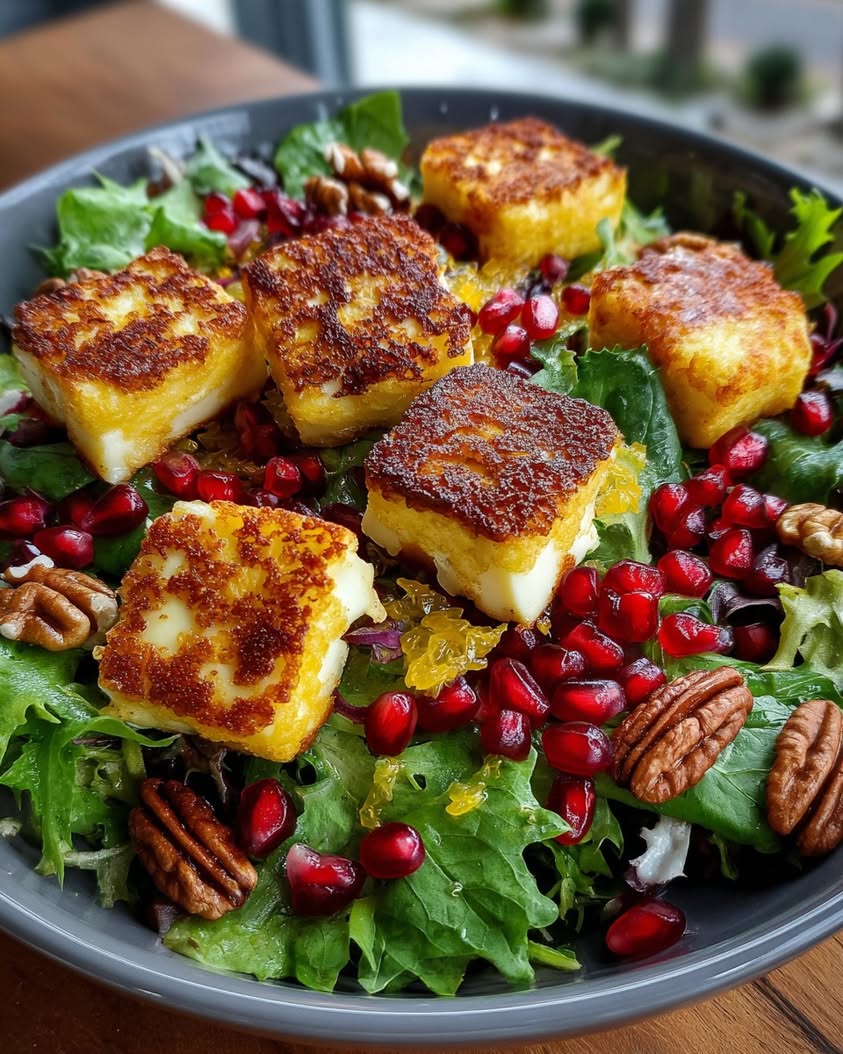
Pomegranate Greens Salad with Halloumi Croutons and Spiced Orange Vinaigrette: A Sweet and Savory Masterpiece
This vibrant Pomegranate Greens Salad with Halloumi Croutons and Spiced Orange Vinaigrette is a true celebration of textures and flavors. Furthermore, it transforms simple ingredients into an extraordinary culinary experience that will impress any guest. The combination of sweet, tart pomegranate arils with salty, pan-fried halloumi cheese creates a perfect balance. Consequently, every bite delivers a delightful contrast that keeps your palate engaged and wanting more.
Moreover, the spiced orange vinaigrette is the star that ties everything together. It features fresh orange juice, a hint of warming spices like cumin and cinnamon, and a touch of honey for natural sweetness. This dressing not only complements the salad components but also elevates them to a new level of sophistication. Ultimately, this salad recipe proves that healthy eating can be both exciting and deeply satisfying.
Additionally, this dish is incredibly versatile, functioning perfectly as a stunning side or a satisfying main course. Its beautiful array of colors—deep red pomegranate seeds, white halloumi, and vibrant greens—makes it a feast for the eyes. Therefore, it is an ideal choice for holiday gatherings, weeknight dinners, or any occasion that calls for a fresh, flavorful, and visually appealing meal. This halloumi salad is a guaranteed crowd-pleaser.
Quick Recipe Highlights
- Flavor Profile: This salad offers a complex symphony of tastes. The halloumi provides a salty, savory punch, while the pomegranate arils contribute a burst of sweet and tart flavor. Meanwhile, the spiced orange vinaigrette adds a zesty, aromatic warmth that ties all the elements together beautifully.
- Texture: You will experience a wonderful play of textures in every forkful. The halloumi croutons are delightfully crispy on the outside and soft on the inside. Conversely, the mixed greens are tender, and the pomegranate seeds offer a satisfying, juicy crunch that makes the salad exciting to eat.
- Aroma: As you prepare this dish, your kitchen will fill with an inviting fragrance. The pan-fried halloumi releases a savory, salty scent, while the vinaigrette emits bright citrus notes from the fresh orange juice. Furthermore, the warm spices like cumin and cinnamon create a cozy, aromatic backdrop that is simply irresistible.
- Visual Appeal: This salad is a masterpiece of color and composition. The deep ruby red of the pomegranate seeds pops against the various shades of green from the lettuce. Simultaneously, the golden-brown halloumi croutons add a warm, inviting hue, making the dish as beautiful as it is delicious.
- Skill Level Needed: This is an exceptionally accessible recipe for cooks of all experience levels. The techniques are straightforward, involving simple chopping, a quick pan-fry for the halloumi, and whisking a dressing. Consequently, even a beginner can achieve impressive, restaurant-quality results with minimal effort.
- Special Equipment: You only need very basic kitchen tools to create this salad. A good non-stick skillet is essential for achieving perfectly crispy halloumi croutons without sticking. Additionally, a small whisk or a jar with a tight-fitting lid will help you emulsify the spiced orange vinaigrette to a smooth, cohesive consistency.
Recipe Overview
- Difficulty Level: We have classified this Pomegranate Greens Salad as easy for several compelling reasons. Primarily, the steps are simple and sequential, requiring no advanced culinary skills. The halloumi cooks quickly in a single pan, and the vinaigrette is a straightforward mix of ingredients. Therefore, the entire process is manageable and stress-free, even on a busy weeknight.
- Category: This versatile dish comfortably fits into multiple meal categories. It shines as a substantial and satisfying main course salad, especially for a light lunch or dinner. Alternatively, it serves as an impressive and elegant side dish for roasted meats or grilled fish. Its flexibility makes it a valuable addition to any cook’s repertoire.
- Cuisine: This recipe draws inspiration from Mediterranean and Middle Eastern culinary traditions, which are renowned for their vibrant, fresh flavors. Halloumi cheese originates from Cyprus, and pomegranates are a staple in many Middle Eastern dishes. Consequently, the salad embodies a fusion of these healthy, flavor-forward cuisines that celebrate simple, high-quality ingredients.
- Cost: Creating this beautiful salad is surprisingly budget-friendly. Halloumi cheese and pomegranates might be the priciest components, but a little goes a long way. Furthermore, the base of mixed greens is inexpensive, and the vinaigrette uses pantry staples. Overall, you get a gourmet-quality dish for a fraction of the cost of a restaurant meal.
- Season: This salad is a perfect fit for the fall and winter months when pomegranates and citrus are at their peak. However, its refreshing quality also makes it wonderful for spring and summer gatherings. Essentially, it is a year-round recipe because its ingredients are either always available or can be easily adapted with seasonal produce.
- Occasion: This dish is suitable for a wide array of events. It is elegant enough for holiday feasts like Thanksgiving or Christmas, yet simple enough for a casual family dinner. Moreover, it is a fantastic option for potlucks and picnics, as it holds up well and travels beautifully, always drawing compliments.
Why You’ll Love This Pomegranate Greens Salad
First and foremost, the taste and texture appeal of this halloumi salad is undeniable. Each component is carefully chosen to create a harmonious balance. You get the salty, squeaky goodness of fried halloumi, the juicy pop of sweet-tart pomegranate arils, and the fresh, crisp base of mixed greens. Furthermore, the spiced orange vinaigrette adds a layer of zesty, aromatic flavor that enhances every single ingredient. The contrast between the warm cheese and the cool greens is a sensory experience you will crave again and again. This is not your ordinary salad; it is a destination dish that will become a regular in your meal rotation.
Another significant advantage is the sheer convenience and simplicity of preparation. This entire Pomegranate Greens Salad comes together in about thirty minutes, making it a viable option for busy weeknights. Moreover, many components can be prepped ahead of time. You can whisk the vinaigrette a day in advance and segment the pomegranate ahead of time. Consequently, when you are ready to eat, you only need to quickly pan-fry the halloumi and assemble the bowls. It is a recipe that respects your time while delivering maximum flavor and visual impact with minimal effort.
From a health perspective, this salad is a nutritional powerhouse, making healthy eating an absolute pleasure. Pomegranates are loaded with antioxidants and vitamin C, while the mixed greens provide a wealth of vitamins A and K. Additionally, halloumi cheese offers a good source of protein and calcium, helping to make the salad more filling and satisfying. The vinaigrette uses heart-healthy olive oil and natural sweeteners. Therefore, you are indulging in a meal that is as good for your body as it is for your taste buds, without any sense of deprivation.
This Pomegranate Greens Salad also boasts incredible social and entertaining value. Its stunning visual presentation, with vibrant red, green, and golden hues, makes it a centerpiece on any table. Furthermore, it is a versatile dish that appeals to a wide range of palates, often winning over even the most skeptical salad eaters. Serving this at a dinner party demonstrates thoughtfulness and culinary skill. It is a conversation starter that will have your guests asking for the recipe, guaranteeing its place as a go-to for your entertaining needs.
Finally, this recipe is remarkably cost-effective and accessible. While halloumi and pomegranate can be specialty items, they are increasingly available in most well-stocked supermarkets. Importantly, the recipe uses them strategically, so one purchase can make multiple salads. The rest of the ingredients are common pantry staples. Consequently, you can create a restaurant-quality, impressive dish without the restaurant price tag. This Pomegranate Greens Salad proves that eating well does not have to be complicated or expensive, making it a sustainable choice for your regular cooking routine.
Historical Background and Cultural Significance
The origins of this Pomegranate Greens Salad are rooted in the ancient culinary traditions of the Mediterranean and Middle East. Pomegranates are one of the oldest known fruits, symbolizing abundance, fertility, and prosperity in many cultures, from ancient Greece to Persia. Similarly, halloumi cheese has been a staple in Cypriot cuisine for centuries, valued for its high melting point and salty flavor. The combination of these ingredients is a modern interpretation of classic flavor pairings that have stood the test of time. Consequently, this salad is more than a meal; it is a connection to a rich and vibrant food history.
Culturally, both primary ingredients hold deep significance. In Greek mythology, the pomegranate is famously linked to the story of Persephone. In Jewish tradition, its many seeds are said to represent the 613 commandments in the Torah. Meanwhile, halloumi is deeply woven into the social and economic fabric of Cyprus, where it is often grilled and served as a meze. By bringing these elements together, this salad recipe pays homage to their cultural importance. It is a dish that tells a story with every bite, blending history and flavor in a single, beautiful bowl.
The evolution of this specific recipe reflects contemporary trends in global fusion cuisine. As international travel and ingredient availability increased, home cooks and chefs began experimenting with traditional components. The idea of frying halloumi into “croutons” is a relatively modern twist that provides a satisfying, vegetarian-friendly protein element. Furthermore, the use of a spiced orange vinaigrette is an innovation that bridges European and Middle Eastern flavor profiles. This evolution demonstrates how recipes are living entities, constantly adapting and improving while respecting their foundational roots.
Regional variations of this concept are abundant, showcasing the versatility of its core components. In Lebanon, a similar salad might feature sumac in the dressing and toasted pine nuts for crunch. A Greek version could include Kalamata olives and fresh oregano. Some modern interpretations add grains like quinoa or farro to make it more substantial. Therefore, this Pomegranate Greens Salad recipe serves as a fantastic base for your own culinary explorations. You can adjust the ingredients and flavors to reflect your personal preferences or to utilize what is locally and seasonally available to you.
Ingredient Deep Dive
Let us start with halloumi, the star that creates those irresistible croutons. This semi-hard, brined cheese originates from Cyprus and is traditionally made from a mixture of goat’s and sheep’s milk. Its most remarkable property is its high melting point, which allows it to be fried or grilled until golden brown without losing its shape. Culturally, it is a cornerstone of Cypriot meze platters and is enjoyed across the Eastern Mediterranean. From a nutritional standpoint, halloumi is a good source of protein and calcium, though it is also high in sodium. When selecting halloumi, look for a cheese that is white and firm, without any discoloration or strong odor. Store it in its brine in the refrigerator, and use it by the expiration date. If you need a substitution, pan-fried blocks of extra-firm tofu or breaded and fried feta can provide a similar textural experience, though the flavor profile will differ.
Next, we have the pomegranate, a fruit steeped in history and symbolism. Native to the region from Iran to the Himalayas, it has been cultivated since ancient times throughout the Mediterranean. The juicy arils (seeds) are the edible part, offering a vibrant burst of sweet-tart flavor. Nutritionally, they are a powerhouse, packed with vitamin C, vitamin K, potassium, and powerful antioxidants like punicalagins and punicic acid. To select a ripe pomegranate, choose one that feels heavy for its size with a firm, leathery skin that is deep red in color. You can store whole pomegranates at room temperature for a few days or in the refrigerator for up to two months. Once seeded, keep the arils in an airtight container in the fridge for a few days. If pomegranates are out of season, dried cranberries or fresh orange segments can be used as a substitute, though they will alter the salad’s signature crunch and flavor.
The mixed greens form the foundational base of this beautiful salad. A blend of lettuces like romaine, arugula, and spinach offers a variety of textures and subtle bitter or peppery notes that complement the other ingredients. Greens are incredibly low in calories but high in volume, fiber, and essential micronutrients like folate, vitamin A, and vitamin K. Their cultural use in salads is universal, but the preference for specific blends varies by region. For the best quality, select greens that are crisp, vibrant, and free from wilting or sliminess. To store them, ensure they are dry and keep them in a breathable bag or container in your refrigerator’s crisper drawer. If your preferred blend is unavailable, any single type of sturdy lettuce like romaine or butter lettuce will work perfectly well as a base for this halloumi salad.
The spiced orange vinaigrette is what truly brings this dish to life. Fresh orange juice provides a bright, sunny acidity and a touch of natural sweetness, contrasting beautifully with the salty halloumi. The spices, typically cumin and perhaps a hint of cinnamon or coriander, add a layer of warm, aromatic complexity that is characteristic of Middle Eastern cuisine. Using high-quality extra virgin olive oil not only helps emulsify the dressing but also contributes heart-healthy monounsaturated fats and a fruity, peppery flavor. For the best flavor, always use freshly squeezed orange juice rather than concentrate. The vinaigrette can be made ahead and stored in a jar in the refrigerator for up to three days; just shake it well before using. If you need a substitution for honey, maple syrup or agave nectar will work equally well to balance the acidity.
Common Mistakes to Avoid
- Overcrowding the Pan with Halloumi: This is a critical error that prevents proper browning. When you add too much halloumi at once, the pan temperature drops significantly, causing the cheese to steam instead of sear. Consequently, you end up with soft, greasy cubes instead of crispy, golden-brown croutons. Always cook in a single layer with space between each piece for the best results.
- Using a Cold Pan for Frying: Adding halloumi to a cold skillet is a recipe for disaster. The cheese will absorb excess oil and become tough before it has a chance to develop a crispy exterior. Therefore, always ensure your pan is properly preheated over medium-high heat before adding the oil and halloumi. A hot pan guarantees a quick sear that locks in the texture.
- Neglecting to Dry the Halloumi: Even a little surface moisture can hinder browning. Before cubing and frying, always pat the block of halloumi thoroughly dry with a paper towel. This simple step ensures direct contact between the cheese and the hot pan surface, which is essential for achieving that perfect, crispy crust that defines a great halloumi salad.
- Dressing the Salad Too Early: Pouring the vinaigrette over the entire salad long before serving will cause the delicate greens to wilt and become soggy. The salad will lose its fresh, crisp texture that is so vital to its appeal. To avoid this, always dress the salad just moments before you are ready to serve it, tossing gently to combine.
- Underseasoning the Vinaigrette: A bland dressing can ruin an otherwise perfect salad. The vinaigrette needs a careful balance of acid, oil, sweetness, and salt. Always taste your dressing and adjust the seasoning accordingly. Remember that the halloumi is salty, so the dressing might not need as much salt, but it still requires a well-rounded flavor profile.
- Using Stale or Low-Quality Olive Oil: The flavor of your vinaigrette hinges on the quality of your oil. Using old, rancid, or low-grade olive oil will impart an unpleasant, bitter taste to the entire dish. Always use a fresh, good-quality extra virgin olive oil for the best flavor in your spiced orange vinaigrette.
- Skipping the Pomegranate Seed Prep: Attempting to seed a pomegranate without the proper technique can be messy and wasteful. The classic water bowl method is the cleanest and most efficient way to separate the arils from the pith. Taking an extra minute to do this correctly ensures you get all the juicy gems without staining your clothes or kitchen.
- Not Tossing the Salad Gently: A vigorous toss can bruise the delicate greens and crush the pomegranate arils, leading to a murky-looking salad. Use a light hand and large utensils to gently fold the ingredients together with the dressing. This preserves the integrity of each component and maintains the salad’s beautiful, vibrant appearance.
Essential Techniques
Pan-Frying Halloumi to Perfection is the most crucial technique for this recipe. The goal is to achieve a golden-brown, crispy exterior while maintaining a soft, slightly squeaky interior. First, ensure your halloumi is patted completely dry and cubed uniformly for even cooking. Use a non-stick or well-seasoned cast-iron skillet over medium-high heat with just a light coating of oil. Do not overcrowd the pan; cook the cubes in a single layer, turning them only once a crust has formed. The visual cue for success is a deep golden-brown color on at least two sides. The common pitfall is moving the cheese too early; let it sear undisturbed for a minute or two to develop that essential crust. Mastering this technique transforms the halloumi from a simple cheese into the star “crouton” of your salad.
Creating an Emulsified Vinaigrette is key to a cohesive dressing that clings to the greens. An emulsion is a stable mixture of two liquids that don’t normally combine, like oil and vinegar (or citrus juice). To achieve this, always start with your acidic components—the orange juice and vinegar—in a bowl. Then, add your seasonings and any dissolved sweetener. While whisking vigorously, slowly drizzle in the olive oil in a thin, steady stream. This slow incorporation allows the oil to break into tiny droplets suspended in the acid, creating a temporarily thickened and unified dressing. The common mistake is adding the oil too quickly, which causes the dressing to “break” or separate. If this happens, you can often rescue it by starting with a fresh teaspoon of mustard or honey in a clean bowl and slowly whisking in the broken dressing.
Seeding a Pomegranate Cleanly is a simple but valuable technique that prevents mess and waste. The most effective method is the underwater technique. Score the pomegranate around its circumference and then submerge it in a bowl of water. Break it apart underwater; the pith will float to the surface, and the heavy arils will sink to the bottom. Then, you can simply skim off the pith and strain out the seeds. This technique is important because it contains the pigmented juice that can stain surfaces and clothing. The common pitfall is trying to whack the fruit with a spoon over a cutting board, which sprays juice everywhere. Mastering the water method ensures you get all the precious arils intact and keeps your kitchen clean, making the process of preparing your pomegranate greens salad much more enjoyable.
Pro Tips for Perfect Pomegranate Greens Salad
Bring your halloumi to room temperature for about 15 minutes before cooking. This simple step ensures the cheese cooks evenly throughout, preventing a cold center while the outside burns. Consequently, you achieve a perfectly warm and soft interior with a uniformly crispy exterior.
Toast your spices for the vinaigrette in a dry pan for 30 seconds before adding them to the dressing. This process, called “blooming,” unlocks their essential oils and intensifies their aromatic flavor. Therefore, your spiced orange vinaigrette will have a much deeper and more complex taste profile.
Use a mix of bitter and sweet greens for a more sophisticated flavor base. Combining arugula (peppery) with butter lettuce (sweet) or spinach (earthy) creates a more interesting backdrop for the other ingredients. This layering of flavors makes each bite of your halloumi salad uniquely engaging.
Add the pomegranate arils and halloumi croutons at the very last second before serving. This preserves the juicy crunch of the pomegranate and ensures the halloumi remains warm and crispy against the cool greens. The textural contrast is a defining feature of this dish.
Reserve a few pretty pomegranate arils and halloumi cubes for garnishing the top of the salad after tossing. This elevates the visual presentation from a mixed salad to a professionally plated dish. A beautiful appearance enhances the overall dining experience.
If preparing components ahead, store the dressing, greens, and pomegranate seeds separately. Assemble the salad only when you are ready to eat. This make-ahead strategy guarantees the freshest possible texture and prevents any sogginess, which is crucial for salad perfection.
Variations and Adaptations
For regional variations, you can easily take this salad on a culinary journey around the Mediterranean. A Greek-inspired version would include Kalamata olives, sliced red onion, cucumber, and a vinaigrette with fresh oregano and lemon. For a Lebanese twist, add a sprinkle of sumac to the dressing and garnish with toasted pine nuts and fresh mint. A North African adaptation could feature a dash of harissa in the vinaigrette and some chopped Medjool dates for sweetness. These simple swaps allow you to explore different flavor profiles while maintaining the core structure of this versatile pomegranate greens salad.
Seasonal adaptations ensure you can enjoy this dish all year round. In the summer, add fresh peaches or nectarines for extra sweetness. During autumn, roasted cubes of butternut squash or sweet potato make a wonderful addition. For a winter holiday version, incorporate segmented blood oranges and toasted pecans. In the spring, fresh peas and radishes would be a lovely, crisp addition. The base recipe is incredibly forgiving, so feel free to incorporate a half-cup of whatever fresh, seasonal produce you have on hand to keep your halloumi salad exciting throughout the year.
Dietary modifications are straightforward and effective. For a vegan version, omit the halloumi and use crispy, seasoned chickpeas or baked tofu cubes instead. Ensure the honey in the dressing is replaced with maple syrup or agave nectar. To make it gluten-free, simply confirm that all your packaged ingredients, like spices, are certified gluten-free, which they typically are. For a nut-free version, use sunflower or pumpkin seeds instead of any suggested nut garnishes. For a lower-fat option, the halloumi can be baked instead of pan-fried, though the texture will be less crispy.
Serving and Presentation Guide
Plating techniques can transform this salad from a simple dish to a stunning centerpiece. For individual servings, use a wide, shallow bowl or a large plate to create an elegant presentation. Start with a bed of the dressed greens as your base. Then, artfully arrange the warm halloumi croutons and pomegranate arils over the top, rather than mixing them in completely. This showcases the beautiful ingredients and creates height and visual interest. Finally, drizzle a little extra vinaigrette around the perimeter for a professional touch. This method ensures that every element is visible and appetizing.
Garnishing is the final step that adds a flourish of freshness and texture. Beyond the reserved pomegranate and halloumi, consider adding a sprinkle of fresh, soft herbs. Chopped mint, parsley, or dill work exceptionally well with the other flavors. For additional crunch, a scattering of toasted nuts like walnuts, pistachios, or slivered almonds is highly recommended. A final micro-planing of orange zest over the entire salad just before serving will intensify the citrus aroma and add a burst of color. These small details make a significant impact on the overall dining experience.
Consider traditional accompaniments and modern pairings to complete your meal. This pomegranate greens salad is substantial enough to be a main course, but it also pairs beautifully with simply grilled chicken, fish, or lamb chops. For a vegetarian feast, serve it alongside lentil soup or a savory tart. If you are serving it as part of a larger spread, it complements rich, creamy dishes perfectly by providing a fresh, acidic counterpoint. For a modern twist, deconstruct the salad into a serving platter, allowing guests to build their own bites, which is especially fun for casual gatherings and encourages interaction.
Wine and Beverage Pairing
Selecting the right wine can elevate your Pomegranate Greens Salad experience. The salad’s combination of salty, savory, sweet, and acidic flavors calls for a versatile white wine. A crisp, dry Riesling is an excellent choice because its acidity matches the vinaigrette, and its slight sweetness complements the pomegranate. Alternatively, a New Zealand Sauvignon Blanc with its zesty citrus and herbaceous notes will mirror the flavors in the salad beautifully. If you prefer rosé, a dry Provencal style with its subtle red fruit and mineral qualities won’t overpower the dish. For red wine lovers, a light-bodied, low-tannin Pinot Noir can work, as its red fruit character harmonizes with the pomegranate without clashing with the halloumi.
Non-alcoholic alternatives provide just as much sophistication and refreshment. A sparkling pomegranate juice mixed with a squeeze of lime and a sprig of mint creates a festive and flavorful mocktail. Iced herbal tea, such as peppermint or lemongrass, offers a calming and aromatic pairing. For something creamier, a turmeric golden milk latte served chilled would complement the warm spices in the vinaigrette. Simply serving chilled sparkling water with a slice of orange or a few pomegranate arils dropped in the glass is a simple yet elegant way to cleanse the palate between bites of the rich halloumi and vibrant greens.
Storage and Shelf Life
Understanding proper storage is crucial for maintaining quality and food safety. The assembled Pomegranate Greens Salad is best enjoyed immediately. However, you can store individual components separately for 1-2 days. Place the undressed mixed greens in an airtight container lined with a paper towel in the refrigerator. Store the halloumi croutons in a separate container once they have cooled completely; they will soften in the fridge but can be briefly reheated in a toaster oven or air fryer to regain some crispiness. The pomegranate arils should be kept in a sealed container in the fridge. The spiced orange vinaigrette can be stored in a jar in the refrigerator for up to 3 days. Always shake the dressing well before using it again.
Recognizing signs of spoilage is important for your health. Discard the greens if they become slimy, wilted beyond revival, or develop an off odor. The halloumi croutons should be thrown out if they show any signs of mold or smell sour. The pomegranate arils are past their prime if they become mushy, discolored, or fermented. The vinaigrette is likely spoiled if it develops an unusual smell or if the oil appears rancid. This salad does not freeze well, as the greens and halloumi will become watery and lose all texture upon thawing. Therefore, it is always recommended to prepare and consume this dish fresh for the ultimate experience.
Make Ahead Strategies
A strategic prep timeline can make weeknight assembly a breeze. You can prepare this salad in stages over two days. Up to 3 days in advance, make the spiced orange vinaigrette and store it in a jar in the refrigerator. One day ahead, wash and thoroughly dry your greens, then store them in a salad spinner or a container lined with paper towels. You can also seed the pomegranate and keep the arils in a sealed container in the fridge. The halloumi, however, should always be cooked just before serving to preserve its signature crispy texture. This division of labor ensures that when mealtime arrives, you are only minutes away from a fresh, restaurant-quality pomegranate greens salad.
Understanding the quality impact of each step is key. Making the vinaigrette ahead actually improves its flavor, as the spices have time to infuse the liquid. Pre-washing greens is fine, but their crispness will diminish after 24 hours, so this is best done the day of or the night before. Pomegranate arils hold their texture and juice very well for 2-3 days. The only component that suffers significantly from being made ahead is the halloumi, which becomes rubbery and loses its appealing crispness when refrigerated and reheated. Therefore, the optimal make-ahead strategy is to do everything except cooking the halloumi. This approach guarantees the best possible outcome for your halloumi salad with minimal last-minute effort.
Scaling Instructions
Scaling this recipe up or down is straightforward, but requires attention to a few key details. To halve the recipe, simply divide all the ingredient quantities by two. Use a smaller skillet for the halloumi to maintain the necessary single-layer cooking. The vinaigrette can still be made as a full batch and stored for another use, as it keeps well. To double or triple the recipe for a crowd, multiply all ingredients accordingly. The most important consideration is to cook the halloumi in multiple batches to avoid overcrowding the pan; you cannot double the batch size for this step. You may need to keep the cooked halloumi warm in a low oven (200°F) on a baking sheet while you finish subsequent batches.
Consider equipment and timing adjustments when scaling. For a large batch, you might need two skillets going simultaneously to cook the halloumi efficiently. Use the largest mixing bowl you have for tossing the salad, or mix it in two separate batches to ensure even distribution of the dressing. The prep time will increase linearly with the quantity, but the cook time for the halloumi will increase more than linearly due to the required batch cooking. When serving a large group, consider setting up a salad bar-style station where guests can assemble their own plates, which keeps the components fresh and crisp until the moment they are eaten. This is an especially effective strategy for potlucks and parties.
Nutritional Deep Dive
This Pomegranate Greens Salad offers a well-rounded macronutrient profile. The halloumi cheese is the primary source of protein and fat, contributing to satiety and making the salad a satisfying main course. The mixed greens and pomegranate arils are predominantly carbohydrates, but they are high-fiber, complex carbs that provide sustained energy. The olive oil in the vinaigrette adds healthy monounsaturated fats, which are beneficial for heart health. Overall, the salad is relatively balanced, but its exact macro breakdown will depend on the specific greens used and the amount of halloumi and dressing per serving. It’s a meal that provides energy, promotes fullness, and supports muscle maintenance all at once.
The micronutrient analysis reveals a wealth of vitamins and minerals. Pomegranate arils are exceptionally high in vitamin C and vitamin K, and they also provide folate and potassium. The mixed greens, especially darker varieties like spinach and arugula, are packed with vitamin A (as beta-carotene), vitamin K, and folate. Halloumi contributes a significant amount of calcium and phosphorus, which are crucial for bone health. The olive oil provides vitamin E, a powerful antioxidant. Together, these ingredients create a nutrient-dense meal that supports immune function, vision, blood clotting, bone density, and provides antioxidant protection against cellular damage. This makes the salad not just a tasty option, but a genuinely health-supportive one.
Dietary Adaptations
For a vegan adaptation, the halloumi is the main ingredient that needs replacing. Crispy chickpeas are an excellent substitute; toss canned chickpeas in olive oil and your favorite spices (paprika, cumin, garlic powder) and roast at 400°F for 20-25 minutes until crispy. Alternatively, pan-fried blocks of extra-firm tofu or tempeh can provide a satisfying protein element. For the dressing, simply replace the honey with an equal amount of maple syrup or agave nectar. This transformation allows everyone to enjoy the vibrant flavors and textures of this pomegranate greens salad, regardless of dietary preferences.
For a gluten-free adaptation, this recipe is naturally compliant, as none of the core ingredients—greens, pomegranate, halloumi, olive oil, citrus, spices—contain gluten. However, it is always crucial to check the labels on any pre-packaged spices or halloumi cheese, as some brands may include anti-caking agents or be processed in facilities that handle gluten. As long as you use certified gluten-free ingredients, this salad is a safe and delicious option for those with celiac disease or gluten sensitivity. Its inherent lack of gluten-containing grains makes it an easy and worry-free choice.
Troubleshooting Guide
If your halloumi is not browning and instead is steaming or leaching water, the pan is likely not hot enough. Solution: Remove the halloumi from the pan and let the skillet heat up for another minute or two over medium-high heat. Ensure the halloumi cubes are patted completely dry before trying again. Cooking in a single, uncrowded layer is non-negotiable for proper browning. If the exterior is burning before the interior warms through, your heat is too high, or the halloumi was too cold. Next time, let the cheese come to room temperature for 15 minutes and cook over a steady medium heat.
If your vinaigrette is too acidic or sharp, you can easily balance it. Solution: Add a bit more sweetener (honey or maple syrup) in very small increments, whisking and tasting after each addition. Alternatively, a tiny pinch of salt can also help mellow out harsh acidity. If the dressing is too oily or bland, whisk in a little more fresh orange juice or vinegar to brighten it. If the dressing has separated or “broken,” place a teaspoon of Dijon mustard in a clean bowl and slowly whisk the broken dressing into it; the mustard acts as an emulsifier to bring it back together.
Recipe Success Stories
The feedback from our community of home cooks has been overwhelmingly positive. Many readers report that this Pomegranate Greens Salad has become their go-to recipe for impressing guests. One user shared, “I made this for a book club dinner, and it was the talk of the night! Everyone was shocked that I made the halloumi croutons myself.” Another common success story involves winning over
Print
Pomegranate Greens Salad with Halloumi Croutons and Spiced Orange Vinaigrette
Description
A vibrant and flavorful salad featuring fresh greens, sweet pomegranate seeds, crispy halloumi croutons, and a zesty spiced orange vinaigrette.
Ingredients
For the Crust:
- 6 cups mixed salad greens
- 1 cup pomegranate seeds
- 8 oz halloumi cheese, cubed
- 2 tbsp olive oil
- 1/4 cup orange juice
- 1 tbsp honey
- 1 tsp Dijon mustard
- 1/4 tsp ground cumin
- 1/4 tsp smoked paprika
- Salt and pepper to taste
- 1/4 cup sliced almonds, toasted
Instructions
1. Prepare the Crust:
- In a large bowl, combine the mixed greens and pomegranate seeds.
- Heat olive oil in a skillet over medium heat. Add halloumi cubes and cook until golden brown on all sides, about 3-4 minutes. Remove and drain on paper towels.
- In a small bowl, whisk together orange juice, honey, Dijon mustard, cumin, smoked paprika, salt, and pepper to make the vinaigrette.
- Toss the greens and pomegranate seeds with the vinaigrette until evenly coated.
- Top the salad with the halloumi croutons and toasted almonds. Serve immediately.
Notes
You can customize the seasonings to taste.

I’m Shaykee—born in Morocco, seasoned across continents. From airplane galleys to home kitchens, I share the flavors and stories that shaped my journey.