
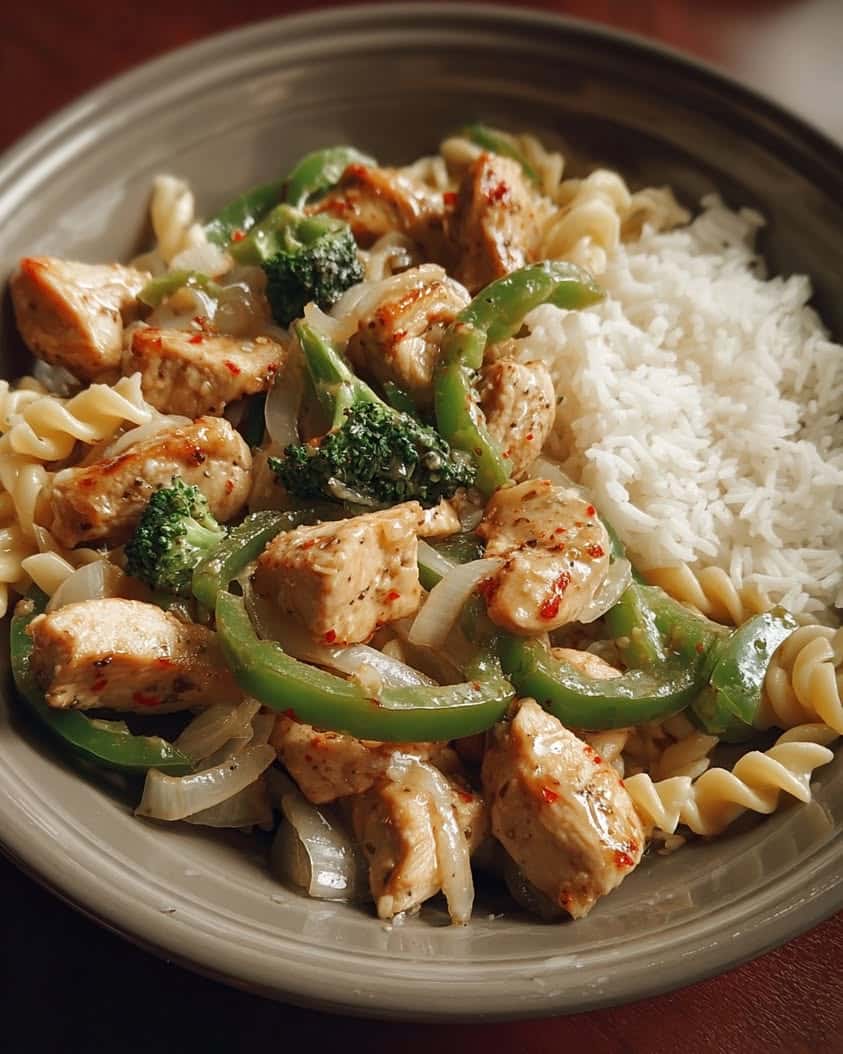
Quick One‑Pan Pan‑Fried Chicken & Veggie Medley with Pasta + Rice: Your New Go-To Weeknight Hero
Imagine a dinner that delivers the hearty satisfaction of two beloved comfort foods, pasta and rice, in a single, sizzling pan. This quick one-pan pan-fried chicken and veggie medley is precisely that kind of culinary magic. It is a vibrant, flavor-packed meal that transforms simple ingredients into a family favorite with minimal effort and even less cleanup. The aroma of golden chicken, caramelized vegetables, and savory seasonings filling your kitchen promises a delicious reward for a busy day.
Furthermore, this recipe is a masterclass in efficient cooking. It cleverly combines textures and flavors, from the juicy, seared chicken to the tender-crisp broccoli and the comforting blend of pasta and rice. Ultimately, it solves the eternal weeknight dilemma, delivering a balanced, impressive meal that feels indulgent yet is surprisingly straightforward to prepare. This dish proves that a fantastic dinner doesn’t require a pile of pots and pans, just one trusty skillet and about forty minutes.
Quick Recipe Highlights
- Flavor Profile: This dish boasts a savory, well-rounded taste. The chicken provides a rich, umami base, while the vegetables add sweet and earthy notes. Additionally, the blend of pasta and rice creates a uniquely satisfying and comforting foundation that soaks up all the delicious pan juices.
- Texture: You get a wonderful contrast in every bite. Expect juicy, tender chicken paired with vegetables that have a slight crunch. Meanwhile, the pasta and rice offer a soft, pillowy texture that makes the meal incredibly hearty and complete.
- Aroma: As it cooks, the kitchen fills with an irresistible scent. First, you’ll smell the savory browning chicken, followed by the sweet aroma of onions and peppers. Finally, the garlic and herbs release their fragrance, creating a mouthwatering preview of the meal to come.
- Visual Appeal: This medley is a feast for the eyes with its colorful mix of green broccoli, red peppers, and golden-brown chicken. The combination is vibrant and inviting, making it perfect for serving directly from the pan at the table.
- Skill Level Needed: This is a beginner-friendly recipe ideal for novice cooks. The techniques involve basic pan-frying and simmering. Consequently, if you can chop vegetables and monitor a skillet, you can absolutely master this one-pan wonder.
- Special Equipment: You only need one large, deep skillet or sauté pan with a lid. A 12-inch pan is ideal to ensure everything has enough space to cook evenly without overcrowding. Otherwise, standard kitchen knives and a cutting board are all that’s required.
Recipe Overview
- Difficulty Level: We rate this recipe as “Easy” because it uses fundamental cooking methods accessible to everyone. The steps are sequential and logical, with no advanced techniques like braising or flambéing. Essentially, it’s a simple process of browning protein, sautéing vegetables, and simmering starches, making it a perfect confidence-builder in the kitchen.
- Category: This dish fits multiple meal categories beautifully. It is a complete main course, a hearty dinner, and an excellent candidate for meal prep. Its balanced composition of protein, vegetables, and carbohydrates makes it a standalone meal that requires no additional sides.
- Cuisine: While not tied to a specific traditional cuisine, this recipe is a modern fusion of comforting elements. It draws inspiration from American home cooking and the global trend of one-pan meals. The technique of pan-frying and simmering is universal, resulting in a globally-inspired, family-friendly dish.
- Cost: This is a very budget-conscious meal. Chicken thighs are typically affordable, and the vegetables and starches are pantry staples. Overall, you can expect to feed a family of four for a fraction of the cost of takeout, making it a smart choice for economical home cooks.
- Season: This recipe is truly versatile across seasons. It’s hearty enough for fall and winter, yet the fresh veggies make it light and bright for spring and summer. You can easily adapt the vegetable mix based on what’s fresh and inexpensive at your local market.
- Occasion: It’s perfect for busy weeknights, casual weekend family dinners, or even informal potlucks. Because it’s all made in one pan, it’s also an excellent option for cooking in vacation rentals or dorm kitchens where equipment is limited.
Why You’ll Love This Recipe
First and foremost, the taste and texture combination is utterly irresistible. The chicken develops a flavorful, golden crust from pan-frying, sealing in its natural juices. Simultaneously, the vegetables soften just enough while retaining a pleasant bite, and the pasta and rice cook together, creating a uniquely comforting and hearty base. Every forkful delivers a perfect mix of savory, sweet, and satisfying elements that please both kids and adults alike.
Next, the convenience factor cannot be overstated. This quick one-pan pan-fried chicken and veggie medley is the ultimate solution for hectic evenings. You simply prepare your ingredients, cook them in stages in the same pan, and let everything simmer together. Consequently, you spend your time enjoying the cooking process rather than washing a mountain of dishes afterward. It streamlines dinner from start to finish.
From a nutritional standpoint, this meal is a well-rounded winner. It provides lean protein from the chicken, a wide array of vitamins and fiber from the colorful vegetable medley, and complex carbohydrates from the pasta and rice for sustained energy. You control the sodium and oil, making it a healthier alternative to processed frozen meals or restaurant fare. It’s a complete plate of nourishment.
Moreover, this dish has fantastic social and entertaining value. It’s substantial and impressive enough to serve to guests straight from the skillet for a rustic, family-style presentation. The vibrant colors and inviting aroma make it a conversation starter. It’s also a forgiving recipe, allowing you to chat with friends without worrying about delicate timing or complicated plating.
Finally, its cost-effectiveness and accessibility are major benefits. The ingredients are common, affordable, and easy to find at any grocery store. You likely have many of them in your pantry already. This recipe demonstrates how to create a restaurant-quality, satisfying meal on a tight budget, proving that eating well at home doesn’t require expensive or exotic components.
Historical Background and Cultural Significance
The concept of the one-pan meal is deeply rooted in culinary traditions across the globe, born from practicality and resourcefulness. Historically, cooks from various cultures utilized a single cooking vessel over a fire to combine available proteins, grains, and vegetables. This method conserved fuel, simplified cooking processes, and made efficient use of limited ingredients. Our modern quick one-pan pan-fried chicken and veggie medley is a direct descendant of these ancient, efficient cooking practices, updated for the contemporary kitchen.
Culturally, dishes that combine starches like pasta and rice often appear in regions where grains are dietary staples. For instance, in some Middle Eastern and Mediterranean cuisines, rice and vermicelli are cooked together. This recipe borrows that harmonious starch concept and pairs it with a Western-style pan-fried chicken and vegetable sauté. The fusion creates a new, culturally-blended comfort food that speaks to today’s interconnected culinary world.
The evolution of this specific recipe mirrors the modern home cook’s desire for speed and simplicity without sacrificing flavor. Over the past few decades, the popularity of “one-pot wonders” and “skillet meals” has skyrocketed, driven by busy lifestyles. This dish represents the pinnacle of that evolution, combining two classic comfort carbohydrates in one pan for maximum satisfaction and minimum cleanup. It’s a recipe designed for real life.
Regional variations of this idea are endless. In Asia, a similar concept might feature diced chicken, vegetables, and rice cooked in a wok. In Spain, a paella pan would bring together chicken, vegetables, and rice with saffron. This version takes a more Americanized approach, using familiar seasonings and the addition of pasta for extra heartiness. The adaptability of the one-pan format is its greatest strength, allowing it to absorb influences from countless culinary traditions.
Ingredient Deep Dive
Chicken Thighs: Chicken thighs are the preferred choice for this quick one-pan pan-fried chicken and veggie medley due to their higher fat content and connective tissue. Historically, darker meat was often more affordable and accessible. Nutritionally, thighs provide iron, zinc, and B vitamins. For best results, select thighs with uniform thickness and trim excess fat. Store them in the coldest part of your refrigerator and use within two days. For a substitute, chicken breasts can be used but require careful monitoring to prevent dryness.
Broccoli: This cruciferous vegetable has been cultivated for centuries, prized for its nutritional density. It is packed with vitamins C and K, fiber, and potent antioxidants. When selecting broccoli, look for tight, dark green florets and firm stalks. Avoid any with yellowing or slimy spots. Store it unwashed in a loose plastic bag in the refrigerator’s crisper drawer. Cauliflower or broccolini make excellent seasonal substitutions while maintaining a similar texture and cooking time.
p>Bell Pepper: Bell peppers, originally from Central and South America, add crucial sweetness and color. They are an excellent source of vitamin C, even more so than citrus fruits. Choose peppers that feel heavy for their size with smooth, taut skin and a vibrant green stem. Red, yellow, or orange peppers are simply ripe green peppers and are often sweeter. Store them in the fridge’s vegetable drawer. For a different flavor profile, poblano peppers can be used for a mild kick.
Pasta and Rice Blend: Combining these two starches is a clever textural trick. The pasta, typically a small shape like orzo or ditalini, cooks quickly and adds a familiar comfort element. The rice, often a long-grain variety like jasmine, provides a separate, distinct graininess. Together, they create a more interesting base than either alone. Use a pasta shape that matches the rice’s cooking time. Store both in a cool, dry pantry. You can experiment with different rice types like basmati or even small pasta like pastina.
Common Mistakes to Avoid
- Overcrowding the Pan: Adding all the chicken at once will steam it instead of searing it. You must cook in batches if necessary to ensure each piece gets proper contact with the hot surface for that golden-brown crust.
- Underseasoning: This is a common pitfall with one-pan meals. Remember to season each layer as you cook—the chicken, then the vegetables, and finally the cooking liquid. Seasoning in stages builds depth of flavor throughout the entire dish.
- Using the Wrong Pan Size: A pan that’s too small will steam ingredients; one that’s too large may cause the cooking liquid to evaporate too fast. A 12-inch deep skillet or sauté pan with a lid is the ideal tool for this recipe.
- Not Preheating the Pan: Starting with a cold pan is a recipe for sticking and poor browning. Always ensure your pan is properly heated over medium-high heat before adding the oil and then the chicken.
- Overcooking the Vegetables: Adding the vegetables too early or cooking them over too high heat can turn them mushy. They should be sautéed just until they begin to soften before the liquid is added, as they will continue to cook during the simmering stage.
- Insufficient Liquid for Simmering: If you don’t add enough broth or water, the pasta and rice will not cook through and may burn on the bottom. Conversely, too much liquid will make the final dish soupy. Measure accurately and trust the recipe’s ratio.
- Lifting the Lid Too Often: Once you add the liquid and starches and bring it to a simmer, resist the urge to stir constantly or check too often. Keeping the lid on traps steam, which is essential for cooking the rice and pasta evenly.
- Skipping the Rest Time: Letting the dish sit off the heat for five minutes after cooking is not optional. This allows the starches to fully absorb any remaining liquid and the flavors to meld together perfectly, resulting in a better texture.
Essential Techniques
Pan-Frying (Searing) Chicken: This technique is crucial for developing deep flavor through the Maillard reaction—a chemical process that browns proteins and creates complex tastes. To master it, pat your chicken thighs completely dry with paper towels before seasoning. Heat your oil in the preheated pan until it shimmers. Then, add the chicken in a single layer without touching. Do not move it for several minutes to allow a proper crust to form. A common pitfall is flipping too early; wait until the chicken releases easily from the pan. Visual success is a deep golden-brown color on each side.
Sautéing Vegetables: Sautéing quickly cooks vegetables in a small amount of fat over relatively high heat. The goal is to soften them and enhance their natural sweetness without losing texture. The key is to add vegetables to the hot pan after removing the chicken, using the flavorful fond (browned bits) left behind. Stir them frequently for even cooking. The mistake here is adding them to a cold pan or overcrowding, which leads to steaming. Success is signaled by vegetables that are brightly colored, slightly softened at the edges, and fragrant.
Simmering Starches: This gentle cooking method uses liquid at a temperature just below a boil (small bubbles breaking the surface) to hydrate and cook pasta and rice. After adding your measured liquid and dried starches to the pan, bring it to a brief boil, then immediately reduce the heat to low. Covering the pan is non-negotiable, as it traps steam and heat. The common pitfall is boiling too vigorously, which can cook the exterior of the grains too quickly while leaving the center hard. The visual cue for doneness is the liquid being fully absorbed and the grains tender.
Pro Tips for Perfect Quick One-Pan Pan-Fried Chicken & Veggie Medley
- For extra flavor, marinate your chicken thighs in a simple mix of olive oil, minced garlic, and herbs for 30 minutes in the refrigerator before you start cooking.
- Use kitchen shears to quickly trim excess fat from chicken thighs and cut them into uniform pieces, which promotes even cooking.
- If you prefer a deeper color on your vegetables, let them sit undisturbed in the hot pan for a minute or two to get a slight char before stirring.
- Toasting the dry pasta and rice in the pan with the vegetables for a minute before adding liquid can give them a nuttier, more complex flavor.
- Finish the dish with a squeeze of fresh lemon juice or a sprinkle of fresh herbs like parsley or basil right before serving to brighten all the flavors.
- If your pan isn’t deep enough to hold all the ingredients comfortably, cook the chicken in batches and use a large Dutch oven instead.
- Let the cooked dish rest with the lid on but off the heat for a full 5-10 minutes. This allows the residual heat to finish cooking the grains and lets everything settle.
- For a richer sauce, use a combination of chicken broth and a splash of white wine or a tablespoon of tomato paste stirred into the sautéed vegetables.
Variations and Adaptations
Regional Variations: Give this dish an Italian twist by using diced tomatoes, oregano, and finishing with Parmesan cheese. For an Asian-inspired version, use soy sauce, ginger, and sesame oil in the cooking liquid, and swap the broccoli for snap peas. A Cajun variation would involve using andouille sausage with the chicken, bell peppers, onions, celery, and Cajun seasoning for a jambalaya-style one-pan meal.
Seasonal Adaptations: In spring, use asparagus tips, fresh peas, and leeks. Summer calls for zucchini, yellow squash, and cherry tomatoes. For fall, incorporate cubed butternut squash, mushrooms, and sage. Winter variations can include heartier greens like kale or chard, which are added at the very end to wilt.
Dietary Modifications: For a gluten-free version, ensure your pasta is certified gluten-free or use all rice, increasing the amount slightly. To make it dairy-free, simply omit any cheese garnish or use a plant-based alternative. For a lower-carb option, increase the chicken and vegetable quantities and substitute the pasta and rice with cauliflower rice, adding it in the last few minutes of cooking.
Flavor Variations: Experiment with different global spice blends. Try a Moroccan vibe with cumin, coriander, and cinnamon, adding chickpeas and dried apricots. A Greek version would feature lemon, oregano, and kalamata olives. For a smoky flavor, add a teaspoon of smoked paprika or chipotle powder to the seasoning mix.
Serving and Presentation Guide
Plating this dish is wonderfully simple due to its all-in-one nature. For a rustic, family-style presentation, bring the entire skillet to the table on a trivet. Alternatively, use a large, shallow serving bowl to transfer the medley, ensuring you get a mix of chicken, veggies, and starches in each scoop. Garnish with a final flourish of freshly chopped parsley, basil, or chives to add a pop of color and freshness. A light grating of Parmesan or Pecorino cheese adds a salty, umami finish that complements the savory elements beautifully.
Consider traditional accompaniments like a simple green salad with a vinaigrette to cut through the richness, or a slice of crusty bread to soak up any remaining juices. For a modern twist, serve with a dollop of garlicky yogurt sauce or a spicy harissa aioli on the side. Temperature is key; serve the dish hot, immediately after its resting period. For portion control, a standard serving is about one and a half to two cups per person, making this recipe ideal for four hearty appetites.
Wine and Beverage Pairing
When selecting a wine, you want something that complements the savory chicken and vegetables without overpowering the dish. A medium-bodied white wine like a Chardonnay with a touch of oak works beautifully, as its slight creaminess pairs well with the starch. Alternatively, a dry Riesling or Pinot Gris offers a crisp acidity that can cut through the richness. For red wine lovers, a lighter red like a Pinot Noir or a Grenache is excellent, providing fruit notes without heavy tannins that might clash.
For non-alcoholic alternatives, consider sparkling water with a squeeze of citrus to cleanse the palate. Iced herbal tea, such as mint or lemon verbena, is refreshing. A tart cherry juice or a ginger beer also stands up well to the robust flavors. If serving coffee or tea after the meal, a medium-roast coffee or an Earl Grey tea would be lovely complements. Always serve white wines chilled and red wines slightly below room temperature for the best pairing experience.
Storage and Shelf Life
Proper storage is essential for maintaining quality. Allow the leftovers to cool completely to room temperature, which should take no more than an hour. Then, transfer them to an airtight container and refrigerate. Stored correctly, the quick one-pan pan-fried chicken and veggie medley will keep for 3 to 4 days in the refrigerator. For longer storage, you can freeze portions in freezer-safe containers or bags for up to 3 months. Be aware that the texture of the pasta and rice may become slightly softer upon thawing.
Signs of spoilage include an off or sour smell, visible mold, or a slimy texture on the chicken or vegetables. When reheating, the stovetop method is best. Add a splash of water or broth to a saucepan or skillet along with the leftovers, cover, and heat over medium-low, stirring occasionally, until steaming hot throughout. You can also reheat single portions in the microwave, covered, stirring every 60 seconds. Do not refreeze previously frozen and thawed leftovers.
Make Ahead Strategies
This recipe is fantastic for strategic prep. You can chop all vegetables and store them in separate containers in the refrigerator for up to two days ahead. You can also trim and cut the chicken, storing it in a sealed container or zip-top bag. For an even faster assembly, you can fully cook the chicken and vegetables, then cool and refrigerate them. When ready to eat, simply start the recipe at the step where you add the liquid and starches, using the pre-cooked components. The quality remains high, though the chicken skin may lose some crispness.
If preparing the entire dish ahead, cook it completely, cool it quickly, and refrigerate. The flavors often meld and improve overnight. When ready to serve, reheat gently on the stovetop with a small amount of added liquid to prevent sticking and to refresh the texture. For the best results, add any fresh garnishes like herbs or a squeeze of lemon juice after reheating, not before storage. This ensures the brightest, freshest final flavor.
Scaling Instructions
Halving this recipe is straightforward for smaller households. Simply divide all ingredient quantities by two. Use a 10-inch skillet to maintain the proper depth of ingredients for effective cooking. The cooking times will remain largely the same, though you may need to reduce the simmering time by a few minutes since there is less volume to heat through. Storage considerations are simpler with smaller batches, and they will cool more quickly for refrigeration.
Doubling or tripling the recipe for a crowd requires some adjustments. Do not attempt to cook a double batch in one standard skillet; the pan will be overcrowded, leading to steaming instead of browning. Instead, cook in batches or use two large skillets simultaneously. Alternatively, use a large Dutch oven or a wide, heavy-bottomed pot. The total cook time may increase slightly, especially for bringing the larger volume of liquid to a simmer. Ensure you have enough storage containers for leftovers.
Nutritional Deep Dive
This dish offers a balanced macronutrient profile. The chicken thighs provide high-quality protein essential for muscle repair and satiety. The combination of pasta and rice delivers complex carbohydrates, which are the body’s primary energy source. The vegetables contribute minimal calories but are rich in dietary fiber, which aids digestion and promotes fullness. The fats come primarily from the cooking oil and the chicken, offering essential fatty acids. Overall, it’s a calorically substantial meal best suited as a main course.
Micronutrient-wise, this medley is a powerhouse. Broccoli and bell peppers are exceptionally high in vitamins C and K, along with folate and potassium. Chicken provides B vitamins, particularly niacin and B6, which are crucial for energy metabolism. Using a fortified pasta or brown rice can further increase the fiber, magnesium, and iron content. For weight management, be mindful of portion size, as the starch blend is energy-dense. Pairing a reasonable portion with a large side salad can help create a very satisfying, balanced plate.
Dietary Adaptations
Gluten-Free: Ensure your pasta is a certified gluten-free brand made from rice, corn, or quinoa flour. Double-check that your broth is also gluten-free, as some brands use wheat-based additives. The rest of the ingredients are naturally gluten-free, making this an easy switch.
Dairy-Free: This recipe is naturally dairy-free as written. Simply avoid garnishing with cheese or a creamy sauce. For added richness without dairy, finish the dish with a drizzle of high-quality olive oil or a dollop of dairy-free pesto.
Vegan: Substitute the chicken with a plant-based protein like cubed extra-firm tofu, tempeh, or chickpeas. Use vegetable broth instead of chicken broth. Sauté the plant protein first to get color, then proceed with the recipe as directed. The vegetables and starches make a complete and satisfying vegan meal.
Low-Carb/Keto: Omit the pasta and rice entirely. Increase the amount of chicken and low-carb vegetables like broccoli, bell peppers, and mushrooms. You could also add a small amount of cauliflower rice at the very end of cooking, just to heat through, to mimic the texture of grain.
Troubleshooting Guide
Texture Issues (Mushy Vegetables/Soggy Starches): This usually results from overcooking or adding the vegetables too early. Next time, add firmer veggies like broccoli later in the sauté step. For soggy pasta/rice, you may have used too much liquid or simmered with the heat too low, not evaporating the excess. To rescue, spread the mixture on a baking sheet and broil for a few minutes to evaporate moisture and add texture.
Flavor Balance (Bland Dish): The most common fix is insufficient seasoning. Remember to season every component. If the cooked dish is bland, you can stir in more salt, a splash of acid (lemon juice or vinegar), or umami boosters like a dash of soy sauce or Worcestershire at the end. Fresh herbs and grated cheese upon serving also dramatically elevate flavor.
Chicken Not Browning: This occurs if the pan isn’t hot enough, the chicken is wet, or the pan is overcrowded. Ensure you pat the chicken very dry, heat the oil until it shimmers, and don’t move the chicken for the first few minutes. If pieces are sticking, they aren’t ready to flip; they will release naturally when a proper crust has formed.
Recipe Success Stories
Community feedback on this quick one-pan pan-fried chicken and veggie medley has been overwhelmingly positive. Many readers report it has become a weekly staple, with one noting, “My kids actually eat the broccoli in this, which is a miracle!” Others love the flexibility, sharing successful variations like adding spinach at the end or using sweet potatoes instead of bell peppers for a fall twist. The consistent praise highlights how the recipe delivers on its promise of ease, flavor, and minimal cleanup.
Adaptation stories from readers are inspiring. One home cook used the method with shrimp for a pescatarian version, cooking the shrimp separately and adding them at the end. Another successfully made it in a cast-iron skillet over a campfire while camping. Photography tips from enthusiasts suggest shooting the meal in the skillet with a wooden spoon, capturing the steam for a tempting image. The recipe’s framework is robust, encouraging creativity while ensuring a delicious result every time.
Frequently Asked Questions
Q: Can I use chicken breasts instead of thighs?
A: Yes, you can use boneless, skinless chicken breasts. Cut them into bite-sized pieces and reduce the initial browning time by a minute or two per side, as they cook faster and can dry out. Consider brining them briefly in salt water beforehand for extra juiciness.
Q: What type of pasta works best?
A: Small shapes that cook in a similar time to rice are ideal. Orzo, ditalini, small shells, or even broken angel hair pasta work perfectly. Avoid large, thick shapes like rigatoni, as they may not cook through evenly with the rice.
Q: Do I have to use both pasta and rice?
A: No, you can use just one. If using only rice, follow standard rice-to-liquid ratios for the type you choose. If using only pasta, you may need slightly less liquid, as pasta releases starch that thickens the cooking water.
Q: My rice is still hard after simmering. What happened?
A: This usually means there wasn’t enough liquid, the heat was too high causing rapid evaporation, or the lid wasn’t on tightly. You can add a small amount of hot broth or water, cover, and continue cooking on very low heat for another 5-10 minutes.
Q: Can I make this spicy?
A: Absolutely. Add red pepper flakes with the garlic, use a spicy sausage instead of some of the chicken, or stir in diced jalapeños with the bell peppers. A dash of hot sauce at the end is also a great way to adjust heat to taste.
Q: Is this recipe freezer-friendly?
A: Yes, it freezes quite well. Cool completely, portion into airtight containers or freezer bags, and freeze for up to 3 months. Thaw overnight in the refrigerator before reheating gently on the stovetop with a splash of water.
Additional Resources
If you loved this quick one-pan pan-fried chicken and veggie medley, explore other one-pan wonders on our site. Consider a One-Pan Lemon Herb Salmon with Asparagus and Potatoes for a seafood twist, or a Hearty One-Pan Sausage and Kale with White Beans. For mastering the core techniques, our guides on “How to Sear Protein Perfectly” and “The Art of the Simmer” offer deeper dives. We also have seasonal ingredient guides to help you pick the best produce year-round.
For equipment, a high-quality, heavy-bottomed stainless steel or enameled cast iron skillet is a worthwhile investment for even heating. A good chef’s knife will make prep work faster and safer. Finally, explore global spice blends to keep your one-pan meals exciting—having a well-stocked spice cabinet is the secret to endless variation from a single, reliable cooking method.
PrintQuick One-Pan Pan-Fried Chicken & Veggie Medley with Pasta + Rice
Description
A hearty, one-pan meal featuring tender pan-fried chicken, a colorful mix of vegetables, and a combination of pasta and rice, all cooked together for easy cleanup and bold flavor.
Ingredients
For the Crust:
- 2 boneless, skinless chicken breasts, cubed
- 1 cup pasta (such as penne or fusilli)
- 1 cup long-grain white rice
- 2 cups mixed vegetables (broccoli florets, bell peppers, carrots, peas)
- 2 cloves garlic, minced
- 1 onion, diced
- 3 tablespoons olive oil
- 2 cups chicken broth
- 1 teaspoon paprika
- 1/2 teaspoon dried thyme
- Salt and black pepper to taste
- Fresh parsley for garnish
Instructions
1. Prepare the Crust:
- In a large skillet or pan, heat olive oil over medium-high heat. Add cubed chicken and cook until browned on all sides, about 5-7 minutes. Remove chicken and set aside.
- In the same pan, add diced onion and minced garlic. Sauté until fragrant, about 2 minutes. Add mixed vegetables and cook for another 3-4 minutes until slightly tender.
- Stir in pasta, rice, paprika, thyme, salt, and pepper. Pour in chicken broth and bring to a boil. Reduce heat to low, cover, and simmer for 15-20 minutes until pasta and rice are cooked and liquid is absorbed.
- Return the cooked chicken to the pan, stirring to combine. Cook for an additional 2-3 minutes to heat through. Garnish with fresh parsley before serving.
Notes
You can customize the seasonings to taste.

I’m Shaykee—born in Morocco, seasoned across continents. From airplane galleys to home kitchens, I share the flavors and stories that shaped my journey.