
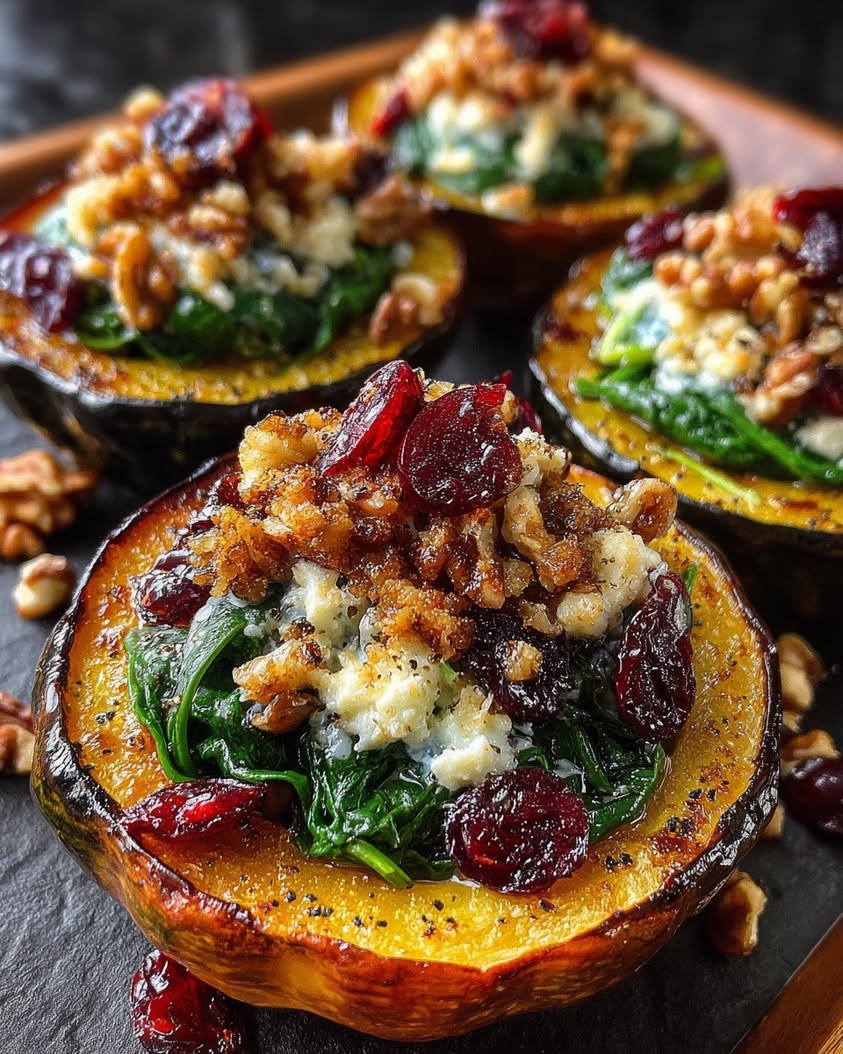
Roasted Acorn Squash Boats: A Festive Fall Side Dish
These creamy roasted acorn squash boats filled with savory spinach, tangy goat cheese, sweet cranberries, and a crunchy walnut crumble offer a symphony of autumn flavors. This stunning vegetarian dish transforms a humble squash into an edible vessel overflowing with festive ingredients. Each bite delivers a perfect balance of creamy, crunchy, sweet, and savory elements that will delight your taste buds. Furthermore, this recipe captures the essence of fall in a beautiful, nutritious package suitable for both weeknight dinners and holiday feasts.
Imagine tender, caramelized acorn squash halves cradling a vibrant filling that sizzles with texture and taste. The natural sweetness of the roasted squash provides a wonderful base for the earthy spinach and tart cranberries. Meanwhile, the creamy goat cheese adds a luxurious tang that cuts through the richness. Finally, a buttery walnut crumble topping provides the perfect crunchy contrast to the soft, creamy interior. This dish not only tastes incredible but also creates a visually stunning centerpiece for any table.
Creating these roasted acorn squash boats requires minimal effort for maximum culinary impact. The process involves simple roasting and mixing techniques that even novice cooks can master. Additionally, the ingredient list features accessible, seasonal items available at most grocery stores. Consequently, you can whip up this impressive dish without specialized skills or hard-to-find components. Ultimately, this recipe proves that elegant, flavorful vegetarian cooking can be both straightforward and deeply satisfying.
Quick Recipe Highlights
- Flavor Profile: These roasted acorn squash boats deliver a complex harmony of sweet, savory, and tangy notes. The natural caramelized squash sweetness balances beautifully with the earthy spinach and tart cranberries. Meanwhile, the creamy goat cheese adds a sharp, luxurious element that ties all the flavors together.
- Texture: This dish offers an exceptional textural experience from the tender roasted squash to the creamy filling and crunchy walnut topping. The soft, almost velvety interior contrasts wonderfully with the crisp crumble. Additionally, the cranberries provide pleasant chewy bursts throughout each bite.
- Aroma: As these squash boats roast, your kitchen will fill with the warm, comforting scents of autumn. The squash caramelizes to release its natural sweetness while the walnuts toast to a fragrant perfection. Furthermore, the herbal notes from the seasoning blend beautifully with the savory spinach aroma.
- Visual Appeal: These roasted acorn squash boats present beautifully with their vibrant orange flesh and colorful filling. The deep green spinach, white goat cheese, red cranberries, and brown walnut crumble create a festive palette. Consequently, this dish looks as spectacular as it tastes, making it perfect for holiday tables.
- Skill Level Needed: This recipe requires basic kitchen skills like cutting squash, sautéing spinach, and simple mixing. Even beginner cooks can achieve excellent results by following the straightforward instructions. Moreover, the forgiving nature of roasted vegetables means minor timing variations won’t ruin the dish.
- Special Equipment: You need only standard kitchen tools including a baking sheet, sharp knife, mixing bowls, and a skillet. A spoon for scooping out the squash seeds and a small bowl for mixing the crumble complete your equipment list. Therefore, you likely already have everything required to make this impressive dish.
Recipe Overview
- Difficulty Level: This roasted acorn squash recipe falls into the easy category because it involves fundamental cooking techniques. The most challenging aspect involves safely cutting the squash, which becomes simpler with a sharp knife and proper technique. Additionally, the filling preparation uses basic sautéing and mixing methods familiar to most home cooks. Finally, the assembly process is intuitive and forgiving, allowing for personal touches without compromising the final result.
- Category: These squash boats function beautifully as a substantial vegetarian main course or an impressive side dish. They fit perfectly into holiday menus alongside roasted meats or as the centerpiece of a meatless meal. Furthermore, they work well for special occasions and elegant weeknight dinners, demonstrating remarkable versatility.
- Cuisine: This dish draws inspiration from contemporary American farm-to-table cooking with its emphasis on seasonal produce. The flavor profile incorporates elements from various traditions, including the use of goat cheese from French cuisine and cranberries from New England cooking. Ultimately, it represents modern vegetarian cuisine that celebrates local, seasonal ingredients in creative preparations.
- Cost: This recipe offers excellent value, particularly during autumn when acorn squash reaches peak season and affordability. The main ingredients represent budget-friendly choices, with walnuts and goat cheese being the potentially pricier components. Fortunately, you can often find these items at reasonable prices, especially when purchasing store brands or buying in bulk.
- Season: Autumn represents the ideal season for this dish when acorn squash reaches its peak flavor and texture. The ingredients perfectly complement other fall produce and holiday flavors, making them particularly suitable for Thanksgiving and Christmas menus. Additionally, the warm, comforting nature of the dish provides nourishment during cooler weather.
- Occasion: These impressive squash boats elevate everyday dinners while being special enough for holiday celebrations. They work beautifully for vegetarian Thanksgiving mains or as a stunning side dish for festive meals. Furthermore, they make excellent options for dinner parties where visual appeal matters as much as flavor.
Why You’ll Love This Roasted Acorn Squash Recipe
The exceptional flavor combination in these roasted acorn squash boats will immediately win you over. Each component contributes something unique while harmonizing beautifully with the others. The sweet, nutty squash forms a perfect edible bowl for the savory spinach and tangy goat cheese filling. Meanwhile, the tart cranberries provide bright bursts of flavor that cut through the richness. Finally, the crunchy walnut crumble adds textural contrast and buttery notes that complete the sensory experience. This dish delivers restaurant-quality sophistication with home kitchen simplicity.
Convenience represents another significant advantage of this roasted acorn squash recipe. The preparation process involves straightforward techniques that don’t require advanced culinary skills. Additionally, the components can be prepared in stages, making it easier to manage alongside other dishes. The roasting time for the squash provides a perfect window to prepare the filling and crumble topping. Consequently, the entire dish comes together efficiently, with minimal active cooking time required from you.
Nutritional benefits make these squash boats particularly appealing for health-conscious cooks. Acorn squash provides substantial vitamins A and C, along with valuable dietary fiber. Spinach contributes iron and additional vitamins, while walnuts offer healthy fats and protein. Goat cheese provides protein with potentially easier digestibility than cow’s milk cheese for some people. This combination creates a well-balanced dish that satisfies hunger while delivering substantial nutritional value.
Entertaining value makes this recipe worth mastering for social occasions. The stunning presentation creates immediate visual impact when you bring these golden squash boats to the table. Furthermore, the vegetarian nature accommodates diverse dietary preferences without compromising on flavor or satisfaction. The dish feels special enough for celebrations while remaining accessible for casual gatherings. Your guests will appreciate both the beautiful appearance and the delicious flavors.
Cost-effectiveness and accessibility round out the compelling reasons to love this recipe. Acorn squash remains affordable throughout autumn, and the other ingredients represent pantry staples for many cooks. Even the slightly pricier components like goat cheese and walnuts are used in modest quantities that stretch their value. This approach creates an impressive dish without requiring expensive or hard-to-find ingredients. Ultimately, you get maximum culinary impact for reasonable financial investment.
Historical Background and Cultural Significance
Acorn squash belongs to the Cucurbita pepo species, which Native American tribes cultivated for thousands of years before European colonization. Indigenous peoples developed sophisticated agricultural techniques for growing winter squash alongside corn and beans in the “Three Sisters” planting system. These squash varieties provided vital nutrition during winter months when other food sources became scarce. The practice of stuffing vegetables likely has roots in multiple culinary traditions where cooks utilized available ingredients creatively to create satisfying meals.
European settlers adopted native squash varieties and incorporated them into their cooking traditions. The concept of edible containers appears across cultures, from stuffed peppers in Mediterranean cuisine to pumpkin bowls in various traditions. The specific combination of squash with cranberries and walnuts reflects North American seasonal ingredients that naturally complement each other. This dish represents a modern interpretation of traditional fall flavors arranged in an visually appealing presentation.
The evolution of this recipe mirrors broader culinary trends toward vegetable-centric dining and global flavor fusion. As vegetarian and flexitarian diets gained popularity, creative preparations of vegetables moved from side dishes to center stage. The addition of goat cheese reflects the influence of European cheese-making traditions on contemporary American cooking. Meanwhile, the walnut crumble topping borrows technique from dessert preparations, demonstrating how culinary boundaries continue to blur in modern recipe development.
Regional variations of stuffed squash appear throughout North America, often reflecting local ingredient availability. In New England, maple syrup might sweeten the filling, while Southern versions could include pecans instead of walnuts. Western adaptations might feature piñon nuts or incorporate Mexican flavor influences like chili powder. These regional interpretations demonstrate how a basic concept adapts to local tastes and ingredients. The version presented here represents a balanced approach that highlights the natural flavors of each component.
Ingredient Deep Dive
Acorn squash serves as both container and ingredient in this recipe, providing sweet, nutty flavor and substantial nutrition. This winter squash variety originated in North and Central America and has been cultivated for centuries. Its distinctive ribbed, dark green skin sometimes shows an orange patch where it rested on the ground during growth. The flesh contains significant vitamins A and C, along with B vitamins, magnesium, potassium, and dietary fiber. When selecting acorn squash, choose firm, heavy specimens with dull skin rather than shiny surfaces, which indicate immaturity. Store whole squash in a cool, dark place for up to a month, though it’s best used within two weeks for optimal flavor and texture.
Fresh spinach forms the green foundation of our filling, contributing earthy flavor and vibrant color. Spinach cultivation dates back to ancient Persia before spreading to China and Mediterranean regions. This leafy green provides substantial iron, calcium, vitamins A, C, and K, along with beneficial antioxidants. When purchasing spinach, look for crisp, deep green leaves without signs of wilting or yellowing. Store spinach unwashed in your refrigerator’s crisper drawer, where it will keep for 3-5 days. For this recipe, you can substitute other greens like kale or Swiss chard, though cooking times may need adjustment.
Goat cheese, or chèvre, adds creamy texture and tangy flavor that balances the squash’s sweetness. Goat domestication for milk production dates back approximately 10,000 years to the Middle East. This cheese typically contains less lactose than cow’s milk cheese and offers protein, calcium, and healthy fats. Select a fresh, soft goat cheese that crumbles easily for the best results in this recipe. Store goat cheese in its original packaging in the refrigerator and use within one week of opening. For dairy-free alternatives, consider firm tofu crumbled with nutritional yeast or vegan cream cheese.
Dried cranberries provide sweet-tart bursts that complement the other flavors in our roasted acorn squash boats. Native Americans used cranberries both fresh and dried, recognizing their preservation qualities and health benefits. These ruby jewels contain antioxidants and vitamin C, though commercial drying often adds sugar. Look for fruit-juice-sweetened varieties for a healthier option. Store dried cranberries in an airtight container in a cool, dark place for up to six months. You can substitute other dried fruits like cherries, apricots, or raisins based on preference and availability.
Walnuts create our crunchy crumble topping, contributing rich, buttery flavor and satisfying texture. Walnuts rank among the oldest tree foods, with evidence of consumption dating back to 7000 BC in Persia. They provide omega-3 fatty acids, antioxidants, and protein, making them nutritionally valuable. Select walnuts that feel heavy for their size without cracks or holes in the shells. Store shelled walnuts in an airtight container in the refrigerator to prevent rancidity. For substitutions, pecans, almonds, or pine nuts would work beautifully while altering the flavor profile slightly.
Common Mistakes to Avoid
- Underseasoning the squash before roasting represents a frequent error. Many cooks salt only the filling, forgetting that the squash itself needs proper seasoning. Always rub the cut sides with oil and season generously with salt and pepper before roasting. This simple step ensures every component contributes fully to the final flavor profile.
- Overcrowding the baking sheet prevents proper caramelization of the squash. When squash halves sit too close together, they steam rather than roast. Consequently, you miss the development of deep, sweet flavors that characterize well-roasted squash. Always ensure adequate space between squash halves on your baking sheet.
- Undercooking the squash creates difficulty in eating and diminishes the creamy texture. Properly roasted acorn squash should be easily pierced with a fork through the flesh. Test multiple spots since thickness can vary within a single squash. Additional roasting time rarely hurts, but undercooked squash remains unpleasantly firm.
- Adding the walnut crumble too early leads to burning during extended roasting. The crumble needs only brief heating to toast the nuts and melt the butter. Adding it during the final 10 minutes protects it from burning while allowing flavors to meld. This timing ensures perfect texture in your finished dish.
- Overcooking the spinach makes it mushy and diminishes its vibrant color. Spinach wilts remarkably quickly when exposed to heat. Cook just until wilted, then immediately remove from heat to preserve texture and nutrients. Remember that residual heat will continue cooking the spinach even after removing the pan from the burner.
- Using cold goat cheese makes crumbling difficult and uneven. Goat cheese crumbles most easily at cool room temperature. Remove it from refrigeration about 15 minutes before using for best results. This simple preparation step ensures attractive distribution throughout your filling.
- Skipping the squash seeding step creates unpleasant texture in the final dish. The stringy membranes and seeds don’t break down during roasting and detract from the creamy filling. Always take time to thoroughly scrape the squash cavities clean before roasting. A sturdy spoon works perfectly for this task.
- Neglecting to score the squash flesh inhibits even cooking and flavor absorption. Making shallow cuts in a crosshatch pattern creates more surface area for oil and seasoning penetration. This technique also helps the squash cook more evenly throughout. The scoring doesn’t need to be deep, just enough to break the surface.
Essential Techniques
Squash preparation requires proper technique to ensure safety and optimal results. First, stabilize the squash on a cutting board by slicing a thin piece off the bottom to create a flat surface. This prevents rolling during cutting. Use a sharp chef’s knife and apply firm, steady pressure to halve the squash lengthwise from stem to base. Scoop out seeds and stringy membranes with a sturdy spoon, then score the flesh in a crosshatch pattern. This scoring increases surface area for better seasoning absorption and more even cooking. The technique transforms a potentially challenging task into a manageable one with practice.
Proper roasting technique develops the squash’s natural sweetness through caramelization. Preheat your oven thoroughly to ensure immediate heat penetration when the squash enters. Place squash cut-side up on a parchment-lined baking sheet to prevent sticking and ease cleanup. Brush the cut surfaces generously with oil to promote browning and prevent drying. Roast until the flesh becomes fork-tender and develops golden-brown edges. This process converts the squash’s starches into simpler sugars, creating deeper, sweeter flavor. Mastering this technique ensures perfectly cooked squash every time.
Sautéing spinach properly preserves its vibrant color and delicate texture. Use a large skillet to prevent overcrowding, which leads to steaming rather than sautéing. Heat oil over medium heat before adding the spinach in batches if necessary. Cook just until wilted, stirring constantly—this happens quickly. Immediately transfer to a colander to drain excess liquid that could make your filling watery. Press gently to remove additional moisture before incorporating into the filling. This technique maintains the spinach’s structural integrity and prevents sogginess in your finished dish.
Creating the perfect walnut crumble requires attention to texture and flavor balance. Start with roughly chopped walnuts for substantial crunch without being difficult to eat. Combine with breadcrumbs for structure and melted butter for binding and richness. Season thoughtfully with salt and herbs to complement the other components. The mixture should resemble coarse sand when properly combined. Sprinkle evenly over the filled squash boats for consistent coverage. Baking until golden brown toasts the nuts and creates irresistible texture contrast against the creamy filling.
Pro Tips for Perfect Roasted Acorn Squash Boats
Select squash of similar size to ensure even cooking times. When your squash halves match in dimension, they finish roasting simultaneously. This attention to selection prevents the frustration of one portion being perfectly cooked while another remains underdone.
Enhance flavor by adding a touch of maple syrup to the oil you brush on the squash. The subtle sweetness complements the squash’s natural sugars and promotes beautiful caramelization. This small addition elevates the flavor profile without making the dish overly sweet.
Toast your walnuts before incorporating them into the crumble for deeper flavor. Spread raw walnuts on a baking sheet and toast at 350°F for 5-7 minutes until fragrant. Cool completely before chopping and mixing into your crumble topping.
Add fresh herbs to your filling for brighter flavor. Fresh thyme or sage complements the autumn ingredients beautifully. Chop herbs finely and mix into the spinach filling along with the goat cheese and cranberries.
Create a flavor base by sautéing aromatics before adding the spinach. Cook minced garlic or shallots in the oil until fragrant and translucent. Then add the spinach to wilt in this flavored base for more complex taste.
Let the roasted squash cool slightly before filling to prevent the goat cheese from melting completely. This maintains distinct pockets of creamy cheese throughout the filling rather than having it disappear into the spinach.
Customize the crumble topping with different nuts or additions. Consider adding Parmesan cheese for savory depth or a pinch of cayenne for subtle heat. These small variations allow you to tailor the dish to your specific preferences.
Rest the finished squash boats for 5 minutes before serving. This brief waiting period allows the flavors to meld and the filling to set slightly. The result is a more cohesive eating experience with better texture.
Variations and Adaptations
Regional variations allow you to customize these squash boats to match different culinary traditions. For a Mediterranean twist, substitute feta for goat cheese and add Kalamata olives and oregano. Southwestern versions might include black beans, corn, and chili powder with a Monterey Jack cheese substitution. Asian-inspired adaptations could feature shiitake mushrooms, ginger, and soy sauce with cashew topping. These regional interpretations demonstrate the recipe’s versatility while maintaining the core concept of stuffed roasted squash.
Seasonal adaptations keep this recipe relevant throughout the year with appropriate ingredient substitutions. Spring versions might feature asparagus, peas, and fresh herbs with lemon zest in the filling. Summer adaptations could include zucchini, corn, and basil with a pine nut crumble. Even winter variations beyond standard autumn ingredients might incorporate roasted root vegetables or hearty greens like kale. This approach allows you to enjoy the stuffed squash concept with peak-season produce regardless of the calendar.
Dietary modifications make this dish accessible to people with various eating restrictions. For vegan versions, omit the goat cheese or use a plant-based alternative, and ensure your breadcrumbs are vegan. Gluten-free adaptations simply require certified gluten-free breadcrumbs or crushed gluten-free crackers in the topping. Lower-carb versions might reduce or eliminate the breadcrumbs in the crumble while increasing nuts. These modifications ensure everyone can enjoy this delicious dish regardless of dietary needs.
Flavor variations allow for creative experimentation with different taste profiles. Consider adding cooked sausage or bacon for meat lovers seeking heartier fare. Sweet versions might include apples, cinnamon, and a streusel-like topping for a dessert-like presentation. Savory herb-focused variations could highlight rosemary, sage, or thyme as the dominant flavor note. These possibilities demonstrate how a single recipe template can inspire numerous distinct dishes.
Texture modifications adjust the mouthfeel to suit personal preferences. For extra creaminess, mix cream cheese or ricotta with the goat cheese in the filling. Additional crunch might come from sprinkling panko breadcrumbs over the crumble topping. Softer textures throughout could involve mashing some of the roasted squash into the filling. These adjustments prove that texture plays as important a role as flavor in recipe satisfaction.
Presentation alternatives offer creative ways to serve this dish beyond the standard boat presentation. For individual portions, use smaller squash varieties like delicata or sweet dumpling squash. Deconstructed versions might cube the roasted squash and mix with the filling components as a bake. Mini versions using small acorn squash make elegant appetizers for dinner parties. These presentation options provide flexibility for different serving situations and aesthetic preferences.
Serving and Presentation Guide
Plating techniques significantly impact how guests perceive and enjoy your roasted acorn squash boats. Serve each half on individual plates for a elegant presentation that makes everyone feel special. Place the squash slightly off-center on the plate to create visual interest and allow space for accompaniments. Angle the squash cut-side up to showcase the colorful filling and attractive crumble topping. This thoughtful plating transforms the dish from simple food to a restaurant-quality presentation.
Garnishing adds the final touches that elevate your dish visually and flavor-wise. Fresh herb sprigs like thyme, rosemary, or parsley provide color contrast and aromatic appeal. A drizzle of balsamic reduction or pomegranate molasses adds both visual stripes and flavor complexity. Additional crumbled goat cheese or whole cranberries scattered around the plate reinforces the ingredients within. These garnishes should complement rather than overwhelm the main presentation.
Traditional accompaniments create balanced meals that highlight the squash boats. Simple protein options like roasted chicken or turkey complement without competing with the squash’s flavors. For vegetarian meals, consider lentil salads or white bean preparations that provide contrasting textures. Green salads with vinaigrette dressings cut through the richness of the squash and cheese. These pairings create satisfying meals where each component enhances the others.
Modern serving suggestions adapt this dish to contemporary dining trends. For family-style meals, present the squash boats on a large platter garnished with autumn leaves or seasonal fruits. Individual cast iron skillets create rustic presentation that keeps the food warmer longer. Deconstructed plating arranges the components artistically for avant-garde presentation. These approaches demonstrate how traditional concepts can feel fresh and modern.
Temperature considerations ensure optimal eating experience. Serve the squash boats warm rather than piping hot to allow the flavors to shine. If preparing ahead, bring close to room temperature before reheating gently to avoid overcooking. Plate on warmed dishes to maintain temperature during service. These simple steps guarantee that your dish reaches the table at the perfect temperature for enjoyment.
Portion control tips help manage serving sizes for different occasions. For main courses, plan one squash half per person, selecting medium-sized squash accordingly. As a side dish, smaller squash or cutting halves into quarters works well for lighter portions. For appetizer portions, use mini squash varieties or cut standard squash into smaller wedges after roasting. This flexibility makes the recipe adaptable to various dining situations.
Wine and Beverage Pairing
Wine pairings should complement the complex flavors of these roasted acorn squash boats without overwhelming them. A crisp, unoaked Chardonnay works beautifully, offering enough body to stand up to the squash while cutting through the richness of the cheese. For red wine lovers, a light Pinot Noir with its cherry notes complements the cranberries while its acidity balances the dish’s richness. Rosé represents another excellent option, particularly drier styles that provide refreshment without sweetness. These selections enhance rather than compete with the dish’s sophisticated flavor profile.
Non-alcoholic alternatives provide thoughtful options for those avoiding alcohol. Sparkling apple cider mirrors the autumn theme while cleansing the palate between bites. Ginger beer offers spicy complexity that stands up to the bold flavors in the squash boats. Herbal teas like peppermint or chamomile provide soothing counterpoints to the rich dish. These beverages ensure everyone enjoys thoughtful pairings regardless of alcohol preference.
Coffee and tea pairings work surprisingly well with this savory autumn dish. Lightly roasted coffee with its bright acidity cuts through the richness while complementing the nutty notes. Earl Grey tea’s bergamot flavor provides an interesting contrast to the squash’s sweetness. Chai tea’s warm spices echo the autumn season and complement the dish’s flavor profile. These hot beverages extend comfortable dining into cooler evenings.
Temperature considerations ensure beverages complement rather than distract from the dining experience. White wines and rosés should be properly chilled but not ice-cold to allow their aromas to develop. Red wines served slightly cooler than room temperature prevent alcohol from overwhelming the food. Non-alcoholic options should match the temperature of the food—cool drinks with warm food can create unpleasant contrasts. These details significantly impact how beverages interact with the food.
Serving suggestions complete the beverage pairing experience. Pour wines just before serving to preserve their freshness and aromatics. Offer non-alcoholic options in attractive pitchers or bottles to make them feel special. Consider providing both hot and cold beverage options to accommodate different preferences. These presentation touches demonstrate thoughtful hospitality that enhances the overall dining experience.
Storage and Shelf Life
Storage methods preserve the quality and safety of your leftover roasted acorn squash boats. Cool completely before transferring to airtight containers, separating components if possible. Refrigerate within two hours of cooking to prevent bacterial growth. Place containers in the coldest part of your refrigerator, typically the back of the bottom shelf. Proper storage maintains texture and flavor while ensuring food safety for later consumption.
Temperature requirements dictate specific handling for optimal food safety and quality. Refrigerate leftovers at 40°F or below, using a refrigerator thermometer to verify temperature. When reheating, ensure the internal temperature reaches 165°F to destroy any potential bacteria. Never leave cooked squash at room temperature for more than two hours total, including serving time. These temperature guidelines prevent foodborne illness while preserving quality.
Container recommendations impact how well your leftovers maintain their texture and flavor. Glass containers with tight-fitting lids prevent odor transfer and don’t absorb stains from the colorful filling. Alternatively, BPA-free plastic containers work well if they create a proper seal. For partial portions, consider dividing among smaller containers to avoid repeated reheating of the entire batch. The right containers significantly extend the enjoyable life of your leftovers.
Signs of spoilage help identify when leftovers should be discarded rather than consumed. Visible mold, however small, indicates complete spoilage requiring disposal. Sour or off odors signal bacterial activity making the food unsafe. Slimy texture on the squash or filling components suggests deterioration. When in doubt, follow the basic food safety principle: when uncertain, throw it out.
Reheating instructions ensure leftovers taste nearly as good as freshly made. Oven reheating at 350°F for 10-15 minutes preserves texture better than microwave methods. If using a microwave, cover with a damp paper towel and heat in 30-second intervals to prevent toughness. Add a sprinkle of water before reheating to create steam that prevents drying. These methods restore the dish’s appeal while maintaining food safety.
Freezing guidelines allow longer preservation with some texture compromise. Freeze completely cooled squash boats on a baking sheet before transferring to freezer bags. This initial freezing prevents them from sticking together. Use within three months for best quality, though safety extends longer. Thaw overnight in the refrigerator before reheating. Note that the texture may become slightly softer after freezing and thawing.
Make Ahead Strategies
Prep timeline organization reduces stress when serving these squash boats for special occasions. Up to two days ahead, wash the squash and prepare the crumble mixture, storing separately. The day before, roast the squash halves and prepare the filling components without combining. On serving day, simply assemble and bake for 15-20 minutes to heat through. This staggered approach distributes the work while ensuring fresh-tasting results.
Storage between steps maintains quality during the make-ahead process. Store roasted squash halves in an airtight container in the refrigerator with parchment between layers if stacking. Keep the spinach filling separately to prevent sogginess, and refrigerate the crumble topping in a sealed bag. These separations preserve individual textural qualities until final assembly. Proper storage ensures components remain at their best.
Quality impact assessment helps determine which steps work best in advance. Roasting the squash ahead actually improves flavor as the seasonings penetrate more deeply. The crumble topping can be prepared days ahead without quality loss. The spinach filling benefits from same-day preparation to maintain vibrant color and texture. Understanding these impacts guides efficient make-ahead planning.
Assembly tips streamline the final preparation when using pre-made components. Bring refrigerated components to cool room temperature before assembling to ensure even heating. Fill the squash boats just before the final baking to prevent sogginess. Add the crumble topping at the last moment to preserve its crunch. These simple techniques ensure make-ahead convenience doesn’t compromise final quality.
Reheating guidelines restore the dish to serving perfection after advance preparation. If components are refrigerator-cold, add 5-10 minutes to the final heating time. Cover loosely with foil if the crumble begins browning too quickly during extended heating. Check that the filling reaches 165°F at the center before serving. These adjustments accommodate the make-ahead approach while ensuring food safety and quality.
Fresh element additions restore brightness to make-ahead preparations. Add a sprinkle of fresh herbs after reheating to provide aromatic lift. A squeeze of lemon juice over the finished dish can brighten flavors that muted during storage. Additional cranberry garnish just before serving reinforces the visual appeal. These last-minute touches bridge the gap between convenience and freshness.
Scaling Instructions
Halving the recipe works beautifully for smaller households while maintaining flavor balance. Use one medium acorn squash, halving it normally, and reduce all other ingredients by approximately half. Maintain the roasting temperature but check for doneness 5-10 minutes earlier since smaller quantities may cook faster. The crumble topping might seem scant but will distribute adequately over two squash halves. This scaling allows enjoyment of the dish without excessive leftovers.
Doubling or tripling the recipe requires practical adjustments for successful execution. Use multiple baking sheets, rotating them halfway through roasting for even cooking. Increase the filling preparation in batches to avoid overcrowding the skillet when sautéing spinach. Consider slightly reducing seasoning per unit in the crumble topping when scaling up to prevent over-salting. These modifications ensure large-batch success without compromising quality.
Equipment adjustments become necessary when significantly increasing recipe quantities. For doubled recipes, standard home baking sheets typically accommodate four squash halves comfortably. When tripling or more, consider roasting in shifts or investing in half-sheet pans that offer more surface area. For large batches, commercial-style baking sheets provide the most efficient use of oven space. Proper equipment selection prevents overcrowding and ensures proper roasting.
Timing modifications help manage kitchen workflow when preparing multiple servings. Stagger the roasting of squash batches if oven space is limited, keeping early batches warm tented with foil. Prepare fillings while squash roasts to optimize active time. For very large quantities, consider par-roasting the squash ahead and finishing just before serving. These timing strategies prevent last-minute stress when cooking for crowds.
Storage considerations differ when scaling recipes up or down. Smaller batches typically get consumed more quickly, requiring less long-term storage planning. Larger batches benefit from portioning into meal-sized containers before refrigerating or freezing. Label all containers with contents and date when dealing with multiple batches. These storage practices maintain organization and food safety regardless of quantity.
Nutritional Deep Dive
Macro breakdown reveals this dish’s balanced nutritional profile that satisfies without excessive calories. Each serving provides complex carbohydrates from the squash for sustained energy release. The goat cheese and walnuts contribute protein and healthy fats that promote satiety. The spinach adds minimal calories while providing substantial micronutrients and fiber. This combination creates a nutritionally complete vegetarian option that fuels your body effectively.
Micronutrient analysis highlights the vitamin and mineral richness of these squash boats. Acorn squash delivers significant vitamin A for eye health and immune function along with vitamin C for collagen production. Spinach provides iron for oxygen transport and vitamin K for blood clotting and bone health. Walnuts contribute manganese for antioxidant defense and copper for iron metabolism. This micronutrient diversity supports multiple body systems simultaneously.
Health benefits extend beyond basic nutrition to disease prevention and wellness promotion. The antioxidant combination from squash, spinach, and cranberries helps combat oxidative stress and inflammation. Dietary fiber supports digestive health and helps maintain healthy cholesterol levels. Omega-3 fatty acids from walnuts contribute to cardiovascular and brain health. These functional benefits make the dish both delicious and genuinely health-supporting.
Dietary considerations make this recipe adaptable to various eating patterns. The dish naturally fits vegetarian diets while providing complete protein through the cheese and nut combination. For gluten-free needs, simply ensure your breadcrumbs meet certification standards. The moderate carbohydrate content works for many balanced eating plans, though specific restrictions may require modifications. This flexibility increases the recipe’s usefulness across different dietary approaches.
Portion analysis helps integrate this dish into broader meal planning strategies. As a main course, one squash half provides substantial volume and nutrition for most appetites. As a side dish, a half squash quartered serves four appropriately. The calorie density falls in the moderate range, making it suitable for weight maintenance when portioned thoughtfully. This understanding supports intentional eating rather than guesswork.
Weight management tips focus on the dish’s natural properties that support healthy eating. The high fiber and water content promote satiety with moderate calories. Protein from cheese and nuts helps prevent between-meal hunger. The satisfying combination of flavors and textures reduces cravings for less nutritious options. These characteristics make the dish valuable for those managing their weight through mindful eating.
Dietary Adaptations
Gluten-free adaptation requires only one simple substitution with no other recipe modifications. Replace regular breadcrumbs with certified gluten-free breadcrumbs or crushed gluten-free crackers. Check that your other ingredients don’t contain hidden gluten, particularly processed items like dried cranberries. This minimal change makes the dish safe for those with celiac disease or gluten sensitivity without compromising flavor or texture.
Dairy-free modification replaces the goat cheese with plant-based alternatives while maintaining creaminess. Firm tofu crumbled with nutritional yeast provides similar texture with savory notes. Commercial vegan cream cheese alternatives offer another option, though may require thinning slightly. Vegan butter substitutes work perfectly in the crumble topping. These substitutions create a satisfying dish for those avoiding dairy products.
Vegan adaptation combines dairy-free approaches with egg-free assurance for complete plant-based compliance. Use the dairy-free substitutions above and verify that your breadcrumbs contain no animal-derived ingredients. Consider adding miso paste for umami depth that compensates for the missing cheese flavor. These modifications transform the dish while preserving its essential character and satisfaction factor.
Low-carb adaptation focuses on reducing the squash portion and modifying the crumble topping. Serve a smaller portion of squash alongside a larger serving of the filling to reduce carbohydrates. Replace breadcrumbs in the crumble with crushed pork rinds or almond flour for minimal carbs. This approach accommodates low-carb eating plans while maintaining the dish’s appealing combination of flavors and textures.
Keto adaptation requires more significant modifications to meet
Print
Roasted Acorn Squash Boats with Spinach, Cranberries, Goat Cheese & Walnut Crumble
Description
A festive and hearty vegetarian dish featuring roasted acorn squash halves filled with a savory-sweet mixture of spinach, cranberries, creamy goat cheese, and a crunchy walnut crumble topping.
Ingredients
For the Crust:
- 2 medium acorn squash, halved and seeds removed
- 2 tablespoons olive oil
- 1/2 teaspoon salt
- 1/4 teaspoon black pepper
- 1 small yellow onion, diced
- 2 cloves garlic, minced
- 5 ounces fresh spinach
- 1/4 cup dried cranberries
- 4 ounces goat cheese, crumbled
- 1/2 cup walnuts, chopped
- 1 tablespoon maple syrup
- 1/2 teaspoon dried thyme
Instructions
1. Prepare the Crust:
- Preheat oven to 400°F (200°C). Brush squash halves with 1 tablespoon olive oil, season with salt and pepper, and place cut-side down on a baking sheet. Roast for 25-30 minutes until tender.
- While squash roasts, heat remaining olive oil in a skillet over medium heat. Sauté onion until soft, about 5 minutes. Add garlic and cook for 1 minute.
- Add spinach to the skillet and cook until wilted. Stir in cranberries, half the goat cheese, and thyme. Remove from heat.
- Flip roasted squash halves cut-side up. Fill each with the spinach mixture. Top with remaining goat cheese and walnuts. Drizzle with maple syrup.
- Return to oven for 5-7 minutes until cheese is slightly melted and walnuts are toasted. Serve warm.
Notes
You can customize the seasonings to taste.

I’m Shaykee—born in Morocco, seasoned across continents. From airplane galleys to home kitchens, I share the flavors and stories that shaped my journey.