
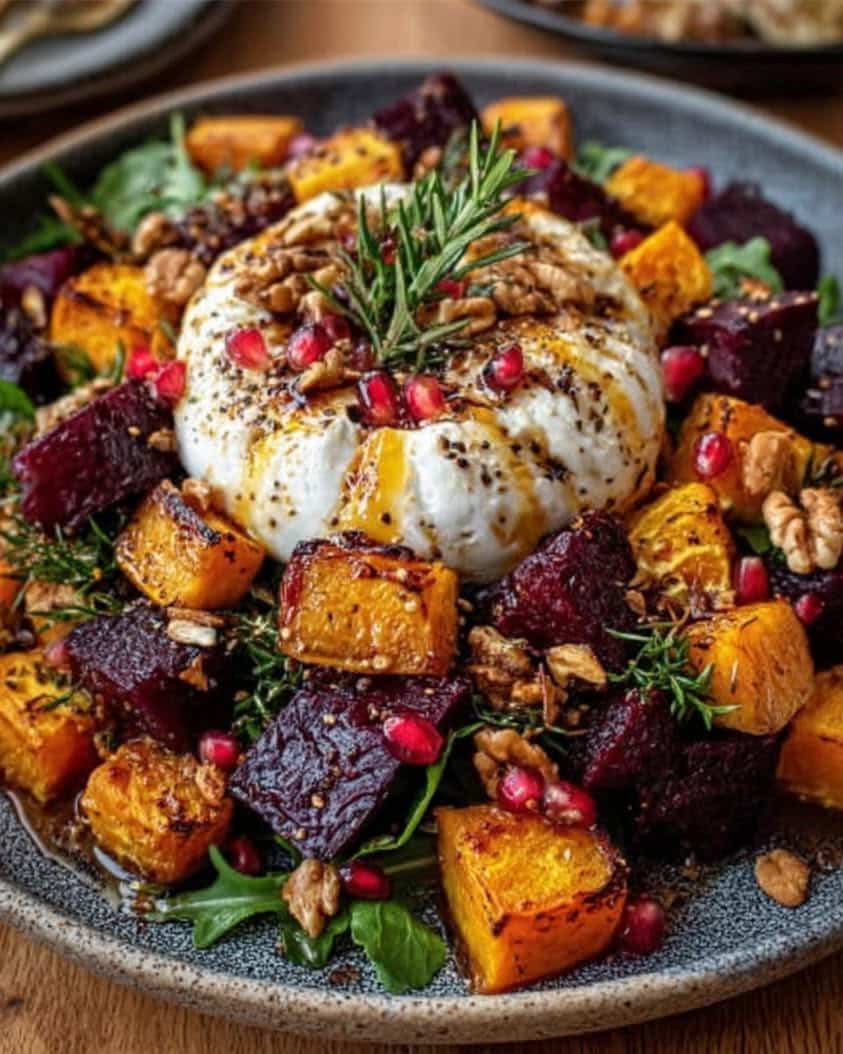
Roasted Beet, Butternut & Burrata Christmas Nest with Hot Honey Drizzle: A Show-Stopping Holiday Side Dish
Elevate your holiday table with this stunning Roasted Beet, Butternut & Burrata Christmas Nest with Hot Honey Drizzle. This dish masterfully combines earthy roasted vegetables with luxurious creamy cheese and a sweet-spicy finish. Consequently, it creates a visually spectacular centerpiece that tastes even better than it looks. Moreover, it brings a vibrant burst of color and sophisticated flavor to any festive gathering, making it an unforgettable addition to your Christmas recipes.
Imagine tender, caramelized cubes of butternut squash and jewel-toned beets, roasted to perfection and arranged in a rustic nest. Then, picture placing a whole ball of fresh, milky burrata cheese in the center. Finally, envision drizzling everything with a glossy, fiery hot honey that cuts through the richness. The result is a harmonious blend of sweet, savory, creamy, and spicy elements. Ultimately, this holiday side dish is designed to impress both in presentation and on the palate, offering a modern twist on traditional vegetable preparations.
Quick Recipe Highlights
- Flavor Profile: This dish offers a beautiful balance. Earthy sweetness from the roasted beets and butternut squash meets the rich, tangy creaminess of burrata. The hot honey drizzle introduces a warm, spicy kick that ties all the elements together perfectly.
- Texture: You get a wonderful contrast between the tender, slightly caramelized vegetables and the luscious, soft interior of the burrata. The honey adds a sticky, glossy mouthfeel that enhances every bite.
- Aroma: As it roasts, the kitchen fills with the warm, sweet scent of caramelizing squash and earthy beets. When you add the hot honey, notes of warm chili and floral honey mingle, creating an incredibly inviting holiday aroma.
- Visual Appeal: The deep reds and vibrant oranges of the vegetables create a stunning color palette reminiscent of Christmas ornaments. Arranged in a nest with the snowy-white burrata in the center, it is a true feast for the eyes.
- Skill Level Needed: This is an accessible recipe for most home cooks. The primary skills involved are simple vegetable chopping and roasting. Assembly is intuitive and allows for creative presentation.
- Special Equipment: You only need basic kitchen tools: a good chef’s knife, a sturdy cutting board, and a large baking sheet. Parchment paper is highly recommended for easy cleanup and to prevent sticking.
Recipe Overview
- Difficulty Level: We rate this recipe as easy. The steps are straightforward: chop, season, roast, and assemble. There is no complex technique required. However, achieving perfectly roasted vegetables without burning requires basic oven monitoring. The assembly is forgiving and encourages a rustic, handmade look.
- Category: This dish fits beautifully into several categories. Primarily, it is a spectacular holiday side dish or vegetarian main course. It can also serve as a luxurious appetizer or a standout item on a festive buffet spread.
- Cuisine: While not tied to one specific tradition, it draws inspiration from modern American and Italian culinary styles. The use of burrata is distinctly Italian, while the hot honey trend and vegetable-focused presentation are hallmarks of contemporary American cooking.
- Cost: The cost is moderate, largely dependent on the price of burrata and fresh produce. Beets and butternut squash are typically affordable, especially in season. Burrata is a splurge ingredient that makes the dish feel special. Hot honey can be purchased or made inexpensively at home.
- Season: This recipe is perfect for fall and winter, particularly around the Christmas holidays. Root vegetables and squash are at their peak sweetness and flavor during these colder months. The warm, comforting elements are ideal for chilly weather gatherings.
- Occasion: It is tailor-made for festive occasions like Christmas dinner, Thanksgiving, or a special winter dinner party. Furthermore, it works wonderfully for a vegetarian Friendsgiving or as an elegant side for a holiday roast.
Why You’ll Love This Recipe
First and foremost, the taste and texture combination is truly extraordinary. The natural sugars in the beets and squash concentrate during roasting, creating a deep, caramelized sweetness. This contrasts spectacularly with the cool, creamy, and slightly tangy burst of the burrata. Then, the hot honey drizzle adds a layer of complexity that wakes up all the other flavors. Each forkful delivers a symphony of earthy, sweet, rich, and spicy notes that will have everyone asking for the recipe. It is a far cry from boring, steamed holiday vegetables.
From a convenience standpoint, this recipe is a dream for holiday cooking. A significant portion of the work is hands-off oven time, allowing you to focus on other dishes. You can prepare the vegetables ahead of time and simply roast them before serving. The assembly is quick and visually impactful, meaning you can create a stunning presentation without last-minute stress. This makes it an ideal choice for managing a busy holiday kitchen timeline.
Nutritionally, this dish is packed with benefits. Beets are rich in fiber, folate, and immune-boosting antioxidants. Butternut squash provides a hefty dose of vitamin A, vitamin C, and potassium. Using olive oil and nuts adds heart-healthy fats. While burrata is indulgent, it also offers protein and calcium. Together, they create a side dish that is as nourishing as it is delicious, contributing vibrant color and nutrients to your holiday feast.
For entertaining, this Roasted Beet, Butternut & Burrata Christmas Nest is a guaranteed conversation starter. Its dramatic presentation creates a “wow” moment when you bring it to the table. It caters beautifully to vegetarian guests as a substantial option, while also appealing to all eaters as a spectacular side. Serving a dish that looks and tastes this special shows your guests the care and thought you put into the meal.
Finally, considering cost and accessibility, the recipe is quite flexible. You can often find beets and squash at farmers’ markets for great prices. If burrata is unavailable or too costly, fresh mozzarella makes a fine substitute. The hot honey can be customized with whatever chili flakes you have on hand. This adaptability means you can create a luxurious-tasting dish without a luxurious budget, making impressive holiday cooking more accessible to everyone.
Historical Background and Cultural Significance
The individual components of this dish have rich and varied histories. Beets have been cultivated since ancient times, originally for their greens. The Romans later valued the root for both food and medicinal purposes. Butternut squash is a New World vegetable, a cultivar of winter squash developed in the 1940s. Combining these earthy, ancient and modern New World ingredients reflects the melting pot of contemporary cuisine. Their pairing on the holiday table symbolizes the harvest and abundance of the late year.
Burrata, meaning “buttered” in Italian, is a relatively recent invention from the Puglia region in the 20th century. It was created as a way to use up the scraps of mozzarella production, showcasing a tradition of culinary resourcefulness. Its introduction to high-end menus worldwide represents the global appreciation for artisan cheese. Placing this Italian delicacy at the heart of a nest of roasted vegetables is a modern act of fusion, blending rustic peasant food sensibility with gourmet presentation.
The concept of a “nest” in food presentation has long been used for visual appeal, often during spring and Easter. Applying this presentation technique to a winter dish with deep-colored vegetables is a creative seasonal adaptation. It transforms the plate into a festive still life, evoking warmth, bounty, and careful arrangement. This evolution from simple roasted vegetables to an artfully composed nest shows how presentation has become integral to the modern dining experience, especially during photo-worthy holiday meals.
Hot honey, while feeling contemporary, has ancient roots. Combining honey with spices for both preservation and flavor dates back centuries across many cultures, from Ethiopian berbere-infused honey to Italian ‘nduja honey. Its current popularity in American food culture bridges the gap between classic sweet heat and modern culinary trends. Drizzling it over this dish ties together old-world traditions (cheesemaking, ancient vegetables) with a very current flavor profile, creating a recipe that feels both timeless and of-the-moment.
Ingredient Deep Dive
Beets: Beets are storied roots with a history spanning millennia. They are nutritional powerhouses, rich in dietary fiber, folate, manganese, and potassium. Notably, they contain betalains, pigments with potent antioxidant and anti-inflammatory properties. When selecting beets, look for firm, smooth globes with vibrant, unwilted greens attached if possible. Store them unwashed in the refrigerator’s crisper drawer. For roasting, golden or Chioggia beets can substitute for red, though they will alter the iconic crimson color. Always wear gloves to prevent staining your hands.
Butternut Squash: This winter squash is a modern cultivar known for its sweet, nutty flavor and smooth texture. It is an excellent source of beta-carotene, which the body converts to vitamin A, crucial for vision and immune health. It also provides vitamin C, magnesium, and potassium. Choose squash that feels heavy for its size with a firm, matte skin and no soft spots. Store in a cool, dark place for weeks. Acorn or delicata squash can be used as alternatives, though their roasting times may vary slightly.
Burrata Cheese: Burrata is a fresh Italian cheese made from mozzarella and cream. The outer shell is solid mozzarella, while the inside contains stracciatella and cream, giving it an extraordinarily soft, rich texture. It provides protein, calcium, and phosphorus. Always seek the freshest burrata possible, checking the sell-by date. It should be stored in its liquid in the refrigerator and consumed within a day or two of purchase. For a substitute, fresh mozzarella (bocconcini) or a high-quality ricotta can be used, though the dramatic creamy center will be lost.
Hot Honey: Hot honey is simply honey infused with chili peppers. Honey itself has antimicrobial properties and has been used as a sweetener and preservative for ages. The capsaicin in chili flakes may offer metabolism-boosting benefits. You can buy prepared hot honey or make your own by gently warming honey with dried chili flakes (like arbol or Calabrian) and letting it steep. The spice level is easily adjustable. For a different flavor, try infusing the honey with rosemary or thyme for an herby twist.
Pistachios: Pistachios add crucial crunch and a pop of green color. Historically prized in the Middle East, they are rich in healthy fats, protein, fiber, and antioxidants like lutein. They also provide B vitamins and minerals like copper and manganese. Buy unsalted, shelled pistachios for this recipe. For the best flavor, toast them lightly in a dry pan before sprinkling. If unavailable, walnuts, pecans, or pine nuts make excellent crunchy substitutes.
Common Mistakes to Avoid
- Uneven Vegetable Cubes: Cutting the beets and squash into wildly different sizes is a common error. Consequently, smaller pieces will burn before larger ones cook through. Aim for uniform 1-inch cubes to ensure even roasting and caramelization.
- Crowding the Pan: Dumping all the vegetables onto one crowded baking sheet will steam them instead of roasting them. For proper caramelization, they need space. Use two pans if necessary to allow hot air to circulate around each piece.
- Underseasoning the Vegetables: Vegetables need ample seasoning before roasting. Do not be shy with salt and pepper at the oil-tossing stage. Remember, the burrata and honey are seasoned elements, but the vegetable base itself must be flavorful.
- Using Cold Burrata: Serving burrata straight from the fridge diminishes its creamy texture and mutes its flavor. Take it out about 20-30 minutes before serving to allow it to come closer to room temperature for optimal silkiness.
- Overheating the Honey: If making your own hot honey, avoid boiling it. Excessive heat can destroy honey’s delicate flavors and beneficial compounds. Gently warm it just enough to infuse the chili flavor without letting it bubble.
- Skipping the Acid: The dish is rich from the cheese and oil. Forgetting the brightening element of acid, like the suggested balsamic glaze or a squeeze of lemon, can make the dish feel heavy. Acid is essential for balance.
- Assembling Too Early: If you assemble the entire nest and let it sit, the heat from the vegetables will melt the burrata prematurely and the nuts will lose their crunch. Assemble just before serving for perfect textures.
- Not Tossing Vegetables Mid-Roast: Leaving the vegetables untouched for the entire cook time can lead to uneven browning. Give them a gentle stir or shake the pan halfway through to promote all-over caramelization.
Essential Techniques
Roasting Root Vegetables: Roasting is the key technique for developing deep flavor. The high, dry heat of the oven caramelizes the natural sugars in the beets and squash, concentrating their sweetness and creating delicious browned edges. To master this, ensure your oven is fully preheated and use a rimmed baking sheet lined with parchment. Toss the vegetables in enough oil to coat them lightly but thoroughly. The visual cue for success is tender pieces that are golden brown on the edges and easily pierced with a fork.
Infusing Honey with Heat: Creating hot honey involves gently warming honey to allow chili flakes to release their capsaicin and flavor without burning. The importance lies in controlling temperature. Combine honey and chili flakes in a small saucepan over the lowest heat setting. Warm for just 3-5 minutes until it becomes fluid and fragrant, then remove from heat to steep. A common pitfall is boiling the honey, which can create a bitter taste. Success is indicated by a honey that is spicy, fluid, and aromatic.
Arranging the “Nest”: This presentation technique transforms simple roasted veggies into a showpiece. The goal is to create a rustic, circular border with the vegetables, leaving a clear center for the burrata. Use a large serving platter or shallow bowl. Spoon the warm vegetables into a ring, gently pressing them together. The importance is visual appeal, creating height and definition. The pitfall is making it too perfect or too messy; aim for artfully rustic. Success is a stable, inviting nest that frames the cheese beautifully.
Pro Tips for Perfect Roasted Beet, Butternut & Burrata Christmas Nest
- Roast the beets on a separate section of the pan or a different tray if you want to prevent the vibrant red juice from tinting the orange squash. This keeps the colors distinct and visually striking.
- For extra flavor, toss the vegetables with a sprig of fresh rosemary or thyme before roasting. Remove the herbs before assembling to keep the presentation clean.
- Score the top of the burrata ball with a sharp knife just before placing it in the nest. This makes it easier for guests to break into the creamy center and allows some to spill out enticingly.
- If your hot honey solidifies after infusing, simply place the jar in a bowl of warm water for a few minutes to reliquify it before drizzling.
- Add the fresh herbs like mint or basil and the crunchy pistachios as the very last step after drizzling the honey. This preserves their bright color and crisp texture.
- For a more formal presentation, use a ring mold to create a perfect, compact circle of vegetables before carefully lifting the mold away and placing the burrata in the center.
- Serve with a small pitcher of extra hot honey on the side. This allows guests to add more spice according to their personal preference.
- If preparing components ahead, let the roasted vegetables cool completely before storing. Reheat them gently in the oven before assembling to restore their warmth without overcooking.
Variations and Adaptations
Regional Variations: You can easily adapt this nest to reflect different regional flavors. For a Mediterranean twist, add Kalamata olives and crumbled feta, using oregano in the oil. For a North African influence, toss the vegetables with ras el hanout before roasting and use a harissa-infused honey. An American Southern version might include roasted sweet potatoes and pecans, with a bourbon-spiked hot honey.
Seasonal Adaptations: While perfect for fall and winter, the nest concept works year-round. In spring, use roasted asparagus, baby carrots, and radishes with fresh goat cheese. For summer, try roasted zucchini, bell peppers, and eggplant with a ball of stracciatella and a basil oil drizzle. The method remains the same, showcasing the best produce of each season.
Dietary Modifications: For a vegan version, replace the burrata with a vegan mozzarella ball or a large, seasoned avocado half. Use maple syrup instead of honey to maintain the sweet element, infused with chili for heat. Ensure all other ingredients, like pre-made balsamic glaze, are certified vegan.
Flavor Variations: Experiment with different infused honeys or oils. Try a truffle honey for decadence, or a smoked chili honey for depth. Alternatively, swap the hot honey for a pomegranate molasses drizzle for a tangy, sweet-sour profile. You can also mix different herbs into the roasting oil, such as sage for autumn or tarragon for a more anise-like note.
Texture Modifications: If you prefer more textural contrast, add other elements after roasting. Crispy fried shallots or garlic breadcrumbs sprinkled over the top add a wonderful crunch. For extra creaminess without more cheese, add dollops of whipped ricotta around the nest.
Presentation Alternatives: Instead of one large nest, create individual servings in small bowls or on appetizer plates for a dinner party starter. Alternatively, deconstruct the salad by chopping the burrata and tossing everything together for a easier, family-style side dish. You can also layer the components in a clear trifle dish for a vertical presentation.
Serving and Presentation Guide
Plating Techniques: Choose a large, neutral-colored platter or a wide, shallow bowl to frame the vibrant colors of the dish. Build the vegetable nest first, creating a border with height to contain the burrata. Place the whole burrata ball gently in the center. The goal is a composition that looks abundant yet intentional, with the cheese as the jewel in the crown.
Garnishing Ideas: Garnishes add the final touch of freshness and color. Beyond the suggested mint or basil, consider microgreens, edible flowers (like nasturtiums), or delicate fronds of dill. A final flurry of flaky sea salt over the burrata just before serving enhances flavor and adds a professional finish. A few extra whole pistachios placed strategically add to the visual appeal.
Traditional Accompaniments: As a holiday side dish, this nest pairs classically with a main course of roast turkey, glazed ham, or prime rib. Its richness complements simply prepared proteins. For a vegetarian feast, it can stand alongside a hearty grain salad, stuffed mushrooms, or a lentil loaf as part of a luxurious spread.
Modern Serving Suggestions: For a contemporary meal, serve it as a shared appetizer with crusty bread or grilled crostini for scooping up the creamy burrata and vegetables. Alternatively, top it with a few slices of prosciutto or speck for a salty, savory contrast that makes it more substantial.
Temperature Considerations: Serve this dish immediately after assembly. The vegetables should be very warm, almost hot, to slightly melt the burrata upon contact. The cheese itself should be cool but not cold. This temperature contrast is part of the sensory experience. Keep the platter on the table for only the duration of the meal, as the cheese will continue to soften.
Portion Control Tips: This recipe yields four generous side-dish portions or two main-course servings. For a larger crowd, simply scale up the ingredients proportionally. When serving as part of a large holiday buffet with many other sides, you can stretch it to serve six by making the nest a bit less dense and ensuring the burrata is broken into by the server to distribute its creaminess.
Wine and Beverage Pairing
Wine Pairings: The sweet earthiness of the vegetables, rich cheese, and spicy honey calls for wines with good acidity and some fruitiness. A dry Rosé from Provence or a Pinot Noir from Oregon offers bright red fruit and acidity that cuts through the richness. An off-dry Riesling is a brilliant match, as its sweetness mirrors the honey and its acidity balances the fat. For a white option, a rich Chardonnay with minimal oak can stand up to the burrata without overpowering the vegetables.
Non-Alcoholic Alternatives: Sparkling apple cider provides festive bubbles and autumnal flavor that complements the squash. A ginger beer, either plain or as a mocktail base, echoes the spicy heat of the honey beautifully. For a more refined option, try a cold-brewed hibiscus tea lightly sweetened with honey; its tartness and floral notes are a wonderful contrast to the savory elements.
Coffee and Tea Pairings: If serving this for a brunch or lunch, coffee and tea make excellent pairings. A medium-roast coffee with notes of caramel or nut will mirror the roasted vegetable flavors. A spiced chai tea latte harmonizes with the warm spices in the hot honey. For an after-dinner pairing with leftovers, a cup of peppermint tea can be a refreshing palate cleanser.
Temperature and Serving Suggestions: Serve white wines and sparkling beverages well-chilled. Red wines should be served slightly below room temperature, around 60-65°F. For non-alcoholic options, consider presentation: serve sparkling cider in flutes or ginger beer in copper mugs for added festive flair. Always offer a variety to cater to different guest preferences.
Storage and Shelf Life
Storage Methods: Store any leftovers in an airtight container in the refrigerator for up to 2 days. However, it is best to store components separately if possible. Keep the roasted vegetables in one container and any remaining burrata (in its liquid) in another. The assembled dish does not keep well, as the burrata will break down and the vegetables will become soggy.
Temperature Requirements: All components must be refrigerated at or below 40°F. Do not leave the assembled dish at room temperature for more than two hours, as the dairy element poses a risk for bacterial growth. Always refrigerate promptly after serving.
Container Recommendations: Use glass or BPA-free plastic containers with tight-fitting lids. For the burrata, if the original container is intact, it is ideal for storage. For vegetables, a shallow container helps them cool quickly and evenly, which is important for food safety.
Signs of Spoilage: Discard the dish if you notice any off odors, such as a sour or ammonia-like smell from the cheese. Visible mold, excessive liquid separation, or a slimy texture on the vegetables are clear indicators it has gone bad. When in doubt, throw it out.
Reheating Instructions: Only reheat the vegetable portion. Spread them on a baking sheet and warm in a 350°F oven for 5-10 minutes until heated through. Do not microwave, as this will make them mushy. Do not reheat the burrata. Add fresh cheese when serving leftovers.
Freezing Guidelines: Freezing is not recommended for this dish. The roasted vegetables will become watery and mushy upon thawing. Burrata does not freeze well at all, as its delicate texture will be completely destroyed. This is a recipe best enjoyed fresh.
Make Ahead Strategies
Prep Timeline: You can significantly streamline your holiday cooking with a smart make-ahead plan. Up to two days in advance, peel and cube the beets and butternut squash. Store them in separate airtight containers or resealable bags in the refrigerator. The day before, you can make the hot honey and store it at room temperature. You can also toast the pistachios and store them in a pantry container.
Storage Between Steps: Keep the pre-cut vegetables chilled until you are ready to roast. Toss them with oil and seasoning just before they go into the oven to prevent them from becoming soggy. The hot honey can be gently rewarmed on the stovetop or in the microwave for a few seconds if it has thickened too much.
Quality Impact Assessment: Pre-cutting the vegetables has minimal impact on quality, especially if kept very cold. The hot honey’s flavor often improves after a day, allowing the chili heat to fully infuse. The only elements that must be done day-of are roasting the vegetables (for best texture and temperature) and assembling the final dish.
Assembly Tips: On the day of serving, roast the pre-cut vegetables. While they are roasting, take the burrata out of the fridge to temper. Warm the hot honey if needed. Chop your fresh herbs. Have your serving platter ready. Once the vegetables are done, assemble immediately for the perfect combination of warm veggies and cool, creamy cheese.
Reheating Guidelines for Prepped Components: If you roasted the vegetables ahead (not ideal, but possible), reheat them on a baking sheet in a 400°F oven for 5-7 minutes to re-crisp the edges and warm them through before assembling. Do not reheat the burrata.
Fresh Element Additions: Always add the final fresh elements—the herbs, extra nuts, a final salt sprinkle, and any acid like balsamic—right before serving. This ensures they retain their vibrant color, crisp texture, and bright flavor, which are essential for balancing the rich, roasted components.
Scaling Instructions
Halving the Recipe: To serve two, simply divide all ingredient quantities in half. Use one standard baking sheet for the reduced volume of vegetables; they will have plenty of space to roast properly. Use a smaller burrata ball or a half-ball of a large one. The cook time may be slightly reduced by 5-7 minutes, so start checking for doneness early.
Doubling or Tripling: For a large gathering, double or triple the amounts of beets, squash, oil, and seasoning. Crucially, you must use multiple baking sheets and roast in batches or on multiple oven racks. Rotate the sheets top-to-bottom and front-to-back halfway through cooking for even browning. You may need to extend the cook time by 5-10 minutes. Present one large nest on a platter or consider making several smaller nests on multiple platters for easier serving.
Equipment Adjustments: Scaling up requires planning for sheet pan space. Do not overcrowd pans. If your oven is small, roast in consecutive batches and keep the first batch warm in a low oven (200°F) on a heatproof platter, covered loosely with foil. Ensure you have a large enough serving platter or multiple platters for presentation.
Timing Modifications: When cooking multiple trays, the total oven time will be longer if roasting in batches. Factor this into your holiday cooking schedule. When tripling, the assembly time will also increase slightly. Enlist help for final assembly to get the dish to the table quickly while everything is at the ideal temperature.
Storage Considerations for Scaled Recipes: Leftover quantities will be larger if you scale up. Remember that the assembled dish does not store well. It is better to store any extra unassembled components (roasted veggies in one container, unused burrata in its liquid) and assemble a fresh, smaller portion with leftovers the next day.
Nutritional Deep Dive
Macro Breakdown: A serving of this holiday side dish provides a balanced mix of macronutrients. The olive oil and nuts contribute healthy unsaturated fats, which aid in the absorption of fat-soluble vitamins from the vegetables. The burrata offers a source of protein and saturated fat, contributing to the feeling of richness and satisfaction. The carbohydrates come primarily from the fibrous vegetables and the natural sugars in the honey, providing sustained energy.
Micronutrient Analysis: This dish is a micronutrient powerhouse. Beets are an excellent source of folate and manganese. Butternut squash delivers over 100% of the daily value for vitamin A in a single cup. It also provides vitamin C and magnesium. The pistachios add B vitamins, copper, and antioxidants like lutein. Together, they create a side dish that supports vision, immune function, and energy metabolism.
Health Benefits: The combination of ingredients offers multiple health benefits. The antioxidants in beets and squash combat oxidative stress. The fiber promotes digestive health and helps regulate blood sugar response. The healthy fats support heart health and brain function. The capsaicin in the chili flakes may offer a mild metabolism boost and anti-inflammatory effects.
Dietary Considerations: This recipe is naturally vegetarian and gluten-free. It contains dairy (burrata) and nuts (pistachios), which are common allergens to note. The honey makes it unsuitable for a strict vegan diet. For those monitoring sodium, you can control the amount of added salt during roasting and at the table.
Portion Analysis: As a side dish, one serving is a satisfying portion that complements a protein main course. As a vegetarian main, it is rich and filling, especially when served with a side of crusty bread or a simple green salad. The visual appeal of the nest helps with natural portion control, as the structure defines a serving size.
Weight Management Tips: For a lighter version, you can reduce the amount of olive oil used for roasting by using an oil spray. You can also slightly reduce the amount of burrata or use a part-skim mozzarella ball. The honey drizzle can be applied more sparingly. Remember, the vegetables themselves are low in calories and high in volume and fiber, which promotes fullness.
Dietary Adaptations
Gluten-Free: This recipe is naturally gluten-free as written. Simply ensure that any pre-made ingredients you use, such as balsamic glaze, are certified gluten-free, as some thickeners may contain gluten. All whole ingredients—vegetables, cheese, honey, nuts—are inherently gluten-free.
Dairy-Free/Vegan: To make this dairy-free and vegan, replace the burrata with a vegan alternative. Many brands now make convincing vegan mozzarella balls. Alternatively, a large, ripe avocado half or a scoop of seasoned vegan ricotta makes a great centerpiece. Substitute the honey with agave nectar or maple syrup infused with chili flakes. Use a vegan balsamic glaze or reduction.
Low-Carb/Keto: For a keto-friendly version, focus on the beets in moderation, as they are higher in carbs than the squash. Increase the proportion of squash and consider adding low-carb vegetables like roasted radishes or turnips. Ensure the hot honey is used very sparingly, as honey is high in sugar. Alternatively, make a sugar-free “hot syrup” using a keto-friendly sweetener like monk fruit or allulose infused with chili.
Paleo: The paleo adaptation requires omitting the dairy and legumes. Omit the burrata or replace it with a compliant ingredient like a mashed sweet potato center or a pile of shredded chicken. Check that your hot honey does not contain any additives. Use only olive oil or avocado oil for roasting. All vegetables and nuts are paleo-approved.
Low-FODMAP: This recipe requires significant modification for a low-FODMAP diet. Butternut squash is only low-FODMAP in servings of 1/3 cup, so portion control is key. Beets should also be limited. Omit the honey (high in fructose) and use a maple syrup infusion instead. Ensure the garlic is omitted from the roasting oil. The burrata is generally low-FODMAP in moderate servings, but check tolerance.
Nut-Free: For a nut-free version, simply omit the pistachios. You can replace the crunch with toasted sunflower seeds or pumpkin seeds (pepitas), which are seeds, not tree nuts. Always check for cross-contamination warnings if serving someone with a severe allergy, and ensure all other ingredients are processed in nut-free facilities.
Troubleshooting Guide
Vegetables Are Soggy, Not Roasted: This usually results from overcrowding the pan or insufficient oven heat. Ensure pieces are spaced out and your oven is fully preheated. Next time, pat the cubed vegetables dry with a towel before tossing with oil to remove excess surface moisture. Use convection roast setting if your oven has it for better air circulation.
Burrata is Too Cold and Firm: If the burrata is rock-solid in the center, it was not tempered long enough. Remember to take it out of the refrigerator 20-30 minutes before serving. If you forget, you can place the sealed package in a bowl of lukewarm (not hot) water for 5-10 minutes to gently take the chill off.
Hot Honey is Too Spicy or Not Spicy Enough: The spice level is easily adjustable. If it is too mild, add more chili flakes and gently re-warm. If it is too spicy, dilute it by mixing in more plain honey. You can also strain out the chili flakes after infusing for a milder, infused flavor without the direct heat.
Colors Bleeding on the Pan: If you prefer distinct colors and the red from the beets is staining the squash, roast them on separate halves of the baking sheet or on different trays entirely. You can also add the beets to the pan 10 minutes after the squash, as they often take slightly longer to cook.
Nest Falls Apart When Serving: A loose nest indicates the vegetables were not packed together with enough intention
Print
Roasted Beet, Butternut & Burrata Christmas Nest with Hot Honey Drizzle
Description
A festive and colorful salad featuring roasted beets and butternut squash arranged in a nest shape, topped with creamy burrata cheese and a spicy-sweet hot honey drizzle.
Ingredients
For the Crust:
- 2 medium beets, peeled and cubed
- 1 small butternut squash, peeled and cubed
- 2 tablespoons olive oil
- 1 teaspoon salt
- 1/2 teaspoon black pepper
- 1 teaspoon dried thyme
- 8 ounces burrata cheese
- 1/4 cup honey
- 1 teaspoon red pepper flakes
- 1 tablespoon apple cider vinegar
- Fresh arugula for serving
- 1/4 cup toasted walnuts, chopped
Instructions
1. Prepare the Crust:
- Preheat oven to 400°F (200°C). Toss beets and butternut squash with olive oil, salt, pepper, and thyme. Spread on a baking sheet and roast for 25-30 minutes until tender.
- While vegetables roast, make hot honey: In a small saucepan, combine honey, red pepper flakes, and apple cider vinegar. Heat over low until warm and slightly thinned, about 5 minutes. Remove from heat and let cool.
- Arrange a bed of arugula on a serving platter. Place roasted beets and squash in a circular nest shape on top.
- Gently place burrata in the center of the nest. Drizzle with hot honey and sprinkle with toasted walnuts. Serve immediately.
Notes
You can customize the seasonings to taste.

I’m Shaykee—born in Morocco, seasoned across continents. From airplane galleys to home kitchens, I share the flavors and stories that shaped my journey.