
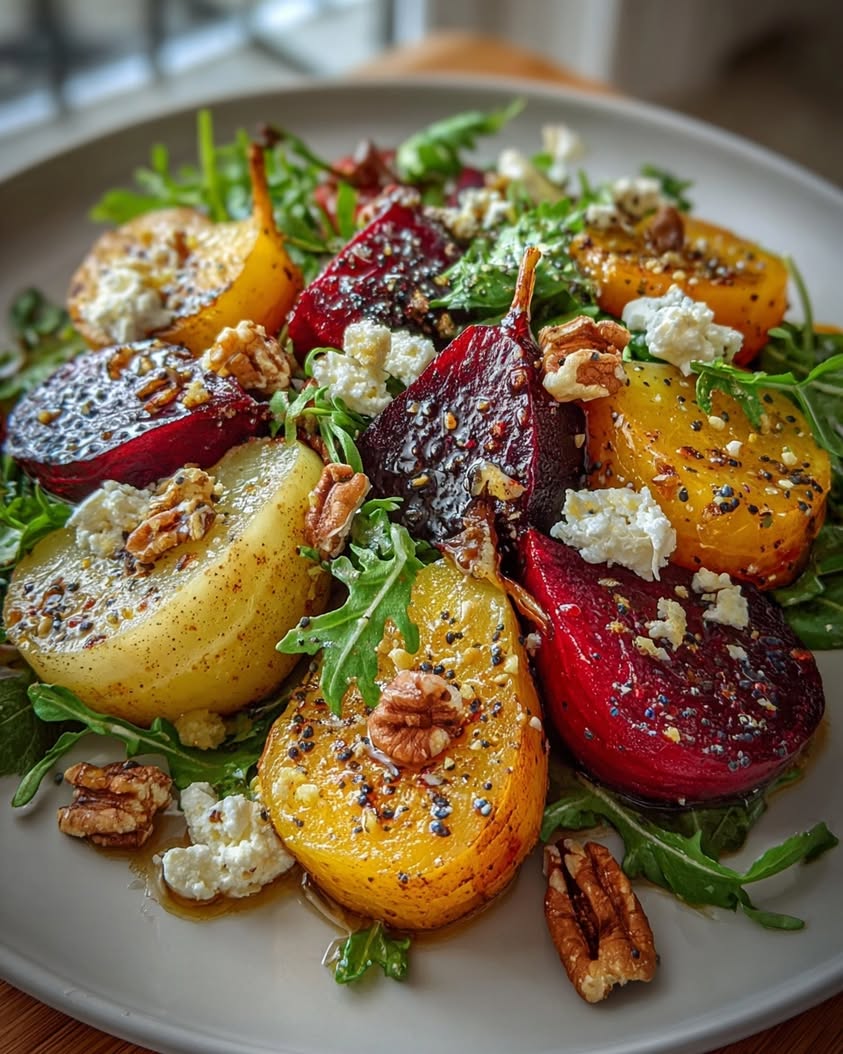
Roasted Beet & Pear Salad with Feta: A Vibrant Symphony of Earthy and Sweet Flavors
This Roasted Beet & Pear Salad with Feta is a stunning celebration of color and flavor designed to elevate any meal. Moreover, it masterfully balances the deep, earthy sweetness of roasted beets with the crisp, juicy freshness of ripe pears. Consequently, each bite delivers a complex and satisfying experience that feels both rustic and refined. This vibrant salad is not just a side dish; it is a centerpiece that brings a touch of elegant simplicity to your table.
Imagine tender, caramelized beets, their natural sugars concentrated by the oven’s heat, mingling with slices of sweet, aromatic pear. Then, creamy, tangy feta cheese crumbles over the top, adding a salty counterpoint that ties everything together. A simple, bright vinaigrette cuts through the richness, while a sprinkle of toasted nuts provides the perfect crunchy finish. Ultimately, this recipe transforms humble ingredients into a show-stopping dish that is as nutritious as it is beautiful.
Perfect for busy weeknights or special occasions, this salad requires minimal hands-on effort. The oven does most of the work, roasting the beets to perfection while you prepare the other components. Whether you are looking for a healthy lunch, a impressive side for dinner guests, or a colorful addition to a holiday spread, this Roasted Beet & Pear Salad with Feta delivers on every level. It is a testament to how simple ingredients can create extraordinary food.
Quick Recipe Highlights
- Flavor Profile: This salad offers a beautiful harmony of sweet and savory notes. The earthy sweetness of the roasted beets pairs perfectly with the fresh, floral sweetness of the pears. Meanwhile, the salty, tangy feta and acidic vinaigrette create a balanced and sophisticated taste that is never cloying.
- Texture: You will enjoy a wonderful contrast of textures in every forkful. The roasted beets are tender and slightly dense, while the pears provide a juicy, crisp bite. Additionally, creamy feta melts on the tongue, and toasted walnuts or pecans add a essential crunchy element that completes the dish.
- Aroma: As the beets roast, they fill your kitchen with a warm, sweet, and earthy fragrance. When you toss the salad, the fresh, light scent of the pear and the sharp, tangy aroma of the feta mingle with the nutty smell of toasted walnuts. This aromatic blend is incredibly inviting.
- Visual Appeal: This salad is a feast for the eyes with its dramatic ruby red, creamy white, and green hues. The deep color of the beets stains the pears and cheese slightly, creating a beautiful, painterly effect on the plate. It is a dish that looks as impressive as it tastes.
- Skill Level Needed: This is a beginner-friendly recipe that requires very few advanced techniques. Essentially, you need to be comfortable with basic knife skills for peeling and slicing, and you must know how to use your oven. The process is straightforward and forgiving, making it perfect for cooks of all levels.
- Special Equipment: You need a baking sheet, parchment paper for easy cleanup, and a sharp knife. A vegetable peeler is helpful for the beets, and a small jar for shaking the vinaigrette is convenient. Otherwise, no special tools are required, which makes this salad highly accessible.
Recipe Overview
- Difficulty Level: We rate this recipe as “Easy” because it involves fundamental cooking techniques like roasting and simple assembly. The steps are sequential and clear, with minimal multitasking required. Furthermore, the ingredients are forgiving; for instance, slight variations in roasting time or pear ripeness will still yield a delicious result. Anyone can achieve success with this straightforward guide.
- Category: This dish falls primarily into the salad category, but it is substantial enough to be a light main course. It also excels as a elegant side dish for proteins like roasted chicken, seared salmon, or grilled steak. Its versatility allows it to shine in multiple meal contexts, from casual lunches to formal dinners.
- Cuisine: While not tied to one specific tradition, this salad draws inspiration from modern American and Mediterranean culinary styles. The use of roasted vegetables, fresh fruit, cheese, and nuts is a hallmark of contemporary, health-conscious cooking. The flavor combinations celebrate seasonal, whole ingredients in a simple, impactful way.
- Cost: This is a moderately priced recipe. Fresh beets and pears are affordable, especially in season. Feta cheese and nuts are the more significant cost factors, but a little goes a long way. You can expect to spend about $10-$15 for four generous servings, making it a cost-effective way to create a restaurant-quality dish at home.
- Season: This salad is ideal for fall and winter when beets and pears are at their peak. However, thanks to year-round availability, you can enjoy it any time. It brings a welcome burst of color and freshness to the colder months and serves as a refreshing, lighter option during spring and summer gatherings.
- Occasion: It is perfect for holiday meals like Thanksgiving or Christmas, where its vibrant color stands out. Similarly, it makes an excellent contribution to potlucks or picnics. For a romantic dinner or a dinner party, it adds an element of effortless elegance. It is truly a versatile dish for many events.
Why You’ll Love This Roasted Beet & Pear Salad with Feta
First and foremost, the taste and texture appeal of this salad is undeniable. Each component is carefully chosen to create a symphony in your mouth. The deep, caramelized flavor of the roasted beets provides a sturdy, sweet foundation. Next, the juicy, crisp pear cuts through with a bright, clean sweetness. Then, the creamy and tangy feta cheese adds a savory, salty punch that prevents the dish from being too sweet. Finally, the crunchy nuts and sharp vinaigrette tie all these elements together into a perfectly balanced bite that is both satisfying and complex.
From a convenience standpoint, this recipe is a dream. The active prep time is short, requiring only about 15 minutes of your attention. After that, the oven takes over, allowing you to prepare the rest of your meal or simply relax. The assembly is quick and intuitive—no fussy techniques are required. Additionally, the ingredients are easy to find at any standard grocery store. This combination of simplicity and impressive results makes it a go-to recipe for busy cooks who still want to eat well.
Nutritionally, this salad is a powerhouse. Beets are packed with fiber, folate, and beneficial nitrates that support heart health and stamina. Pears add more fiber and a dose of vitamin C. Meanwhile, feta cheese provides protein and calcium, and walnuts contribute healthy omega-3 fats. This dish is naturally gluten-free and can be adapted for various dietary needs with ease. You are serving a meal that delights the senses and fuels the body wonderfully.
For social and entertaining value, this salad is a true winner. Its stunning visual presentation guarantees compliments from your guests. It pairs beautifully with a wide range of main courses, making menu planning simple. You can easily double or triple the recipe for a crowd without complicating the process. Serving a dish that looks and tastes this sophisticated, yet is so simple to make, allows you to spend more time with your guests and less time stressing in the kitchen.
Finally, this Roasted Beet & Pear Salad with Feta is remarkably cost-effective. It transforms inexpensive root vegetables and seasonal fruit into something extraordinary. A small amount of feta and nuts delivers a big impact, maximizing flavor without maximizing cost. Compared to ordering a similar salad at a restaurant, making it at home saves a significant amount of money. This accessibility means you can enjoy gourmet-quality food regularly, which is a fantastic benefit for any home cook.
Historical Background and Cultural Significance
The combination of fruits, cheeses, and nuts in salads has ancient roots, particularly in Mediterranean and Middle Eastern cultures. For centuries, people in these regions have paired fresh and preserved fruits with local cheeses. The concept of adding roasted vegetables is a more modern twist, reflecting contemporary cooking’s focus on depth of flavor and technique. This particular recipe is a fusion of these old and new ideas, creating a dish that feels both timeless and of-the-moment.
Culturally, beets hold significance across Eastern Europe and the Middle East, often appearing in traditional soups like borscht or as simple roasted sides. Pears have been cultivated for thousands of years across Asia and Europe, symbolizing longevity and prosperity in some cultures. Combining them on a plate is a celebration of agricultural bounty and seasonal eating. It is a practice that connects us to the rhythm of the harvest and the tradition of using what is fresh and available.
The evolution of this recipe mirrors broader food trends. Over the past few decades, salads have transformed from simple side dishes of lettuce and tomato into complex, composed meals. The rise of “farm-to-table” dining emphasized the beauty of individual, high-quality ingredients. Consequently, recipes like this one, which showcase a few perfect components in harmony, became popular. It represents a shift towards vegetable-forward eating where produce is the star, not an afterthought.
Regional variations of this concept abound. In the American South, you might find a similar salad with pecans and a bourbon-spiked vinaigrette. In the Mediterranean, it could feature halloumi instead of feta and a drizzle of pomegranate molasses. Some versions incorporate bitter greens like arugula or radicchio to add another flavor layer. This adaptability is a testament to the recipe’s solid foundation; it provides a perfect template for creativity based on local ingredients and personal taste.
Ingredient Deep Dive
Beets: Beets have a long history, cultivated since ancient times for both their edible roots and greens. They are nutritional champions, rich in fiber, folate, manganese, and potassium. The compounds that give beets their vibrant color, betalains, have potent anti-inflammatory and antioxidant properties. When selecting beets, look for firm, smooth roots with vibrant greens still attached if possible, as this indicates freshness. Store them unwashed in the refrigerator’s crisper drawer, where they will keep for several weeks. For a quicker alternative, pre-cooked vacuum-packed beets work well, though they lack the deep caramelized flavor of roasting.
Pears: Pears are one of the oldest cultivated fruits, with evidence of their consumption dating back to prehistoric times. They are an excellent source of dietary fiber, particularly pectin, which supports gut health, and they provide a good amount of vitamin C and copper. Choose pears that are firm but yield slightly to gentle pressure at the stem for this salad. Anjou or Bosc pears are ideal because they hold their shape well. Store ripe pears in the fridge to slow further ripening. If your pears are too hard, leave them at room temperature for a day or two. For a substitution, crisp apples are a fantastic alternative.
Feta Cheese: Authentic feta is a brined curd cheese with a protected designation of origin (PDO) in Greece, made from at least 70% sheep’s milk mixed with goat’s milk. It is a good source of calcium, phosphorus, and protein, though it is also high in sodium. The tangy, salty flavor and crumbly texture are essential to this salad’s balance. Look for feta packed in brine for the best flavor and texture. Store it in its brine in the refrigerator. For a dairy-free version, a firm, salty tofu crumble or a vegan feta alternative can be used, though the flavor profile will change.
Walnuts (or Pecans): Walnuts are among the oldest tree foods, revered for their brain-like shape and associated health benefits. They are uniquely high in alpha-linolenic acid, a plant-based omega-3 fatty acid. Toasting nuts is a critical step as it deepens their flavor and improves crunch. Always toast nuts in a dry skillet over medium heat or on a baking sheet in the oven until fragrant. Store all nuts in the freezer to prevent their oils from going rancid. Pecans make a wonderful, slightly sweeter substitute, and pumpkin seeds are an excellent nut-free option.
The Vinaigrette: A simple vinaigrette of olive oil, vinegar, mustard, and honey emulsifies the salad and adds a bright, acidic component. Extra virgin olive oil is preferred for its fruity, peppery notes and healthful monounsaturated fats. The acid, whether red wine vinegar, balsamic, or lemon juice, cuts through the richness. Dijon mustard acts as an emulsifier and adds depth. A touch of honey or maple syrup balances the acidity. The quality of each ingredient shines through, so use the best you have available.
Common Mistakes to Avoid
- Not Wearing Gloves While Handling Beets: Beet juice stains skin and cutting boards dramatically. Always wear disposable gloves or immediately wash your hands after handling. This simple precaution saves you from having pink hands for a day.
- Overcrowding the Baking Sheet: When roasting the beets, give them space on the pan. If they are piled on top of each other, they will steam instead of roast. Consequently, you will miss out on the desirable caramelized edges and concentrated flavor.
- Using Overripe or Mushy Pears: The pear should provide a crisp, juicy contrast. If the pear is too soft, it will become mushy when tossed and lack the necessary textural element. Choose a pear that is ripe but still firm for the best result.
- Skipping the Toasting Step for Nuts: Raw nuts can taste bland and sometimes bitter. Toasting unlocks their essential oils and maximizes their flavor and crunch. It only takes a few minutes but makes a significant difference in the final dish.
- Adding the Dressing Too Early: If you dress the entire salad long before serving, the greens will wilt, and the colors will bleed excessively. For the freshest presentation, dress the salad just before you are ready to serve it at the table.
- Not Tasting and Adjusting the Vinaigrette: The balance of oil, acid, and sweetener is personal. Always taste your vinaigrette on a leaf of lettuce or a piece of pear and adjust the seasoning with salt, pepper, or more acid before tossing the whole salad.
- Using Pre-Crumbled, Dry Feta: Pre-crumbled feta is often drier and less flavorful than a block stored in brine. For the creamiest texture and tangiest taste, buy a block of feta in brine and crumble it yourself just before serving.
- Neglecting to Peel the Beets: After roasting, the beet skin should slide off easily. However, if you skip peeling, the texture can be tough and unpleasant. Take the extra minute to rub off the skins with a paper towel for the smoothest, most luxurious mouthfeel.
Essential Techniques
Roasting Root Vegetables: Roasting is the most important technique in this recipe. It transforms the hard, earthy raw beet into a tender, sweet, and complex ingredient. The high, dry heat of the oven caramelizes the natural sugars in the beet, creating a depth of flavor that boiling or steaming cannot achieve. To master it, ensure your oven is fully preheated and cut the beets into uniform pieces so they cook evenly. A common pitfall is under-roasting, which leaves the beets hard in the center. They are done when you can easily pierce them with the tip of a knife. The visual cue is a slightly shriveled, glossy exterior.
Creating a Stable Emulsion (Vinaigrette): A good vinaigrette is a temporary emulsion of oil and vinegar. The goal is to combine them so they stay mixed long enough to coat the salad evenly. The key is to add the oil very slowly while whisking vigorously, or to shake everything in a tightly sealed jar. Dijon mustard contains lecithin, which acts as an emulsifier to help bind the oil and water. The common mistake is dumping all the oil in at once, which will cause it to separate immediately. A successful vinaigrette will look slightly creamy and opaque, not thin and separated.
Toasting Nuts: Toasting nuts is a dry-heat technique that removes raw, bitter flavors and enhances nuttiness and crunch. You can do this in a dry skillet on the stovetop over medium heat or on a baking sheet in a 350°F oven. The most critical factor is attention; nuts go from perfectly toasted to burnt very quickly. Stir or shake them frequently for even color. The visual cue is a light golden brown color, and the aromatic cue is a rich, nutty smell filling your kitchen. Always transfer them to a plate to cool immediately to stop the cooking process.
Pro Tips for Perfect Roasted Beet & Pear Salad with Feta
First, roast a few extra beets while your oven is on. You can store them in the fridge for up to 5 days to make this salad again quickly or add them to grain bowls, sandwiches, or hummus.
Second, for the most beautiful presentation, toss the beets with a little vinaigrette first before adding the pears and greens. This allows the vibrant red color to shine without immediately staining everything else.
Third, if you are making this for a party, prep all components separately. Roast and cube the beets, slice the pears and toss them with a little lemon juice to prevent browning, make the vinaigrette, and toast the nuts. Then, assemble everything on a large platter just before serving.
Fourth, experiment with different acids in your vinaigrette. A aged balsamic vinegar will add sweetness and complexity, while fresh lemon juice will bring a brighter, cleaner acidity that pairs wonderfully with the pears.
Fifth, consider adding a handful of robust greens like baby arugula or watercress. Their peppery bite introduces another flavor dimension that complements the sweetness of the beets and pears beautifully.
Sixth, for a warmer salad, you can serve it immediately after adding the roasted beets. The slight warmth from the beets will gently wilt the greens and slightly soften the feta, creating a different but equally delicious experience.
Seventh, use a melon baller to create small, elegant spheres of beet and pear instead of cubes. This technique takes a bit more time but results in a stunning, restaurant-quality presentation.
Eighth, if you love herbs, a generous sprinkle of fresh dill, mint, or tarragon just before serving adds a fantastic layer of fresh aroma and flavor that elevates the entire dish.
Variations and Adaptations
Regional Variations: Across different regions, this salad adapts to local ingredients. In the Pacific Northwest, you might find hazelnuts and a blackberry vinaigrette. A Southern version could include candied pecans and a buttermilk-based dressing. In the Mediterranean, swapping feta for goat cheese and adding Kalamata olives creates a Greek-inspired twist. These variations celebrate local bounty while maintaining the core structure of sweet, savory, creamy, and crunchy.
Seasonal Adaptations: This recipe is a perfect template for seasonal eating. In spring, use roasted asparagus and strawberries. During summer, try roasted peaches or nectarines with fresh corn. For a winter holiday version, incorporate roasted squash or sweet potatoes and pomegranate arils. The method remains the same; you simply swap the main roasted vegetable and fresh fruit based on what is at its peak.
Dietary Modifications: For a vegan version, omit the feta or use a commercial vegan feta alternative, and replace the honey in the dressing with maple syrup or agave. To make it nut-free, substitute toasted sunflower or pumpkin seeds. For a lower-carb option, reduce the amount of pear and increase the ratio of beets and greens, as beets are relatively lower in net carbs than pears.
Flavor Variations: Introduce new flavors with infused elements. Add orange zest to the vinaigrette, or toss the roasted beets with a sprinkle of ground cumin or smoked paprika before assembling. A drizzle of pomegranate molasses or a balsamic glaze over the finished salad adds a sweet-tart syrupiness that is incredibly appealing.
Texture Modifications: If you prefer a smoother texture, you can puree some of the roasted beets into the vinaigrette to create a creamy, pink dressing. For more crunch, add crispy fried shallots or crumbled bacon. To make it more substantial, serve it on a bed of farro, quinoa, or wild rice to turn it into a hearty grain bowl.
Presentation Alternatives: Instead of a tossed salad, create a composed presentation. Arrange overlapping slices of beet and pear on individual plates, then artfully scatter feta and nuts on top. Drizzle the vinaigrette around the plate. Alternatively, serve it in individual jars or glasses for a portable, layered salad effect.
Serving and Presentation Guide
Plating Techniques: For a family-style meal, a large, wide, shallow bowl or a rimmed platter is ideal. It allows the colors to spread out and be admired. Start with a base of greens if using, then gently mound the beet and pear mixture in the center. This creates height and visual interest. Scatter the feta and nuts over the top, letting some fall to the edges of the platter for a casual, abundant look.
Garnishing Ideas: The final garnish adds the finishing touch. Beyond the nuts and feta, consider microgreens, edible flowers, or a few whole herb leaves. A final crack of black pepper or a light flake of sea salt over the top just before serving enhances both flavor and appearance. A light drizzle of high-quality extra virgin olive oil around the perimeter of the plate adds a professional sheen.
Traditional Accompaniments: This salad pairs classically with simply prepared proteins. Think roasted or grilled chicken, seared duck breast, baked salmon, or a juicy pork tenderloin. It also stands up beautifully to rich, creamy soups, making it part of a elegant lunch. For a vegetarian feast, serve it alongside a savory tart or a hearty lentil loaf.
Modern Serving Suggestions: For a contemporary twist, serve smaller portions as a starter course on chilled plates. You can also deconstruct it for a tasting menu, serving each component separately in small bites. Another modern idea is to blend it into a smooth, chilled soup by pureeing the roasted beets and pears with vegetable broth and yogurt, then garnishing with the feta and nuts.
Temperature Considerations: This salad is most commonly served at room temperature. This allows all the flavors to be perceptible and the textures to be at their best. If you have just roasted the beets, letting them cool for 10-15 minutes is perfect. Avoid serving it ice-cold from the fridge, as the cold will mute the flavors and harden the fats in the cheese and dressing.
Portion Control Tips: As a side dish, plan for about 1 to 1.5 cups of salad per person. As a main course, aim for 2 to 3 cups, and consider adding a protein like grilled chicken or chickpeas. If serving as part of a large buffet with many other dishes, a smaller portion of about 3/4 cup per person is sufficient, as it is a flavor-packed dish.
Wine and Beverage Pairing
Wine Pairings: The sweet earthiness of the beets and the fresh fruitiness of the pear call for wines with good acidity to cleanse the palate. A dry Rosé from Provence, with its bright red fruit and mineral notes, is a fantastic match. Alternatively, a Pinot Noir with its lighter body and earthy, cherry flavors complements the salad without overpowering it. For white wine lovers, a crisp Sauvignon Blanc or a Grüner Veltliner with its peppery finish cuts through the creaminess of the feta beautifully.
Non-Alcoholic Alternatives: Sparkling water with a twist of lemon or lime is always a refreshing choice. For something more special, a homemade shrub (drinking vinegar) made with pear or apple cider vinegar and muddled herbs like rosemary or thyme provides complex, sweet-tart flavors that mirror the salad’s profile. A lightly sweetened iced herbal tea, such as hibiscus or mint, also pairs wonderfully.
Coffee and Tea Pairings: While not a typical pairing for salad, if serving this as part of a brunch, a medium-roast coffee with low acidity would work well. For tea, consider a green tea like Sencha, which has vegetal notes that can harmonize with the earthy beets, or a white tea with its delicate, slightly sweet character that won’t clash with the pears.
Temperature Considerations: Serve white wines and Rosés well-chilled, between 45-55°F. Red wines like Pinot Noir should be served slightly cooler than room temperature, around 55-60°F, to keep the alcohol from feeling too heavy. Non-alcoholic sparkling beverages are best served very cold to provide a refreshing contrast to the salad.
Serving Suggestions: Always offer water alongside any beverage pairing to help cleanse the palate between bites. When serving wine, pour a small amount initially to allow guests to taste the pairing, then offer more. For non-alcoholic options, consider serving them in elegant glassware to make the experience feel just as special as a wine pairing.
Storage and Shelf Life
Storage Methods: Store leftover salad components separately for the best quality. Keep dressed salad in an airtight container in the refrigerator for up to 1 day, though the greens will wilt. For longer storage, store the roasted beets, sliced pears (tossed with lemon juice), crumbled feta, toasted nuts, and vinaigrette each in their own sealed containers in the fridge. The beets will last for up to 5 days, the pears for 2-3 days, and the vinaigrette for up to a week.
Temperature Requirements: All components must be refrigerated at or below 40°F. Do not leave the assembled salad at room temperature for more than 2 hours, as the dairy and fresh produce can become a food safety risk. If taking it to a picnic, transport the dressing separately in a cooler and assemble on-site.
Container Recommendations: Use glass containers with tight-fitting lids to prevent odors from transferring to the beets and pears. For the vinaigrette, a small mason jar is perfect for shaking and storing. For nuts, store them at room temperature in a sealed bag or container to maintain crunch, or refrigerate them if storing for more than a week.
Signs of Spoilage: Discard the salad if you notice an off or sour smell, significant sliminess on the beets or pears, or mold growth. If the vinaigrette develops an odd smell or the oil smells rancid, it should be replaced. Always trust your senses when evaluating leftovers.
Reheating Instructions: This salad is not meant to be reheated. If you have leftover roasted beets, you can enjoy them cold in the salad or gently warm them in the microwave or a skillet if using in a different warm dish. The pears, feta, and greens should never be reheated.
Freezing Guidelines: Freezing is not recommended for the assembled salad or its fresh components like pears and greens, as the texture will be destroyed upon thawing. You can freeze roasted beets for up to 3 months; place them in a single layer on a baking sheet to freeze solid, then transfer to a freezer bag. Thaw in the refrigerator before use.
Make Ahead Strategies
Prep Timeline: You can prepare almost this entire salad 1-2 days in advance. Day 1: Roast and cube the beets. Toast and chop the nuts. Make the vinaigrette. Day of Serving: Slice the pears (toss with lemon juice). Crumble the feta. Assemble everything on a platter or in a bowl just before your guests arrive or right before dinner.
Storage Between Steps: As mentioned, keep components separate. The roasted beets can be stored in their container in the fridge. The vinaigrette stays at room temperature or in the fridge; if refrigerated, let it come to room temperature and shake vigorously before using. Nuts should be kept in an airtight container at room temperature to stay crisp.
Quality Impact Assessment: Prepping ahead has minimal negative impact if done correctly. The beets actually benefit from resting, as their flavors meld. The only element that must be absolutely fresh is the pear, to prevent browning and maintain crispness. The feta is best crumbled just before serving to maintain its moist texture.
Assembly Tips: For the fastest assembly, arrange your containers in order of use. Start with your serving vessel, then have your beets, pears, greens (if using), feta, nuts, and dressing ready. Toss the beets and pears with a little dressing first in a separate bowl, then transfer to the platter. Top with feta and nuts, then drizzle a little more dressing over the top.
Reheating Guidelines: There is no reheating for this cold salad. If you want to serve it slightly warm, you can add the roasted beets straight from the refrigerator to the salad; they will be cool, not cold. Alternatively, let them sit out for 20 minutes to take the chill off.
Fresh Element Additions: The key to a make-ahead salad tasting fresh is adding certain elements at the last minute. Always add the sliced pears, fresh herbs, and final garnish of nuts just before serving. This ensures maximum crispness, bright color, and aromatic impact for your guests.
Scaling Instructions
Halving the Recipe: Halving this salad is straightforward for a smaller meal. Use one medium beet, one pear, 2 ounces of feta, and a quarter cup of nuts. The vinaigrette recipe halves easily, but consider making the full batch and storing the extra for another salad later in the week. Cooking time for the beets may reduce slightly, so start checking for tenderness at the 30-minute mark.
Doubling or Tripling: For a crowd, simply multiply the ingredients. The most important adjustment is to use two or three baking sheets for the beets, ensuring they are in a single layer and not overcrowded. You may need to roast them in batches or on multiple oven racks, rotating the sheets halfway through. Make the vinaigrette in a large jar or whisk it in a bowl. Consider serving it on a very large platter or in a big, wide salad bowl.
Equipment Adjustments: Scaling up requires larger equipment. Use multiple baking sheets or a large roasting pan. You will need a bigger bowl for tossing. For very large batches, a commercial-style stainless steel bowl is ideal. Ensure you have enough storage containers for prepped ingredients if making ahead.
Timing Modifications: The prep time will increase linearly as you chop more beets and pears. The roast time may increase slightly if the oven is very full, as it can affect air circulation. Add an extra 5-10 minutes to the roasting time and rely on the knife-tenderness test rather than the clock. Assembly time will also be longer.
Storage Considerations: When making a large batch, storage becomes crucial. Have a plan for leftovers, as a dressed salad does not keep well. It is often better to leave a portion undressed and store the components separately for next-day meals. Ensure you have enough refrigerator space for all the prepped containers.
Nutritional Deep Dive
Macro Breakdown: A serving of this salad provides a balanced mix of macronutrients. The beets and pears are excellent sources of complex carbohydrates and dietary fiber, which support steady energy and digestive health. The feta cheese contributes protein and fat, helping to increase satiety. The nuts add more healthy fats and a small amount of additional protein. The olive oil in the dressing is a source of heart-healthy monounsaturated fats. This combination makes the salad satisfying without being overly heavy.
Micronutrient Analysis: This dish is a micronutrient powerhouse. Beets are rich in folate, essential for cell growth, and manganese, important for bone health and metabolism. Pears provide vitamin C and copper. Feta cheese is an excellent source of calcium and phosphorus for strong bones. Walnuts contribute significant amounts of copper and magnesium. Together, they offer a wide spectrum of vitamins and minerals that support overall wellness.
Health Benefits: Regular consumption of the ingredients in this salad is linked to numerous health benefits. The nitrates in beets can help lower blood pressure and improve athletic performance. The fiber in both beets and pears promotes gut health and helps regulate cholesterol. The antioxidants in all the components combat oxidative stress and inflammation. The healthy fats support brain health and hormone production.
Dietary Considerations: This recipe is naturally gluten-free. It is vegetarian but not vegan due to the feta cheese. It can be modified to be dairy-free, nut-free, or vegan as discussed. For those on a low-sodium diet, be mindful of the feta cheese and adjust the amount or seek out a lower-sodium variety. The sugar content comes from natural sources in the fruits and a small amount of honey in the dressing.
Portion Analysis: A standard serving as a side dish is nutritionally dense but not excessively high in calories, making it a weight-conscious choice. As a main dish, it provides a complete meal with fiber, protein, and fat to keep you full. Paying attention to the amount of added nuts and cheese is the easiest way to adjust the calorie content if needed, though these ingredients
Print
Roasted Beet & Pear Salad with Feta
Description
A vibrant and earthy salad featuring tender roasted beets, sweet sliced pears, creamy feta cheese, and a tangy balsamic vinaigrette, perfect as a light lunch or elegant side dish.
Ingredients
For the Crust:
- 3 medium beets, peeled and cubed
- 2 ripe pears, cored and thinly sliced
- 4 cups mixed greens (such as arugula or spinach)
- 1/2 cup crumbled feta cheese
- 1/4 cup chopped walnuts, toasted
- 1/4 cup olive oil
- 2 tablespoons balsamic vinegar
- 1 teaspoon honey
- 1/2 teaspoon Dijon mustard
- Salt and black pepper to taste
Instructions
1. Prepare the Crust:
- Preheat the oven to 400°F (200°C). Toss the cubed beets with 1 tablespoon of olive oil, salt, and pepper, then spread on a baking sheet. Roast for 25-30 minutes until tender and slightly caramelized. Let cool.
- In a small bowl, whisk together the remaining olive oil, balsamic vinegar, honey, Dijon mustard, salt, and pepper to make the vinaigrette.
- Arrange the mixed greens on a serving platter. Top with the roasted beets, sliced pears, crumbled feta, and toasted walnuts.
- Drizzle the balsamic vinaigrette over the salad just before serving, and toss gently to combine.
Notes
You can customize the seasonings to taste.

I’m Shaykee—born in Morocco, seasoned across continents. From airplane galleys to home kitchens, I share the flavors and stories that shaped my journey.