
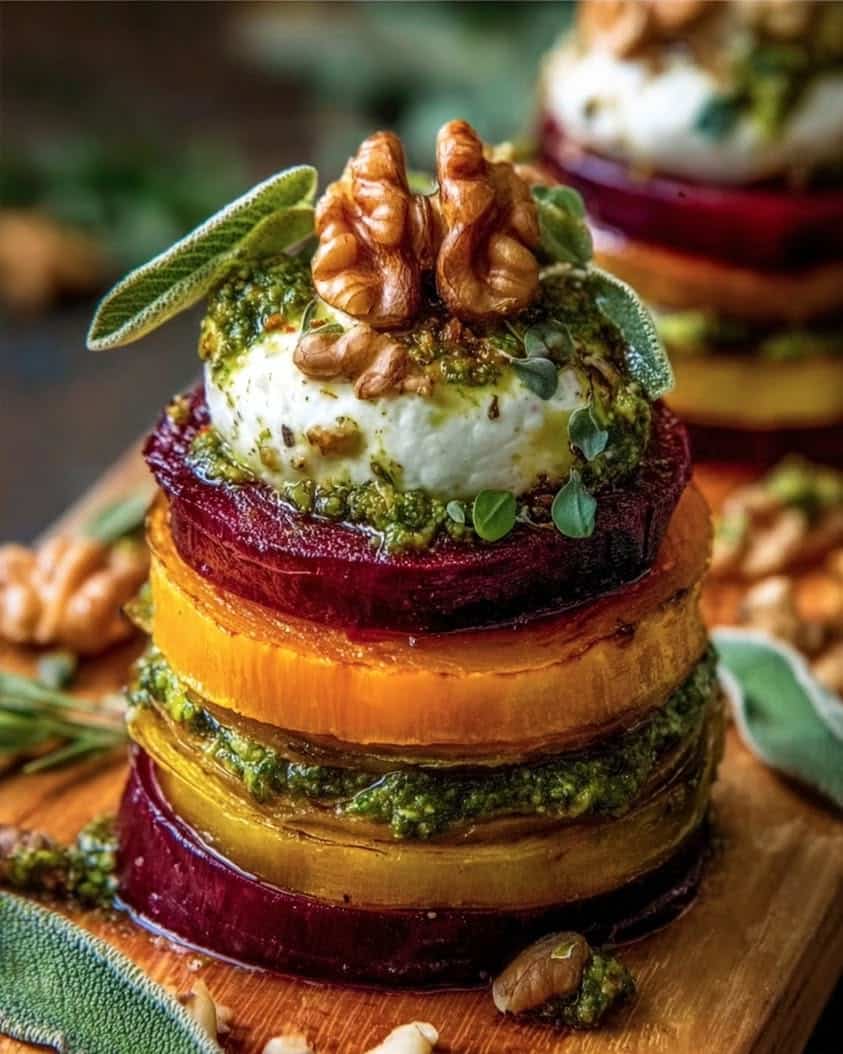
Golden Roasted Beet & Sweet Potato Stacks: An Elegant and Healthy Vegetarian Appetizer
These stunning Golden roasted beet & sweet potato stacks, layered with creamy whipped cheese & crunchy walnuts. A stunning, elegant, and healthy vegetarian appetizer! 🍠 will completely transform your perception of vegetable dishes. Consequently, they offer a perfect balance of earthy sweetness from the roasted roots and a luxurious creaminess from the whipped cheese. Moreover, the crunchy walnut topping provides a delightful textural contrast that elevates every single bite. This dish proves that healthy eating can be an incredibly sophisticated and visually impressive experience.
Imagine presenting these beautiful towers at your next dinner party. Your guests will marvel at the vibrant layers of deep crimson and golden orange. Furthermore, the aroma of roasted vegetables and fresh herbs will fill your kitchen with an irresistible warmth. Ultimately, this recipe delivers restaurant-quality presentation with surprisingly simple home kitchen techniques. It is a guaranteed conversation starter that showcases your culinary creativity while focusing on wholesome, nutritious ingredients.
Interestingly, this dish manages to feel both indulgent and light simultaneously. The natural sugars in the beets and sweet potatoes caramelize beautifully during roasting, creating a depth of flavor that needs minimal enhancement. Additionally, the creamy element comes from whipped cheese rather than heavy creams or sauces, keeping the dish feeling fresh and vibrant. This approach allows the natural flavors to shine through while providing a truly satisfying eating experience.
Quick Recipe Highlights
- Flavor Profile: These stacks deliver a harmonious balance of earthy sweetness from the roasted roots and tangy creaminess from the cheese. Furthermore, the walnuts add a nutty depth that complements the vegetables perfectly. Ultimately, a hint of fresh thyme ties all the elements together with an aromatic freshness.
- Texture: You will experience a wonderful contrast between the tender, almost melt-in-your-mouth roasted vegetable slices and the light, airy whipped cheese. Meanwhile, the crunchy walnut topping provides a satisfying crispness that prevents the dish from feeling one-dimensional. This combination creates a truly engaging mouthfeel.
- Aroma: As the beets and sweet potatoes roast, your kitchen will fill with the warm, sweet scent of caramelizing vegetables. Additionally, the fresh thyme releases its herbal fragrance, which blends beautifully with the nutty aroma of toasted walnuts. The overall effect is incredibly inviting and comforting.
- Visual Appeal: The dramatic color contrast between the deep red beets and vibrant orange sweet potatoes makes these stacks visually stunning. Moreover, the white whipped cheese layers and brown walnut topping create a beautiful color palette that looks professional and artistic. Presentation is undoubtedly one of this dish’s strongest assets.
- Skill Level Needed: This recipe is accessible for cooks of all experience levels, requiring only basic knife skills and oven knowledge. However, attention to detail during assembly will yield the most beautiful results. Essentially, patience and care matter more than advanced techniques here.
- Special Equipment: You will need a mandoline for achieving uniformly thin vegetable slices, which is crucial for even cooking and stable stacks. Additionally, a baking sheet, parchment paper, and a mixing bowl for the whipped cheese complete the essential tool list. Fortunately, most home kitchens already have these items.
Recipe Overview
- Difficulty Level: We classify this recipe as easy because it involves straightforward techniques like roasting and whipping. However, the assembly requires some patience to create stable, beautiful stacks. Consequently, while the cooking processes are simple, the presentation aspect raises the challenge slightly above basic level. Ultimately, even beginners can achieve impressive results with careful attention to the stacking instructions.
- Category: These stacks function beautifully as an elegant appetizer for dinner parties or holiday meals. Alternatively, they can serve as a light vegetarian main course when paired with a simple green salad. Their versatility makes them suitable for various dining occasions, from casual lunches to formal gatherings.
- Cuisine: This dish draws inspiration from modern American vegetarian cuisine with influences from Mediterranean flavor profiles. The use of roasted vegetables and whipped cheese reflects contemporary cooking trends that emphasize fresh, whole ingredients. Meanwhile, the walnut garnish adds a touch of rustic elegance found in many European culinary traditions.
- Cost: The ingredients are generally affordable, especially when beets and sweet potatoes are in season. The most significant cost comes from quality cheese, though you can adapt this based on your budget. Overall, this recipe provides excellent value considering the impressive presentation and restaurant-quality results.
- Season: This dish shines brightest during fall and winter when root vegetables are at their peak sweetness and most affordable. However, with proper storage, these ingredients are available year-round, making it a versatile option for any season. The warm, comforting nature of the roasted vegetables particularly suits cooler weather.
- Occasion: These stacks are perfect for holiday entertaining, dinner parties, or special family meals where you want to impress. They also work well for romantic dinners or as part of a brunch spread. Essentially, any occasion that calls for an elegant yet healthy vegetarian option is ideal for this recipe.
Why You’ll Love This Recipe
First and foremost, the taste and texture combination is truly exceptional. The sweet, earthy flavors of the roasted vegetables pair perfectly with the tangy, creamy cheese. Meanwhile, the crunchy walnuts provide a satisfying contrast that keeps each bite interesting. Additionally, the fresh herbs cut through the richness, creating a well-balanced flavor profile that delights the palate. This harmonious blend of sweet, creamy, crunchy, and herbal elements makes every mouthful a delightful experience.
From a convenience perspective, this recipe offers numerous advantages. You can prepare many components in advance, making final assembly quick and stress-free. Furthermore, the roasting process is largely hands-off, allowing you to attend to other tasks while the vegetables cook. The stacking itself becomes almost meditative and creative, transforming simple ingredients into edible art. This makes the recipe particularly valuable when entertaining, as you can minimize last-minute kitchen stress.
Nutritionally, these stacks pack an impressive health punch. Beets and sweet potatoes are rich in fiber, vitamins, and antioxidants, supporting overall health and digestion. The cheese provides protein and calcium, while walnuts contribute healthy fats and additional protein. Consequently, this dish satisfies hunger while delivering substantial nutritional benefits. It is a perfect example of how delicious food can also be genuinely good for you.
For social and entertaining value, these stacks are virtually unmatched among vegetarian appetizers. Their stunning appearance immediately signals to guests that you have invested care and creativity in their dining experience. Moreover, they serve as excellent conversation starters, with guests often curious about the construction and flavors. The individual portion presentation makes serving elegant and straightforward, eliminating the messiness of shared appetizer plates.
Finally, the cost-effectiveness and accessibility of this recipe make it a practical choice for regular cooking. The main ingredients are budget-friendly, especially when purchased in season. Additionally, most components have a long shelf life, reducing food waste concerns. Despite the elegant appearance, this dish requires no expensive specialty ingredients or equipment beyond a basic mandoline. This accessibility means you can create impressive culinary results without a significant financial investment.
Historical Background and Cultural Significance
The concept of layered vegetable dishes has roots in many culinary traditions worldwide. However, the specific combination of beets and sweet potatoes in stacked form is a relatively modern innovation. This recipe emerged from the contemporary vegetarian movement that sought to elevate plant-based ingredients to center stage. Chefs began experimenting with root vegetables as the main attraction rather than side dishes, leading to creative presentations like these stacks.
Culturally, this dish reflects several important food trends of the 21st century. It embodies the growing emphasis on plant-forward eating without sacrificing elegance or sophistication. Additionally, it demonstrates how global influences have enriched vegetarian cuisine, incorporating techniques and flavor combinations from various traditions. The stacks represent a departure from meat-centric fine dining while maintaining the visual appeal and complex flavors associated with upscale restaurant food.
The evolution of this recipe parallels broader changes in how we view vegetable preparation. Traditionally, root vegetables were often boiled or mashed, treatments that prioritized comfort over presentation. Modern cooking techniques, particularly precise roasting and creative assembly, have transformed these humble ingredients into culinary stars. This evolution reflects both technological advances in kitchen tools and shifting consumer expectations around vegetable dishes.
Regional variations of this concept have emerged as the basic idea has spread. Some versions incorporate different root vegetables like parsnips or carrots, while others experiment with various cheese types or garnishes. The Mediterranean influence often appears through the use of herbs like oregano or rosemary, while Middle Eastern versions might include spices like cumin or coriander. This adaptability demonstrates the recipe’s fundamental strength – its framework supports countless interpretations while maintaining its core appeal.
Ingredient Deep Dive
Beets have a remarkable history dating back to ancient times when they were cultivated primarily for their greens rather than their roots. Modern beets descend from sea beet native to Mediterranean regions, with the swollen root form developing through selective cultivation. Nutritionally, they are rich in folate, manganese, potassium, iron, and vitamin C. Their vibrant color comes from betalains, powerful antioxidants with anti-inflammatory properties. When selecting beets, choose firm, smooth specimens with vibrant greens still attached if possible. Store them unwashed in the refrigerator, where they will keep for several weeks.
Sweet potatoes have an equally fascinating history, originating in Central or South America over 5,000 years ago. Christopher Columbus brought them to Europe after his first voyage, and they subsequently spread worldwide through trade routes. They are packed with vitamin A (as beta-carotene), vitamin C, manganese, and several B vitamins. The orange-fleshed varieties commonly used in this recipe are particularly rich in antioxidants. Choose firm sweet potatoes without soft spots or signs of sprouting. Store them in a cool, dark, well-ventilated place – but not the refrigerator, as cold temperatures can negatively affect their texture and flavor.
The cheese component typically uses goat cheese or cream cheese, both offering distinct advantages. Goat cheese provides a tangy flavor that cuts through the sweetness of the vegetables, while cream cheese offers a milder, richer base. Nutritionally, cheese contributes protein, calcium, and healthy fats to the dish. When selecting cheese for whipping, choose high-quality options without added stabilizers, which can affect texture. Fresh cheeses should be stored in their original packaging in the refrigerator and used by their expiration dates. For vegan adaptations, numerous plant-based cream cheese alternatives work beautifully in this application.
Walnuts rank among the oldest tree foods cultivated by humans, with evidence of their consumption dating back thousands of years. They originated in Persia and spread along the Silk Road, becoming incorporated into cuisines across Europe and Asia. They are exceptionally rich in omega-3 fatty acids, particularly alpha-linolenic acid, along with antioxidants and several essential minerals. The polyphenols in walnuts help combat oxidative stress and inflammation in the body. Select walnuts that feel heavy for their size without any rattle when shaken, indicating freshness. Store them in an airtight container in the refrigerator or freezer to prevent their oils from turning rancid.
Common Mistakes to Avoid
- Cutting vegetable slices too thick results in uneven cooking and unstable stacks. Always use a mandoline for uniformly thin slices that roast evenly and create stable layers. Additionally, pat the slices dry after roasting to prevent slipping during assembly.
- Overcrowding the baking sheet leads to steamed rather than roasted vegetables. Arrange slices in a single layer with space between them to ensure proper caramelization. This step is crucial for developing the deep, sweet flavors that define this dish.
- Under-seasoning the vegetables before roasting diminishes their final flavor. Remember to season each layer generously with salt and pepper before roasting. The seasoning penetrates the vegetables during cooking, creating well-seasoned layers throughout the stacks.
- Skipping the cheese-whipping step creates dense, heavy layers that overwhelm the delicate vegetables. Properly whipped cheese should be light and spreadable, almost like a mousse. This texture contrast is essential to the dish’s success.
- Assembling stacks with vegetables that are too hot causes the cheese to melt and lose its structure. Always cool the roasted vegetables to room temperature before beginning assembly. This patience ensures clean, distinct layers in your final presentation.
- Using stale walnuts diminishes both flavor and nutritional value. Always taste walnuts before using to ensure they haven’t turned rancid. Toasting them just before assembly maximizes their flavor and crunch.
- Rushing the assembly process leads to unstable, messy-looking stacks. Take your time building each stack carefully, ensuring each layer is centered and evenly distributed. The extra minutes spent here dramatically improve the final presentation.
- Neglecting the garnish undermines the visual impact of the finished dish. The fresh herbs and walnut topping provide essential color contrast and flavor accents. Always include these finishing touches for a professional appearance.
Essential Techniques
Uniform slicing represents the most critical technique for successful stacks. Using a mandoline ensures every vegetable slice has identical thickness, which promotes even cooking and stable construction. When slicing, maintain consistent pressure and use the safety guard to protect your fingers. The ideal thickness is approximately 1/8 inch – thick enough to hold structure but thin enough to become tender during roasting. Properly sliced vegetables will stack neatly and create visually appealing, consistent layers in the final presentation.
Roasting technique transforms the raw vegetables into sweet, tender components perfect for stacking. The key is high enough heat to caramelize the natural sugars without burning the edges. Arrange slices in a single layer without overlapping to ensure they roast rather than steam. Rotating the baking sheet halfway through cooking promotes even browning. The vegetables are ready when tender enough to pierce easily with a fork but still hold their shape for stacking. Perfect roasting creates the foundation flavor upon which the entire dish builds.
Whipping the cheese creates the light, spreadable texture that makes these stacks so special. Start with room temperature cheese for easiest incorporation of air during whipping. Use a stand mixer or hand mixer rather than attempting to whip by hand. The goal is to incorporate enough air to lighten the texture while maintaining enough structure to hold its shape between vegetable layers. Properly whipped cheese should peak softly when lifted with a spatula. This technique transforms simple cheese into an elegant component worthy of the beautiful vegetables.
Strategic assembly is the final technique that brings all components together successfully. Begin with the largest vegetable slices at the base, gradually decreasing size as you build upward. Spread cheese thinly but completely to the edges of each vegetable layer. Apply gentle, even pressure as you build to create stable stacks without squeezing out the cheese. The most stable structures typically feature alternating vegetable types rather than grouping the same vegetable together. Mastering this technique ensures your beautiful creations remain intact from plate to mouth.
Pro Tips for Perfect Roasted Beet and Sweet Potato Stacks
Choose vegetables with similar diameters to create uniform, professional-looking stacks. This attention to selection at the grocery store pays dividends during assembly. Additionally, look for straight, regularly shaped specimens that will yield evenly round slices.
Use separate baking sheets for beets and sweet potatoes to prevent color bleeding. The beet juice will stain the sweet potatoes an unappealing color if they roast together. Alternatively, you can roast them on the same sheet if separated by a barrier.
Lightly oil the baking sheets rather than the vegetables themselves for more even coverage. This method uses less oil while ensuring every slice has just enough to promote caramelization without becoming greasy. A pastry brush helps distribute the oil evenly.
Let the roasted vegetables cool completely before attempting assembly. Warm vegetables will cause the cheese to melt and compromise the structural integrity of your stacks. Patience during this cooling period is essential for picture-perfect results.
Create a simple template for assembly using a round cutter slightly smaller than your vegetable slices. Place the template on your serving plate and build each stack inside it for perfect alignment. Carefully lift the template straight up once assembly is complete.
Garnish just before serving to maintain optimal texture contrasts. The walnuts will soften if exposed to the cheese for too long, diminishing their crunchy appeal. Similarly, fresh herbs wilt quickly when in contact with moist ingredients.
If making ahead, store components separately and assemble within two hours of serving. The vegetables can roast a day in advance, and the cheese can be whipped several hours ahead. This approach preserves the ideal textures of all components.
Variations and Adaptations
Regional variations can transform this basic concept into entirely different culinary experiences. Mediterranean versions might incorporate feta cheese, Kalamata olives, and oregano. Middle Eastern interpretations could feature tahini-whipped cheese, pomegranate seeds, and za’atar seasoning. Latin American variations might use queso fresco, cilantro, and a sprinkle of chili powder. These adaptations demonstrate how the basic stacking technique accommodates diverse flavor profiles while maintaining the dish’s structural integrity and visual appeal.
Seasonal adaptations allow this recipe to shine year-round with appropriate ingredient adjustments. Spring versions could incorporate thin asparagus spears or radish slices alongside the root vegetables. Summer adaptations might include grilled zucchini or eggplant rounds. Autumn variations could feature roasted pumpkin or parsnip slices. Winter versions might incorporate roasted Brussels sprout halves or kale chips as garnishes. This flexibility makes the recipe a versatile addition to your seasonal cooking repertoire.
Dietary modifications easily accommodate various eating preferences and restrictions. Vegan versions can utilize whipped tofu or cashew cream instead of dairy cheese. Gluten-free needs are naturally met by the ingredient list. Low-carb adaptations might use larger cheese layers and fewer vegetable slices. Paleo versions could substitute the cheese with whipped avocado or coconut cream. These modifications ensure the dish can delight guests with diverse dietary needs while maintaining its elegant presentation.
Flavor variations can dramatically change the character of the stacks without altering the basic technique. Incorporate roasted garlic or caramelized onions into the whipped cheese for depth. Add citrus zest to the cheese for brightness. Spice rubs on the vegetables before roasting can introduce warmth and complexity. Herb-infused oils brushed on the vegetables before roasting can add another layer of flavor. These simple adjustments allow you to customize the stacks to complement different menus or personal preferences.
Serving and Presentation Guide
Plating techniques significantly impact the visual appeal of your finished stacks. Choose neutral-colored plates that provide contrast against the vibrant vegetables – white, black, or dark gray surfaces work particularly well. Position each stack slightly off-center on the plate for dynamic composition. Wipe any smears or drips from the plate edges before serving for a clean, professional appearance. Consider the number of stacks per portion – typically two to three stacks per person works well for appetizer portions.
Garnishing ideas extend beyond the basic walnut and herb suggestion. Microgreens add a delicate, restaurant-quality touch. Edible flowers provide stunning color accents. Pomegranate arils offer jewel-like brightness and bursts of flavor. Toasted breadcrumbs provide additional texture contrast. Citrus zest sprinkled over the top adds visual interest and flavor enhancement. These garnishes should complement rather than overwhelm the stacks, adding the final touches that elevate the presentation from home cooking to professional standard.
Traditional accompaniments might include simple green salads with vinaigrette dressings that cut through the richness of the stacks. Roasted nuts or seeds scattered around the plate reinforce the nutty elements within the stacks. Crusty bread or crackers provide textural contrast and help guests enjoy every last bit of cheese. These accompaniments should support rather than compete with the main attraction, allowing the stacks to remain the focal point of the plate.
Modern serving suggestions might include drizzles of reduced balsamic glaze or herb-infused oils around the base of the stacks. Deconstructed versions arranged artfully on long rectangular plates offer contemporary appeal. Family-style presentation with stacks arranged on a large platter encourages sharing and conversation. Miniature versions using smaller vegetable slices work beautifully for cocktail parties or tasting menus. These approaches adapt the basic concept to different dining contexts while maintaining its essential appeal.
Wine and Beverage Pairing
Wine pairings should complement both the earthy sweetness of the vegetables and the creamy tang of the cheese. Crisp white wines like Sauvignon Blanc or Pinot Grigio cut through the richness beautifully. Light-bodied reds such as Pinot Noir provide enough structure to stand up to the earthy flavors without overwhelming the dish. Rosé offers a versatile option that bridges both worlds, particularly dry Provençal styles. Sparkling wines like Prosecco or Cava provide cleansing bubbles that refresh the palate between bites. The goal is balance – beverages should enhance rather than dominate the dining experience.
Non-alcoholic alternatives can be equally sophisticated and complementary. Sparkling water with citrus slices provides simple refreshment. Herbal teas like peppermint or chamomile served chilled offer interesting flavor parallels. Craft sodas with natural ingredients provide sweetness without overwhelming the savory elements. Vegetable-based juices like carrot-ginger or beet-apple create thematic connections to the dish. These options ensure all guests can enjoy thoughtfully paired beverages regardless of their alcohol preferences.
Coffee and tea pairings work surprisingly well with these stacks, particularly for brunch or lunch servings. Light roast coffees with bright acidity complement the sweet vegetables without clashing. Earthy teas like pu-erh or hojicha mirror the root vegetable flavors. Herbal teas with mint or lemon verbena provide cleansing contrast. Chai tea’s warming spices create an interesting flavor dialogue with the roasted elements. These pairings demonstrate how beverage choices can extend beyond conventional wine matches to create unique dining experiences.
Storage and Shelf Life
Storage methods depend on whether you’re storing components separately or assembled stacks. Unassembled components keep well for several days – roasted vegetables in airtight containers in the refrigerator, whipped cheese in a separate covered container. Assembled stacks should be consumed within a few hours as the vegetables will eventually release moisture that compromises the cheese texture and stack stability. Always store in the refrigerator regardless of component state, as the dairy element requires cold storage for safety.
Temperature requirements are straightforward – constant refrigeration at or below 40°F ensures food safety and quality preservation. Never leave assembled stacks at room temperature for more than two hours, as this creates risk of bacterial growth. If transporting for parties, use insulated containers with cold packs to maintain proper temperature. When reheating any components, ensure they reach proper internal temperature while being careful not to compromise texture.
Container recommendations include glass or BPA-free plastic containers with tight-fitting lids for component storage. For assembled stacks, use containers that prevent crushing – sometimes placing parchment between stacks helps maintain their shape. Always label containers with dates to track freshness. Clear containers allow easy identification of contents without opening, which helps maintain consistent temperature during storage.
Make Ahead Strategies
Prep timeline can extend over several days when planned strategically. Vegetables can be roasted up to three days in advance and stored properly in the refrigerator. Cheese can be whipped one day ahead and kept covered. Walnuts can be toasted several days in advance and stored at room temperature. Final assembly should happen within a few hours of serving for optimal texture and stability. This staggered approach minimizes last-minute tasks when entertaining.
Storage between steps requires attention to proper technique. Cool roasted vegetables completely before refrigerating to prevent condensation that creates sogginess. Place parchment between vegetable layers when storing to prevent sticking. Cover whipped cheese with plastic wrap pressed directly against the surface to prevent skin formation. Store toasted walnuts in airtight containers at room temperature to maintain crispness. These simple precautions preserve quality during the make-ahead period.
Quality impact assessment helps determine which components benefit most from advance preparation. Roasted vegetables actually develop deeper flavor when made ahead, making them ideal candidates. Whipped cheese maintains its texture well when properly stored. Herb garnishes should be prepared close to serving time for maximum freshness and visual appeal. Understanding these variables allows you to prioritize your prep schedule effectively.
Scaling Instructions
Halving the recipe works beautifully for smaller gatherings or intimate dinners. Simply reduce all ingredients by half and use a smaller baking sheet for roasting. Assembly may proceed exactly as with the full recipe, though you’ll create fewer stacks. Timing remains largely unchanged since roasting time depends on slice thickness rather than quantity. This adaptation makes the recipe accessible for couples or small families without generating excessive leftovers.
Doubling or tripling requires some adjustments to ensure consistent results. Use multiple baking sheets rather than overcrowding, and rotate them in the oven for even cooking. Consider roasting in batches if oven space is limited. When whipping larger quantities of cheese, ensure your mixer bowl isn’t overfilled for proper aeration. Assembly may take significantly longer, so enlist help or build in extra time. These considerations prevent quality compromises when scaling up for larger events.
Equipment adjustments become necessary when significantly increasing quantity. Additional baking sheets and mixing bowls may be needed. For very large batches, consider using commercial sheet pans that maximize oven capacity. If assembling dozens of stacks, create an assembly line system with all components within easy reach. These logistical considerations streamline the process when cooking for crowds.
Nutritional Deep Dive
Macro breakdown reveals a well-balanced nutritional profile ideal for health-conscious eating. The complex carbohydrates from the vegetables provide sustained energy release. The cheese contributes protein for satiety and muscle maintenance. The walnuts add healthy fats that support nutrient absorption and heart health. This combination creates a satisfying dish that fuels the body effectively without causing energy spikes and crashes. The fiber content further enhances the nutritional value by supporting digestive health.
Micronutrient analysis highlights the vitamin and mineral density of this dish. Beets provide folate crucial for cell function and tissue growth. Sweet potatoes deliver massive amounts of vitamin A in the form of beta-carotene, essential for vision and immune function. Cheese contributes calcium for bone health. Walnuts provide manganese for antioxidant defense. Together, these ingredients create a micronutrient powerhouse that supports overall wellness through diverse nutritional contributions.
Health benefits extend beyond basic nutrition to include functional advantages. The anti-inflammatory compounds in both beets and walnuts may help reduce chronic disease risk. The fiber supports healthy cholesterol levels and blood sugar regulation. The combination of nutrients supports cardiovascular health through multiple mechanisms. These functional benefits make the stacks not just delicious but genuinely therapeutic in the context of a balanced diet.
Dietary Adaptations
Gluten-free needs are naturally met by the original recipe, which contains no gluten-containing ingredients. However, always check labels on pre-packaged items like cheese, as some manufacturers use gluten-based stabilizers. When serving gluten-free guests, ensure all preparation surfaces and utensils are thoroughly cleaned to prevent cross-contamination. This adaptation is one of the simplest, requiring no ingredient substitutions or technique modifications.
Dairy-free adaptations replace the whipped cheese with plant-based alternatives. Numerous commercial vegan cream cheeses work well, or you can create your own from cashews or tofu. The whipping technique remains identical regardless of the base ingredient. Nutritional yeast can add cheesy flavor if desired. These substitutions create stacks that are virtually identical in appearance and texture to the original version while accommodating dairy restrictions.
Vegan versions build on dairy-free adaptations while ensuring all components align with vegan principles. Use plant-based cheese alternatives and verify that any garnishes meet vegan standards. The roasting process remains unchanged, as vegetables roasted with oil are naturally vegan. These adaptations make the recipe inclusive for guests following plant-based diets while maintaining its elegant presentation and delicious flavor profile.
Troubleshooting Guide
Texture issues commonly involve vegetables that are either too firm or too soft. If vegetables aren’t tender enough, they likely needed longer roasting time at proper temperature. If they’re mushy, they may have been sliced too thin or roasted too long. The ideal texture should yield easily to a fork while maintaining enough structure for stacking. If vegetables release excessive liquid after roasting, they may have been under-salted before cooking.
Flavor balance problems typically stem from under-seasoning or poor ingredient quality. If the stacks taste bland, likely not enough salt was used during the roasting process. If flavors seem flat, the vegetables may have been past their prime or improperly stored. If the cheese overpowers the vegetables, either too much was used or the vegetable layers need more seasoning. Proper technique at each step ensures harmonious flavor development.
Temperature problems usually involve components that are either too hot or too cold during assembly. If cheese melts and runs, the vegetables were too warm during stacking. If stacks feel unpleasantly cold when served, they may have been refrigerated too long after assembly. The ideal serving temperature is cool room temperature, which allows all flavors and textures to express themselves fully.
Recipe Success Stories
Community feedback consistently highlights how this recipe impresses guests despite its straightforward preparation. Many home cooks report receiving compliments that far exceed their investment of time and effort. Several have shared stories of guests assuming the stacks came from professional caterers rather than their home kitchens. This disconnect between perceived complexity and actual simplicity makes the recipe particularly rewarding for cooks looking to expand their entertaining repertoire.
Variation successes demonstrate the recipe’s adaptability to different tastes and ingredient availability. One cook substituted feta for the goat cheese and added oregano for a Greek-inspired version that became a family favorite. Another used purple sweet potatoes alongside golden beets for a dramatic color reversal that looked stunning. These adaptations show how the basic template supports creative interpretation while maintaining its essential appeal.
Photography tips from successful makers emphasize natural lighting and contrasting backgrounds. Shooting from slightly above showcases the beautiful layers most effectively. Including a partially eaten stack in the frame demonstrates the interior construction. Many successful food photographers recommend using a neutral-colored plate and simple garnishes that don’t distract from the main subject. These visual strategies help capture the dish’s elegance for sharing on social media or recipe sites.
Frequently Asked Questions
Can I use different vegetables in these stacks? Absolutely, the technique works with many firm vegetables that slice and roast well. Try using parsnips, carrots, potatoes, or even firm fruits like apples or pears. The key is selecting ingredients that maintain their structure during roasting and provide interesting flavor and color contrasts when layered.
How far in advance can I assemble the stacks? We recommend assembling within 2-3 hours of serving for optimal texture. The vegetables will eventually release moisture that can make the stacks unstable and the cheese watery. If you must assemble further ahead, pat the roasted vegetables thoroughly before stacking and refrigerate until serving.
Can I make these stacks vegan? Definitely, simply substitute the dairy cheese with a plant-based alternative. Many commercial vegan cream cheeses whip beautifully, or you can make your own from soaked cashews. The other components are naturally plant-based, making this an easy adaptation for vegan diets.
What if I don’t have a mandoline? While a mandoline ensures perfectly uniform slices, you can use a very sharp knife and careful cutting. Take your time and aim for slices as consistent as possible. The stacks may be slightly less uniform but will taste equally delicious.
Can I serve these stacks warm? The traditional presentation is at room temperature, but warm stacks can be delicious. If serving warm, assemble just before serving as the heat will cause the cheese to soften significantly. The flavor profile changes interestingly when served warm versus room temperature.
How do I prevent the stacks from falling over? Ensure your vegetable slices are completely dry after roasting. Build on a stable surface, and consider using a round cutter as a guide during assembly. Chilling for 15-20 minutes after assembly can help set the stacks before serving.
Can I freeze assembled stacks? We don’t recommend freezing assembled stacks as the texture of both vegetables and cheese will suffer significantly. However, you can freeze the roasted vegetable slices separately and thaw before assembling with freshly whipped cheese.
What’s the best way to reheat leftover stacks? Leftover assembled stacks don’t reheat well due to the cheese component. Instead, disassemble and reheat the vegetable components separately in an oven or toaster oven, then reassemble with fresh cheese.
Can I use pre-cooked beets from the grocery store? While convenient, pre-cooked beets often have a different texture and moisture content than freshly roasted. They can work in a pinch, but for best results, we recommend roasting fresh beets specifically for this recipe.
What other nuts work besides walnuts? Pecans, almonds, pistachios, or hazelnuts all make excellent substitutes. Toast them lightly to enhance their flavor, and chop to a similar size as the walnut pieces for consistent texture and appearance.
Additional Resources
Related recipes that complement these stacks include simple green salads with bright vinaigrettes that cut through the richness. Roasted vegetable soups make excellent first courses that thematically connect to the stacks. Grain-based salads featuring quinoa or farro can turn the stacks into a more substantial meal. Understanding how to pair these stacks with other dishes helps create well-balanced menus for various occasions.
Technique guides for perfect vegetable roasting provide foundational skills that extend beyond this specific recipe. Learning to whip cheeses and other dairy products opens possibilities for numerous other dishes. Knife skills tutorials help improve efficiency and safety in the kitchen. These fundamental techniques represent valuable culinary investments that will enhance your cooking across many recipes and cuisines.
Ingredient information resources help you select the best produce for any recipe. Understanding seasonal availability ensures you’re cooking with ingredients at their peak flavor and value. Learning proper storage techniques extends the life of your ingredients and reduces food waste. These knowledge areas contribute to becoming a more informed, efficient cook regardless of what you’re preparing.
PrintRoasted Beet & Sweet Potato Stacks with Whipped Cheese & Walnut
Description
A vibrant and elegant dish featuring layers of roasted beets and sweet potatoes, topped with creamy whipped cheese and crunchy walnuts.
Ingredients
For the Crust:
- 2 medium beets, peeled and sliced into 1/4-inch rounds
- 2 medium sweet potatoes, peeled and sliced into 1/4-inch rounds
- 2 tablespoons olive oil
- 1 teaspoon salt
- 1/2 teaspoon black pepper
- 1 cup whipped cream cheese
- 1/4 cup chopped walnuts
- 1 tablespoon fresh thyme leaves
- 1 teaspoon honey
Instructions
1. Prepare the Crust:
- Preheat oven to 400°F (200°C). Toss beet and sweet potato slices with olive oil, salt, and pepper.
- Arrange slices in a single layer on baking sheets. Roast for 20-25 minutes, until tender and lightly browned.
- While vegetables roast, whip cream cheese until smooth and spreadable.
- Layer roasted beet and sweet potato slices into stacks on serving plates.
- Top each stack with a dollop of whipped cream cheese, a sprinkle of walnuts, a drizzle of honey, and fresh thyme.
Notes
You can customize the seasonings to taste.

I’m Shaykee—born in Morocco, seasoned across continents. From airplane galleys to home kitchens, I share the flavors and stories that shaped my journey.
The recipe is very difficult to follow as measurements are inconsistent. One measurement in the advice section, another in the recipe (1/8 inch vs 1/4 inch), and others are completely lacking (e.g the thyme). It does not take 20 minutes to prepare, the veg does not roast as described after 25 minutes. The photograph is very appealing, though. I can not recommend this having tried it and laboured my way through it once. It seems like a not well thought through recipe.