
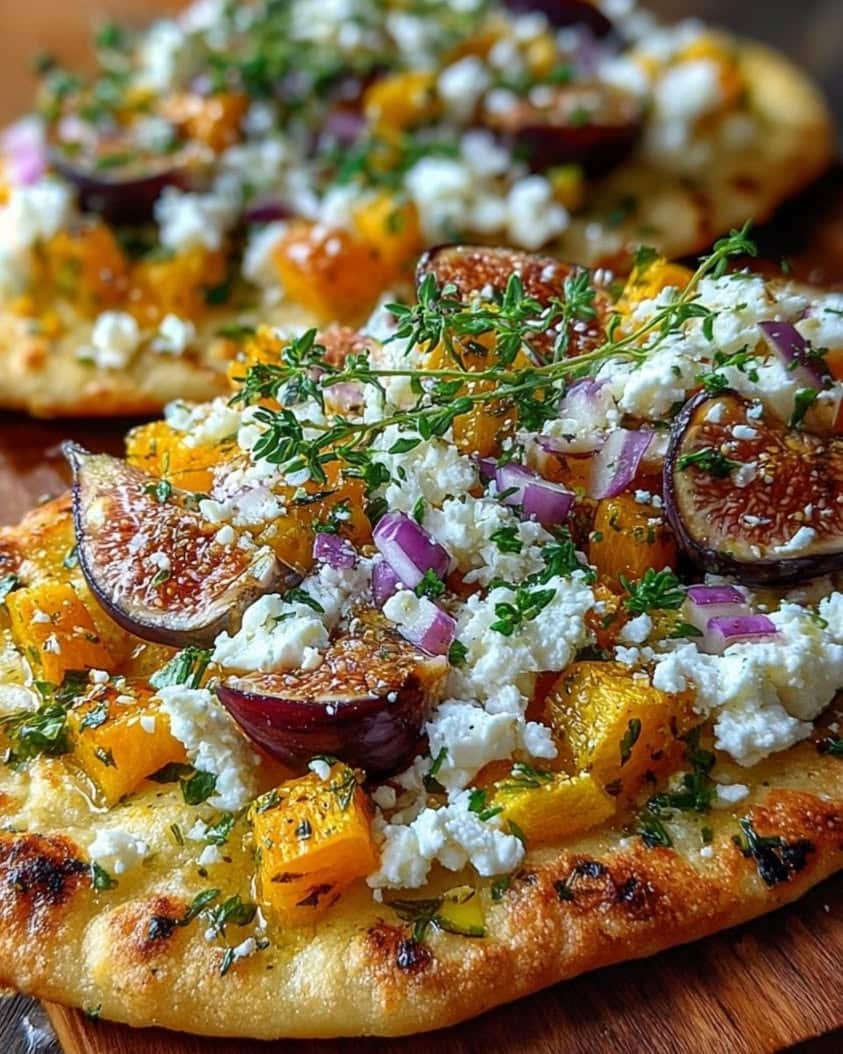
Roasted Butternut Squash & Fig Flatbread: A Sweet and Savory Masterpiece
This roasted butternut squash and fig flatbread recipe is a stunning culinary creation that masterfully balances sweet and savory notes. Imagine a crisp, golden flatbread base generously topped with creamy roasted butternut squash, luscious sweet figs, and tangy crumbled feta cheese. The final flourish is a delicate drizzle of aromatic thyme honey that ties all the elements together into a harmonious and unforgettable flavor experience. This dish is perfect for anyone seeking an elegant yet approachable appetizer or light meal.
Furthermore, this butternut squash flatbread offers a wonderful textural journey. You get the satisfying crunch of the baked flatbread crust contrasting with the soft, caramelized squash and the jammy interior of the figs. Each bite delivers a complex symphony of flavors, from the earthy sweetness of the squash to the bright, herbal notes of the thyme-infused honey. This recipe is surprisingly simple to prepare, making it an excellent choice for both weeknight dinners and impressive entertaining.
Ultimately, this fig appetizer showcases how a few quality ingredients can transform into something truly special. The process of roasting the butternut squash deepens its natural sweetness, which pairs exquisitely with the salty feta and the fragrant honey. This easy elegant flatbread is a testament to the beauty of simple, seasonal cooking. It is a versatile dish that will quickly become a favorite in your recipe rotation, especially during the autumn months when these ingredients are at their peak.
Quick Recipe Highlights
- Flavor Profile: This flatbread recipe delivers a perfect sweet and savory balance. The natural sweetness of the roasted butternut squash and figs is beautifully offset by the salty, tangy feta cheese. Additionally, the thyme honey adds a subtle herbal complexity that elevates the entire dish.
- Texture: You will enjoy a wonderful contrast of textures in every bite. The flatbread provides a crisp and chewy base, while the roasted squash is tender and creamy. Meanwhile, the figs become soft and jammy, and the feta offers delightful crumbly bits.
- Aroma: As this butternut squash flatbread bakes, your kitchen will fill with an incredible fragrance. The scent of roasting squash and caramelizing figs blends with the earthy aroma of thyme and the sweet scent of honey, creating an irresistible olfactory preview.
- Visual Appeal: This fig appetizer is a feast for the eyes with its vibrant color palette. The orange squash, deep purple figs, white feta, and golden honey create a stunning presentation that looks as good as it tastes, making it an easy elegant centerpiece.
- Skill Level Needed: This is an accessible recipe perfect for cooks of all levels. The steps are straightforward, involving simple roasting and assembling. Consequently, even beginner cooks can achieve a professional-looking and tasting result with minimal effort.
- Special Equipment: You only need basic kitchen tools. A baking sheet, a sharp knife for prepping the squash, and a small saucepan for warming the honey are the primary items required. Therefore, you can create this gourmet flatbread recipe without any specialized equipment.
Recipe Overview
- Difficulty Level: This roasted butternut squash and fig flatbread is classified as easy because it uses pre-made flatbread as a base, eliminating the need for dough preparation. The cooking techniques involved are fundamental, primarily chopping and roasting. Furthermore, the assembly is intuitive and does not require advanced culinary skills, making it a very approachable sweet and savory dish for any home cook.
- Category: This versatile dish fits into multiple meal categories. It works perfectly as a shareable appetizer for a party or a light lunch alongside a simple green salad. Moreover, it can be served as a sophisticated main course for a vegetarian dinner or even cut into small pieces for a passed hors d’oeuvre.
- Cuisine: This butternut squash flatbread draws inspiration from Mediterranean and Middle Eastern culinary traditions, where flatbreads are a staple and the combination of fruit, cheese, and honey is common. It is a modern fusion recipe that celebrates global flavors, focusing on fresh, high-quality ingredients and balanced tastes.
- Cost: The cost for this fig appetizer is moderately affordable, depending on the seasonality of the figs and squash. Using pre-made flatbread keeps the cost and effort low. Overall, it is a cost-effective way to create a restaurant-quality dish at home that feels luxurious without a hefty price tag.
- Season: This recipe is ideally suited for the late summer and fall seasons. This is when butternut squash is harvested and fresh figs are most abundant and flavorful. However, you can adapt it for other seasons by using stored squash and dried figs, though the flavor profile will be slightly different.
- Occasion: This easy elegant flatbread is perfect for a wide range of occasions. It is an excellent choice for casual family dinners, festive holiday gatherings, romantic date nights, or potluck parties. Its impressive appearance and crowd-pleasing flavors make it suitable for both everyday meals and special celebrations.
Why You’ll Love This Roasted Butternut Squash and Fig Flatbread
You will absolutely adore the taste and texture appeal of this roasted butternut squash and fig flatbread. The flavor profile is an exquisite dance between sweet and savory elements. Creamy, caramelized squash meets the jammy sweetness of fresh figs, while the salty tang of feta cheese provides a perfect counterpoint. Finally, the aromatic thyme honey drizzle weaves all these flavors together, creating a complex and satisfying experience in every single bite. The contrast between the crisp flatbread, soft squash, and creamy cheese is simply irresistible.
The convenience and preparation benefits of this butternut squash flatbread are another major reason to love it. This recipe is deceptively simple to execute, often relying on pre-made flatbread or pizza dough to save time. Most of the active work involves chopping and roasting the squash, which is a very hands-off process. Consequently, you can prepare a gourmet-tasting meal without spending hours in the kitchen, making it a perfect solution for busy weeknights or last-minute entertaining.
From a health perspective, this fig appetizer offers significant nutritional advantages. Butternut squash is packed with vitamins A and C, fiber, and antioxidants. Figs provide a natural source of sweetness along with dietary fiber and minerals like potassium. When you use a whole-wheat flatbread and moderate the cheese, this dish becomes a well-rounded option. It is a fantastic way to incorporate more fruits and vegetables into your diet in a delicious and appealing format.
The social and entertaining value of this easy elegant flatbread cannot be overstated. It is a visually stunning dish that always garners compliments and looks beautiful on a table. Its shareable nature makes it ideal for gatherings, encouraging conversation and interaction. Serving this sweet and savory creation signals to your guests that you have put thought and care into the meal, elevating the entire dining experience and making any occasion feel more special.
Finally, the cost-effectiveness and accessibility of this flatbread recipe are key benefits. While it tastes luxurious, the ingredients are generally affordable and easy to find at most grocery stores. Butternut squash is inexpensive, especially in season, and pre-made flatbread is a budget-friendly base. This recipe demonstrates that you do not need expensive or exotic ingredients to create a memorable and sophisticated dish that delights the senses and satisfies the appetite.
Historical Background and Cultural Significance
The origin story of flatbread is one of the oldest in culinary history, dating back thousands of years across numerous civilizations. From the ancient Egyptians to the cultures of the Indus Valley, simple mixtures of flour and water cooked on hot surfaces were a dietary staple. The modern interpretation, like this roasted butternut squash and fig flatbread, is a direct descendant of these ancient practices. However, the specific combination of squash, fruit, and cheese reflects a more contemporary, fusion-oriented approach to cooking that prioritizes flavor pairing and seasonal ingredients.
The cultural importance of flatbread is profound and global. In many cultures, from Italy to the Middle East to South Asia, flatbread is more than just food; it is a utensil, a plate, and a symbol of hospitality. Adding toppings to flatbread is a natural evolution, leading to dishes like pizza, lahmacun, and manakish. Our butternut squash flatbread sits within this tradition, using the bread as a canvas for a creative and delicious topping combination that speaks to a modern, health-conscious palate.
The evolution of this specific recipe is a testament to contemporary food trends that celebrate sweet and savory combinations. The pairing of fruit with cheese and herbs has long been a feature of cheeseboards and salads. Transferring these flavors to a warm, crispy flatbread is a relatively recent innovation that maximizes texture and aroma. This fig appetizer represents a shift towards casual yet sophisticated eating, where restaurant-quality flavors are accessible in the home kitchen.
Regional variations of topped flatbread are endless. For instance, an Italian version might use rosemary and ricotta, while a Middle Eastern inspiration could include za’atar and pomegranate molasses. This particular recipe with butternut squash and thyme honey draws loosely from Mediterranean and North American fall harvest traditions. It is a versatile template that encourages customization based on local produce and personal taste, ensuring its place as a adaptable and beloved dish in many households.
Ingredient Deep Dive
Butternut squash is a winter squash native to the Americas and has been cultivated for thousands of years. It was a staple food for many Indigenous peoples long before European colonization. Nutritionally, it is a powerhouse, exceptionally high in Vitamin A, Vitamin C, and fiber. When selecting a squash, look for one that feels heavy for its size with a hard, matte rind free of soft spots. Store it in a cool, dark place for up to a month. For this flatbread recipe, you can substitute with other sweet squash varieties like acorn or delicata, or even sweet potato for a similar texture and sweetness.
Fresh figs have a rich history, revered in ancient Greece and Rome and spread throughout the Mediterranean. They are one of the oldest cultivated fruits. They offer a good source of dietary fiber, calcium, and antioxidants. Choose figs that are plump and tender to the touch but not mushy, with an intact stem. They are highly perishable, so store them in the refrigerator for just a few days. If fresh figs are unavailable for this appetizer, you can rehydrate dried figs in warm water or use a high-quality fig jam as an alternative topping.
Feta cheese originated in Greece and is a protected designation of origin product, meaning true feta must be made in specific regions of Greece from sheep’s milk or a sheep and goat milk blend. It is a brined cheese known for its tangy, salty flavor and crumbly texture. Feta is a good source of calcium and protein. For this recipe, ensure you buy a block of feta in brine for the best flavor and texture, crumbling it yourself. If you need a substitute, other salty, crumbly cheeses like goat cheese or ricotta salata would work well.
Flatbread serves as the foundation for this dish. While you can use store-bought naan, pita, or pizza crust for convenience, making your own is also an option. The flatbread provides the crucial crispy and chewy base that holds the toppings. For a healthier twist, opt for a whole-wheat or multigrain flatbread to add extra fiber and nutrients. The choice of base can significantly alter the final dish’s character, from a soft and pillowy naan to a thin and cracker-like crust.
Thyme honey is the simple yet transformative element that elevates this from a good flatbread to a great one. Honey itself has been used as a sweetener for millennia. Thyme honey, in particular, is a monofloral honey from bees that pollinate thyme flowers, possessing a distinct herbal note. To make the thyme honey for this recipe, gently warm plain honey with a few sprigs of fresh thyme to infuse the flavor. This infused honey adds a layer of aromatic complexity that perfectly bridges the sweet squash and salty feta, creating a harmonious sweet and savory finish.
Common Mistakes to Avoid
- Using Soggy Squash: A common error is not roasting the butternut squash long enough or crowding it on the pan. Consequently, the squash steams instead of roasting, resulting in a watery texture that will make the flatbread soggy. Always roast squash in a single layer to ensure it caramelizes properly.
- Overloading the Flatbread: It is tempting to pile on the toppings, but this leads to a soggy, undercooked base. Less is more with this easy elegant flatbread. Apply a thin, even layer of squash and a modest scattering of figs and feta to allow the crust to crisp up.
- Adding Honey Before Baking: Drizzling the thyme honey before the flatbread goes into the oven is a mistake. The high heat can cause the honey to burn and become bitter. Instead, always add the honey drizzle after the flatbread has been baked and is just out of the oven.
- Neglecting to Preheat the Baking Sheet: For an extra-crispy crust, place your empty baking sheet in the oven while it preheats. Then, carefully assemble the flatbread on the hot pan. This technique gives the bottom of the flatbread a head start on crisping, preventing a doughy center.
- Using Cold Ingredients: Bringing your ingredients to room temperature before assembling the flatbread helps it cook more evenly. Cold squash and cheese straight from the fridge can lower the temperature of the flatbread, affecting the overall cooking time and texture.
- Choosing the Wrong Figs: Using under-ripe or over-ripe figs can impact the final flavor. Under-ripe figs will not provide the necessary sweetness, while over-ripe figs can be too mushy and release excessive moisture. Select figs that are perfectly ripe for the best results in this fig appetizer.
- Skipping the Oil on the Squash: Tossing the butternut squash cubes with oil is crucial for roasting. The oil helps conduct heat, promotes caramelization, and prevents the squash from drying out. Without it, the squash may taste bland and have a less appealing texture.
- Not Tasting the Feta: Feta cheeses can vary dramatically in saltiness. Always taste your feta before adding it to the flatbread. If it is exceptionally salty, you may want to use a lighter hand to avoid overpowering the other delicate flavors in this sweet and savory dish.
Essential Techniques
Roasting the butternut squash is the most critical technique for this flatbread recipe. Proper roasting transforms the hard, raw squash into a tender, sweet, and caramelized topping. The key is to cut the squash into uniform, small cubes to ensure even cooking. Toss them thoroughly with oil and seasonings, then spread them in a single layer on a baking sheet. Crowding the pan will cause the squash to steam, so using two sheets if necessary is important. You will know the squash is perfectly roasted when the edges are browned and the cubes are easily pierced with a fork.
Assembling the flatbread correctly is vital for the final texture. Start with a par-baked or fully baked flatbread base to ensure it can support the toppings without becoming soggy. Spread the roasted squash in a thin, even layer, leaving a small border around the edges for the crust. Scatter the figs and feta strategically, ensuring each slice gets a bit of everything. The goal is a balanced distribution of flavors and textures without weighing down the base, which is essential for an easy elegant presentation and eating experience.
Creating the thyme honey infusion is a simple technique with a significant impact. Gently warming the honey with fresh thyme sprigs allows the herbal essential oils to dissolve into the honey, imparting a subtle, aromatic flavor. Do not boil the honey, as high heat can degrade its quality and flavor. Simply warm it over low heat for 5-10 minutes, then let it steep off the heat. This infused honey is the finishing touch that elevates the entire dish, adding a layer of complexity that makes this butternut squash flatbread truly special.
Pro Tips for Perfect Roasted Butternut Squash and Fig Flatbread
For an extra-crispy crust, pre-bake your flatbread for 3-5 minutes before adding any toppings. This step creates a protective barrier that helps prevent the squash moisture from seeping into the bread. Consequently, you achieve a crispier base that can support the juicy toppings without becoming soggy in the center.
Add a layer of cheese directly onto the flatbread before the other toppings. Sprinkle a light layer of mozzarella or a creamy cheese spread on the par-baked crust. This layer acts as a moisture barrier and adds a wonderful creamy element that enhances the overall flavor profile of your sweet and savory creation.
Let the roasted squash cool slightly before assembling the flatbread. Adding piping hot squash directly to the base can start to cook the dough prematurely and release steam, which leads to sogginess. Allowing it to cool for a few minutes ensures a better texture for the final baked product.
Use a pizza stone or steel if you have one. Preheat the stone in the oven for at least 30 minutes before baking your flatbread. The intense, direct heat from the stone will give you a fantastically crisp and bubbly crust that rivals any professional pizza oven, elevating this easy elegant dish even further.
Finish with fresh herbs after baking. While the thyme honey provides herbal notes, sprinkling a few fresh thyme leaves or even some arugula over the hot flatbread after it comes out of the oven adds a pop of color and a fresh, bright flavor that contrasts beautifully with the rich toppings.
Experiment with different nuts for added crunch. Toasting pine nuts, walnuts, or pecans and scattering them over the finished flatbread introduces a wonderful textural element. The nuttiness also complements the squash and figs perfectly, adding another dimension to this already complex fig appetizer.
Variations and Adaptations
For regional variations, you can take this flatbread recipe in many exciting directions. A Mediterranean twist could include kalamata olives, red onion, and a sprinkle of oregano. A Middle Eastern version might feature a base of labneh instead of squash, topped with za’atar and pomegranate seeds. For a taste of the American South, consider adding candied pecans and a drizzle of bourbon-infused honey. These adaptations show the incredible versatility of the flatbread format while maintaining the core appeal of a balanced, flavorful topping.
Seasonal adaptations are straightforward and recommended. In the spring, substitute the squash with roasted asparagus and peas, using a lemon-infused honey. During summer, ripe peaches or nectarines can replace the figs, paired with fresh basil. In the heart of winter, roasted mushrooms and caramelized onions make a wonderful savory alternative, finished with a truffle honey. This approach allows you to enjoy a version of this easy elegant flatbread all year round, using the best produce each season has to offer.
Dietary modifications are easily accommodated. For a gluten-free version, use your favorite gluten-free flatbread or pizza crust. To make it vegan, omit the feta and use a vegan cheese alternative or a creamy white bean spread, and ensure your honey is replaced with maple syrup or agave. For a lower-carb option, you can serve the toppings on a bed of mixed greens instead of flatbread, turning it into a hearty salad. These modifications ensure everyone can enjoy this sweet and savory combination.
Serving and Presentation Guide
Plating techniques for this butternut squash flatbread are key to its visual impact. After baking, transfer the flatbread to a large wooden cutting board or a sleek slate platter for a rustic yet sophisticated presentation. Use a pizza wheel or a large, sharp chef’s knife to slice it into portions. For a family-style meal, place the whole flatbread in the center of the table and allow guests to serve themselves, fostering a communal and interactive dining experience.
Garnishing ideas can elevate the dish further. After adding the thyme honey drizzle, sprinkle with fresh, delicate thyme leaves or microgreens for a touch of green. A light dusting of smoked paprika or sumac adds a pop of color and a subtle flavor nuance. For added texture and richness, a scattering of toasted pine nuts or walnuts just before serving provides a delightful crunch that contrasts with the soft toppings.
Traditional accompaniments for a flatbread like this include a simple, crisp green salad with a light vinaigrette to cut through the richness. A bowl of marinated olives or a selection of pickled vegetables also pairs wonderfully. For a more substantial meal, consider serving it with a creamy soup, such as tomato basil or a chilled gazpacho in the summer. These sides complement the flavors without competing with the star of the show.
Wine and Beverage Pairing
Wine pairings for this sweet and savory flatbread should balance its complex flavor profile. A crisp, unoaked white wine like a Sauvignon Blanc or Pinot Grigio works beautifully, as their acidity cuts through the richness of the cheese and squash. Alternatively, a dry Rosé with its berry notes can complement the figs wonderfully. For red wine lovers, a light-bodied Pinot Noir with its low tannins and red fruit character will not overpower the dish. The key is to choose a wine with good acidity to refresh the palate between bites.
Non-alcoholic alternatives can be just as sophisticated. A sparkling water with a twist of lemon or a few fresh thyme sprigs is a simple and refreshing choice. For something more complex, try a ginger beer or a craft lemonade, as the spice and sweetness will mirror the flavors in the flatbread. Iced herbal teas, such as peppermint or chamomile, also make excellent pairings, offering a calming and complementary flavor experience without alcohol.
Storage and Shelf Life
Storage methods for leftover flatbread are straightforward but time-sensitive. Allow the flatbread to cool completely to room temperature after baking. Then, wrap individual slices tightly in plastic wrap or aluminum foil, or place them in an airtight container. Properly stored, the leftovers will keep in the refrigerator for up to 2 days. However, note that the crust will soften over time due to the moisture from the toppings.
Reheating instructions are crucial for restoring texture. To recrisp the flatbread, avoid using a microwave, as it will make the crust soft and chewy. Instead, preheat your oven or toaster oven to 375°F. Place the slices directly on the oven rack or a baking sheet for 5-8 minutes until warmed through and the edges are crisp again. This method will bring it closest to its freshly baked state.
Make Ahead Strategies
Prep timeline for this easy elegant flatbread can be spread over two days to make dinner preparation swift. The day before, you can roast the butternut squash cubes, allow them to cool, and store them in an airtight container in the refrigerator. You can also make the thyme honey infusion and store it at room temperature. On the day of serving, simply assemble the cold toppings on the flatbread and bake. This strategy cuts the active prep time significantly.
Storage between steps is simple. The roasted squash will keep well for up to 2 days in the refrigerator. The thyme honey can be made up to a week in advance, as the flavor will continue to deepen over time. You can also pre-crumble the feta and store it in a separate container. Having these components ready turns the final assembly into a quick 5-minute task before baking, making this fig appetizer perfect for stress-free entertaining.
Scaling Instructions
Halving the recipe is simple for a smaller meal. Use one small butternut squash or half of a large one, about 1.5 cups cubed. Reduce the figs to 4-5 and use half a flatbread, or make one smaller flatbread on a personal-sized naan. The thyme honey can be halved, but it is easier to make the full batch and save the rest for another use, as it keeps well.
Doubling or tripling the recipe for a crowd requires some adjustments. Use multiple baking sheets to roast the squash in a single layer, and you may need to roast in batches. For baking, you will likely need to bake the flatbreads one or two at a time, depending on your oven size. Keep the finished flatbreads warm in a 200°F oven on a wire rack set over a baking sheet to prevent sogginess while the others bake.
Nutritional Deep Dive
The macro breakdown of this butternut squash flatbread is generally balanced. The flatbread base provides complex carbohydrates for energy. The butternut squash and figs contribute additional carbs, primarily in the form of natural sugars and fiber. The feta cheese offers protein and fat, making the dish more satiating. The olive oil and honey add healthy fats and simple sugars, respectively. Overall, it is a dish with a good mix of macronutrients, especially when made with a whole-grain flatbread.
Health benefits are plentiful. Butternut squash is renowned for its high levels of beta-carotene, which the body converts to Vitamin A, essential for vision, immune function, and skin health. The figs provide soluble fiber, which aids digestion and helps maintain healthy cholesterol levels. Furthermore, the herbs and honey contain antioxidants. When consumed as part of a balanced diet, this flatbread recipe contributes valuable vitamins, minerals, and fiber.
Dietary Adaptations
For a gluten-free adaptation, simply replace the standard flatbread with a certified gluten-free alternative. Many excellent store-bought gluten-free pizza crusts or flatbreads are available. Alternatively, you can use a large portobello mushroom cap or a slice of roasted eggplant as a base. Ensure all other ingredients, like the thyme honey, are certified gluten-free if cross-contamination is a concern.
Creating a vegan version of this sweet and savory flatbread is easy. Substitute the feta cheese with a vegan feta alternative, which is often made from tofu or almonds. For the thyme honey, use maple syrup, agave nectar, or a vegan honey substitute. The roasted squash and figs remain the same, making this a simple swap that results in a delicious plant-based appetizer or main course.
Troubleshooting Guide
If your flatbread turns out soggy, the most likely cause is excess moisture from the toppings or an undercooked base. To fix this, ensure your squash is thoroughly roasted and not steamed. Next time, pre-bake the flatbread crust for a few minutes before adding toppings. Also, avoid overloading the flatbread. If you are faced with a soggy result, you can often recrisp it by placing it back in a hot oven for a few minutes directly on the rack.
If the flavor balance seems off, you can adjust it after baking. If it is too sweet, a sprinkle of flaky sea salt or a drizzle of balsamic glaze can add savory depth. If it is too savory, an extra drizzle of the thyme honey will sweeten it. If the feta overpowers, use less next time or try a milder goat cheese. Remember, tasting and adjusting as you go is the key to perfecting this recipe.
Recipe Success Stories
Community feedback on this roasted butternut squash and fig flatbread has been overwhelmingly positive. Many home cooks report that it has become their go-to recipe for impressing guests with minimal effort. One reader shared that she served it at a book club meeting, and it was the first dish to disappear, with multiple requests for the recipe. Another mentioned that their children, who are typically picky eaters, loved the sweet combination of squash and honey, making it a rare vegetable dish that the whole family enjoys.
Variation successes from readers are inspiring. A common adaptation is adding protein, such as shredded rotisserie chicken or prosciutto, for a more filling meal. Others have successfully used different cheeses, like creamy goat cheese or sharp blue cheese, for a bolder flavor profile. Some have even turned it into a dessert by omitting the feta, adding a sprinkle of cinnamon to the squash, and using a sweeter flatbread base, drizzling with the thyme honey for a unique fruit pizza.
Frequently Asked Questions
Can I use dried figs instead of fresh? Yes, you can use dried figs. Simply rehydrate them by soaking in warm water or wine for about 30 minutes until they become plump. Then, slice and use as you would fresh figs. The flavor will be more concentrated and slightly less juicy, but still delicious.
What is the best type of flatbread to use? Naan, pre-baked pizza crusts, or pocketless pita bread work exceptionally well. The key is to choose something that is already cooked or par-baked so it can crisp up in the oven without the toppings burning. Avoid using raw dough unless you are prepared to par-bake it first.
Can I make this recipe ahead of time? You can prepare the components ahead of time. Roast the squash and make the thyme honey a day or two in advance. However, for the best texture, assemble and bake the flatbread just before serving to ensure the crust stays crisp.
How do I prevent the flatbread from getting soggy? The key is to avoid excess moisture. Ensure your roasted squash has cooled, do not overload the toppings, and consider pre-baking the flatbread for 3-5 minutes before adding toppings. Also, baking on a preheated pan or pizza stone helps crisp the bottom quickly.
Is there a substitute for butternut squash? Absolutely. Sweet potato is the closest substitute, offering a similar sweet, creamy texture when roasted. Acorn squash or delicata squash would also work very well. The cooking times may vary slightly depending on the density of the substitute.
Can I make this vegan? Yes, it is easy to make vegan. Use a plant-based flatbread, omit the feta or use a vegan feta alternative, and replace the honey with maple syrup or agave nectar to create a thyme-infused syrup instead.
What can I use instead of thyme? Rosemary or sage would be excellent herbal substitutes. Rosemary will give a stronger, pine-like aroma, while sage is earthier. You can use the same infusion method with the honey for a different but equally delicious flavor profile.
How should I store leftovers? Store cooled leftovers in an airtight container in the refrigerator for up to 2 days. Reheat in an oven or toaster oven to restore crispiness. The microwave will make the crust soft.
Can I freeze this flatbread? Freezing is not recommended after assembly and baking. The texture of the thawed and reheated flatbread will be compromised, and the figs and squash can become watery. It is best enjoyed fresh.
What main dish would this pair well with? It pairs beautifully with simple proteins like roasted chicken, grilled fish, or a lentil soup. It works as an appetizer, a light lunch, or a side dish, making it very versatile for meal planning.
Additional Resources
For related recipes, consider exploring other flatbread or pizza creations that celebrate seasonal produce. A caramelized onion and goat cheese flatbread or a pear and gorgonzola pizza would appeal to those who enjoy the sweet and savory balance of this dish. A roasted vegetable galette or a hearty fall harvest salad would also complement the flavors and techniques used here, expanding your repertoire of elegant, vegetable-forward meals.
Technique guides can help you master the components of this recipe. Look for detailed tutorials on how to properly peel and cube a butternut squash efficiently and safely. Guides on the science of roasting vegetables can help you achieve perfect caramelization every time. Additionally, learning about infusing oils and honeys with herbs will open up a world of flavor possibilities for this and many other dishes in your kitchen.
PrintRoasted Butternut Squash & Fig Flatbread with Feta & Thyme Honey
Description
A sweet and savory flatbread featuring roasted butternut squash, fresh figs, creamy feta, and a drizzle of thyme-infused honey.
Ingredients
For the Crust:
- 1 medium butternut squash, peeled and cubed
- 6 fresh figs, quartered
- 4 flatbreads or naan
- 4 oz feta cheese, crumbled
- 1/4 cup honey
- 2 tbsp fresh thyme leaves
- 2 tbsp olive oil
- Salt and black pepper to taste
- 1 tbsp balsamic glaze (optional)
Instructions
1. Prepare the Crust:
- Preheat oven to 400°F (200°C). Toss butternut squash cubes with olive oil, salt, and pepper, then roast for 20-25 minutes until tender.
- Warm honey with half the thyme leaves in a small saucepan over low heat for 5 minutes, then set aside.
- Place flatbreads on a baking sheet. Top with roasted squash, figs, and crumbled feta. Bake for 8-10 minutes until edges are crisp.
- Drizzle with thyme honey and remaining fresh thyme. Add balsamic glaze if desired, slice, and serve warm.
Notes
You can customize the seasonings to taste.

I’m Shaykee—born in Morocco, seasoned across continents. From airplane galleys to home kitchens, I share the flavors and stories that shaped my journey.