
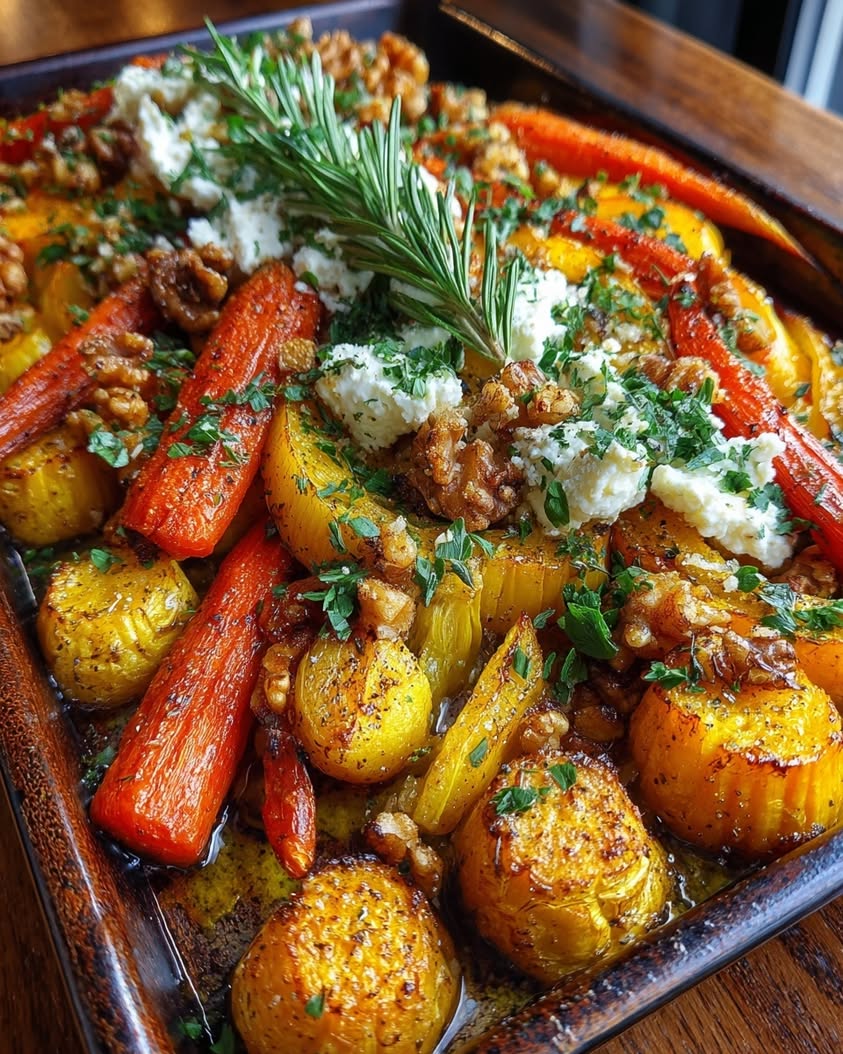
Roasted Honeynut Squash & Carrot Medley with Goat Cheese Crumble & Maple-Sage Drizzle: A Stunning Fall Side Dish
Welcome the crisp autumn air with a dish that captures the very essence of the season. This Roasted Honeynut Squash & Carrot Medley with Goat Cheese Crumble & Maple-Sage Drizzle is more than just a side dish; it is a vibrant celebration of fall flavors on a single platter. Imagine sweet, caramelized honeynut squash and earthy carrots roasted to tender perfection. Then picture them topped with creamy, tangy goat cheese and finished with a warm, aromatic maple-sage drizzle. The result is a symphony of textures and tastes that will become the star of your holiday table or any cozy weeknight dinner.
Furthermore, this recipe transforms humble, seasonal vegetables into an extraordinary culinary experience. The process is wonderfully simple, allowing the natural sugars in the squash and carrots to concentrate and deepen in the oven’s heat. Meanwhile, the quick maple-sage sauce infuses the dish with a sophisticated, herbaceous sweetness. Ultimately, this medley is designed to impress without stress, proving that the best fall recipes are often the most straightforward. Let us dive into creating this beautiful, flavorful dish that highlights the best produce of the harvest season.
Quick Recipe Highlights
- Flavor Profile: This dish masterfully balances sweet and savory notes. The natural sweetness of the roasted honeynut squash and carrots is enhanced by a warm maple drizzle. Conversely, the tangy goat cheese crumble and earthy sage provide a sophisticated savory counterpoint that prevents the dish from being cloying.
- Texture: You will enjoy a delightful contrast in every bite. The roasted vegetables become tender and almost creamy inside with beautifully caramelized, slightly crisp edges. Subsequently, the soft goat cheese crumble adds a cool, creamy element, while the drizzle introduces a silky, liquid component that ties everything together.
- Aroma: As this medley roasts, your kitchen will fill with the comforting, sweet scent of caramelizing squash and carrots. Additionally, the warm maple-sage drizzle releases an incredible fragrance of toasted sage and rich maple syrup, creating an unmistakably autumnal and inviting atmosphere.
- Visual Appeal: This dish is a feast for the eyes with its stunning color palette. The deep orange of the honeynut squash and the bright orange of the carrots create a warm base. Meanwhile, the white goat cheese crumble and glossy amber drizzle provide beautiful visual contrast, making it perfect for holiday plating.
- Skill Level Needed: This is an accessible recipe for cooks of all levels. Basically, it requires simple knife skills for chopping and the fundamental technique of roasting. Therefore, even a beginner can achieve restaurant-quality results with minimal effort and common kitchen tools.
- Special Equipment: You need only a few standard kitchen items. A sturdy baking sheet, a sharp chef’s knife, and a small saucepan for the drizzle are essential. Parchment paper is highly recommended for easy cleanup and to prevent the vegetables from sticking during the roasting process.
Recipe Overview
- Difficulty Level: This recipe is confidently rated as easy. The steps are sequential and simple: chop, toss, roast, and drizzle. There are no complicated techniques or precise timings required beyond basic oven monitoring. Consequently, it is an ideal recipe for a relaxing cooking session that yields impressive results.
- Category: This dish falls primarily into the side dish category, perfect for complementing a main protein like roast chicken, turkey, or pork. However, it can also serve as a hearty vegetarian main when paired with a grain like farro or quinoa. It is versatile enough for both casual and formal meals.
- Cuisine: While not tied to a single traditional cuisine, this medley draws inspiration from modern American farm-to-table cooking. It emphasizes seasonal, local produce and simple preparations that highlight natural flavors. The use of maple syrup and sage nods to North American autumnal harvest traditions.
- Cost: This is a very cost-effective recipe, especially during the fall and winter months when root vegetables are abundant and inexpensive. Honeynut squash, carrots, and fresh sage are typically budget-friendly. The goat cheese and pure maple syrup are the splurge items, but a little goes a long way in terms of flavor impact.
- Season: This recipe is quintessentially a fall and winter dish. Honeynut squash and carrots are at their peak sweetness and flavor during the cooler months. Moreover, the warm, spiced notes of sage and maple syrup perfectly complement the cozy, hearty feelings associated with autumn and holiday gatherings.
- Occasion: It is exceptionally suited for Thanksgiving, Christmas, or Friendsgiving dinners as a standout side. Equally, it is perfect for a cozy Sunday supper or a meal prep component for weekday lunches. Its elegance and simplicity make it fitting for both special occasions and everyday nourishment.
Why You’ll Love This Roasted Honeynut Squash & Carrot Medley
First and foremost, the taste and texture appeal of this dish is undeniable. Each forkful delivers a complex yet harmonious experience. The sweet, caramelized vegetables melt in your mouth, while the tangy, cool goat cheese provides a refreshing contrast. Finally, the warm maple-sage drizzle adds a layer of aromatic sweetness that makes the entire dish sing. It is a satisfying combination that feels both indulgent and wholesome, hitting all the right notes for a memorable side.
Secondly, the convenience and preparation benefits are a major win. This roasted vegetable medley requires minimal hands-on time. After a quick chop and toss, the oven does most of the work. This frees you up to prepare the rest of your meal or simply relax. The drizzle comes together in minutes on the stovetop. Therefore, you can create a stunning, restaurant-quality dish with very little active effort, which is a true gift during busy holiday seasons.
Nutritionally, this dish is a powerhouse. Honeynut squash and carrots are loaded with beta-carotene, which your body converts to vitamin A for eye and skin health. They also provide a good amount of fiber for digestive wellness. Additionally, goat cheese offers protein and calcium with slightly less lactose than cow’s milk cheese. Using pure maple syrup as a sweetener provides antioxidants and a more natural sugar source compared to refined sugars. Ultimately, it is a side dish that nourishes your body as much as it delights your palate.
For social and entertaining value, this medley is a guaranteed crowd-pleaser. Its vibrant colors and elegant presentation make it a centerpiece on any buffet table. The familiar flavors are universally appealing, yet the combination feels special and thoughtfully composed. It is a fantastic conversation starter and a dish that guests will remember and request again. Serving something this beautiful shows care and attention to your guests’ dining experience.
Finally, its cost-effectiveness and accessibility make it a practical choice. The core ingredients are affordable, especially in season. You can easily find them at any grocery store or farmers market. The recipe is also forgiving; for instance, you can substitute butternut squash if honeynut is unavailable. This accessibility ensures you can recreate this delicious fall side dish anytime the craving strikes, without hunting for obscure or expensive components.
Historical Background and Cultural Significance
The story of this dish begins with its central ingredient: squash. Squash is one of the “Three Sisters” of Indigenous American agriculture, historically planted alongside corn and beans. For centuries, Native American tribes cultivated various squash varieties, valuing them for their nutritional density and storage capability through winter. The practice of roasting squash over fires or in earth ovens is an ancient cooking method that concentrates its natural sugars. Our modern recipe honors this history by using simple roasting to highlight the vegetable’s inherent sweetness.
Culturally, the combination of maple and sage is deeply rooted in North American culinary traditions. Indigenous peoples were the first to tap maple trees and boil the sap into syrup, a process later adopted by European settlers. Sage, particularly in the form of burning smudges, holds spiritual significance for many tribes, but its culinary use as a hearty, aromatic herb for seasoning meats and vegetables is also longstanding. Combining these two elements creates a bridge between ancient foodways and contemporary cooking, celebrating ingredients native to this continent.
The evolution of this specific recipe reflects modern farm-to-table and vegetable-forward dining trends. The honeynut squash itself is a relatively new variety, developed in the early 2000s to be sweeter and more flavorful than its butternut parent. Its popularity symbolizes a shift towards valuing taste and quality in produce. The addition of tangy goat cheese represents the influence of European dairy traditions, while the drizzle technique is a nod to contemporary plating aesthetics that emphasize layered flavors and visual appeal.
Regional variations of roasted squash dishes abound. In the American South, roasted squash might be seasoned with pecans and bourbon. In New England, cranberries and walnuts are common additions. Mediterranean versions might feature rosemary, olive oil, and feta cheese. Our recipe with maple and sage leans into a Northeastern North American flavor profile, but it remains adaptable. This versatility shows how a foundational technique like roasting can be a canvas for regional tastes and available ingredients, making it a truly global comfort food.
Ingredient Deep Dive
Honeynut Squash: This smaller, sweeter cousin of butternut squash was bred for superior flavor. It is packed with vitamins A and C, potassium, and fiber. Its thin skin is edible when cooked, adding convenience. When selecting, choose squash that feel heavy for their size with firm, unblemished skin. Store them in a cool, dark place for several weeks. If unavailable, butternut squash is a perfect substitute; simply peel it and cut into slightly smaller cubes to match the roasting time.
Carrots: Carrots have a long history, originating in Central Asia. They were originally purple or yellow; the orange variety was developed in the Netherlands. They are renowned for their beta-carotene content, crucial for eye health. Choose firm, smooth carrots with vibrant color, preferably with their green tops still attached for freshness. Store them in the refrigerator’s crisper drawer. For a variation, try using multi-colored heirloom carrots to add stunning visual appeal to your medley.
Goat Cheese (Chèvre): With origins dating back thousands of years to the Mediterranean, goat cheese is one of the oldest dairy products. It is easier to digest for many people due to its different protein structure and lower lactose. It provides protein, calcium, and healthy fats. Select a fresh, creamy log. Store it tightly wrapped in the refrigerator. For a dairy-free version, a crumbled vegan feta or a sprinkle of nutritional yeast can provide a similar tangy, salty element.
Pure Maple Syrup: True maple syrup is made solely from the concentrated sap of maple trees, primarily in northeastern North America. It contains antioxidants like manganese and zinc. Always opt for “pure maple syrup,” not pancake syrup, which is corn syrup with flavoring. Grade A Amber Color is ideal for its balanced flavor. Store it in the pantry before opening and in the refrigerator afterward. For a sugar-free option, a monk fruit maple-flavored syrup can work, though the flavor profile will change.
Fresh Sage: This hardy, aromatic herb has been used medicinally and culinarily since Roman times. Its earthy, slightly peppery flavor is a hallmark of fall and holiday cooking. Fresh sage is essential for the drizzle; dried sage cannot replicate its potency here. Look for perky, gray-green leaves without dark spots. Store it wrapped in a damp paper towel in a plastic bag in the fridge. As a last-resort substitute, fresh thyme offers a different but complementary earthy note.
Common Mistakes to Avoid
- Overcrowding the Pan: Placing vegetables too close together steams them instead of roasting them. Consequently, you will miss out on the crucial caramelization. Always use a large enough baking sheet and spread the pieces in a single layer with space between them for optimal browning.
- Using Old, Dried Sage: The maple-sage drizzle relies on the potent oils from fresh sage. Dried sage will taste dusty and lack the vibrant, aromatic punch. Always seek out fresh sage leaves for this recipe to achieve that signature warm, autumnal flavor.
- Neglecting to Toss the Vegetables in Oil: Skipping or skimping on the olive oil coating is a critical error. The oil conducts heat, encourages browning, and prevents sticking. Ensure every piece of squash and carrot is lightly but thoroughly coated for even cooking and perfect texture.
- Cutting Vegetables Unevenly: Inconsistent sizing leads to uneven cooking. Smaller pieces will burn before larger ones are tender. Take the time to cut your honeynut squash and carrots into uniform cubes. This ensures they all finish roasting at the same time.
- Burning the Maple Drizzle: Maple syrup burns easily due to its sugar content. Always warm it gently over low heat and remove it as soon as it simmers and the sage becomes fragrant. Letting it boil vigorously will create a bitter, burnt taste that ruins the sauce.
- Adding Goat Cheese Before Serving: Placing the cold goat cheese crumble on the hot vegetables before they go to the table can cause it to melt into a messy, unappealing puddle. For the best presentation and texture contrast, always add the goat cheese crumble just before serving.
- Underseasoning: Vegetables need ample seasoning. Do not be shy with the salt and pepper before roasting. Seasoning layers flavor from the inside out. Taste the roasted vegetables before assembling the final dish and adjust with an extra pinch of salt if needed.
- Using Imitation Maple Syrup: Pancake syrup or table syrup is made with high-fructose corn syrup and artificial flavors. It will make your drizzle taste artificial and overly sweet. Investing in a small bottle of pure maple syrup is non-negotiable for the quality of this dish.
Essential Techniques
Uniform Chopping: Mastering uniform chopping is fundamental for even roasting. Aim for ¾-inch to 1-inch cubes. Use a sharp chef’s knife and a stable cutting board. First, halve and seed the squash, then slice it into planks before dicing. For carrots, cut them into similar-sized pieces. Consistent size ensures all pieces caramelize and become tender simultaneously, preventing a mix of burnt and undercooked vegetables.
High-Heat Roasting: Roasting at a high temperature (400°F or above) is key. This technique quickly caramelizes the natural sugars on the exterior of the vegetables, creating complex flavors and a slight crispness while the interior becomes creamy. Do not be tempted to lower the temperature to avoid watching the oven. The high heat is what transforms simple veggies into something extraordinary. The visual cue for success is golden-brown, slightly blistered edges.
Infusing the Drizzle: This technique gently coaxes flavor from the sage into the maple syrup. Warm the syrup over low heat until it just begins to simmer—small bubbles will form around the edges. Add the sage and let it steep off the heat. The residual warmth releases the herb’s essential oils without cooking them away, resulting in a fragrant, flavorful sauce. The sage should look slightly darkened and wilted, not fried and crispy.
Pro Tips for Perfect Roasted Honeynut Squash & Carrot Medley
For maximum caramelization, preheat your baking sheet in the oven. Carefully add the oiled vegetables to the hot pan; the sizzle helps start the browning process immediately. This trick gives you a better sear and more flavorful results.
Let the roasted vegetables rest for five minutes after pulling them from the oven. This allows them to reabsorb some of their own steam, making the texture even creamier inside. It also makes them the perfect temperature for topping with goat cheese without causing it to melt completely.
Use a microplane or the fine side of a box grater to zest your orange directly over the roasted vegetables before adding the drizzle and cheese. The bright, citrusy notes will cut through the richness and add an incredible layer of freshness that elevates the entire dish.
If your goat cheese is too cold and hard to crumble neatly, let it sit at room temperature for 10-15 minutes. Alternatively, place it in the freezer for 5 minutes; a slightly firmer cheese can sometimes crumble more cleanly than a soft, sticky one.
Double the maple-sage drizzle recipe and store the extra in a jar in the fridge. You can use it throughout the week as a glaze for roasted chicken, a topping for pancakes, or a sweetener for oatmeal. The flavors deepen beautifully over a couple of days.
For a textural contrast, add a crunchy element. Toast some pecans, walnuts, or pumpkin seeds while the vegetables roast. Sprinkle them over the top along with the goat cheese for an added dimension of crunch and nutty flavor.
Variations and Adaptations
For regional variations, consider the ingredients local to your area. In the Pacific Northwest, add roasted hazelnuts and a drizzle of pear cider reduction. A Southern adaptation might include a sprinkle of candied pecans and a touch of smoked paprika in the oil. Mediterranean-inspired versions could swap the sage for rosemary and the goat cheese for feta, adding a handful of kalamata olives.
Seasonal adaptations keep this recipe exciting year-round. In spring, use asparagus and new potatoes with a lemon-herb drizzle. For summer, try zucchini, bell peppers, and eggplant with a basil-infused olive oil. The core technique remains the same, but the vegetables and accompanying flavors shift with what is freshest at the market.
Dietary modifications are straightforward. For a vegan version, omit the goat cheese and use a dollop of coconut cream or a crumbled vegan almond feta. To make it nut-free, ensure your maple syrup is processed in a dedicated facility and skip any nut garnishes. For a lower-sugar option, reduce the maple syrup by half and supplement with a splash of vegetable broth in the drizzle.
Flavor variations can personalize the dish. Add warmth with a pinch of cinnamon, nutmeg, or cayenne pepper to the olive oil before tossing the vegetables. For an umami boost, toss the roasted veggies with a teaspoon of white miso paste thinned with a little hot water before adding the other toppings. A balsamic glaze can stand in for the maple drizzle for a tangier profile.
Serving and Presentation Guide
Plating techniques matter for this visually stunning dish. For family style, pile the roasted medley onto a large, rustic platter. Drizzle the maple-sage sauce in wide, sweeping arcs over the top, then artfully scatter the goat cheese crumbles. Finish with a few whole fresh sage leaves as a garnish. For individual plates, use a ring mold to create a neat cylinder of vegetables at the center of each plate, then carefully remove the mold and top with cheese and drizzle.
Garnishing ideas extend beyond sage. Fresh pomegranate arils add a burst of color and juicy tartness. Toasted pumpkin seeds (pepitas) provide a green accent and crunch. A final flake of sea salt, such as Maldon, adds a delicate texture and enhances all the flavors. A sprinkle of finely chopped fresh chives or parsley introduces a fresh, green note.
Traditional accompaniments include a simple roast turkey, herb-crusted pork loin, or seared chicken breasts. The sweet and savory notes of the medley complement rich meats beautifully. For a vegetarian feast, serve it alongside wild rice pilaf, garlicky sautéed greens, and a lentil loaf. It acts as the sweet, creamy component that balances more earthy or savory dishes.
Wine and Beverage Pairing
Wine pairings should complement the dish’s sweet and earthy notes. An off-dry Riesling or Gewürztraminer is excellent; their slight sweetness mirrors the maple and squash, while their acidity cuts through the richness. For a red option, choose a light-bodied, low-tannin wine like Pinot Noir or Gamay (Beaujolais). Their red fruit flavors and earthy undertones harmonize with the roasted vegetables and sage without overpowering them.
Non-alcoholic alternatives can be just as thoughtful. Sparkling apple cider is a classic fall pairing that echoes the sweetness. A ginger beer or spicy ginger ale provides a zesty contrast that cleanses the palate. For a warm option, a sage-infused tea or a chai latte complements the herbal notes in the drizzle beautifully.
Storage and Shelf Life
Store leftovers in an airtight container in the refrigerator for up to 4 days. Keep the components separate if possible: store the roasted vegetables, the goat cheese crumble, and any leftover drizzle in their own containers. This prevents the vegetables from becoming soggy and the cheese from dissolving. The maple-sage drizzle will thicken when chilled; gently reheat it in a microwave or on the stovetop with a splash of water to return it to a drizzling consistency.
Reheating instructions are important for quality. Reheat the roasted vegetables in a 350°F oven for about 10-15 minutes, or in an air fryer for 5 minutes, until warmed through. This method helps restore some of the crisp edges. Avoid microwaving, as it will make the vegetables soft and mushy. Always add the cold goat cheese crumble and fresh drizzle after reheating.
Make Ahead Strategies
You can prep this dish in stages to save time on the day of serving. The day before, wash, peel, and chop the squash and carrots. Store them submersed in cold water in airtight containers in the refrigerator; this prevents oxidation and keeps them crisp. You can also make the maple-sage drizzle ahead and store it in a jar in the fridge. Simply gently reheat it before using. The goat cheese can be crumbled and kept in a separate container.
On the day of serving, drain and thoroughly dry the pre-chopped vegetables, then toss them with oil and seasonings before roasting. This streamlined process cuts your active prep time in half. Assemble the dish just before serving to maintain the ideal temperature and texture contrasts between the warm vegetables, cool cheese, and silky drizzle.
Scaling Instructions
Halving the recipe is simple for smaller households. Use one small honeynut squash and 2-3 carrots. Keep the oven temperature and roasting time the same, but use a smaller baking sheet. The maple-sage drizzle can be halved, but consider making the full amount anyway; the extra keeps well and is useful for other meals.
Doubling or tripling for a crowd requires planning. Use multiple baking sheets and rotate them between oven racks halfway through cooking to ensure even browning. You may need to add a few extra minutes to the roasting time due to the increased volume of vegetables steaming in the oven. Make the drizzle in a larger saucepan and keep it warm in a small slow cooker or thermos until serving time.
Nutritional Deep Dive
This medley is rich in vitamins, minerals, and fiber. Honeynut squash is an exceptional source of vitamin A (from beta-carotene), providing well over 100% of your daily needs in a serving. It also offers vitamin C, potassium, and manganese. Carrots contribute additional beta-carotene and fiber. Together, they support eye health, immune function, and healthy digestion. The olive oil provides heart-healthy monounsaturated fats, which also help your body absorb the fat-soluble vitamins in the vegetables.
The goat cheese adds protein and calcium, making the dish more satiating and supportive of bone health. Pure maple syrup, while a sweetener, contains antioxidants like polyphenols and minerals like zinc and manganese in trace amounts. Compared to using refined sugar, it is a more natural choice. As a complete dish, it is a nutrient-dense side that contributes valuable vitamins, minerals, fiber, and healthy fats to your overall meal.
Dietary Adaptations
For a gluten-free diet, this recipe is naturally compliant as written. Just ensure all packaged ingredients, like maple syrup, are certified gluten-free if cross-contamination is a concern.
For a dairy-free or vegan adaptation, omit the goat cheese. Replace it with a crumbled vegan feta alternative or a sprinkle of nutritional yeast for a cheesy flavor. For added creaminess, a dollop of vegan sour cream or a drizzle of tahini mixed with lemon juice works wonderfully.
For a Paleo adaptation, omit the goat cheese. The rest of the ingredients are Paleo-friendly. Ensure your maple syrup is 100% pure and not cut with other sweeteners. You could add diced avocado or toasted nuts for the fat and texture the cheese would have provided.
Troubleshooting Guide
If your vegetables are soggy instead of caramelized, the likely culprit is overcrowding on the pan. Next time, use two baking sheets to give them ample space. Also, ensure your oven is fully preheated before adding the pan, and do not open the door frequently during roasting, as this causes temperature fluctuations that lead to steaming.
If the flavor feels flat, it probably needs more salt. Season in layers: salt the vegetables before roasting, and taste again after roasting before final assembly. A pinch of flaky sea salt on the finished dish can also brighten all the flavors. Additionally, a small splash of acid, like lemon juice or apple cider vinegar, can balance the sweetness if the dish tastes one-dimensional.
Recipe Success Stories
Readers have shared wonderful adaptations of this recipe. One home cook added diced apples to the roasting pan during the last 15 minutes for extra fall flavor. Another used the leftover medley as a filling for savory hand pies, reporting they were a huge hit. A Thanksgiving host shared that this dish received more compliments than the turkey, with guests appreciating its vibrant colors and unique flavor combination compared to traditional marshmallow-topped casseroles.
Frequently Asked Questions
Can I use butternut squash instead of honeynut? Absolutely. Butternut squash is a perfect substitute. Peel it thoroughly, remove the seeds, and cut it into ¾-inch cubes. The roasting time may be slightly longer depending on the density of your particular squash.
Is the skin of the honeynut squash edible? Yes, when roasted, the thin skin of honeynut squash becomes perfectly tender and edible. This saves prep time and adds fiber. If you prefer a smoother texture, you can peel it, but it is not necessary.
Can I make this recipe vegan? Easily. Simply omit the goat cheese or use a high-quality vegan feta crumble. Check that your maple syrup is vegan (most pure maple syrup is). The rest of the ingredients are plant-based.
How do I prevent the goat cheese from melting into a mess? Ensure the roasted vegetables have rested for at least 5 minutes after coming out of the oven—they should be warm, not piping hot. Crumble the cheese just before serving, not before.
Can I use dried sage? It is not recommended for the drizzle. Dried sage will not infuse the syrup properly and can give a gritty, dusty texture and flavor. Fresh sage is essential for this component.
What can I serve with this as a main course? It pairs beautifully with simple proteins like roast chicken, pan-seared pork chops, or baked salmon. For a vegetarian meal, serve it over a bed of quinoa or farro with a side of braised lentils.
Can I prep the vegetables the night before? Yes. Chop the squash and carrots and store them submerged in water in airtight containers in the refrigerator. Drain and pat them very dry before tossing with oil and roasting.
My maple syrup solidified in the fridge. What do I do? This is normal. Place the jar in a bowl of warm water or gently heat it in a saucepan over low heat until it returns to liquid form. Do not microwave it in a glass jar.
Can I freeze leftovers? The roasted vegetables can be frozen for up to 3 months, though their texture may become softer upon thawing. The maple-sage drizzle and goat cheese do not freeze well. It is best enjoyed fresh or refrigerated for a few days.
What herbs can I use besides sage? Fresh thyme or rosemary would be lovely. Use about 1 teaspoon of chopped fresh thyme or ½ teaspoon of chopped fresh rosemary. The flavor profile will be different but still delicious.
Additional Resources
If you loved this Roasted Honeynut Squash & Carrot Medley, explore other seasonal vegetable dishes on the blog. A recipe for a Harvest Bowl with Massaged Kale and Apple Cider Vinaigrette uses similar flavors in a salad format. For another stunning fall side, try the Brussels Sprouts with Bacon and Cranberries. To master the art of roasting any vegetable, check out our comprehensive Guide to Perfect Roasted Vegetables, which covers temperatures, oils, and timing for dozens of different veggies.
For ingredient sourcing, seek out local farmers markets in the autumn for the sweetest honeynut squash and freshest carrots. Investing in a high-quality, heavy-duty baking sheet (like a half-sheet pan) will improve all your roasting endeavors. Finally, for more drizzle and sauce inspiration, our post on “5 Easy Sauce Recipes to Elevate Any Meal” offers simple formulas for creating delicious toppings that can transform simple ingredients into special dishes.
PrintRoasted Honeynut Squash & Carrot Medley with Goat Cheese Crumble & Maple-Sage Drizzle
Description
A sweet and savory fall side dish featuring roasted honeynut squash and carrots, topped with creamy goat cheese and a fragrant maple-sage drizzle.
Ingredients
For the Crust:
- 2 honeynut squashes, halved and seeded
- 4 large carrots, peeled and cut into 1-inch pieces
- 2 tablespoons olive oil
- 1 teaspoon salt
- 1/2 teaspoon black pepper
- 1/2 teaspoon ground cinnamon
- 4 ounces goat cheese, crumbled
- 1/4 cup pure maple syrup
- 8 fresh sage leaves, finely chopped
- 1 tablespoon unsalted butter
Instructions
1. Prepare the Crust:
- Preheat oven to 400°F (200°C). Line a baking sheet with parchment paper.
- Toss squash halves and carrot pieces with olive oil, salt, pepper, and cinnamon. Arrange on the baking sheet in a single layer.
- Roast for 25-30 minutes, until vegetables are tender and lightly caramelized.
- While roasting, melt butter in a small saucepan over medium heat. Add chopped sage and cook for 1-2 minutes until fragrant. Stir in maple syrup and simmer for 2 minutes, then remove from heat.
- Transfer roasted vegetables to a serving platter. Drizzle with the maple-sage mixture and sprinkle with crumbled goat cheese. Serve warm.
Notes
You can customize the seasonings to taste.

I’m Shaykee—born in Morocco, seasoned across continents. From airplane galleys to home kitchens, I share the flavors and stories that shaped my journey.