
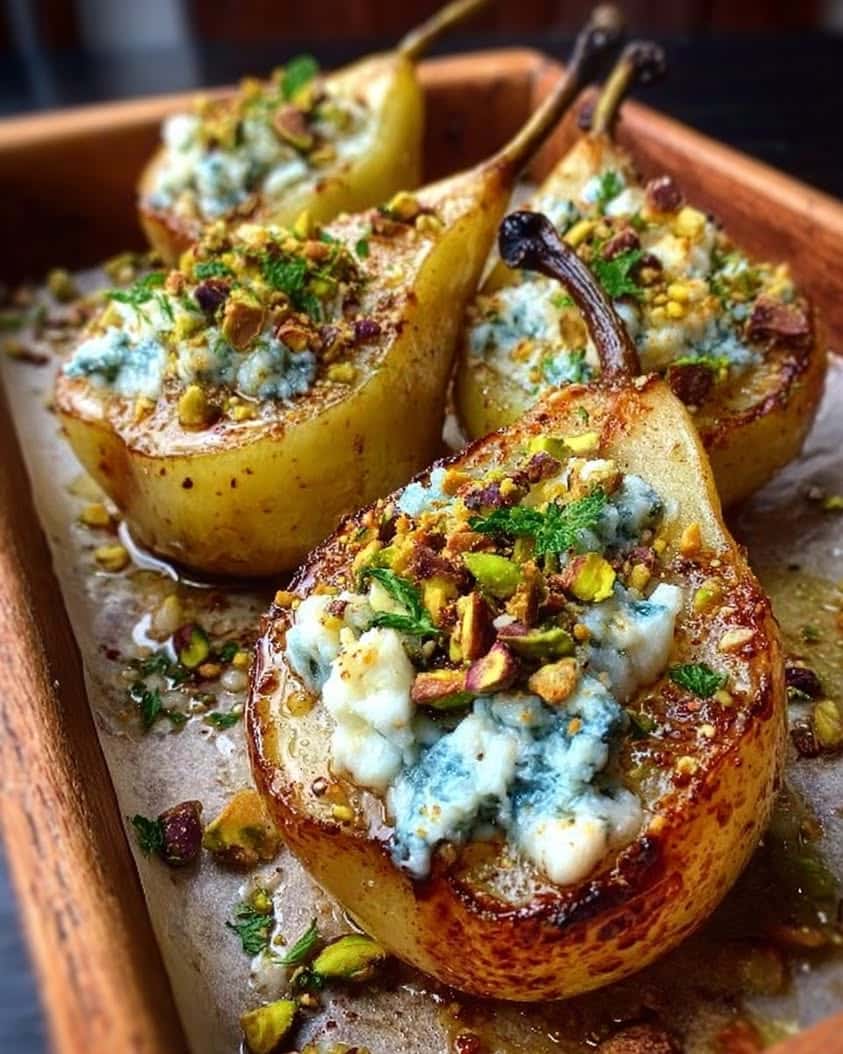
Sweet & Savory Roasted Pears with Blue Cheese and Pistachios: An Elegant, Easy Appetizer or Dessert That’s Always a Crowd-Pleaser!
Imagine a dish that perfectly balances sweet and savory flavors with contrasting textures that delight the palate. These roasted pears with blue cheese and pistachios achieve exactly that harmony. Furthermore, this recipe transforms simple, wholesome ingredients into an elegant culinary experience. The warm, tender pears provide a sweet foundation that beautifully complements the sharp, creamy blue cheese. Meanwhile, the crunchy pistachios add a nutty richness that ties everything together. Ultimately, this dish serves as the perfect bridge between courses or a stunning standalone dessert.
The beauty of these roasted pears lies in their incredible versatility. For instance, you can serve them as an impressive appetizer to start a dinner party on a high note. Alternatively, they make a sophisticated dessert that feels indulgent yet remains relatively light. The preparation process is remarkably straightforward, requiring minimal hands-on time. Consequently, even novice cooks can create a dish that looks and tastes professionally crafted. The aroma that fills your kitchen as the pears roast is simply irresistible, promising a delightful eating experience.
This recipe celebrates the natural sweetness of seasonal pears while introducing complex flavor dimensions through thoughtful pairings. The transformation that occurs in the oven is nothing short of magical. Initially firm pears become tender and caramelized, their natural sugars concentrating and intensifying. When topped with the bold blue cheese and sprinkled with toasted pistachios, each component enhances the others. The result is a dish that feels both comforting and luxurious, familiar yet exciting. Whether you are hosting a formal gathering or enjoying a quiet night in, these roasted pears deliver exceptional flavor with minimal effort.
Quick Recipe Highlights
- Flavor Profile: These roasted pears offer a sophisticated balance of sweet and savory notes. The natural pear sweetness intensifies during roasting, creating a perfect counterpoint to the sharp, tangy blue cheese. Finally, the rich, slightly salty pistachios complete this complex flavor symphony.
- Texture: This dish delivers an exceptional textural experience with every bite. The roasted pears become wonderfully tender and almost buttery in consistency. Meanwhile, the creamy blue cheese melts slightly against the warm fruit, and the crunchy pistachios provide a satisfying contrast that elevates the entire dish.
- Aroma: As these pears roast, your kitchen will fill with an irresistible fragrance. The sweet, caramelized scent of baking pears mingles with the earthy notes of roasting nuts. Additionally, the sharp aroma of melting blue cheese adds a savory dimension that makes mouths water in anticipation.
- Visual Appeal: These roasted pears present beautifully on any plate with their golden-brown surfaces and vibrant toppings. The white and blue veins of the cheese create striking visual interest against the pear’s flesh. Furthermore, the green pistachios and optional fresh herbs provide colorful accents that make the dish look professionally crafted.
- Skill Level Needed: This recipe is perfectly accessible for cooks of all experience levels. Basic knife skills for halving pears and simple assembly are the primary requirements. Consequently, even complete beginners can achieve impressive results that belie the minimal effort involved.
- Special Equipment: You need only standard kitchen tools to prepare this dish. A baking sheet, parchment paper, and a small bowl for mixing toppings are sufficient. Therefore, you can create this elegant dish without any specialized or expensive equipment.
Recipe Overview
- Difficulty Level: We classify this recipe as easy because it involves straightforward preparation techniques. The steps primarily consist of halving pears, scooping seeds, and combining simple toppings. Additionally, the roasting process requires minimal supervision, making it perfect for relaxed cooking. Even kitchen novices will find the process manageable and rewarding.
- Category: These versatile roasted pears comfortably fit multiple meal categories. They function beautifully as an appetizer, dessert, or even a light main course when paired with a salad. Furthermore, they work equally well for formal entertaining and casual family meals, demonstrating remarkable adaptability.
- Cuisine: This dish draws inspiration from European culinary traditions, particularly French and Italian influences. The combination of fruit with cheese has deep roots in both cuisines. Meanwhile, the specific pairing of pears with blue cheese reflects classic French flavor affinities. Ultimately, it represents a modern interpretation of timeless flavor combinations.
- Cost: This recipe offers excellent value, using affordable seasonal produce as its foundation. Pears are typically inexpensive, especially during their peak season. Similarly, a small amount of blue cheese goes a long way in terms of flavor impact. Consequently, you can create an impressive dish without significant financial investment.
- Season: Autumn and winter are the ideal seasons for this recipe when pear varieties are at their peak. However, thanks to modern agriculture, good pears are often available year-round. Furthermore, the warm, comforting nature of roasted fruit makes this dish particularly appealing during cooler months.
- Occasion: These roasted pears suit numerous occasions from holiday gatherings to intimate dinners. They make an elegant starter for Thanksgiving or Christmas meals. Similarly, they work beautifully for date nights, book club meetings, or as a special weeknight treat. Their versatility makes them a valuable addition to any entertaining repertoire.
Why You’ll Love This Roasted Pears Recipe
First and foremost, the flavor combination in these roasted pears will captivate your taste buds. The sweet, caramelized pears create a perfect foundation for the sharp, tangy blue cheese. Meanwhile, the rich, slightly salty pistachios add depth and complexity to each bite. This harmonious balance of sweet and savory elements makes the dish incredibly moreish. Furthermore, the contrasting textures keep your palate engaged from first bite to last. The experience begins with the tender pear, moves through the creamy cheese, and finishes with the satisfying crunch of nuts.
From a practical perspective, this recipe offers remarkable convenience despite its impressive presentation. The preparation time is minimal, requiring only about ten minutes of active work. Additionally, the ingredients are simple and often already available in well-stocked kitchens. The roasting process itself is largely hands-off, allowing you to focus on other meal components or guests. Consequently, you can create a dish that tastes and looks sophisticated without stress or complicated techniques. This accessibility makes it perfect for both experienced cooks and kitchen beginners.
Nutritionally, these roasted pears provide substantial benefits beyond their delicious taste. Pears are an excellent source of dietary fiber, particularly when eaten with their skin. They also contain important vitamins and antioxidants that support overall health. Meanwhile, blue cheese offers calcium and protein, while pistachios contribute healthy fats and additional protein. The combination creates a satisfying dish that feels indulgent while providing genuine nutritional value. This balance makes it easier to enjoy gourmet flavors without compromising your health goals.
For entertaining purposes, these roasted pears deliver exceptional social value. They create an immediate impression of culinary sophistication that impresses guests. Moreover, the dish serves as an excellent conversation starter due to its beautiful presentation and intriguing flavor combination. The recipe scales easily to accommodate larger gatherings without significantly increasing preparation time. Whether serving four or fourteen, you can maintain consistent quality and presentation. This reliability makes it a go-to option for hosts who want to enjoy their own parties.
Finally, the cost-effectiveness of this recipe makes it accessible for regular enjoyment. Seasonal pears are typically affordable, especially during autumn and winter months. A small amount of blue cheese provides significant flavor impact, making expensive varieties more economical. Similarly, pistachios are used as a garnish rather than a main component, keeping costs manageable. Compared to restaurant versions, homemade roasted pears offer tremendous value without sacrificing quality. This affordability means you can enjoy gourmet flavors more frequently.
Historical Background and Cultural Significance
The practice of combining fruit with cheese has ancient origins across multiple culinary traditions. European cultures particularly embraced this pairing, recognizing how fruit’s sweetness complements cheese’s richness. Historical records indicate that both ancient Romans and Greeks enjoyed fruit and cheese combinations. Furthermore, medieval European cookbooks frequently featured recipes pairing seasonal fruits with local cheeses. This longstanding tradition demonstrates the timeless appeal of balancing sweet and savory flavors. The specific combination of pears and blue cheese likely emerged from French culinary innovation.
Blue cheese itself has a fascinating history that contributes to this dish’s cultural significance. Legend suggests that blue cheeses were discovered accidentally when cheeses were stored in caves with natural mold spores. The French Roquefort region famously claims the oldest known blue cheese tradition. Meanwhile, English Stilton and Italian Gorgonzola represent other celebrated blue cheese varieties with centuries of history. The intentional cultivation of mold in cheeses represents an early example of food science innovation. Consequently, using blue cheese connects this modern recipe to ancient culinary practices.
The evolution of this specific recipe reflects broader trends in contemporary cooking. While the combination of pears and blue cheese is classic, the roasting technique represents a modern interpretation. Traditional preparations often featured fresh pear slices served with cheese on a cheese board. The innovation of roasting pears intensifies their sweetness and transforms their texture. This development aligns with the modern preference for warm, comforting dishes that feel both rustic and refined. The addition of pistachios as a crunchy element further updates the classic pairing for contemporary palates.
Regional variations of this concept appear throughout culinary traditions worldwide. In the United States, baked fruit with cheese toppings became popular in the mid-twentieth century. Meanwhile, Mediterranean countries have long featured roasted fruits in both savory and sweet contexts. Modern chefs continue to reinterpret this combination using local ingredients and techniques. For instance, some versions incorporate honey or balsamic glaze for additional sweetness and acidity. Others experiment with different nuts or cheese varieties based on regional availability. This ongoing evolution keeps the fundamental concept fresh and exciting.
Ingredient Deep Dive
Pears serve as the foundation of this dish, providing natural sweetness and tender texture when roasted. Cultivated for thousands of years, pears originated in Asia and spread through Europe along trade routes. Today, numerous varieties offer slightly different flavor profiles and textures. For roasting, Bosc or Anjou pears work particularly well because they hold their shape during cooking. Nutritionally, pears provide substantial dietary fiber, vitamin C, and various antioxidants. When selecting pears, choose fruits that are firm but yield slightly to pressure at the stem for optimal roasting results.
Blue cheese contributes the signature savory element that balances the pears’ sweetness. This category of cheese encompasses varieties like Roquefort, Gorgonzola, and Stilton, each with distinct characteristics. The blue veins result from penicillin mold introduced during cheesemaking, creating complex flavors ranging from sharp to creamy. Nutritionally, blue cheese provides protein, calcium, and phosphorus, though it is high in sodium. When selecting blue cheese, consider the intensity you prefer—creamier varieties like Gorgonzola Dolce work well for those new to blue cheese. Store blue cheese tightly wrapped in the refrigerator to prevent drying.
Pistachios provide the essential crunchy element and nutty flavor that completes the dish. Historically, pistachios originated in the Middle East and have been cultivated for over 9,000 years. They traveled along the Silk Road to Mediterranean regions, where they became culinary staples. Nutritionally, pistachios offer protein, healthy fats, fiber, and various vitamins and minerals. Their vibrant green color also enhances the visual appeal of the finished dish. When selecting pistachios, choose raw, unsalted varieties to control seasoning. Store them in airtight containers in cool, dark places to prevent rancidity.
Common Mistakes to Avoid
- Choosing overripe pears will result in mushy texture after roasting. Instead, select pears that are firm but yield slightly to pressure. Furthermore, underripe pears won’t caramelize properly or develop sufficient sweetness during roasting.
- Overcrowding the baking sheet prevents proper caramelization and even cooking. Ensure adequate space between pear halves to allow hot air circulation. Consequently, the pears will roast rather than steam, developing better flavor and texture.
- Using pre-crumbled blue cheese often delivers inferior flavor and texture. These products frequently contain anti-caking agents that affect melting quality. Instead, purchase a wedge of quality blue cheese and crumble it yourself for better results.
- Skipping the pistachio toasting step diminishes their flavor impact. Raw nuts lack the depth that toasting develops. Simply toast pistachios in a dry skillet for 3-5 minutes until fragrant before chopping.
- Underseasoning the pears misses an opportunity to enhance their natural sweetness. A pinch of salt and pepper accentuates the flavor contrast with the cheese. Even in sweet preparations, salt remains essential for balanced flavor.
- Overbaking the pears transforms them from tender to mushy. Watch for visual cues like golden edges and slight yielding to touch. Remember that residual heat will continue cooking the pears after removal from the oven.
- Adding cheese too early causes it to melt completely rather than softening attractively. Sprinkle the blue cheese during the final minutes of roasting. This timing allows it to warm and soften while maintaining its distinct appearance.
- Neglecting to rinse pistachios if using salted varieties can make the dish excessively salty. Even if a recipe suggests salted pistachios, rinsing and drying provides better seasoning control.
Essential Techniques
Proper pear preparation begins with selecting the right variety and ripeness. Bosc and Anjou pears work particularly well because they maintain structure during roasting. To prepare them, slice lengthwise and use a melon baller or small spoon to remove the core and seeds. Creating a small well ensures the toppings nestle perfectly into each pear half. Importantly, leaving the skin intact provides texture contrast and visual appeal. The skin also helps the pear halves maintain their shape during the roasting process.
Roasting technique significantly impacts the final texture and flavor development. Arranging the pears cut-side up on a parchment-lined baking sheet promotes even cooking and easy cleanup. The oven temperature of 400°F (200°C) creates sufficient heat to caramelize the pears’ natural sugars without burning them. During roasting, the pears transform from firm and crisp to tender and juicy. Visual cues include golden edges and slight bubbling around the core area. The perfect roasted pear should yield easily to a knife but not collapse entirely.
Cheese application timing proves crucial for optimal texture and presentation. Adding blue cheese during the final 3-5 minutes of roasting allows it to soften and warm without completely melting. This technique preserves the distinctive appearance of the cheese veins while integrating its flavor with the pear. If the cheese melts completely, it loses its visual appeal and becomes overly incorporated. The goal is warmed cheese that maintains some structural integrity while complementing the warm pear beneath it.
Pro Tips for Perfect Roasted Pears
- Select pears of similar size and ripeness to ensure even cooking. This consistency prevents some pieces from becoming overdone while others remain undercooked. Furthermore, uniform pears create a more professional presentation on the serving platter.
- Experiment with different blue cheese varieties to discover your preference. Milder Gorgonzola Dolce works well for those new to blue cheese, while stronger Roquefort provides more assertive flavor. The cheese choice significantly influences the overall character of the dish.
- Add a drizzle of honey during the final minutes of roasting for extra sweetness and shine. This addition enhances caramelization and provides a beautiful glaze. Alternatively, aged balsamic vinegar offers sophisticated acidity that balances the richness.
- Toast pistachios in a dry skillet before chopping to deepen their flavor. Watch carefully to prevent burning, shaking the pan frequently. The nutty aroma indicates they are properly toasted and ready for use.
- Incorporate fresh herbs like thyme or rosemary for aromatic complexity. Sprinkle them over the pears before roasting or use as garnish afterward. Herbs provide freshness that cuts through the richness of cheese and nuts.
- Allow the roasted pears to rest for 2-3 minutes before serving. This brief resting period allows the flavors to meld and the cheese to set slightly. Consequently, the toppings adhere better to the pear when serving.
Variations and Adaptations
Regional variations of this concept reflect local ingredients and culinary traditions. Mediterranean versions might incorporate figs instead of pears with local goat cheese and pine nuts. Meanwhile, American interpretations often feature apples with cheddar and walnuts for a classic flavor profile. Asian-inspired versions could use Asian pears with miso-infused cheese and sesame seeds. These adaptations demonstrate the recipe’s incredible flexibility across different culinary contexts. Experimenting with local ingredients can yield exciting new interpretations of the basic formula.
Seasonal adaptations allow this dish to shine throughout the year with appropriate ingredient substitutions. Spring versions might feature rhubarb compote alongside the blue cheese and pistachios. Summer adaptations could use peaches or nectarines with similar preparation methods. Autumn remains the classic season for pears, while winter might incorporate persimmons or roasted apples. Additionally, holiday versions might include pomegranate arils or cranberries for festive color. These seasonal variations keep the concept fresh and relevant regardless of the calendar.
Dietary modifications make this recipe accessible to various eating preferences and restrictions. For vegan versions, substitute blue cheese with cashew-based cheese or crumbled tofu with nutritional yeast. Nut-free adaptations might use toasted pumpkin seeds or breadcrumbs instead of pistachios. Lower-carb versions can reduce the number of pears and increase cheese and nut proportions. Gluten-free needs require no adaptation since the recipe naturally contains no gluten. These modifications ensure everyone can enjoy this delightful combination regardless of dietary needs.
Serving and Presentation Guide
Plating techniques significantly influence the visual impact and perceived sophistication of this dish. For individual servings, place one or two pear halves slightly off-center on each plate. Drizzle any accumulated pan juices around the pears to create a sauce-like effect. Alternatively, arrange all pear halves on a beautiful platter for family-style serving. Overlapping the pears slightly creates dimension and visual interest. The presentation should highlight the contrasting colors and textures of the components.
Garnishing provides the final touch that elevates the dish from homemade to restaurant-quality. Fresh herb sprigs like thyme, rosemary, or mint add color and fragrance. Microgreens or edible flowers create an especially elegant appearance for special occasions. Additional chopped pistachios sprinkled around the plate reinforce the nutty element. A light dusting of flaky sea salt enhances both flavor and visual appeal. These finishing touches require minimal effort but deliver maximum impact.
Traditional accompaniments balance the richness of the roasted pears with contrasting elements. Bitter greens like arugula or radicchio provide freshness and textural contrast. Crusty bread or crackers help scoop up any melted cheese and pear remnants. For dessert presentations, vanilla ice cream or whipped cream complement the warm pears beautifully. These accompaniments transform the roasted pears into a more complete culinary experience. Consider your menu context when selecting appropriate sides.
Wine and Beverage Pairing
Wine pairings should complement both the sweetness of the pears and the pungency of the blue cheese. Sweet white wines like Sauternes or Late Harvest Riesling create beautiful harmony with the dish’s sweet and savory elements. Alternatively, robust red wines with minimal tannins such as Zinfandel or Shiraz stand up to the blue cheese without overwhelming the pears. Sparkling wines like Prosecco or Champagne cut through the richness with their acidity and effervescence. The perfect pairing enhances rather than competes with the complex flavors.
Non-alcoholic alternatives provide sophisticated options for those avoiding alcohol. Sparkling apple cider mirrors the effervescence of Champagne while complementing the fruit elements. Ginger beer offers spicy notes that contrast the richness of cheese and nuts. Herbal teas like chamomile or mint provide aromatic complexity without caffeine. Fresh pear juice reduced with a touch of vinegar mimics the sweet-tart balance of wine. These creative alternatives ensure all guests can enjoy appropriately paired beverages.
Coffee and tea pairings work particularly well when serving these roasted pears as dessert. Dark roast coffee with its bitter notes contrasts the sweetness of the caramelized pears. Earl Grey tea’s bergamot flavor provides aromatic complexity that complements the cheese. Chai tea’s warming spices echo the comforting nature of the roasted fruit. Herbal teas like peppermint offer cleansing freshness after the rich flavors. Consider the time of day and menu context when selecting hot beverage pairings.
Storage and Shelf Life
Storage methods for leftovers maintain quality and food safety when properly implemented. Cool leftover roasted pears completely before transferring to an airtight container. Separate layers with parchment paper to prevent sticking and maintain presentation quality. Refrigerate within two hours of cooking to prevent bacterial growth. Properly stored, leftover roasted pears maintain good quality for 2-3 days. However, the texture will soften further upon refrigeration and reheating.
Reheating instructions focus on restoring the original texture and warmth without further overcooking. The oven method works best for preserving texture—place pears on a baking sheet at 350°F (175°C) for 5-8 minutes. The microwave offers convenience but may make the pears mushy—use short bursts at medium power. To refresh the toppings, add additional cheese and nuts after reheating. The pistachios will regain some crunch when warmed briefly. Always check that reheated food reaches 165°F (74°C) for food safety.
Freezing guidelines require special consideration due to the high water content of pears. While possible, freezing significantly alters the texture, making the pears soft upon thawing. If freezing, expect to use thawed pears in applications where texture matters less, like smoothies or compotes. Freeze pear halves individually on a parchment-lined sheet before transferring to airtight containers. This method prevents them from freezing together in a solid block. Frozen roasted pears maintain best quality for 2-3 months.
Make Ahead Strategies
Prep timeline planning maximizes efficiency when incorporating this dish into entertaining menus. The day before serving, prepare the pears through the coring step and store them submerged in acidulated water. This preparation prevents browning while keeping the pears fresh. Similarly, toast and chop the pistachios, storing them at room temperature in an airtight container. Crumble the blue cheese and refrigerate it separately. These advance steps reduce final preparation to simple assembly and roasting.
Storage between steps maintains ingredient quality when preparing components in advance. Prepared pears require an acid bath (water with lemon juice) to prevent enzymatic browning during storage. Cover the container tightly and refrigerate for up to 24 hours before roasting. Toasted nuts stay crispest in airtight containers at cool room temperature away from light. Crumbled blue cheese should be refrigerated in a separate airtight container. Proper separation prevents flavor transfer and maintains individual component quality.
Assembly tips for last-minute preparation ensure optimal results when serving. Pat the pre-prepared pear halves dry before arranging on the baking sheet. This step promotes better caramelization during roasting. Add the pre-toasted pistachios during the final minutes alongside the cheese to preserve their crunch. If the pears have cooled significantly from refrigeration, add 2-3 minutes to the roasting time. These adjustments account for the make-ahead preparation while delivering fresh-from-the-oven quality.
Scaling Instructions
Halving the recipe works perfectly for smaller households or intimate meals. Simply reduce all ingredients by half while maintaining the same oven temperature and roasting time. Use a smaller baking sheet or arrange the pear halves in the center of a standard sheet. The reduced quantity may cook slightly faster, so begin checking for doneness at 20 minutes. This adaptation allows enjoyment of the dish without excessive leftovers. The flavor balance remains consistent despite the smaller yield.
Doubling or tripling the recipe accommodates larger gatherings without complication. Use multiple baking sheets, rotating them halfway through cooking for even results. Consider staggering the roasting batches if oven space is limited. Keep completed batches warm in a 200°F (95°C) oven while subsequent batches cook. When increasing quantities, maintain the same spacing between pear halves to ensure proper air circulation. These adjustments guarantee consistent quality regardless of quantity.
Equipment adjustments become necessary when significantly scaling the recipe. Multiple baking sheets allow proper spacing for larger quantities. Half-sheet pans accommodate approximately 8 pear halves comfortably without overcrowding. If using convection oven settings, reduce temperature by 25°F and monitor closely as cooking time may decrease. For very large quantities, consider roasting in successive batches to maintain quality. These practical considerations ensure success when cooking for crowds.
Nutritional Deep Dive
Macro breakdown reveals a balanced nutritional profile that includes all three macronutrients. The pears contribute complex carbohydrates and dietary fiber, particularly when skin is consumed. Blue cheese provides both protein and fat, with saturated fat being the predominant type. Pistachios contribute additional protein, healthy unsaturated fats, and more fiber. This combination provides sustained energy release rather than blood sugar spikes. The balance makes these roasted pears satisfying as either an appetizer or light main course.
Micronutrient analysis highlights the vitamin and mineral content of each component. Pears offer vitamin C, vitamin K, and potassium alongside various phytonutrients. Blue cheese provides significant calcium, phosphorus, zinc, and vitamin B12. Pistachios contribute B vitamins, vitamin E, and minerals like copper and manganese. Together, these ingredients create a nutrient-dense dish that supports multiple bodily systems. The variety ensures broad micronutrient coverage in a relatively small portion.
Health benefits extend beyond basic nutrition to include specific wellness advantages. The fiber in pears and pistachios supports digestive health and promotes satiety. Antioxidants in pears combat oxidative stress and inflammation throughout the body. Calcium from cheese contributes to bone health, while healthy fats from nuts support cardiovascular function. The combination of protein, fiber, and fat helps regulate blood sugar levels. These collective benefits make the dish both delicious and genuinely nourishing.
Dietary Adaptations
Gluten-free needs require no adaptation since the recipe naturally contains no gluten-containing ingredients. However, verify that all packaged components like blue cheese are certified gluten-free if serving individuals with celiac disease. Some blue cheese varieties use bread mold in production, though this is increasingly rare. When serving with accompaniments like bread or crackers, select certified gluten-free options. This adaptation ensures the dish remains safe for those with gluten sensitivities or celiac disease.
Dairy-free modifications replace blue cheese with appropriate plant-based alternatives. Commercial vegan blue cheese varieties provide similar flavor profiles though availability varies by region. Alternatively, crumbled firm tofu marinated in miso and nutritional yeast offers savory complexity. Cashew cream with lemon juice and white miso creates a spreadable alternative. These substitutions maintain the savory element essential to the dish’s balance. The result satisfies dairy-free needs while preserving the intended flavor experience.
Vegan adaptations combine dairy-free cheese alternatives with other plant-based adjustments. Follow the dairy-free modification for the cheese component while ensuring all other ingredients meet vegan standards. Some strict vegans avoid honey, so substitute maple syrup or agave nectar if sweetening. Verify that the pistachios haven’t been processed with animal products. These comprehensive adjustments create a fully plant-based version that remains true to the original concept. The result delivers the same sweet-savory balance without animal products.
Troubleshooting Guide
Texture issues commonly involve pears becoming either too firm or too mushy during roasting. Underripe pears resist softening even with extended cooking time, while overripe pears collapse completely. The solution involves selecting pears at the perfect stage of ripeness—firm but yielding slightly to pressure. If pears aren’t softening, cover with foil and continue roasting until tender. Conversely, if pears become too soft, serve them as a compote rather than intact halves. Understanding pear varieties and ripeness prevents most texture problems.
Flavor balance problems typically involve either excessive sweetness or overwhelming saltiness from the cheese. If the dish tastes too sweet, increase the black pepper or add a drizzle of balsamic reduction. When the blue cheese dominates, serve with additional fresh pear slices or a sweet garnish like honey. Balancing these contrasting flavors is subjective, so adjust based on personal preference. Remember that ingredients vary in intensity—particularly different blue cheese varieties. Tasting components separately before assembling provides better control over the final balance.
Equipment challenges usually involve oven temperature variations or inadequate baking sheets. If pears aren’t caramelizing, your oven temperature may be inaccurate—use an oven thermometer to verify. Dark baking sheets promote faster browning, while light-colored sheets may require additional cooking time. If using convection settings, reduce temperature by 25°F and monitor closely. Baking sheet material affects heat conduction—dark steel promotes browning while aluminum provides even heating. Understanding your specific equipment helps achieve consistent results.
Recipe Success Stories
Community feedback consistently highlights how this recipe impresses guests despite its simplicity. Many home cooks report receiving compliments that far exceed the actual effort invested. One reader mentioned serving these roasted pears at her holiday party where guests assumed they came from a professional caterer. Another noted how the dish converted blue cheese skeptics who discovered they enjoyed it in this context. These success stories demonstrate how accessible gourmet cooking can be with the right recipes.
Variation successes show how adaptable this recipe proves across different contexts and ingredient availability. A camping enthusiast developed a foil packet version cooked over grill embers with great success. A college student simplified the recipe using a toaster oven with impressive results. Parents have reported children enjoying the dish when introduced to the components separately first. These adaptations prove the fundamental concept works across cooking environments and skill levels. The recipe’s structure supports creativity while maintaining reliability.
Reader suggestions have generated valuable improvements to the original preparation method. One contributor recommended adding a pinch of cinnamon to the pears before roasting for extra warmth. Another suggested wrapping prosciutto around the pear halves for additional savory elements. Several readers confirmed that scoring the cut surface of the pears helps toppings adhere better. These community-generated enhancements enrich the recipe while maintaining its essential character. The collective wisdom improves the experience for all who try it.
Frequently Asked Questions
Can I use other pear varieties besides Bosc or Anjou? Yes, many pear varieties work well though textures differ slightly. Bartlett pears become very soft and juicy when roasted, while Concorde pears maintain excellent structure. Experiment with different varieties to discover your preference, adjusting cooking time based on firmness.
What can I substitute for blue cheese if I don’t enjoy it? Excellent alternatives include goat cheese, feta, or even sharp cheddar for different flavor profiles. Goat cheese provides similar tanginess without the distinctive blue cheese mold flavor. The substitution significantly changes the character but can yield equally delicious results.
Can I prepare these roasted pears completely in advance? While best served immediately, you can roast pears several hours ahead and serve at room temperature. The texture will soften, and you may want to refresh toppings before serving. For optimal quality, prepare components separately and assemble just before serving.
Are there nut-free alternatives to pistachios? Absolutely—toasted pumpkin seeds, sunflower seeds, or breadcrumbs provide similar crunch without nuts. For those with seed allergies, crispy fried onions or shallots offer satisfying texture contrast. The adaptation maintains the essential textural element while accommodating allergies.
Can I make this recipe without an oven? While roasting delivers the best results, you can achieve similar effects using a grill or air fryer. Grill pear halves cut-side down over medium heat until tender and lightly charred. Air fry at 375°F for 12-15 minutes, checking frequently for doneness.
How do I know when the pears are perfectly roasted? Perfectly roasted pears yield easily to a paring knife but still maintain their shape. The edges will appear golden brown, and the surface may show some caramelization. The pear flesh should be tender throughout without being mushy or falling apart.
Can I use canned pears for this recipe? Canned pears lack the structural integrity needed for roasting and will become too soft. Fresh pears are essential for the proper texture development during cooking. The roasting process transforms fresh pears in ways that canned pears cannot replicate.
What’s the best way to serve these for a party? For parties, consider cutting pears into quarters rather than halves for bite-sized portions. Arrange on a platter with toothpicks for easy serving. This approach works particularly well as part of a larger appetizer spread.
Can I add other fruits to the roasting pan? Absolutely—apples work beautifully alongside pears, and figs make an excellent addition. Consider fruits with similar roasting times to ensure even cooking. The combination creates visual interest and flavor complexity.
How do I prevent the cheese from melting completely? Add the cheese during the final 3-5 minutes of roasting rather than at the beginning. This timing allows it to warm and soften without losing its distinctive appearance. The residual heat will continue warming the cheese after removal from the oven.
Additional Resources
Related recipes that complement these roasted pears include simple green salads with vinaigrette dressings. The freshness and acidity of salad provide perfect contrast to the rich, sweet pears. Similarly, recipes for homemade crackers or crusty bread make excellent accompaniments for scooping up the soft pear and cheese. For dessert presentations, vanilla bean ice cream or whipped cream recipes complete the experience. These related offerings create well-rounded menus that highlight the roasted pears effectively.
Technique guides for basic knife skills and fruit preparation build foundation cooking abilities. Understanding how to properly halve and core pears ensures beautiful presentation and even cooking. Similarly, learning to toast nuts properly maximizes their flavor contribution to various dishes. Cheese selection and handling knowledge helps when adapting the recipe with different varieties. These fundamental skills transfer to countless other recipes beyond this specific dish.
Seasonal cooking resources help identify the best produce selections throughout the year. Understanding pear harvest seasons ensures optimal flavor and texture in the finished dish. Similarly, knowledge of seasonal cheese production cycles informs selection decisions. Learning to work with available ingredients rather than strictly following recipes develops culinary creativity. This approach leads to better cooking results regardless of the specific recipe being prepared.
PrintRoasted Pears with Blue Cheese and Pistachios
Description
A sophisticated yet simple dessert featuring sweet roasted pears topped with tangy blue cheese and crunchy pistachios.
Ingredients
For the Crust:
- 4 ripe but firm pears, halved and cored
- 2 tablespoons olive oil
- 2 tablespoons honey
- 1/2 cup crumbled blue cheese
- 1/4 cup shelled pistachios, chopped
- 1 teaspoon fresh thyme leaves
- Salt and black pepper to taste
Instructions
1. Prepare the Crust:
- Preheat oven to 375°F (190°C). Arrange pear halves cut-side up on a baking sheet.
- Drizzle pears with olive oil and honey, then season with salt and pepper.
- Roast for 20-25 minutes until pears are tender and lightly caramelized.
- Remove from oven and top each pear with blue cheese and pistachios.
- Return to oven for 3-5 minutes until cheese is slightly melted.
- Garnish with fresh thyme and serve warm.
Notes
You can customize the seasonings to taste.

I’m Shaykee—born in Morocco, seasoned across continents. From airplane galleys to home kitchens, I share the flavors and stories that shaped my journey.