
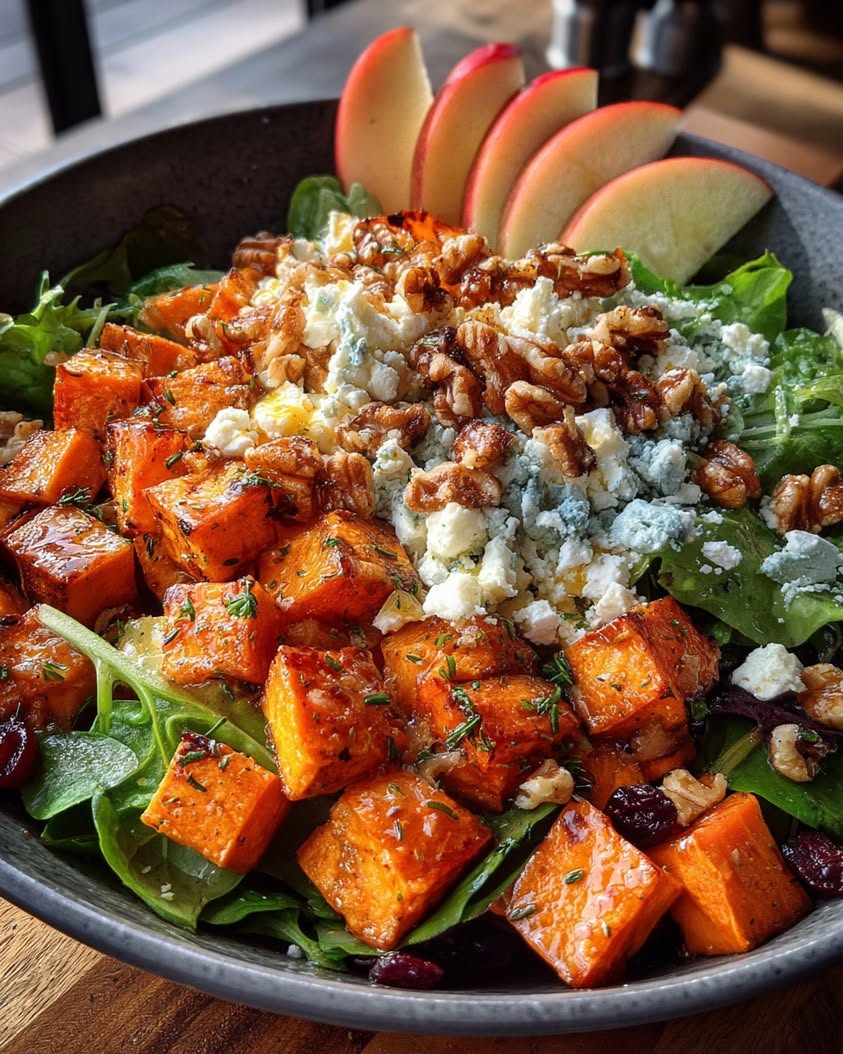
Roasted Sweet Potato, Apple & Feta Salad with Maple Walnut Crunch: The Ultimate Fall Side Dish
This roasted sweet potato and apple salad recipe perfectly captures the essence of autumn in a single, stunning bowl. Imagine tender, caramelized sweet potatoes mingling with crisp, slightly tart apples, all tossed together with creamy feta cheese and a delightful maple walnut crunch. Consequently, this dish delivers a symphony of textures and flavors that will become your new seasonal favorite. Moreover, it strikes an ideal balance between wholesome ingredients and indulgent taste, making it a crowd-pleaser for any occasion.
The magic of this sweet potato and apple salad lies in its beautiful contrast. Warm, roasted vegetables meet fresh, crisp fruit, while salty cheese plays against sweet, candied nuts. Furthermore, the entire ensemble comes together with a simple, tangy vinaigrette that highlights every component. This recipe is not just a side dish; it is a vibrant, edible centerpiece that celebrates the best produce of the fall harvest. Ultimately, it is a testament to how simple ingredients can create an extraordinary eating experience.
Creating this roasted sweet potato and apple salad requires minimal effort for maximum reward. The process is straightforward, involving roasting the sweet potatoes to perfection, quickly candying the walnuts, and assembling everything just before serving. As a result, you get a dish that feels both rustic and elegant. Whether you are preparing a cozy family dinner or contributing to a festive potluck, this salad is guaranteed to impress. It is the ultimate fall side dish that beautifully bridges the gap between hearty and refreshing.
Quick Recipe Highlights
- Flavor Profile: This salad masterfully combines sweet, savory, salty, and tangy notes. The natural sweetness of the roasted sweet potatoes and maple syrup is balanced by the salty feta and the sharp, acidic punch from the vinaigrette.
- Texture: You will experience a wonderful interplay of soft and creamy roasted sweet potatoes, crisp and juicy apple slices, crunchy candied walnuts, and the soft crumble of feta cheese. This variety makes every single bite exciting and satisfying.
- Aroma: As the sweet potatoes roast, they release a warm, caramelized scent that fills your kitchen. The candied walnuts add a rich, toasty maple aroma, creating an unmistakably cozy and inviting fall fragrance.
- Visual Appeal: The salad is a feast for the eyes with its vibrant orange sweet potatoes, green and red apple slices, white feta crumbles, and deep brown walnuts. The colors are a direct reflection of a classic autumn palette.
- Skill Level Needed: This is an exceptionally beginner-friendly recipe. The techniques are basic, primarily involving chopping, roasting, and a simple stovetop step for the walnuts. Therefore, even novice cooks can achieve fantastic results with confidence.
- Special Equipment: You only need a standard baking sheet, a small saucepan, and a large mixing bowl. No fancy or specialized kitchen tools are required, making this recipe accessible to virtually everyone.
Recipe Overview
- Difficulty Level: This roasted sweet potato and apple salad is rated easy because it uses fundamental cooking techniques. The steps are simple to follow, and the margin for error is very small. Consequently, it is an excellent recipe for building kitchen confidence while producing a dish that looks and tastes sophisticated.
- Category: This dish fits perfectly into several categories, including side dishes, salads, and vegetarian mains. It is substantial enough to serve as a light lunch yet versatile enough to accompany a wide variety of main courses like roasted chicken, turkey, or pork.
- Cuisine: While not tied to one specific tradition, this salad draws inspiration from modern American farm-to-table cooking. It emphasizes fresh, seasonal produce and simple, clean flavors that allow the quality of the ingredients to truly shine through.
- Cost: The recipe is very budget-friendly, utilizing affordable, staple ingredients. Sweet potatoes and apples are typically inexpensive, especially during their peak season. Furthermore, a small amount of feta and walnuts goes a long way in terms of flavor and texture.
- Season: This is the quintessential fall recipe. It is best made from late September through November when sweet potatoes and crisp apples are at their absolute peak of flavor and freshness, offering the best texture and sweetness.
- Occasion: It is incredibly versatile for events. Serve it at a casual weeknight dinner, a festive Thanksgiving feast, a weekend potluck with friends, or even pack it for a satisfying next-day lunch. It reliably suits any autumn gathering.
Why You’ll Love This Roasted Sweet Potato and Apple Salad
First and foremost, the taste and texture appeal of this salad is absolutely undeniable. Every single forkful delivers a complex and satisfying experience. You get the warm, creamy softness of the roasted sweet potato contrasted with the cool, crisp snap of a fresh apple. Subsequently, the salty, creamy feta cheese cuts through the sweetness, while the maple-glazed walnuts provide a final, irresistible crunch. This harmonious combination of flavors and textures is what will have you coming back to this recipe again and again throughout the fall season.
From a convenience standpoint, this roasted sweet potato and apple salad is a dream to prepare. The hands-on active time is surprisingly short. While the sweet potatoes are roasting in the oven, you have plenty of time to prepare the other components like the walnuts, dressing, and apple slices. This efficient workflow makes it an ideal choice for a busy weeknight or when you are preparing multiple dishes for a holiday meal. Moreover, the ingredients are easy to find at any standard grocery store, eliminating any stressful shopping trips.
The nutritional advantages of this dish are another significant reason to love it. Sweet potatoes are a powerhouse of beta-carotene and fiber, while apples contribute vitamins and additional dietary fiber. Walnuts add healthy fats and omega-3s, and the olive oil in the dressing is a source of heart-healthy monounsaturated fats. Consequently, this salad is not just delicious; it is genuinely nourishing. It provides sustained energy from complex carbohydrates and helps you feel full and satisfied, making it a smart choice for healthy eating.
This salad also holds immense social and entertaining value. Its stunning visual presentation, with vibrant autumn colors, makes it a beautiful addition to any table. It is a guaranteed conversation starter at potlucks and holiday dinners. Furthermore, because it is a crowd-pleaser that appeals to both adults and children, it takes the stress out of menu planning. You can confidently serve this roasted sweet potato and apple salad knowing it will be met with enthusiasm and requests for the recipe.
Finally, the cost-effectiveness and accessibility of this recipe are major benefits. It transforms humble, inexpensive ingredients into a dish that feels special and gourmet. You do not need to invest in expensive or hard-to-find items. Essentially, this salad demonstrates that eating well does not have to be complicated or costly. It is an accessible recipe for cooks of all budgets and skill levels, proving that the best meals often come from the simplest, most honest ingredients.
Historical Background and Cultural Significance
The origin story of salads combining sweet and savory elements is a long and cross-cultural one. While this specific recipe is a modern creation, its roots can be traced to culinary traditions that value the use of seasonal, local produce. The combination of fruit with vegetables and cheese appears in various forms across European and Middle Eastern cuisines. For instance, the practice of adding apples to salads is common in German and Scandinavian cooking, while the use of feta cheese points towards Mediterranean influences. This roasted sweet potato and apple salad is a contemporary fusion of these timeless ideas.
The cultural importance of this dish lies in its celebration of the autumn harvest. For centuries, communities have created recipes that showcase the bounty available at a specific time of year. Sweet potatoes and apples are both iconic fall crops in many parts of North America. Consequently, this salad has become a symbol of seasonal eating and modern homesteading. It reflects a cultural shift towards appreciating whole foods and creating dishes that are both delicious and visually representative of the time of year, much like a pumpkin pie or apple crisp.
The evolution of this recipe is a testament to changing dietary trends and flavor preferences. The classic Waldorf salad, with its apples, walnuts, and celery, was an early precursor. Modern versions, however, have moved towards incorporating roasted vegetables for deeper flavor and more complex textures. The addition of roasted sweet potato is a relatively recent innovation that adds heartiness and warmth, transforming a light salad into a more substantial side dish or main course. This evolution shows how recipes adapt to our desire for meals that are satisfying, nutritious, and full of bold flavor contrasts.
Regional variations of this concept are endless and encourage culinary creativity. In the American South, you might find a version with pecans instead of walnuts and a tangy buttermilk dressing. A Northeastern adaptation could include sharp cheddar cheese and dried cranberries. Meanwhile, a West Coast interpretation might feature arugula as the base and a lemon-tahini dressing. This flexibility is part of the recipe’s enduring appeal. It serves as a fantastic template that home cooks can personalize based on their local ingredients and personal taste preferences, ensuring it never gets boring.
Ingredient Deep Dive
Sweet potatoes are the hearty foundation of this salad. Historically, they originated in Central or South America over 5,000 years ago and were later spread across the globe by European explorers. Nutritionally, they are packed with beta-carotene, which converts to Vitamin A, and are an excellent source of fiber, Vitamin C, and manganese. When selecting sweet potatoes, look for firm specimens with smooth, unblemished skin. Store them in a cool, dark, and well-ventilated place, but not in the refrigerator. For substitutions, you can use cubed butternut squash or even carrots, though the flavor profile will shift slightly.
Apples provide the essential fresh, crisp contrast in this dish. Culturally, apples have a rich history in many mythologies and are deeply ingrained in American tradition, thanks to figures like Johnny Appleseed. They are a good source of dietary fiber and Vitamin C. For this salad, choose a firm, crisp variety that holds its shape when sliced, such as Honeycrisp, Granny Smith for tartness, or Pink Lady. Store apples in the refrigerator to maintain crispness. If you need to substitute, firm pears are an excellent alternative, offering a similar texture and a subtly different sweetness.
Feta cheese brings a salty, tangy creaminess that balances the sweetness. This brined cheese has its origins in Greece and is a staple of Mediterranean cuisine. It is typically made from sheep’s or goat’s milk, which can make it easier to digest for some people. Feta is a good source of calcium and protein. Look for feta blocks packed in brine for the best flavor and texture. Store it in its brine in the refrigerator. For a dairy-free version, you can use crumbled tofu marinated in lemon juice and salt, or a vegan feta alternative.
Walnuts are transformed into a sweet and crunchy topping. They are one of the oldest tree foods, cultivated for thousands of years. Walnuts are renowned for their high content of alpha-linolenic acid, an omega-3 fatty acid. Always choose walnuts that smell fresh and are not shriveled or rubbery, as they can turn rancid. For the best flavor, store them in an airtight container in the freezer. If you have a nut allergy, pepitas (pumpkin seeds) make a wonderful substitution; simply toast them with the maple syrup for a similar crunchy element.
Common Mistakes to Avoid
- Overcrowding the Baking Sheet: If you pack the sweet potato cubes too tightly on the pan, they will steam instead of roast. This results in soft, mushy potatoes without the desirable caramelized edges. Always use a large enough baking sheet and spread the cubes in a single layer with some space between them for optimal browning.
- Underseasoning the Sweet Potatoes: Sweet potatoes need a generous amount of salt and pepper before roasting. Skipping this step or being too light-handed will leave the main component of your salad tasting bland. Remember to season every layer of your dish, starting with the roasted vegetables.
- Burning the Maple Walnuts: The maple syrup can burn very quickly in the pan. Consequently, you must use medium-low heat and stir the walnuts constantly. The moment you smell a deep, toasted aroma and the syrup has coated the nuts and thickened, immediately transfer them to parchment paper to cool and harden.
- Adding the Apples Too Early: If you slice and add the apples long before serving, they will oxidize and turn brown. Furthermore, they can become soggy if tossed with the dressing too far in advance. For the freshest taste and crispest texture, prepare the apples just before you are ready to assemble and serve the entire salad.
- Using the Wrong Apple Variety: A soft apple like a Red Delicious will become mushy and mealy in the salad. You need a crisp, firm variety that can hold its own against the other ingredients. Granny Smith, Honeycrisp, or Fuji apples are all reliable choices that provide a satisfying crunch.
- Neglecting to Let the Sweet Potatoes Cool Slightly: Adding the feta cheese to piping hot sweet potatoes will cause it to melt into a greasy, unappealing mess. Let the roasted sweet potatoes cool for at least 10-15 minutes before combining them with the cheese and fresh apples. This preserves the distinct texture of each ingredient.
- Skipping the Toasting Step for the Walnuts: Even if you are candying them, you should start with raw walnuts. Toasting them first, even briefly, deepens their nutty flavor and ensures a crisper final texture. Do not add maple syrup to cold, raw walnuts straight from the bag.
- Creating a Soggy Dressing: A common error is using too much oil in the vinaigrette, which can make the salad feel heavy and greasy. Follow the ratio of acid to oil carefully. Alternatively, you can dress the salad components lightly and serve extra dressing on the side for individuals to add as they prefer.
Essential Techniques
Roasting the sweet potatoes is the most critical technique for developing flavor. This dry-heat cooking method caramelizes the natural sugars in the potatoes, creating a sweet, deep, and complex taste that boiling cannot achieve. To master it, ensure your oven is fully preheated and cut the potatoes into uniform, half-inch cubes for even cooking. A common pitfall is skipping the step of tossing them in oil, which is essential for crispness. You will know they are perfectly roasted when the edges are browned and caramelized, and the cubes are tender enough to be easily pierced with a fork.
Candying the walnuts is a simple stovetop process that elevates them from a simple nut to a gourmet garnish. The technique involves gently toasting the walnuts in maple syrup until the syrup reduces and clings to them, creating a sweet, glassy coating. The key is to use medium-low heat and stir constantly to prevent the sugar in the syrup from burning. A major pitfall is walking away from the pan, even for a moment. Visual cues for success are a bubbling, thickening syrup that completely coats the nuts and a rich, toasted aroma. Immediately spreading them on parchment paper prevents them from clumping together as they cool and harden.
Creating a balanced vinaigrette is a fundamental skill for any salad. The goal is to emulsify the oil and acid into a cohesive dressing that lightly coats the ingredients without separation. For this recipe, the sharpness of the vinegar or lemon juice is crucial for cutting through the sweetness of the potatoes and maple. Whisk the dressing vigorously or shake it in a jar to properly combine the ingredients. A common mistake is under-seasoning the dressing; always taste it and adjust the salt, pepper, or acid as needed. The perfect vinaigrette should taste bright and balanced, not overly oily or harshly acidic.
Pro Tips for Perfect Roasted Sweet Potato and Apple Salad
For extra-crispy sweet potatoes, soak the cubed potatoes in cold water for 30 minutes before roasting. This step draws out excess starch, resulting in a much crispier exterior. Just be sure to pat them completely dry with a clean kitchen towel before tossing them with oil and seasonings.
Add a savory dimension to the walnuts by sprinkling them with a tiny pinch of flaky sea salt and a crack of black pepper when they come out of the pan. This sweet-and-salty combination makes them even more addictive and complex.
Prevent apple browning by tossing the sliced apples in a small spoonful of the dressing or a squeeze of lemon juice immediately after cutting. The acid creates a barrier that significantly slows down the oxidation process, keeping your apples looking fresh and vibrant.
Boost the dressing’s flavor by adding a teaspoon of whole grain or Dijon mustard. The mustard not only adds a subtle sharpness but also acts as an emulsifier, helping to keep the oil and vinegar blended together for a longer period.
Customize the salad greens to your preference. While the recipe is often served without a green base, adding a bed of hearty greens like baby kale, arugula, or spinach can turn it into a more substantial main course salad.
For a warm salad experience, assemble the dish while the sweet potatoes are still warm. The gentle heat will slightly wilt any greens you’ve added and make the flavors meld together beautifully, creating a comforting and cozy dish.
Toast the walnuts in a dry pan for a few minutes before adding the maple syrup. This extra step deepens their nutty flavor and ensures they have a crisp texture that will hold up once coated in the sweet syrup.
Variations and Adaptations
Regional variations can take this salad on a delicious journey. For a Southern twist, substitute the walnuts with pecans and add a handful of dried cherries. A Mediterranean version could include chopped Kalamata olives, fresh oregano, and a lemon-oregano vinaigrette. Meanwhile, an autumnal Italian-inspired salad might feature radicchio for bitterness and a balsamic glaze drizzle. These adaptations show how the core template of roasted vegetable and fruit salad is wonderfully adaptable to different flavor palettes and culinary traditions from around the world.
Seasonal adaptations keep this recipe exciting all year round. In the winter, use roasted squash and pomegranate arils. For a spring version, try roasted asparagus and strawberries with goat cheese. A summer adaptation could feature roasted corn and peaches with a cilantro-lime vinaigrette. The principle remains the same: a roasted vegetable base paired with a fresh, seasonal fruit, a creamy cheese, and a crunchy nut element. This flexibility ensures you can enjoy the concept of this salad with the very best produce any season has to offer.
Dietary modifications are straightforward and effective. For a vegan version, simply omit the feta cheese or use a high-quality vegan feta alternative. To make it gluten-free, ensure all your packaged ingredients like vinegar are certified gluten-free, which they typically are. For a nut-free salad, replace the walnuts with toasted sunflower seeds or pepitas. If you are watching your sugar intake, you can reduce the amount of maple syrup in the walnuts or use a sugar-free syrup alternative. The salad is naturally vegetarian and can be easily adjusted to fit many dietary needs without sacrificing flavor.
Serving and Presentation Guide
Plating techniques can elevate this humble salad into a restaurant-quality dish. Instead of tossing everything haphazardly in a bowl, try building the salad in layers. Start with a base of greens if using, then artfully arrange the roasted sweet potatoes. Scatter the apple slices and crumbled feta over the top, and finally, garnish generously with the maple walnuts. This method ensures that every beautiful component is visible and that the textural contrasts remain distinct until the moment it is served and tossed at the table.
Garnishing ideas add the final touch of elegance. A final drizzle of high-quality extra virgin olive oil or a balsamic reduction over the assembled salad looks stunning. Fresh herb sprigs like thyme or rosemary reinforce the fall theme. For a pop of color and a burst of tartness, a scattering of pomegranate arils is exceptional. A light dusting of smoked paprika or sumac on the feta cheese can add visual interest and a subtle flavor twist. These small details demonstrate care and attention, making the dish feel special.
Traditional accompaniments for this salad include holiday roasts like turkey, ham, or a standing rib roast. It also pairs wonderfully with roasted chicken, pork chops, or grilled sausages. For a vegetarian feast, it can be served alongside a hearty lentil loaf or stuffed acorn squash. Consider the overall menu and choose a main course that will complement, rather than compete with, the salad’s sweet and savory profile. Its versatility is one of its greatest strengths, allowing it to fit seamlessly into a wide range of meal plans.
Wine and Beverage Pairing
Wine pairings for this salad should balance its sweet and savory nature. A dry Riesling is a fantastic choice because its bright acidity and slight stone fruit notes complement the sweet potatoes and apples without overpowering them. Alternatively, a crisp Rosé with its red fruit flavors and clean finish can cut through the richness beautifully. For red wine lovers, a light-bodied Pinot Noir with low tannins and earthy notes pairs well without clashing with the salad’s diverse flavors. The key is to avoid heavily oaked or high-tannin wines that could conflict with the sweetness in the dish.
Non-alcoholic alternatives can be just as sophisticated. A sparkling apple cider provides effervescence and echoes the apple in the salad. For a warmer option, a ginger-turmeric tea offers a spicy counterpoint to the sweet elements. Alternatively, a simple glass of chilled club soda with a squeeze of lime and a sprig of mint cleanses the palate between bites. These beverages enhance the dining experience by providing refreshing contrasts that highlight the salad’s complex flavor profile without the need for alcohol.
Storage and Shelf Life
Storage methods are crucial for maintaining the salad’s quality. The assembled salad is best enjoyed immediately, but you can store leftovers in an airtight container in the refrigerator for up to 2 days. Be aware that the apples will soften and the walnuts will lose some of their crunch over time. For optimal results, store the components separately. Keep the roasted sweet potatoes, dressing, candied walnuts, and sliced apples in their own containers. This strategy allows you to assemble fresh portions as needed, preserving the intended textures for longer.
Signs of spoilage to watch for include a sour smell, slimy texture on the sweet potatoes or apples, or mold. The vinaigrette and high acidity from the apples and dressing help to preserve the salad for a short time, but it is not meant for long-term storage. Do not freeze the assembled salad, as the texture of the fresh apples and greens will be destroyed upon thawing. The roasted sweet potatoes alone can be frozen for up to 3 months, but they may be best used in soups or mashes after freezing, as their texture will be softer.
Make Ahead Strategies
A smart prep timeline can make weeknight dinners or holiday cooking effortless. Up to two days in advance, you can roast the sweet potatoes and store them in the fridge. The maple walnuts can also be made ahead and stored at room temperature in an airtight container. The vinaigrette can be prepared and stored in a jar in the refrigerator for up to a week. The only component you should prepare the day of serving is the apple, to prevent browning and sogginess. This divide-and-conquer approach drastically reduces your final prep time.
Storage between steps is simple. Let the roasted sweet potatoes cool completely before transferring them to a sealed container in the refrigerator. The candied walnuts must be cooled completely on the parchment paper before being stored in an airtight container at room temperature; storing them in the fridge can introduce moisture and make them sticky. When you are ready to serve, you can serve the sweet potatoes cold, at room temperature, or gently reheated in the microwave or a warm oven. Assemble everything just before serving for the very best texture and flavor.
Scaling Instructions
Halving the recipe is straightforward for smaller households. Simply divide all the ingredient quantities by two. Use a smaller baking sheet for the sweet potatoes to ensure they still have room to roast properly and not steam. The cooking time for the sweet potatoes and walnuts may be slightly less, so keep a close eye on them. This scaled-down version is perfect for a cozy dinner for two with minimal leftovers.
Doubling or tripling the recipe for a crowd requires minor adjustments. Use two or three baking sheets for the sweet potatoes, and rotate the pans in the oven halfway through cooking to ensure even browning. You may need to candy the walnuts in two separate batches to avoid overcrowding the pan, which would lead to steaming instead of proper candying. Mix the salad in a very large bowl or divide the assembly between two bowls. When scaling up, it becomes even more important to prepare components ahead of time to manage your workflow smoothly on the day of your event.
Nutritional Deep Dive
The macro breakdown of this salad is well-balanced. The sweet potatoes and apples provide complex carbohydrates for sustained energy, while the walnuts and olive oil contribute healthy fats that aid in nutrient absorption and promote satiety. The feta cheese adds a modest amount of protein. This combination helps to keep blood sugar levels stable and prevents the energy crash that can come from meals high in simple sugars. It is a satisfying dish that fuels your body effectively.
Micronutrient analysis reveals a wealth of vitamins and minerals. Sweet potatoes are famously rich in Vitamin A (as beta-carotene), which is essential for vision and immune function. Apples provide Vitamin C and various antioxidants. Walnuts are a top source of manganese and copper, and they also contain important phytonutrients. The olive oil in the dressing is a source of Vitamin E. Together, these ingredients create a nutrient-dense meal that supports overall health, from cellular function to inflammation reduction.
Dietary Adaptations
For a vegan adaptation, replace the feta cheese with a plant-based alternative. Many grocery stores now carry excellent vegan feta made from tofu, almonds, or coconut oil. Alternatively, you can use creamy, marinated tofu cubes. The flavor profile will be slightly different but still delicious. Ensure the maple syrup you use is certified vegan, as some sugar processing methods use animal bone char. This simple swap makes the salad entirely plant-based while maintaining its core structure and appeal.
A dairy-free version follows the same principle as the vegan adaptation by omitting the feta cheese. To replace the creamy, tangy element that feta provides, consider adding a drizzle of tahini-lemon sauce or using creamy avocado slices. The fat and creaminess from the avocado can mimic the mouthfeel that the cheese would normally provide. The salad is still incredibly flavorful and satisfying without the dairy, making it suitable for those with lactose intolerance or a milk allergy.
Troubleshooting Guide
If your sweet potatoes are soggy instead of caramelized, the issue is likely overcrowding on the pan or insufficient oven heat. For a solution, always preheat your oven fully and use a large enough baking sheet to hold the potatoes in a single layer. Do not skip the step of tossing them in oil, as this is crucial for achieving a crispy exterior. If you are making a large batch, use two baking sheets and rotate them halfway through the cooking time to ensure even heat distribution and proper browning on all sides.
If the flavor balance seems off, you can easily correct it. If the salad is too sweet, add more acid in the form of lemon juice or vinegar to the dressing. A pinch of salt can also help balance sweetness. If it is too acidic, a drizzle of olive oil or a bit more maple syrup can mellow it out. If the walnuts have become sticky or soft, you can re-crisp them by spreading them on a baking sheet and placing them in a 300°F oven for 5-7 minutes. Most flavor and texture issues have simple, effective fixes.
Recipe Success Stories
Community feedback for this roasted sweet potato and apple salad has been overwhelmingly positive. Many readers report that it has become their go-to fall potluck dish, consistently earning them compliments and recipe requests. One home cook shared that she now makes a double batch every Sunday for weekday lunches, and her entire family looks forward to it. Another reader mentioned that it was the first salad her young children actually asked for seconds of, thanks to the sweet potatoes and maple walnuts. These stories highlight the recipe’s broad appeal and reliability.
Variation successes from our readers are inspiring. One person added crumbled cooked bacon for a smoky twist, while another used goat cheese instead of feta for a tangier profile. A creative cook added a sprinkle of chili powder to the sweet potatoes before roasting for a sweet and spicy kick. Another successful adaptation involved using a base of massaged kale, which held up beautifully for leftovers the next day. These personal touches demonstrate how this recipe serves as a fantastic canvas for individual creativity, allowing everyone to make it their own.
Frequently Asked Questions
Can I make this salad ahead of time? You can prepare the components ahead of time, but for the best texture, assemble it just before serving. Roast the sweet potatoes and make the walnuts and dressing up to two days in advance. Store them separately in the refrigerator (except the walnuts, which stay at room temp). Slice the apples and assemble the salad right before you plan to eat it to prevent sogginess and browning.
What is the best apple to use in this salad? The best apples are firm and crisp varieties that hold their shape and provide a juicy crunch. Excellent choices include Honeycrisp, Granny Smith for a tart contrast, Fuji, or Pink Lady. Avoid soft apples like Red Delicious, as they will become mushy and mealy when mixed with the other ingredients and dressing.
Can I use a different type of nut? Absolutely. Pecans are a wonderful substitute for walnuts and offer a classic fall flavor. Almonds or hazelnuts would also work well. Just be sure to chop them to a similar size and follow the same candying process with the maple syrup. For a nut-free version, use toasted pumpkin seeds (pepitas) or sunflower seeds.
Is this salad served warm or cold? It is most commonly served at room temperature. This allows the flavors to meld together beautifully. You can assemble it with the sweet potatoes still slightly warm, which will gently wilt any greens you’ve added, or you can use cooled sweet potatoes for a more traditional cold salad. Both methods are delicious.
How can I make the walnuts extra crunchy? For the crunchiest walnuts, toast them in a dry skillet over medium heat for 3-5 minutes before you add the maple syrup. This step deepens their flavor and ensures a firm base. Then, when you add the syrup and cook it down, the nuts will become perfectly candied and maintain a satisfying snap.
Can I add a protein to make it a main course? Yes, this salad makes a fantastic main dish with added protein. Grilled chicken breast, pan-seared shrimp, or flaked canned salmon are all excellent additions. For a plant-based protein, consider adding a cup of cooked quinoa, lentils, or chickpeas. These additions make the salad more filling and nutritionally complete for a standalone meal.
My sweet potatoes are burning on the bottom. What did I do wrong? This usually happens if the oven temperature is too high or if you are not using enough oil. Ensure your oven is calibrated correctly. Also, tossing the sweet potatoes thoroughly in oil helps create a protective layer. Using parchment paper on your baking sheet can also prevent direct contact and reduce the risk of burning.
Can I use frozen sweet potato cubes? You can, but the texture will be different. Frozen sweet potatoes often contain more water, which can lead to steaming instead of roasting. They will be softer and less likely to achieve those desirable caramelized edges. If you must use frozen, do not thaw them first, and spread them in a single layer on a well-oiled, parchment-lined baking sheet. Pat them dry if possible and expect a slightly longer cooking time.
Additional Resources
If you loved this roasted sweet potato and apple salad, you might enjoy exploring other seasonal salad recipes. A hearty Kale and Brussels Sprout Salad with a lemon-parmesan dressing offers a similar robust texture. For another sweet and savory combination, try a Butternut Squash and Cranberry Salad with a maple vinaigrette. Our Quinoa Salad with Roasted Vegetables and Feta is another excellent make-ahead option for healthy lunches. These recipes all share a focus on fresh, flavorful ingredients and satisfying textures that make eating well a true pleasure.
For mastering the techniques used in this recipe, consider our in-depth guides. We have a comprehensive tutorial on How to Roast Any Vegetable Perfectly, which covers temperature, oil, and seasoning for a variety of veggies. Our guide to Making the Perfect Vinaigrette Every Time breaks down the science of emulsification and flavor balancing. Additionally, a post on Easy Meal Prep Strategies can help you integrate recipes like this into your busy weekly routine, ensuring you always have healthy, delicious food ready to go.
PrintRoasted Sweet Potato, Apple & Feta Salad with Maple Walnut Crunch
Description
A vibrant autumn salad featuring roasted sweet potatoes, crisp apples, creamy feta, and a sweet and crunchy maple walnut topping.
Ingredients
For the Crust:
- 2 medium sweet potatoes, peeled and cubed
- 2 tbsp olive oil
- 1 tsp smoked paprika
- Salt and black pepper to taste
- 1 large apple, thinly sliced
- 4 cups mixed greens
- 1/2 cup crumbled feta cheese
- 1/2 cup walnuts, roughly chopped
- 2 tbsp maple syrup
- 2 tbsp apple cider vinegar
- 1 tbsp Dijon mustard
Instructions
1. Prepare the Crust:
- Preheat oven to 400°F (200°C). Toss sweet potato cubes with olive oil, smoked paprika, salt, and pepper. Spread on a baking sheet and roast for 20-25 minutes, until tender and slightly caramelized.
- While sweet potatoes roast, prepare the maple walnut crunch. In a small skillet over medium heat, toast walnuts for 2-3 minutes. Add maple syrup and stir constantly for 1-2 minutes until walnuts are coated and sticky. Remove from heat and let cool.
- In a small bowl, whisk together apple cider vinegar, Dijon mustard, and a pinch of salt and pepper to make the dressing.
- In a large salad bowl, combine mixed greens, roasted sweet potatoes, sliced apple, and crumbled feta. Drizzle with dressing and toss gently to combine.
- Top the salad with the maple walnut crunch just before serving.
Notes
You can customize the seasonings to taste.

I’m Shaykee—born in Morocco, seasoned across continents. From airplane galleys to home kitchens, I share the flavors and stories that shaped my journey.