
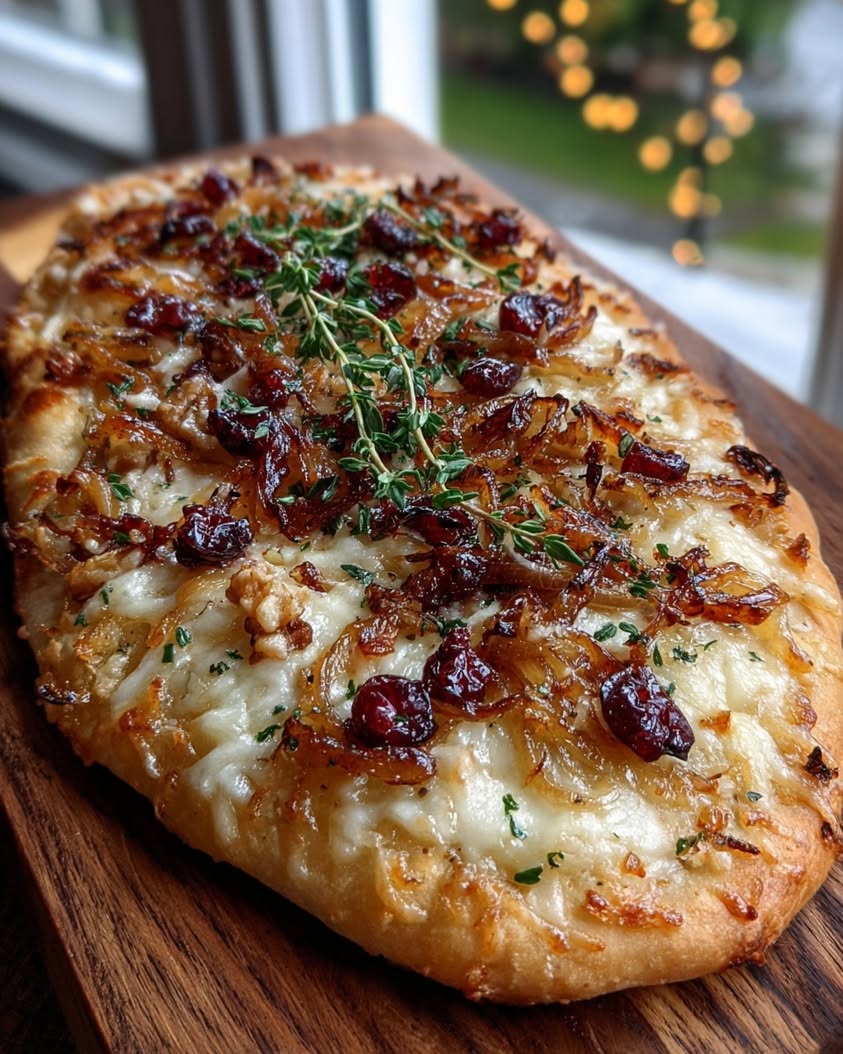
Savory-sweet Rustic Flatbread! Caramelized onions, tart cranberries & melted Gruyère cheese. The perfect easy appetizer or light meal. #Flatbread #Appetizer #Cranberry #Gruyere #EasyRecipe
Imagine pulling a golden, bubbling flatbread from your oven. The air fills with the incredible aroma of sweet caramelized onions and nutty Gruyère cheese. This rustic flatbread recipe combines sophisticated flavors with surprisingly simple preparation. Consequently, you get a dish that looks and tastes gourmet without requiring professional chef skills. The contrast of sweet and savory elements creates a memorable eating experience that will impress your family and guests alike.
This caramelized onion and cranberry flatbread serves as the perfect centerpiece for any gathering. Furthermore, it works beautifully as an appetizer, a light lunch, or even a elegant dinner option. The combination of textures from the crisp crust, gooey cheese, and chewy cranberries provides incredible mouthfeel. Additionally, the visual appeal of the finished dish makes it perfect for holiday entertaining or special weeknight meals. You will love how this recipe transforms basic ingredients into something extraordinary.
The beauty of this Gruyère cheese flatbread lies in its versatility and approachability. Meanwhile, the ingredient list remains accessible and the techniques straightforward. You achieve restaurant-quality results using your standard home kitchen equipment. The process of slowly caramelizing onions becomes almost therapeutic, filling your kitchen with wonderful scents. Ultimately, this recipe delivers maximum flavor impact with minimal fuss, making it a go-to choice for busy cooks who still want to eat well.
Quick Recipe Highlights
- Flavor Profile: This savory-sweet flatbread features deeply caramelized onions that provide a rich, sweet base. The tart dried cranberries cut through the richness beautifully, while the nutty Gruyère cheese adds a sophisticated, complex flavor. A hint of fresh thyme ties all the elements together with its earthy aroma.
- Texture: You get a wonderful contrast of textures in every bite. The flatbread base becomes crisp and slightly chewy around the edges. Meanwhile, the melted Gruyère cheese turns wonderfully gooey, and the cranberries maintain a pleasant chewiness. The caramelized onions add a silky, jam-like quality that complements the other textures perfectly.
- Aroma: As this flatbread bakes, your kitchen fills with an irresistible fragrance. The sweet scent of caramelizing onions blends with the nutty aroma of melting Gruyère. Additionally, the herbal notes of thyme and the slight tartness from the cranberries create a complex olfactory experience that will have everyone gathering in the kitchen.
- Visual Appeal: This flatbread presents beautifully with its golden-brown crust and bubbling cheese surface. The ruby-red cranberries create stunning visual contrast against the pale yellow cheese and golden onions. Sprigs of fresh thyme add a touch of green that makes the entire dish look professionally prepared and inviting.
- Skill Level Needed: This recipe requires basic kitchen skills like slicing onions and using a baking sheet. The caramelization process needs patience rather than advanced technique. Consequently, even beginner cooks can achieve excellent results by following the simple steps and timing guidelines provided.
- Special Equipment: You need only standard kitchen equipment including a baking sheet, skillet, and basic utensils. A pizza cutter or sharp knife makes serving easier. Parchment paper proves helpful for preventing sticking and ensuring easy cleanup after baking.
Recipe Overview
- Difficulty Level: This recipe earns its easy rating because it uses store-bought flatbread or pizza dough, eliminating the most challenging step. The techniques involve simple slicing, sautéing, and baking. Furthermore, the recipe forgives small timing variations, making it accessible for cooks of all experience levels. The instructions provide clear guidance for each step to ensure success.
- Category: This versatile dish fits multiple categories including appetizers, light meals, and party food. It works perfectly as a starter for a multi-course dinner. Alternatively, it serves as a satisfying lunch or light dinner when paired with a simple green salad. The flexibility makes it a valuable addition to your recipe collection.
- Cuisine: This flatbread draws inspiration from French and Italian culinary traditions while maintaining a modern American sensibility. The use of Gruyère cheese nods to French cuisine, while the flatbread format has Italian roots. Meanwhile, the cranberry addition reflects contemporary American fusion cooking that prioritizes flavor combinations over strict tradition.
- Cost: This recipe represents excellent value given the impressive final result. The main expenses include Gruyère cheese and fresh cranberries when in season. Fortunately, you can often find these ingredients at reasonable prices, especially when purchasing from warehouse clubs or during holiday sales. The overall cost remains lower than ordering similar dishes at restaurants.
- Season: While this flatbread works year-round, it particularly shines during fall and winter months. The warming flavors of caramelized onions and melted cheese provide comfort during colder weather. Additionally, fresh cranberries become readily available in autumn, making this an ideal holiday season appetizer for Thanksgiving and Christmas gatherings.
- Occasion: This flatbread suits everything from casual family dinners to elegant entertaining. It makes perfect game day food when cut into small squares. Meanwhile, it works beautifully as an appetizer for dinner parties or holiday celebrations. The recipe scales easily to feed small gatherings or larger crowds without compromising quality.
Why You’ll Love This Recipe
The flavor combination in this savory-sweet flatbread creates an unforgettable taste experience. The deep, rich sweetness of properly caramelized onions forms the foundation of the flavor profile. Meanwhile, the tart pop of cranberries provides a bright counterpoint that cleanses the palate. The nutty, slightly salty Gruyère cheese brings everything together with its complex flavor and perfect meltability. Each component complements the others without any single element dominating. Consequently, you get a balanced, sophisticated flavor that feels both comforting and exciting.
Preparation convenience makes this recipe a weeknight hero despite its gourmet appearance. Using pre-made flatbread or pizza dough significantly reduces active kitchen time. Furthermore, the topping ingredients require minimal prep beyond slicing onions and shredding cheese. The caramelization process mostly involves occasional stirring rather than constant attention. This means you can multitask while the onions cook, perhaps preparing a simple salad to accompany your flatbread. The straightforward assembly takes mere minutes before the oven does the rest of the work.
Nutritional advantages include better control over ingredients compared to restaurant versions. You determine the amount and quality of cheese, oil, and other components. The onions provide antioxidants and prebiotic fibers that support gut health. Meanwhile, cranberries contribute vitamin C and various phytonutrients. Using whole grain flatbread adds fiber and nutrients absent from traditional white flour bases. The protein from cheese helps create a more satisfying meal that keeps you full longer than carbohydrate-heavy alternatives.
Social and entertaining value comes from the impressive presentation and crowd-pleasing flavors. This flatbread looks beautiful when served whole on a wooden board for guests to admire before slicing. The combination of familiar and sophisticated elements appeals to diverse tastes. Additionally, the recipe easily adapts to various dietary needs with simple substitutions. Serving this at parties often sparks conversation about the unique flavor pairing. People frequently request the recipe, giving you the satisfaction of sharing a culinary success.
Cost-effectiveness becomes apparent when comparing this homemade version to similar restaurant dishes. Gourmet flatbreads often cost fifteen dollars or more at restaurants, while this homemade version costs significantly less per serving. The ingredients remain accessible at most supermarkets without requiring special trips to gourmet stores. Furthermore, you likely already have many components like olive oil, salt, and pepper in your pantry. The excellent value proposition makes this recipe worth incorporating into your regular cooking rotation.
Historical Background and Cultural Significance
Flatbread represents one of humanity’s oldest prepared foods, dating back thousands of years across numerous cultures. The basic concept of flattened dough cooked on hot surfaces appears in ancient Egyptian, Mesopotamian, and Indus Valley civilizations. These early versions served as practical sustenance rather than gourmet fare. Meanwhile, the specific combination of toppings reflects more recent culinary innovation. The marriage of caramelized onions and cheese has roots in French onion soup, while the addition of fruit nods to Italian flavor pairing traditions.
Cultural importance stems from flatbread’s role as a universal food canvas across civilizations. Every culture developed its own version using local ingredients and cooking methods. From Indian naan to Middle Eastern mana’eesh, the concept remains remarkably consistent. The modern gourmet flatbread trend emerged from California pizza culture in the late 20th century. Chefs began experimenting with non-traditional toppings, moving beyond tomato sauce and mozzarella. This creative freedom allowed for combinations like caramelized onions and cranberries that might seem unusual in traditional contexts but delight modern palates.
Evolution of the recipe demonstrates how culinary traditions adapt over time. Early flatbreads typically featured simple toppings like herbs, oil, or salt when available. The introduction of New World ingredients like cranberries expanded possibilities dramatically. Meanwhile, globalization made ingredients like Gruyère cheese accessible worldwide. Contemporary recipes often blend elements from multiple culinary traditions, creating fusion dishes that reflect our interconnected food landscape. This particular recipe represents that evolution beautifully by combining European cheese-making traditions with American native fruits.
Regional variations might include different cheeses, fruits, or preparation methods based on local ingredients. In Provence, a similar flatbread might feature goat cheese and figs. German versions could include smoked cheese and apples. The cranberry addition particularly resonates with North American traditions given the fruit’s native status. Meanwhile, the caramelized onion technique has strong associations with French cuisine. This recipe’s beauty lies in its adaptability to whatever excellent local ingredients you have available while maintaining the core sweet-savory balance.
Ingredient Deep Dive
Yellow onions form the flavor foundation through the magical process of caramelization. These common kitchen staples transform dramatically when cooked slowly over low heat. Their natural sugars break down and develop complex, sweet flavors that provide depth to countless dishes. Nutritionally, onions offer quercetin, a powerful antioxidant, along with vitamin C and B vitamins. When selecting onions, choose firm, heavy specimens with dry, papery skins and no soft spots. Store them in a cool, dark, well-ventilated place away from potatoes. If unavailable, you can substitute shallots for a more delicate flavor or red onions for color.
Gruyère cheese brings sophisticated nutty flavor and excellent melting qualities to this flatbread. This Swiss cheese traditionally comes from the Canton of Fribourg and boasts AOP protection. Its complex flavor develops during aging, which typically lasts five months to over a year. Nutritionally, Gruyère provides high-quality protein, calcium, and phosphorus. When selecting Gruyère, look for a firm texture with minimal moisture and a natural rind. Store wrapped in parchment paper inside your refrigerator’s cheese drawer. For substitutions, Comté, Beaufort, or even a good quality Emmentaler work well, though each will slightly alter the final flavor profile.
Dried cranberries contribute tart sweetness and chewy texture that contrasts beautifully with the other ingredients. Unlike fresh cranberries, dried versions have concentrated flavor and longer shelf life. They provide dietary fiber, various antioxidants, and some vitamin C. When purchasing dried cranberries, check the ingredient list to avoid brands with excessive added sugar. Store them in a cool, dark place in an airtight container. If you prefer, you can substitute other dried fruits like cherries, apricots, or golden raisins, though each will change the flavor dynamic. Rehydrating them briefly in warm water can make them plumper and juicier.
Fresh thyme adds an herbal note that ties all the elements together beautifully. This Mediterranean herb has been used culinary and medicinally for centuries. Its tiny leaves pack intense flavor that withstands cooking well. Thyme contains various essential oils with potential health benefits. When selecting fresh thyme, look for vibrant green leaves without signs of drying or yellowing. Store it in the refrigerator with stems in water, covered loosely with plastic. If fresh isn’t available, use one-third the amount of dried thyme, though the flavor will be less vibrant. Rosemary or oregano can work as alternatives with different but complementary flavor profiles.
Common Mistakes to Avoid
- Rushing the caramelization process represents the most common error. Onions need time to properly break down and develop their sweet, complex flavor. Cooking them over too high heat will cause burning rather than proper caramelization. Instead, maintain low to medium-low heat and plan for the full twenty to thirty minutes needed.
- Overloading the flatbread with toppings leads to a soggy crust that fails to crisp properly. The weight of excessive ingredients prevents the heat from reaching the dough efficiently. Furthermore, too much moisture from onions or cheese can make the center limp. Use a light hand when applying toppings for the best textural results.
- Using pre-shredded cheese often compromises texture and flavor. These products typically contain anti-caking agents that prevent proper melting. Additionally, pre-shredded cheese loses flavor more quickly than block cheese. Always shred your cheese just before using for superior meltability and fresher taste in your final dish.
- Neglecting to preheat your baking surface results in uneven cooking. A hot baking sheet or pizza stone helps create a crisp crust by immediately cooking the bottom of the dough. If using a baking sheet, place it in the oven during preheating. This simple step dramatically improves your flatbread’s texture.
- Skipping the resting period for rolled dough causes shrinkage during baking. The gluten needs time to relax after being worked. Letting the shaped dough rest for ten to fifteen minutes before topping ensures it maintains its shape and doesn’t pull back from the edges of your pan.
- Cutting the flatbread immediately after removing it from the oven seems logical but creates problems. The cheese needs a minute to set, and immediate slicing can drag toppings across the surface. Allow your flatbread to rest for two to three minutes before cutting for cleaner slices and better presentation.
- Using the wrong onion variety affects the final flavor. Sweet onions like Vidalia contain more water and different sugar content than standard yellow onions. While they work in a pinch, yellow onions provide the best flavor foundation for proper caramelization in this recipe.
- Baking at incorrect oven temperature leads to suboptimal results. Too low, and your crust won’t crisp properly; too high, and your toppings may burn before the crust cooks through. Use an oven thermometer to verify your oven’s accuracy and adjust accordingly for perfect results every time.
Essential Techniques
Caramelizing onions properly forms the foundation of this recipe’s flavor profile. This technique transforms sharp, pungent raw onions into sweet, deeply flavorful golden strands through slow, gentle cooking. Begin by slicing onions uniformly to ensure even cooking. Use a heavy-bottomed skillet and moderate heat with a small amount of fat. Stir occasionally but not constantly, allowing the onions to develop color between stirs. The process typically takes twenty to thirty minutes, during which the onions will reduce significantly in volume. Properly caramelized onions should reach a rich golden-brown color with a jam-like consistency. Avoid the temptation to rush by increasing heat, as this causes burning rather than proper caramelization.
Shaping the flatbread dough correctly ensures even cooking and appealing presentation. Whether using store-bought pizza dough or flatbread, handle it gently to maintain air pockets that create light texture. On a lightly floured surface, press the dough outward from the center using your fingertips. Avoid using a rolling pin, which can compress the dough too much. For irregular rustic shapes, simply stretch and pat the dough rather than aiming for perfect geometry. The edges should be slightly thicker than the center to contain toppings and create an appealing crust. If the dough springs back excessively, let it rest for five minutes before continuing. The final shape should be thin but not transparent, typically about ¼-inch thick.
Cheese distribution affects both flavor and visual appeal in the finished flatbread. Shred your cheese just before using for optimal meltability and flavor. Distribute it evenly across the surface, leaving a small border around the edges for proper crust formation. Avoid piling cheese too thickly in any one area, as this can create greasy spots where fat separates during baking. The cheese layer should be substantial enough to hold other toppings in place but not so thick that it overwhelms other flavors. Some bare spots create attractive visual variation in the finished product. Remember that cheese will spread and bubble during baking, so a seemingly sparse application often proves sufficient.
Pro Tips for Perfect Savory-sweet Rustic Flatbread
Add a pinch of sugar to your onions during caramelization to enhance browning and flavor development. This small addition helps jumpstart the Maillard reaction that creates complex flavors. Meanwhile, the natural sweetness complements both the cheese and cranberries beautifully.
Brush the flatbread edges lightly with olive oil before baking for an exceptionally crisp, golden crust. This simple step promotes browning and adds flavor to what might otherwise be plain dough. The oil creates a barrier that prevents sogginess from topping moisture.
Toast your flatbread base briefly before adding toppings for extra crispiness. Place the naked dough in a hot oven for three to four minutes until surface dries slightly. This technique prevents a soggy center by creating a moisture barrier before toppings go on.
Combine different cranberry types for more complex flavor and texture. Use mostly dried cranberries but add a few fresh ones for tart bursts. The fresh berries will soften and release juice during baking, creating pockets of intense flavor.
Grate a small amount of nutmeg over the cheese before baking for enhanced warmth and complexity. This classic pairing with Gruyère and onions elevates the flavor profile subtly but significantly. The spice should complement rather than dominate the other flavors.
Let caramelized onions cool slightly before topping your flatbread to prevent dough from cooking prematurely. Hot onions can begin cooking the dough surface, potentially creating a gummy layer between crust and toppings. Five minutes of cooling makes a noticeable difference.
Experiment with herb combinations beyond thyme for personalized flavor profiles. Rosemary adds piney notes, while sage provides earthiness. Marjoram offers sweeter herbal notes that complement the cranberries particularly well. Always use fresh herbs for the brightest flavor.
Finish the baked flatbread with a drizzle of reduced balsamic vinegar for professional presentation and flavor enhancement. The sweet-tart acidity cuts through the richness of cheese and onions beautifully. Reduce balsamic by half over low heat until syrupy before using.
Variations and Adaptations
Regional variations might include different cheeses that reflect local traditions. For a French twist, use goat cheese instead of Gruyère and add Herbes de Provence. Italian-inspired versions could feature mozzarella with basil and sun-dried tomatoes. Mediterranean adaptations might include feta cheese, Kalamata olives, and oregano. Meanwhile, American versions could incorporate sharp cheddar and apple slices for a fall-inspired profile. Each variation maintains the core concept of sweet and savory balance while reflecting different culinary traditions. The basic flatbread method remains consistent regardless of topping choices.
Seasonal adaptations allow this recipe to shine year-round with appropriate ingredient adjustments. Spring versions might feature asparagus tips and fresh peas with lemon zest. Summer adaptations could include zucchini ribbons, fresh corn, and cherry tomatoes. Autumn remains perfect for the original cranberry version or substitutions with roasted squash. Winter variations might incorporate roasted root vegetables and hardy greens. Using seasonal produce ensures peak flavor and often better pricing. The cooking method adapts easily to whatever vegetables are at their best during different times of year.
Dietary modifications make this recipe accessible to various eating preferences and restrictions. For gluten-free needs, use certified gluten-free pizza dough or flatbread. Vegan adaptations replace cheese with plant-based alternatives and use oil instead of butter for caramelizing. Lower-carb versions can employ cauliflower crust or low-carb tortillas as bases. Dairy-free options might feature nutritional yeast or vegan Parmesan alternatives. Each modification requires slight technique adjustments but maintains the essential flavor balance that makes the recipe successful.
Flavor variations can transform this flatbread into entirely different experiences while using the same basic method. Spicy versions might include chili flakes, pickled jalapeños, or spicy sausage. Earthy adaptations could feature mushrooms sautéed with garlic and rosemary. Bright, fresh variations might include citrus zest and fresh herbs added after baking. Smoky profiles could incorporate smoked cheese, bacon, or smoked paprika. The basic template of crisp flatbread with balanced toppings adapts to nearly any flavor profile you wish to explore.
Serving and Presentation Guide
Plating techniques should highlight the rustic, homemade quality of this flatbread. Serve it whole on a wooden cutting board or large platter for dramatic presentation. Use a pizza cutter or sharp chef’s knife to slice it at the table, allowing guests to appreciate the beautiful whole creation before cutting. For individual servings, transfer slices to plates using a small spatula to maintain structural integrity. Consider placing the flatbread on a bed of fresh herbs or greens for color contrast. The presentation should feel generous and abundant rather than overly precise or fussy.
Garnishing ideas should enhance both visual appeal and flavor without overwhelming the main components. Fresh herb sprigs like thyme, rosemary, or parsley provide color and fragrance. A light dusting of finely grated Parmesan or Pecorino cheese adds salty complexity. Meanwhile, a drizzle of high-quality olive oil or reduced balsamic vinegar creates professional-looking finishing touches. For textural contrast, sprinkle with toasted pine nuts or walnuts just before serving. Microgreens or edible flowers make elegant garnishes for special occasions. Always apply garnishes after slicing to ensure even distribution and prevent dragging during cutting.
Traditional accompaniments might include simple green salads with bright vinaigrettes that cut through the flatbread’s richness. Arugula salads with lemon dressing work particularly well. For heartier meals, serve with soup—tomato bisque or butternut squash soup make excellent pairings. Charcuterie boards complement this flatbread beautifully for entertaining, allowing guests to create varied bites. Pickled vegetables provide acidity that cleanses the palate between rich bites. These traditional pairings have stood the test of time because they create balanced meals that satisfy multiple taste preferences.
Wine and Beverage Pairing
Wine pairings should complement both the sweetness of caramelized onions and the richness of Gruyère cheese. Medium-bodied red wines with good acidity work beautifully—Pinot Noir represents a classic choice that won’t overwhelm the dish. Beaujolais Villages offers fruit-forward notes that harmonize with the cranberries. For white wine lovers, Chardonnay with moderate oak provides enough body to stand up to the flavors. Meanwhile, dry Riesling cuts through the richness with its acidity while complementing the sweet elements. Rosé with good structure offers versatility that works year-round. Ultimately, choose wines you enjoy drinking, as personal preference matters most.
Non-alcoholic alternatives should provide refreshment without overwhelming the complex flavors of the flatbread. Sparkling water with citrus slices offers cleansing bubbles that reset the palate between bites. Herbal teas like peppermint or chamomile provide soothing counterpoints to the rich flavors. Fruit-infused waters with cranberries, oranges, and herbs mirror the flatbread’s ingredients elegantly. For something more substantial, tart cherry juice mixed with sparkling water creates a sophisticated alcohol-free spritzer. Meanwhile, kombucha with ginger or berry notes provides complexity that stands up to the food. These options ensure everyone can enjoy appropriate beverage pairings regardless of alcohol preference.
Coffee and tea pairings work surprisingly well with this savory-sweet flatbread when served as a light meal. Medium-roast coffee with low acidity complements without overwhelming the dish’s subtle flavors. Earl Grey tea’s bergamot notes provide aromatic complexity that harmonizes with the herbal elements. For after-dinner service, espresso’s intensity stands up to the remaining flavor notes on the palate. Chai tea’s warming spices echo the comfort food quality of the flatbread. Meanwhile, green tea’s vegetal notes provide contrast to the rich ingredients. These pairings work particularly well for brunch or lunch servings when coffee and tea feel more appropriate than alcohol.
Storage and Shelf Life
Storage methods depend on whether you’re dealing with leftovers or planning ahead. For cooked flatbread, cool completely to room temperature before storing to prevent condensation that creates sogginess. Place slices in a single layer in an airtight container, separating layers with parchment paper. Refrigerate for up to three days, though the crust will soften over time. For longer storage, freezing works surprisingly well—wrap individual slices tightly in plastic wrap then aluminum foil before freezing. Properly stored frozen flatbread maintains quality for up to two months. Always label containers with dates to track freshness.
Reheating instructions should restore crispness without overcooking the toppings. For best results, use an oven or toaster oven preheated to 375°F. Place slices directly on the oven rack or a baking sheet for five to seven minutes until heated through and crisp. Microwave reheating creates soggy texture and should be avoided. For frozen slices, reheat directly from frozen, adding a few extra minutes to the heating time. If you have an air fryer, it works excellently for reheating at 350°F for three to four minutes. The goal is to restore the original texture as much as possible rather than simply warming the flatbread.
Signs of spoilage include off odors, visible mold, or slimy texture on the surface. The high cheese and onion content means this flatbread should be refrigerated promptly after cooling. Discard any leftovers that have been at room temperature for more than two hours. If freezing, quality deteriorates after two months, though the flatbread remains safe longer when properly frozen. When in doubt, remember that dairy products and cooked vegetables have relatively short shelf lives compared to other foods. Your senses provide the best guidance—when anything seems questionable, err on the side of caution and discard.
Make Ahead Strategies
Prep timeline can be spread over several days to make final assembly quick and easy. Caramelized onions can be prepared up to five days in advance and refrigerated in an airtight container. The flavor actually improves with a day of resting. Dough can be made or purchased ahead and refrigerated for two days or frozen for up to three months. Cheese can be shredded a day in advance and stored wrapped in the refrigerator. Cranberries require no advance preparation beyond measuring. This staggered approach means you can have nearly everything ready before your event, reducing last-minute stress.
Storage between steps requires attention to food safety and quality maintenance. Caramelized onions should be cooled completely before refrigeration to prevent condensation. Store them in a sealed container with a thin layer of olive oil on top to prevent drying. Dough should be wrapped tightly in plastic wrap to prevent crust formation. Shredded cheese benefits from being stored in a zip-top bag with air pressed out. All components should be brought to near room temperature before assembly for even cooking. Proper storage between prep stages ensures that your advance work translates to excellent final results.
Assembly tips for make-ahead preparation focus on maintaining texture until baking. You can fully assemble the flatbread up to two hours ahead if refrigerated immediately. Place the topped flatbread on parchment paper on a baking sheet, cover loosely with plastic wrap, and refrigerate. For longer advance preparation, consider partial assembly—spread the caramelized onions on the dough and refrigerate, then add cheese and cranberries just before baking. This approach prevents the cranberries from absorbing too much moisture and becoming soggy. Always bring the assembled flatbread to room temperature for fifteen minutes before baking for optimal crust development.
Scaling Instructions
Halving the recipe works beautifully for smaller households or when testing the recipe. Use half of all ingredients and prepare on a smaller baking surface. The caramelized onion process remains the same regardless of quantity—simply use a smaller skillet. Baking time may decrease slightly due to the smaller size, so begin checking for doneness a few minutes early. The flavor balance remains consistent when properly scaled. This adaptation makes the recipe practical for couples or small families while maintaining the essential experience. Freezing leftovers becomes less necessary with appropriately scaled batches.
Doubling or tripling the recipe requires some equipment and technique adjustments. Use multiple baking sheets and rotate them halfway through baking for even cooking. You may need to work in batches unless you have commercial oven capacity. When caramelizing larger onion quantities, use multiple skillets or work in batches to avoid steaming. Consider whether you have adequate counter space for assembling multiple flatbreads simultaneously. For very large batches, you can par-bake the crusts ahead of time and add toppings just before final baking. This approach streamlines service for parties or events where you’re feeding a crowd.
Timing modifications become necessary when scaling for different group sizes. While active prep time increases linearly with batch size, some elements like oven preheating remain constant. For multiple batches, have all ingredients prepped and organized before beginning assembly. Stagger baking times if oven space is limited, keeping assembled flatbreads refrigerated until their turn. For large events, consider baking ahead and reheating briefly just before serving—the quality difference is minimal when properly executed. Always factor in extra time when working with larger quantities to avoid rushed preparation that compromises results.
Nutritional Deep Dive
Macro breakdown varies based on specific ingredients but generally provides balanced nutrition. The flatbread crust contributes complex carbohydrates for sustained energy. Cheese provides high-quality protein and fats that promote satiety. Onions and cranberries add fiber that supports digestive health. The overall macronutrient profile makes this dish satisfying without being overly heavy. For precise tracking, input your specific brand choices into a nutrition calculator, as store-bought dough and cheese varieties differ significantly. The presence of all three macronutrients in reasonable proportions makes this a well-rounded light meal option.
Micronutrient analysis reveals valuable vitamins and minerals throughout the ingredients. Onions provide vitamin C, B vitamins, and potassium. Cranberries contribute vitamin C, vitamin E, and various antioxidants. Cheese offers calcium, phosphorus, and vitamin A. Using whole grain dough increases fiber, B vitamins, and minerals like magnesium and iron. The combination creates a nutrient-dense dish that provides more than just calories. While not a complete meal by itself, it contributes meaningfully to your daily micronutrient needs when served with appropriate accompaniments like salads or vegetables.
Health benefits extend beyond basic nutrition when considering the specific ingredients. The quercetin in onions has anti-inflammatory properties. Cranberries contain proanthocyanidins that support urinary tract health. Fermented cheeses like Gruyère provide probiotics for gut health. Olive oil contains heart-healthy monounsaturated fats. When prepared with attention to oil and cheese quantities, this flatbread can be part of a balanced diet. The satisfaction factor also contributes to healthy eating habits by preventing later overconsumption of less nutritious foods. Mindful enjoyment of flavorful, well-prepared food supports overall wellness beyond mere nutrient counting.
Dietary Adaptations
Gluten-free adaptation simply requires using certified gluten-free pizza dough or flatbread. Many excellent commercial options now exist, or you can make your own using gluten-free flour blends. The topping ingredients naturally contain no gluten, making this an easy modification. Ensure all packaged ingredients like dried cranberries are certified gluten-free if cross-contamination is a concern. The method remains identical regardless of the dough type used. This adaptation makes the recipe accessible to those with celiac disease or gluten sensitivity without sacrificing flavor or texture.
Dairy-free adaptation replaces Gruyère with plant-based alternatives that melt well. Several brands now offer credible vegan cheese options made from nuts, coconut, or other bases. Nutritional yeast can add cheesy flavor if the meltability of vegan cheese proves unsatisfactory. Use olive oil instead of butter for caramelizing the onions. The other ingredients naturally contain no dairy, making this another straightforward modification. Test your chosen vegan cheese beforehand to ensure you like its flavor and melting characteristics when baked.
Vegan adaptation combines the dairy-free modifications with attention to other animal products. Ensure your dough contains no dairy or honey—many commercial pizza doughs are accidentally vegan. Use olive oil for caramelizing rather than butter. Select a vegan cheese that melts satisfactorily, or create a cheese-like sauce from cashews and nutritional yeast. The other components naturally fit vegan parameters. This adaptation allows everyone to enjoy the flavor combination regardless of dietary philosophy while maintaining the essential sweet-savory balance.
Troubleshooting Guide
Texture issues often stem from moisture management problems. Soggy centers typically result from overloading with toppings or underbaking. To fix, bake longer at a slightly lower temperature to evaporate moisture without burning the top. If the crust remains pale while toppings cook, place the baking sheet on a lower oven rack. For tough, chewy crust, the dough may have been overworked or insufficiently rested before baking. Next time, handle the dough more gently and allow proper resting time. These adjustments typically resolve the most common texture complaints.
Flavor balance problems might include excessive sweetness or saltiness. If your flatbread tastes too sweet, the onions may have caramelized with too much sugar or the cranberries might be overly sweetened. Counteract with a sprinkle of flaky sea salt before serving. If too salty, the cheese likely contained more sodium than anticipated—use low-sodium versions next time. For bland results, ensure you adequately seasoned the onions during caramelization and used enough fresh herbs. A finishing drizzle of quality olive oil can rescue underseasoned flatbread beautifully.
Temperature problems usually involve oven calibration or rack placement. If the bottom burns before the top browns, your oven likely runs hot or the rack sits too low. Use an oven thermometer to verify temperature accuracy and adjust accordingly. If the cheese browns before the crust crisps, the rack may be too high. For even cooking, position the rack in the center and rotate the baking sheet halfway through. These simple adjustments prevent the frustration of unevenly cooked flatbread.
Recipe Success Stories
Community feedback consistently highlights how this recipe impresses guests despite its simplicity. Many home cooks report receiving compliments that make them feel like professional chefs. One reader served it at a holiday party where guests assumed it came from a gourmet pizzeria. Another mentioned it became their signature dish for book club meetings, with friends requesting it repeatedly. The combination of approachable technique and sophisticated results seems to resonate across cooking skill levels. These success stories demonstrate how the recipe delivers on its promise of restaurant-quality flavors from home kitchen preparation.
Variation successes show the recipe’s adaptability to different tastes and ingredient availability. One family substituted peaches for cranberries during summer with excellent results. Another used sweet potatoes and sage for a fall variation that became a Thanksgiving tradition. Vegetarian versions with roasted vegetables please mixed-diet gatherings, while meat additions satisfy carnivorous guests. The basic template proves remarkably flexible while maintaining its essential character. These adaptations inspire confidence that the recipe can become whatever you need it to be for your specific circumstances and preferences.
Reader suggestions have improved the recipe through collective kitchen wisdom. One cook recommended adding a sprinkle of cornmeal to the baking sheet for extra crispness. Another suggested mixing a small amount of cream cheese with the caramelized onions for richer texture. Several readers confirmed that the make-ahead strategies work perfectly for stress-free entertaining. These community contributions enhance the original recipe while
Print
Rustic Caramelized Onion and Cranberry Flatbread with Gruyère Cheese
Description
A savory-sweet flatbread featuring slow-caramelized onions, tart dried cranberries, and nutty Gruyère cheese on a crisp, rustic crust.
Ingredients
For the Crust:
- 1 lb pizza dough, at room temperature
- 2 large yellow onions, thinly sliced
- 2 tbsp olive oil
- 1/2 cup dried cranberries
- 1 1/2 cups shredded Gruyère cheese
- 1 tsp fresh thyme leaves
- Salt and black pepper to taste
- 1 tbsp balsamic glaze (optional, for drizzling)
Instructions
1. Prepare the Crust:
- Preheat oven to 425°F (220°C). Stretch pizza dough into a rustic oval or rectangle on a parchment-lined baking sheet.
- Heat olive oil in a skillet over medium-low heat. Add onions and cook, stirring occasionally, until deeply golden and caramelized, about 20–25 minutes. Season with salt and pepper.
- Spread caramelized onions evenly over the pizza dough. Top with shredded Gruyère cheese and dried cranberries.
- Bake for 12–15 minutes, until crust is golden and cheese is bubbly. Remove from oven and sprinkle with fresh thyme.
- Drizzle with balsamic glaze if desired, slice, and serve warm.
Notes
You can customize the seasonings to taste.

I’m Shaykee—born in Morocco, seasoned across continents. From airplane galleys to home kitchens, I share the flavors and stories that shaped my journey.