
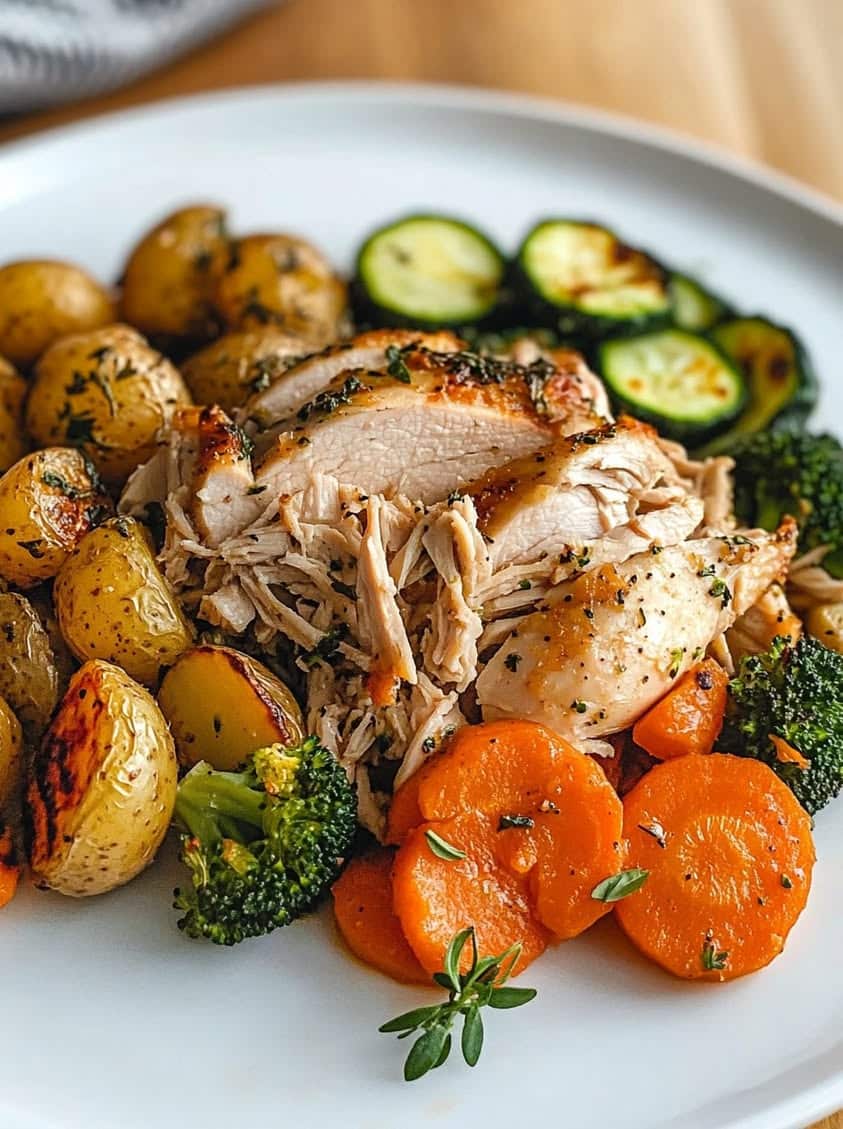
Rustic Thyme-Roasted Chicken with Crispy Potatoes & Caramelized Carrots: A Complete, Comforting One-Pan Meal
Imagine the ultimate Sunday supper, a meal that fills your home with the most incredible aroma and delivers a complete dinner on a single sheet pan. This rustic thyme-roasted chicken with crispy potatoes and caramelized carrots does exactly that. Furthermore, it transforms simple, humble ingredients into a feast worthy of any table. The golden, thyme-roasted chicken skin crackles with flavor, while the potatoes soak up the savory juices and turn perfectly crisp. Meanwhile, the carrots caramelize into sweet, tender bites, and a quick toss of fresh greens adds a vibrant finish. Ultimately, this dish is the epitome of comfort food made elegant and easy.
This recipe celebrates the beauty of a one-pan meal, minimizing cleanup while maximizing taste. The process is wonderfully straightforward, allowing the oven to do most of the work. As the chicken roasts, its drippings season the vegetables roasting beneath, creating a symphony of flavors that are deeply connected. The result is a golden, thyme-roasted chicken with crispy potatoes and caramelized carrots that feels both rustic and refined. Consequently, it is perfect for a cozy family dinner yet impressive enough for casual entertaining. This meal proves that the best dinners are often the simplest ones, built on good technique and great ingredients.
Quick Recipe Highlights
- Flavor Profile: This dish offers a beautiful balance of savory, herbal, and sweet notes. The golden, thyme-roasted chicken provides a deeply savory and umami-rich base. Simultaneously, the caramelized carrots introduce a natural sweetness that contrasts perfectly with the salty, crispy potatoes.
- Texture: You will experience a fantastic textural journey. Expect crackling, crispy chicken skin giving way to succulent, juicy meat. The potatoes achieve a golden exterior with a fluffy interior, while the carrots become tender with lightly caramelized edges. Finally, the fresh greens add a pleasant, crisp contrast.
- Aroma: As it cooks, your kitchen will fill with the warm, earthy scent of roasting thyme and garlic. This herbal fragrance mingles with the savory smell of roasting chicken and the sweet, almost nutty aroma of caramelizing root vegetables. It is the quintessential scent of a comforting, home-cooked meal.
- Visual Appeal: The presentation is stunningly rustic. The chicken emerges with golden-brown, crispy skin. The potatoes turn a deep, inviting gold, and the carrots develop beautiful caramelized spots. A scattering of fresh green herbs or greens on top adds a final pop of color, making the plate look as good as it tastes.
- Skill Level Needed: This is an accessible recipe for most home cooks. It requires basic knife skills for chopping vegetables and the ability to season a chicken. The real skill lies in timing and trusting the roasting process. Therefore, even a beginner can achieve fantastic results by following the steps closely.
- Special Equipment: You need just a few key tools. A large, heavy-duty rimmed baking sheet is essential for this one-pan meal. Additionally, a reliable instant-read thermometer guarantees perfectly cooked chicken. Finally, a good chef’s knife and cutting board make prep work quick and safe.
Recipe Overview
- Difficulty Level: We rate this recipe as easy. The steps are sequential and simple, involving mostly chopping and seasoning. There is no complex sauce-making or intricate techniques. The oven handles the transformative cooking. However, achieving perfect crispness on the potatoes and chicken requires attention to spacing and temperature, which the guide explains clearly.
- Category: This dish falls squarely into the main course category for dinner. It is a complete protein-and-vegetable meal. Additionally, it fits into the comfort food and Sunday supper traditions. It can also be considered a rustic or farmhouse-style meal, perfect for family gatherings or a satisfying weeknight dinner.
- Cuisine: The recipe draws from a broad European and American rustic cooking tradition. The technique of roasting a whole chicken with root vegetables is a cornerstone of French and British country cooking. The use of fresh thyme and garlic nods to Mediterranean flavors, creating a universally appealing, hearty dish.
- Cost: This is a cost-effective meal centered on a whole chicken, which is typically an economical protein choice. Potatoes and carrots are inexpensive, hardy vegetables. Fresh herbs and greens are the only potential splurge, but you can often use dried thyme in a pinch. Overall, it delivers restaurant-quality flavor on a home-cook budget.
- Season: This recipe shines brightest in the fall and winter. Root vegetables like carrots and potatoes are at their peak, and the warm, hearty nature of the meal is ideal for cooler weather. That said, it is truly a versatile dish you can enjoy year-round, especially for a comforting Sunday supper any time.
- Occasion: It is perfect for a relaxed family dinner or a casual weekend gathering with friends. It creates an impressive spread without requiring the host to be stuck in the kitchen. The one-pan nature makes it ideal for easy entertaining. It is also a fantastic meal prep option, yielding delicious leftovers.
Why You’ll Love This Recipe
First and foremost, the taste and texture are utterly irresistible. Each component complements the others perfectly. You get the juicy, herb-infused chicken, the salty crunch of the potatoes, and the sweet softness of the carrots in every bite. This combination satisfies on a deep, comforting level. Moreover, the layers of flavor from the thyme, garlic, and pan drippings create a complexity that belies the simple ingredient list. Every forkful is a celebration of rustic, honest cooking.
Secondly, the convenience factor is a major win. As a true one-pan meal, prep and cleanup are remarkably streamlined. You chop, season, and roast everything together. Consequently, you avoid juggling multiple pots and pans on the stove. This makes the cooking process less stressful and more enjoyable. Furthermore, the active prep time is short, leaving you free while the oven works its magic. It is the ultimate strategy for a delicious, low-fuss dinner after a busy day.
Nutritionally, this meal offers a well-rounded plate. Chicken provides lean protein essential for muscle repair and satiety. Potatoes, often misunderstood, are a good source of vitamin C, potassium, and fiber, especially with the skin on. Carrots deliver a powerhouse of beta-carotene for eye health. The fresh greens added at the end contribute vitamins and a burst of freshness. Together, they create a balanced meal that is both nourishing and deeply satisfying.
For social and entertaining value, this dish is a star. Presenting a whole, golden, thyme-roasted chicken is always impressive. The meal feels generous and celebratory. Because it is mostly hands-off, you can spend time with your guests instead of being tied to the stove. Serving it family-style on a large platter encourages sharing and conversation. It is the kind of meal that creates a warm, welcoming atmosphere and makes everyone feel cared for.
Finally, the cost-effectiveness and accessibility are undeniable. The ingredients are pantry staples and widely available. A whole chicken stretches further than individual cuts, feeding more people for less money. Root vegetables are affordable and have a long shelf life. This recipe demonstrates how to create a spectacular meal without expensive or hard-to-find items. It is accessible cooking at its finest, proving that great food does not require a big budget.
Historical Background and Cultural Significance
The tradition of roasting a whole bird with surrounding vegetables is ancient and nearly universal. Essentially, this method utilized the radiant heat and drippings from the meat to cook and flavor other components, making efficient use of resources and fuel. In Europe, particularly in France and England, the Sunday roast became a cultural institution. Families would return from church to the smell of a chicken or joint of meat slowly roasting, often with potatoes and root vegetables in the pan below. This practice turned a meal into a weekly ritual of gathering and comfort.
Culturally, a roasted chicken symbolizes hospitality, abundance, and home. It is a centerpiece dish, often reserved for family dinners and special occasions. The act of carving at the table is a ceremonial gesture of sharing. In many cultures, offering a guest the best part of the bird is a sign of respect. This rustic thyme-roasted chicken with crispy potatoes and caramelized carrots carries that same spirit of generosity. It is food meant to be shared, to nourish both body and connection.
The recipe has evolved significantly with cooking technology. Historically, roasting was done on a spit over an open fire or in a hearth. The introduction of the enclosed oven allowed for more even, controlled cooking. The modern concept of the “one-pan” or “sheet pan” meal is a direct descendant of these older practices, optimized for contemporary kitchens and busy lives. Today’s versions emphasize ease and efficiency while retaining the core principles of flavor layering and communal eating that have always defined this style of cooking.
Regional variations are endless, reflecting local ingredients and tastes. In Provence, you might find herbes de Provence and olives scattered in the pan. In Italy, rosemary and lemon would be prominent flavors. An American version might include sage and onion. Our recipe, with its focus on fresh thyme and garlic, leans into a classic, versatile flavor profile that appeals broadly. The addition of quick-cooking greens at the end is a modern touch for added nutrition and color, showing how these timeless techniques continue to adapt.
Ingredient Deep Dive
Let us start with the star: the whole chicken. Culturally, chicken is the most widely consumed poultry in the world, prized for its versatility and mild flavor. Nutritionally, it is an excellent source of lean protein, B vitamins, and selenium. For this recipe, select a bird that is plump with smooth, unblemished skin. If possible, choose a higher-welfare chicken for better flavor and texture. Patting the skin completely dry before seasoning is the single most important step for achieving that coveted crispy, golden skin. Store it in the coldest part of your refrigerator and use it by the sell-by date.
Next, consider the humble potato. A staple food for centuries, potatoes sustained populations and fueled exploration. They provide complex carbohydrates for energy, along with vitamin C, potassium, and fiber, especially when the skins are left on. For crispy potatoes, starchy varieties like Russets or Yukon Golds are ideal. Their high starch content creates a fluffy interior and a crisp exterior when roasted. Cut them into even, one-inch pieces so they cook uniformly. Store potatoes in a cool, dark, well-ventilated place away from onions to prevent sprouting.
Carrots bring sweetness and color. Historically, carrots were originally purple or white; the orange variety was cultivated in the Netherlands. They are famously rich in beta-carotene, which the body converts to vitamin A, crucial for vision and immune health. Choose firm, smooth carrots without cracks. For caramelization, cut them into similar-sized pieces to the potatoes. Tossing them in the pan drippings allows their natural sugars to concentrate and brown, creating deep flavor. Store carrots in the crisper drawer of your refrigerator, ideally in a perforated bag to maintain humidity.
Fresh thyme is the aromatic soul of this dish. This ancient herb was used by Egyptians for embalming and by Greeks for courage. Its tiny leaves pack a potent, earthy, and slightly floral punch. Thyme contains thymol, a compound with antioxidant properties. For the best flavor, use fresh sprigs. You can strip the leaves by running your fingers down the stem. If you must substitute, use one-third the amount of dried thyme, but fresh is highly recommended for its brighter note. Store fresh thyme in the refrigerator wrapped in a damp paper towel.
Common Mistakes to Avoid
- Not Drying the Chicken: This is the top error. Moist skin steams instead of roasting, resulting in pale, rubbery skin. Always pat the chicken thoroughly dry inside and out with paper towels before applying any oil or seasoning.
- Crowding the Pan: If the potatoes and carrots are piled on top of each other, they will steam and become soggy. Spread them in a single, even layer with some space between pieces to ensure they roast and crisp properly.
- Underseasoning: Chicken and root vegetables need generous seasoning. Do not be shy with salt and pepper. Season the chicken cavity, under the skin, and over the vegetables. Remember, seasoning draws out natural flavors.
- Using the Wrong Potato: Waxy potatoes like Red Bliss will not get as crispy. Opt for starchy or all-purpose potatoes like Russets or Yukon Golds for the perfect fluffy interior and golden exterior.
- Skipping the Thermometer: Judging doneness by time or color alone is unreliable. An instant-read thermometer inserted into the thickest part of the thigh should read 165°F. This guarantees safe, juicy meat every time.
- Adding the Greens Too Early: Delicate greens like arugula or spinach will wilt into nothing if added before serving. Toss them in at the very end, off the heat, so they just barely wilt from the residual warmth.
- Not Letting the Chicken Rest: Cutting into the chicken immediately lets all the precious juices run out. Let it rest for at least 10-15 minutes after roasting. This allows the juices to redistribute, ensuring every slice is moist.
- Using a Cold Pan: For the crispiest potatoes, preheat your baking sheet in the oven for a few minutes before adding the oil and vegetables. The hot surface gives them a jump start on browning.
Essential Techniques
Properly drying the chicken is a non-negotiable technique. Why is it important? Because water is the enemy of crispness. Any surface moisture must evaporate before the skin can begin to brown and crisp. To master it, use a generous amount of paper towels and pat the bird inside and out until no dampness remains. A common pitfall is rushing this step. The visual cue for success is skin that looks matte and dry to the touch, not glossy or damp.
Creating a single layer of vegetables is crucial for roasting, not steaming. This technique ensures hot air circulates around each piece, promoting even browning and caramelization. To do it, use a large enough pan and resist the urge to overload it. If necessary, use two pans. The pitfall is piling vegetables in a heap. The visual cue for success is seeing space between the potato and carrot pieces on the pan before it goes into the oven.
Testing for doneness with a thermometer guarantees perfect chicken every time. This technique removes all guesswork, preventing dry, overcooked meat or unsafe undercooking. Insert the instant-read thermometer into the thickest part of the thigh, avoiding the bone. The correct internal temperature is 165°F. A common pitfall is checking too early and frequently, which lets heat escape. The visual cue is golden skin and clear juices, but the thermometer provides definitive proof.
The final technique is resting the meat. This allows the muscle fibers, which tightened during cooking, to relax and reabsorb the juices. If you cut immediately, those juices flood the cutting board. To master it, simply transfer the chicken to a cutting board and tent it loosely with foil for 10-15 minutes. The pitfall is slicing due to impatience. The cue for success is visibly juicier and more tender meat when you finally carve.
Pro Tips for Perfect Rustic Thyme-Roasted Chicken
For the crispiest skin, season the chicken and leave it uncovered on a rack in the refrigerator for a few hours or overnight. This air-drying process further dehydrates the skin.
Truss the chicken legs together with kitchen twine. This helps the bird cook evenly and maintains a compact shape for more consistent roasting.
Toss the chopped potatoes and carrots in the oil and seasoning right on the baking sheet to minimize dishwashing. Ensure every piece is lightly coated.
Place the chicken directly on top of the vegetables in the center of the pan. As it roasts, the flavorful drippings will baste the potatoes and carrots underneath.
Halfway through cooking, use a thin spatula to gently loosen and flip the vegetables. This prevents sticking and encourages even browning on all sides.
If the chicken skin is browning too quickly, tent just the bird loosely with a piece of aluminum foil while the vegetables continue to cook.
After removing the chicken to rest, return the pan of vegetables to the oven for 5-10 minutes. This extra time makes them extra crispy.
Use the resting time to quickly wilt your greens. You can toss them in the warm pan off the heat or dress them lightly with lemon juice and olive oil.
Variations and Adaptations
For regional variations, consider a Mediterranean twist with lemon slices, olives, and oregano. A French-inspired version might use herbes de Provence and shallots. An American adaptation could include apple slices and sage for a fall flavor profile. Each region’s staple herbs and produce can transform the core recipe while keeping the comforting one-pan method intact.
Seasonal adaptations are simple and rewarding. In spring, use new potatoes and baby carrots with asparagus added in the last 10 minutes. For summer, try cherry tomatoes and zucchini alongside the chicken. In autumn, incorporate cubed sweet potato or parsnips with the carrots. Winter calls for heartier roots like turnips or rutabaga. Adjusting the vegetables keeps the meal exciting and aligned with what is fresh and local.
Dietary modifications are straightforward. For a gluten-free meal, ensure your seasonings are certified gluten-free, though the base recipe naturally is. To make it dairy-free, simply use olive oil instead of butter if any is called for. For a lower-carb option, increase the volume of non-starchy vegetables like carrots and reduce the potatoes, or substitute with radishes or cauliflower florets which roast beautifully.
Flavor variations can personalize the dish. Swap thyme for rosemary, tarragon, or a blend of Italian herbs. Add spice with smoked paprika or chili flakes to the vegetable seasoning. Introduce sweetness with a drizzle of honey or maple syrup on the carrots in the last 10 minutes of roasting. A splash of balsamic vinegar added to the pan juices creates a quick, flavorful glaze.
Serving and Presentation Guide
For plating, a large, rustic wooden board or a big serving platter works beautifully. First, arrange the crispy potatoes and caramelized carrots as a bed. Then, place the whole roasted chicken or carved pieces on top. Finally, scatter the fresh greens over and around everything. This creates height and visual interest. Alternatively, serve it family-style directly on the heated baking sheet for a casual, inviting presentation.
Garnishing adds the final touch. A few extra fresh thyme sprigs or chopped parsley provide color and reinforce the herbal notes. A sprinkle of flaky sea salt over the chicken skin just before serving enhances crunch and flavor. A drizzle of high-quality extra virgin olive oil or a squeeze of fresh lemon juice can brighten the entire dish right at the table.
Traditional accompaniments are simple. A crusty loaf of bread is perfect for soaking up the delicious pan juices. A light, crisp salad with a vinaigrette dressing balances the richness of the roast. For a more substantial meal, consider a side of simple buttered peas or braised white beans.
Consider temperature carefully. Serve the meal immediately after the chicken has rested and the greens are added. The contrast between the hot, crispy components and the cool, fresh greens is part of the experience. Warm your serving platter slightly to keep everything hot as you bring it to the table.
Wine and Beverage Pairing
For wine pairings, a medium-bodied red like Pinot Noir or Grenache is excellent. Their bright acidity and red fruit notes cut through the richness of the chicken skin and complement the earthy thyme and sweet carrots. Alternatively, a full-bodied white wine like an oak-aged Chardonnay can stand up to the robust flavors. Its buttery notes pair wonderfully with the caramelized vegetables and crispy potatoes.
Non-alcoholic alternatives should offer refreshment and balance. Sparkling water with a twist of lemon or a few cucumber slices cleanses the palate. A tart cranberry spritzer made with unsweetened juice and soda water provides a festive, flavorful option. For something warmer, a lightly sweetened herbal tea, like rosemary or mint, can be a soothing complement to the meal.
If considering beer, opt for a malty, not-too-bitter amber ale or a Belgian-style saison. The slight sweetness of an amber ale mirrors the carrots, while the spicy, herbal notes of a saison echo the thyme. Both have enough carbonation to refresh the palate between bites of this hearty, flavorful one-pan meal.
Storage and Shelf Life
Store leftovers in airtight containers in the refrigerator within two hours of cooking. Separate the chicken meat from the bones and carcass for best results. The roasted vegetables and carved chicken will keep for 3-4 days. The carcass can be frozen to make stock later. Always use shallow containers to allow for rapid cooling, which maintains food safety and quality.
For reheating, use the oven or toaster oven to preserve texture. Reheat chicken and vegetables on a baking sheet at 350°F until warmed through. This method helps re-crisp the potatoes and chicken skin better than a microwave, which can make them soggy. If using a microwave, cover with a damp paper towel to add steam and prevent drying out.
Freezing is possible but with texture trade-offs. The cooked chicken meat freezes well for up to 3 months. The roasted potatoes and carrots will become soft and mealy upon thawing and reheating, so it is not recommended. If you plan to freeze, portion the shredded chicken with some of the pan juices in freezer bags, pressing out all air.
Make Ahead Strategies
You can prep components up to a day in advance. Chop the potatoes and carrots, store them submerged in cold water in the refrigerator to prevent browning. Dry them thoroughly before roasting. Season the chicken and leave it uncovered on a rack in the fridge to dry-brine, which will enhance flavor and crispness. This advance prep cuts your active time before cooking down to just minutes.
For a full make-ahead meal, roast the chicken and vegetables as directed. Let everything cool completely, then store the carved meat and vegetables separately. To serve, reheat the vegetables on a sheet pan in a hot oven to recrisp. Gently warm the chicken in a covered dish with a splash of broth to keep it moist. Assemble and add fresh greens.
The quality impact of make-ahead is minimal if done correctly. The dry-brine step actually improves the chicken. The key is ensuring vegetables are thoroughly dried after their water bath before roasting. Reheating in the oven, not the microwave, is crucial for restoring a pleasant texture to the potatoes and chicken skin.
Scaling Instructions
Halving the recipe is simple. Use a 3-4 pound chicken and reduce vegetables proportionally. A standard half-sheet pan will still provide ample space. Cooking time may reduce slightly, so start checking the chicken’s temperature at the 50-minute mark. The rest of the technique remains identical, ensuring you still get that golden, thyme-roasted chicken with crispy potatoes and caramelized carrots for a smaller household.
Doubling or tripling for a crowd requires planning. You will need multiple baking sheets and oven racks. Rotate the pans top to bottom and front to back halfway through cooking for even browning. Do not overcrowd the pans; it is better to use three pans than to overload two. Stagger putting them in the oven if space is limited. The total cook time may increase by 10-15 minutes due to oven load.
Equipment adjustments are key for scaling. For larger batches, consider using disposable aluminum roasting pans for easy cleanup. Ensure your oven can accommodate multiple pans with proper air circulation. If cooking for a very large group, you might roast chickens and vegetables separately in batches, holding the finished ones in a warm oven until all are done.
Nutritional Deep Dive
This meal provides a balanced macronutrient profile. The chicken offers high-quality protein for satiety and muscle maintenance. Potatoes contribute complex carbohydrates for sustained energy. The olive oil and chicken skin provide healthy fats, which aid in the absorption of fat-soluble vitamins from the carrots. The fresh greens add minimal calories but significant micronutrients and fiber, rounding out the plate.
Micronutrient analysis reveals a wealth of vitamins and minerals. Carrots are famously rich in beta-carotene (vitamin A). Potatoes provide more potassium than a banana and a good dose of vitamin C, especially with the skin on. Chicken is a source of B vitamins, particularly B6 and niacin, which support metabolism. Thyme contains small amounts of iron and vitamin K. Together, they create a nutrient-dense eating experience.
The health benefits are multifaceted. The lean protein supports tissue repair and immune function. The fiber from vegetables and potato skins promotes digestive health. Antioxidants from the carrots, thyme, and olive oil combat oxidative stress. This combination of nutrients supports heart health, vision, and overall vitality, making this comforting meal genuinely good for you.
Dietary Adaptations
For a gluten-free version, this recipe is naturally compliant. Simply double-check that any pre-made seasoning blends used are certified gluten-free. Most single herbs and spices are safe, but cross-contamination can occur in processing facilities.
A dairy-free adaptation is effortless, as the core recipe typically uses oil, not butter. If you see a version that includes butter under the chicken skin, substitute it with extra virgin olive oil. The result will still be flavorful and crispy.
For a lower-carb or keto approach, replace the potatoes with lower-starch vegetables. Excellent options include cauliflower florets, halved Brussels sprouts, or radishes. They will roast in the pan drippings and become tender and flavorful while keeping the carbohydrate count down.
A Paleo adaptation follows similar guidelines: omit the potatoes and use approved vegetables like carrots, onions, and Brussels sprouts. Ensure the chicken is of good quality, and use avocado oil or olive oil for fat. The fresh herbs and greens are perfectly Paleo-friendly.
Troubleshooting Guide
If your chicken skin is not crispy, the culprit is almost always moisture. Next time, pat the chicken drier and consider the refrigerator dry-brine method. Also, ensure your oven is fully preheated. If the skin is browning too fast before the meat is done, tent only the chicken with foil while the vegetables finish cooking.
Soggy potatoes result from overcrowding or insufficient oil. They need space for moisture to evaporate and a thin coat of oil to conduct heat and promote browning. Use a large enough pan and toss the potatoes to ensure each piece is lightly coated. Preheating the pan can also give them a crisper start.
If the carrots are not caramelizing, they might be cut too large or the oven temperature is too low. Cut them into uniform, one-inch pieces. Also, make sure they are in a single layer and tossed in the pan drippings. Their natural sugars need direct contact with the hot pan surface to brown properly.
For dry chicken meat, overcooking is the likely cause. Always use a thermometer and pull the chicken at 165°F in the thigh. Remember, carryover cooking will increase the temperature a few degrees while resting. Letting the chicken rest adequately is also crucial for juiciness.
Recipe Success Stories
Community feedback on this recipe consistently highlights its reliability and crowd-pleasing nature. Many home cooks report it has become their go-to Sunday supper or easy entertaining meal. They love how the single-pan method simplifies cleanup and how the aroma fills the home. Several have mentioned that even picky eaters devour the crispy potatoes and sweet carrots, making it a family favorite.
Variation successes are frequently shared. One cook added sliced fennel to the vegetable mix with rave reviews. Another used sweet potatoes instead of russets for a different flavor profile. A common adaptation is adding whole garlic cloves to the pan, which become soft, sweet, and spreadable. These small tweaks show the recipe’s fantastic flexibility while maintaining its core appeal.
Readers often share brilliant presentation tips. One suggestion is to carve the chicken in the kitchen and arrange it artfully over the vegetables on a platter, garnished with lemon wedges. Another tip is to serve the pan juices in a small gravy boat on the side for drizzling. These ideas elevate the dish from a simple roast to a special occasion centerpiece.
Frequently Asked Questions
Can I use chicken pieces instead of a whole chicken? Absolutely. Use bone-in, skin-on chicken thighs or breasts. Adjust the cooking time downward, as pieces will cook faster than a whole bird. Start checking for doneness at 35-40 minutes.
What type of potato is best for getting crispy? Starchy potatoes like Russets or all-purpose Yukon Golds are ideal. Their high starch content creates a fluffy interior and a crisp, golden exterior when roasted properly.
My vegetables are done before the chicken. What should I do? Simply remove the vegetables to a serving platter and tent them with foil to keep warm. Let the chicken continue roasting until it reaches the safe internal temperature of 165°F.
Can I prepare this the night before? Yes, you can chop the vegetables and store them in water. You can also season the chicken and leave it uncovered in the fridge to dry-brine, which will actually improve the skin’s crispiness.
What greens work best for the final addition? Quick-wilting greens like baby spinach, arugula, or chopped kale are perfect. They add freshness and color. Heartier greens like kale can be tossed in during the last 5 minutes of cooking if you prefer them more tender.
How do I prevent the chicken from sticking to the pan? The layer of vegetables underneath acts as a natural rack. As long as you have enough oil on the vegetables and the pan is not scratched or damaged, sticking should not be an issue.
Is it necessary to truss the chicken? Trussing helps the chicken cook evenly and look neater, but it is not strictly necessary. If you do not truss, the legs may splay open, but the cooking time and result will be very similar.
Can I use dried thyme instead of fresh? You can, but use one-third the amount. Dried thyme is more potent. For the best, brightest flavor, fresh thyme is highly recommended, especially for this rustic thyme-roasted chicken.
What should I do with the leftover carcass? Do not throw it away! It is gold for making homemade chicken stock. Simmer it with onion, carrot, celery, and herbs for several hours to create a flavorful base for soups and sauces.
My family doesn’t like carrots. What can I substitute? Many other root vegetables work beautifully. Try parsnips, turnips, sweet potatoes, or even whole shallots. Cut them into similar-sized pieces to ensure even cooking with the potatoes.
Additional Resources
For related recipes, explore other one-pan wonders like lemon-herb roasted salmon with asparagus or sausage and vegetable sheet pan dinners. These follow the same efficient, flavorful principle. If you love the technique of roasting a whole chicken, consider trying a beer-can chicken or a classic herb-roasted chicken with pan gravy for variety.
Technique guides can elevate your cooking further. Learn how to spatchcock a chicken for faster, more even roasting. Understanding the science of the Maillard reaction (browning) will help you achieve perfect crispness every time. Mastering basic knife skills for chopping vegetables uniformly is another invaluable skill that speeds up prep for this and countless other recipes.
For ingredient information, consider sourcing high-quality, pasture-raised chicken for superior flavor and texture. Learn about different potato varieties and their best uses. Explore the world of fresh herbs beyond thyme—rosemary, sage, and marjoram all bring unique notes to roasted dishes.
PrintRustic Thyme-Roasted Chicken with Crispy Potatoes, Caramelized Carrots & Greens
Description
A comforting one-pan meal featuring juicy roasted chicken seasoned with fresh thyme, paired with crispy golden potatoes, sweet caramelized carrots, and tender sautéed greens.
Ingredients
For the Crust:
- 1 whole chicken (about 4 lbs), patted dry
- 2 lbs baby potatoes, halved
- 4 large carrots, peeled and cut into 1-inch pieces
- 1 bunch kale or Swiss chard, stems removed and chopped
- 4 tbsp olive oil, divided
- 3 tbsp fresh thyme leaves
- 4 cloves garlic, minced
- 1 lemon, sliced
- Salt and black pepper to taste
- 1/2 cup chicken broth
Instructions
1. Prepare the Crust:
- Preheat oven to 425°F (220°C). In a large bowl, toss potatoes and carrots with 2 tbsp olive oil, half the thyme, salt, and pepper. Spread in a single layer on a large baking sheet.
- Season chicken inside and out with salt, pepper, and remaining thyme. Place lemon slices and garlic inside cavity. Rub chicken with 1 tbsp olive oil and place on top of vegetables on the baking sheet.
- Roast for 1 hour to 1 hour 15 minutes, until chicken juices run clear and potatoes are crispy, basting occasionally with pan juices. Let chicken rest 10 minutes before carving.
- While chicken rests, heat remaining 1 tbsp olive oil in a skillet over medium heat. Sauté greens with a pinch of salt until wilted, about 5 minutes. Deglaze skillet with chicken broth and simmer 2 minutes. Serve greens alongside chicken and vegetables.
Notes
You can customize the seasonings to taste.

I’m Shaykee—born in Morocco, seasoned across continents. From airplane galleys to home kitchens, I share the flavors and stories that shaped my journey.