
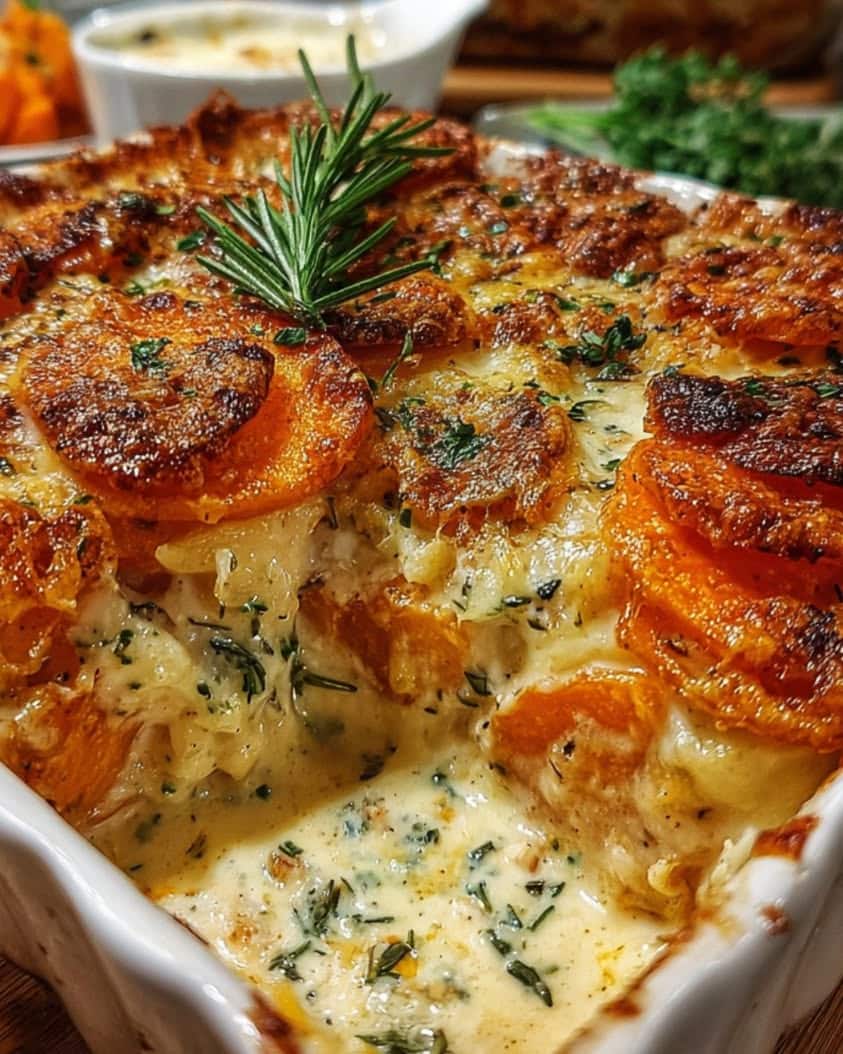
Scalloped Sweet Potatoes with Smoked Gouda and Rosemary: The Ultimate Comfort Food Upgrade
Imagine a dish that perfectly balances sweet and savory flavors with a creamy, luxurious texture. These Scalloped Sweet Potatoes with Smoked Gouda and Rosemary deliver exactly that experience. Furthermore, they transform the humble sweet potato into an elegant side dish worthy of any holiday table. The natural sweetness of the potatoes melds beautifully with the smoky, rich cheese and the aromatic, piney notes of fresh rosemary. Consequently, every bite becomes a complex flavor journey that will have your guests asking for the recipe.
This recipe for Scalloped Sweet Potatoes offers a sophisticated twist on a classic comfort food. Instead of traditional potatoes, we use vibrant sweet potatoes for a nutritional boost and a beautiful color contrast. The smoked Gouda cheese adds a deep, complex flavor that pairs exceptionally well with the earthy rosemary. Moreover, the creamy sauce enveloping each slice bakes into a golden, bubbly masterpiece. Ultimately, this dish proves that side dishes can be the star of the meal, providing both visual appeal and unforgettable taste.
Creating this Scalloped Sweet Potatoes dish is surprisingly straightforward, even for novice cooks. The process involves simple slicing, a quick sauce preparation, and patient baking. Additionally, the aroma that will fill your kitchen as it bakes is absolutely intoxicating. The scent of melting smoked Gouda and herbal rosemary will build anticipation for a memorable meal. Therefore, this recipe not only results in a delicious dish but also creates a wonderful cooking experience that feels both rustic and refined.
Quick Recipe Highlights
- Flavor Profile: These Scalloped Sweet Potatoes feature a masterful balance of sweet, savory, and smoky notes. The natural sweetness of the potatoes is perfectly complemented by the rich, smoky Gouda and the aromatic, earthy rosemary. Consequently, each component works in harmony to create a deeply satisfying taste experience.
- Texture: This dish offers a delightful contrast between the tender, softened sweet potato slices and the creamy, velvety cheese sauce. The top layer bakes to a beautiful golden-brown crust, providing a slight crispness against the soft interior. Moreover, the texture remains consistently luxurious from the first bite to the last.
- Aroma: As these Scalloped Sweet Potatoes bake, your kitchen will fill with an irresistible fragrance. The smoky scent of the melting Gouda cheese blends with the woody, aromatic notes of fresh rosemary. Additionally, the sweet, caramelized scent of the potatoes creates an overall aroma that promises a delicious meal.
- Visual Appeal: The presentation of this dish is truly stunning, with layers of vibrant orange sweet potatoes visible through the creamy sauce. A golden, bubbly cheese crust forms on top, often with flecks of dark green rosemary. Furthermore, the colorful contrast makes it a beautiful centerpiece for any holiday table or special dinner.
- Skill Level Needed: This recipe for Scalloped Sweet Potatoes is accessible for cooks of all experience levels. Basic knife skills for slicing and simple sauce-making are the primary techniques required. Therefore, even beginner cooks can achieve impressive results with careful attention to the instructions.
- Special Equipment: You will need a mandoline for uniformly thin potato slices, although a sharp knife works too. Additionally, a medium saucepan for the cheese sauce and a 9×13 inch baking dish are essential. Consequently, the equipment list is simple and likely already in most home kitchens.
Recipe Overview
- Difficulty Level: We classify these Scalloped Sweet Potatoes as an easy recipe because it involves fundamental cooking techniques. The steps include slicing vegetables, making a simple roux-based sauce, and layering ingredients for baking. Moreover, the process is straightforward without complicated procedures, making it perfect for a home cook looking to create something special without stress. Ultimately, the most challenging aspect is patiently waiting for it to bake to perfection.
- Category: This dish falls squarely into the side dish category, perfect for complementing various main courses. It works beautifully with holiday roasts like turkey or ham, as well as weeknight proteins like chicken or pork. Additionally, its richness and depth of flavor allow it to stand alongside other classic comfort food dishes without being overshadowed.
- Cuisine: While scalloped potatoes have European roots, this version with sweet potatoes and smoked Gouda represents modern American cuisine. The recipe draws inspiration from traditional French cooking techniques while incorporating popular contemporary ingredients. Furthermore, the use of sweet potatoes, a New World food, creates a uniquely American twist on a classic preparation.
- Cost: This recipe for Scalloped Sweet Potatoes is moderately priced, with sweet potatoes being an affordable root vegetable. Smoked Gouda may represent the most significant cost, but a little goes a long way in terms of flavor impact. Additionally, rosemary is often available fresh in small quantities or can be grown at home, keeping costs manageable for a special dish.
- Season: These Scalloped Sweet Potatoes shine during the fall and winter months when sweet potatoes are at their peak. The warm, comforting nature of the dish makes it ideal for holiday gatherings and cold-weather meals. Moreover, the ingredients are readily available year-round, allowing you to enjoy this comfort food whenever the craving strikes.
- Occasion: This dish is perfect for holiday dinners like Thanksgiving, Christmas, or Easter where impressive sides are expected. It also works well for Sunday family dinners, potlucks, or any special occasion meal. Furthermore, its elegant presentation makes it suitable for dinner parties where you want to serve something memorable yet approachable.
Why You’ll Love This Scalloped Sweet Potatoes Recipe
First and foremost, the taste and texture appeal of these Scalloped Sweet Potatoes is absolutely remarkable. The combination of naturally sweet potatoes with smoky, savory cheese creates a complex flavor profile that satisfies multiple taste preferences. Additionally, the creamy sauce and tender potato layers provide a comforting mouthfeel that feels both luxurious and familiar. The aromatic rosemary adds an herbal note that cuts through the richness, preventing the dish from feeling too heavy. Consequently, every element works together to create a truly memorable eating experience that will have people coming back for seconds.
The convenience and preparation benefits of this Scalloped Sweet Potatoes recipe cannot be overstated. While the baking time is substantial, the active prep work is minimal and can be completed in about twenty minutes. Furthermore, the dish can be assembled ahead of time and refrigerated until ready to bake, making it perfect for entertaining. The ingredients are simple and readily available at most grocery stores, with no hard-to-find components. Therefore, this recipe offers an impressive result without requiring extensive culinary expertise or last-minute fussing in the kitchen.
Nutritional advantages represent another compelling reason to love these Scalloped Sweet Potatoes. Sweet potatoes are packed with beta-carotene, vitamin C, and fiber, offering more nutrients than traditional white potatoes. Additionally, when prepared with reasonable portions of cheese and cream, this dish can be part of a balanced diet. The complex carbohydrates in sweet potatoes provide sustained energy, while the dairy contributes protein and calcium. Consequently, you can enjoy this comforting dish while still nourishing your body with valuable vitamins and minerals.
Regarding social and entertaining value, these Scalloped Sweet Potatoes truly excel as a crowd-pleasing side dish. The beautiful presentation with its golden crust and visible layers makes it look professionally prepared. Moreover, the familiar concept of scalloped potatoes with a gourmet twist makes it approachable for various palates while still feeling special. The recipe scales easily to feed a large group, and it travels well if you’re bringing a dish to someone else’s home. Ultimately, it’s a reliable option that will earn you compliments and recipe requests from grateful guests.
Finally, the cost-effectiveness and accessibility of this Scalloped Sweet Potatoes recipe make it a practical choice for regular rotation. Sweet potatoes are typically affordable, especially when in season, and the other ingredients are pantry staples for most cooks. Furthermore, the dish feels luxurious enough for special occasions but uses inexpensive ingredients that won’t break your grocery budget. The recipe is also adaptable to what you have on hand, with several possible substitutions we’ll discuss later. Therefore, you can create an impressive, restaurant-quality side dish without the restaurant price tag.
Historical Background and Cultural Significance
The origin story of scalloped potatoes traces back to European culinary traditions, particularly from England and France. The term “scalloped” originally referred to the method of baking in a cream sauce, not necessarily to the scallop-shaped edges we associate with the word today. Furthermore, potatoes became a staple crop in Europe after their introduction from the Americas, leading to various preparation methods. Traditional scalloped potatoes typically featured thinly sliced white potatoes baked in milk or cream with seasonings. Consequently, this cooking technique became a practical way to transform humble ingredients into a comforting, nourishing dish for families.
The cultural importance of scalloped potatoes lies in their role as a comfort food across various Western cultures. In America, they became a staple of potlucks, church suppers, and family gatherings, representing home cooking at its most satisfying. Additionally, their appearance on holiday tables, particularly alongside Easter ham or Christmas turkey, cemented their status as a celebratory dish. The creamy, carb-heavy nature of the recipe made it practical for feeding large groups economically while still feeling special. Therefore, scalloped potatoes developed deep cultural roots as a dish associated with community, family, and celebration.
The evolution of the scalloped potatoes recipe has been fascinating, with numerous variations emerging over time. Cooks began adding cheese to create potatoes au gratin, while others incorporated onions, garlic, or various herbs for additional flavor. Furthermore, the introduction of sweet potatoes to the traditional preparation represents a more recent innovation that capitalizes on their natural sweetness and nutritional benefits. The use of smoked Gouda in this Scalloped Sweet Potatoes recipe reflects contemporary tastes for bolder, more complex flavors in familiar dishes. Consequently, what began as a simple peasant dish has transformed into a versatile canvas for culinary creativity.
Regional variations of scalloped potatoes exist throughout the world, each with local ingredients and traditions. In Quebec, tourtière often accompanies a version with cheese and meat, while Scandinavian countries might include fish or different dairy products. Additionally, Southern American versions might include spicy peppers or different cheese varieties, reflecting local tastes and ingredient availability. This Scalloped Sweet Potatoes recipe with smoked Gouda represents a modern American take that combines traditional technique with contemporary flavor preferences. Ultimately, the dish continues to evolve while maintaining its core identity as a comforting, crowd-pleasing baked potato casserole.
Ingredient Deep Dive
Sweet potatoes form the foundation of this Scalloped Sweet Potatoes recipe, offering both flavor and nutritional benefits. Culturally, sweet potatoes have a long history in the Americas, with evidence of cultivation dating back thousands of years in Peru. Nutritionally, they’re packed with beta-carotene (which converts to vitamin A), vitamin C, manganese, and fiber, making them a superior choice to white potatoes in many ways. When selecting sweet potatoes, look for firm specimens with smooth, unblemished skin and vibrant color. Store them in a cool, dark, well-ventilated place (not the refrigerator) for up to two weeks. If needed, you can substitute with regular potatoes, butternut squash, or even carrots for a different but equally delicious result.
Smoked Gouda cheese provides the distinctive savory, smoky flavor that elevates these Scalloped Sweet Potatoes. This Dutch cheese has been produced for centuries in the Netherlands, with smoking traditionally used as a preservation method that also developed its characteristic flavor. Nutritionally, Gouda provides protein, calcium, phosphorus, and vitamin B12, though it’s also high in saturated fat, so moderation is key. When selecting smoked Gouda, look for a firm but not hard cheese with a rich, smoky aroma. Store it wrapped in parchment paper inside an airtight container in the refrigerator for up to three weeks. For substitutions, other smoked cheeses like cheddar, mozzarella, or provolone work well, though the flavor profile will change slightly.
Heavy cream and milk combine to create the luxurious sauce that binds our Scalloped Sweet Potatoes together. Dairy products have been central to human nutrition for thousands of years, with cream representing the rich, fatty layer that rises to the top of milk. Nutritionally, these ingredients provide fat-soluble vitamins, calcium, and protein, though they’re also high in saturated fat. When selecting dairy for this recipe, choose fresh products with later expiration dates to ensure quality. Store them consistently refrigerated at below 40°F and use well before their expiration dates. For lighter versions, you can substitute with half-and-half or whole milk, though the sauce will be less rich and creamy.
Fresh rosemary contributes the aromatic, herbal notes that balance the richness of these Scalloped Sweet Potatoes. This Mediterranean herb has a long history in culinary and medicinal use, symbolizing remembrance in various cultures. Nutritionally, rosemary contains antioxidants and anti-inflammatory compounds, along with small amounts of iron, calcium, and vitamin B6. When selecting fresh rosemary, look for vibrant green needles that aren’t dried out or discolored, with a strong, piney fragrance. Store it wrapped loosely in a damp paper towel inside a plastic bag in the refrigerator for up to two weeks. If substituting, fresh thyme offers a different but complementary flavor, while dried rosemary can work in a pinch (use one-third the amount).
Common Mistakes to Avoid
- Uneven potato slicing leads to inconsistent cooking. When preparing your Scalloped Sweet Potatoes, slices of varying thickness will cook at different rates, resulting in some pieces being overcooked while others remain unpleasantly firm. Using a mandoline slicer ensures uniform thickness, typically around 1/8 inch, for even cooking throughout the dish. Consequently, this simple step significantly improves the final texture and presentation of your completed recipe.
- Insufficient seasoning throughout the layers diminishes flavor impact. Many cooks season only the top of their Scalloped Sweet Potatoes, leaving the interior layers bland and underseasoned. Instead, season each layer of potatoes lightly with salt and pepper as you assemble the dish. Furthermore, seasoning the cream sauce adequately ensures that every component contributes to the overall flavor profile.
- Overcrowding the baking dish prevents proper sauce distribution. When assembling your Scalloped Sweet Potatoes, arrange the slices neatly rather than dumping them haphazardly into the dish. This careful arrangement allows the creamy sauce to circulate evenly around each potato slice. Moreover, proper layering creates the beautiful presentation that makes this dish so visually appealing when served.
- Rushing the sauce-making process can result in graininess or separation. When preparing the cheese sauce for your Scalloped Sweet Potatoes, add the cheese off the heat and stir gently until just melted. Excessive heat can cause the proteins in the cheese to tighten and become grainy. Additionally, gradually incorporating the cheese while stirring constantly creates the smoothest, creamiest sauce possible.
- Skipping the resting period before serving leads to a soupy consistency. Your Scalloped Sweet Potatoes need at least 15-20 minutes to rest after baking so the sauce can thicken properly. During this time, the starches from the potatoes continue to absorb liquid and the dish sets up. Consequently, this patience results in perfect slices that hold their shape when served rather than collapsing into a pool of sauce.
- Using pre-shredded cheese containing anti-caking agents affects sauce texture. These commercial shredded cheeses often contain potato starch or cellulose to prevent clumping, which can interfere with smooth melting in your Scalloped Sweet Potatoes. Instead, purchase a block of smoked Gouda and shred it yourself just before using. Furthermore, freshly shredded cheese melts more evenly and contributes to a superior sauce consistency.
- Neglecting to test potato doneness with a paring knife risks undercooking. Oven temperatures can vary, so visual cues alone may not guarantee your Scalloped Sweet Potatoes are fully cooked. Instead, insert a thin paring knife into the center of the dish toward the end of baking time; it should slide through the potatoes with minimal resistance. This simple test ensures perfectly tender potatoes in every bite.
- Baking at too high a temperature causes the sauce to break or curdle. Gentle, moderate heat works best for Scalloped Sweet Potatoes, allowing the potatoes to cook through while the sauce thickens gradually. Excessive heat can cause the dairy to separate, resulting in an oily, broken sauce rather than a creamy emulsion. Therefore, patience during the baking process yields the best texture and appearance.
Essential Techniques
Creating a smooth cheese sauce represents a fundamental technique for perfect Scalloped Sweet Potatoes. Begin by melting butter and whisking in flour to create a roux, which will thicken your sauce. Cook this mixture briefly to eliminate the raw flour taste before gradually whisking in warm milk and cream. The gradual incorporation prevents lumps from forming, while constant whisking ensures a smooth base. Finally, remove the sauce from heat before stirring in the shredded smoked Gouda, allowing it to melt gently without becoming grainy. Mastering this technique ensures your Scalloped Sweet Potatoes have a luxurious, velvety sauce that coats each potato slice perfectly.
Proper potato slicing technique significantly impacts the final texture of your Scalloped Sweet Potatoes. Using a mandoline slicer set to 1/8-inch thickness creates uniformly thin slices that cook evenly throughout the baking process. If using a knife, take extra care to maintain consistent thickness, as variations will result in uneven cooking. Additionally, immediately submerging the sliced potatoes in water prevents oxidation and discoloration while you prepare the other components. This technique not only improves appearance but also removes excess starch that could make the sauce gluey. Consequently, proper slicing and handling set the foundation for beautifully layered, perfectly cooked Scalloped Sweet Potatoes.
Layering represents another crucial technique for achieving the classic presentation of Scalloped Sweet Potatoes. Begin with a thin layer of sauce in the bottom of your baking dish to prevent sticking. Then, arrange potato slices in slightly overlapping rows, seasoning lightly between layers. Repeat this process, finishing with a layer of sauce and a generous sprinkling of cheese. This methodical approach ensures even distribution of flavors and textures throughout the dish. Furthermore, the structured layers allow for attractive serving portions that showcase the beautiful orange color of the sweet potatoes against the creamy sauce.
Pro Tips for Perfect Scalloped Sweet Potatoes
First, consider par-cooking your potato slices for exceptionally tender results. Briefly simmering the sliced sweet potatoes in the cream mixture for 5-7 minutes before assembling jumpstarts the cooking process. Consequently, this technique ensures your Scalloped Sweet Potatoes bake more evenly and become perfectly tender without extended oven time.
Additionally, infusing your cream with rosemary before making the sauce enhances the herbal flavor. Gently heat the cream with several rosemary sprigs for 10-15 minutes, then strain before proceeding with the recipe. This method extracts the essential oils from the rosemary without leaving tough needles in your finished dish.
For a beautifully golden crust, consider reserving some cheese to sprinkle on top during the final 15 minutes of baking. This technique prevents overbrowning while still creating that appealing bubbly, cheesy surface that makes Scalloped Sweet Potatoes so visually appealing.
Furthermore, placing your baking dish on a sheet pan catches any potential bubble-overs and makes handling easier. The extended surface area also promotes more even heating around the edges of your Scalloped Sweet Potatoes, contributing to consistent cooking throughout.
Experiment with different potato varieties for unique flavor profiles in your Scalloped Sweet Potatoes. Japanese sweet potatoes (with white flesh) offer a chestnut-like flavor, while Hannah sweet potatoes provide a less sweet alternative. These variations maintain the dish’s essence while introducing new taste dimensions.
Finally, consider adding a pinch of nutmeg to your cheese sauce for enhanced complexity. This warm spice complements both the sweetness of the potatoes and the smokiness of the Gouda without dominating the flavor profile of your Scalloped Sweet Potatoes.
Variations and Adaptations
Regional variations of Scalloped Sweet Potatoes allow for creative interpretation based on local ingredients and traditions. Southern versions might include a crunchy pecan topping or a dash of hot sauce for contrast. Northeastern adaptations could incorporate maple syrup to enhance the natural sweetness of the potatoes. Furthermore, Southwestern interpretations might include roasted green chiles or cumin for a spicy, earthy note. These regional twists maintain the comforting essence of Scalloped Sweet Potatoes while reflecting local culinary preferences and ingredient availability.
Seasonal adaptations of this Scalloped Sweet Potatoes recipe keep it interesting throughout the year. During spring, fresh peas or asparagus tips can be layered between the potatoes for brightness. Summer versions might include fresh corn kernels or roasted red peppers for a lighter take. Additionally, autumn adaptations could incorporate caramelized onions or wild mushrooms for earthy depth. Winter versions might feature chestnuts or Brussels sprout leaves for holiday appropriateness. Consequently, seasonal variations allow you to enjoy this comforting dish year-round with ingredients at their peak.
Dietary modifications make these Scalloped Sweet Potatoes accessible to various eating preferences and restrictions. For a vegan version, use coconut cream and nutritional yeast instead of dairy and cheese. Gluten-free adaptations simply require using a gluten-free flour blend or cornstarch for thickening the sauce. Additionally, lower-carb versions can incorporate layers of cauliflower or zucchini along with reduced sweet potato quantities. These modifications ensure that everyone can enjoy a version of this comforting dish regardless of dietary needs.
Flavor variations provide endless opportunities to customize your Scalloped Sweet Potatoes according to personal taste. Adding caramelized onions between layers introduces sweet, savory depth that complements the smoked Gouda beautifully. Incorporating crispy pancetta or bacon bits adds salty, meaty contrast to the creamy potatoes. Furthermore, mixing in roasted garlic puree or horseradish creates more complex, pungent notes that cut through the richness. These flavor enhancements allow you to put your personal stamp on the recipe while maintaining its essential character.
Serving and Presentation Guide
Plating techniques for Scalloped Sweet Potatoes should highlight the beautiful layers that define this dish. Use a sharp, thin spatula or pie server to lift clean portions from the baking dish, maintaining the structural integrity. Angle your utensil to show the cross-section of colorful layers when transferring to individual plates. Additionally, wiping the plate edges clean after serving maintains a professional appearance. These simple techniques elevate the presentation of what is essentially a humble casserole into restaurant-quality fare.
Garnishing ideas for Scalloped Sweet Potatoes should complement rather than overwhelm the dish’s appearance and flavors. Fresh rosemary sprigs provide an herbal accent that hints at the flavors within. Toasted breadcrumbs or chopped nuts add textural contrast and visual interest to the creamy surface. Furthermore, a light dusting of smoked paprika or microgreens introduces color contrast against the orange and gold tones. These garnishes should be applied just before serving to maintain their freshness and visual impact.
Traditional accompaniments for Scalloped Sweet Potatoes include roasted meats that benefit from the rich, creamy side dish. Holiday roasts like turkey, ham, or prime rib pair beautifully, with the potatoes complementing the savory meat. Pork chops, roasted chicken, or beef tenderloin make excellent partners for weeknight meals. Additionally, green vegetables like roasted Brussels sprouts, green bean almondine, or a simple salad provide freshness that balances the richness. These classic pairings create well-rounded meals that showcase the Scalloped Sweet Potatoes without overwhelming other components.
Wine and Beverage Pairing
Wine pairings for Scalloped Sweet Potatoes should consider the dish’s sweet, savory, and creamy characteristics. Off-dry white wines like Riesling or Gewürztraminer complement the sweetness while cutting through the richness. Light-bodied reds such as Pinot Noir or Gamay provide enough acidity to balance the creaminess without overwhelming the potatoes. Additionally, orange wines or skin-contact whites offer interesting textural contrast that stands up to the dish’s complexity. These selections create harmonious pairings that enhance rather than compete with the flavors of your Scalloped Sweet Potatoes.
Non-alcoholic alternatives provide thoughtful options for those preferring beverages without alcohol. Sparkling apple cider mirrors the sweet notes while the carbonation cleanses the palate between bites. Ginger beer offers spicy contrast that cuts through the richness of the cheese and cream. Additionally, herbal teas like rosemary or sage infusions echo the botanical notes in the dish without adding sweetness. These creative non-alcoholic pairings ensure everyone can enjoy complementary beverages with their Scalloped Sweet Potatoes.
Storage and Shelf Life
Storage methods for leftover Scalloped Sweet Potatoes require proper cooling and containment for food safety. Allow the dish to cool completely at room temperature for no more than two hours before transferring to the refrigerator. Divide larger quantities into smaller, shallow containers to promote rapid, even cooling. Additionally, ensure airtight seals to prevent absorption of other refrigerator odors. These practices maintain quality and safety for enjoying your Scalloped Sweet Potatoes in subsequent meals.
Reheating instructions are crucial for restoring the texture and flavor of leftover Scalloped Sweet Potatoes. Gentle reheating in a 325°F oven covered with foil prevents drying out while warming thoroughly. Adding a tablespoon of milk or cream before reheating restores moisture that may have been lost during storage. Furthermore, avoiding microwave reheating prevents the rubbery texture that can develop with rapid, uneven heating. These methods help recreate the freshly baked experience when enjoying your Scalloped Sweet Potatoes as leftovers.
Make Ahead Strategies
Prep timeline for Scalloped Sweet Potatoes can be spread over two days for stress-free entertaining. The day before serving, complete all preparation through assembly in the baking dish. Cover tightly with plastic wrap or a lid and refrigerate until ready to bake. Additionally, remove from refrigeration about 30 minutes before baking to take the chill off for more even cooking. This make-ahead strategy allows you to enjoy guests rather than spending extensive time in the kitchen on the day of your event.
Storage between steps requires attention to food safety and quality preservation when preparing Scalloped Sweet Potatoes in advance. After slicing potatoes, store them completely submerged in water in the refrigerator to prevent oxidation. Prepare the cheese sauce separately, cool it quickly, and store in an airtight container. Additionally, assemble the components just before baking for best texture results. These interim storage practices maintain ingredient quality when breaking the recipe into stages.
Scaling Instructions
Halving the Scalloped Sweet Potatoes recipe works beautifully for smaller households or intimate dinners. Use an 8×8 inch baking dish instead of the standard 9×13 size for proper depth. Reduce baking time by approximately 15-20 minutes, checking for doneness with a paring knife. Additionally, consider using a slightly higher oven temperature (25 degrees) to compensate for the smaller volume. These adjustments ensure perfectly cooked Scalloped Sweet Potatoes even when preparing smaller quantities.
Doubling or tripling the recipe requires considerations beyond simply multiplying ingredients. Use multiple baking dishes rather than one extremely large vessel to ensure even cooking throughout. Rotate dishes in the oven halfway through baking for consistent browning and doneness. Additionally, increase baking time incrementally, checking for doneness every 10-15 minutes after the initial estimated time. These techniques guarantee success when preparing Scalloped Sweet Potatoes for larger gatherings.
Nutritional Deep Dive
Macro breakdown of Scalloped Sweet Potatoes reveals a balanced profile of carbohydrates, fats, and proteins. The sweet potatoes provide complex carbohydrates for sustained energy release and dietary fiber for digestive health. Dairy ingredients contribute significant protein and fat content, particularly saturated fats from the cheese and cream. Additionally, the dish contains minimal simple sugars, with sweetness coming primarily from the natural sugars in the potatoes. Understanding this macro profile helps with portion control and balancing with other meal components.
Health benefits of Scalloped Sweet Potatoes derive primarily from the nutrient-dense main ingredient. Sweet potatoes offer exceptional levels of beta-carotene, which converts to vitamin A essential for vision, immune function, and skin health. The vitamin C content supports collagen production and enhances iron absorption from other foods. Furthermore, the potassium in sweet potatoes helps regulate blood pressure, while the fiber promotes satiety and digestive regularity. These nutritional advantages make Scalloped Sweet Potatoes a more nutrient-packed option than traditional scalloped potato recipes.
Dietary Adaptations
Gluten-free adaptation of Scalloped Sweet Potatoes requires simple substitution of the thickening agent. Replace all-purpose flour with an equal amount of cornstarch or a gluten-free flour blend when making the roux. Ensure all other ingredients, particularly pre-shredded cheeses, are certified gluten-free. Additionally, verify that your vegetable broth or other additions don’t contain hidden gluten sources. These straightforward modifications create Scalloped Sweet Potatoes suitable for those with celiac disease or gluten sensitivity.
Dairy-free version of Scalloped Sweet Potatoes replaces all dairy components with plant-based alternatives. Use coconut cream or cashew cream instead of dairy cream and milk for comparable richness. Nutritional yeast or commercial vegan cheese alternatives can substitute for the smoked Gouda, though flavor will vary. Additionally, vegan butter or olive oil works perfectly for the roux base. These substitutions allow those with dairy allergies or lactose intolerance to enjoy the comforting essence of Scalloped Sweet Potatoes.
Troubleshooting Guide
Texture issues with Scalloped Sweet Potatoes typically involve either watery or gluey consistency. Watery results often stem from insufficient baking time or slicing potatoes too thickly, preventing proper starch release. Gluey textures usually indicate overworking the sauce or using excessively high heat during preparation. Additionally, insufficient resting time before serving can make properly cooked Scalloped Sweet Potatoes appear too loose. Understanding these common texture problems helps identify and correct issues for perfect results.
Flavor balance problems in Scalloped Sweet Potatoes typically involve blandness or overwhelming richness. Underseasoning during assembly is the most common cause of blandness, as potatoes require significant seasoning. Overpowering cheese flavor may result from using an exceptionally strong smoked Gouda or adding too much. Furthermore, insufficient herbal notes might indicate stale rosemary or inadequate quantity. These flavor issues can be corrected with careful seasoning adjustments and quality ingredient selection.
Frequently Asked Questions
Can I make Scalloped Sweet Potatoes ahead of time? Yes, you can assemble the dish completely up to 24 hours in advance. Cover tightly and refrigerate until ready to bake. Add approximately 10-15 minutes to the baking time since you’ll be starting with a cold dish. This make-ahead option makes Scalloped Sweet Potatoes perfect for holiday meals when oven space is at a premium.
What’s the difference between scalloped potatoes and au gratin potatoes? Scalloped potatoes traditionally feature potatoes baked in a cream sauce without cheese, while au gratin includes cheese. However, modern usage often blurs this distinction, and our Scalloped Sweet Potatoes recipe includes cheese for enhanced flavor. The technique of thin slicing and baking in a creamy sauce remains consistent between both preparations.
Can I freeze Scalloped Sweet Potatoes? Freezing is not recommended as the dairy-based sauce may separate and become grainy upon thawing. The potato texture also suffers, becoming watery and less appealing. For best results, enjoy Scalloped Sweet Potatoes fresh or refrigerated for up to 3 days rather than attempting to freeze them.
Why are my Scalloped Sweet Potatoes watery? Watery consistency typically results from undercooking, which prevents potato starches from properly thickening the sauce. Slicing potatoes too thickly can also contribute to excess liquid. Ensure your potatoes are sliced uniformly thin and bake until completely tender when pierced with a knife.
Can I use regular potatoes instead of sweet potatoes? Absolutely, though the flavor profile will be quite different. Yukon Gold or Russet potatoes work well as substitutes. Adjust baking time as needed since regular potatoes may cook differently than sweet potatoes in the same preparation.
What can I substitute for smoked Gouda? Other smoked cheeses like cheddar, mozzarella, or provolone work well. For a different flavor profile, try Gruyère, Fontina, or even blue cheese. The substitution will change the character of your Scalloped Sweet Potatoes but can create delicious variations.
How do I know when Scalloped Sweet Potatoes are done? The potatoes should be tender when pierced with a paring knife, and the sauce should be bubbly around the edges. The top should be golden brown, and the entire dish should appear set rather than liquidy. These visual and textural cues indicate perfectly cooked Scalloped Sweet Potatoes.
Can I make this recipe without cream? Yes, you can use whole milk or half-and-half for a lighter version, though the sauce will be less rich. For dairy-free options, coconut cream works surprisingly well. These substitutions create different but still delicious versions of Scalloped Sweet Potatoes.
What main dishes pair well with Scalloped Sweet Potatoes? Roasted meats like turkey, ham, beef, or pork are classic pairings. For vegetarian options, consider stuffed peppers, lentil loaf, or roasted vegetable platters. The rich, creamy nature of Scalloped Sweet Potatoes complements simpler, savory main dishes beautifully.
How long do leftovers last in the refrigerator? Properly stored in an airtight container, Scalloped Sweet Potatoes keep for 3-4 days in the refrigerator. Reheat gently in the oven rather than the microwave for best texture. Always check for signs of spoilage before consuming leftovers.
Additional Resources
Related recipes that complement Scalloped Sweet Potatoes include other vegetable side dishes with contrasting textures and flavors. Consider learning to make crispy roasted Brussels sprouts, garlic sautéed green beans, or a bright citrus salad. These accompaniments provide balance to the rich, creamy nature of Scalloped Sweet Potatoes in a complete meal. Furthermore, mastering complementary dishes expands your entertaining repertoire and creates well-rounded menus for various occasions.
Technique guides for fundamental cooking skills enhance your execution of Scalloped Sweet Potatoes and other recipes. Learning proper knife skills ensures uniform vegetable slicing for even cooking. Understanding sauce-making techniques improves your ability to create smooth, lump-free cheese sauces. Additionally, mastering herb preparation and usage helps you extract maximum flavor from ingredients like rosemary. These foundational skills transfer to countless other recipes beyond Scalloped Sweet Potatoes, making you a more confident and capable cook.
PrintScalloped Sweet Potatoes with Smoked Gouda and Rosemary
Description
A rich and creamy side dish featuring layers of sweet potatoes, smoked Gouda cheese, and fresh rosemary baked to perfection.
Ingredients
For the Crust:
- 3 large sweet potatoes, peeled and thinly sliced
- 2 cups smoked Gouda cheese, shredded
- 1 cup heavy cream
- 2 cloves garlic, minced
- 1 tablespoon fresh rosemary, chopped
- 1 teaspoon salt
- 1/2 teaspoon black pepper
- 1/4 teaspoon nutmeg
- 2 tablespoons unsalted butter, cubed
Instructions
1. Prepare the Crust:
- Preheat oven to 375°F (190°C). Grease a 9×13-inch baking dish.
- In a bowl, combine heavy cream, garlic, rosemary, salt, pepper, and nutmeg.
- Layer half of the sweet potato slices in the baking dish, then sprinkle with half of the shredded Gouda. Repeat with remaining sweet potatoes and cheese.
- Pour the cream mixture evenly over the layers and dot with cubed butter.
- Cover with foil and bake for 30 minutes. Remove foil and bake for another 15-20 minutes until potatoes are tender and top is golden.
Notes
You can customize the seasonings to taste.

I’m Shaykee—born in Morocco, seasoned across continents. From airplane galleys to home kitchens, I share the flavors and stories that shaped my journey.