
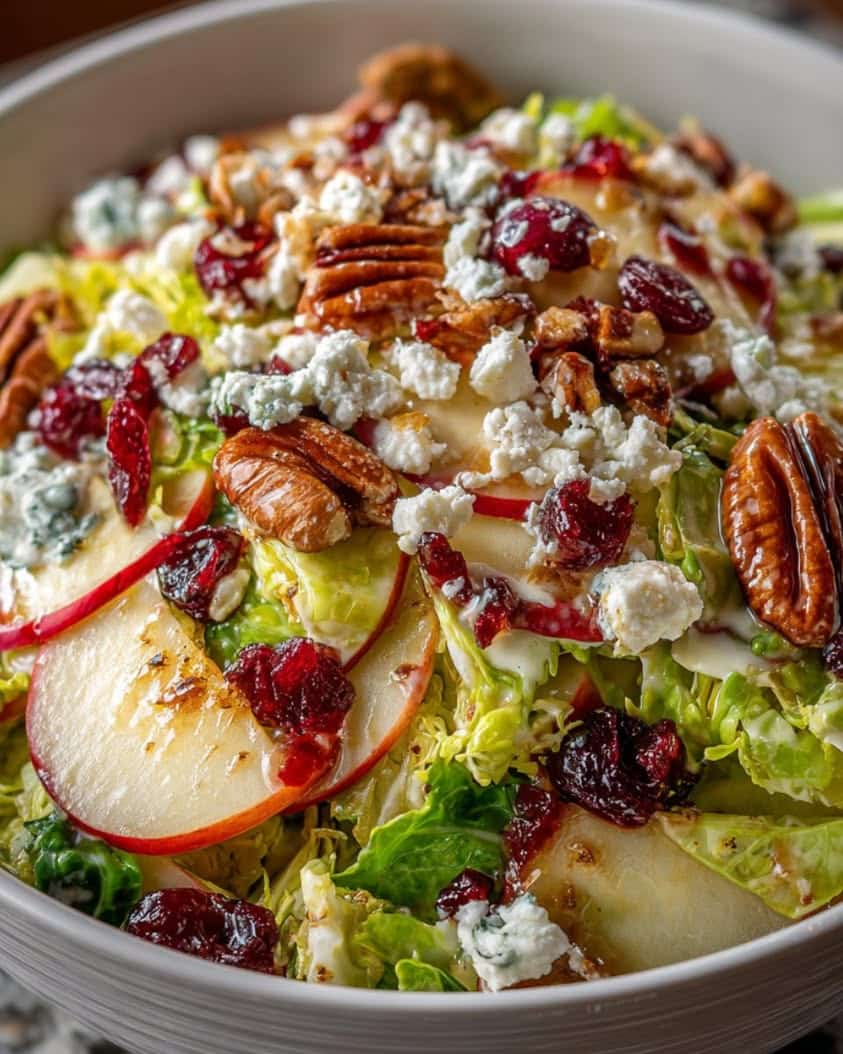
Shaved Brussels Sprout Salad with Apples, Pecans & Cranberry Dressing: A Crisp, Vibrant Side Dish
This shaved Brussels sprout salad is a true celebration of texture and flavor. It masterfully combines the earthy, crisp base of thinly sliced Brussels sprouts with the sweet crunch of fresh apples and the rich, buttery notes of toasted pecans. The real star, however, is the vibrant cranberry dressing that ties everything together with its perfect balance of tangy and sweet. This dish is not just a salad; it is a hearty, satisfying side that stands up beautifully to heavier main courses, making it an ideal choice for your holiday table or a weeknight dinner.
Furthermore, this recipe for shaved Brussels sprout salad requires absolutely no cooking, which is a huge advantage for busy home cooks. You simply need to shred the sprouts, chop the accompaniments, and whisk together the simple dressing. The result is a dish that feels both elegant and incredibly approachable. Its robust nature means it won’t wilt or become soggy quickly, allowing you to prepare it in advance without sacrificing quality. This salad is a guaranteed crowd-pleaser that will convert even the most ardent Brussels sprout skeptics.
Ultimately, this shaved Brussels sprout salad delivers a powerful nutritional punch alongside its incredible taste. It is packed with fiber, vitamins, and antioxidants, making it a genuinely healthy recipe that doesn’t compromise on satisfaction. Each forkful offers a complex interplay of flavors and textures that will keep you coming back for more. Whether you are seeking a standout side dish for Thanksgiving or a fresh new lunch option, this salad is sure to become a staple in your recipe rotation.
Quick Recipe Highlights
- Flavor Profile: This shaved Brussels sprout salad features a dynamic balance of earthy, sweet, and tangy notes. The slight bitterness of the sprouts is perfectly offset by the sweet apples and the sharp, fruity pop of the cranberry vinaigrette. Additionally, the toasted pecans add a deep, nutty richness that completes the flavor symphony.
- Texture: The texture of this salad is a key component of its appeal. You get a firm, satisfying crunch from the shaved Brussels sprouts, a juicy crispness from the apples, and a delightful brittle crunch from the toasted pecans. Consequently, every bite is a complex and enjoyable sensory experience that never feels monotonous.
- Aroma: The aroma is fresh and inviting, with the earthy scent of raw Brussels sprouts taking center stage. This is complemented by the sweet fragrance of apple and the warm, toasty notes from the pecans. The dressing adds a final bright, acidic top note that makes the entire dish smell incredibly appetizing.
- Visual Appeal: This salad is a feast for the eyes with its beautiful color palette. You see deep greens from the sprouts, vibrant reds from the cranberries in the dressing and potentially the apples, and the warm brown of the pecans. It is a rustic yet elegant dish that looks stunning on any table.
- Skill Level Needed: This is an exceptionally beginner-friendly recipe. The only skills required are basic knife work for shredding and chopping, and the ability to whisk a dressing together. Therefore, it is a perfect introduction for new cooks or a simple, reliable dish for seasoned chefs.
- Special Equipment: A sharp chef’s knife or a mandoline slicer is highly recommended for achieving thin, consistent shavings of Brussels sprouts. Besides that, you only need a mixing bowl, a whisk, and a small jar for shaking the dressing.
Recipe Overview
- Difficulty Level: This shaved Brussels sprout salad is classified as easy because it involves no complex techniques or cooking. The most challenging aspect is safely shredding the Brussels sprouts, which can be done quickly with a knife or a mandoline. Otherwise, it is a simple assembly of fresh ingredients, making it accessible for cooks of all experience levels.
- Category: This dish falls squarely into the category of side dishes and salads. It is a cold salad that serves as a perfect accompaniment to proteins like roasted chicken, turkey, or pork. Moreover, it can be bulked up with a grain like quinoa to serve as a light main course for lunch.
- Cuisine: While not tied to a specific traditional cuisine, this salad draws inspiration from modern American farm-to-table cooking. It emphasizes fresh, seasonal produce and simple, clean flavors that allow the quality of the ingredients to shine. The use of apples and cranberries also gives it a distinct autumnal, North American feel.
- Cost: This is a very cost-effective recipe to prepare. Brussels sprouts and apples are typically affordable, especially in season. The most expensive components are often the pecans and the cranberry juice or preserves for the dressing, but they are used in modest quantities. Overall, it is a budget-friendly way to create an impressive and healthy dish.
- Season: This salad is perfectly suited for the fall and winter months when Brussels sprouts are at their peak. The ingredients evoke the flavors of the harvest season and major holidays like Thanksgiving and Christmas. However, it is refreshing enough to be enjoyed year-round as a crisp counterpoint to grilled foods in the summer.
- Occasion: It is an ideal dish for potlucks, holiday feasts, and family dinners because it can be made ahead of time. Its vibrant appearance and sophisticated flavor profile make it special enough for celebratory meals, while its simplicity makes it practical for casual weeknight eating.
Why You’ll Love This Shaved Brussels Sprout Salad
You will adore the incredible taste and texture of this shaved Brussels sprout salad. The foundation of shredded sprouts provides a hearty, crisp bite that is far more substantial than delicate lettuce. Meanwhile, the sweet, juicy apples and the rich, crunchy pecans create a delightful contrast in every mouthful. The tangy cranberry dressing wraps all these elements together, creating a flavor profile that is simultaneously refreshing and deeply satisfying. This is a salad that truly eats like a meal, offering a complex sensory experience that is both exciting and comforting.
Furthermore, the convenience of this healthy recipe is a major selling point. Since there is no cooking involved, you can have this impressive dish ready in under 30 minutes. The salad actually benefits from sitting for a short while, as the dressing gently softens the raw sprouts just enough to make them perfectly palatable. This make-ahead quality is a game-changer for entertaining, as it removes the last-minute stress of preparing a side dish. You can focus on your main course, confident that your vibrant shaved Brussels sprout salad is already waiting in the wings.
From a nutritional standpoint, this salad is an absolute powerhouse. Brussels sprouts are loaded with vitamins C and K, fiber, and antioxidants. Apples contribute additional fiber and vitamin C, while pecans provide healthy fats and protein. The cranberry dressing, especially if made with whole cranberry juice, adds its own set of antioxidants. Consequently, this dish supports digestive health, boosts your immune system, and provides sustained energy. It is a delicious way to nourish your body without feeling like you are on a restrictive diet.
This shaved Brussels sprout salad also possesses tremendous social and entertaining value. Its unique composition and beautiful presentation are guaranteed to spark conversation at any dinner party or potluck. It is a sophisticated alternative to a standard green salad that shows thought and care in its preparation. Because it holds up so well, it is perfect for buffet-style serving, where delicate salads would quickly wilt. You can proudly bring this dish to any gathering, knowing it will be a memorable and appreciated contribution.
Finally, the cost-effectiveness and accessibility of this dish cannot be overstated. The core ingredients are humble and affordable, allowing you to create a restaurant-quality side dish on a modest budget. You can easily find Brussels sprouts, apples, and pecans at any grocery store throughout the year. Additionally, the recipe is forgiving and allows for substitutions based on what you have available, making it a practical and versatile addition to your culinary repertoire. This shaved Brussels sprout salad proves that eating well does not have to be expensive or complicated.
Historical Background and Cultural Significance
The story of the Brussels sprout itself is centuries old, believed to have been cultivated in ancient Rome before finding its namesake home in Brussels, Belgium, as early as the 13th century. However, the concept of using them raw in a shaved salad is a distinctly modern invention. For generations, Brussels sprouts were almost exclusively roasted, boiled, or steamed, methods that often, when overcooked, emphasized their sulfurous compounds and led to their unpopularity among many. The shift towards appreciating them raw marks a significant evolution in our culinary preferences and techniques, embracing their natural, crisp texture and milder flavor.
This shaved Brussels sprout salad is a testament to the contemporary farm-to-table movement, which prioritizes fresh, local, and seasonal ingredients. Its composition reflects a modern American sensibility that values bold, clean flavors and nutritional density. The inclusion of apples and cranberries taps into a deeply ingrained North American culinary identity, using iconic harvest fruits to create a dish that feels both nostalgic and innovative. It represents a break from tradition, reimagining a classic vegetable for a new generation of eaters who appreciate texture and vibrancy.
The evolution of this recipe parallels a broader cultural shift towards healthier eating habits. As consumers became more interested in raw foods and maximizing nutrient retention, chefs and home cooks began experimenting with vegetables in their uncooked state. Shaving Brussels sprouts thinly transformed them from a often-maligned side into a trendy, sought-after salad base. This preparation method mitigates the toughness of the whole sprout, making it enjoyable to eat raw and allowing it to absorb dressings beautifully. The recipe’s popularity soared as it appeared on menus and food blogs, celebrated for its unique combination of health and flavor.
Regional variations of this salad are already emerging, showcasing its versatility. In different parts of the country, you might find additions like sharp cheddar cheese, crispy bacon, or sunflower seeds. Some versions use a Parmesan-lemon dressing, while others, like this one, lean into a fruitier profile. This adaptability is a key part of its cultural significance; it serves as a template for creativity, allowing cooks to incorporate local and personal preferences. The shaved Brussels sprout salad has firmly cemented its place as a modern classic, a dish that is constantly being reinvented while staying true to its crisp, healthy core.
Ingredient Deep Dive
Brussels Sprouts form the hearty base of this salad. These miniature cabbages have a long history dating back to ancient Rome, but they gained their famous name through cultivation near Brussels, Belgium, since the 13th century. Nutritionally, they are superstars, packed with vitamins C and K, fiber, folate, and antioxidants that combat inflammation. When selecting them, look for firm, bright green sprouts with tightly packed leaves; avoid any that are yellowing or have loose leaves. Store them unwashed in a plastic bag in your refrigerator’s crisper drawer. For a substitution, you could use very thinly sliced kale or savoy cabbage, though the texture will be different.
Fresh Apples provide the essential sweet and crisp counterpoint to the earthy sprouts. Apples have a rich cultural history, symbolizing everything from temptation to health across countless myths and traditions. They are a fantastic source of dietary fiber, particularly pectin, and vitamin C. For this salad, choose a firm, crisp variety that holds its shape when cut, such as Honeycrisp, Fuji, or Granny Smith for a tarter note. To prevent browning, you can toss the apple slices with a little lemon juice from the dressing. If you don’t have apples, firm pears make an excellent substitute, offering a similar texture and mild sweetness.
Pecans deliver the rich, buttery crunch that makes this salad so satisfying. As the only tree nut native to North America, pecans have a deep history in Southern U.S. cuisine and were a staple food for Native Americans. They are a great source of healthy monounsaturated fats, zinc, and manganese. Always buy raw pecans and toast them yourself for the best flavor; this deepens their nutty taste and improves the texture. Store pecans in an airtight container in the freezer to prevent their oils from going rancid. For a substitution, walnuts or almonds would work well, though they will impart a slightly different flavor profile.
The Cranberry Dressing is what truly brings this salad to life. Cranberries are one of only three fruits native to North America, and they have been used by Indigenous peoples for centuries, both as food and medicine. They are renowned for their high levels of vitamin C and proanthocyanidins, which are powerful antioxidants that support urinary tract health. For the dressing, you can use pure cranberry juice, cranberry sauce, or even whole berry cranberry relish as a base. Combined with olive oil, vinegar, and a touch of maple syrup or honey, it creates a vibrant, tangy-sweet emulsion. If cranberry is unavailable, a pomegranate molasses or reduced cherry juice can provide a similar tart and fruity base.
Common Mistakes to Avoid
- Using a Dull Knife: Shredding Brussels sprouts with a dull knife is difficult and dangerous. You will need to apply excessive pressure, which increases the risk of the knife slipping. Instead, always use a sharp chef’s knife or a mandoline for clean, thin, and consistent slices.
- Skipping the Toasting Step for Pecans: Adding raw pecans to the salad is a missed opportunity for flavor. Toasting them in a dry skillet for a few minutes wakes up their natural oils and creates a deeper, richer, and crunchier nut. Just be sure to let them cool completely before adding them to the salad.
- Cutting the Apples Too Early: If you dice your apples at the very beginning of your prep, they will have time to oxidize and turn brown. To maintain their fresh, bright appearance, prepare your dressing and shred your sprouts first, then chop the apples just before you are ready to assemble and serve the salad.
- Not Massaging the Dressing In: Simply tossing the dressing with the shredded sprouts is not enough. For the best texture and flavor, use your clean hands to gently massage the dressing into the sprouts for about a minute. This process slightly wilts and tenderizes them, making them more enjoyable to eat raw.
- Using a Bland Oil for the Dressing: The quality of your olive oil matters significantly in a simple vinaigrette. Avoid using a heavily processed or flavorless vegetable oil. A good extra-virgin olive oil will contribute a fruity, peppery note that complements the other ingredients and elevates the entire dish.
- Overcomplicating the Dressing: The beauty of the cranberry dressing is its bright, straightforward flavor. Resist the urge to add too many extra herbs or spices, as they can overpower the delicate balance of tart cranberry, sweet apple, and earthy sprouts. Stick to the core ingredients for the most cohesive result.
- Storing the Salad with the Dressing for Days: While this salad holds up better than most, it is not indestructible. If you dress it and store it for more than 24 hours, the sprouts can become too soft and the apples can lose their crunch. For best results, store the components separately and combine them within a few hours of serving.
- Forgetting to Season at the End: Even though your dressing contains salt, always taste the fully assembled salad and adjust the seasoning. The raw sprouts can absorb a surprising amount of salt. A final pinch of flaky sea salt and a crack of black pepper just before serving can make all the difference.
Essential Techniques
Shaving Brussels Sprouts is the most critical technique for this salad. It is important because thin slices transform the tough, dense sprout into a delicate, palatable base that can absorb dressing effectively. To master it, first trim off the woody stem end. Then, using a sharp chef’s knife, carefully slice the sprout vertically into very thin ribbons. Alternatively, you can use a mandoline slicer on a thin setting for perfect, consistent results, but always use the safety guard. A common pitfall is cutting slices that are too thick, which results in a tough, chewy, and overly bitter salad. The visual cue for success is a pile of fluffy, confetti-like green shreds.
Emulsifying the Vinaigrette is what creates a smooth, cohesive dressing that clings to the salad ingredients. This is important because it prevents the oil and acidic components from separating, ensuring every bite is perfectly seasoned. To master it, combine all non-oil ingredients in a bowl, then whisk vigorously while slowly drizzling in the olive oil. This slow incorporation allows the oil to break into tiny droplets suspended in the vinegar and juice. A common pitfall is adding the oil too quickly, which causes the dressing to “break” and look oily. The visual cue for success is a slightly thickened, homogenous dressing that is opaque and well-combined.
Toasting Nuts is a simple technique that profoundly enhances their flavor and texture. It is important because the heat catalyzes a Maillard reaction, developing complex, roasty notes and making the pecans crunchier. To master it, spread raw pecans in a single layer in a dry skillet over medium heat. Shake the pan or stir frequently for 3-5 minutes until they become fragrant and lightly browned. A common pitfall is walking away, as they can burn in seconds. The visual cue for success is a uniform light golden-brown color and the release of a rich, nutty aroma. Always transfer them to a plate to cool immediately and stop the cooking process.
Pro Tips for Perfect Shaved Brussels Sprout Salad
Use a food processor with a slicing disc for ultimate efficiency. If you are making a large batch of this salad, this is the fastest way to shred a pound or more of Brussels sprouts in seconds. Simply trim the ends, feed them through the chute, and you will have perfectly uniform shreds with minimal effort.
Massage the dressing into the sprouts with your hands. Do not just toss it with a spoon. Gently squeezing and massaging the shredded sprouts for about 60 seconds helps to break down their fibrous structure slightly. This makes them more tender and allows them to better absorb the flavorful dressing.
Add the apples at the very last minute to prevent browning. After you have prepared the dressing and the shredded sprouts, then chop your apple. This timing ensures the apple pieces remain bright white and crisp, providing the best visual appeal and texture in the finished salad.
Toast your pecans in the oven for a more even result. While a skillet works well, spreading the pecans on a baking sheet and toasting them at 350°F for 5-8 minutes yields a perfectly even color and toastiness without any risk of burning spots. Just be sure to watch them closely after the 5-minute mark.
Let the dressed salad rest for 15 minutes before serving. This short resting period is the secret to the ideal texture. It allows the acidic dressing to very slightly “cook” or wilt the sprouts, softening their raw edge just enough while still maintaining a wonderful crunch.
Taste and re-season just before serving. The raw vegetables can mute seasonings, so always give your salad a final taste after it has rested. You will likely need another small pinch of salt or a extra twist of black pepper to make all the flavors pop.
Variations and Adaptations
For regional variations, you can take this salad in many delicious directions. A Southern-inspired version might include crumbled bacon and a buttermilk-based dressing. A Mediterranean twist could feature crumbled feta cheese, kalamata olives, and a lemon-oregano vinaigrette. Meanwhile, an Asian-fusion adaptation might use a ginger-soy dressing, mandarin oranges, and sliced almonds. These variations show how versatile the shaved Brussels sprout base can be, adapting to different flavor profiles from around the world while maintaining its satisfying crunch.
Seasonal adaptations are simple and effective. In the spring, incorporate shaved asparagus and fresh peas with a lemony dressing. For summer, add fresh sweet corn, cherry tomatoes, and basil. In the heart of winter, consider adding roasted cubed butternut squash or sweet potato for a warm element. You can also swap the apple for a seasonal fruit like pears in the late fall or crisp persimmons in the winter. This ensures your salad always feels fresh and in harmony with the best produce available.
Dietary modifications are straightforward for this naturally flexible recipe. For a vegan version, ensure the sweetener in the dressing is maple syrup instead of honey. To make it nut-free, simply replace the pecans with roasted sunflower or pumpkin seeds for a similar crunch. For a Paleo or Whole30 diet, confirm that your cranberry dressing uses compliant ingredients like 100% juice and no added sugars. A low-carb or Keto adaptation would involve reducing the amount of apple and ensuring the cranberry component is sugar-free.
Flavor variations can dramatically change the character of the salad. For a sweeter profile, use a sweeter apple like Fuji and add dried cherries. For a savory, umami-rich version, add grated Parmesan cheese and a splash of fish sauce to the dressing. To introduce a spicy kick, include a pinch of red pepper flakes in the dressing or garnish with thinly sliced fresh chili. Smoked paprika sprinkled over the top can add a deep, smoky dimension that pairs wonderfully with the pecans.
Texture modifications can cater to different preferences. If you desire more creaminess, add crumbled goat cheese or blue cheese. For an extra crunch, include crispy fried shallots or onions as a garnish. To make the salad even heartier, fold in cooked and cooled farro, wheat berries, or quinoa. You can also swap the raw apple for a crisp, thinly sliced fennel bulb, which provides a similar crunch with a distinctive anise-like flavor.
Presentation alternatives can elevate the dish for special occasions. Instead of tossing everything together, create a composed salad by arranging a bed of shredded sprouts and artfully placing piles of chopped apple, pecans, and other toppings over them. Serve the dressing on the side in a small pitcher for a elegant touch. For individual servings, use a ring mold to create a tall, neat stack of the salad in the center of each plate, drizzling the dressing around the base.
Serving and Presentation Guide
Plating techniques can transform this simple salad into a restaurant-worthy dish. For a family-style presentation, use a wide, shallow bowl instead of a deep one; this allows the colorful ingredients to be visible and prevents them from getting lost at the bottom. To serve individually, mound a generous portion in the center of a chilled plate. You can also use a large spoon and fork to create a tall, neat nest of the salad, which gives it height and visual drama on the plate.
Garnishing is the final touch that enhances both appearance and flavor. A final sprinkle of extra toasted pecans and a few reserved apple dice on top adds texture and signals what is inside. Fresh herb sprigs like parsley or thyme provide a pop of green and a fresh aroma. For a special occasion, a few edible flowers or a light dusting of finely grated orange zest can make the dish look exceptionally festive and inviting.
Traditional accompaniments for this salad are hearty autumnal mains. It is a classic pairing with holiday turkey, roasted chicken, or baked ham. The salad’s acidity and crunch cut through the richness of these meats perfectly. It also pairs beautifully with pork chops or a pork tenderloin, where the apple and cranberry flavors complement the pork naturally. Consider it as part of a holiday spread alongside other sides like mashed potatoes and stuffing.
Modern serving suggestions include incorporating it into a larger meal structure. For a light lunch, top the salad with grilled shrimp or shredded rotisserie chicken to make it a complete meal. It also works wonderfully as part of a grain bowl, served over a base of quinoa or wild rice. For a brunch option, serve it alongside a quiche or frittata. Its robust nature means it can stand up to being part of a picnic or packed lunch without deteriorating.
Temperature considerations are important for the best eating experience. This salad is intended to be served cold. The crisp, refreshing quality is a key part of its appeal, especially when served alongside warm, rich main courses. However, ensure the salad has not been sitting in an overly cold refrigerator right before serving, as extreme cold can mute the flavors. Let it sit at room temperature for about 10 minutes before serving to allow the flavors to fully express themselves.
Portion control is easy to manage with this nutrient-dense salad. As a side dish, a generous cup per person is a standard serving. If serving as a main course, aim for about two cups per person. Because the salad is so fibrous and satisfying, people tend to be satisfied with smaller portions than they might be with a leaf-based salad. To control portions at a buffet, consider serving it with a slotted spoon to drain excess dressing and prevent overly heavy servings.
Wine and Beverage Pairing
Wine pairings for this salad should complement its earthy, sweet, and tangy profile. A dry Riesling is an excellent choice because its bright acidity mirrors the tanginess of the cranberry dressing, while its slight stone fruit notes harmonize with the apple. Alternatively, a Pinot Noir with its light body and red fruit characteristics (like cherry and cranberry) can stand up to the earthy sprouts without overwhelming the dish. A crisp, unoaked Chardonnay would also work well, providing a clean, neutral palate that lets the salad’s flavors shine.
Non-alcoholic alternatives can be just as sophisticated. A sparkling apple cider provides effervescence and echoes the apple in the salad. For a more complex option, try a chilled hibiscus tea, which has a tart, cranberry-like flavor that pairs beautifully. Ginger beer or a ginger ale offers a spicy kick that can cut through the richness of the pecans and cleanse the palate. Simply infused water with cranberries and orange slices is another refreshing and thematic choice.
While not a classic coffee or tea course dish, this salad can be part of a brunch where such beverages are served. A light roast coffee with bright, fruity notes would be complementary rather than clashing. For tea, consider a green tea like Sencha, which has vegetal notes that align with the Brussels sprouts, or a white tea with its delicate, slightly sweet character that won’t overpower the salad’s subtlety.
Temperature considerations for beverages are straightforward. All pairings should be served well-chilled, as the salad itself is a cold dish. Iced teas, cold beer, and chilled wines will provide the most refreshing contrast. If serving a warm beverage like coffee or tea, ensure it is not so hot that it creates an unpleasant temperature juxtaposition when enjoyed alongside the cool, crisp salad.
Serving suggestions for your beverage pairings enhance the overall experience. Serve white wine and sparkling ciders in tall, slender glasses to maintain their chill and carbonation. For non-alcoholic options, a highball glass with plenty of ice is perfect. Presenting the drinks in clear glassware allows their beautiful colors—the pale gold of Riesling or the deep ruby of hibiscus tea—to complement the visual appeal of the salad itself on the table.
Storage and Shelf Life
Proper storage methods are crucial for maintaining the quality of this salad. The key is to store the components separately whenever possible. Keep the undressed, shredded Brussels sprouts in an airtight container or a zip-top bag with a paper towel to absorb excess moisture. Store the prepared dressing in a separate jar in the refrigerator. The toasted pecans and chopped apples should be kept in their own airtight containers at room temperature and in the fridge, respectively. This separation prevents the salad from becoming soggy and the nuts from losing their crunch.
Temperature requirements are standard for fresh produce. All components, except for the toasted nuts, must be stored in the refrigerator at or below 40°F (4°C). The cold environment slows down enzymatic degradation and microbial growth. The toasted pecans, however, are best stored in a cool, dark pantry in an airtight container. Refrigerating nuts can sometimes cause them to absorb other flavors and lose their crisp texture.
Container recommendations focus on creating an airtight seal. Glass containers with locking lids are ideal for the dressed or undressed sprouts, as they won’t absorb odors and are easy to clean. A mason jar is perfect for shaking and storing the dressing. For the nuts, a simple glass jar or a plastic container with a tight-fitting lid will suffice. Avoid storing any of the components, especially the dressed salad, in metal containers, as the acid in the dressing can react with the metal and impart an off-flavor.
Recognizing signs of spoilage is important for food safety. The primary indicator for the sprouts is a foul, sulfurous odor—beyond their normal mild scent. If the leaves become slimy, yellow, or develop visible mold, discard the entire batch. The dressing should be discarded if it develops an off smell, a change in color, or if mold appears. Apples will first become brown and mushy. Pecans will smell rancid or paint-like when they have gone bad.
Reheating instructions are not applicable for this particular dish, as it is a cold salad. In fact, reheating would ruin the texture and flavor. If you have stored the dressed salad and find it too cold, simply let it sit at room temperature for 10-15 minutes before serving to take the chill off and allow the flavors to become more pronounced.
Freezing guidelines are not recommended for this salad. Freezing raw Brussels sprouts will destroy their cellular structure, resulting in a mushy, watery, and unappetizing texture upon thawing. The same goes for the apples. The dressing may separate and become grainy if frozen. Therefore, this is a fresh dish best enjoyed within a few days of preparation and not suited for long-term freezer storage.
Make Ahead Strategies
A strategic prep timeline can make entertaining stress-free. Up to two days in advance, you can wash, trim, and shred the Brussels sprouts. Store them in an airtight container in the fridge with a paper towel. The dressing can be made up to five days ahead and stored in a jar in the refrigerator. The pecans can be toasted 2-3 days in advance and kept at room temperature. Then, on the day of serving, all you need to do is chop the apple and combine everything.
Storage between steps is simple with the right organization. Use clear, labeled containers so you can easily identify each component. For the shredded sprouts, press a piece of parchment paper or a clean paper towel directly onto the surface before sealing the lid; this absorbs any condensation and keeps them crisp. Give the dressing a good shake before using it to re-emulsify the ingredients that may have settled or separated during storage.
Assessing the quality impact of make-ahead steps is reassuring. Shredding the sprouts ahead of time has minimal negative impact, especially if stored properly. In fact, some argue it slightly mellows their flavor. The dressing’s flavor often improves with a day in the fridge, as the ingredients have time to meld. The only component that must be done at the last minute is chopping the apple to prevent browning. The toasted pecans will stay crunchy for days if stored correctly.
Final assembly tips for a make-ahead salad ensure peak freshness. When you are ready to serve, place the shredded sprouts in a large bowl. Pour about three-quarters of the dressing over them and massage it in with your hands. Let this sit for 10-15 minutes. Just before serving, add the chopped apple and most of the pecans, tossing to combine. Taste and add more dressing if needed. This method ensures the sprouts are perfectly dressed and the apples and nuts retain their distinct textures.
There are no reheating guidelines for this cold salad. The goal of make-ahead prep is to have everything chilled and ready to assemble. If the dressed sprouts have been in the fridge for more than an hour, let them sit out for 15-20 minutes before serving to take the extreme chill off, which allows the flavors to be more perceptible.
Adding fresh elements at the last minute is the key to a perfect make-ahead salad. Even if you pre-mix the dressed sprouts, always add the final components right before serving. This includes the last handful of pecans for a top garnish and any fresh herbs like parsley. This gives the salad a just-made appearance and ensures the most delicate textures are preserved for your guests to enjoy.
Scaling Instructions
Halving the recipe is straightforward for smaller gatherings. Simply divide all ingredient quantities by two. Use a kitchen scale for the most accuracy, especially for the Brussels sprouts and pecans. The dressing can be easily halved in a small jar. The one adjustment to note is that the massaging time for the sprouts may be slightly less since there is a smaller volume. The rest time after dressing can remain the same. This scaled-down version is perfect for a meal for two or three people.
Doubling or tripling the recipe is ideal for large parties and potlucks. Multiply all ingredients accordingly. The main consideration here is equipment; you will need an extra-large bowl for mixing, or you may need to mix in batches. When toasting the pecans, do it in multiple batches to ensure even browning. For the dressing, you can make a large batch in a blender to ensure it emulsifies properly. When massaging the dressing into the sprouts, you may need to use two hands and work in sections to ensure even coverage.
Equipment adjustments are necessary when scaling up. A standard home kitchen bowl may not be large enough for a doubled or tripled recipe. Consider using a very large stockpot or a clean plastic food storage tub for mixing. If you are using a food processor to shred the sprouts, you will likely need to work in multiple batches. For a very large quantity, a commercial-style mandoline or a food processor becomes almost essential to save time and effort on prep.
Timing modifications are minimal when scaling. The prep time will increase linearly with the quantity. Shredding two pounds of sprouts takes roughly twice as long as shredding one pound. However, the toasting time for the pecans should not be increased; instead, toast them in separate batches to avoid overcrowding the pan. The critical rest time after dressing the salad (15 minutes) remains the same regardless of batch size, as it is a chemical process that works on the individual pieces.
Storage considerations change with scale. A large batch of dressed salad will generate more liquid at the bottom of the bowl over time. For a big party, it is best to dress the salad in stages, perhaps keeping half in the fridge and adding dressing to the second half closer to serving time. For leftovers, store large quantities in several smaller containers rather than one gigantic one; this cools the food more quickly and safely and makes it easier to access portions later
Print
Shaved Brussels Sprout Salad with Apples, Pecans & Cranberry Dressing
Description
A crisp, refreshing salad featuring thinly sliced Brussels sprouts, sweet apples, toasted pecans, and a tangy cranberry vinaigrette.
Ingredients
For the Crust:
- 1 lb Brussels sprouts, trimmed and thinly sliced
- 1 large apple, cored and thinly sliced
- 1/2 cup pecans, toasted and chopped
- 1/4 cup dried cranberries
- 1/4 cup olive oil
- 2 tbsp apple cider vinegar
- 1 tbsp honey
- 1 tsp Dijon mustard
- Salt and black pepper to taste
Instructions
1. Prepare the Crust:
- In a large bowl, whisk together olive oil, apple cider vinegar, honey, Dijon mustard, salt, and pepper to make the dressing.
- Add the shaved Brussels sprouts and sliced apple to the bowl, tossing well to coat with the dressing.
- Let the salad sit for 10 minutes to soften the Brussels sprouts, then stir in the toasted pecans and dried cranberries before serving.
Notes
You can customize the seasonings to taste.

I’m Shaykee—born in Morocco, seasoned across continents. From airplane galleys to home kitchens, I share the flavors and stories that shaped my journey.