
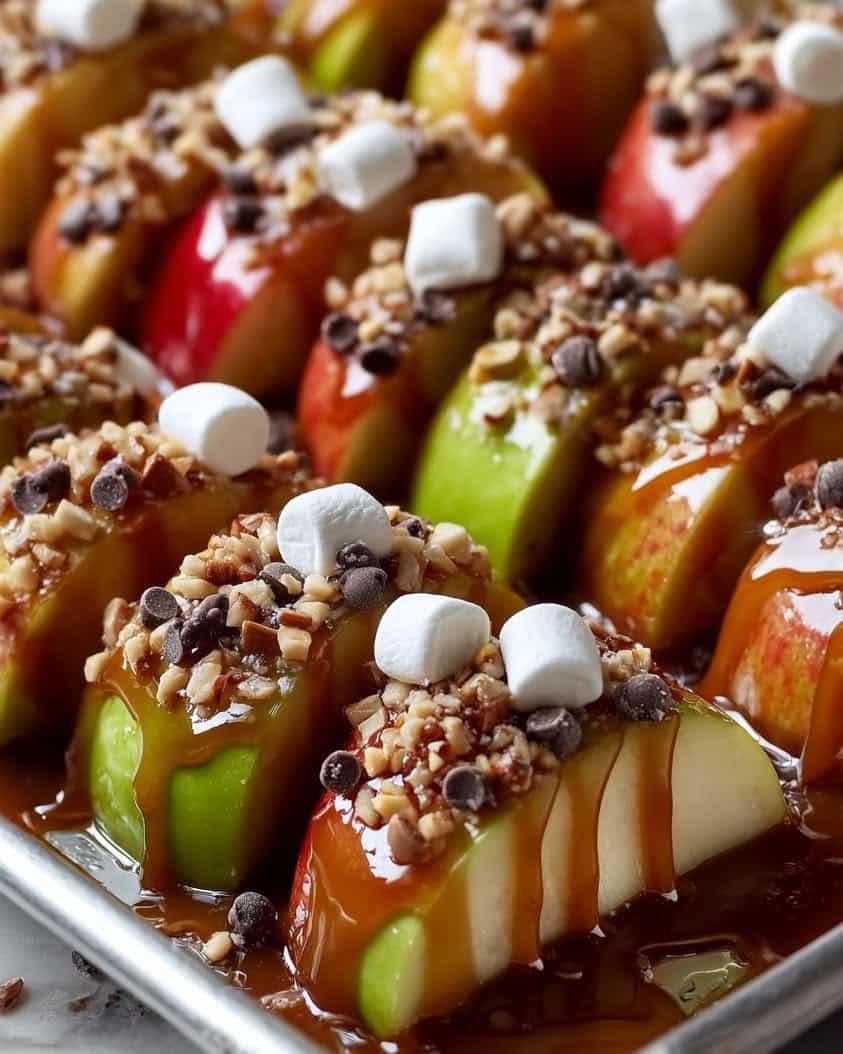
Sheet Pan Caramel Apples: Gooey, Crunchy & So Easy!
These Sheet Pan Caramel Apples are the ultimate fall dessert that brings all the nostalgic flavors of a county fair right into your kitchen. Imagine crisp apple wedges coated in a warm, buttery caramel sauce, then baked until perfectly tender. The result is a treat that is simultaneously gooey, crunchy, and incredibly satisfying. This recipe simplifies the classic caramel apple experience, transforming it into an easy, shareable snack perfect for any autumn gathering.
Furthermore, this method eliminates the fuss of dipping individual apples on sticks. Instead, you get a beautifully caramelized batch of apple slices ready in minutes. The aroma of cinnamon and baked apples filling your home is an unforgettable sensory experience. Consequently, this dessert feels both rustic and elegant, making it a fantastic choice for everything from a casual family movie night to a festive holiday party.
Ultimately, these Sheet Pan Caramel Apples deliver maximum flavor with minimal effort. They are the perfect answer when you need a quick, impressive dessert that celebrates the best of the season. The combination of sweet, tart, and spicy notes creates a harmonious flavor profile that everyone will love. This recipe is a true game-changer for fall baking enthusiasts.
Quick Recipe Highlights
- Flavor Profile: These Sheet Pan Caramel Apples offer a beautiful balance of sweet and tart. The rich, buttery caramel complements the natural acidity of the apples perfectly. Additionally, a hint of warm cinnamon adds a cozy, spiced depth that defines autumn desserts.
- Texture: You get a wonderful contrast in every bite. The apples soften slightly in the oven but retain a pleasant firmness. Meanwhile, the caramel coating becomes delightfully sticky and chewy, creating a truly addictive mouthfeel.
- Aroma: As these Sheet Pan Caramel Apples bake, your kitchen will fill with an irresistible fragrance. The scent of melting caramel, warm cinnamon, and roasting fruit is the very essence of fall. It is a comforting aroma that promises a delicious treat.
- Visual Appeal: This dessert is a feast for the eyes with its glossy, golden-brown caramel glaze. The vibrant apple peeks through, creating a beautiful, rustic presentation. Served on a platter, these Sheet Pan Caramel Apples look both abundant and inviting.
- Skill Level Needed: This is an absolutely beginner-friendly recipe. If you can slice apples and stir ingredients, you can master these Sheet Pan Caramel Apples. There are no advanced techniques required, making it a perfect first project for new bakers.
- Special Equipment: You truly only need a good sheet pan and some parchment paper. A sturdy baking sheet ensures even cooking, and the parchment paper guarantees an easy cleanup. No special candy thermometers or dipping tools are necessary.
Recipe Overview
- Difficulty Level: We classify these Sheet Pan Caramel Apples as easy because the process is straightforward and forgiving. There is no precise candy-making involved, and the baking time is short. Essentially, anyone who feels comfortable in a kitchen can achieve excellent results on their first try.
- Category: This recipe falls squarely into the dessert category, but it also makes a fantastic snack. These Sheet Pan Caramel Apples are a sweet treat perfect for after dinner, a lunchbox surprise, or an afternoon pick-me-up. They blur the line between a composed dessert and a fun, hand-held snack.
- Cuisine: This is a modern American recipe that reinterprets a classic American fairground treat. The sheet pan method is a contemporary twist on tradition, emphasizing convenience without sacrificing flavor. It celebrates the apple, a quintessential North American fruit, in a simple, homey preparation.
- Cost: This is an incredibly cost-effective dessert. Apples are plentiful and affordable in the fall, and the other ingredients are common pantry staples. You can create a stunning dessert for a crowd for a fraction of the cost of store-bought versions or fair food.
- Season: Autumn is the undisputed best season for this recipe. This is when apples are at their peak of flavor and crispness. The warm, spiced nature of the dish also perfectly complements the cooler weather and cozy atmosphere of fall.
- Occasion: These Sheet Pan Caramel Apples are versatile for many events. They are ideal for Halloween parties, Thanksgiving dinners, football game days, and bonfire gatherings. Moreover, they are a simple, fun project to make with children on a weekend afternoon.
Why You’ll Love This Sheet Pan Caramel Apples Recipe
First and foremost, the taste and texture of these Sheet Pan Caramel Apples are utterly irresistible. The combination of a soft, warm apple with a rich, chewy caramel coating is a timeless delight. Each bite delivers a perfect harmony of sweet and tart flavors, with the warm spice of cinnamon tying everything together. This dessert satisfies cravings for something decadent while still feeling somewhat wholesome because it features real fruit. The experience is nostalgic yet fresh, making it a guaranteed crowd-pleaser for both kids and adults.
Another significant advantage is the sheer convenience and simplicity of the preparation. Traditional caramel apples require meticulous dipping and a lot of patience for the caramel to set. This sheet pan method, however, streamlines the entire process. You simply toss the apple slices with the caramel sauce and bake them in a single layer. Consequently, you get all the flavor with a fraction of the work and mess. It is the ultimate minimalist approach to a classic dessert, perfect for busy weeknights or last-minute guests.
From a nutritional perspective, these Sheet Pan Caramel Apples offer some benefits over many other desserts. Apples are a great source of dietary fiber and vitamin C. By making the caramel sauce at home, you control the ingredients and can avoid the excessive preservatives and artificial flavors found in many store-bought toppings. While it is certainly a treat, it is a dessert that incorporates whole fruit, making it a slightly better option than many cakes or cookies. You can even adjust the sugar level to your preference.
The social and entertaining value of this dish is tremendous. A large tray of these warm, gooey apples encourages sharing and conversation. They are a fantastic centerpiece for a fall party or a cozy family gathering. Furthermore, this recipe is incredibly interactive; you can set up a topping bar with nuts, chocolate chips, or sprinkles and let guests customize their own servings. This interactive element turns dessert into a fun activity, creating lasting memories alongside a delicious treat.
Finally, the cost-effectiveness and accessibility of this recipe cannot be overstated. The ingredients are basic, affordable, and easy to find at any grocery store. You do not need any special equipment or expensive components. This makes it an excellent dessert for feeding a large group without straining your budget. For the price of a few apples and some simple pantry items, you can create a dessert that feels special, celebratory, and deeply satisfying.
Historical Background and Cultural Significance
The origin of the caramel apple is a relatively modern story in the grand timeline of food history. Most accounts credit Kraft Foods employee Dan Walker with the invention in the 1950s. As the story goes, Walker was experimenting with an excess of caramel candies from Halloween sales. He decided to melt them down and dip apples into the liquid, creating a novel treat. This innovation was a happy accident that quickly captured the public’s imagination. The convenience of using pre-made caramels made the recipe easy to replicate at home, fueling its rapid rise in popularity.
The cultural importance of the caramel apple is deeply tied to American autumn traditions. It quickly became a staple at fall festivals, county fairs, and Halloween celebrations across the United States. The treat symbolizes the harvest season, utilizing the abundant apple crop in a fun and indulgent way. Its association with festive occasions and family-friendly events cemented its place in American culinary culture. For many, the sight of a caramel apple evokes powerful memories of crisp air, colorful leaves, and community gatherings.
The evolution of the caramel apple recipe has been fascinating to observe. The original dipped-on-a-stick version remains a classic. However, home cooks and chefs have continuously experimented with variations. This led to the creation of gourmet versions with dark chocolate, sea salt, and various nut toppings. The sheet pan method represents the latest evolution, prioritizing ease and shareability over the traditional individual presentation. This adaptation reflects modern desires for simpler, less fussy recipes that retain all the classic flavor.
Regional variations of the caramel apple concept exist throughout the world, showcasing the universal appeal of fruit and candy. In many parts of Europe, candied apples are popular, which involve a hard, red candy shell instead of a soft caramel one. In Mexico, a similar treat called “manzanas enchiladas” features apples coated in a sweet and spicy chili powder syrup. The sheet pan caramel apple, with its deconstructed approach, is a distinctly American innovation that fits perfectly into today’s food trends favoring communal dishes and easy preparation methods.
Ingredient Deep Dive
Let us start with the star of the show: the apples. Cultivated for thousands of years, apples have a rich history spanning continents and cultures. They are nutritional powerhouses, offering a good dose of fiber, particularly pectin, which supports digestive health, and vitamin C for immune function. For this recipe, selecting a firm, crisp variety like Granny Smith, Honeycrisp, or Fuji is crucial. These types hold their shape during baking and provide a tart contrast to the sweet caramel. Store apples in the refrigerator to maintain their crispness. If you need a substitution, firm pears can work in a pinch, though the flavor profile will change slightly.
Next, we have the caramel, typically made from a combination of brown sugar, butter, and cream. Brown sugar, with its molasses content, gives the caramel its distinctive deep flavor and color. Butter adds richness and a silky mouthfeel, while cream ensures the sauce is smooth and not gritty. From a nutritional standpoint, these are energy-dense ingredients, so moderation is key. When selecting butter, unsalted is best so you control the salt level. For a dairy-free version, you can use coconut cream and vegan butter. The key to a good caramel is gentle heating to allow the sugar to dissolve completely without burning.
Spices like cinnamon and a pinch of salt are the supporting actors that elevate the dish. Cinnamon, once more valuable than gold, has a warm, woody aroma that is synonymous with comfort baking. It may also have anti-inflammatory properties. Salt, meanwhile, is not just a seasoning; it is a flavor enhancer that makes the sweet caramel taste even richer and more complex by contrasting with and balancing the sweetness. Use pure ground cinnamon for the best flavor, and a fine sea salt dissolves easily into the sauce. There are no real substitutes for cinnamon’s unique flavor, but a pinch of nutmeg or allspice could add complementary warmth.
Common Mistakes to Avoid
- Using the Wrong Apple Variety: Choosing a soft apple like a Red Delicious is a common error. These apples will turn to mush in the oven. Instead, always select firm, crisp apples such as Granny Smith or Honeycrisp to ensure they retain some texture after baking.
- Skipping the Parchment Paper: Pouring the caramel directly onto the sheet pan seems easier, but it leads to a terrible cleanup. The hot sugar bonds to the metal. Therefore, always line your pan with parchment paper for effortless removal and washing.
- Overcrowding the Pan: If you pile the apples on top of each other, they will steam instead of roast. This results in soggy apples rather than ones with a slightly caramelized edge. For the best texture, spread the apples in a single, even layer.
- Undermixing the Caramel Sauce: If you do not whisk the caramel ingredients thoroughly, the butter or sugar might not fully incorporate. This can lead to a greasy or grainy sauce. Take an extra moment to whisk until the mixture is completely smooth and homogenous.
- Overbaking the Apples: Baking for too long will cause the apples to become overly soft and lose their shape. They should be tender but still have a slight bite. Keep a close eye on them, especially during the last few minutes of cooking.
- Not Letting it Cool Slightly: Serving the apples straight from the oven can result in burns from the molten-hot caramel. Allow the sheet pan to rest for about five minutes before serving. This lets the caramel thicken slightly and become safe to eat.
- Using Cold Ingredients: Using cold butter straight from the fridge can make it difficult to blend smoothly into the caramel sauce. For best results, use room temperature butter to ensure a silky, lump-free consistency.
- Ignoring Acidity: If your caramel sauce tastes a bit flat, you might be missing a touch of acidity. A tiny splash of lemon juice or apple cider vinegar can brighten the flavor and cut through the sweetness, making the overall taste more balanced.
Essential Techniques
The first essential technique is properly slicing the apples. Consistent sizing is not just about aesthetics; it is critical for even cooking. If some pieces are thick and others are thin, you will end up with a mix of mushy and undercooked apples. Use a sharp knife to cut the apples into uniform wedges, about half an inch thick. Remove the core to avoid any tough, bitter parts in your final dish. This simple attention to detail ensures every piece bakes perfectly in the same amount of time.
Another key technique is creating a smooth, lump-free caramel sauce. The goal is to fully dissolve the sugar granules and emulsify the fat from the butter into the mixture. To achieve this, gentle heat and constant stirring are your best friends. Do not rush this process by cranking up the heat, as this can cause the sugar to crystallize or burn. Instead, warm the ingredients over medium-low heat, whisking continuously until the sauce is glossy and uniform. This patient approach guarantees a velvety sauce that coats the apples beautifully.
Finally, mastering the baking step is crucial for texture. The objective is to warm the apples through and allow the caramel to bubble and thicken, not to cook the apples into a sauce. Arranging the apples in a single layer on the parchment-lined sheet pan is non-negotiable. This allows for hot air to circulate around each piece, promoting slight caramelization and preventing sogginess. Bake just until the apples are fork-tender and the caramel is bubbly. Overbaking is the primary enemy of a perfect texture in this recipe.
Pro Tips for Perfect Sheet Pan Caramel Apples
For an extra flavor dimension, toss your apple slices with a teaspoon of lemon juice before adding the caramel. This not only adds a subtle brightness but also helps prevent the apples from browning too much before they go into the oven.
If you want a thicker, chewier caramel, try reducing the amount of liquid slightly or adding a tablespoon of corn syrup to the sauce. The corn syrup interferes with sugar crystallization, resulting in a smoother, more pliable final product.
Do not discard any leftover caramel sauce that pools on the pan. After baking, this sauce thickens into delicious caramel candies. Simply let the pan cool completely, then peel the caramel off the parchment paper for a bonus treat.
For a truly gourmet touch, sprinkle the apples with a flaky sea salt like Maldon immediately after they come out of the oven. The salt crystals provide a wonderful textural contrast and enhance the sweetness of the caramel.
If you are adding toppings like chopped nuts or chocolate chips, press them onto the apples about halfway through the baking time. This allows the toppings to adhere to the caramel before it fully sets, ensuring they do not all fall off.
For easier serving and a cleaner presentation, use a small offset spatula or a pie server to lift the apple slices from the parchment paper. This helps keep the caramel coating intact on each piece.
Variations and Adaptations
For regional variations, you can take this recipe in many exciting directions. A Southern twist might involve a sprinkle of pecans and a dash of bourbon in the caramel sauce. A Nordic-inspired version could use cardamom instead of cinnamon and a drizzle of lingonberry jam after baking. The basic sheet pan method is a fantastic canvas for global flavors, allowing you to experiment with different spices and nut combinations from various culinary traditions.
Seasonal adaptations are also simple and effective. In the winter, add a hint of ginger or allspice to the caramel for a holiday feel. For a summer version, use firmer stone fruits like peaches or nectarines alongside the apples. You can even make a spring iteration with rhubarb slices, though you will need to adjust the sugar to account for its tartness. The recipe is wonderfully flexible, encouraging you to use what is fresh and available.
Dietary modifications are straightforward. For a vegan version, use coconut oil or vegan butter and full-fat coconut milk in the caramel sauce. For a gluten-free diet, this recipe is naturally compliant, as long as you ensure any pre-packaged caramel ingredients are certified gluten-free. To reduce the sugar, you can use a sugar substitute designed for baking in the caramel, though the texture may be slightly different. There is an adaptation for almost every dietary need.
Serving and Presentation Guide
Plating techniques can elevate this simple dessert into a restaurant-quality presentation. Instead of piling them on a plate, consider fanning the apple slices out on a long rectangular platter. Drizzle any extra caramel sauce from the pan over the top for a glossy finish. You can also serve them individually in small bowls or mason jars with a scoop of vanilla ice cream on the side. The goal is to create height and visual interest on the plate.
Garnishing ideas are endless and add both color and texture. A dusting of powdered sugar just before serving provides a beautiful snowy effect. Fresh mint leaves add a pop of green and a refreshing aroma. For a festive touch, a sprinkle of edible gold dust or colorful fall-themed sprinkles makes the dish feel special. Toasted coconut flakes or crushed toffee bits are also excellent garnishes that add crunch.
Traditional accompaniments are a key part of the experience. A scoop of high-quality vanilla ice cream is the classic pairing, as the cold creaminess contrasts perfectly with the warm, soft apples. Alternatively, a dollop of freshly whipped cream or a drizzle of cold heavy cream is equally delightful. For a less rich option, a side of Greek yogurt provides a tangy balance to the sweetness. Consider the overall richness of your meal when choosing your accompaniment.
Wine and Beverage Pairing
Wine pairings for this dessert should complement its sweetness and richness without overpowering it. A late harvest Riesling or Gewürztraminer is an excellent choice, as their natural sweetness and floral notes harmonize with the apples and spice. For red wine lovers, a light-bodied, fruity Beaujolais can work well. If you prefer fortified wines, a tawny Port or a cream sherry offers a nutty complexity that stands up to the caramel. The key is to select a wine that is as sweet as or sweeter than the dessert itself to avoid a bitter taste.
Non-alcoholic alternatives can be just as sophisticated. A sparkling apple cider provides festive bubbles and echoes the apple flavor in the dessert. Chai tea latte, with its warm spices, is a cozy and complementary pairing. For a cold option, a glass of cold milk is a timeless and comforting choice that cuts through the sweetness of the caramel beautifully. Iced coffee, especially with a hint of vanilla, also offers a pleasant bitter contrast to the sweet apples.
Storage and Shelf Life
Storage methods for these caramel apples are simple but important for maintaining quality. Once completely cooled, transfer the apples to an airtight container. Place a sheet of parchment paper between layers to prevent them from sticking together. They should be stored in the refrigerator, not at room temperature, because the dairy in the caramel sauce can spoil. Properly stored, they will keep for up to 3 days.
Understanding the signs of spoilage is crucial for food safety. If you notice any off smells, such as a sour or alcoholic aroma, the apples should be discarded. Visible mold growth is an obvious sign of spoilage. Additionally, if the caramel becomes excessively watery or the apples develop a slimy texture, it is time to throw them out. When in doubt, it is always safer to err on the side of caution.
Reheating instructions are straightforward if you prefer to serve them warm. The best method is to place the desired number of apples on a parchment-lined baking sheet and warm them in a 300°F oven for 5-10 minutes. Avoid using the microwave, as it can make the apples rubbery and cause the caramel to become dangerously hot. Freezing is not recommended, as the texture of the apples will become very mushy upon thawing.
Make Ahead Strategies
You can easily implement a prep timeline to make this dessert even more convenient for entertaining. The day before, you can slice the apples and store them submerged in a bowl of water with a tablespoon of lemon juice to prevent browning. You can also prepare the caramel sauce, let it cool, and store it in a separate airtight container in the refrigerator. When you are ready to bake, simply drain the apples, gently reheat the caramel sauce until pourable, and combine everything on the sheet pan.
Storing components between steps is key to a successful make-ahead plan. The acidulated water for the apples is essential for maintaining their color and freshness. The caramel sauce will thicken significantly in the fridge, so gentle reheating is necessary to return it to a pourable consistency. Do not combine the apples and caramel until you are ready to bake, as the salt and sugar in the caramel will draw moisture out of the apples, making them watery.
The quality impact assessment for making this dessert ahead is very positive. The flavor actually improves as the apples have a chance to marinate slightly in the lemon water, which enhances their brightness. The caramel sauce also benefits from the flavors melding together overnight. The final baked product will be just as delicious, if not more so, than if you made it completely from scratch in one session. The only element that should always be fresh is any garnish you add after baking.
Scaling Instructions
Halving the recipe is perfectly feasible for a smaller household. Simply use half of all the ingredients and bake the apples on a quarter sheet pan or a smaller baking dish. The baking time may be slightly reduced, so start checking for doneness around the 8-minute mark. This is a great way to enjoy this treat without having too many leftovers, though they are so delicious that leftovers are rarely a problem.
Doubling or tripling the recipe for a crowd is where the sheet pan method truly shines. Use multiple sheet pans and rotate their positions in the oven halfway through baking to ensure even cooking. You may need to add a few extra minutes to the baking time if the pans are very full. It is crucial not to overcrowd a single pan, as this will steam the apples instead of roasting them. The scalability of this recipe makes it a fantastic option for potlucks and large family dinners.
Nutritional Deep Dive
From a macro breakdown perspective, this dessert is primarily a source of carbohydrates from the apples and the sugar in the caramel. It also contains a moderate amount of fat from the butter and a small amount of protein. The apples contribute dietary fiber, which helps slow the absorption of the sugars and provides a feeling of fullness. While it is an energy-dense food, the portion size can be managed, and the inclusion of whole fruit adds some nutritional value not found in many other desserts.
The micronutrient analysis reveals that apples are a good source of vitamin C and potassium. The caramel sauce, while not a significant source of vitamins, provides small amounts of minerals like calcium and iron from the brown sugar and butter. Cinnamon, though used in a small quantity, contains antioxidants and has been studied for its potential anti-inflammatory properties. Understanding these components helps place this treat in the context of an overall balanced diet.
Dietary Adaptations
For a gluten-free adaptation, this recipe is naturally a great choice. The primary ingredients—apples, sugar, butter, and spices—are inherently gluten-free. The only potential source of gluten would be in pre-made caramel candies if you use them instead of making sauce from scratch. Therefore, always prepare the caramel sauce yourself using verified gluten-free ingredients to ensure the entire dish is safe for those with celiac disease or gluten sensitivity.
A vegan adaptation is very achievable with a few simple swaps. Replace the butter with a high-quality vegan butter stick and use full-fat canned coconut milk instead of heavy cream. The resulting caramel sauce will be just as rich and flavorful. Be sure to use a vegan-friendly sugar, as some refined white sugars are processed with bone char. All other components remain the same, making this a delicious dessert that everyone can enjoy.
Troubleshooting Guide
If you encounter texture issues, such as watery caramel, the likely cause is undercooking the sauce or the apples releasing too much liquid. To fix this, you can try simmering the caramel sauce for a minute or two longer before tossing it with the apples to cook off excess moisture. Also, ensure you are using firm, fresh apples, as older apples tend to be more watery. If the problem persists after baking, you can carefully pour off any excess liquid from the pan and then broil the apples for a minute to tighten the caramel.
Flavor balance problems often stem from the caramel being too sweet or not having enough depth. If your caramel tastes one-dimensionally sweet, add a pinch more salt to balance it. A tiny splash of vanilla extract or even a teaspoon of apple cider vinegar can add complexity and cut the sweetness. If the apples themselves are too tart, choose a sweeter variety like Fuji or Gala next time, or add a touch more brown sugar to the caramel sauce.
Recipe Success Stories
The community feedback for this sheet pan method has been overwhelmingly positive. Many home cooks report that this recipe has become their go-to fall dessert because of its simplicity and guaranteed delicious results. One reader mentioned that her children, who normally refuse baked fruit desserts, devoured these apples and asked for them again the next day. Another shared that she brought them to a school bake sale, and they were the first item to sell out, with multiple parents asking for the recipe.
Variation successes from readers have been incredibly creative. One person added a layer of peanut butter drizzle over the apples before adding the caramel, creating a flavor reminiscent of a candy apple. Another reader used a mix of apples and pears for a more complex fruit profile. A common adaptation is adding a handful of fresh cranberries to the pan for a tart burst of flavor and a festive red color. These stories show how a great basic recipe can inspire personal touches and new family traditions.
Frequently Asked Questions
What are the best apples to use for Sheet Pan Caramel Apples?
You should always choose firm, crisp apples that hold their shape during baking. Excellent choices include Granny Smith for a tart contrast, Honeycrisp for a balanced sweet-tart flavor, or Fuji for a sweeter result. Avoid soft varieties like Red Delicious or McIntosh, as they will become mushy and lose their texture in the oven, resulting in a less appealing final dish.
Can I use store-bought caramel sauce instead of making my own?
Yes, you can absolutely use a high-quality store-bought caramel sauce to save time. Look for a thick sauce meant for ice cream topping, not a thin liquid caramel. You will need about one and a half cups of sauce to coat six apples adequately. Gently warm the jarred sauce before tossing with the apples to make it easier to mix and ensure even coverage on every slice.
How do I prevent the apples from turning brown before baking?
The easiest way to prevent browning is to toss the sliced apples with a tablespoon of lemon juice. The citric acid in the lemon juice slows down the oxidation process that causes browning. You can do this right after slicing while you prepare the caramel sauce. Alternatively, you can submerge the slices in a bowl of water with a splash of lemon juice or vinegar if you are prepping them far in advance.
My caramel sauce is too thin. How can I thicken it?
If your caramel sauce is too thin, you can simmer it for a few extra minutes on the stove to cook off some of the liquid and concentrate the sugars. Another option is to add a tablespoon of corn syrup, which helps thicken the sauce without making it grainy. If you have already baked the apples and the sauce is runny, you can broil them for a minute or two to help the caramel tighten and bubble.
Can I make this recipe vegan?
Absolutely. To make vegan Sheet Pan Caramel Apples, substitute the butter with a plant-based alternative and use full-fat canned coconut milk instead of heavy cream. Ensure the brown sugar you use is vegan, as some refined sugars are processed with bone char. The method remains exactly the same, and the result is a wonderfully rich and creamy caramel that everyone can enjoy.
What can I do with any leftover caramel sauce from the pan?
The leftover caramel that hardens on the parchment paper is a delicious bonus. Once the pan has cooled completely, you can simply peel the caramel off the paper and break it into pieces. These homemade caramel candies are a fantastic treat on their own. Alternatively, you can chop them up and use them as an ice cream topping or mix-in for cookies or brownies.
Additional Resources
If you enjoyed these Sheet Pan Caramel Apples, you might also love other simple fruit-based desserts. A classic Apple Crisp uses a similar flavor profile with a crunchy oat topping. For a more elegant presentation, individual Baked Apples stuffed with nuts and raisins are a wonderful option. If you are a fan of the sheet pan method, explore other sheet pan desserts like a berry slump or pineapple upside-down cake made directly on the pan for easy cleanup and even cooking.
For mastering fundamental techniques used in this recipe, consider exploring guides on how to make caramel from scratch. Understanding the science of sugar cooking can help you troubleshoot and create perfect caramel every time. Additionally, a guide to selecting and storing different apple varieties can help you choose the best fruit for any baking project. Learning these core skills will build your confidence in the kitchen and allow you to adapt recipes to your personal taste with ease.
PrintSheet Pan Caramel Apples
Description
A fun and easy dessert featuring crisp apple slices coated in caramel and chocolate, baked to perfection on a single sheet pan.
Ingredients
For the Crust:
- 4 large apples, cored and sliced
- 1 cup caramel sauce
- 1 cup semi-sweet chocolate chips
- 1/2 cup chopped nuts (optional)
- 1 teaspoon cinnamon
- Cooking spray
Instructions
1. Prepare the Crust:
- Preheat oven to 375°F (190°C) and line a sheet pan with parchment paper.
- Arrange apple slices in a single layer on the prepared sheet pan. Lightly spray with cooking spray and sprinkle with cinnamon.
- Drizzle caramel sauce evenly over the apples, then sprinkle with chocolate chips and optional nuts.
- Bake for 20-25 minutes, until apples are tender and caramel is bubbly. Let cool slightly before serving.
Notes
You can customize the seasonings to taste.

I’m Shaykee—born in Morocco, seasoned across continents. From airplane galleys to home kitchens, I share the flavors and stories that shaped my journey.