
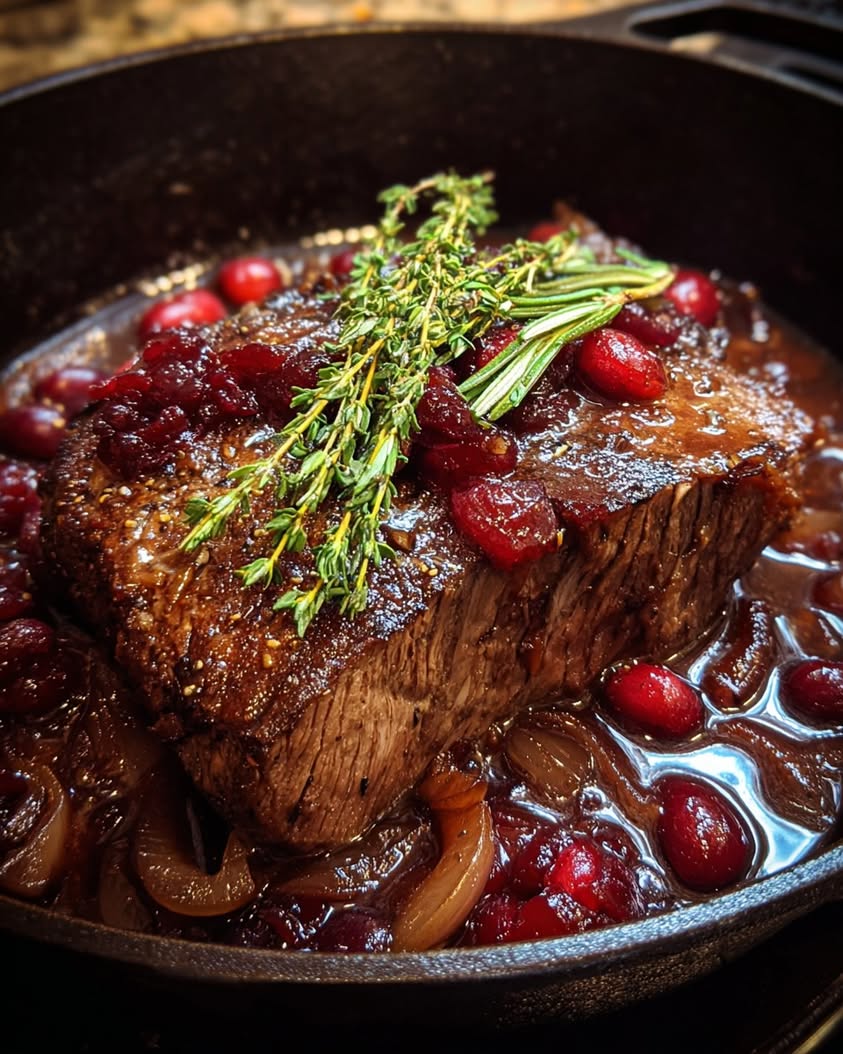
Slow-Braised Beef Roast with Cranberry Balsamic Glaze: The Ultimate Holiday Centerpiece
Imagine a dinner so spectacular it becomes the main topic of conversation for weeks afterward. This Slow-Braised Beef Roast with Cranberry Balsamic Glaze delivers exactly that kind of memorable dining experience. The rich, savory aroma that fills your home as this masterpiece cooks is simply intoxicating. Furthermore, the visual presentation of the glossy, ruby-red glaze draped over the perfectly carved beef creates an undeniable wow factor. This dish truly represents the pinnacle of holiday comfort food.
Creating this incredible Slow-Braised Beef Roast with Cranberry Balsamic Glaze requires patience, but the process is surprisingly straightforward. The long, slow cooking time transforms an affordable cut of beef into something extraordinarily tender and flavorful. Meanwhile, the cranberry balsamic glaze provides a beautiful balance of sweet and tangy notes that cut through the richness of the meat. Consequently, every bite delivers a complex symphony of textures and flavors that will have your guests requesting seconds.
This recipe stands out because it combines traditional braising techniques with a modern, vibrant glaze. The deep mahogany crust on the beef gives way to meat so tender it practically dissolves on your tongue. Additionally, the cranberry balsamic glaze adds a festive touch that makes it perfect for special occasions. Whether you are hosting a holiday dinner or celebrating a milestone, this dish guarantees a successful and impressive meal.
Quick Recipe Highlights
- Flavor Profile: This Slow-Braised Beef Roast features deep umami notes from the slow-cooked beef, balanced by the sweet-tart complexity of the cranberry balsamic glaze. The combination creates a sophisticated flavor profile that is both rich and refreshing. Ultimately, the glaze caramelizes beautifully on the exterior while infusing the meat with its distinctive character.
- Texture: The slow braising process results in exceptionally tender, fall-apart beef that requires minimal effort to shred or slice. Conversely, the cranberry balsamic glaze provides a slight sticky texture that clings perfectly to the meat. This contrast between the succulent beef and the glossy glaze makes each mouthful incredibly satisfying.
- Aroma: As this Slow-Braised Beef Roast cooks, your kitchen will fill with the comforting scent of roasting beef, aromatic herbs, and sweet cranberries. The balsamic vinegar adds a sharp, acidic note that cuts through the richness. Subsequently, these layered aromas build anticipation for the incredible meal to come.
- Visual Appeal: The finished Slow-Braised Beef Roast presents a stunning centerpiece with its dark, caramelized exterior and vibrant crimson glaze. When sliced, the tender pink beef creates a beautiful contrast against the deep red sauce. Therefore, this dish photographs beautifully and makes any table setting look professionally curated.
- Skill Level Needed: While this recipe requires several hours of cooking time, the actual hands-on work is quite manageable for most home cooks. The key techniques involve simple searing and braising methods that are easy to master. However, timing and patience are crucial for achieving the perfect texture in this Slow-Braised Beef Roast.
- Special Equipment: You will need a heavy-bottomed Dutch oven or oven-safe pot with a tight-fitting lid for optimal braising results. A quality instant-read thermometer helps ensure perfect doneness for your Slow-Braised Beef Roast. Additionally, a fine-mesh strainer is useful for creating a smooth cranberry balsamic glaze.
Recipe Overview
- Difficulty Level: This Slow-Braised Beef Roast recipe falls into the intermediate category due to the multiple steps involved and the importance of proper technique. While the process is not complicated, achieving the perfect sear on the meat and knowing when the braise is complete requires some cooking experience. The cranberry balsamic glaze also needs careful reduction to achieve the ideal consistency. Nevertheless, following the instructions precisely will yield restaurant-quality results.
- Category: This spectacular Slow-Braised Beef Roast fits perfectly into multiple meal categories including holiday feasts, Sunday dinners, and special occasion centerpieces. It works beautifully as the main protein for formal dinners yet is comforting enough for family meals. The impressive presentation also makes it ideal for dinner parties and celebratory gatherings where you want to serve something extraordinary.
- Cuisine: This Slow-Braised Beef Roast with Cranberry Balsamic Glaze draws inspiration from modern American cuisine with influences from traditional European braising techniques. The use of cranberries connects it to New England culinary traditions, while the balsamic glaze reflects Italian influences. The result is a fusion dish that feels both familiar and excitingly new, perfect for contemporary holiday tables.
- Cost: Preparing this Slow-Braised Beef Roast represents excellent value considering the impressive results. A chuck roast or similar braising cut provides exceptional flavor and texture at a reasonable price point. The cranberry balsamic glaze ingredients are pantry staples that add minimal cost while delivering maximum impact. Compared to ordering a similar dish at a restaurant, this homemade version saves significantly while feeding more people.
- Season: This Slow-Braised Beef Roast shines brightest during the fall and winter months when cranberries are in season and comfort food is most appreciated. The rich, warming qualities of the dish make it perfect for chilly weather, while the festive cranberry element aligns beautifully with holiday celebrations. That said, this recipe works well year-round for special occasions where you want to serve something memorable.
- Occasion: This spectacular Slow-Braised Beef Roast elevates any gathering from ordinary to extraordinary. It makes an ideal centerpiece for Thanksgiving, Christmas, Easter, or Rosh Hashanah dinners. The dish also works wonderfully for anniversary celebrations, birthday dinners, or when hosting important guests. Any event where you want to create lasting culinary memories deserves this showstopping main course.
Why You’ll Love This Recipe
The exceptional flavor and texture of this Slow-Braised Beef Roast will immediately win you over. The meat becomes incredibly tender during the long, slow cooking process, developing deep, complex flavors that simple roasting cannot achieve. Meanwhile, the cranberry balsamic glaze provides a beautiful counterpoint to the richness of the beef with its bright, tangy sweetness. Every component works in harmony to create a dining experience that feels both luxurious and comforting. The satisfaction of carving into a perfectly cooked roast that literally falls apart at the touch of a fork is genuinely unparalleled in home cooking.
From a practical perspective, this Slow-Braised Beef Roast offers numerous convenience benefits that make holiday entertaining less stressful. The majority of the cooking time is hands-off, allowing you to focus on other dishes or spend time with your guests. Additionally, the recipe is quite forgiving – the slow braising method ensures the meat remains moist and tender even if cooked slightly longer than planned. The cranberry balsamic glaze can be prepared ahead of time and simply warmed before serving. This strategic approach to meal preparation means you can create an impressive centerpiece without last-minute kitchen chaos.
Nutritionally, this Slow-Braised Beef Roast provides substantial benefits beyond mere deliciousness. Beef serves as an excellent source of complete protein, iron, zinc, and B vitamins essential for energy production and immune function. The cranberries in the glaze contribute powerful antioxidants and vitamin C, while the balsamic vinegar offers probiotics and may help regulate blood sugar. Using a leaner cut of beef for braising reduces the overall fat content without sacrificing flavor or tenderness. When served with appropriate vegetable sides, this dish represents a well-balanced meal that satisfies both palate and nutritional requirements.
The social and entertainment value of this Slow-Braised Beef Roast cannot be overstated. Serving such an impressive dish creates an immediate sense of occasion and makes guests feel truly special. The dramatic presentation when you bring the whole roast to the table generates excitement and conversation. Furthermore, the familiar yet elevated flavors appeal to diverse palates, making it a crowd-pleaser for both adventurous and traditional eaters. The generous servings ensure everyone leaves satisfied, and any leftovers taste even better the next day. This recipe consistently delivers what I call the “hosting trifecta” – impressive presentation, incredible flavor, and stress-free execution.
Considering the cost-effectiveness and accessibility of ingredients, this Slow-Braised Beef Roast represents outstanding value. Chuck roast, shoulder roast, or similar braising cuts deliver exceptional results at a fraction of the price of premium steaks or roasting cuts. The transformation that occurs during slow cooking turns these economical cuts into something truly extraordinary. The cranberry balsamic glaze utilizes ingredients most home cooks already have in their pantries or can easily find at any grocery store. This accessibility means you can create a restaurant-quality dish without specialty shopping or excessive expense. The recipe scales beautifully for larger gatherings, making it perfect for holiday entertaining when feeding a crowd.
Historical Background and Cultural Significance
The tradition of slow-braising tough cuts of meat dates back centuries across numerous cultures as a practical method for tenderizing less desirable portions of the animal. This technique likely originated in medieval Europe where cooking over low heat for extended periods in heavy pots made tougher meats palatable. The French pot-au-feu and Belgian carbonnade represent early examples of this approach to transforming economical ingredients into comforting, flavorful dishes. The specific method used in this Slow-Braised Beef Roast builds upon these time-honored techniques while incorporating contemporary flavor profiles that reflect modern culinary preferences.
Culturally, the beef roast holds significant symbolic meaning in many societies, often representing prosperity, celebration, and hospitality. In North America, the Sunday roast dinner tradition brought by European immigrants evolved into a cherished family ritual. The addition of cranberries to savory meat dishes has roots in Native American cooking, where the tart berries were used both fresh and dried to complement game meats. This Slow-Braised Beef Roast with Cranberry Balsamic Glaze beautifully merges these historical influences into a dish that feels both traditional and innovative. The result honors culinary heritage while appealing to contemporary tastes.
The evolution of this specific recipe reflects broader trends in modern home cooking where classic techniques meet global flavor influences. The cranberry balsamic glaze represents a departure from traditional gravy or jus, incorporating elements of both New England and Mediterranean cuisines. This fusion approach characterizes much of contemporary American cooking, where cooks feel empowered to combine ingredients and methods from different traditions. The Slow-Braised Beef Roast format allows for this creativity while maintaining the comforting, familiar essence of a traditional roast dinner. This evolution demonstrates how home cooking continues to adapt and innovate while respecting foundational techniques.
Regional variations of braised beef dishes exist worldwide, from Italian brasato al Barolo to Jewish brisket. What distinguishes this Slow-Braised Beef Roast is the specific combination of cranberry and balsamic, which creates a uniquely American profile. Different regions might substitute local ingredients – for example, using sour cherries in the Midwest or adding molasses in the South. The basic principle of transforming an economical cut through slow, moist heat remains constant, but the flavorings reflect local preferences and available ingredients. This adaptability is part of what makes braising such an enduring and beloved cooking method across cultures and generations.
Ingredient Deep Dive
The beef chuck roast serves as the foundation of this spectacular dish. Chuck comes from the shoulder area of the animal and contains considerable connective tissue that transforms into rich gelatin during slow cooking. This cut has been valued for centuries for its deep beefy flavor and ability to become exceptionally tender when cooked properly. Nutritionally, beef chuck provides high-quality protein, iron, zinc, and B vitamins essential for energy metabolism. When selecting your roast, look for well-marbled meat with creamy white fat and a deep red color. Avoid roasts with excessive external fat or those that appear dry or discolored. Store beef in the coldest part of your refrigerator and use within 3-5 days of purchase, or freeze for longer storage. If chuck roast is unavailable, beef brisket, shoulder roast, or bottom round make suitable substitutes, though cooking times may vary slightly.
Fresh cranberries bring vibrant color and tangy flavor to the glaze while connecting the dish to American culinary heritage. Native Americans used cranberries both medicinally and as food, introducing them to European settlers who incorporated them into traditional cooking. These bright red berries pack impressive nutritional benefits, including high levels of vitamin C, fiber, and unique phytochemicals that support urinary tract health. Select cranberries that are firm, shiny, and bright to dark red in color; avoid soft, shriveled, or discolored berries. Fresh cranberries keep well in the refrigerator for several weeks and freeze beautifully for year-round use. If fresh cranberries are unavailable, frozen work equally well in this recipe, though avoid canned cranberry sauce as it contains added sugars and has a different texture.
Balsamic vinegar contributes complex sweetness and acidity that balances the richness of the beef. Authentic traditional balsamic vinegar originates from Modena, Italy, where it undergoes years of aging in wooden barrels. While this recipe doesn’t require expensive traditional balsamic, selecting a quality commercial product aged for at least three years will provide better flavor. Nutritionally, balsamic vinegar contains antioxidants and may help regulate blood sugar levels. Store balsamic vinegar in a cool, dark place away from direct sunlight. If you need to substitute, a combination of red wine vinegar and a small amount of molasses can approximate the flavor profile, though the results will differ from true balsamic.
The aromatic vegetables – onions, carrots, and garlic – form the flavor base that supports the entire dish. These humble ingredients have been used in braises and stews across cultures for centuries, providing natural sweetness and depth. Onions and garlic contain sulfur compounds with demonstrated health benefits, while carrots contribute beta-carotene and fiber. Select firm, heavy-for-their-size onions, crisp carrots without cracks, and firm garlic heads with tight skins. Proper storage in a cool, dark place with good air circulation preserves their quality. While the specific vegetables in this recipe create a classic flavor profile, you can adapt based on seasonality or preference – leeks, celery, parsnips, or shallots all work beautifully in this Slow-Braised Beef Roast.
Beef broth forms the braising liquid that gently cooks the meat while absorbing and concentrating flavors. Quality broth makes a significant difference in the final dish, so select low-sodium versions to control seasoning. Homemade beef stock provides unparalleled depth, but several quality commercial options work well. Nutritionally, broth provides hydration and minerals while being low in calories. For storage, follow package directions or refrigerate homemade broth for up to 5 days. Vegetable broth or even water can substitute in a pinch, though the flavor will be less robust. The broth quantity in this recipe is carefully calibrated to create the perfect braising environment without drowning the meat, ensuring concentrated flavor and proper texture development in your Slow-Braised Beef Roast.
Common Mistakes to Avoid
- Failing to properly sear the roast before braising represents one of the most common errors. This crucial step develops deep flavor through the Maillard reaction and creates an appealing crust. Without adequate searing, your Slow-Braised Beef Roast will lack the complex, caramelized notes that distinguish exceptional braised meat. Always pat the meat completely dry before searing and ensure your pot is properly preheated.
- Using the wrong cut of beef will inevitably lead to disappointing results. Lean cuts like sirloin or round become dry and tough during long cooking, while well-marbled cuts with connective tissue transform into tenderness. Selecting chuck roast, brisket, or shoulder ensures the fat and collagen have time to break down properly in your Slow-Braised Beef Roast. Understanding which cuts benefit from slow cooking is fundamental to success.
- Rushing the braising process undermines the entire purpose of this cooking method. The magic happens during the long, slow cooking that breaks down tough connective tissues. Increasing the oven temperature to save time will result in tough, stringy meat rather than the desired fall-apart tenderness. Patience is non-negotiable when creating this Slow-Braised Beef Roast with its characteristic texture.
- Overcrowding the pot during searing prevents proper browning and creates steam rather than caramelization. Cooking the roast in batches if necessary ensures each piece develops a beautiful crust. Similarly, using too small a pot can cause uneven cooking. Selecting the right-sized Dutch oven gives your Slow-Braised Beef Roast adequate space for optimal heat circulation and flavor development.
- Neglecting to let the meat rest after cooking causes valuable juices to escape when sliced. The resting period allows the muscle fibers to relax and reabsorb moisture throughout the roast. Cutting immediately into your Slow-Braised Beef Roast will result in drier meat and lost flavor. Always budget for at least 15-20 minutes of resting time before carving.
- Underseasoning at various stages creates a bland final dish. Seasoning the meat before searing, seasoning the vegetables as they sauté, and properly seasoning the braising liquid all contribute layers of flavor. Waiting until the end to add salt to your Slow-Braised Beef Roast means it won’t penetrate deeply into the meat. Season thoughtfully throughout the cooking process.
- Simmering rather than properly braising affects texture development. The liquid should come about halfway up the side of the meat, not submerge it completely. Too much liquid essentially boils the meat rather than braising it, resulting in a different texture. Maintaining the proper liquid level ensures your Slow-Braised Beef Roast cooks through steam and gentle simmering rather than boiling.
- Over-reducing the cranberry balsamic glaze creates an unpleasantly thick, sticky consistency rather than a glossy sauce. The glaze should coat the back of a spoon but still be pourable. Cooking it too long makes it difficult to brush onto the roast and can create bitter notes. Carefully monitoring the reduction process preserves the perfect texture for your Slow-Braised Beef Roast glaze.
Essential Techniques
Proper searing represents the first critical technique for achieving exceptional flavor in your Slow-Braised Beef Roast. This process involves cooking the meat over high heat to develop a brown crust through the Maillard reaction, which creates hundreds of new flavor compounds. To master this technique, ensure your pot is properly preheated and the meat surface is completely dry before adding it to the hot oil. Resist the temptation to move the meat constantly – allow it to develop a proper crust before turning. Common pitfalls include crowding the pot, which lowers the temperature and creates steam, and using oil with too low a smoke point. Visual cues for success include a deep brown color and the meat releasing easily from the pot surface when properly seared.
The braising technique itself transforms tough cuts into tender masterpieces through gentle, moist heat cooking. This method involves first searing the meat, then cooking it partially submerged in liquid at low temperatures for an extended period. The importance lies in the breakdown of collagen into gelatin, which creates the characteristic fall-apart texture of excellent Slow-Braised Beef Roast. Mastering braising requires maintaining a consistent, low oven temperature and using just enough liquid to create steam without boiling the meat. Common mistakes include boiling rather than simmering, which toughens proteins, and frequently removing the lid, which releases valuable steam and heat. Visual doneness cues include meat that easily shreds with a fork and has pulled away from any bones.
Creating the perfect cranberry balsamic glaze requires understanding reduction techniques and flavor balance. This process involves simmering the liquid ingredients to evaporate water content, concentrating flavors and thickening the consistency. The importance lies in achieving the ideal balance between the cranberries’ tartness, the balsamic’s acidity, and the sweetening elements. To master glaze making, maintain a gentle simmer and stir frequently to prevent scorching, especially as the mixture thickens. Common pitfalls include boiling too vigorously, which can create bitter flavors, and over-reducing, which makes the glaze too thick to brush properly. Visual cues for perfect glaze include coating the back of a spoon without dripping off immediately and having a shiny, glossy appearance that will beautifully complement your Slow-Braised Beef Roast.
Resting the meat after cooking constitutes a crucial final technique that significantly impacts juiciness and texture. This process allows the muscle fibers that tightened during cooking to relax and reabsorb the natural juices throughout the roast. The importance of proper resting cannot be overstated – it can mean the difference between a juicy and a dry Slow-Braised Beef Roast. To master this technique, transfer the meat to a cutting board and tent loosely with foil in a warm spot. Common mistakes include cutting immediately, which releases valuable juices, or covering too tightly, which continues cooking. Proper resting typically takes 15-20 minutes for a roast of this size, during which time the internal temperature will stabilize and the juices will redistribute evenly throughout the meat.
Pro Tips for Perfect Slow-Braised Beef Roast
Bring your beef to room temperature before cooking to ensure more even cooking throughout the roast. This simple step prevents the exterior from overcooking while the interior reaches the proper temperature. Additionally, pat the surface completely dry with paper towels to promote better browning during the searing process.
Season your roast generously with salt and pepper at least 45 minutes before cooking, or even the night before. This advanced seasoning allows the salt to penetrate deeper into the meat, enhancing flavor throughout rather than just on the surface. The result is a more thoroughly seasoned Slow-Braised Beef Roast that tastes fantastic in every bite.
Use a digital meat thermometer to eliminate guesswork about doneness. The ideal internal temperature for braised beef is between 195°F and 205°F – significantly higher than for roasted meats. At this temperature, the collagen has fully broken down into gelatin, creating that characteristic fall-apart tenderness.
Skim excess fat from the braising liquid before reducing it into a sauce. This step removes greasiness while preserving the deep flavors developed during cooking. The resulting sauce will have a cleaner, more refined texture that beautifully complements your Slow-Braised Beef Roast without overwhelming richness.
Strain the braising liquids before reducing them for the final sauce. This removes any small bits of vegetable or herb that might create a gritty texture. The smooth, velvety sauce that results will have professional quality that elevates your entire Slow-Braised Beef Roast presentation.
Add a splash of fresh orange juice to the cranberry glaze for enhanced brightness. The citrus notes complement both the cranberry tartness and the rich beef flavors beautifully. This small addition creates additional complexity in your Slow-Braised Beef Roast without overwhelming the primary flavor profile.
Let the finished roast rest for at least 20 minutes before carving to allow juices to redistribute. This patience pays off in exceptionally moist, tender meat that holds together when sliced. Rushing this step means losing valuable juices and compromising your Slow-Braised Beef Roast texture.
Slice the roast against the grain for the most tender eating experience. Identifying the direction of the muscle fibers and cutting perpendicular to them shortens the fibers, making each piece more tender. This technique significantly enhances the already exceptional texture of your Slow-Braised Beef Roast.
Variations and Adaptations
Regional variations of this Slow-Braised Beef Roast allow for creative interpretation based on local ingredients and culinary traditions. A Mediterranean version might incorporate sun-dried tomatoes, Kalamata olives, and rosemary in the braising liquid. For a Latin-inspired twist, add chipotle peppers, orange juice, and Mexican oregano to create a barbacoa-style roast. Asian variations could include star anise, ginger, and soy sauce in the braising liquid, with a hoisin-based glaze instead of cranberry. French influence might manifest through the addition of red wine, thyme, and bay leaf in the braising process. Each regional adaptation maintains the fundamental slow-braising technique while incorporating distinctive flavor profiles that reflect different culinary heritages.
Seasonal adaptations ensure your Slow-Braised Beef Roast remains appropriate throughout the year. During spring, fresh herbs like tarragon and chives can lighten the profile, while asparagus and pea tendrils make elegant garnishes. Summer versions might feature a brighter glaze using cherries or raspberries instead of cranberries. Autumn naturally suits the original recipe with its holiday connotations and abundant cranberries. Winter adaptations could incorporate heartier root vegetables in the braise and a port wine reduction in the glaze. These seasonal modifications keep the dish feeling fresh and appropriate regardless of when you serve it while maintaining the comforting essence of slow-braised meat.
Dietary modifications make this Slow-Braised Beef Roast accessible to various eating preferences and restrictions. For a gluten-free version, ensure your broth and other packaged ingredients are certified gluten-free – the basic recipe is naturally gluten-free otherwise. Low-carb and keto adaptations might reduce or eliminate the sweetener in the glaze, relying on the natural sweetness of slowly caramelized onions and carrots. For paleo compliance, use coconut sugar instead of brown sugar and ensure all ingredients align with paleo principles. While a completely vegan version isn’t feasible with the central beef component, the braising technique and glaze concept can be adapted for large mushrooms or root vegetables for plant-based alternatives.
Flavor variations allow for personalization based on preference or available ingredients. Experiment with different acid components in the glaze such as pomegranate molasses, red wine reduction, or even coffee for depth. Herb variations might include rosemary, thyme, sage, or marjoram in the braising liquid depending on your preference. Spice additions like smoked paprika, cumin, or coriander seeds can add warmth and complexity to the rub. Incorporating umami boosters like tomato paste, mushroom powder, or Worcestershire sauce in the braising liquid enhances the savory characteristics. These flavor modifications let you tailor the Slow-Braised Beef Roast to your specific taste while maintaining the technical foundation that ensures success.
Serving and Presentation Guide
Plating techniques for your Slow-Braised Beef Roast should highlight its impressive appearance while ensuring practical serving. For formal occasions, present the whole roast on a large platter with the cranberry balsamic glaze brushed generously over the top. Surround with some of the braised vegetables and fresh herb sprigs for color contrast. For family-style service, slice the roast against the grain into thick pieces and arrange slightly overlapping on the platter. Spoon additional glaze over the sliced meat and serve the remaining sauce in a gravy boat alongside. Individual plating works beautifully for more controlled portions – place a slice of beef slightly off-center on warm plates, nap with sauce, and arrange accompaniments thoughtfully around the meat.
Garnishing ideas should enhance rather than overwhelm the beautiful appearance of your Slow-Braised Beef Roast. Fresh herb sprigs like rosemary, thyme, or parsley provide natural color and fragrance that complement the dish. For special occasions, consider edible flowers like nasturtiums or pansies for a dramatic touch. Citrus elements like orange or lemon zest sprinkled over the finished dish add brightness and visual interest. Toasted nuts such as walnuts or pecans can provide textural contrast when sprinkled around the platter. Remember that garnishes should be edible and should complement the flavors of the dish rather than serving merely as decoration.
Traditional accompaniments for Slow-Braised Beef Roast often include starch elements to soak up the delicious braising liquids. Creamy mashed potatoes represent a classic pairing that complements the rich meat beautifully. Root vegetable purées like parsnip, celery root, or carrot provide slightly sweet counterpoints to the savory beef. For something less traditional, polenta or risotto make excellent bases for the meat and sauce. Crusty bread is essential for sopping up every last bit of the incredible juices from your plate. These traditional sides create a comforting, complete meal that satisfies the desire for hearty fare, especially during cooler weather.
Modern serving suggestions might lighten the presentation while maintaining the essential character of the dish. Consider serving smaller portions of the Slow-Braised Beef Roast alongside grain-based salads featuring farro, quinoa, or wild rice. Roasted seasonal vegetables like Brussels sprouts, delicata squash, or broccolini provide contemporary alternatives to traditional mashed potatoes. For a deconstructed approach, shred the beef and serve it over creamy polenta with the cranberry balsamic glaze drizzled artistically around the plate. These modern presentations maintain the incredible flavor of the dish while updating the visual presentation for contemporary dining preferences.
Wine and Beverage Pairing
Wine pairings for this Slow-Braised Beef Roast should complement both the rich, savory meat and the sweet-tart cranberry balsamic glaze. Full-bodied red wines with good acidity stand up beautifully to the dish’s complexity. A Syrah or Shiraz offers peppery notes that complement the beef while having enough fruit to handle the cranberry elements. Zinfandel works wonderfully with its jammy berry characteristics that echo the cranberry components. For something more elegant, a Pinot Noir with its red fruit notes and earthy undertones creates a beautiful harmony. If preferring white wine, choose an oaked Chardonnay with enough body and richness to match the substantial nature of the Slow-Braised Beef Roast.
Non-alcoholic alternatives provide sophisticated options for those avoiding alcohol without compromising the dining experience. Craft sodas with cranberry or cherry notes can mirror the fruit elements in the glaze. For something more refined, a pomegranate-based mocktail with herbal elements like rosemary or thyme complements the savory aspects. Sparkling cider offers effervescence that cuts through the richness while providing autumnal flavors that align with the dish’s character. Iced hibiscus tea provides tartness that parallels the cranberry components while offering beautiful color. These non-alcoholic pairings ensure all guests can enjoy complementary beverages with your Slow-Braised Beef Roast.
Coffee and tea pairings might seem unconventional but can work surprisingly well with this robust dish. For coffee, choose medium-roast brews with low acidity and notes of chocolate or nuts that complement the savory beef. Cold brew coffee provides a smooth, less acidic option that won’t compete with the dish’s flavors. Tea selections might include smoky Lapsang Souchong, whose campfire notes complement the seared exterior of the meat. A sturdy Assam black tea has maltiness that stands up to the rich flavors. Herbal teas like rooibos offer caffeine-free alternatives with natural sweetness that harmonizes with the glaze. These hot beverages provide interesting alternatives to traditional wine pairings for your Slow-Braised Beef Roast.
Storage and Shelf Life
Proper storage methods ensure you can safely enjoy your Slow-Braised Beef Roast beyond the initial meal. After cooking, allow the meat to cool to room temperature within two hours to prevent bacterial growth. Remove the meat from the braising liquid and store separately from the sauce and vegetables. Use shallow airtight containers rather than deep ones to promote rapid, even cooling. Glass containers are ideal as they don’t absorb odors or stains from the richly colored braising liquids. Label containers with the date to track freshness. Following these storage protocols maintains both safety and quality for your leftover Slow-Braised Beef Roast.
Temperature requirements for storage are critical for food safety. Refrigerate your Slow-Braised Beef Roast within two hours of cooking, ensuring your refrigerator maintains 40°F or below. The roast will keep safely for 3-4 days when properly refrigerated. For longer storage, freezing provides an excellent option. The beef freezes particularly well due to its high moisture content from braising. Frozen Slow-Braised Beef Roast maintains quality for 2-3 months, though it remains safe indefinitely when kept at 0°F. Always thaw frozen beef in the refrigerator overnight rather than at room temperature to prevent bacterial growth.
Reheating instructions are crucial for restoring the wonderful texture and flavor of your Slow-Braised Beef Roast. For best results, reheat gently in a covered dish with some of the braising liquid to prevent drying out. An oven temperature of 300°F works well for reheating without further cooking the meat. Microwave reheating can create hot spots and toughen the meat, so if using this method, do so at reduced power and stir or rearrange pieces periodically. The cranberry balsamic glaze should be reheated separately and gently to prevent breaking or over-thickening. Proper reheating techniques ensure your leftover Slow-Braised Beef Roast tastes nearly as wonderful as when freshly made.
Make Ahead Strategies
Prep timeline for this Slow-Braised Beef Roast can be strategically planned to reduce day-of cooking stress. Up to three days before serving, you can season the meat and store it wrapped in the refrigerator. The vegetables can be chopped and stored in airtight containers. The cranberry balsamic glaze can be completely prepared and refrigerated separately. On the day before serving, you can complete the entire braising process, cool the meat in its liquid, and refrigerate. This approach actually improves flavor as the ingredients have more time to meld. On serving day, simply reheat the meat gently in the braising liquid and warm the glaze separately.
Storage between steps requires attention to food safety and quality preservation. When refrigerating seasoned raw meat, place it on a plate or tray to catch any drips and prevent cross-contamination. After braising, cool the meat in its liquid before transferring to storage containers – the fat that rises to the surface acts as a protective layer. The cranberry balsamic glaze should be stored in a separate container to maintain its distinct flavor and texture. If preparing components more than three days in advance, freezing provides a better option for maintaining freshness. These strategic storage approaches ensure each element of your Slow-Braised Beef Roast remains at peak quality until serving.
Reheating guidelines for make-ahead Slow-Braised Beef Roast differ slightly from reheating leftovers. When reheating a fully cooked and refrigerated roast, do so gently in a 300°F oven with some of the braising liquid until warmed through, approximately 30-45 minutes depending on size. Avoid boiling when reheating, as this can toughen the already cooked meat. The cranberry balsamic glaze may thicken when refrigerated, so warm it gently with a splash of water or broth to restore pouring consistency. If the meat was refrigerated in its braising liquid, skim any solidified fat from the surface before reheating. These careful reheating methods restore the perfect serving temperature and texture to your make-ahead Slow-Braised Beef Roast.
Scaling Instructions
Halving the recipe works beautifully when cooking for smaller households or wanting fewer leftovers. Use a 3-4 pound chuck roast instead of 5-6 pounds and reduce all other ingredients proportionally. A smaller Dutch oven or even a heavy oven-safe skillet can accommodate the smaller roast adequately. The cooking time may reduce slightly, but still rely on internal temperature and texture rather than strict timing. Check for doneness starting at about 2.5 hours rather than the full 3-4 hours. The cranberry balsamic glaze can be halved precisely, though reducing acidic liquids requires careful attention to prevent over-reduction. Halved successfully, this scaled-down Slow-Braised Beef Roast delivers the same incredible flavor and texture for smaller gatherings.
Doubling or tripling the recipe requires some adjustments for optimal results. When cooking multiple roasts, sear them in batches to avoid overcrowding the pot, which prevents proper browning. Use the largest Dutch oven available or consider using a roasting pan covered tightly with foil for braising. Increase the braising liquid proportionally, but note that you may not need to double it exactly – the liquid should still come only about halfway up the roasts. Cooking time may increase slightly, but more importantly, ensure all roasts have adequate space for heat circulation. When making larger batches of the
Print
Slow-Braised Beef Roast with Cranberry Balsamic Glaze
Description
A tender, fall-apart beef roast slow-braised in a rich cranberry balsamic glaze, perfect for a cozy dinner.
Ingredients
For the Crust:
- 3 lb beef chuck roast
- 1 tbsp olive oil
- 1 cup fresh or frozen cranberries
- 1/2 cup balsamic vinegar
- 1/4 cup brown sugar
- 1 cup beef broth
- 1 onion, sliced
- 3 garlic cloves, minced
- 1 tsp dried thyme
- Salt and black pepper to taste
Instructions
1. Prepare the Crust:
- Preheat oven to 325°F (165°C). Season beef roast generously with salt and pepper.
- Heat olive oil in a large Dutch oven over medium-high heat. Sear roast on all sides until browned, about 3-4 minutes per side.
- Remove roast and set aside. In the same pot, add onion and garlic; sauté until softened, about 5 minutes.
- Add cranberries, balsamic vinegar, brown sugar, beef broth, and thyme. Stir to combine and bring to a simmer.
- Return roast to the pot, spoon some glaze over the top, cover, and transfer to the oven. Braise for 3-4 hours, until beef is fork-tender.
- Remove roast and let rest. Meanwhile, simmer the remaining glaze on the stovetop until thickened. Serve roast sliced with glaze drizzled over top.
Notes
You can customize the seasonings to taste.

I’m Shaykee—born in Morocco, seasoned across continents. From airplane galleys to home kitchens, I share the flavors and stories that shaped my journey.