
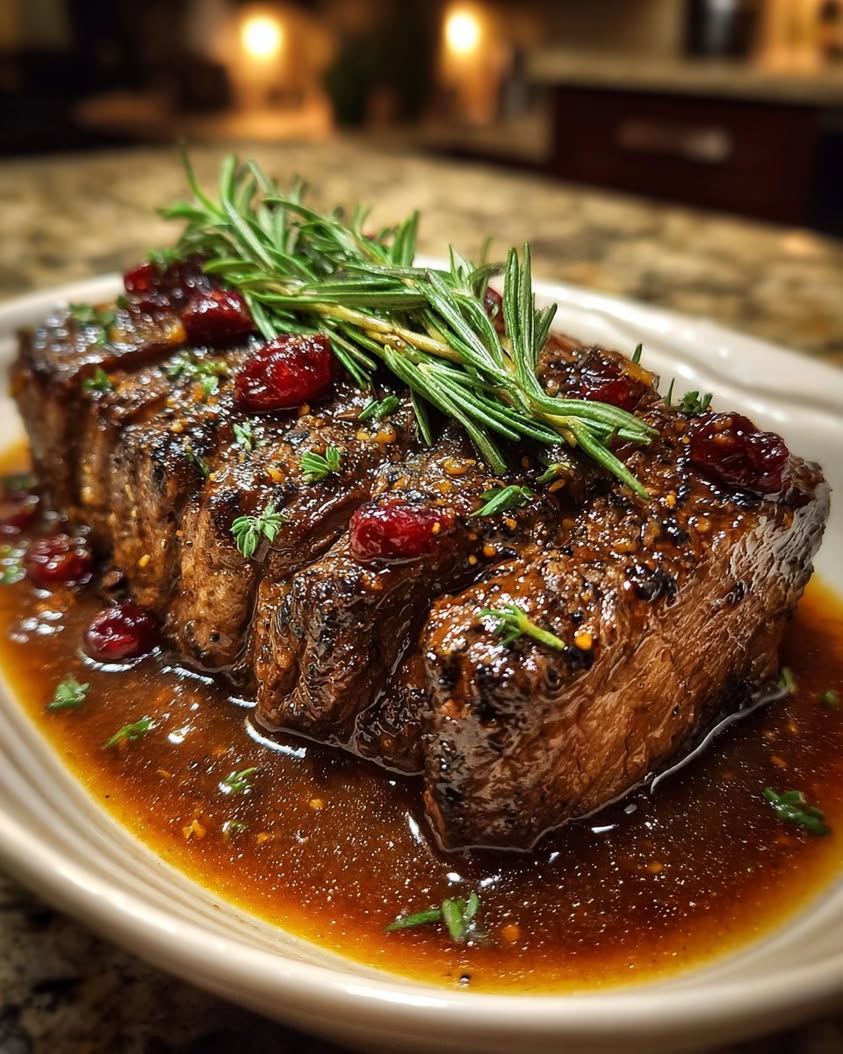
Slow-Braised Beef Roast with Cranberry Balsamic Glaze: The Ultimate Holiday Centerpiece
Imagine a dinner table filled with loved ones and the incredible aroma of a perfectly cooked meal filling the air. This slow-braised beef roast with cranberry balsamic glaze delivers exactly that experience. Furthermore, it transforms a simple chuck roast into an extraordinary culinary masterpiece. The deep, savory notes of the beef meld beautifully with the sweet and tangy cranberry glaze. Consequently, every bite offers a complex symphony of flavors that will have your guests requesting seconds.
This recipe represents the pinnacle of comfort food with an elegant twist. The long, slow cooking process ensures the beef becomes incredibly tender, practically falling apart with the gentle prod of a fork. Meanwhile, the cranberry balsamic glaze adds a festive, glossy finish that makes this dish perfect for holiday gatherings. Additionally, the hands-on preparation time remains minimal, allowing you to enjoy the company of your guests. Ultimately, this dish proves that impressive meals do not require complicated techniques, just patience and quality ingredients.
The magic of this slow-braised beef roast lies in its ability to balance robust, hearty flavors with a touch of sophistication. The cranberry glaze provides a vibrant counterpoint to the rich, umami depth of the braised meat. Moreover, the balsamic vinegar introduces a subtle acidity that cuts through the richness, creating a perfectly balanced profile. This dish truly stands as a testament to the power of slow cooking and thoughtful flavor pairing. It is, without a doubt, the ultimate cozy dinner for any special occasion.
Quick Recipe Highlights
- Flavor Profile: This slow-braised beef roast features a deep, savory base from the long cooking process, which is brilliantly contrasted by a sweet and tangy cranberry balsamic glaze. The combination of herbs, garlic, and the reduced glaze creates a complex taste that is both comforting and sophisticated.
- Texture: The beef itself becomes exceptionally tender and succulent, shredding easily after hours of slow braising. The glaze adds a lovely, slightly sticky coating that clings to the meat, providing a perfect textural contrast in every mouthful.
- Aroma: As it cooks, the aroma of garlic, thyme, and seared beef will fill your kitchen, building anticipation. Later, the sweet and sharp scent of reducing cranberries and balsamic vinegar adds a festive, inviting note that is simply irresistible.
- Visual Appeal: The finished dish boasts a beautiful, dark mahogany-colored glaze that makes the beef look glossy and professional. Served on a platter, perhaps with fresh herbs and whole cranberries, it creates a stunning centerpiece for any table.
- Skill Level Needed: While the recipe is straightforward, achieving perfect searing and managing a long braising time requires a moderate level of kitchen confidence. However, the steps are simple to follow, making it accessible for cooks who are comfortable with basic techniques.
- Special Equipment: A heavy-bottomed Dutch oven or an oven-safe pot with a tight-fitting lid is essential for consistent, even braising. You will also need a blender or food processor to create a perfectly smooth cranberry balsamic glaze.
Recipe Overview
- Difficulty Level: We classify this slow-braised beef roast as intermediate due to the multi-step process involving searing, braising, and glazing. While none of the steps are overly complex, successfully executing them in sequence and managing the long cooking time requires some culinary experience. However, detailed instructions make it achievable for dedicated beginners.
- Category: This dish firmly belongs in the main course category, designed to be the star of the meal. It also falls under holiday recipes and comfort food, perfect for a cozy family dinner or a large celebratory feast where a show-stopping centerpiece is required.
- Cuisine: The recipe draws inspiration from modern American comfort food traditions, with influences from European braising techniques. The use of cranberry sauce nods to classic North American holiday meals, while the balsamic glaze introduces an Italian touch, creating a delicious fusion.
- Cost: Using a chuck roast makes this an affordable luxury compared to premium cuts like prime rib. The other ingredients, like canned cranberry sauce and common pantry staples, keep the overall cost reasonable. This makes it an excellent choice for feeding a crowd without breaking the bank.
- Season: This recipe shines brightest during the fall and winter months. The hearty, warming nature of the braised beef and the festive cranberry flavor make it ideal for holidays like Thanksgiving, Christmas, and New Year’s Eve, or for any cold-weather gathering.
- Occasion: It is perfectly suited for formal holiday dinners, festive potlucks, and special Sunday family meals. Its impressive presentation and make-ahead friendly nature also make it a fantastic choice for entertaining, as it reduces stress on the day of the event.
Why You’ll Love This Slow-Braised Beef Roast
The taste and texture of this dish are truly unparalleled. The slow-braising process breaks down the tough connective tissues in the chuck roast, resulting in meat that is unbelievably tender and juicy. Each forkful melts in your mouth, while the cranberry balsamic glaze provides a burst of sweet, tangy, and savory flavor that complements the rich beef perfectly. This combination creates a deeply satisfying eating experience that feels both rustic and refined. It is a guaranteed crowd-pleaser that will have everyone at the table asking for your secret.
From a convenience standpoint, this recipe is a dream for any host. After the initial searing and brief simmering, the oven does most of the work for you. This hands-off approach frees you up to prepare side dishes, set the table, or simply relax with your guests. Furthermore, the dish holds exceptionally well, so if dinner is delayed, the beef will only become more tender. It also reheats beautifully, making it a fantastic option for leftovers or for preparing a day in advance.
Nutritionally, this slow-braised beef roast offers several advantages. Beef is an excellent source of high-quality protein, iron, and B vitamins, which are essential for energy. The slow cooking method also allows fat to render out, which you can skim off before serving. Using whole cranberry sauce adds a dose of antioxidants and fiber. When served with a balanced plate of vegetables and complex carbohydrates, this meal can be part of a wholesome and nourishing diet.
The social and entertaining value of this dish cannot be overstated. It creates a memorable centerpiece that sparks conversation and makes any meal feel like a celebration. The stunning visual appeal of the glazed roast immediately elevates the occasion. Moreover, the act of serving a beautifully prepared, home-cooked meal from a shared platter fosters a warm, communal atmosphere. It is a recipe that builds traditions and creates lasting memories around the dinner table.
Finally, this recipe is remarkably cost-effective and accessible. A chuck roast is an economical cut that transforms into something extraordinary through the magic of braising. The other ingredients are pantry staples or easy-to-find items at any grocery store. Consequently, you can create a restaurant-quality, impressive meal without a restaurant-quality price tag. This accessibility ensures that delicious, celebratory food can be enjoyed by everyone, regardless of their budget.
Historical Background and Cultural Significance
The technique of braising tough cuts of meat dates back centuries and spans numerous cultures. Essentially, this method was born from necessity, as people sought ways to make inexpensive, tough cuts of meat palatable and tender. Every culture with a history of cattle farming developed its own version of a pot roast. The American pot roast, often cooked with root vegetables and gravy, became a Sunday dinner staple, symbolizing home, family, and comfort. This slow-braised beef roast is a direct descendant of that tradition, updated with a modern, festive glaze.
Culturally, the roast holds a place of honor on dining tables across the Western world. It represents abundance, celebration, and the skill of the home cook. Serving a whole roast signifies a special occasion, from holidays to family reunions. The incorporation of cranberries specifically ties this recipe to North American traditions, where cranberry sauce is a quintessential accompaniment to Thanksgiving and Christmas turkey. By pairing it with beef, this recipe creates a new, yet familiar, holiday classic that honors its culinary roots.
The evolution of this particular recipe reflects broader trends in modern home cooking. While the braising technique is ancient, the use of a fruit-based glaze like the cranberry balsamic glaze is a more contemporary innovation. It showcases a move towards balancing savory main courses with sweet and acidic components, a hallmark of modern gastronomy. This evolution demonstrates how classic comfort food can be refined and elevated without losing its soul-satisfying essence, making it relevant for today’s discerning palates.
Regional variations of pot roast are abundant, and this recipe can be easily adapted. A French Boeuf Bourguignon uses red wine and mushrooms, while a German Sauerbraten employs a vinegar marinade. This cranberry-glazed version offers a distinctly North American twist. You could explore other regional influences by substituting the cranberries with other fruits, such as cherries for a Black Forest vibe or apples for a more New England feel. The basic braising method provides a versatile canvas for a world of flavors.
Ingredient Deep Dive
Let’s start with the star: the beef chuck roast. This cut comes from the shoulder of the cow, a well-exercised area rich in connective tissue and marbling. Historically, these tougher, cheaper cuts were the backbone of working-class cuisine. When subjected to long, slow, moist cooking, the collagen and connective tissues break down into gelatin, resulting in incredibly tender and flavorful meat. Nutritionally, it is a great source of protein, zinc, iron, and B vitamins. When selecting a chuck roast, look for one with good marbling throughout, as this fat will baste the meat from within during cooking. Store it in the coldest part of your refrigerator and use it within a few days of purchase.
Next, the cranberry sauce. Cranberries are one of North America’s native fruits, long used by Indigenous peoples for food and medicine. They are packed with vitamin C, fiber, and unique antioxidants called proanthocyanidins, known for supporting urinary tract health. Using whole-berry cranberry sauce in the glaze provides texture and bursts of tart fruit flavor. For the best results, choose a high-quality sauce without high-fructose corn syrup. If fresh or frozen cranberries are in season, you can make your own simple sauce by simmering them with a little orange juice and sugar until they pop and thicken.
The balsamic vinegar is the third key component. Authentic traditional balsamic vinegar, or Aceto Balsamico Tradizionale, is a protected product from Italy, aged for years in wooden barrels and possessing a complex, sweet-and-sour flavor. For cooking, a good quality, moderately priced balsamic vinegar is perfect. It adds a crucial acidity that brightens the rich dish and contributes to the glossy, syrupy consistency of the glaze. Its deep, caramel-like notes complement the sweetness of the cranberries beautifully. Store balsamic vinegar in a cool, dark place. For a substitution in a pinch, a mix of red wine vinegar and a small amount of brown sugar can mimic some of its characteristics.
Common Mistakes to Avoid
- Not Searing the Meat Properly: Searing is non-negotiable for building a deep, flavorful foundation. If you skip this step or crowd the pot, the meat will steam instead of brown. Always pat the roast dry and sear it in a very hot pot until a dark brown crust forms on all sides.
- Using the Wrong Cut of Beef: Choosing a lean cut like sirloin or round roast will result in dry, tough meat. You must use a well-marbled, tough cut like chuck roast, brisket, or short ribs. These cuts have the necessary collagen that melts during braising, self-basting the meat and making it tender.
- Adding the Glaze Too Early: Applying the cranberry balsamic glaze at the beginning of cooking will cause the sugars to burn and become bitter. The glaze should always be brushed on during the final stage of cooking or even after the meat is out of the oven to preserve its bright, sweet-tangy flavor.
- Braising with Too Much Liquid: The liquid should only come about one-third to halfway up the side of the roast, not submerge it. This allows the top of the roast to be exposed to the hot air of the oven, creating different textures, while the bottom braises in the liquid.
- Not Letting the Meat Rest: Cutting into the roast immediately after taking it out of the oven will cause all the precious juices to run out onto the cutting board. Always let it rest for at least 15-20 minutes tented with foil. This allows the muscle fibers to relax and reabsorb the juices.
- Overcooking the Vegetables: If you add delicate vegetables like carrots and onions at the very beginning, they will turn to mush. For better texture, add hearty root vegetables about halfway through the braising time, or roast them separately and add them back in at the end.
- Skimping on Seasoning: A large cut of meat like a chuck roast needs generous seasoning. Be sure to salt and pepper the roast liberally on all sides before searing. Taste the braising liquid before it goes into the oven and adjust the seasoning accordingly.
- Using a Pot That Doesn’t Hold Heat Well: A thin, flimsy pot will lead to hot spots and uneven cooking. A heavy-bottomed Dutch oven is ideal because it distributes heat evenly and maintains a consistent, gentle simmer in the oven, which is key for successful braising.
Essential Techniques
Mastering the sear is your first critical step. Searing is not just about color; it’s about creating a complex layer of flavor through the Maillard reaction. This chemical process occurs when proteins and sugars in the meat are exposed to high heat, producing hundreds of new flavor compounds. To achieve a perfect sear, ensure your pot is very hot before adding the oil. Pat the roast completely dry with paper towels, as moisture is the enemy of browning. Then, place the roast in the pot and do not move it for several minutes, allowing a proper crust to form. The visual cue for success is a deep, rich brown color on all sides, not a gray steam.
Understanding the braising process is fundamental. Braising is a combination cooking method that uses both dry and moist heat. The meat is first seared (dry heat) and then slowly cooked in a covered pot with a small amount of liquid (moist heat). The magic happens at a low and steady temperature, typically between 275°F and 325°F (135°C and 163°C). At this temperature, the tough collagen in the meat slowly dissolves into gelatin, which tenderizes the meat and enriches the cooking liquid. A common pitfall is boiling the meat; the liquid should barely simmer. You’ll know it’s done when a fork can be inserted and twisted with almost no resistance.
Creating and applying the glaze is the final finesse. A glaze is a thickened, flavorful sauce that coats the food. For the cranberry balsamic glaze, you are reducing the liquids to concentrate the flavors and achieve a syrupy consistency. This happens over medium heat, and you must watch it carefully to prevent burning. The glaze is ready when it coats the back of a spoon and you can draw a line through it with your finger. Applying it in the last 15-30 minutes of cooking allows it to set and caramelize slightly without burning. For an extra glossy finish, you can brush on one more layer after the roast comes out of the oven.
Pro Tips for Perfect Slow-Braised Beef Roast
For an even more profound flavor, season the chuck roast generously with salt and pepper up to 24 hours in advance and let it rest uncovered on a rack in the refrigerator. This process, known as dry-brining, seasons the meat deeply and helps the surface dry out for a superior sear.
After searing the meat, do not forget to deglaze the pot with a splash of red wine or beef broth. Scraping up the browned bits (the fond) from the bottom of the pot is crucial because those bits are packed with immense, concentrated flavor that will form the base of your braising liquid.
Use a piece of parchment paper. After you’ve added your braising liquid, place a piece of parchment paper directly on the surface of the liquid and meat before putting the lid on. This “cartouche” helps reduce evaporation and keeps the top of the roast from drying out.
To check for doneness, rely on feel rather than time. The roast should be fork-tender. Insert a fork into the center and try to twist it. If the meat easily shreds and offers little resistance, it is perfectly done. A thermometer will read around 200-205°F (93-96°C) for shreddable meat.
Let the roast rest adequately before slicing or shredding. Tent it loosely with foil for at least 15-20 minutes. This allows the muscle fibers to relax and reabsorb the juices throughout the roast, ensuring every slice is moist and flavorful, not dry.
Skim the fat from the braising liquid before reducing it into a sauce or serving it as au jus. The easiest way is to use a fat separator, or you can gently spoon the fat off the surface. This results in a cleaner, more refined sauce that isn’t greasy.
Variations and Adaptations
For regional variations, consider a French-inspired version by using red wine as the primary braising liquid and adding a bouquet garni of thyme, parsley, and bay leaf. Alternatively, for a Mexican-inspired twist, use beef broth with a touch of orange juice, chipotle chiles in adobo for smokiness, and warm spices like cumin and oregano, then finish with a fresh cilantro garnish.
Seasonal adaptations are simple and effective. In the spring, you could use a rhubarb and strawberry compote instead of cranberry for the glaze. During summer, a glaze made with grilled peaches and a hint of bourbon would be delightful. In the heart of winter, adding spices like star anise or a cinnamon stick to the braising liquid can add wonderful warmth.
Dietary modifications are straightforward. For a gluten-free version, simply ensure your beef broth and other packaged ingredients are certified gluten-free. To make it Paleo or Whole30 compliant, use a sugar-free cranberry sauce and ensure your balsamic vinegar has no added sulfites or caramel color. The recipe is naturally dairy-free, making it suitable for that dietary need as well.
Experiment with flavor variations by changing the glaze components. Instead of cranberry, try a glaze made with fig jam, cherry preserves, or even a hoisin-based glaze for an Asian flair. You can also infuse the braising liquid with different aromatics, such as star anise, lemongrass, or smoked paprika, to take the flavor profile in a completely new direction.
Serving and Presentation Guide
Plating this roast beautifully elevates the entire dining experience. Transfer the whole roast to a large, clean cutting board or a warm platter. Instead of pre-slicing, present it whole, showcasing the glossy glaze. Use a sharp carving knife to slice it against the grain at the table, which is both practical and theatrical. Alternatively, for a more rustic feel, you can use two forks to pull the meat into large, tender chunks directly on the platter.
Garnishing is key for color and freshness. Scatter fresh whole cranberries, sprigs of rosemary or thyme, and perhaps some microgreens or flat-leaf parsley around the platter. For a festive touch during the holidays, add roasted whole chestnuts or segments of fresh orange. These elements add pops of color and hint at the flavors within the dish.
For traditional accompaniments, creamy mashed potatoes or soft polenta are classic choices to soak up the delicious braising liquid. Roasted root vegetables like carrots, parsnips, and Brussels sprouts cooked in the same oven are a perfect match. A simple green salad with a sharp vinaigrette provides a refreshing contrast to the rich, hearty main course.
Wine and Beverage Pairing
Selecting the right wine can enhance the meal significantly. The rich, savory notes of the beef and the sweet-tangy cranberry glaze pair wonderfully with medium to full-bodied red wines that have good acidity. A classic Pinot Noir, with its red fruit flavors and earthy notes, is a fantastic match that won’t overpower the dish. Alternatively, a Syrah/Shiraz or a Zinfandel can stand up to the robust flavors, especially if they have a peppery or jammy character that complements the fruit in the glaze.
For non-alcoholic alternatives, consider sophisticated options that mirror the complexity of wine. A tart cherry juice spritzer with a splash of soda water and a twist of orange peel can echo the fruit notes in the glaze. Alternatively, a chilled glass of high-quality cranberry juice mixed with ginger ale and a dash of aromatic bitters provides a festive and flavorful option. Sparkling apple cider is always a celebratory and family-friendly choice.
Storage and Shelf Life
Proper storage is essential for maintaining quality and safety. Allow the beef roast to cool completely to room temperature within two hours of cooking. Then, store the meat and any braising liquid/glaze separately in airtight containers in the refrigerator. Properly stored, the beef will keep for 3 to 4 days. The fat that rises to the top of the liquid will actually help preserve it and can be removed before reheating.
For freezing, this dish is an excellent candidate. Portion the shredded or sliced beef with some of the braising liquid into freezer-safe bags or containers. Exclude as much air as possible to prevent freezer burn. It will maintain best quality for up to 3 months. Thaw overnight in the refrigerator before reheating. To reheat, place the beef and liquid in a covered saucepan over low heat, stirring occasionally, until warmed through. You can also reheat it gently in a covered dish in the oven at 300°F (150°C).
Make Ahead Strategies
This slow-braised beef roast is a fantastic make-ahead dish, which makes it perfect for stress-free entertaining. You can complete the entire recipe, including braising and glazing, up to two days in advance. After the roast has cooled, slice or shred it and place it in a baking dish. Pour the strained braising liquid over the top, cover tightly, and refrigerate.
On the day of serving, reheat the entire dish, covered, in a 300°F (150°C) oven until thoroughly warmed, which usually takes 30-45 minutes. If the meat seems dry, add a splash of beef broth before reheating. For the best presentation, you can brush on a fresh layer of the cranberry balsamic glaze during the last 10 minutes of reheating to make it look freshly made and glossy.
Scaling Instructions
Scaling this recipe up or down is straightforward, but requires attention to a few details. The cooking times are primarily determined by the weight and thickness of the roast, not the overall volume of ingredients. A good rule of thumb is to budget about 45 minutes to 1 hour of braising time per pound of meat. Therefore, a 3-pound roast will take less time than a 5-pound roast.
When doubling the recipe for a crowd, ensure your Dutch oven or roasting pan is large enough to accommodate both roasts without crowding; they should not be stacked. If necessary, use two separate pots. The amount of braising liquid can be increased proportionally. When halving the recipe, use a smaller pot to ensure the liquid level comes up appropriately on the sides of the smaller roast. Always rely on the fork-tender test for doneness rather than a strict timer.
Nutritional Deep Dive
A serving of this slow-braised beef roast provides a substantial amount of high-quality protein, which is essential for muscle repair, satiety, and overall bodily function. The chuck roast also delivers important micronutrients, including heme iron, which is highly absorbable and crucial for oxygen transport in the blood, and zinc, which supports immune function. The slow cooking process allows much of the saturated fat to render out into the braising liquid, which you can skim off, resulting in a leaner final product than one might assume.
From the cranberry glaze, you gain dietary fiber and a host of antioxidants and phytonutrients. These compounds, like proanthocyanidins, are known for their anti-inflammatory properties and role in promoting urinary tract health. To keep the dish balanced, be mindful of the added sugar from the cranberry sauce and glaze. Serving it with non-starchy vegetables and a complex carbohydrate like quinoa or sweet potato can create a well-rounded, nutrient-dense meal that is satisfying and health-conscious.
Dietary Adaptations
For a gluten-free version, this recipe is already nearly compliant. The primary concern is the beef broth; simply ensure you use a brand that is certified gluten-free, as some broths may contain hidden gluten-based additives. All other core ingredients—beef, cranberry sauce, balsamic vinegar, and vegetables—are naturally gluten-free.
To adapt this for a low-carb or Keto diet, the main adjustment lies in the glaze. Replace the traditional cranberry sauce with a homemade version using fresh or frozen cranberries, a keto-friendly sweetener like erythritol or allulose, and a small amount of sugar-free orange extract for flavor. Be mindful that balsamic vinegar contains sugars, so use it sparingly or consider a splash of red wine vinegar instead. Serve the roast with low-carb sides like cauliflower mash or roasted broccoli.
For a Whole30 or Paleo adaptation, you must use a cranberry sauce with no added sugar. You can easily make your own by simmering fresh cranberries with orange juice (check that it has no added sugar) until they burst and thicken. Ensure your balsamic vinegar contains no caramel color or sulfites, or substitute with a compliant red wine vinegar. Use coconut amos instead of soy sauce if it’s included in your recipe variation.
Troubleshooting Guide
If your beef turns out tough, it is almost certainly undercooked. The collagen in a chuck roast needs sufficient time and temperature to break down into gelatin. The solution is simple: return the roast to the pot, add a bit more liquid if necessary, cover it, and continue braising until it becomes fork-tender. Check it every 30 minutes. Remember, tough meat needs more time, while dry meat is often beyond saving.
If the cranberry balsamic glaze is too thin, it likely needs further reduction. Transfer the glaze to a small saucepan and simmer it over medium heat, stirring frequently, until it reduces and thickens to a syrupy consistency that coats the back of a spoon. Conversely, if the glaze becomes too thick, you can thin it out by whisking in a tablespoon of warm water or beef broth at a time until it reaches the desired consistency.
If the overall dish tastes bland, the problem is usually underseasoning. The braising liquid should be well-seasoned before going into the oven, as it will concentrate. To fix a finished but bland dish, reduce the braising liquid in a saucepan to intensify the flavor, then season it aggressively with salt and pepper. You can also add a splash of something acidic, like a little more balsamic vinegar or a squeeze of lemon juice, to brighten the flavors.
Frequently Asked Questions
Can I use a different cut of beef? Yes, but stick to tough, well-marbled cuts suitable for braising. Brisket and beef short ribs are excellent alternatives. Avoid lean cuts like sirloin or round roast, as they will become dry and tough with this long cooking method.
Can I make this in a slow cooker? Absolutely. After searing the roast on the stove, transfer it to your slow cooker. Add the other ingredients for braising (onions, garlic, broth), but reserve the glaze. Cook on low for 8-10 hours. For the last 30 minutes, brush on the glaze and cook uncovered to let it set.
My glaze burned a little. What can I do? If the glaze on the roast itself is slightly burnt, carefully scrape off the burnt parts. Serve the roast with the unburnt glaze from the pot or make a fresh half-batch of glaze to serve on the side. In the future, apply the glaze later in the cooking process.
Can I use fresh cranberries instead of canned sauce? Yes, you can make a fresh glaze. Simmer 2 cups of fresh or frozen cranberries with 1/2 cup orange juice and 1/4 cup maple syrup or brown sugar until the berries pop and the mixture thickens. Then blend it smooth with the balsamic vinegar.
Why is my braising liquid so greasy? The fat renders out of the chuck roast during cooking. The best way to fix this is to skim the fat off the top after cooking. Use a fat separator, a spoon, or carefully drag a paper towel across the surface to absorb the excess grease.
How do I know when the roast is done? Doneness is not measured by internal temperature for shredding meat, but by tenderness. The roast is done when you can insert a fork into the thickest part and twist it easily, with the meat beginning to fall apart. This typically occurs at an internal temperature of 200-205°F (93-96°C).
Can I prepare this entirely ahead of time? Yes, this is an excellent make-ahead dish. Cook, slice, and store it with the braising liquid in the refrigerator for up to 2 days. Reheat gently in a covered dish in the oven. Refresh the glaze before serving for the best appearance.
What can I do with the leftovers? Leftovers are incredibly versatile. Shred the beef and use it for incredible sandwiches, tacos, or quesadillas. You can also chop it up and add it to soups, stews, or a hearty hash with potatoes for breakfast.
Additional Resources
If you loved this slow-braised beef roast, you might enjoy exploring other braised dishes that use similar techniques for incredible results. Our recipe for Classic Beef Bourguignon delves deeper into French braising traditions. For a lighter option, our Braised Chicken Thighs with Olives and Lemon offers a bright, Mediterranean twist on the method. Understanding how to make a perfect pan sauce or gravy is another valuable skill that complements this recipe beautifully.
For technique guides, we recommend reading up on how to properly sear meat to build flavor and the science behind braising to understand why it works so well. Investing in a good quality, enameled cast-iron Dutch oven is one of the best decisions a home cook can make for dishes like this. Finally, don’t be afraid to experiment with seasonal produce to create your own unique glazes and accompaniments, making this timeless recipe your own.
PrintSlow-Braised Beef Roast with Cranberry Balsamic Glaze
Description
A tender, fall-apart beef roast slow-braised to perfection and finished with a sweet-tart cranberry balsamic glaze.
Ingredients
For the Crust:
- 3 lb beef chuck roast
- 1 tbsp olive oil
- 1 large onion, sliced
- 4 cloves garlic, minced
- 1 cup beef broth
- 1/2 cup balsamic vinegar
- 1 cup fresh or frozen cranberries
- 2 tbsp brown sugar
- 1 tsp dried thyme
- Salt and black pepper to taste
Instructions
1. Prepare the Crust:
- Preheat oven to 325°F (165°C). Season beef roast generously with salt and pepper.
- Heat olive oil in a large Dutch oven over medium-high heat. Sear roast on all sides until browned, about 3-4 minutes per side. Remove and set aside.
- In the same pot, add onion and garlic; sauté until softened, about 5 minutes.
- Pour in beef broth and balsamic vinegar, scraping up any browned bits from the bottom. Stir in cranberries, brown sugar, and thyme.
- Return roast to the pot, cover, and transfer to the oven. Braise for 3-4 hours, until beef is fork-tender.
- Remove roast and let rest. Skim excess fat from the braising liquid, then simmer on the stovetop until slightly thickened to form a glaze. Serve roast sliced or shredded, drizzled with glaze.
Notes
You can customize the seasonings to taste.

I’m Shaykee—born in Morocco, seasoned across continents. From airplane galleys to home kitchens, I share the flavors and stories that shaped my journey.
I’m confused because the article mentions not adding the glaze too early … But the recipe calls for adding the glaze at the beginning?? Is it to add later in the cooking or at the beginning??