
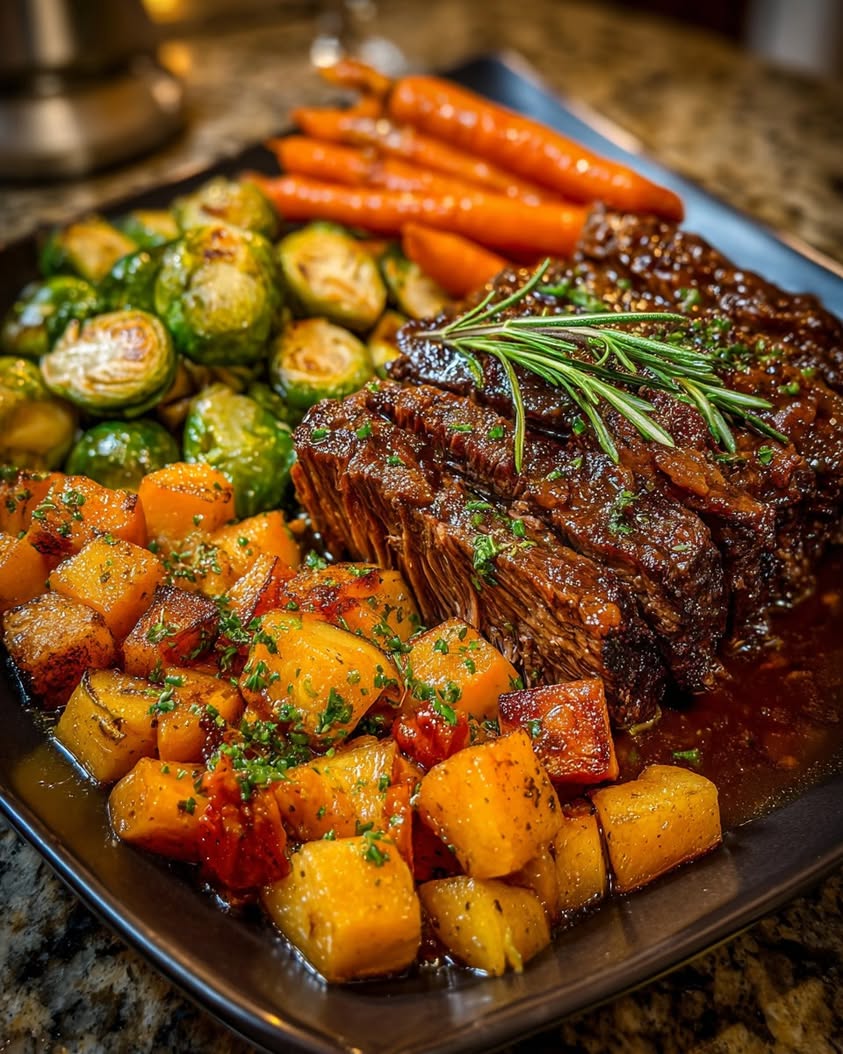
Slow-Cooked Pot Roast with Caramelized Brussels Sprouts, Sweet Potato, Butternut Squash & Carrot: The Ultimate Cozy Dinner
Imagine walking into a home filled with the rich, savory aroma of a pot roast that has been slowly simmering for hours. This slow-cooked pot roast recipe promises exactly that experience, delivering a meal that is the very definition of comfort food. Moreover, it transforms a simple chuck roast into something magical, making it fall-apart tender with just a fork. Paired with a vibrant medley of caramelized Brussels sprouts, sweet potato, butternut squash, and carrot, this dish is a complete, nourishing feast that satisfies both the stomach and the soul.
Furthermore, this recipe is designed for real life, meaning it requires minimal hands-on effort for maximum flavor payoff. The slow cooker does the heavy lifting, gently breaking down the tough connective tissues in the meat while you go about your day. Consequently, you are rewarded with a deeply flavorful, succulent main course. Meanwhile, the roasted vegetables develop their own complex profile, with crispy, caramelized edges and sweet, tender interiors that perfectly complement the savory beef.
Ultimately, this meal is more than just dinner; it is a centerpiece for gathering. It evokes feelings of warmth, family, and tradition. Whether you are serving it for a casual Sunday supper or a special holiday meal, this slow-cooked pot roast with caramelized Brussels sprouts and roasted roots is guaranteed to earn rave reviews. It is a timeless classic, updated with a colorful, modern vegetable side that makes the entire plate as beautiful as it is delicious.
Quick Recipe Highlights
- Flavor Profile: This dish masterfully balances deep, savory umami from the slow-cooked beef with the natural sweetness of roasted root vegetables. Herbs like rosemary and thyme add an aromatic earthiness, while the caramelization process introduces a delightful hint of bitterness and complexity to the Brussels sprouts.
- Texture: You will experience a beautiful contrast of textures. The pot roast becomes incredibly tender and shreds easily, while the roasted vegetables offer a dual texture: crispy, almost charred exteriors and soft, creamy interiors, especially from the sweet potato and butternut squash.
- Aroma: As it cooks, your kitchen will fill with the heartwarming scent of savory herbs, roasting meat, and the sweet, nutty fragrance of caramelizing vegetables. It is an aromatic experience that builds anticipation for the meal to come.
- Visual Appeal: The presentation is stunning, featuring a rich, dark brown pot roast surrounded by a vibrant autumn-hued medley of orange sweet potatoes, golden butternut squash, deep green Brussels sprouts, and bright orange carrots. It is a feast for the eyes.
- Skill Level Needed: This is a beginner-friendly recipe. While it involves several steps, none are technically difficult. The key skills are simple vegetable chopping, basic searing, and understanding your slow cooker or oven settings. Patience is the most important ingredient.
- Special Equipment: A large slow cooker (6-quart or larger) is essential for the hands-off cooking of the roast. Additionally, you will need a large skillet or roasting pan for searing the meat and roasting the vegetables, ensuring you achieve that crucial caramelization.
Recipe Overview
- Difficulty Level: We rate this recipe as “Easy” because the techniques involved are fundamental. The process is largely passive, relying on time and low heat to develop flavor and tenderness. Importantly, the most complex step—searing the roast—simply requires a hot pan and a few minutes of attention. Following that, the appliance does the work.
- Category: This dish falls squarely into the categories of Main Course and Comfort Food. It is a hearty, protein-centered meal that is both filling and deeply satisfying. Additionally, it can be classified as a One-Pan Meal when using an oven Dutch oven method, though we use a separate pan for optimal vegetable roasting here.
- Cuisine: This recipe is rooted in American home cooking traditions, particularly the classic pot roast. However, the focus on caramelized, roasted vegetables and herbaceous flavors gives it a modern, chef-inspired twist that elevates it beyond the standard preparation.
- Cost: This is a cost-effective meal, especially when feeding a family or group. A chuck roast is an affordable cut that becomes luxurious through slow cooking. The vegetables are seasonal and inexpensive. Overall, you get restaurant-quality results for a fraction of the price per serving.
- Season: This recipe shines in the fall and winter months. The hearty, warming nature of the dish is perfect for cooler weather. Furthermore, the featured vegetables like Brussels sprouts, sweet potato, and butternut squash are at their peak during these seasons, offering the best flavor and value.
- Occasion: It is ideal for cozy family dinners, weekend meal prep, and casual entertaining. It is also a fantastic, stress-free option for holidays like Thanksgiving or Christmas, as most components can be prepared ahead of time, freeing you up to enjoy your guests.
Why You’ll Love This Recipe
First and foremost, the taste and texture of this slow-cooked pot roast are utterly irresistible. The beef transforms into strands of juicy, flavorful meat that melts in your mouth. Simultaneously, the caramelized Brussels sprouts offer a crispy, slightly bitter counterpoint that cuts through the richness, while the sweet potato, butternut squash, and carrot become wonderfully soft and sweet. Every forkful is a perfect, balanced bite that delivers complex layers of savory, sweet, and herbal notes. This is comfort food at its most sophisticated, satisfying primal cravings with elegant execution.
From a convenience standpoint, this recipe is a weeknight hero disguised as a weekend project. After the initial prep and sear, the slow cooker works its magic unattended for hours. Therefore, you can run errands, work, or relax while dinner essentially cooks itself. The vegetable roasting happens separately but is also largely hands-off. Consequently, you achieve a meal that tastes like you spent all day in the kitchen, without actually having to do so. It is the ultimate strategy for impressive, low-effort cooking that delivers maximum reward.
Nutritionally, this meal is a powerhouse. Pot roast provides high-quality protein, iron, and B vitamins. Meanwhile, the vegetable medley is loaded with fiber, vitamins A and C from the sweet potatoes and carrots, and beneficial antioxidants from the Brussels sprouts and butternut squash. Together, they create a well-rounded plate that fuels your body. Importantly, by controlling the ingredients, you avoid the excessive sodium and preservatives often found in pre-made meals, making this a genuinely healthy dinner choice.
For social and entertaining value, this dish is unparalleled. It is inherently a sharing meal, presented family-style on a large platter. Its comforting aroma and beautiful appearance immediately make guests feel welcomed and cared for. Because it serves a crowd effortlessly, it takes the stress out of hosting. You can be present with your company instead of stuck at the stove. Ultimately, it fosters a sense of community and warmth, turning a simple meal into a memorable gathering centered around fantastic food.
Finally, its cost-effectiveness and accessibility are major wins. Chuck roast is one of the most affordable beef cuts, and slow cooking turns its toughness into a virtue. The vegetables are common, seasonal, and inexpensive. You do not need rare or pricey ingredients to create something extraordinary. This recipe demonstrates how accessible, whole ingredients can be transformed into a spectacular meal. It is gourmet cooking on a budget, proving that you do not need to spend a fortune to eat like royalty.
Historical Background and Cultural Significance
The concept of pot roast has deep roots in global culinary traditions, essentially representing a universal solution for cooking tougher, less expensive cuts of meat. In America, the dish as we know it became a staple during the 19th century with the advent of cast-iron cookware and the wood-fired stove. Families needed economical ways to feed many people, and slow-cooking a tough cut like chuck or brisket with hardy vegetables in a single pot was the perfect solution. This method tenderized the meat and created a flavorful, gravy-like sauce, turning an affordable ingredient into a celebratory centerpiece.
Culturally, pot roast symbolizes home, family, and maternal care in American folklore. It is the quintessential Sunday dinner, evoking nostalgia for gatherings around the family table. The dish represents resourcefulness and comfort, often passed down through generations with slight variations. Its presence in cookbooks and family recipes underscores its role as a foundational dish of American home cooking. Moreover, it transcends regional differences, appearing on tables from New England to the Midwest to the South, each area adding its own local herbs, vegetables, or cooking liquids.
The evolution of the recipe is directly tied to kitchen technology. Originally cooked in a heavy pot in the hearth or a wood stove, it moved to the standard oven, and then found a perfect modern home in the electric slow cooker in the 1970s. This appliance revolutionized the dish, making it even more accessible for working families. The basic principle remained unchanged: low, slow, moist heat. However, contemporary adaptations, like this one, now emphasize bolder searing for flavor and the inclusion of more diverse, caramelized vegetables, moving beyond the standard potatoes, carrots, and onions.
Regional variations are fascinating. For instance, a Mississippi pot roast might include pepperoncini peppers and powdered ranch mix. A New England pot roast could use root beer as a braising liquid. In Pennsylvania Dutch country, it might be served with dumplings. Our version, with its focus on caramelized Brussels sprouts and roasted sweet potatoes, reflects a modern, health-conscious approach that prioritizes vibrant vegetable sides. This evolution shows how a classic comfort food adapts to contemporary tastes while retaining its soul-warming core.
Ingredient Deep Dive
Chuck Roast: This cut comes from the shoulder of the cow, a well-exercised area rich in connective tissue (collagen). Historically, it was a butcher’s cut, valued for its flavor but requiring long cooking. That collagen, when broken down by slow, moist heat, melts into gelatin, creating incredible tenderness and a luxurious, silky mouthfeel in the cooking juices. Nutritionally, it is a great source of protein, zinc, iron, and B vitamins, particularly B12. When selecting, look for a roast with good marbling (white fat streaks) throughout, as this intramuscular fat will baste the meat from within as it cooks, keeping it juicy.
Brussels Sprouts: These miniature cabbages have a storied history, believed to have been cultivated in ancient Rome but gaining their name from their popularity in Brussels, Belgium, in the 16th century. They were introduced to the United States in the 18th century. They are nutritional powerhouses, packed with vitamins C and K, fiber, and antioxidants like kaempferol, which has anti-inflammatory properties. For this recipe, selecting sprouts of similar size ensures even cooking. Look for firm, bright green heads with tightly packed leaves. Avoid yellowing or loose leaves. Their inherent bitterness mellows beautifully through caramelization, creating a nutty, complex flavor.
Sweet Potato: A staple food for millennia, sweet potatoes originated in Central or South America and were domesticated over 5,000 years ago. They are not related to white potatoes but are part of the morning glory family. They are famously rich in beta-carotene, which the body converts to vitamin A, crucial for vision and immunity. They also provide vitamin C, manganese, and fiber. Choose firm sweet potatoes with smooth, unbruised skin. Storing them in a cool, dark, well-ventilated place (not the refrigerator) is best. Their natural sweetness intensifies when roasted, providing a perfect contrast to the savory roast.
Butternut Squash: This winter squash is a modern cultivar, developed in the 1940s in Massachusetts. It quickly became popular for its sweet, nutty flavor and manageable size. It is an excellent source of vitamins A and C, potassium, and magnesium. Its bright orange flesh indicates high levels of beta-carotene. When selecting, choose a squash that feels heavy for its size with a hard, matte rind and a long, solid neck (which contains more flesh and fewer seeds). Roasting concentrates its sweetness and creates a wonderfully creamy texture that complements the other elements on the plate.
Carrots: Carrots have a long history, originally cultivated for their aromatic leaves and seeds rather than their roots. The orange carrot we know today was developed in the Netherlands in the 17th century. They are famously high in beta-carotene and also provide biotin, vitamin K1, potassium, and antioxidants. For roasting, choose medium-sized, firm carrots. Larger carrots can sometimes have a woody core. Roasting carrots caramelizes their natural sugars, enhancing their sweetness and creating tender, flavorful bites that add both color and nutritional depth to the vegetable medley.
Common Mistakes to Avoid
- Skipping the Sear: Failing to sear the roast is the biggest flavor mistake. Searing creates a flavorful brown crust via the Maillard reaction, which adds immense depth to the final dish. If you skip this step, your pot roast will taste boiled and bland, rather than rich and complex.
- Overcrowding the Pan When Searing: When you place the roast in the pan, ensure it is not crowded. If the pan is too full, the meat will steam instead of sear. Consequently, you will not achieve that crucial caramelized crust. Use a large, heavy-bottomed skillet and work in batches if necessary.
- Using the Wrong Cut of Meat: Using a lean cut like sirloin or round steak will result in dry, tough meat. These cuts lack the necessary collagen and fat. You must use a marbled, collagen-rich cut like chuck roast, brisket, or rump roast that can withstand long cooking and become tender.
- Underseasoning: Pot roast is a large piece of meat that needs ample seasoning. Do not be shy with salt and pepper. Season generously on all sides before searing. Additionally, remember to season the vegetables before roasting. Underseasoned food will taste flat, regardless of the cooking technique.
- Adding Vegetables Too Early: If you add delicate vegetables like the Brussels sprouts, sweet potato, squash, and carrots to the slow cooker at the beginning, they will turn to mush after 4-5 hours. They should be roasted separately to maintain their texture and vibrant color.
- Not Letting the Meat Rest: After cooking, you must let the pot roast rest for at least 15-20 minutes before shredding or slicing. This allows the juices to redistribute throughout the meat. If you cut into it immediately, the precious juices will run out onto the cutting board, leaving the meat dry.
- Using Water as the Only Liquid: While water will technically steam the meat, it adds no flavor. Always use a flavorful liquid like beef broth, red wine, or a combination. This liquid reduces and concentrates, becoming the base for a delicious, savory sauce to serve with the meal.
- Peeling the Vegetables Too Thinly: For the sweet potato and butternut squash, leave a bit of flesh when peeling. Over-peeling removes the nutritious layer just under the skin. A sturdy vegetable peeler or a sharp knife will help you remove just the outer skin efficiently.
Essential Techniques
Searing the Roast: This technique is non-negotiable for building flavor. It involves cooking the meat over high heat in a small amount of oil until a deep brown crust forms. The Maillard reaction creates hundreds of new flavor compounds. To master it, pat the roast completely dry with paper towels first, as moisture causes steaming. Heat your oil until it shimmers, then place the roast in and do not move it for several minutes to allow a proper crust to develop. A common pitfall is flipping too soon. The visual cue for success is a deep, caramel-brown color that releases easily from the pan when ready to turn.
Slow Cooking/Low-Temperature Braising: This is the transformative process that turns tough meat tender. The roast cooks submerged in flavorful liquid at a low temperature (around 200-300°F) for an extended period. This gentle heat slowly breaks down the tough collagen into gelatin without toughening the muscle proteins. It is important to maintain a steady, low temperature. In a slow cooker, use the “Low” setting for best results. The visual cue for doneness is when the meat easily shreds with a fork, offering no resistance. If it still feels firm, it needs more time.
Caramelizing Vegetables: Caramelization is the browning of natural sugars in vegetables through roasting at high heat (usually 400°F or above). This technique enhances sweetness and adds complex, nutty flavors. The key is to ensure the vegetables are dry, evenly coated in oil, and spread in a single layer on the baking sheet without overcrowding. Overcrowding causes them to steam and become soggy. The visual cues are golden-brown, crispy edges and tender interiors when pierced with a fork. For Brussels sprouts, listen for a slight sizzle in the oven, indicating moisture is evaporating and browning is occurring.
Pro Tips for Perfect Slow-Cooked Pot Roast
Pat the chuck roast completely dry with paper towels before seasoning and searing. Any surface moisture will create steam, which prevents the beautiful browning you need for maximum flavor development. This simple step is the foundation of a deeply flavorful crust.
After searing, deglaze the hot skillet with a splash of your cooking liquid (broth or wine). Scrape up all the flavorful browned bits (fond) and add them to the slow cooker. This captures every bit of the seared flavor and incorporates it into the braising liquid.
Layer your aromatics like onions, garlic, and herbs at the bottom of the slow cooker and place the seared roast on top. This allows the steam and flavors from the aromatics to rise and permeate the meat from below as it cooks.
For the roasted vegetables, cut them into uniform sizes. This ensures they all cook at the same rate, so you do not end up with some pieces burnt and others undercooked. Aim for 1 to 1.5-inch chunks for the sweet potato, squash, and carrot.
Do not discard the accumulated juices from the slow cooker after the roast is done. Instead, skim off excess fat from the top, then simmer the liquid in a saucepan to reduce and concentrate it into a rich, glossy sauce to drizzle over the finished dish.
Let the roasted vegetables rest for a few minutes on the baking sheet after removing them from the oven. This allows them to firm up slightly, making them easier to transfer to a serving platter without falling apart.
If time allows, season the chuck roast with salt and pepper the night before and let it rest uncovered in the refrigerator. This dry-brining process helps season the meat more deeply and can also improve the texture of the seared crust.
Use a fat separator when making the sauce from the cooking juices. This tool allows you to pour off the flavorful liquid while leaving the unwanted fat behind, resulting in a cleaner, more refined sauce.
Variations and Adaptations
Regional Variations: To give this dish a Southern twist, add a tablespoon of smoked paprika and a couple of bay leaves to the slow cooker. For a French-inspired version, use red wine as the braising liquid and add a bundle of fresh herbs (thyme, parsley, bay leaf) tied with kitchen twine. A Midwest variation might include adding halved baby red potatoes to the vegetable roast for the last 30 minutes of cooking.
Seasonal Adaptations: In spring, replace the root vegetables with asparagus spears, baby carrots, and new potatoes, roasting them for a shorter time. For summer, serve the shredded pot roast on its own or with a fresh, crisp salad, saving the heavy roasting for cooler months. The slow-cooked meat itself remains a year-round favorite.
Dietary Modifications: For a gluten-free version, ensure your beef broth is certified gluten-free. To make it dairy-free, simply use olive oil instead of butter for roasting the vegetables. The recipe is naturally dairy-free as written. For a lower-carb option, increase the Brussels sprouts and reduce or omit the sweet potato and butternut squash, focusing on non-starchy vegetables.
Flavor Variations: Introduce global flavors by changing the seasoning profile. Add star anise and a cinnamon stick to the braise for a warm, aromatic note. Alternatively, use a Mexican-inspired blend of cumin, chili powder, and oregano in the rub, and add a can of diced green chiles to the slow cooker.
Texture Modifications: If you prefer a more stew-like consistency, cut the seared chuck roast into 2-inch cubes before adding it to the slow cooker. You can also add the roasted vegetables to the slow cooker for the last 30-45 minutes to soak up more of the braising liquid, though they will lose their crisp edges.
Presentation Alternatives: Instead of serving the roast whole, shred all the meat and mix it with some of the reduced cooking juices. Serve it in bowls over mashed cauliflower or polenta, topped with the roasted vegetables. This creates a deconstructed, bowl-style meal that is easy to eat and visually appealing.
Serving and Presentation Guide
For a classic family-style presentation, place the whole or shredded pot roast on a large, warm platter. Artfully arrange the caramelized Brussels sprouts and roasted root vegetables around the meat, creating a colorful and abundant display. Drizzle a small amount of the reduced cooking sauce over the meat to make it glisten. This method invites guests to serve themselves and highlights the beauty of the entire dish.
Garnishing adds a final touch of freshness and color. A sprinkle of finely chopped fresh parsley or rosemary over the entire platter works beautifully. For a pop of color and slight acidity, a few microgreens or a light scattering of pomegranate arils in the fall can be stunning. Alternatively, a few twists of freshly cracked black pepper on top adds visual texture.
Traditional accompaniments include creamy mashed potatoes, buttered egg noodles, or crusty bread to soak up the delicious juices. For a modern, lighter take, serve it alongside a simple arugula salad dressed with lemon vinaigrette to cut the richness. The contrast between the warm, hearty main and a cool, crisp salad is very satisfying.
Consider temperature carefully. Serve the pot roast and vegetables on warmed plates or a warmed platter to keep everything hot through the meal. The fat in the sauce will also congeal if it gets too cool. If you have made components ahead, ensure the meat is reheated gently in its juices and the vegetables are briefly warmed in the oven to refresh their crispness.
For portion control, a good rule of thumb is about 6-8 ounces of cooked meat per person, plus a generous cup of the roasted vegetables. Since the meat is rich and satisfying, people often eat less than they might think. Having leftovers is part of the joy of this recipe, so do not feel you need to skimp on servings.
Wine and Beverage Pairing
Wine pairings for this rich, savory dish should focus on reds with good acidity to cut through the fat and enough body to stand up to the robust flavors. A classic California Zinfandel is an excellent choice, with its jammy fruit and peppery notes complementing the caramelized vegetables and herbs. Alternatively, a French Syrah from the Rhône Valley, like a Crozes-Hermitage, offers earthy, smoky flavors that mirror the depth of the slow-cooked meat. For a smoother option, a Merlot with soft tannins and plum flavors can be very harmonious.
For non-alcoholic alternatives, consider beverages with similar balancing acidity or earthy depth. A tart cherry juice spritzer (cherry juice mixed with club soda and a squeeze of lemon) provides a fruity counterpoint. Alternatively, a high-quality ginger beer has the spice and bite to cleanse the palate between bites. For a warmer option, a roasted barley tea or a mushroom-based broth can echo the umami notes of the dish in a soothing way.
While not a traditional pairing for pot roast, a robust coffee or tea can be delightful after the meal. A dark roast coffee with notes of chocolate or a smoky Lapsang Souchong tea can be a contemplative finish, their intense flavors standing up to the lingering savory notes. Serve these after dessert to allow the main course flavors to settle first.
Temperature is key for beverage service. Serve red wines at a cool room temperature, around 60-65°F, to keep the alcohol from tasting hot and to allow the fruit flavors to shine. Non-alcoholic spritzers should be well-chilled. Ultimately, the goal is to choose a drink that refreshes the palate, making each bite of the rich pot roast and sweet vegetables taste new again.
Storage and Shelf Life
Store leftover pot roast and vegetables separately for best results. Place the shredded or sliced meat in an airtight container with enough of its cooking juices to keep it moist. The roasted vegetables should be stored in their own container. Properly stored, both will last in the refrigerator for 3-4 days. The fat in the cooking juices will solidify when chilled; this is normal and can be reheated or skimmed off as desired.
For freezing, the pot roast meat freezes exceptionally well. Portion it with some of its juices in freezer-safe bags or containers, removing as much air as possible. It will maintain quality for 2-3 months. The roasted vegetables can be frozen, but their texture will become softer upon thawing, better suited for soups or mashes than standalone sides. Clearly label everything with the date.
Reheating requires care to prevent dryness. For the meat, thaw it overnight in the refrigerator if frozen. Then, reheat it gently in a saucepan with its juices over low heat, or in a covered dish in the oven at 300°F until warmed through. You can add a splash of broth if it seems dry. For the vegetables, re-spread them on a baking sheet and warm in a 350°F oven for 10-15 minutes to help recrisp the exteriors. Avoid microwaving if you want to preserve texture.
Signs of spoilage include an off or sour smell, a slimy texture on the meat or vegetables, or mold. If the liquid becomes cloudy or develops bubbles, it is best to discard it. When in doubt, throw it out. Proper cooling is crucial; do not leave the cooked food at room temperature for more than two hours before refrigerating.
Make Ahead Strategies
You can prepare nearly this entire meal in advance, making it perfect for stress-free entertaining. Up to two days ahead, sear the chuck roast and place it with the aromatics and liquid in the slow cooker insert. Cover and refrigerate the entire insert. On the day of serving, simply place the cold insert into the slow cooker base and start cooking, adding an extra 30-60 minutes to the cook time to account for starting from cold.
The vegetables can be prepped 1 day in advance. Chop the sweet potato, butternut squash, carrots, and Brussels sprouts. Store them in separate airtight containers or resealable bags in the refrigerator. This saves significant time on the day of cooking. The Brussels sprouts are best kept whole or halved until just before roasting to prevent oxidation.
Assess the quality impact: pre-searing and refrigerating the meat only deepens the flavor. Pre-chopped vegetables may lose a tiny amount of moisture but will roast perfectly fine. The key is to pat the pre-chopped veggies dry with a towel before tossing with oil and seasoning to ensure proper caramelization.
For final assembly, if making ahead for a same-day event, cook the roast on low as planned. Roast the vegetables about an hour before you plan to eat. Let the roast rest while the vegetables are in the oven. Then, shred the meat, reduce the sauce, and combine everything on a platter. This timeline ensures everything is hot and fresh at serving time.
For reheating a fully made dish, gently warm the meat and sauce in a covered Dutch oven on the stovetop over low heat or in a 300°F oven. Re-crisp the vegetables on a sheet pan in a 400°F oven for 5-10 minutes. Add any fresh garnishes, like herbs, after reheating to maintain their vibrant color and flavor.
Scaling Instructions
Halving the recipe is straightforward for smaller households. Use a 3-4 pound chuck roast and halve all other ingredients. The cook time may reduce slightly, so start checking for tenderness around the 3.5-hour mark on high or 7-hour mark on low. Use a smaller slow cooker if possible, as too much empty space can affect cooking. The vegetable roasting time will remain roughly the same, as oven temperature dictates that process.
Doubling or tripling the recipe is ideal for large gatherings. You will need a very large slow cooker (7-8 quart) or may need to use two standard ones. Do not overfill your slow cooker; it should be no more than 2/3 full. Sear the roasts in batches to avoid steaming. The cooking time may increase by 1-2 hours for a double batch, so plan accordingly. For the vegetables, you will need to roast them in multiple batches or on several sheet pans, rotating them in the oven for even cooking.
Equipment adjustments are crucial when scaling. For larger meat quantities, ensure your searing skillet is large enough to accommodate without crowding, or sear in batches. When roasting more vegetables, use multiple sheet pans and rotate them top-to-bottom and front-to-back halfway through cooking to ensure even browning. Do not pile vegetables on top of each other; they must be in a single layer.
Consider storage when scaling up. A double batch will yield many leftovers. Have a plan for freezing portions in meal-sized containers. This makes scaling up a fantastic meal-prep strategy, providing ready-made dinners for future busy weeks with no extra effort on your part.
Nutritional Deep Dive
This meal provides a strong macro balance. A typical serving offers a substantial amount of high-quality protein from the chuck roast, essential for muscle repair and satiety. The roasted vegetables contribute complex carbohydrates from the sweet potato and squash, providing sustained energy. Healthy fats come from the cooking oils and the marbling within the beef. This combination ensures the meal is filling and nutritionally complete, preventing energy crashes often associated with carb-heavy or low-protein meals.
The micronutrient profile is impressive. The orange vegetables (sweet potato, carrot, butternut squash) are loaded with beta-carotene (vitamin A), crucial for vision, immune function, and skin health. Brussels sprouts are an excellent source of vitamin K for bone health and blood clotting, and vitamin C for immunity. The beef provides heme iron, which is more easily absorbed by the body than plant-based iron, and a full spectrum of B vitamins, particularly B12, which supports nerve function and energy metabolism.
Health benefits extend to digestion and inflammation. The high fiber content from the variety of vegetables promotes healthy digestion and gut bacteria. Antioxidants like vitamin C and the various phytonutrients in the vegetables help combat oxidative stress and inflammation in the body. The collagen from the slow-cooked meat may support joint and skin health. This is a meal that truly nourishes from the inside out.
For dietary considerations, this recipe is naturally gluten-free and dairy-free as written. It is not suitable for vegetarians or vegans. For those on low-carb or keto diets, the sweet potato and butternut squash are higher in carbs and can be reduced or omitted in favor of more Brussels sprouts and other low-starch vegetables like cauliflower or broccoli.
Regarding portion analysis, a balanced plate should have a palm-sized portion of protein (the pot roast), and the rest of the plate filled with the colorful vegetables. The richness of the meat means you likely will not need a huge portion to feel satisfied. Listening to your body’s fullness cues is key, as the dish is very flavorful and satisfying.
Dietary Adaptations
Gluten-Free: This recipe is naturally gluten-free. The only potential source of gluten would be in the beef broth or any pre-made seasoning blends. To ensure it’s safe, use a beef broth that is certified gluten-free. All other ingredients—fresh meat, vegetables, herbs, and oils—are inherently gluten-free.
Dairy-Free: The recipe as written contains no dairy. Use olive oil or avocado oil for searing the roast and roasting the vegetables instead of butter. Always check labels on store-bought broths to ensure no dairy-derived additives are present, though this is rare.
Vegan/Vegetarian: Adapting this recipe for a plant-based diet requires a complete rethink. Instead of beef, use a large, meaty mushroom like a whole portobello cap or a seared block of extra-firm tofu or tempeh as the centerpiece. For the “braising” liquid, use a rich mushroom or vegetable broth with soy sauce for umami. The roasted vegetable medley remains perfect as is.
Low-Carb/Keto: Omit the sweet potato and butternut squash entirely. Increase the quantity of Brussels sprouts and add other low-carb vegetables like cauliflower florets, radishes, or turnips to the roasting pan. Ensure any store-bought broth is sugar-free. The pot roast itself is excellent for keto, being high in fat and protein.
Paleo: This recipe is already very Paleo-friendly. Use a compliant beef broth (check for no soy or additives) and ensure your cooking oil is Paleo-approved, such as avocado oil or coconut oil. The vegetables are all Paleo staples. Avoid any processed ingredients.
Low-FODMAP: For those sensitive to FODMAPs, the main triggers here are the garlic and onion. Omit the garlic and use only the green tops of green onions (scallions) for flavor. Butternut squash is only low-FODMAP in servings of 1/3 cup, so reduce the amount or replace it with carrot. Sweet potato is low-FODMAP in 1/2 cup servings.

I’m Shaykee—born in Morocco, seasoned across continents. From airplane galleys to home kitchens, I share the flavors and stories that shaped my journey.