
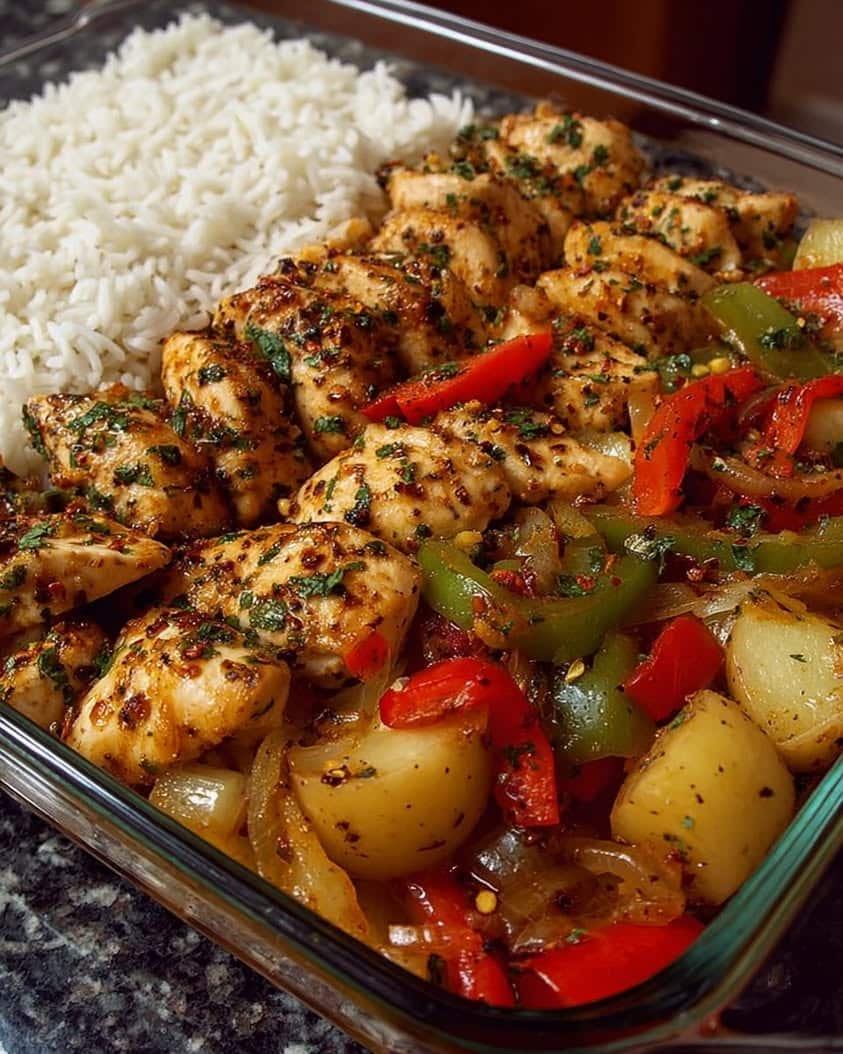
Spicy Garlic Butter Chicken Stir-Fry with Vegetables & Rice: A Flavor-Packed Weeknight Wonder
Imagine a sizzling skillet filled with tender, golden chicken pieces, a rainbow of crisp vegetables, all glistening in a rich, aromatic sauce. This Spicy Garlic Butter Chicken Stir-Fry is exactly that kind of magic. It delivers a perfect balance of heat, savory garlic, and the luxurious richness of butter in under thirty minutes. Consequently, it solves the eternal weeknight dinner dilemma by being both incredibly fast and deeply satisfying.
The beauty of this dish lies in its symphony of textures and flavors. You get the satisfying bite of juicy chicken, the fresh crunch of bell peppers and broccoli, all coated in a sauce that is simultaneously spicy, garlicky, and slightly sweet. Moreover, it clings perfectly to every ingredient, ensuring each forkful is packed with taste. Served over a bed of fluffy white rice, it creates a complete, restaurant-quality meal from the comfort of your own kitchen.
This recipe is a masterclass in efficiency. From start to finish, you will have a vibrant, healthy dinner on the table faster than you could get takeout. The process is straightforward, the ingredients are simple, and the result is consistently impressive. Ultimately, it is the kind of reliable, crowd-pleasing recipe that will earn a permanent spot in your weekly rotation.
Quick Recipe Highlights
- Flavor Profile: This dish is a bold fusion of spicy, savory, and rich notes. The garlic provides a pungent backbone, while the butter adds a silky, mellowing richness. Additionally, the soy sauce and optional chili paste create a complex umami and heat that is utterly addictive.
- Texture: Expect a delightful contrast in every bite. The chicken becomes beautifully seared and tender, while the vegetables retain a vital, crisp-tender crunch. Meanwhile, the sauce thickens slightly to coat everything in a glossy, velvety layer.
- Aroma: As soon as the garlic hits the hot butter, your kitchen will fill with an irresistible, mouthwatering fragrance. The scent of toasting spices and sizzling protein builds an anticipation that the taste absolutely fulfills.
- Visual Appeal: This stir-fry is a feast for the eyes with its vibrant color palette. The green broccoli, red bell peppers, and golden-brown chicken create a stunning contrast against the white rice, making it as photogenic as it is delicious.
- Skill Level Needed: This is a perfect recipe for beginners and busy cooks alike. It requires basic knife skills for chopping and fundamental stovetop techniques like searing and sautéing. Furthermore, the process is forgiving and quick to learn.
- Special Equipment: All you need is a large skillet or wok and a sturdy spatula. A good, sharp knife for prep will make the process even faster and more enjoyable.
Recipe Overview
- Difficulty Level: We rate this recipe as “Easy” for several compelling reasons. The steps are sequential and simple, involving basic cooking techniques like chopping, searing, and simmering. There is no complex timing or advanced culinary skill required. Additionally, the ingredient list is composed of common, accessible items. Therefore, even a novice cook can achieve fantastic results on the first try.
- Category: This dish comfortably fits into multiple meal categories. Primarily, it is a hearty and complete main course for dinner. It also works wonderfully as a meal prep option for lunches throughout the week. Furthermore, it can be served as part of a larger family-style Asian-inspired feast.
- Cuisine: While stir-frying is a cornerstone of Chinese culinary tradition, this recipe takes a modern, fusion approach. It combines classic stir-fry methodology with a butter-based sauce, a ingredient more common in Western cooking. The result is a globally-inspired dish that prioritizes bold flavor and quick preparation above strict authenticity.
- Cost: This is an exceptionally cost-effective meal. Chicken thighs or breasts, rice, and fresh vegetables like bell peppers and broccoli are typically very affordable. Pantry staples like soy sauce, garlic, and butter form the sauce base. Consequently, you can feed a family of four a nutritious, restaurant-quality meal for a fraction of the cost of dining out.
- Season: This Spicy Garlic Butter Chicken Stir-Fry is truly a year-round champion. In colder months, the spicy, warming sauce is deeply comforting. During spring and summer, the bright, fresh vegetables make it feel light and vibrant. Moreover, it is an excellent way to utilize seasonal produce from your garden or local market.
- Occasion: Its speed makes it the ultimate weeknight dinner savior. Simultaneously, its impressive appearance and flavor profile allow it to shine for casual weekend gatherings or a simple date night at home. It is versatile enough for any informal occasion where good, quick food is the goal.
Why You’ll Love This Recipe
First and foremost, the taste and texture are absolutely phenomenal. Each component plays a specific role: the chicken delivers savory protein, the vegetables add freshness and crunch, and the sauce ties it all together with its spicy, garlicky, buttery glory. The heat level is also fully customizable, allowing you to dial it up or down to suit your personal preference. Ultimately, it is a deeply satisfying meal that feels indulgent without being heavy.
From a practical standpoint, the convenience is unbeatable. With a total time of just thirty minutes, it fits seamlessly into even the most hectic evenings. The prep is minimal, and the cooking process is active but brief. Furthermore, it uses just one main pan, meaning cleanup is a breeze. This efficiency makes it a reliable go-to when you are short on time but refuse to compromise on a homemade, healthy dinner.
Nutritionally, this stir-fry is a well-rounded choice. It packs a powerful punch of lean protein from the chicken and a diverse array of vitamins and fiber from the colorful vegetable mix. By controlling the sauce ingredients, you can manage sodium and fat levels far better than any takeout alternative. Therefore, it is a meal that fuels your body properly while thrilling your taste buds.
For social and entertaining value, this dish is a quiet superstar. It is easy to double or triple for a crowd, and its vibrant presentation always draws compliments. Serving it family-style encourages sharing and conversation. Additionally, because most components can be prepped ahead of time, you can spend more time with your guests and less time stressed in the kitchen.
Finally, its cost-effectiveness and accessibility are major wins. The ingredients are humble and easy to find at any standard grocery store. You likely have many of the sauce components in your pantry already. Compared to ordering similar food for delivery, making this at home saves a significant amount of money. In essence, it delivers maximum flavor and satisfaction with minimal investment of both time and money.
Historical Background and Cultural Significance
The technique of stir-frying, known as “chǎo” in Chinese, has a history stretching back over 1,500 years. It originated as a fuel-efficient cooking method during times when firewood and charcoal were precious resources. By cooking food quickly over very high heat in a curved wok, ancient cooks could prepare meals rapidly while conserving fuel. This practical necessity birthed one of the world’s most dynamic and beloved cooking styles.
Culturally, stir-frying is much more than just a cooking technique; it is a fundamental expression of Chinese culinary philosophy. It emphasizes the harmony of texture, color, flavor, and aroma within a single dish. The fast cooking preserves the natural vitality and nutrients of the ingredients, reflecting a holistic view of food and health. Consequently, stir-fry dishes are central to family meals and celebrations across many Asian cultures.
The evolution of this specific recipe, a Spicy Garlic Butter Chicken Stir-Fry, showcases the beautiful adaptation of traditional methods. While garlic is a staple in Asian cooking, the use of butter is a more Western influence, likely introduced through global trade and cultural exchange. The addition of chili for heat can be traced to various regional cuisines within Asia that prize spice. Thus, the dish represents a modern fusion, taking a classic technique and applying globally-available ingredients to create something new and universally appealing.
Regional variations of chicken stir-fry are endless. In Sichuan province, you might find a version with mouth-numbing Sichuan peppercorns. In Thailand, a similar dish would likely incorporate fish sauce, basil, and bird’s eye chilies. The American-Chinese version often features a thicker, sweeter sauce. Our recipe sits comfortably in this tradition of adaptation, prioritizing approachable ingredients and a quick cooking process for the modern home cook, while still honoring the core stir-fry principles of high heat and quick movement.
Ingredient Deep Dive
Chicken thighs are the preferred choice for this stir-fry due to their higher fat content, which keeps them incredibly juicy and flavorful during high-heat cooking. They are also more forgiving than lean chicken breast, which can easily become dry if overcooked by just a minute. Nutritionally, they provide high-quality protein, iron, and B vitamins. For the best results, look for thighs with firm, pink flesh and trim any excess fat. You can substitute boneless, skinless chicken breast if you prefer; just be vigilant about not overcooking it.
Fresh garlic is non-negotiable for achieving the deep, aromatic base this dish requires. Garlic has been cultivated for thousands of years, valued both as a food and for its medicinal properties. It contains allicin, a compound with noted health benefits. For stir-fries, fresh cloves minced finely will distribute their flavor most evenly. Avoid pre-minced jarred garlic, as it often has a muted, sometimes bitter taste. Store fresh garlic heads in a cool, dark, dry place where they will last for months.
Butter introduces a rich, creamy dimension that balances the sharpness of the garlic and the heat from the chilies. While not traditional in many Asian stir-fries, it creates a luxurious, velvety sauce that clings beautifully to the rice. For a richer flavor, use unsalted butter so you can control the sodium level with the soy sauce. If you need a dairy-free version, a high-quality plant-based butter or even a neutral oil like avocado oil will work, though the flavor profile will shift slightly.
Soy sauce is the primary source of salt and umami, the savory “fifth taste.” This fermented sauce, made from soybeans, wheat, salt, and a fermenting culture, has been essential to East Asian cuisine for over 2,500 years. It adds depth and complexity that simple salt cannot achieve. For a gluten-free adaptation, easily substitute tamari or coconut aminos. Use low-sodium soy sauce if you are monitoring your salt intake. Always add it around the edges of the hot pan so it caramelizes slightly, enhancing its flavor.
The vegetable medley, typically bell peppers and broccoli, provides color, texture, and vital nutrients. Bell peppers are excellent sources of Vitamin C and antioxidants. Broccoli adds fiber, Vitamin K, and folate. Choose peppers that feel heavy for their size with taut, shiny skin. Select broccoli with tight, dark green florets and firm stalks. You can absolutely swap in other quick-cooking veggies like snap peas, carrots cut into matchsticks, or sliced mushrooms based on preference and seasonality.
Common Mistakes to Avoid
- Overcrowding the Pan: Adding all the chicken or vegetables at once will cause the pan temperature to plummet. This results in steaming instead of searing, leading to soggy, grey chicken and limp vegetables. Always cook in batches if your pan is not large enough to hold everything in a single layer without touching.
- Using Cold Meat: Placing cold chicken directly from the refrigerator into the hot pan hinders even cooking. The outside can burn before the inside is done. For a more consistent sear, let the chicken sit at room temperature for 10-15 minutes before cooking after you have cut and seasoned it.
- Burning the Garlic: Garlic burns in seconds and becomes intensely bitter. Always add it to the pan after you have sautéed the chicken and there is still fat in the pan, but before the pan gets dangerously hot again. Stir it constantly for just 30-60 seconds until fragrant, then immediately add the liquid ingredients.
- Underseasoning the Chicken: Seasoning the chicken pieces generously with salt and pepper before they hit the pan is crucial for building flavor from the inside out. Do not rely solely on the sauce to season the entire dish. This foundational step ensures every component is tasty.
- Neglecting to Prep Everything First: Stir-frying is a fast, active process. If you are chopping vegetables while the chicken cooks, you will likely overcook something. Mise en place—having all your ingredients chopped, measured, and ready by the stove—is the golden rule for stir-fry success.
- Using the Wrong Pan: A thin-bottomed skillet will not retain enough heat for a proper sear. Ideally, use a large, heavy-bottomed skillet, cast-iron pan, or a wok. These materials distribute heat evenly and can recover temperature quickly after adding ingredients.
- Overcooking the Vegetables: The goal for vegetables in a stir-fry is “crisp-tender.” They should still have a bit of bite and bright color. Add them according to their cooking time—harder veggies like broccoli first, softer ones like peppers slightly later. They will continue to cook slightly in the residual heat after you turn off the stove.
- Not Letting the Sauce Simmer: After adding the sauce ingredients, allow the mixture to come to a simmer and thicken slightly for a minute or two. This step cooks off the raw taste of the soy sauce and cornstarch, melds the flavors, and gives the sauce a glossy, cohesive texture that coats the food perfectly.
Essential Techniques
The high-heat sear is the most critical technique for a successful stir-fry. It creates the Maillard reaction—a chemical process that browns the proteins and develops complex, savory flavors. To master it, ensure your pan is very hot before adding oil, and then add the chicken in a single layer. Resist the urge to move it constantly; let it sit for a minute to develop a golden crust. A common pitfall is a pan that is not hot enough, which leads to steaming. The visual cue for success is audible sizzling upon contact and easy release from the pan when the sear is complete.
Proper sauce building is what elevates the dish from simple cooked ingredients to a cohesive meal. After sautéing aromatics like garlic, deglaze the pan with your liquid ingredients (soy sauce, broth), scraping up any browned bits stuck to the bottom. Those bits, called fond, are packed with flavor. Then, allow the sauce to come to a simmer so the cornstarch slurry can activate and thicken the liquid into a glossy glaze. The key is to add the slurry in a thin stream while stirring constantly to prevent clumps. The sauce is ready when it coats the back of a spoon.
The “crisp-tender” vegetable cook is an art of timing. The goal is to apply high heat briefly to warm the vegetables through while enhancing their natural sweetness and preserving their vibrant color and crunch. Cut vegetables into uniform sizes for even cooking. Add them according to density; harder veggies like broccoli go in first, followed by softer ones like bell peppers. Stir constantly to expose all sides to the heat. The visual cue is a brightening of color and a slight softening—they should still offer resistance when bitten, not be mushy.
Pro Tips for Perfect Spicy Garlic Butter Chicken Stir-Fry
For maximum flavor, marinate your chicken pieces in a tablespoon of soy sauce and a teaspoon of cornstarch for 15-20 minutes before cooking. The soy sauce seasons the meat, and the cornstarch helps create a velvety texture and a better sear on the outside.
To control the spice level perfectly, add chili paste or crushed red pepper flakes at the end of the cooking process, after you have removed the pan from the heat. This allows you to taste and adjust incrementally without making the entire dish too spicy.
For a restaurant-quality glossy sauce, mix your cornstarch slurry with cold water or cold broth until completely smooth before adding it to the hot pan. Adding cornstarch directly to hot liquid will cause it to clump immediately.
If you want to incorporate more vegetables, blanch harder ones like broccoli or carrots in boiling water for 60-90 seconds before stir-frying. This “blanching” step ensures they will be perfectly crisp-tender by the time the chicken is cooked and the sauce is thickened.
Use a combination of oils: start with a high-smoke-point oil like avocado or peanut oil for searing the chicken, then add the butter later for the sauce. This prevents the butter from burning during the initial high-heat stage.
To make cleanup even easier, line your prep area with parchment paper or use a large bowl for all your vegetable trimmings. Having a dedicated trash bowl keeps your cutting board clear and your workflow smooth.
For deeper flavor, add a teaspoon of freshly grated ginger along with the garlic. Ginger adds a bright, warming note that complements the garlic and spice beautifully.
Let the cooked stir-fry rest for two minutes off the heat before serving. This allows the sauce to thicken slightly more and the ingredients to absorb the flavors fully, resulting in a more harmonious dish.
Variations and Adaptations
For regional variations, explore different flavor profiles. A Thai-inspired version could use fish sauce instead of soy, add a spoonful of brown sugar, and finish with fresh basil. A Korean-style adaptation might include a gochujang (fermented chili paste) based sauce and a sprinkle of sesame seeds. A Hunan-style take would double down on fresh chilies and include Sichuan peppercorns for their characteristic tingling numbness.
Seasonal adaptations make this recipe a year-round favorite. In spring, use asparagus tips and fresh peas. Summer calls for zucchini, yellow squash, and cherry tomatoes. In autumn, incorporate sliced mushrooms and baby bok choy. For winter, try hearty greens like kale or chard, adding them at the very end to just wilt. Using what is fresh and local always enhances the final result.
Dietary modifications are straightforward. For gluten-free, use tamari or coconut aminos instead of soy sauce and ensure your chili paste is gluten-free. For dairy-free, substitute the butter with a plant-based alternative or more high-heat oil. To make it low-carb or keto, serve the stir-fry over cauliflower rice instead of white rice and be mindful of any added sugar in your sauce ingredients.
Flavor variations can tailor the dish to any palate. For a sweeter profile, add a tablespoon of honey or maple syrup to the sauce. For more tang, a splash of rice vinegar at the end brightens everything up. For an earthy, smoky note, add a dash of smoked paprika to the chicken seasoning. Experimenting with different combinations keeps the recipe exciting.
Texture modifications can cater to personal preference. If you love extra-crispy chicken, dust the seasoned pieces with a little extra cornstarch before searing. For a saucier dish, increase the broth by a quarter cup and adjust the cornstarch slurry slightly. If you prefer softer vegetables, add them earlier in the process and cover the pan for a minute to steam them slightly before proceeding.
Presentation alternatives can elevate a simple weeknight meal. Instead of mixing everything together, arrange the cooked chicken and vegetables neatly over the rice and drizzle the sauce over the top. Serve it in a shallow bowl for an elegant feel. Garnish with thinly sliced green onions, sesame seeds, or a lime wedge for a pop of color and freshness.
Serving and Presentation Guide
Plating techniques matter for visual appeal. For a family-style presentation, spoon the fluffy white rice onto a large, warm platter and mound the vibrant stir-fry over the top, allowing the sauce to drizzle down the sides. For individual servings, pack warm rice into a small bowl, then invert it onto the center of a dinner plate to create a neat mound. Arrange the chicken and vegetables around the rice and spoon the sauce over everything.
Garnishing is the final touch that adds freshness and complexity. A generous sprinkle of thinly sliced green onions provides color and a mild oniony bite. Toasted sesame seeds add a nutty flavor and visual texture. For a burst of citrus, add a wedge of lime on the side. If you enjoy extra heat, a few slices of fresh red chili pepper make a beautiful and functional garnish.
Traditional accompaniments are simple. Steamed white jasmine or basmati rice is the classic and perfect choice to soak up the delicious sauce. For a lighter option, serve it over brown rice or quinoa. A simple side of steamed edamame or a light cucumber salad with rice vinegar can provide a refreshing contrast to the rich, spicy main dish.
Modern serving suggestions might include turning leftovers into a completely new meal. The next day, wrap the cold stir-fry in a large flour tortilla with some shredded lettuce for a fantastic lunch wrap. Alternatively, toss it with cooked noodles instead of rice for a spicy garlic butter chicken noodle bowl. Its versatility is one of its greatest strengths.
Temperature considerations are key. Serve the dish immediately after cooking while the rice is hot and fluffy and the stir-fry is still sizzling from the pan. Warm your serving bowls or platters beforehand to keep everything hot longer. If you must wait, keep the components separate—rice covered, stir-fry in the pan off heat—and combine just before serving to prevent the vegetables from becoming soggy.
Portion control is easy with this nutrient-dense meal. A good rule of thumb is to aim for a portion of rice about the size of your fist, topped with a heaping cup of the chicken and vegetable stir-fry. This balance provides a satisfying mix of carbohydrates, protein, and fiber that will keep you full and energized without overeating.
Wine and Beverage Pairing
Wine pairings for this spicy, savory dish should focus on balancing the heat and richness. An off-dry Riesling or Gewürztraminer is a classic choice; their slight sweetness cools the spice, while their aromatic profile complements the garlic and ginger. For red wine lovers, a fruity, low-tannin Zinfandel or Beaujolais can stand up to the bold flavors without clashing. The key is to avoid high-alcohol or heavily oaked wines, as they can amplify the heat unpleasantly.
Non-alcoholic alternatives are just as important. A sparkling water with a squeeze of lime or lemon helps cleanse the palate between bites. For something more substantial, a chilled, slightly sweetened ginger beer or ginger tea mirrors the ginger in the dish and soothes the spice. Iced jasmine or green tea also pairs beautifully, offering a subtle, fragrant counterpoint to the savory sauce.
While not traditional, coffee or tea pairings after the meal can be delightful. A light, floral black tea or oolong tea can help settle a meal rich with garlic and spice. A cup of mild, low-acidity coffee with a touch of cream can provide a pleasant, bitter contrast that rounds out the dining experience, especially if the meal was particularly spicy.
Temperature considerations for beverages are straightforward. Iced or very cold drinks are generally best for managing the perception of heat from the chili. The cold temperature provides immediate relief and refreshment. However, a warm, soothing tea can also be comforting if the spice level is moderate. Ultimately, offer a variety so guests can choose what works for their palate.
Serving suggestions for beverages should be casual and accessible. For a family dinner, place a pitcher of iced water with citrus slices on the table. For a gathering, offer a choice of a preselected white wine and a non-alcoholic sparkler. Having drinks ready and within reach allows everyone to enjoy the vibrant, spicy flavors of the stir-fry comfortably.
Storage and Shelf Life
Proper storage methods are essential for food safety and quality. Allow the stir-fry to cool completely to room temperature before storing, but do not leave it out for more than two hours. Transfer it to an airtight container. It is best to store the stir-fry and the rice separately to prevent the rice from becoming mushy. Both components will keep well in the refrigerator for 3 to 4 days.
Temperature requirements are non-negotiable. The refrigerator must be at or below 40°F (4°C). Do not store the cooked stir-fry in the pan on the stovetop. For longer storage, freezing is an option, though the texture of the vegetables will soften upon reheating. When freezing, use freezer-safe containers or heavy-duty bags, removing as much air as possible to prevent freezer burn.
Container recommendations include glass meal-prep containers with tight-fitting lids or BPA-free plastic containers. Glass is preferable as it does not absorb odors and can go from fridge to microwave easily. If using plastic, ensure it is labeled for food storage. Label containers with the date so you can keep track of freshness.
Signs of spoilage include an off or sour smell, a slimy texture on the chicken or vegetables, or visible mold. If you see any of these signs, discard the food immediately. When in doubt, throw it out. Properly stored stir-fry should still smell aromatic and look vibrant, even after a few days.
Reheating instructions are simple for best results. For the microwave, place a portion in a microwave-safe dish, sprinkle with a teaspoon of water to reintroduce moisture, and cover loosely. Heat on high in 60-second intervals, stirring in between, until piping hot throughout. For the stovetop, reheat gently in a skillet over medium-low heat, adding a splash of water or broth to loosen the sauce.
Freezing guidelines can extend the shelf life to 2-3 months. Freeze the stir-fry (without rice) in portion-sized containers. Thaw overnight in the refrigerator before reheating. Note that previously frozen and thawed stir-fry is best used in wraps or mixed into fried rice, as the vegetable texture will be softer, though the flavor will remain excellent.
Make Ahead Strategies
A smart prep timeline can turn a 30-minute meal into a 10-minute assembly. The day before, chop all your vegetables (bell peppers, broccoli) and store them in separate airtight containers or bags in the refrigerator. You can also mince the garlic and measure out all your sauce ingredients into a small container or bowl. The chicken can be cut into pieces and stored in a separate container. This “mise en place” done in advance makes the actual cooking day effortless.
Storage between steps is simple with proper planning. Keep pre-chopped vegetables crisp by placing a slightly damp paper towel in the container with them. Store minced garlic in a small jar with a splash of oil to prevent drying out. Keep the cut chicken on the bottom shelf of the fridge to prevent cross-contamination. Having everything organized and chilled means you can grab and go when it is time to cook.
Assessing the quality impact of make-ahead steps is important. Pre-chopped vegetables will be perfectly fine for 24-48 hours. Mincing garlic ahead may slightly diminish its pungency, but the flavor difference is minimal for a cooked dish. Cutting chicken ahead is fine, but do not season it with salt until you are ready to cook, as salt can draw out moisture over time. Overall, these steps have a negligible impact on the final, delicious result.
Assembly tips for make-ahead cooking are straightforward. When ready to cook, pull your prepped containers from the fridge. Have your skillet heating while you gather everything. Because your ingredients are ready, you can focus entirely on the cooking process—searing, sautéing, and sauce-building—without any frantic chopping. This leads to better control and a more enjoyable cooking experience.
Reheating guidelines for fully made-ahead stir-fry follow the same principles as for leftovers. Reheat gently to preserve texture. If you made the entire dish ahead, consider slightly undercooking the vegetables so they finish perfectly upon reheating. Always add a small splash of liquid when reheating to refresh the sauce.
Fresh element additions can revive a make-ahead meal. Even if you cooked the entire stir-fry ahead, add a fresh garnish just before serving. A sprinkle of newly sliced green onions, a handful of chopped cilantro, or a squeeze of fresh lime juice just before eating adds a burst of freshness that makes the dish taste newly made.
Scaling Instructions
Halving the recipe is simple for smaller households. Reduce all ingredients by half. Use a medium skillet instead of a large one, as the smaller volume of food will not sear properly in an oversized pan. Cooking times will be slightly shorter, so keep a close eye on the chicken and vegetables to prevent overcooking. The sauce will thicken more quickly due to the reduced volume, so have your slurry ready and add it judiciously.
Doubling or tripling the recipe for a crowd requires some adjustments. Use the largest skillet or wok you have, or cook the protein and vegetables in multiple batches to avoid overcrowding. You may need to increase the cooking time slightly for each batch. When making the sauce, combine the liquid ingredients in a separate bowl or measuring cup before adding to the pan to ensure even distribution. You may also need to simmer the sauce a minute longer to reach the desired thickness.
Equipment adjustments are crucial when scaling. For a double batch, a large Dutch oven or a 14-inch wok may be necessary. If you only have standard skillets, plan to cook in two batches, keeping the first batch warm in a low oven (200°F) on a baking sheet while you cook the second. For a halved recipe, a 10-inch skillet is ideal. Using the right-sized tool ensures proper heat distribution and cooking.
Timing modifications are minimal but important. When doubling, the time to sear the chicken may increase by a minute or two per batch, but the actual active cooking time per ingredient does not change dramatically. The sauce may take an extra minute or two to come to a simmer and thicken due to the larger volume. Always rely on visual cues—golden-brown sear, crisp-tender veggies, glossy sauce—rather than strictly adhering to the original timer.
Storage considerations change with scale. A larger batch means more leftovers. Plan your storage containers accordingly. It is often helpful to portion the finished stir-fry into meal-sized containers before refrigerating for easy grab-and-go lunches. For a halved recipe, you may have fewer leftovers, so smaller containers are perfect. Always cool large batches quickly by spreading them on a baking sheet before transferring to containers to maintain food safety.
Nutritional Deep Dive
A macro breakdown for a typical serving reveals a balanced meal. The chicken provides a high-quality source of protein essential for muscle repair and satiety. The vegetables contribute complex carbohydrates and fiber, which aid digestion and provide sustained energy. The rice serves as the primary carbohydrate fuel. The fats come primarily from the chicken (if using thighs) and the butter, offering both saturated and unsaturated fats. This combination supports stable blood sugar levels and prolonged fullness.
The micronutrient analysis is impressive thanks to the vegetable medley. Bell peppers are loaded with Vitamin C, an antioxidant that supports immune function. Broccoli provides Vitamin K for bone health and folate for cell growth. Garlic contains manganese and Vitamin B6. Chicken adds iron and zinc. Together, this dish delivers a wide spectrum of vitamins and minerals that contribute to overall health, making it a nutrient-dense choice for any meal.
Health benefits extend beyond basic nutrition. The capsaicin in chili peppers may boost metabolism and have anti-inflammatory properties. Garlic is renowned for its potential cardiovascular benefits. The fiber from the vegetables promotes gut health. The lean protein supports muscle maintenance. Consequently, this is not just a tasty meal but a functional one that contributes positively to your well-being when consumed as part of a varied diet.
Dietary considerations are easily addressed. For those monitoring sodium, use low-sodium soy sauce and limit added salt. For a lower-fat version, use chicken breast and reduce the amount of butter, supplementing with broth for sauce volume. The dish is naturally dairy-free if you omit the butter, and gluten-free if you use tamari. Its adaptable nature allows it to fit into many dietary patterns with simple tweaks.
Portion analysis shows that a standard serving is satisfying without being excessive. A balanced plate with one-quarter protein (chicken), one-quarter carbohydrates (rice), and one-half vegetables (the stir-fry mix) aligns with many healthy eating guidelines. This ratio ensures you get the energy you need while prioritizing vitamin-rich vegetables, making it a model for a wholesome dinner plate.
Weight management tips include being mindful of the rice portion, as it is the most calorie-dense component. Using a measuring cup for the rice can help with portion control. You can also increase the ratio of vegetables to chicken and rice to bulk up the meal with fewer calories. The protein and fiber content naturally promote satiety, helping to prevent overeating later in the evening.
Dietary Adaptations
For a gluten-free adaptation, the only critical swap is the soy sauce. Replace it with an equal amount of tamari (ensure it’s labeled gluten-free, as some brands contain wheat) or coconut aminos. Also, double-check that your chili paste or sauce does not contain hidden wheat-based ingredients. All other components in the base recipe—chicken, vegetables, butter, garlic—are naturally gluten-free.
A dairy-free version is simple. Substitute the butter with an equal amount of a high-quality plant-based butter that performs well under heat, or use a neutral-tasting oil like avocado oil. The sauce will lack the distinct buttery richness but will still be delicious with the garlic and soy sauce flavors taking center stage. You can also add a teaspoon of toasted sesame oil at the end for a different kind of richness.
Creating a vegan adaptation requires replacing the chicken and butter. Use extra-firm tofu, pressed and cubed, or a plant-based chicken alternative. Sear the tofu as you would the chicken. For the butter, use a vegan butter substitute or oil. To mimic the umami depth of chicken, consider adding a splash of vegan “chicken” broth or a teaspoon of nutritional yeast to the sauce. Increase the quantity of vegetables for a hearty result.
For a low-carb or keto adaptation, eliminate the rice entirely. Serve the stir-fry over cauliflower rice, which you can sauté quickly in the same pan after removing the stir-fry. Ensure your sauce uses a keto-friendly thickener like xanthan gum instead of cornstarch, and use a sugar-free soy
Print
Spicy Garlic Butter Chicken Stir-Fry with Vegetables & Rice
Description
A quick and flavorful stir-fry featuring tender chicken, crisp vegetables, and a spicy garlic butter sauce, served over steamed rice for a satisfying meal.
Ingredients
For the Crust:
- 1 lb boneless, skinless chicken breasts, cut into bite-sized pieces
- 2 tablespoons soy sauce
- 1 tablespoon cornstarch
- 3 tablespoons unsalted butter
- 4 cloves garlic, minced
- 1 teaspoon red pepper flakes
- 1 red bell pepper, sliced
- 1 cup broccoli florets
- 1 carrot, julienned
- 1/2 cup snap peas
- 2 green onions, chopped
- Cooked white rice, for serving
- Salt and black pepper to taste
Instructions
1. Prepare the Crust:
- In a bowl, toss the chicken pieces with soy sauce and cornstarch until coated. Let marinate for 10 minutes.
- Melt butter in a large skillet or wok over medium-high heat. Add garlic and red pepper flakes, stirring for 30 seconds until fragrant.
- Add the marinated chicken to the skillet and cook for 5-7 minutes, until browned and cooked through. Remove chicken and set aside.
- In the same skillet, add the bell pepper, broccoli, carrot, and snap peas. Stir-fry for 4-5 minutes until vegetables are tender-crisp.
- Return the chicken to the skillet, toss with the vegetables, and cook for another 2 minutes to combine. Season with salt and black pepper.
- Serve the stir-fry over cooked white rice, garnished with chopped green onions.
Notes
You can customize the seasonings to taste.

I’m Shaykee—born in Morocco, seasoned across continents. From airplane galleys to home kitchens, I share the flavors and stories that shaped my journey.