
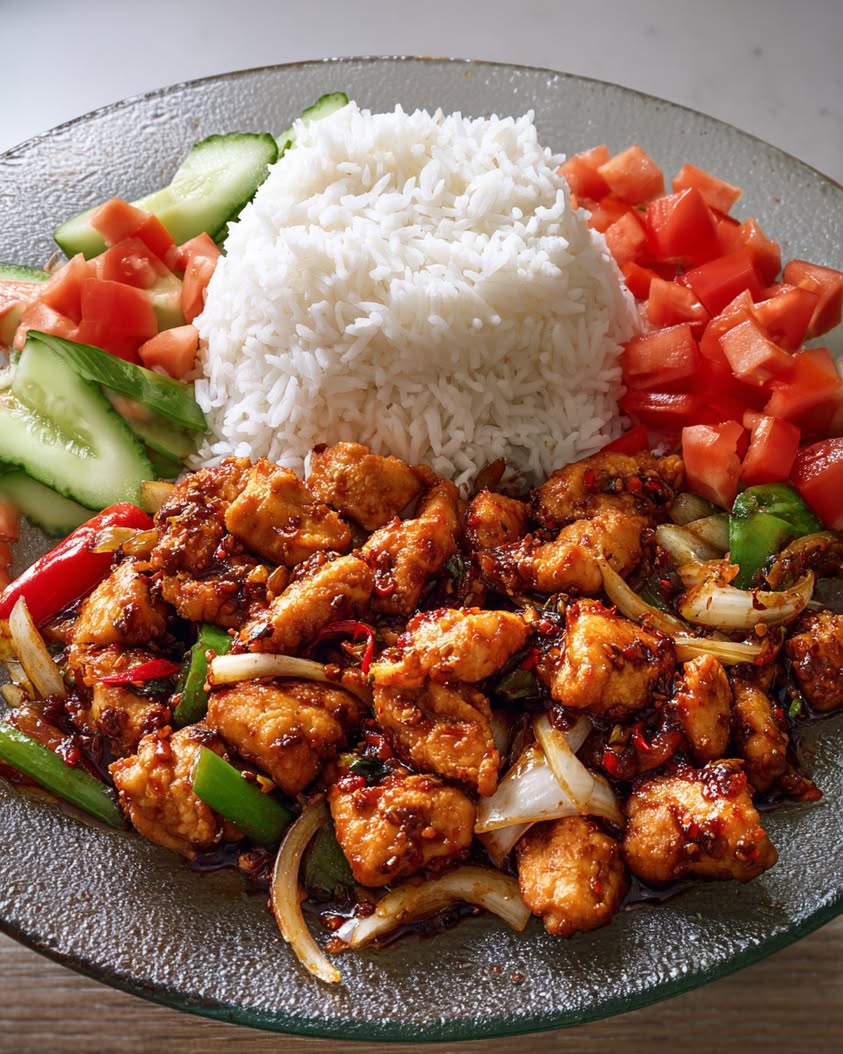
Spicy Garlic Chicken with Steamed Rice & Fresh Tomato-Cucumber Salad: A 30-Minute Flavor Explosion
Imagine a dinner that delivers restaurant-quality flavor without the fuss, all in the time it takes to watch a sitcom. This recipe for spicy garlic chicken with steamed rice and a fresh tomato-cucumber salad is precisely that kind of culinary magic. It is a complete, balanced meal designed for busy lives, promising a quick, flavorful, and healthy weeknight dinner ready in 30 minutes! The star of the show is tender chicken pieces, seared to golden perfection and then coated in a glossy, aromatic sauce built from a generous amount of fresh garlic, a kick of chili, and a savory-sweet balance of soy and honey.
Furthermore, this dish is a masterclass in contrast and harmony. The bold, pungent, and spicy garlic chicken sits atop a bed of simple, fluffy steamed rice that acts as the perfect canvas, soaking up every last drop of that incredible sauce. On the side, a crisp, bright tomato-cucumber salad provides a necessary cool and acidic counterpoint, cutting through the richness and cleansing the palate. Ultimately, this meal proves that you do not need complicated techniques or a pantry full of exotic ingredients to create something truly special and satisfying for your family.
Consequently, if you are searching for a reliable, crowd-pleasing recipe that feels both indulgent and wholesome, you have found it. This spicy garlic chicken served with fluffy rice and a fresh tomato-cucumber salad is a guaranteed hit. It is versatile enough for a casual Tuesday yet impressive enough for casual weekend entertaining. Let us dive into the details of how to bring this vibrant, delicious plate to your table with minimal effort and maximum reward.
Quick Recipe Highlights
- Flavor Profile: This dish is a beautiful symphony of bold tastes. Expect a powerful, fragrant garlic punch that is immediately tempered by a gentle, building heat from the chili. The sauce delivers a complex balance of savory umami from the soy sauce, a touch of sweetness from honey, and a bright, tangy finish from the lime juice.
- Texture: The experience is all about delightful contrasts. You get juicy, tender bites of chicken with a slightly caramelized exterior from the sear. Meanwhile, the steamed rice is soft and pillowy, and the salad offers a fantastic, refreshing crunch from the cucumber and red onion.
- Aroma: As soon as the garlic and chili hit the hot oil, your kitchen will fill with an irresistible, mouth-watering scent. This aromatic base is deepened by the soy sauce and honey, creating a warm, savory, and slightly sweet fragrance that promises a delicious meal.
- Visual Appeal: This plate is a feast for the eyes with its vibrant colors. The golden-brown chicken glistens in its dark sauce, sitting on a mound of white rice. The salad pops with the red of tomatoes, the green of cucumber, and the purple hue of red onion, making the entire dish look fresh and appetizing.
- Skill Level Needed: This is a beginner-friendly recipe. The techniques involved—chopping, mincing, searing, and simmering—are fundamental. If you can operate a stove and a knife, you can absolutely master this quick, flavorful, and healthy weeknight dinner.
- Special Equipment: No special tools are required! A good sharp knife, a cutting board, a large skillet or wok for the chicken, a medium pot with a lid for the rice, and a mixing bowl for the salad are all you need to get started.
Recipe Overview
- Difficulty Level: We classify this spicy garlic chicken recipe as “Easy” for several compelling reasons. First, the ingredient list is straightforward with no hard-to-find items. Second, the cooking process is linear and logical, moving from prep to cook to assembly without complicated steps. Finally, the techniques, like pan-searing and making a simple pan sauce, are foundational skills that build kitchen confidence. Even a novice cook can achieve fantastic results on the first try.
- Category: This recipe falls squarely into the “Main Course” or “Dinner” category. It is a complete protein-centric meal that provides carbohydrates and vegetables on the side. Additionally, it fits perfectly into “Quick & Easy Meals,” “Healthy Dinners,” and “Family-Friendly Recipes,” thanks to its balanced nutrition and broad appeal.
- Cuisine: While not strictly authentic to one region, this dish draws strong inspiration from various Asian culinary traditions, particularly Chinese stir-fry and Thai flavor profiles. The use of soy sauce, garlic, chili, and fresh herbs creates a pan-Asian fusion feel. The fresh salad accompaniment adds a Mediterranean or Middle Eastern touch, making it a globally-inspired, modern home-cooked meal.
- Cost: This is an incredibly cost-effective meal. Chicken thighs are typically an affordable protein choice. Staples like rice, garlic, and onions are pantry basics. Fresh produce like tomatoes, cucumber, and cilantro are inexpensive, especially in season. Overall, you can feed a family of four a restaurant-quality meal for a fraction of the cost of takeout, making it a budget-friendly superstar.
- Season: This is truly a year-round recipe. In summer, the fresh, cool salad is especially refreshing. During colder months, the warm, spicy, and comforting chicken and rice provide hearty satisfaction. The bright flavors can lift spirits in the gray winter, while the light salad keeps it feeling appropriate for spring and summer evenings.
- Occasion: Its versatility is a key strength. It is the ultimate quick, flavorful, and healthy weeknight dinner solution after a long workday. Simultaneously, it is elegant and tasty enough to serve for a casual weekend lunch with friends or a relaxed family gathering. It is a true all-purpose meal.
Why You’ll Love This Recipe
First and foremost, the taste and texture appeal is immediate and profound. Each component of this spicy garlic chicken dish is designed to complement the others perfectly. The chicken delivers a savory, spicy, and slightly sweet flavor bomb that is incredibly moreish. The rice soaks up the extra sauce, ensuring no flavor is wasted. Then, the crisp, acidic salad provides a necessary palate cleanser, making each bite of the chicken taste new and exciting again. This interplay of hot and cold, soft and crunchy, rich and fresh is what makes the eating experience so dynamic and satisfying. You will find yourself going back for just one more bite, again and again.
Moreover, the convenience and preparation benefits cannot be overstated. In our busy lives, a recipe that promises a complete, delicious meal in 30 minutes is worth its weight in gold. The prep is simple: mostly chopping and mincing. The cooking happens quickly in parallel—you can cook the rice and prepare the salad while the chicken sears and simmers. There is no need for marinating for hours or complicated steps. This efficiency makes it a reliable go-to when time is short but the desire for a real, home-cooked meal is high. It is the antidote to expensive and often less-healthy takeout.
From a nutritional standpoint, this meal offers significant advantages. Chicken thighs provide high-quality protein and essential nutrients like iron and zinc. Using healthy oils for cooking and a sauce built from whole ingredients like garlic, chili, and honey avoids the excessive sodium, sugar, and preservatives found in many bottled sauces. The salad adds a hefty dose of vitamins, antioxidants, and fiber from fresh vegetables. When served with a reasonable portion of whole-grain rice, this becomes a balanced plate supporting energy, muscle repair, and overall well-being. It is indulgence you can feel good about.
Additionally, this dish holds tremendous social and entertaining value. Because it is so flavorful and visually appealing, it is a wonderful meal to share. It is approachable for most palates, yet interesting enough to feel special. You can easily double the recipe to feed a crowd without significantly increasing your kitchen time. Serving this spicy garlic chicken with fluffy rice and a fresh tomato-cucumber salad at a casual dinner party demonstrates care and skill, making your guests feel pampered without the host being stuck in the kitchen all evening.
Finally, the cost-effectiveness and accessibility seal the deal. As mentioned, the ingredients are common and affordable. You likely have many of them in your kitchen already. This accessibility means you can whip up this impressive meal without a special grocery trip. Compared to ordering similar flavors from a restaurant, the savings are substantial. This recipe empowers you to create a gourmet-tasting experience at home on a modest budget, proving that eating well does not have to be complicated or expensive.
Historical Background and Cultural Significance
The concept of garlic and chili with meat is ancient and spans countless cultures. Garlic, revered for both its medicinal and culinary properties, has been a cornerstone of cooking from the Mediterranean to Asia for thousands of years. Similarly, chili peppers, after their introduction from the Americas, revolutionized cuisines across Asia, becoming integral to defining regional heat profiles. This recipe for spicy garlic chicken is a modern, streamlined interpretation of these timeless flavor partnerships. It does not belong to one specific tradition but rather celebrates a global love for pungent, spicy, and savory combinations that wake up the senses.
In many Asian culinary traditions, the combination of garlic, soy, and chili forms a foundational “holy trinity” for stir-fries and sauces. In Chinese cooking, for instance, quick stir-frying with garlic and chili is a classic technique to impart wok hei, or the “breath of the wok.” Thai cuisine famously balances heat, sour, salty, and sweet, often starting with a paste of garlic and chilies. Our recipe borrows these core principles—high heat, bold aromatics, and a balanced sauce—but simplifies the process for the Western home kitchen, making these vibrant flavors accessible to everyone.
The evolution of this specific recipe format—a main protein in a glossy sauce served with plain rice and a simple salad—reflects modern global eating habits. It is a format popularized by meal-kit services and food blogs that prioritize weeknight ease without sacrificing flavor. The fresh tomato-cucumber salad, while common in Mediterranean and Middle Eastern mezze, acts as a universal, refreshing side that cuts through richness. This fusion approach is a testament to how contemporary home cooking freely blends techniques and ingredients from different food cultures to create something new, practical, and delicious for today’s lifestyles.
Regional variations of this concept are endless. In Korea, similar flavors might appear as dak-bokkeum-tang, a braised chicken dish with potatoes and vegetables. In the Philippines, chicken adobo can have a garlic-forward, slightly spicy version. In the American South, you might find a spicy garlic chicken with a different spice blend served over grits. Our version sits comfortably within this wide spectrum, offering a quick, flavorful, and healthy weeknight dinner that is adaptable to your own pantry and preference, continuing the timeless tradition of cooks building on foundational flavors to feed their families.
Ingredient Deep Dive
Chicken Thighs (Boneless, Skinless): We choose chicken thighs for their superior flavor and juiciness compared to breasts. Thighs have a higher fat content, which means they stay tender and moist even with high-heat cooking and can withstand the brief simmer in the sauce without drying out. Culturally, dark meat chicken is prized in many Asian cuisines for its richer taste. Nutritionally, they provide excellent protein, iron, and B vitamins. For selection, look for thighs that are pink and moist, not gray or dry. You can substitute chicken breasts, but reduce the cook time slightly to prevent toughness. Store raw chicken in the coldest part of your fridge and use within 1-2 days, or freeze for longer storage.
Fresh Garlic: Garlic is the non-negotiable star. Its history as a culinary and medicinal herb dates back over 5,000 years. When minced and cooked, it transforms from pungent and sharp to sweet, nutty, and deeply aromatic, forming the flavor backbone of the sauce. Nutritionally, it is celebrated for compounds like allicin, which may support heart health and immunity. Select firm, heavy heads with tight, papery skin. Avoid heads with soft spots or green sprouts. Store in a cool, dark, dry place—not in the fridge. For a milder flavor, you can reduce the amount, but this is a garlic-forward dish, so be generous!
Jasmine or Basmati Rice: These long-grain rice varieties are perfect for this dish because they cook up fluffy and separate, not sticky. They act as the ideal neutral base to soak up the flavorful sauce. Rice is a staple food for over half the world’s population, with deep cultural significance from Asia to Latin America. It provides essential carbohydrates for energy. Rinse your rice in cold water until it runs clear to remove excess starch for the best texture. This step prevents gumminess. Store uncooked rice in an airtight container in a cool, dry pantry. Leftover cooked rice can be refrigerated for 3-4 days and reheats beautifully.
Fresh Tomatoes and Cucumber: These salad vegetables bring crucial freshness, acidity, and crunch. Tomatoes, originally from South America, are now a global kitchen staple packed with vitamin C, potassium, and the antioxidant lycopene. Cucumbers, with their high water content, are hydrating and cooling. For the best salad, choose ripe but firm tomatoes and crisp, firm cucumbers. Heirloom or vine-ripened tomatoes offer superior flavor. English or Persian cucumbers have thinner skins and fewer seeds, making them ideal for salads without peeling. Store tomatoes at room temperature until ripe, then refrigerate. Keep cucumbers in the fridge’s crisper drawer.
Soy Sauce: This fermented soybean sauce is the primary source of salty umami in the dish. It has been produced in China for over 2,500 years. It deepens the color and flavor of the sauce immensely. For a gluten-free version, use tamari or a certified gluten-free soy sauce. Coconut aminos can be a soy-free alternative, though they are sweeter. Low-sodium soy sauce is a good option if you are watching salt intake. Note that the sauce will be less dark. Store soy sauce in a cool, dark place after opening.
Fresh Chili (or Chili Flakes): The heat element is vital. Chilies contain capsaicin, which not only provides the “spicy” kick but can also boost metabolism. Using a fresh red chili gives a brighter, fruitier heat compared to flakes. Remove the seeds and membranes for less heat. You can control the spice level precisely to your taste. In a pinch, red pepper flakes or even a dash of sriracha can work. Remember, you can always add more heat, but you cannot take it away, so start conservatively.
Common Mistakes to Avoid
- Overcrowding the Pan: Adding all the chicken to the skillet at once will cause it to steam instead of sear. You will end up with pale, rubbery chicken without the flavorful browned bits (fond) needed for the sauce. Cook in batches if necessary to ensure each piece has contact with the hot surface.
- Burning the Garlic: Garlic burns in seconds and turns bitter, ruining the entire sauce. After sautéing the chili, add the garlic and stir constantly for only about 30 seconds until fragrant. Have your next ingredients (soy sauce, honey, water) ready to go so you can add them immediately to stop the cooking.
- Using Old, Pre-Minced Garlic: The flavor of fresh garlic cloves, minced just before cooking, is incomparably brighter and more potent than jarred minced garlic, which can have a dull, sometimes metallic taste. Taking the minute to mince fresh garlic is non-negotiable for the best flavor.
- Not Deglazing the Pan Properly: After searing the chicken, those browned bits stuck to the pan are pure flavor gold. When you add the liquid (water/stock) to make the sauce, use a wooden spoon to scrape all those bits up vigorously. This “deglazing” step is what builds a deep, rich sauce base.
- Overcooking the Chicken After Adding the Sauce: Once you return the chicken to the pan with the sauce, you are just warming it through and letting it coat. Simmering for the full 2-3 minutes is sufficient. Longer cooking will make the chicken tough and can cause the sauce to over-reduce and become too salty.
- Skipping the Rice Rinse: Not rinsing rice before cooking leaves excess surface starch. This results in gluey, clumpy rice instead of distinct, fluffy grains. Rinsing in a bowl or fine-mesh strainer under cold water until it runs clear is a simple step with a major textural payoff.
- Cutting the Salad Vegetables Too Early: If you dice the tomatoes and cucumber an hour before serving, they will start to weep water and become soggy. For the crispiest, freshest salad, prepare the vegetables right before you are ready to mix and serve.
- Forgetting to Season the Salad: The salad is not just a colorful garnish; it’s a vital flavor component. A simple dressing of lime juice, olive oil, salt, and pepper is essential. Without it, the salad will taste flat and fail to provide the bright contrast the meal needs.
- Ignoring Ingredient Prep (Mise en Place): Because the chicken cooks quickly, you won’t have time to mince garlic or mix sauce ingredients while it’s in the pan. Having everything chopped, measured, and ready to go before you turn on the stove is the secret to a smooth, stress-free 30-minute cook time.
- Using a Low-Heat Oil for Searing: Olive oil has a low smoke point and can burn at the high heat needed to sear chicken. Opt for a neutral oil with a high smoke point like avocado, grapeseed, or refined coconut oil for the best sear without unpleasant burnt flavors.
Essential Techniques
Mincing Garlic: Properly minced garlic ensures it cooks evenly and disperses its flavor throughout the sauce without burning. Start by smashing the clove with the flat side of your knife to loosen the skin. After peeling, make lengthwise slices, then turn the clove and make crosswise cuts until it is finely chopped. A garlic press is faster but can result in a wetter, more pungent paste. The goal is uniform, small pieces that will melt into the sauce. A common pitfall is not mincing finely enough, leaving larger chunks that can burn or offer an overly harsh bite.
Searing Chicken: Searing creates the Maillard reaction—a complex chemical process that produces hundreds of new flavor compounds, resulting in a deep, savory, browned crust. Pat the chicken thighs completely dry with paper towels first; moisture is the enemy of browning. Ensure your pan is hot and your oil is shimmering before adding the chicken. Do not move the pieces for the first 2-3 minutes to allow a proper crust to form. The visual cue for success is a golden-brown color that releases easily from the pan when you try to flip it. If it sticks, it needs more time.
Building a Pan Sauce: This is the technique that turns simple pan drippings into a luxurious coating. After removing the chicken, you sauté aromatics (chili, garlic) in the remaining fat. Then, you deglaze with liquid (water/stock), scraping up the fond. Adding soy sauce and honey provides savory depth and sweetness. Simmering briefly reduces and thickens the sauce slightly, allowing the flavors to marry. The sauce is done when it coats the back of a spoon. Returning the chicken to the sauce at the end ensures every piece is glazed and flavorful.
Fluffing Rice: Once your rice is cooked and has rested with the lid on, fluffing it with a fork is critical. It separates the grains that have stuck together during cooking, releasing steam and preventing a gummy, dense texture. Gently run the tines of a fork through the rice from the bottom to the top. Do not press or smash the grains. This technique ensures light, separate, perfectly textured rice that is ideal for serving under the saucy chicken.
Pro Tips for Perfect Spicy Garlic Chicken
First, for maximum flavor, let the seared chicken rest on a plate for a few minutes before slicing. This allows the juices to redistribute, ensuring every bite is moist. Meanwhile, you can build your sauce in the same pan.
Second, if your sauce seems too thin after adding the chicken back, you can create a quick slurry. Mix a teaspoon of cornstarch with a tablespoon of cold water and stir it into the simmering sauce. It will thicken almost immediately.
Third, to infuse the rice with extra fragrance, cook it with a pandan leaf, a smashed garlic clove, or a teaspoon of coconut oil. These subtle additions elevate plain steamed rice to something special.
Fourth, for a more complex sauce, substitute half of the water with low-sodium chicken broth or stock. The added collagen and seasonings will give the sauce a richer body and deeper savory notes.
Fifth, if you love cilantro but some at your table do not, serve it on the side as a garnish. This way, everyone can customize their plate to their taste without debate.
Sixth, toast your rice lightly in the pot with a little oil before adding water. Sauté for 1-2 minutes until the grains turn slightly opaque. This helps keep them separate and adds a subtle nutty flavor.
Seventh, for an extra glossy, restaurant-quality finish to your sauce, stir in a half tablespoon of cold butter right at the end, off the heat. This technique, called mounting with butter, adds a silky texture and rich flavor.
Eighth, if using chicken breasts, pound them to an even thickness before cooking. This ensures they cook through at the same rate as the thinner edges, preventing dry, overcooked spots.
Variations and Adaptations
Regional Variations: Explore the world through your skillet. For a Korean twist, add 1-2 tablespoons of gochujang (Korean chili paste) to the sauce and garnish with sesame seeds and sliced green onion. For a Thai-inspired version, use fish sauce instead of soy sauce and finish with a big handful of Thai basil. A Filipino adobo-style adaptation would use more vinegar and black peppercorns in the braising liquid.
Seasonal Adaptations: Adapt the salad to what is fresh. In summer, use heirloom tomatoes and sweet corn. In fall, a shaved Brussels sprout or kale salad with a lemony vinaigrette works wonderfully. In winter, a quick-pickled carrot and daikon radish salad adds crunch and brightness when fresh tomatoes are less flavorful.
Dietary Modifications: For a gluten-free meal, use tamari instead of soy sauce. To make it dairy-free, ensure any butter used at the end is plant-based. For a lower-carb option, serve the spicy garlic chicken over cauliflower rice or a bed of sautéed zucchini noodles. The salad remains a perfect low-carb side.
Flavor Variations: Introduce new dimensions with different ingredients. Add a teaspoon of grated fresh ginger with the garlic for a zesty kick. A splash of rice vinegar or lime zest in the sauce can heighten acidity. For a smoky note, use smoked paprika or a chipotle chili in adobo sauce instead of the fresh red chili.
Texture Modifications: Love crunch? Add chopped roasted peanuts or cashews as a garnish on the chicken. For extra vegetable texture, stir in snap peas or bell peppers during the last minute of cooking the sauce so they stay crisp-tender.
Presentation Alternatives: Instead of a composed plate, serve the components family-style in separate bowls, allowing everyone to build their own plate. For a handheld option, slice the chicken and serve it in warm tortillas or lettuce wraps with the rice and salad as fillings, drizzled with extra sauce.
Serving and Presentation Guide
Plating Techniques: For an elegant presentation, use a ring mold or a small bowl to create a neat mound of steamed rice in the center of the plate. Arrange the sliced spicy garlic chicken artfully around or over one side of the rice. Spoon extra sauce over the chicken and let it pool slightly around the rice. Place a generous scoop of the tomato-cucumber salad on the other side of the plate, creating a vibrant color contrast.
Garnishing Ideas: Fresh herbs are your best friend for garnish. A final sprinkle of chopped cilantro or thinly sliced green onion adds color and a fresh aroma. A lime wedge on the side not only looks pretty but allows guests to add a final bright squeeze. For a touch of luxury, a few microgreens or edible flowers elevate the plate instantly.
Traditional Accompaniments: While the rice and salad complete this meal, you could add other traditional sides depending on your inspiration. A small bowl of miso soup would complement the Asian flavors. Simple steamed or stir-fried greens like bok choy or broccoli would add another vegetable element without complicating the meal.
Modern Serving Suggestions: For a casual, shareable meal, serve everything in the middle of the table. Place the whole skillet of chicken, a pot of rice, and a large bowl of salad on trivets. Provide serving spoons and let everyone help themselves, creating an interactive and relaxed dining experience.
Temperature Considerations: Serve this dish immediately after cooking. The chicken and sauce should be piping hot, the rice should be warm, and the salad should be cool and crisp. Warm your serving plates slightly to keep the food at an ideal temperature for longer, especially if you are plating multiple servings.
Portion Control Tips: A good rule of thumb is one chicken thigh per person, about ¾ cup of cooked rice, and a heaping ½ cup of salad. This provides a satisfying and balanced plate. If you are watching carbohydrates, you can increase the salad portion and slightly decrease the rice. The visual balance of the plate is key to a satisfying meal.
Wine and Beverage Pairing
Wine Pairings: The bold garlic and spice in this dish call for wines that can stand up to the intensity. A slightly off-dry Riesling or Gewürztraminer is a classic pairing—their touch of sweetness and floral notes beautifully counteract the heat and garlic. For red wine lovers, a light-bodied, low-tannin red like a Beaujolais or a Pinot Noir works well, as heavy tannins can clash with the spice. A dry rosé with good acidity is another versatile and refreshing option that bridges the gap between the rich chicken and the fresh salad.
Non-Alcoholic Alternatives: Sparkling water with a squeeze of lime is always a perfect palate cleanser. For something more special, try a ginger beer—its spicy-sweet profile complements the dish wonderfully. Iced green tea or jasmine tea, either plain or lightly sweetened, echoes the Asian flavors and is deeply refreshing. A homemade lemonade or limeade, not too sweet, also provides a bright, cooling contrast to the meal’s heat.
Coffee/Tea Pairings: While not a typical dinner beverage, an after-dinner tea can be lovely. A light, floral oolong tea or a mint tea would be soothing and aid digestion after the flavorful meal. Avoid heavy, bitter coffees or teas that might overwhelm the delicate balance of flavors you just enjoyed.
Temperature Considerations: All beverages should be served well-chilled, except for the optional after-dinner tea. The cold temperature of iced tea, sparkling water, or white wine is crucial for cooling the palate from the spicy garlic chicken. Ensure your glasses are chilled beforehand for the best experience.
Serving Suggestions: Offer a variety of beverages if you are serving guests. Place a pitcher of iced water with citrus slices on the table, along with options for wine or sparkling water. This allows everyone to choose their preferred pairing and stay hydrated, which is especially important with spicy food.
Storage and Shelf Life
Storage Methods: Store all components separately for the best quality. Place cooled spicy garlic chicken and sauce in an airtight container. Store rice in its own container. Keep the tomato-cucumber salad undressed in a separate container; store any dressing on the side. This prevents the salad from becoming soggy and the rice from absorbing all the sauce and becoming mushy.
Temperature Requirements: All leftovers must be refrigerated promptly, within two hours of cooking. Store them in the main body of the refrigerator at or below 40°F (4°C). Do not leave the meal at room temperature for extended periods, as the combination of protein, rice, and moisture can promote rapid bacterial growth.
Container Recommendations: Use glass or BPA-free plastic containers with tight-fitting lids. Glass is preferable as it does not absorb odors and allows you to see the contents. For the salad, a container with a vented lid or a paper towel placed under the lid can help absorb excess moisture and keep vegetables crisper.
Signs of Spoilage: Discard any leftovers that have an off or sour smell, visible mold, or a slimy texture on the chicken or vegetables. Cooked rice can harbor Bacillus cereus spores that are not killed by reheating; if the rice smells funky, tastes sour, or is overly dry and hard, it is safest to throw it away.
Reheating Instructions: Reheat the chicken and sauce gently in a skillet over medium-low heat with a splash of water to loosen the sauce. You can also use the microwave, covered, at 50% power in 30-second intervals, stirring in between. Reheat rice by sprinkling it with a few drops of water and covering it before microwaving, or re-steam it in a basket over boiling water. Always ensure leftovers are heated to 165°F (74°C) throughout.
Freezing Guidelines: The spicy garlic chicken and sauce freeze quite well for up to 3 months. Cool completely, then store in a freezer-safe bag or container, pressing out excess air. The texture of the tomatoes and cucumbers in the salad will be destroyed by freezing, so do not freeze the salad. Cooked rice can be frozen, but it may become grainier upon thawing. Thaw frozen components overnight in the refrigerator before reheating.
Make Ahead Strategies
Prep Timeline: You can prep nearly this entire meal a day in advance. The day before, mince the garlic and chili, slice the chicken, and mix the sauce ingredients (soy, honey, water) in a small container. Chop the vegetables for the salad and store them in a sealed container in the fridge, but do not add salt or dressing. You can even measure out your rice and have it ready to rinse and cook.
Storage Between Steps: Keep pre-chopped aromatics in small containers in the fridge. Store sliced raw chicken in a separate leak-proof container on the bottom shelf to prevent cross-contamination. The pre-mixed sauce can sit at room temperature if used within a few hours, or refrigerated if made a day ahead. Keeping components separate maintains their quality and safety.
Quality Impact Assessment: Pre-mincing garlic may lead to a very slight loss of pungency, but the convenience often outweighs this for a weeknight meal. Pre-slicing chicken is fine. The salad vegetables will lose some crispness if dressed too early, so always add dressing just before serving. The overall flavor of the finished dish will still be excellent with advance prep.
Assembly Tips: When ready to cook, simply pull your prepped ingredients from the fridge. Let the sauce mixture come to room temperature for a minute while you heat your pan. Your cooking process will be faster and smoother since the time-consuming chopping and measuring are already done.
Reheating Guidelines: If you fully cook the chicken and sauce ahead of time, gently reheat it in a pan as described in the storage section. Avoid microwaving at full power, which can make the chicken rubbery. Cook the rice fresh for the best texture, as reheated rice is never quite as good as freshly made.
Fresh Element Additions: No matter how much you prep ahead, always finish with fresh elements. Chop fresh cilantro just before serving. Mix the salad dressing and toss it with the vegetables at the last minute. Squeeze fresh lime juice over the finished chicken. These final touches restore brightness and vibrancy to the make-ahead components.
Scaling Instructions
Halving the Recipe: Halving this recipe for two people is straightforward. Simply divide all ingredient quantities by two. Use a medium skillet instead of a large one. The cooking times will remain roughly the same, as the amount of chicken in the pan will be less, potentially leading to even quicker searing. Keep a close eye on the sauce reduction, as a smaller volume will reduce faster. You may only need to simmer for 1-2 minutes after adding the chicken back.
Doubling or Tripling: To feed a crowd, double or triple the ingredients. The key here is to not overcrowd the pan. You will need to sear the chicken in multiple batches to get proper browning; use a large sheet pan to hold the seared batches. Use a large Dutch oven or pot to make the sauce, as a skillet may be too small. You may need to increase the sauce simmering time by a minute or two to reach the desired consistency due to the larger volume.
Equipment Adjustments: Scaling up requires larger equipment. A large roasting pan or an extra-large skillet (or two skillets used simultaneously) may be necessary. For the rice, ensure you have a pot large enough to accommodate the increased volume with room for boiling—rice typically needs about 1.5 times its volume in water and expands as it cooks. A rice cooker becomes especially helpful when making large batches.
Timing Modifications: While prep time increases linearly with more ingredients, active cooking time does not double. Searing will take longer due to multiple batches.
Print
Spicy Garlic Chicken with Steamed Rice & Fresh Tomato-Cucumber Salad
Description
A vibrant and flavorful meal featuring tender chicken in a spicy garlic sauce, served with fluffy steamed rice and a refreshing tomato-cucumber salad.
Ingredients
For the Crust:
- 1 lb boneless, skinless chicken thighs, cut into bite-sized pieces
- 3 tbsp soy sauce
- 2 tbsp honey
- 1 tbsp sriracha sauce
- 4 cloves garlic, minced
- 1 tbsp fresh ginger, grated
- 1 cup jasmine rice, rinsed
- 2 cups water
- 2 large tomatoes, diced
- 1 cucumber, diced
- 1/4 red onion, thinly sliced
- 2 tbsp fresh cilantro, chopped
- 2 tbsp olive oil
- 1 tbsp lime juice
- Salt and black pepper to taste
Instructions
1. Prepare the Crust:
- In a bowl, mix soy sauce, honey, sriracha, garlic, and ginger. Add chicken, toss to coat, and marinate for 10 minutes.
- Cook rice with water in a pot or rice cooker until fluffy, about 15-20 minutes.
- Heat olive oil in a skillet over medium-high heat. Add chicken and cook until browned and cooked through, about 8-10 minutes.
- In a separate bowl, combine tomatoes, cucumber, red onion, cilantro, lime juice, salt, and pepper for the salad.
- Serve chicken over rice with salad on the side.
Notes
You can customize the seasonings to taste.

I’m Shaykee—born in Morocco, seasoned across continents. From airplane galleys to home kitchens, I share the flavors and stories that shaped my journey.