
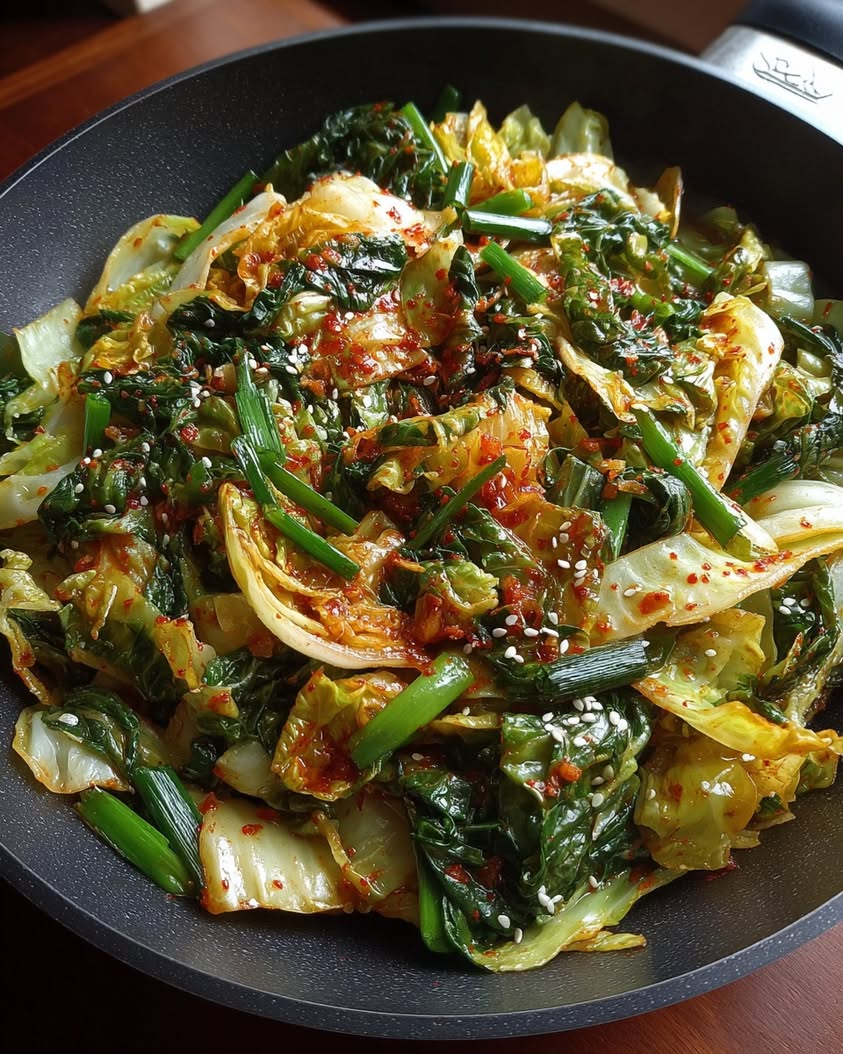
Spicy Stir-Fried Cabbage: A Quick & Healthy Vegan Side Dish
Are you searching for a vegetable side dish that delivers maximum flavor with minimal effort? This spicy stir-fried cabbage recipe is your new weeknight savior. Consequently, it transforms humble cabbage into a vibrant, exciting dish that will have everyone asking for seconds. Moreover, it perfectly balances heat, savory notes, and a satisfying crunch.
This recipe proves that healthy eating does not have to be boring or time-consuming. In fact, you can have this complete quick and healthy side on the table in under fifteen minutes. Furthermore, it is naturally vegan and low-carb, making it a fantastic addition to various dietary lifestyles. Ultimately, it is a true low-carb weeknight win that will become a regular in your meal rotation.
The magic of this dish lies in its simplicity and powerful flavor combination. Garlic and ginger create an aromatic base, while the soy sauce and chili paste build a complex, umami-rich sauce. The cabbage itself becomes tender-crisp, soaking up all the delicious flavors while retaining a pleasant texture. This easy stir-fried cabbage is more than a side; it is a celebration of simple, wholesome ingredients.
Quick Recipe Highlights
- Flavor Profile: This dish offers a bold and addictive taste. It starts with a savory, umami base from soy sauce, followed by a distinct garlic and ginger kick. Finally, a building heat from the chili paste or sauce creates a complex and satisfying experience.
- Texture: The texture is a perfect contrast of tender and crisp. The high-heat stir-fry method cooks the cabbage quickly, wilting it slightly while maintaining a delightful crunch. This creates a mouthfeel that is far from mushy and utterly enjoyable.
- Aroma: As it cooks, the kitchen fills with an irresistible fragrance. First, the scent of sizzling garlic and ginger hits your nose, followed by the savory aroma of the soy-based sauce. The final result is a deeply appetizing and warm scent that promises a delicious meal.
- Visual Appeal: The dish is visually striking with its vibrant green cabbage coated in a glossy, dark sauce. Occasional specks of red chili and minced garlic add color contrast, making it look as good as it tastes on any plate.
- Skill Level Needed: This recipe is perfect for beginners. It requires only basic knife skills for chopping and a fundamental understanding of stir-frying. Essentially, if you can operate a stove and a wok or skillet, you can master this dish with ease.
- Special Equipment: No fancy tools are required. A large wok or a wide skillet is ideal for achieving the characteristic “wok hei” and ensuring even cooking. Otherwise, a sturdy spatula or pair of tongs is all you need to toss the cabbage as it cooks.
Recipe Overview
- Difficulty Level: We classify this recipe as easy because it involves straightforward techniques and minimal prep work. The steps are simple: chop, mix the sauce, and stir-fry. There is no complicated timing or advanced culinary skill required, making it accessible for cooks of all experience levels. Consequently, it is a fantastic recipe for a busy weeknight or for building confidence in the kitchen.
- Category: This dish fits perfectly into multiple meal categories. Primarily, it serves as an excellent side dish for proteins like grilled chicken, fish, or tofu. Additionally, it can be bulked up with noodles or rice to become a light main course. It is also ideal for potlucks and meal prep due to its serving versatility.
- Cuisine: This spicy stir-fried cabbage draws inspiration from various Asian culinary traditions, particularly Chinese stir-fry techniques. The use of soy sauce, ginger, and garlic is classic in many East Asian dishes. However, the recipe is adaptable, allowing you to incorporate Thai chili paste or Korean gochujang for a different regional twist.
- Cost: This is an incredibly budget-friendly recipe. A head of cabbage is one of the most affordable vegetables available. The other ingredients, like soy sauce, garlic, and ginger, are pantry staples for many. Therefore, you can create a large, flavorful side dish for a family for just a few dollars.
- Season: Cabbage is a versatile vegetable available year-round, but this dish is particularly wonderful in the cooler months. The spicy and warming qualities are comforting in autumn and winter. Conversely, it also works well in spring and summer as a light, crisp counterpoint to heavier grilled meats.
- Occasion: This dish is suitable for almost any occasion. It is a quick fix for a casual family dinner, an elegant side for a dinner party, and a great addition to a holiday spread. Its universal appeal and simple preparation make it a go-to recipe for any event.
Why You’ll Love This Spicy Stir-Fried Cabbage
First and foremost, the taste and texture are utterly addictive. The initial savory punch from the soy sauce gives way to the aromatic warmth of ginger and garlic. Subsequently, a slow, building heat from the chili lingers pleasantly on the palate. The cabbage itself is the star, transforming into a tender-yet-crisp vehicle that carries the robust sauce perfectly. Every bite is a harmonious blend of umami, spice, and satisfying crunch that will make you forget you are eating such a healthy vegetable.
Furthermore, the convenience factor is a massive win for any home cook. From start to finish, this dish requires only fifteen minutes of your time. The prep work is minimal, involving mostly slicing the cabbage and mincing a few aromatics. Consequently, it is the perfect solution for those evenings when you need to get a healthy, homemade side on the table fast. It is a true testament to the idea that incredible food does not require hours in the kitchen.
From a nutritional standpoint, this recipe is a powerhouse. Cabbage is low in calories but high in fiber, Vitamin C, and Vitamin K. The cooking method, stir-frying, helps retain these water-soluble vitamins better than boiling. Additionally, using minimal oil keeps the dish light and healthy. This makes it an excellent choice for anyone focused on healthy eating, weight management, or simply incorporating more nutrient-dense vegetables into their diet without sacrificing flavor.
This spicy stir-fried cabbage also holds significant social and entertaining value. Its vibrant color and appealing aroma make it a standout on any dinner table. It pairs wonderfully with a wide variety of main courses, from Asian-inspired dishes to simple roasted meats. When you serve it to guests, they will be impressed by the complex flavors, often not realizing how simple it was to prepare. It is a dish that makes you look like a culinary rock star with very little effort.
Finally, the cost-effectiveness and accessibility of the ingredients cannot be overstated. Cabbage is famously inexpensive and has a long shelf life. The other components are common pantry items or easy to find at any grocery store. This means you can create a restaurant-quality side dish for a fraction of the cost of takeout. It is a brilliant way to eat well on a budget, proving that delicious and healthy eating is accessible to everyone.
Historical Background and Cultural Significance
Stir-frying as a cooking technique has a deep and rich history, originating in China over 1,500 years ago. This method evolved as a efficient way to cook food quickly while conserving fuel, which was often scarce. The technique spread throughout Asia, with each region adapting it to use local ingredients and flavors. Cabbage, particularly Napa cabbage, has been a staple in East Asian cuisines for centuries, valued for its availability, storage longevity, and versatility. The combination of stir-frying and cabbage was a natural and practical development in culinary history.
The cultural importance of stir-fried dishes is immense, especially within family cooking. In many households, a quick stir-fry is the equivalent of a weeknight staple in Western cultures. It represents practicality, resourcefulness, and the ability to create a delicious, balanced meal with speed and skill. A dish like this spicy stir-fried cabbage embodies the principle of “xia fan cai” in Chinese cuisine, which refers to dishes that are particularly good with rice. They are designed to be flavorful and saucy, making the simple act of eating rice a delightful experience.
The evolution of this specific recipe is a story of globalization and adaptation. While the core technique is ancient, the specific combination of soy sauce, chili, and cabbage reflects a more modern fusion of flavors that appeals to a global palate. As Asian cuisines gained popularity worldwide, home cooks began experimenting with these ingredients, leading to simplified, accessible versions of classic dishes. This recipe is a product of that evolution, taking inspiration from traditional methods but streamlining them for the modern, busy cook.
Regional variations of stir-fried cabbage are fascinating. In Sichuan province, you might find it blistered with dry chilies and Sichuan peppercorns for a mouth-numbing effect. In Korea, a similar dish might incorporate gochujang (fermented chili paste) for a deeper, sweeter heat. Japanese versions might use a lighter soy sauce and perhaps a touch of dashi. This particular recipe is a versatile blueprint that you can easily tweak to mimic these regional styles, making it a gateway to exploring a wide world of flavor from your own kitchen.
Ingredient Deep Dive
Green Cabbage is the foundation of this dish. Cultivated for over 4,000 years, cabbage was revered by ancient Romans and Greeks for its medicinal properties. It is a nutritional powerhouse, packed with Vitamin C, Vitamin K, and fiber, while being incredibly low in calories. The sulfur compounds in cabbage, which are released during cooking, have been linked to anti-inflammatory and cancer-fighting benefits. When selecting a head, look for one that is firm and heavy for its size with crisp, vibrant outer leaves. Store it uncut in the plastic bag in the refrigerator’s crisper drawer, where it can last for up to two weeks. If you need a substitution, Napa cabbage offers a milder, more tender alternative, or kale can be used for a heartier, more robust texture.
Soy Sauce is the primary source of umami and saltiness. This fermented sauce originated in China over 2,500 years ago and is fundamental to many Asian cuisines. It is made from soybeans, wheat, salt, and a fermenting culture. Nutritionally, it provides protein and antioxidants from the fermentation process, but it is also high in sodium. For a gluten-free version, tamari is an excellent substitute as it is typically made with little to no wheat. Always opt for naturally brewed soy sauce for the best flavor. Store it in a cool, dark place, and it will keep for years. For a different flavor profile, you could use coconut aminos, which are sweeter and less salty.
Fresh Garlic and Ginger are the aromatic heart of the dish. Garlic has been used both culinarily and medicinally since the time of the Egyptian pyramids. It contains allicin, a compound with potent antibacterial and antiviral properties. Ginger, originating in Southeast Asia, is famed for its ability to aid digestion and reduce nausea. When buying garlic, choose firm, plump bulbs with tight skin; for ginger, look for roots that are firm and smooth with a shiny skin. Store both in a cool, dry place; do not refrigerate. In a pinch, jarred minced garlic and ginger can be used, though the flavor will be less vibrant. Alternatively, garlic powder and ground ginger can work, but use about one-third the amount since their flavors are more concentrated.
Chili Paste or Sauce provides the essential “spicy” element. The capsaicin in chilies is what gives them their heat and is also known to boost metabolism and act as an anti-inflammatory. Sriracha, a Thai-inspired sauce, offers a garlicky, moderate heat, while Gochujang, a Korean fermented chili paste, provides a deeper, sweeter, and more complex spice. Sambal Oelek is a simpler, purer chili paste without added vinegar or sugar. You can control the heat level easily by adjusting the quantity. These condiments should be stored in the refrigerator after opening. If you do not have Asian chili pastes, a dash of cayenne pepper or red pepper flakes can be used to provide the heat, though the flavor profile will shift.
Common Mistakes to Avoid
- Overcrowding the Pan: Adding too much cabbage at once is a critical error. The excess moisture released will steam the cabbage instead of frying it, resulting in a soggy, limp texture. Always use a very large wok or skillet and cook in batches if necessary to ensure each piece has contact with the hot surface.
- Underseasoning the Dish: Cabbage is a mild vegetable that requires ample seasoning to shine. Do not be shy with the sauce ingredients. Taste as you go and adjust the levels of soy sauce for saltiness and chili paste for heat. Remember, the flavors will mellow slightly when mixed with the bulk of the cabbage.
- Burning the Garlic and Ginger: These aromatics cook very quickly in hot oil. If you add them to a smoking pan or leave them for too long, they will burn and become bitter, ruining the entire dish. Add them to the hot oil and stir constantly for only 20-30 seconds until fragrant before adding the cabbage.
- Overcooking the Cabbage: The goal is a tender-crisp texture, not mush. Stir-frying over high heat should take only 4-6 minutes. Once the cabbage has wilted slightly but still has a bright color and a bit of crunch, it is done. Prolonged cooking will make it watery and soft.
- Using a Cold Pan or Insufficient Heat: Stir-frying is a high-heat cooking technique. If your pan or wok is not hot enough before you add the oil and ingredients, the cabbage will stew in its own juices. Preheat your pan over medium-high to high heat for a few minutes until it is very hot to achieve the characteristic sear and crisp-tender texture.
- Skipping the Drying Step: If you wash your cabbage just before cooking, ensure you dry it thoroughly in a salad spinner or with towels. Excess water on the leaves will introduce more moisture into the hot pan, leading to steaming instead of frying and a less flavorful final product.
- Neglecting to Prep Everything in Advance: Stir-frying is a fast process with no time to pause and mince garlic or measure soy sauce once you have started cooking. Ensure all your ingredients are chopped, minced, and measured and placed within arm’s reach before you turn on the stove. This “mise en place” is crucial for success.
- Using the Wrong Type of Pan: A small, deep saucepan will not work for this recipe. You need a wide, sloping surface area to allow the cabbage to spread out and cook quickly. A wok is ideal, but a large cast-iron skillet or a wide non-stick sauté pan are excellent alternatives.
Essential Techniques
The High-Heat Stir-Fry is the most critical technique in this recipe. This method involves cooking small pieces of food quickly in a small amount of very hot oil. The importance lies in the results: it sears the outside of the cabbage, locking in nutrients and flavor while creating a delightful smoky aroma known as “wok hei.” To master it, ensure your wok or skillet is screaming hot before adding oil, and then immediately add your aromatics. The key is constant tossing and stirring to ensure even exposure to the heat and prevent burning. A common pitfall is adding too many ingredients at once, which lowers the pan’s temperature and causes the food to steam. You will know you are successful when the cabbage is wilted and slightly charred in spots but still vibrant and crisp.
Proper Ingredient Prep, or “mise en place,” is a non-negotiable technique for any stir-fry. This French term meaning “everything in its place” is vital because the cooking process is too rapid to stop and chop an ingredient. Its importance cannot be overstated; it ensures a smooth, stress-free cooking experience and prevents any one component from burning while you scramble to prepare another. To master it, completely finish all slicing, dicing, and sauce mixing before you even turn on the stove. Arrange everything in small bowls next to your cooktop in the order you will use them. The common pitfall is underestimating the speed of cooking and trying to prep as you go. Visual success is a tidy workstation and a perfectly timed, flawlessly executed dish.
Pro Tips for Perfect Spicy Stir-Fried Cabbage
First, heat your wok or skillet until it is genuinely hot before adding oil. You can test this by sprinkling a few drops of water onto the surface; if they sizzle and evaporate almost instantly, the pan is ready. This initial blast of heat is crucial for searing the cabbage and preventing a steamed, soggy outcome.
Second, use a high-smoke-point oil. Regular olive oil or butter will burn at the high temperatures required for stir-frying. Instead, opt for avocado oil, peanut oil, or canola oil, which can withstand the heat without breaking down and imparting a bitter flavor to your dish.
Third, do not skip the step of toasting the aromatics. Adding the garlic and ginger to the hot oil and stirring for just 20-30 seconds until fragrant fundamentally builds the flavor base of the entire dish. This quick process unlocks their essential oils and creates a deeper, more complex taste profile.
Fourth, add the cabbage in two or three batches if your pan is not large enough. It is far better to cook it in stages than to overcrowd the pan. As the first batch wilts and makes room, you can add the next, ensuring everything gets proper contact with the hot surface.
Fifth, have your sauce mixture pre-mixed in a small bowl or liquid measuring cup. This allows you to add it all at once, ensuring even distribution and coating. Pouring in individual sauces separately often results in uneven seasoning and delays in the fast-paced cooking process.
Sixth, resist the urge to cover the pan with a lid. Covering the cabbage will trap steam and completely defeat the purpose of stir-frying, turning your crisp vegetable into a soft, boiled-tasting mess. The entire process should be done uncovered over high heat.
Variations and Adaptations
For regional variations, you can easily take this recipe on a culinary tour of Asia. For a Sichuan-style version, add a teaspoon of whole Sichuan peppercorns to the hot oil first to infuse it, then remove them before adding the garlic. You will get that characteristic “mala” numbing sensation. For a Thai twist, use fish sauce instead of soy sauce and finish with a squeeze of fresh lime juice and a handful of chopped Thai basil. A Korean adaptation would involve using gochujang instead of chili paste and adding a teaspoon of sesame oil at the very end.
Seasonal adaptations are simple and effective. In the spring, add fresh shelled peas or sliced asparagus during the last two minutes of cooking. During summer, toss in sweet corn kernels or diced zucchini. For a heartier autumn or winter version, incorporate sliced mushrooms or shredded Brussels sprouts, which may require a slightly longer cooking time. These additions keep the recipe feeling fresh and aligned with what is available at your local market.
Dietary modifications are straightforward. The recipe is naturally vegan and gluten-free if you use tamari instead of soy sauce. To make it a complete meal, add a protein source directly to the stir-fry. Firm tofu, tempeh, chickpeas, or shredded chicken are excellent options. For a keto or very low-carb version, simply ensure your chosen chili paste does not contain sugar, and you are good to go. It is an incredibly adaptable foundation.
Serving and Presentation Guide
Plating this dish effectively enhances its appeal. For a family-style presentation, serve it directly from the wok or in a wide, shallow bowl to show off its glossy sauce and vibrant color. For individual plates, use a pair of tongs to create a small, high mound of cabbage in the center of the plate, allowing any excess sauce to pool attractively around the base. This technique adds height and visual interest to your meal presentation.
Garnishing adds the final touch of flavor and color. A sprinkle of toasted sesame seeds adds a nutty flavor and a contrasting texture. Thinly sliced scallions (green onions) provide a fresh, sharp bite and a pop of green. For a extra kick of heat and color, add a few thin slices of fresh red chili pepper. A final light drizzle of chili oil or a wedge of lime on the side allows guests to customize their own plate.
Traditional accompaniments are simple and focus on balance. A bowl of steamed jasmine or white rice is the classic partner, as it helps to temper the spice and soak up the delicious sauce. For a more substantial meal, it pairs wonderfully with simple proteins like grilled chicken skewers, pan-seared fish like salmon, or a classic tofu stir-fry. The cabbage’s bold flavor stands up well to these without overpowering them.
Wine and Beverage Pairing
Selecting the right wine can elevate this spicy dish beautifully. A slightly sweet or off-dry white wine is ideal because the sweetness helps counterbalance the heat from the chili. A German Riesling (Kabinett or Spätlese) or a Gewürztraminer are excellent choices, as their floral notes and hint of sweetness complement the Asian flavors perfectly. If you prefer red wine, opt for a low-tannin, fruity option like a Beaujolais or a Pinot Noir, which will not clash with the spice.
For non-alcoholic alternatives, consider drinks that are cooling or have their own subtle sweetness. A chilled, sparkling jasmine tea provides a fragrant and refreshing counterpoint. Ginger beer, with its own spicy-sweet profile, can be a fun and complementary match. A simple glass of cold coconut water is also surprisingly effective at calming the palate and hydrating you through the spicy meal.
Serving temperature is crucial for maximum enjoyment. White wines and non-alcoholic beers should be served well-chilled, between 45-50°F (7-10°C). Red wines should be served slightly cooler than room temperature, around 55°F (13°C), especially since the dish itself is spicy. Iced teas and other non-alcoholic drinks are best served very cold to provide a refreshing contrast to the warm, spicy stir-fry.
Storage and Shelf Life
Proper storage is key to maintaining the quality of your leftovers. Allow the stir-fried cabbage to cool completely to room temperature before storing, but do not leave it out for more than two hours to prevent bacterial growth. Transfer it to an airtight container and refrigerate. Stored correctly, it will keep for 3 to 4 days. The texture will become softer as it sits, but the flavors will continue to meld and develop.
Freezing is not generally recommended for this dish. The high water content of cabbage means it will become very watery and mushy upon thawing, resulting in a significant loss of its desirable crisp-tender texture. The sauce may also separate. For the best eating experience, it is intended to be enjoyed fresh or within a few days of refrigeration.
Reheating requires care to avoid further sogginess. The best method is to reheat it in a wok or skillet over medium-high heat. This will help re-crisp the cabbage slightly and re-emulsify the sauce. Stir frequently until heated through. You can also use a microwave, but be aware that it will make the cabbage even softer. Spread it in a single layer on a microwave-safe plate and heat in short 30-second bursts, stirring between each.
Make Ahead Strategies
You can significantly speed up your dinner preparation by prepping components ahead of time. The cabbage can be washed, cored, and sliced 1-2 days in advance. Store it in a zip-top bag or airtight container in the refrigerator with a paper towel to absorb excess moisture. The sauce can be mixed and stored in a jar in the fridge for up to a week. The garlic and ginger can also be minced and stored together in a small container for 2-3 days.
When you are ready to cook, having everything prepped means you can have the dish on the table in the time it takes to heat your wok and perform the actual stir-fry—about 5-7 minutes. This makes it an unparalleled option for busy weeknights. The quality impact is minimal; in fact, some argue that letting the sauce ingredients meld for a day improves the overall flavor.
For the absolute best texture, however, I recommend doing the final cooking just before serving. While you can fully cook the dish a day ahead and reheat it, the cabbage will lose its delightful crunch. The ideal make-ahead strategy is to have all the components prepped and separated, then execute the quick stir-fry at the last minute for a restaurant-quality result at home.
Scaling Instructions
This recipe is incredibly easy to scale up or down. To halve the recipe, simply use half a small head of cabbage and reduce all other sauce and aromatic ingredients by half. The cook time will remain roughly the same, as the same high-heat technique is used. You can use a smaller skillet with no other equipment adjustments necessary. This is perfect for a solo dinner or a side for two.
Doubling or tripling the recipe is great for meal prep or feeding a crowd. The key here is to not overcrowd your pan. You will need to cook the cabbage in multiple batches. Use a large bowl to hold the cooked batches, then return everything to the wok at the end, add the sauce, and toss together to heat through and combine. Your total active time will increase slightly due to the batch cooking, but the recipe’s efficiency remains high.
When scaling up, be mindful of your sauce distribution. Mix the sauce in a separate bowl, ensuring all ingredients are well combined, before adding it to the wok. This prevents one batch from being too salty and another not salty enough. The storage considerations remain the same; scaled-up batches will keep for the same 3-4 days in the refrigerator, making it a fantastic weekly meal prep option.
Nutritional Deep Dive
This dish is a macro-nutrient dream for those watching their intake. It is very low in carbohydrates, with most of the carbs coming from fiber, making it an excellent low-carb choice. It is virtually fat-free, depending on the oil used, and contains a small amount of plant-based protein. The primary nutritional benefit, however, comes from its micronutrient profile. Cabbage is an outstanding source of Vitamin K, crucial for bone health and blood clotting, and Vitamin C, a powerful antioxidant that supports the immune system.
The health benefits extend beyond basic vitamins. The capsaicin in the chili paste has been linked to boosting metabolism and providing anti-inflammatory effects. The garlic and ginger contain bioactive compounds with potent medicinal properties, including fighting illness and improving heart health. Furthermore, the high fiber content promotes digestive health and helps maintain a feeling of fullness, which can aid in weight management. This makes the dish not just a tasty side but a genuine contributor to a healthy lifestyle.
Dietary Adaptations
For a Gluten-Free version, the only ingredient you need to check is the soy sauce. Simply substitute it with tamari (ensure the brand is certified gluten-free) or coconut aminos. All other core ingredients—cabbage, garlic, ginger, chili paste, and oil—are naturally gluten-free. This simple swap makes the dish safe for those with celiac disease or gluten sensitivity without any compromise on flavor.
This recipe is naturally Vegan, as written. It contains no animal products whatsoever. The umami depth comes purely from the fermented soy sauce and the savory notes of the garlic and ginger. It is a fantastic, flavorful option to include in a plant-based diet and proves that vegan food can be bold, spicy, and deeply satisfying.
For a Keto adaptation, you are already in great shape as cabbage is a low-carb vegetable. The critical step is to verify that your chosen chili paste or sauce does not contain added sugar, as this is common in many brands. Sriracha, for example, often has sugar. Opt for a sugar-free sambal oelek or pure chili paste. With that one check, this dish fits perfectly into a ketogenic lifestyle.
Troubleshooting Guide
If your cabbage turns out soggy and watery, the most likely cause was overcrowding the pan or not having it hot enough. To fix it for next time, ensure your wok is screaming hot before adding the oil and cabbage, and cook in batches if needed. If you are faced with a currently soggy dish, you can try to salvage it by returning it to a very hot, dry wok to evaporate some of the excess liquid, stirring constantly.
If the dish is too spicy, balance it out by adding a touch of sweetness. A teaspoon of sugar, maple syrup, or a splash of orange juice stirred in at the end can help tame the heat. Serving it with a generous portion of plain steamed rice will also help dilute the spice level on the palate. For next time, remember you can always add more chili, but you cannot take it out, so start with a conservative amount.
If the flavor is bland or flat, it is usually an issue of undersalting or insufficient umami. The quick fix is to add an extra splash of soy sauce and stir it in. A tiny pinch of MSG (such as Accent) can work wonders to boost the savory depth instantly. For a more complex flavor, a few drops of toasted sesame oil stirred in at the very end can add a new dimension.
Frequently Asked Questions
Can I use a different type of cabbage?
Absolutely. While green cabbage is standard, Napa cabbage will give you a more tender, delicate result. Red cabbage can be used for a vibrant color, though it may bleed slightly into the sauce. Savoy cabbage, with its crinkly leaves, is another excellent option that holds sauce very well.
My cabbage is never crispy, it’s always soft. What am I doing wrong?
This is almost always a heat and crowding issue. Ensure your pan is very hot before you start, and do not add too much cabbage at once. The cabbage should sizzle vigorously upon contact. If your pan is small, cook in two batches to guarantee that each piece gets seared by the intense heat rather than steamed by the collective moisture.
How can I make this less spicy for my family?
Simply reduce or omit the chili paste or sauce entirely. You can still make a very flavorful dish with just the garlic, ginger, and soy sauce. For a mild warmth, use a small pinch of red pepper flakes instead of a concentrated paste. You can also serve the chili paste on the side for individuals to add to their own portion.
Is this dish actually healthy?
Yes, it is exceptionally healthy. It is low in calories and carbohydrates, high in fiber, and packed with vitamins and antioxidants from the cabbage, garlic, and ginger. Using a moderate amount of oil and sodium-conscious soy sauce keeps it a nutritious choice. It is a fantastic way to eat more vegetables in a flavorful and satisfying way.
Can I add other vegetables to this stir-fry?
Certainly. This recipe is very adaptable. Sliced bell peppers, carrots, onions, or broccoli would all be great additions. Just be mindful of the different cooking times; harder vegetables like carrots should be added a minute or two before the cabbage to ensure they become tender.
What protein can I add to make it a main course?
For a complete meal, add cubed firm tofu, tempeh, or chickpeas for a plant-based option. For meat-eaters, thinly sliced chicken breast, shrimp, or ground pork are excellent. Cook your protein first in the wok, set it aside, and then add it back in with the sauce at the end to heat through.
Do I have to use a wok?
While a wok is ideal, it is not mandatory. A large, heavy-bottomed skillet or cast-iron pan will work perfectly well. The key is having a cooking surface with plenty of area so the cabbage can spread out in a relatively single layer for optimal searing and frying.
How do I get that “restaurant-style” flavor?
The secret often lies in high heat and a well-seasoned wok. Restaurants have powerful burners that generate intense heat, which is hard to replicate but not impossible. Get your home burner as hot as possible, and consider adding a tiny pinch of sugar to the sauce to promote caramelization. A final drizzle of toasted sesame oil off the heat also adds a professional finish.
Additional Resources
If you loved this spicy stir-fried cabbage, you might enjoy exploring other quick and healthy vegetable side dishes. Consider trying a simple Sautéed Garlic Spinach, which cooks in mere minutes, or a vibrant Stir-Fried Green Beans with a similar savory and spicy profile. For a different take on cabbage, a Vinegar-Based Coleslaw offers a crunchy, tangy alternative. These recipes all share the same philosophy of making vegetables the exciting star of the meal with minimal effort and maximum flavor.
To deepen your stir-fry skills, learning about the fundamental techniques is invaluable. Understanding how to properly “velvet” chicken or shrimp for a tender texture, or mastering the art of creating a classic stir-fry sauce base, can elevate all your Asian-inspired cooking. Exploring the wide world of chili pastes and sauces—from doubanjiang to sambal—will also allow you to customize your heat and flavor profiles with confidence. The journey to becoming a stir-fry master starts with a single recipe, and you are well on your way.
PrintSpicy Stir-Fried Cabbage
Description
A quick and flavorful stir-fry featuring tender cabbage with a spicy kick, perfect as a side dish or light main course.
Ingredients
For the Crust:
- 1 medium head green cabbage, shredded
- 2 tablespoons vegetable oil
- 3 cloves garlic, minced
- 1 tablespoon ginger, grated
- 2–3 dried red chilies, crushed
- 2 tablespoons soy sauce
- 1 tablespoon rice vinegar
- 1 teaspoon sesame oil
- 2 green onions, sliced
- Salt to taste
Instructions
1. Prepare the Crust:
- Heat vegetable oil in a large wok or skillet over medium-high heat.
- Add garlic, ginger, and crushed red chilies, stir-frying for 30 seconds until fragrant.
- Add shredded cabbage and stir-fry for 5-7 minutes until slightly wilted but still crisp.
- Pour in soy sauce and rice vinegar, tossing to coat evenly.
- Cook for another 2-3 minutes, then drizzle with sesame oil and garnish with green onions.
- Season with salt if needed and serve immediately.
Notes
You can customize the seasonings to taste.

I’m Shaykee—born in Morocco, seasoned across continents. From airplane galleys to home kitchens, I share the flavors and stories that shaped my journey.