
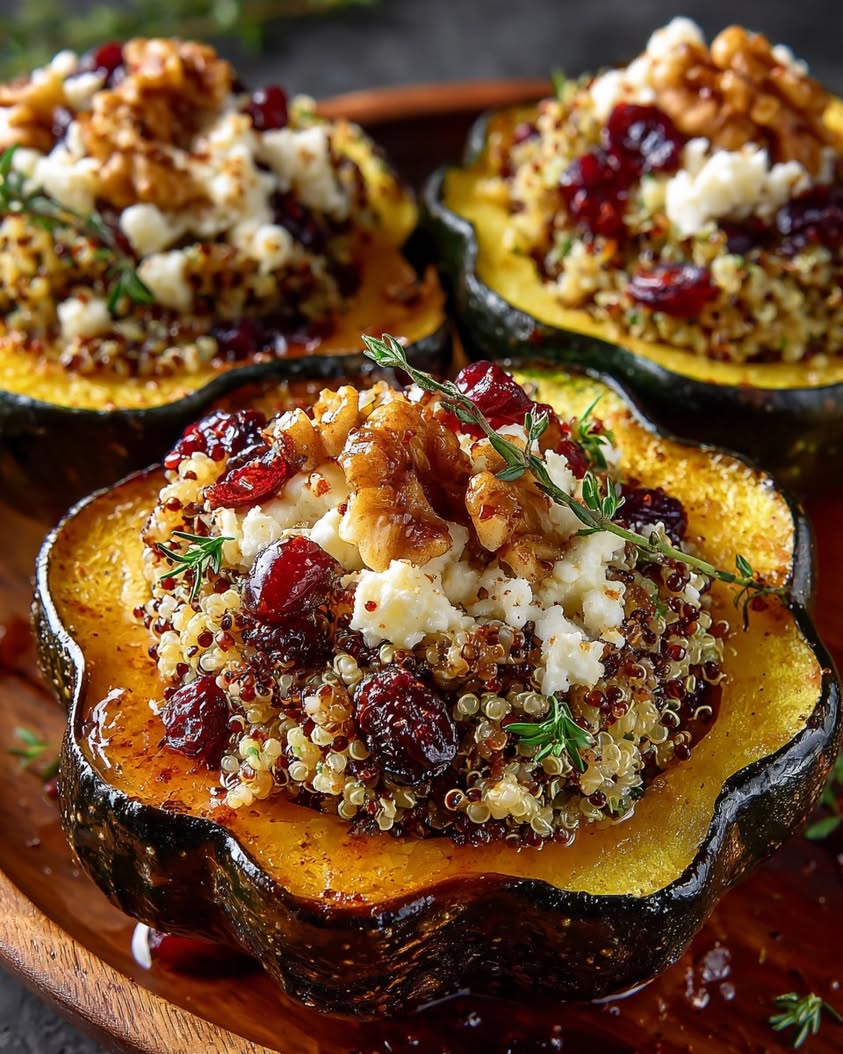
Savory Roasted Acorn Squash: A Perfect Fall Dinner Stuffed with Quinoa, Brie, and Cranberries
This savory roasted acorn squash recipe is the ultimate celebration of autumn. Imagine tender, caramelized squash halves filled with a hearty quinoa stuffing, creamy brie, tart cranberries, and crunchy walnuts. The final flourish is a spicy hot honey drizzle that ties everything together. This dish is not just a meal; it is a warm, comforting experience that fills your kitchen with the most incredible aromas.
Furthermore, this recipe is a fantastic centerpiece for any fall dinner table. It is visually stunning, nutritionally balanced, and packed with complex flavors and textures. Each component plays a crucial role, from the earthy squash to the rich cheese and the sweet-heat of the honey. Consequently, you get a vegetarian dinner that is both satisfying and elegant enough for a holiday gathering.
Ultimately, this stuffed acorn squash is the perfect answer to what to make with seasonal produce. It transforms simple ingredients into a spectacular dish. Whether you need a hearty weeknight dinner or a show-stopping side, this recipe delivers. The combination of sweet, savory, creamy, and crunchy is absolutely irresistible.
Quick Recipe Highlights
- Flavor Profile: This dish offers a masterful balance of sweet and savory notes. The natural sweetness of the roasted squash and cranberries contrasts beautifully with the savory quinoa and earthy walnuts. Meanwhile, the spicy hot honey drizzle adds a kick that elevates every bite.
- Texture: You will experience a wonderful contrast of textures in every forkful. The squash becomes tender and almost creamy, while the quinoa provides a fluffy base. Additionally, the toasted walnuts add a satisfying crunch, and the melted brie offers a luxurious, gooey element.
- Aroma: As this dish roasts, your kitchen will fill with an irresistible fragrance. The scent of sweet, roasting squash mingles with the nutty aroma of toasting walnuts and the warm, spicy notes of the hot honey. It is the quintessential smell of a cozy fall evening.
- Visual Appeal: This recipe is a feast for the eyes with its vibrant autumn colors. The deep green squash shells cradle a golden stuffing flecked with red cranberries and brown walnuts. The glossy honey drizzle adds a final touch of elegance, making it perfect for photographing and sharing.
- Skill Level Needed: This is an accessible recipe for cooks of all levels, from beginners to experts. The techniques involved are straightforward, such as roasting and making a simple stuffing. Therefore, you do not need any special culinary skills to achieve a beautiful and delicious result.
- Special Equipment: You only need basic kitchen tools to make this dish. A baking sheet, a small pot for the quinoa, and a mixing bowl are essentials. A sharp knife and a sturdy spoon for scooping out the squash seeds are also helpful.
Recipe Overview
- Difficulty Level: This recipe is rated easy because it uses simple, foundational cooking methods. Roasting squash and cooking quinoa are beginner-friendly techniques. The assembly is straightforward, requiring no complicated steps or precision. Consequently, even a novice cook can confidently prepare this impressive dish.
- Category: This versatile dish fits into multiple meal categories beautifully. It works perfectly as a hearty vegetarian main course for a fall dinner. Alternatively, you can serve it as a substantial side dish alongside a roast chicken or turkey. It is also ideal for holiday meals and festive occasions.
- Cuisine: While not tied to one specific tradition, this dish draws inspiration from modern American farm-to-table cooking. It emphasizes seasonal, whole ingredients in a wholesome way. The use of squash and cranberries is classic for North American autumn cuisine, creating a comforting and familiar flavor profile.
- Cost: This is a reasonably priced meal, especially when acorn squash is in season. The quinoa, cranberries, and walnuts are pantry staples that offer great value. Brie is the splurge ingredient, but a little goes a long way. Overall, it is a cost-effective way to create a restaurant-quality meal at home.
- Season: This recipe is absolutely perfect for the fall and early winter months. Acorn squash is at its peak from October through December. The warm, spiced flavors are ideal for cooler weather. Furthermore, the ingredients align perfectly with Thanksgiving and Christmas holiday menus.
- Occasion: This stuffed squash is incredibly versatile for different events. It is a cozy weeknight dinner that feels special. It is also elegant enough for a dinner party or a holiday feast like Thanksgiving. Moreover, it makes a fantastic Meatless Monday option that everyone will enjoy.
Why You’ll Love This Savory Roasted Acorn Squash
First and foremost, the taste and texture appeal is absolutely phenomenal. Each bite delivers a symphony of flavors and sensations. The sweet, tender squash contrasts with the fluffy, savory quinoa and the pops of tart cranberry. Then, you get the creamy richness of melted brie and the satisfying crunch of walnuts. Finally, the spicy-sweet hot honey drizzle cuts through the richness, creating a perfectly balanced and unforgettable dish that will have you coming back for more.
Another significant benefit is the sheer convenience and preparation ease. This is a one-pan meal for the most part, meaning cleanup is incredibly simple. You can prepare the quinoa stuffing while the squash roasts, making efficient use of your time. Furthermore, the ingredients are easy to find at any standard grocery store. This recipe proves that a gourmet-tasting meal does not require complicated techniques or hard-to-source components.
From a health perspective, the nutritional advantages are substantial. Acorn squash is loaded with vitamins A and C, along with valuable fiber. Quinoa provides a complete protein, making this a satisfying vegetarian dinner. Walnuts contribute healthy omega-3 fats, and cranberries are packed with antioxidants. This dish is a powerhouse of nutrients that supports your well-being without sacrificing an ounce of flavor.
For social gatherings, the entertaining value of this dish is through the roof. It looks stunning on a dinner table and serves as a fantastic conversation starter. Because it is a self-contained serving, presentation is effortless. You can easily double or triple the recipe to feed a crowd. It is a reliable recipe that guarantees compliments and satisfied guests every single time.
Finally, the cost-effectiveness and accessibility make it a practical choice for any home cook. Seasonal squash is very affordable, and the other ingredients are pantry-friendly. You are creating a restaurant-quality meal for a fraction of the price. This recipe is a brilliant way to eat well, impress your family, and stay within your food budget, all while enjoying the best flavors of the season.
Historical Background and Cultural Significance
The story of squash begins thousands of years ago in the Americas. Indigenous peoples were the first to cultivate squash, alongside corn and beans, in a system known as the “Three Sisters.” Acorn squash, specifically, is a winter squash variety that was prized for its hard shell, which allowed it to be stored through the winter months. This storability made it a crucial food source for many Native American tribes long before European colonization. The use of squash as a edible vessel for stuffings has deep roots in these traditional cooking methods.
Culturally, stuffed vegetables appear in cuisines all around the world, from dolmas in the Middle East to stuffed peppers in Europe. The concept of hollowing out a vegetable and filling it with a savory mixture is a universal solution for creating a hearty, self-contained meal. In North America, stuffing squash became a natural evolution, especially during the harvest season when these gourds were abundant. This recipe represents a modern fusion, taking that traditional concept and updating it with contemporary ingredients like quinoa and brie.
The recipe has evolved significantly with global trade and ingredient availability. Cranberries, native to North America, were a traditional ingredient used by Indigenous peoples and early colonists. Quinoa, from South America, has become a global superfood staple only in recent decades. Brie cheese hails from France, and the hot honey trend is a modern American creation. This dish is a beautiful testament to how recipes evolve, blending Old World and New World ingredients into something uniquely delicious for today’s palate.
Regional variations of stuffed squash are endless, reflecting local tastes and ingredients. In the American South, you might find a stuffing with sausage and cornbread. In Italy, a version with risotto and Parmesan cheese is common. Mediterranean variations often include ingredients like feta, olives, and pine nuts. Our version with quinoa, brie, and cranberries is a distinctly North American take, highlighting the best of the fall harvest and the modern preference for whole grains and bold, contrasting flavors.
Ingredient Deep Dive
Acorn Squash is a winter squash known for its dark green, ribbed skin and sweet, yellow-orange flesh. Historically, it was a vital food source for Native American communities. Nutritionally, it is an excellent source of vitamins A and C, potassium, and dietary fiber, which aids digestion. When selecting, choose squash that are heavy for their size with a deep green color and no soft spots. Store them in a cool, dark place; they can last for several weeks. For a substitution, delicata or sweet dumpling squash work beautifully.
Quinoa is an ancient grain originally cultivated in the Andean region of South America. The Incas considered it sacred, referring to it as the “mother of all grains.” It is a nutritional powerhouse, providing all nine essential amino acids, making it a complete protein. It is also high in fiber, iron, and magnesium. Look for pre-rinsed quinoa to avoid a bitter saponin coating. Store it in an airtight container in a cool, pantry. As a substitute, you can use cooked couscous, farro, or brown rice.
Brie Cheese is a soft, creamy cheese named after the French region from which it originated. It has been produced since the Middle Ages and is known for its edible, bloomy rind. Brie is a good source of protein and calcium, though it is also high in saturated fat. Select a wheel that feels soft to the touch but is not bulging. Keep it refrigerated and bring it to room temperature before serving for the best flavor and texture. For a dairy-free version, a creamy vegan cheese or even a dollop of cashew cream can work.
Dried Cranberries add a chewy texture and a burst of tart sweetness. Cranberries are one of only three fruits native to North America. They are famously high in antioxidants and vitamin C. When buying dried cranberries, check the label to avoid brands with excessive added sugar. Store them in a cool, dry pantry. If you need a substitute, dried cherries or chopped dried apricots would provide a similar sweet-tart balance. For a fresher take, you could use pomegranate arils.
Walnuts are one of the oldest tree foods, cultivated for thousands of years. They are celebrated for their brain-healthy omega-3 fatty acids. They also provide protein, antioxidants, and minerals like manganese. Always taste a walnut before using to ensure it is not rancid. Store them in the refrigerator or freezer to maintain freshness due to their high oil content. Toasted pecans or almonds would be excellent substitutes if you prefer a different nut.
Hot Honey Drizzle is the modern superstar of this dish, combining sweet honey with spicy chili peppers. The trend of infusing honey with chilies has roots in various global cuisines. Honey offers natural antioxidants and can soothe a sore throat. You can use any variety of honey you like. For the heat, you can use red pepper flakes, a dash of hot sauce, or even a finely minced fresh chili. Store homemade hot honey at room temperature. For a substitute, maple syrup with a pinch of cayenne pepper works in a pinch.
Common Mistakes to Avoid
- Underseasoning the Squash: Many people forget to generously season the inside of the squash cavity with salt and pepper before roasting. This is your first and best chance to build flavor directly into the vegetable itself. Consequently, the squash can taste bland if this step is skipped.
- Overcooking the Quinoa: Cooking quinoa for too long or with too much water can make it mushy. Mushy quinoa will make the stuffing wet and dense. Always follow the package instructions precisely and fluff it with a fork immediately after cooking to keep the grains separate.
- Skipping the Toasting Step for the Walnuts: Toasting walnuts is not an optional step; it is essential. Raw walnuts can have a slightly bitter flavor and a soft texture. Toasting them unlocks their nutty aroma and provides the necessary crunch that contrasts with the other soft ingredients.
- Using Cold Brie: Adding cold, hard brie to the stuffing mixture is a common error. It will not melt properly and can create cold spots. Always let the brie come to room temperature before you cube it and mix it into the warm quinoa stuffing.
- Not Roasting the Squash Until Truly Tender: Removing the squash from the oven before it is easily pierced with a fork is a mistake. Undercooked squash will be difficult to eat and lack sweetness. Be patient; the roasting time is crucial for developing its caramelized flavor and tender texture.
- Adding the Hot Honey Before Serving: Drizzling the hot honey over the squash before the final bake can cause it to burn or lose its spicy kick. The honey is best added as a fresh, finishing drizzle right before you serve the dish. This preserves its flavor and glossy appearance.
- Overstuffing the Squash Halves: It is tempting to pack in as much stuffing as possible, but this can lead to spillover in the oven and uneven heating. Fill the cavities generously but do not mound the stuffing high above the rim of the squash.
- Forgetting to Let it Rest: Pulling the stuffed squash from the oven and serving it immediately is a misstep. Allowing it to rest for 5-10 minutes lets the flavors meld together and makes it safer to handle. The stuffing will also set up slightly, making for a cleaner serving experience.
Essential Techniques
Roasting the Squash: Roasting is the fundamental technique that transforms raw, hard squash into a sweet, tender, and caramelized vessel. The dry heat of the oven concentrates the squash’s natural sugars. To master it, cut the squash evenly so it cooks uniformly, and roast it cut-side down initially to create steam that helps tenderize it. A common pitfall is under-roasting; the squash should be easily pierced with a fork. The visual cue for success is golden-brown, caramelized edges and flesh that scoops out effortlessly.
Cooking Quinoa: Properly cooked quinoa should be light, fluffy, and separate, not mushy or clumpy. The key is using the correct water-to-grain ratio, typically 2:1, and simmering it gently with the lid on. After cooking, you must let it steam off the heat and then fluff it with a fork. A common mistake is stirring it while it cooks, which releases starch and makes it gummy. Success is achieved when you see the germ ring separate from the seed, and all the water is absorbed.
Toasting Walnuts: Toasting nuts deepens their flavor and enhances their crunch exponentially. You can do this in a dry skillet over medium heat or on a baking sheet in the oven. The key is to watch them carefully and stir frequently because they can burn in seconds. A common pitfall is walking away from the stove. You will know they are perfectly toasted when they become fragrant and take on a slightly darker color. Immediately transfer them to a cool plate to stop the cooking process.
Making the Hot Honey Drizzle: This technique involves gently warming honey to infuse it with chili heat. Warming the honey makes it easier to mix and helps the chili flavors bloom. Do not boil the honey, as this can degrade its quality. Simply warm it gently in a saucepan or microwave, stir in your chosen chili element, and let it steep. The goal is a harmonious blend of sweet and spicy, not one that overpowers the other. Let it cool slightly before drizzling for the best consistency.
Pro Tips for Perfect Stuffed Acorn Squash
First, score the flesh of the squash in a crosshatch pattern before roasting. This simple step allows the oil and seasonings to penetrate deeper and helps the squash cook more evenly. It also creates little pockets for the stuffing to grip onto.
Secondly, always rinse your quinoa thoroughly before cooking, even if the package says “pre-rinsed.” This removes any residual saponins, which are natural compounds that can impart a bitter or soapy taste to the final dish.
For the best texture, spread the cooked quinoa on a baking sheet after fluffing it. This allows it to cool and dry out slightly, preventing the stuffing from becoming too moist when mixed with the other ingredients.
When cubing the brie, you can leave the rind on. The rind is entirely edible and will soften beautifully during the final bake. It adds a subtle earthy flavor that complements the other ingredients wonderfully.
To prevent the cranberries from burning or becoming too tough, you can plump them up before adding them to the stuffing. Simply soak them in hot water or a bit of orange juice for 10 minutes, then drain them well.
If your squash halves are wobbling on the baking sheet, create a stable base by slicing a thin piece off the bottom. This ensures they sit flat, which promotes even cooking and prevents the filling from spilling out.
For an extra flavor boost, consider cooking your quinoa in vegetable broth instead of water. This infuses the grain with a savory depth that makes the overall stuffing even more delicious.
Finally, do not be afraid to get creative with the hot honey. You can add other warm spices to the infusion, such as a cinnamon stick, a star anise, or a few slices of fresh ginger, for an even more complex flavor profile.
Variations and Adaptations
For regional variations, you can take this recipe in countless directions. A Mediterranean version could feature a stuffing of couscous, feta cheese, Kalamata olives, and sun-dried tomatoes. A Southwestern twist might include black beans, corn, cilantro, Monterey Jack cheese, and a drizzle of chipotle crema. An Italian-inspired adaptation could use Arborio rice cooked like a risotto with mushrooms, Parmesan, and sage.
Seasonal adaptations are easy to implement. In the winter, incorporate roasted chestnuts or Brussels sprout leaves into the stuffing. For a spring version, use peas, asparagus, lemon zest, and fresh herbs like mint and dill. Summer adaptations could feature fresh corn, zucchini, and basil, though a lighter squash like pattypan would be more appropriate than acorn.
Dietary modifications are straightforward with this flexible recipe. For a vegan version, omit the brie and use a creamy vegan cheese or a tahini-lemon sauce. To make it gluten-free, ensure all your packaged ingredients like vegetable broth are certified gluten-free. For a nut-free option, substitute toasted pumpkin seeds or sunflower seeds for the walnuts.
Flavor variations can completely transform the character of the dish. For a sweeter profile, add diced apples or pears and use maple syrup in the drizzle. For a savory, umami-rich version, add sautéed mushrooms and a splash of soy sauce to the quinoa. You can also experiment with different cheeses; goat cheese, gorgonzola, or sharp cheddar would all be fantastic.
Texture modifications can cater to personal preference. If you love crunch, add toasted pepitas or breadcrumbs to the topping. For a creamier stuffing, stir in a couple of tablespoons of cream cheese or ricotta into the quinoa mixture. If you prefer a smoother eating experience, you can puree the cooked squash and mix it directly into the stuffing before baking.
Presentation alternatives offer a fun way to mix things up. Instead of stuffing large halves, you can slice the acorn squash into rings, roast them, and pile the stuffing in the center of each ring. For individual appetizer portions, use mini acorn squashes or even delicata squash rounds. You can also deconstruct the dish and serve it as a quinoa salad topped with roasted squash cubes and the other components.
Serving and Presentation Guide
Plating techniques can elevate this humble dish into a restaurant-quality presentation. Place one stuffed squash half in the center of a warm plate. Use a large spoon to ensure you get a clean scoop that includes both the squash and the stuffing. Drizzle the hot honey in a zig-zag pattern over the top and around the plate for a professional touch. Alternatively, you can slice the stuffed half into wedges for an elegant, fan-like display.
Garnishing ideas are the final touch that adds color and freshness. A sprinkle of fresh, chopped herbs like parsley, thyme, or chives provides a vibrant green contrast. A few extra whole cranberries and walnut halves scattered around the plate reinforce the ingredients inside. For a festive touch during the holidays, a small sprig of rosemary adds aroma and visual appeal.
Traditional accompaniments for a hearty stuffed squash often include simple, complementary sides. A light, crisp green salad with a sharp vinaigrette helps cut through the richness of the brie. For a more substantial meal, roasted Brussels sprouts or sautéed kale make excellent partners. A crusty baguette is also welcome for soaking up any delicious drippings left on the plate.
Modern serving suggestions might include turning this into a grain bowl component. Flake the roasted squash and stuffing over a bed of baby arugula for a lunch-friendly option. You could also serve it alongside a creamy soup, like a roasted tomato or butternut squash soup, for a cozy, multi-course meal. For a brunch twist, top it with a fried egg for extra protein.
Temperature considerations are important for the best eating experience. Serve the stuffed squash hot from the oven, when the brie is perfectly melted and gooey. The plates should be warm to keep the dish from cooling down too quickly. If you are serving it as part of a buffet, you can keep it warm in a low-temperature oven until ready to serve.
Portion control is naturally built into this recipe, as each person typically gets one half. However, for smaller appetites or as part of a larger feast, one squash half can be split between two people. Conversely, for very hungry diners, you can offer a second half or serve it with more substantial sides like mashed potatoes or a lentil salad.
Wine and Beverage Pairing
Selecting the right wine pairings can enhance the complex flavors of this dish beautifully. A medium-bodied white wine like an oaked Chardonnay complements the creamy brie and the sweetness of the squash. Alternatively, a dry Riesling with its crisp acidity can balance the richness and highlight the cranberries. For red wine lovers, a light Pinot Noir with its red fruit notes and low tannins will not overpower the dish. Rosé, especially a dry Provencal style, is another versatile option that bridges the gap between the sweet and savory elements.
Non-alcoholic alternatives provide sophisticated options for all guests. Sparkling apple cider mirrors the autumnal theme and its effervescence cleanses the palate. A ginger beer, with its spicy kick, echoes the heat from the honey drizzle. For a warmer option, a spiced cranberry tea or a simple mug of hot vegetable broth can be very comforting. Iced herbal teas, like hibiscus or rooibos, also pair well without caffeine.
Coffee and tea pairings are excellent for a cozy fall dinner. A medium-roast coffee with low acidity will complement the dish without bitterness. A chai tea latte, with its warm spices of cinnamon, cardamom, and clove, will harmonize with the squash and hot honey flavors. For an after-dinner option, a cup of Earl Grey tea can be a lovely, aromatic finish to the meal.
Temperature considerations are crucial for beverage service. White wines and rosés should be served well-chilled, between 45-50°F. Red wines like Pinot Noir are best slightly cooler than room temperature, around 55°F. Non-alcoholic sparkling drinks should be served ice-cold to be most refreshing. Hot beverages should be served piping hot to provide a comforting contrast to the warm food.
Serving suggestions for your chosen beverages will complete the experience. Serve wine in appropriate glassware to concentrate the aromas. For non-alcoholic options, use tall glasses for iced drinks and elegant mugs for hot ones. Consider placing a carafe of water on the table to help guests cleanse their palates between bites. Ultimately, the goal is to offer a drink that enhances the meal and makes the entire experience more enjoyable.
Storage and Shelf Life
Proper storage methods are key to maintaining the quality of your leftovers. Allow the stuffed squash to cool completely to room temperature before storing, but do not leave it out for more than two hours. Transfer the leftovers to an airtight container. You can store the squash halves whole, or you can scoop the stuffing and squash flesh out and store them together. This method prevents the container from becoming too crowded and promotes even cooling.
Temperature requirements are non-negotiable for food safety. The stuffed squash must be refrigerated promptly. Store it in the main body of the refrigerator, not in the door, where the temperature is most consistent. The ideal refrigerator temperature is 40°F or below. Properly stored, your leftovers will maintain their best quality for 3 to 4 days. Do not attempt to store it at room temperature after it has been cooked.
Container recommendations can affect how well your food keeps. Glass containers with tight-sealing lids are ideal because they do not absorb odors and allow you to see the contents. If using plastic, ensure it is BPA-free and designed for food storage. You can also use a baking dish covered tightly with plastic wrap or aluminum foil, though a sealed container is generally better at preventing dryness.
Recognizing signs of spoilage is crucial for safety. Before eating leftovers, always inspect them visually and smell them. Discard the squash if you see any signs of mold, which can appear as fuzzy spots in various colors. If the stuffing or squash develops an off or sour smell, it is best to err on the side of caution and throw it away. A slimy texture on the squash surface is another clear indicator that it has gone bad.
Reheating instructions will ensure your leftovers taste as good as the first time. The best method is to reheat it in the oven. Preheat your oven to 350°F, place the stuffed squash on a baking sheet, and cover it loosely with foil. Heat for 15-20 minutes, or until warmed through. You can also use an air fryer for a crisper result. The microwave is a quicker option but may make the stuffing a bit soggy; use a lower power setting and reheat in short intervals.
Freezing guidelines allow you to enjoy this dish much later. This recipe freezes reasonably well. Wrap each cooled, stuffed squash half individually in plastic wrap and then in aluminum foil. Place them in a freezer bag, removing as much air as possible. Label the bag with the date. Frozen stuffed squash will keep for up to 2 months. To reheat, do not thaw; bake from frozen in a 375°F oven, covered, for 30-40 minutes.
Make Ahead Strategies
A strategic prep timeline can make assembling this dish for a dinner party incredibly easy. You can roast the squash halves up to two days in advance. Let them cool completely, then store them in an airtight container in the refrigerator. The quinoa stuffing can also be prepared 1-2 days ahead. Simply mix everything except the brie and walnuts; add those fresh ingredients just before assembling and baking to maintain their texture.
Storage between steps is simple with proper planning. Keep the cooked squash and the prepared stuffing in separate containers in the refrigerator. If you toast the walnuts ahead of time, store them at room temperature in a zip-top bag or an airtight container to keep them crisp. The hot honey can be made weeks in advance and stored in a jar at room temperature.
Assessing the quality impact of make-ahead steps is important. The flavor of the dish often improves when components are made a day ahead, as the flavors have time to meld. The texture of the squash may soften slightly upon reheating, but it will still be delicious. The key is to add elements like fresh herbs, nuts, and the hot honey drizzle at the end to preserve their distinct qualities.
Assembly tips for a make-ahead meal are straightforward. When you are ready to serve, take the pre-roasted squash and stuffing out of the refrigerator. Let them sit at room temperature for about 20 minutes to take the chill off. Fill the squash halves with the stuffing, top with the reserved brie, and bake as directed, adding a few extra minutes to the baking time since you are starting with cold ingredients.
Reheating guidelines for pre-assembled dishes require a gentle touch. If you fully assemble the squash the day before, cover the baking sheet tightly with plastic wrap and refrigerate. When ready to cook, remove the plastic, cover with foil, and bake in a preheated 375°F oven for 20-25 minutes, then uncover and bake for another 5-10 minutes to crisp the top.
Adding fresh elements after reheating is the secret to a bright, vibrant final dish. Always drizzle the hot honey over the squash after it comes out of the oven, just before serving. If you used fresh herbs in the stuffing, you may want to sprinkle a few more on top for a pop of color and freshness. A final sprinkle of flaky sea salt can also elevate the flavors perfectly.
Scaling Instructions
Halving the recipe is simple for smaller households. Use one medium acorn squash and cut it into two halves. Reduce all other ingredient quantities by half. The roasting time may be slightly less, so start checking for tenderness around the 35-minute mark. This is a perfect solution for a romantic dinner for two, ensuring you have minimal leftovers and can enjoy the dish at its peak freshness.
Doubling or tripling the recipe for a crowd requires minor adjustments. Use a second baking sheet to ensure the squash halves are not overcrowded, which would cause them to steam instead of roast. You may need to rotate the baking sheets halfway through cooking for even browning. For the quinoa, it is best to cook it in two separate batches to prevent it from becoming mushy. A large mixing bowl will be essential for combining the doubled or tripled stuffing ingredients.
Equipment adjustments are necessary when scaling up. For a double batch, you will likely need two standard baking sheets. If you are tripling the recipe, consider using your oven’s convection setting if it has one, as it will promote better air circulation. For the quinoa, ensure you have a pot large enough, or plan to cook it in batches. Having a set of measuring cups and spoons dedicated to the task will make the process smoother and more efficient.
Timing modifications are crucial when cooking larger quantities. The total active prep time will increase linearly, but the oven time may need a slight extension. When the baking sheet is crowded, the oven temperature can drop, so add an extra 5-10 minutes to the roasting time and rely on the visual and textural cues for doneness. Stagger the assembly if you are limited on counter space to keep the process organized.
Storage considerations change with volume. A large batch of leftovers will take up significant refrigerator space, so plan ahead by clearing a shelf. It is often better to store the components separately if you have scaled up significantly; keep the roasted squash in one container and the stuffing in another. This prevents the squash from becoming soggy and allows you to reheat smaller portions as needed throughout the week.
Nutritional Deep Dive
The macro breakdown of this dish offers a well-rounded profile. A single serving provides a balance of complex carbohydrates from the squash and quinoa, plant-based protein primarily from the quinoa and walnuts, and healthy fats from the walnuts, olive oil, and brie. The quinoa makes it a particularly good source of complete protein for a vegetarian meal. The cranberries and honey contribute natural sugars, but the fiber from the squash and quinoa helps modulate the blood sugar response.
A micronutrient analysis reveals a wealth of vitamins and minerals. Acorn squash is exceptionally high in Vitamin C and a great source of Potassium and Magnesium. Quinoa contributes Iron, Magnesium, and B vitamins. Walnuts are a top source of Manganese and also provide Copper. Brie cheese adds Calcium and Phosphorus. Together, these ingredients create a meal that supports immune function, bone health, and energy production.
The collective health benefits of these ingredients are impressive. The high fiber content promotes digestive health and sustained energy. The antioxidants from the squash, cranberries, and walnuts combat oxidative stress and inflammation. The healthy fats support brain function and cardiovascular health. This is a meal that truly nourishes the body, providing essential nutrients in a delicious and satisfying package that feels like a treat.
Dietary considerations are mostly positive. This recipe is naturally vegetarian and can be easily adapted to be gluten-free and vegan. For those monitoring sodium, you can control the amount of salt added. For individuals with diabetes, the carbohydrate content is significant but comes with ample fiber. It is generally a wholesome choice for most dietary patterns, emphasizing whole foods and plant-based ingredients.
Portion analysis shows that one stuffed squash half is a substantial and satisfying meal. It is calorically dense due to the nuts, cheese, and oil, making it a good option for a main course. The portion size is self-limiting, which can aid in intuitive eating. If you are looking for a lighter meal, you could share one half between two people and serve it with a large green salad.
Weight management tips can be applied if needed. To reduce the calorie density slightly, you can use a little less olive oil when roasting the squash and reduce the amount of walnuts and brie by a quarter. The high fiber and protein content naturally promote satiety, which can help prevent overeating. Enjoying this as a balanced meal without other high-calorie sides can fit well into a weight maintenance plan.
Dietary Adaptations
For a gluten-free adaptation, this recipe is already nearly perfect. The primary action is to ensure that any packaged vegetable broth you use is certified gluten-free, as some brands may contain hidden gluten. All other core ingredients—squash, quinoa, nuts, cheese, and honey—are naturally gluten-free. This makes it an excellent and safe choice for anyone with celiac disease or gluten sensitivity.
A dairy-free or vegan version is easily achievable. Simply omit the brie cheese. For a creamy element, you can stir in a quarter cup of nutritional yeast into the
Print
Stuffed Acorn Squash with Quinoa, Brie, Cranberries & Toasted Walnuts with a Hot Honey Drizzle
Description
A hearty and elegant fall dish featuring roasted acorn squash halves stuffed with a savory quinoa mixture, creamy brie, tart cranberries, and crunchy walnuts, all finished with a spicy-sweet hot honey drizzle.
Ingredients
For the Crust:
- 2 medium acorn squash, halved and seeded
- 1 cup quinoa, rinsed
- 2 cups vegetable broth
- 1 tablespoon olive oil
- 1 small onion, diced
- 2 cloves garlic, minced
- 4 ounces brie cheese, cubed
- 1/2 cup dried cranberries
- 1/2 cup walnuts, toasted and chopped
- 2 tablespoons honey
- 1 teaspoon hot sauce (such as sriracha)
- Salt and black pepper to taste
- Fresh thyme leaves for garnish
Instructions
1. Prepare the Crust:
- Preheat oven to 400°F (200°C). Place acorn squash halves cut-side up on a baking sheet, drizzle with olive oil, and season with salt and pepper. Roast for 25-30 minutes until tender.
- While squash roasts, cook quinoa in vegetable broth according to package instructions. Fluff with a fork and set aside.
- In a skillet, heat olive oil over medium heat. Sauté onion until softened, about 5 minutes. Add garlic and cook for 1 minute more.
- Combine cooked quinoa, sautéed onion and garlic, brie cubes, dried cranberries, and toasted walnuts in a bowl. Season with salt and pepper.
- Remove squash from oven and fill each half generously with the quinoa mixture. Return to oven for 5-7 minutes until brie is melted.
- In a small bowl, mix honey and hot sauce to create the hot honey drizzle.
- Drizzle stuffed squash with hot honey, garnish with fresh thyme, and serve warm.
Notes
You can customize the seasonings to taste.

I’m Shaykee—born in Morocco, seasoned across continents. From airplane galleys to home kitchens, I share the flavors and stories that shaped my journey.