
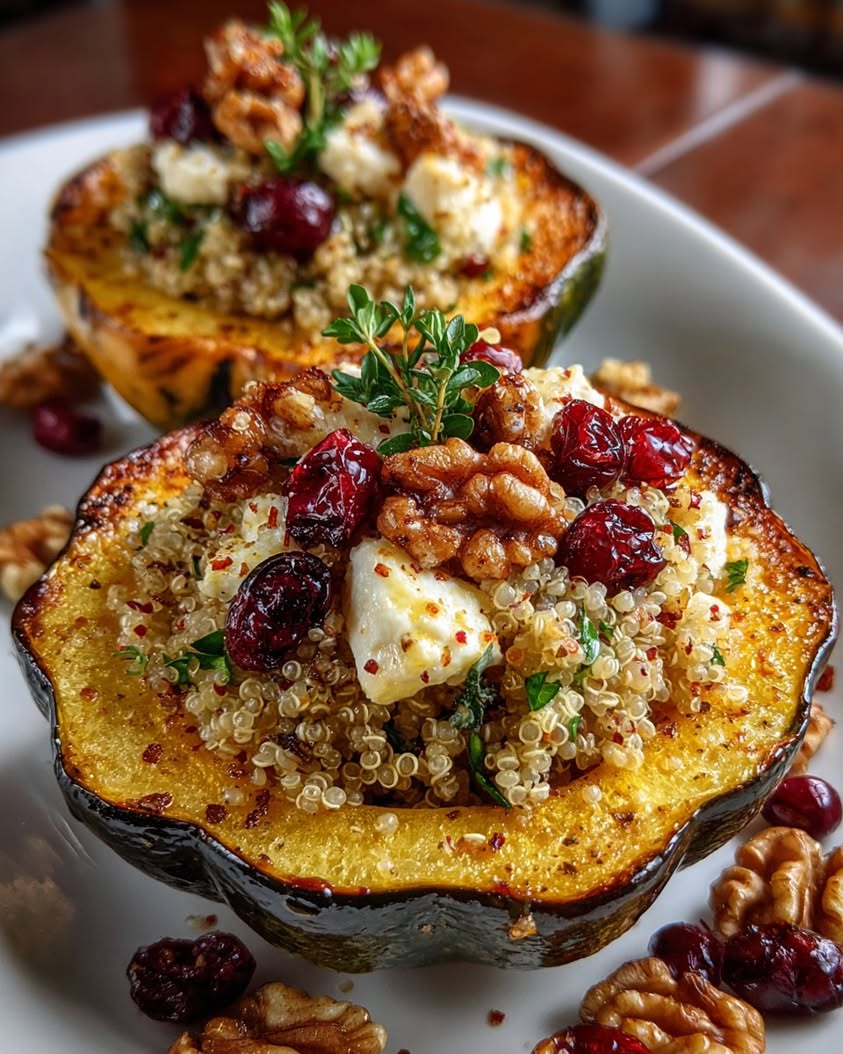
Creamy Brie & Quinoa Stuffed Acorn Squash: The Ultimate Cozy Fall Dinner
This recipe for Creamy Brie & quinoa stuffed acorn squash with sweet cranberries, toasted walnuts, and a spicy hot honey drizzle perfectly captures the essence of autumn in a single, stunning dish. Imagine tender, roasted acorn squash halves filled with a savory quinoa mixture, melted brie cheese, and pops of tart cranberry, all finished with a sweet and spicy honey drizzle. Consequently, it creates a vegetarian dinner that feels both elegant and deeply comforting, making it an ideal centerpiece for any fall table.
Furthermore, the beauty of this stuffed squash lies in its harmonious balance of flavors and textures. The natural sweetness of the roasted squash provides a perfect base for the nutty quinoa and rich, creamy brie. Meanwhile, the toasted walnuts add a delightful crunch that contrasts beautifully with the soft filling. Finally, the hot honey drizzle ties everything together with a kick of heat that cuts through the richness, ensuring every bite is a complex and satisfying experience.
This dish is more than just a meal; it is a celebration of seasonal produce. Acorn squash, a hallmark of fall harvests, becomes a natural, edible bowl for a hearty and nutritious filling. As a result, this vegetarian dinner is not only visually impressive but also incredibly wholesome. It is the kind of comfort food that warms you from the inside out, perfect for a cozy weeknight or a festive holiday gathering.
Quick Recipe Highlights
- Flavor Profile: This dish offers a masterful balance of savory, sweet, and spicy notes. The creamy, mild brie and earthy quinoa are beautifully offset by the tart pop of cranberries. Ultimately, the spicy hot honey drizzle adds a final layer of complexity that makes the flavor profile truly unforgettable.
- Texture: You will experience a wonderful interplay of textures in every bite. The roasted squash becomes tender and almost custardy, while the quinoa filling is fluffy and substantial. Additionally, the toasted walnuts provide a satisfying crunch, creating a delightful mouthfeel that keeps you coming back for more.
- Aroma: As this stuffed squash roasts, your kitchen will fill with the warm, inviting scent of caramelizing squash and toasted nuts. The aroma of melting brie and herbs mingles with a hint of spice from the honey, creating a fragrance that promises a delicious fall dinner.
- Visual Appeal: The presentation is naturally stunning with the vibrant orange squash halves acting as edible bowls. The filling is speckled with red cranberries, white brie, and brown walnuts, making it a beautiful, colorful centerpiece for any table. Therefore, it is perfect for impressing guests with minimal effort.
- Skill Level Needed: This is an accessible recipe for cooks of all levels. Basic techniques like roasting, sautéing, and making a simple dressing are all that is required. Consequently, even beginner cooks can achieve a restaurant-quality vegetarian dinner with confidence.
- Special Equipment: You will need a baking sheet, a small saucepan for the quinoa, and a skillet for toasting walnuts. A sharp knife and a sturdy spoon for scooping out the squash seeds are also essential. Otherwise, no fancy equipment is necessary for this cozy fall recipe.
Recipe Overview
- Difficulty Level: We classify this stuffed acorn squash as easy because it relies on fundamental cooking methods. The steps are straightforward: roast the squash, cook the quinoa, and assemble. While there are multiple components, they can be managed simultaneously. Consequently, even a novice cook can successfully create this impressive dish without stress.
- Category: This recipe fits perfectly into several meal categories. It serves as a complete and satisfying main course for a vegetarian dinner. Alternatively, you can present it as a substantial side dish alongside a roast chicken or turkey. It is also an excellent option for a hearty lunch or a festive holiday meal.
- Cuisine: This dish draws inspiration from modern American farm-to-table cuisine, which emphasizes seasonal, whole ingredients. The use of squash, cranberries, and walnuts is a nod to traditional New England fall harvests. Meanwhile, the hot honey drizzle adds a contemporary twist that has become a popular flavor profile across the United States.
- Cost: Preparing this stuffed squash is relatively budget-friendly. Acorn squash and quinoa are inexpensive staples, especially in the autumn. Brie and walnuts may represent a slightly higher cost, but they are used in moderation. Overall, you can create a restaurant-quality meal for four at a fraction of the price.
- Season: This recipe is quintessentially autumnal. Acorn squash is at its peak from early fall through winter, offering the best flavor and texture. The warm spices and hearty ingredients are perfectly suited for cooler weather. Therefore, it is the ultimate fall dinner to celebrate the harvest season.
- Occasion: This versatile dish is suitable for many occasions. It is cozy enough for a simple family weeknight meal yet elegant enough for a Thanksgiving side dish or a dinner party centerpiece. Its vibrant colors and beautiful presentation make it ideal for any festive autumn gathering.
Why You’ll Love This Stuffed Acorn Squash
First and foremost, the taste and texture appeal of this dish is undeniable. Each component is carefully chosen to create a symphony in your mouth. You get the creamy, luxurious melt of the brie cheese against the fluffy, nutty quinoa. Then, a burst of tartness from the cranberries cuts through the richness. Finally, the crunchy walnuts and the spicy-sweet honey drizzle create a finish that is simply irresistible. This stuffed squash is the epitome of comfort food with a sophisticated edge.
Additionally, the convenience and preparation benefits are significant. While the dish looks impressive, the process is wonderfully straightforward. You can roast the squash and cook the quinoa simultaneously to save time. Furthermore, the filling can be prepared in advance, making final assembly a breeze on a busy evening. This recipe proves that a beautiful, wholesome vegetarian dinner does not have to be complicated or time-consuming.
From a nutritional standpoint, this meal is a powerhouse. Acorn squash is loaded with vitamins A and C, along with valuable fiber. Quinoa provides a complete protein, making it an excellent base for a meatless meal. Walnuts contribute healthy omega-3 fats, and cranberries are packed with antioxidants. Consequently, this stuffed acorn squash is a meal that truly nourishes your body while delighting your taste buds.
Moreover, the social and entertaining value of this dish is immense. Serving individual roasted squash halves feels special and personalized for your guests. The beautiful colors and aromatic hot honey drizzle make it a show-stopping centerpiece. It is a conversation starter that demonstrates care and culinary skill. Therefore, it is perfect for holiday dinners, festive gatherings, or any time you want to make a weeknight meal feel extraordinary.
Finally, the cost-effectiveness and accessibility of the ingredients make this a repeat-worthy recipe. Seasonal squash is affordable, and quinoa is a budget-friendly pantry staple. You can easily find all the components at a standard grocery store. This fall dinner allows you to create a restaurant-quality experience at home without a restaurant price tag. It is an accessible, approachable, and utterly delicious way to enjoy the best flavors of the season.
Historical Background and Cultural Significance
The practice of stuffing vegetables has ancient roots across many cultures, dating back to a time when maximizing food resources was essential. In Europe, cooks often hollowed out robust vegetables like cabbages, peppers, and squash to create edible containers for grains, meats, and other fillings. This method was both practical and economical. The concept of stuffed squash specifically found a natural home in the Americas, where indigenous peoples cultivated and cooked with a vast variety of squash for thousands of years. They utilized the entire plant, and stuffing was a logical way to create a hearty, self-contained meal.
Acorn squash, in particular, holds significance in North American culinary traditions. As a winter squash, it was a vital food source for Native American tribes and early colonists because of its long storage life through harsh winters. The combination of squash with other native ingredients like cranberries and walnuts is a classic reflection of New England’s fall harvest. This trinity of flavors represents a true taste of American terroir. Consequently, modern dishes like this stuffed acorn squash are a direct evolution of these historical foodways, celebrating indigenous ingredients in a contemporary context.
The evolution of this specific recipe mirrors broader food trends. The incorporation of quinoa, a seed native to South America, reflects its rise to superfood status in the late 20th and early 21st centuries. Similarly, the addition of brie cheese introduces a French influence, showcasing the globalization of modern cuisine. The final modern twist, the hot honey drizzle, is a relatively recent phenomenon popularized by trendy pizzerias and chefs, illustrating how classic dishes are constantly being reinvented. This recipe is a beautiful mosaic of old and new world ingredients and techniques.
Regional variations of stuffed vegetables are endless. In the Mediterranean, bell peppers are stuffed with rice and herbs. In the Middle East, zucchini is filled with spiced meat and rice. This vegetarian dinner version with acorn squash is a distinctly North American interpretation, emphasizing plant-based proteins and seasonal produce. Its popularity has grown alongside the increasing demand for meatless meals that do not sacrifice flavor or satisfaction. It stands as a testament to how traditional cooking methods can be adapted to suit modern dietary preferences and nutritional awareness.
Ingredient Deep Dive
Acorn Squash is a winter squash known for its distinctive ribbed, dark green skin and sweet, yellow-orange flesh. Historically, it was a staple for Native Americans, who would roast or boil it and often preserve it for winter use. Nutritionally, it is an excellent source of dietary fiber, vitamin C, potassium, and magnesium, and it’s particularly rich in vitamin A for eye and skin health. When selecting, look for squash that is heavy for its size with a deep green color and no soft spots. Store it in a cool, dark place; it can last for several weeks. For a substitution, delicata or sweet dumpling squash work beautifully.
Quinoa, often mistaken for a grain, is actually a seed native to the Andes region of South America, where it was sacred to the Inca civilization. It provides a complete protein, meaning it contains all nine essential amino acids, making it a superstar for vegetarian dinners. It is also high in fiber, iron, and magnesium. Look for pre-rinsed quinoa to avoid a bitter saponin coating. Store it in an airtight container in a cool, pantry. You can substitute it with other cooked grains like farro, brown rice, or couscous if desired.
Brie Cheese is a soft, creamy, surface-ripened cheese that originated in the French region of Île-de-France. Its cultural significance is immense, often considered a king among cheeses. It adds a luxurious, rich, and slightly nutty flavor that melts beautifully into the quinoa filling. From a nutritional standpoint, brie provides protein and calcium but is also higher in fat. Select a wheel that feels soft to the touch and avoid any with an ammonia smell. For a dairy-free version, a creamy vegan cheese or even a dollop of cashew cream can be used.
Dried Cranberries bring a necessary tart and sweet element to balance the dish. Cranberries are one of only three major fruits native to North America. They are packed with antioxidants and vitamin C. The drying process concentrates their sweetness. Look for unsweetened or fruit-juice-sweetened varieties to control added sugar. You can substitute them with dried cherries, chopped apricots, or even raisins for a different flavor profile. They should be stored in a sealed container in your pantry.
Walnuts are among the oldest tree foods, cultivated for thousands of years. Toasting them is a critical step that deepens their flavor and adds a essential crunchy texture to the stuffed squash. They are an excellent source of omega-3 fatty acids, which are important for brain health. Store walnuts in an airtight container in the refrigerator or freezer to prevent them from becoming rancid. Pecans or sliced almonds make fine substitutes if needed.
The Hot Honey Drizzle is the modern finishing touch that elevates the entire dish. Honey has been used as a sweetener for millennia, while the infusion of chili peppers is a trend with roots in American Southern and Korean cuisines. This combination creates a complex sweet-heat flavor that enhances every other component. You can adjust the spice level to your preference. For a substitute, mix maple syrup with a pinch of cayenne pepper or red pepper flakes.
Common Mistakes to Avoid
- Underseasoning the Squash Cavity: Many cooks forget to season the inside of the squash after scooping out the seeds. Simply brushing with oil is not enough. You must generously salt and pepper the flesh. Otherwise, the squash itself will taste bland compared to the flavorful filling.
- Overcooking the Quinoa: Quinoa can quickly become mushy if you use too much water or cook it for too long. Follow the package instructions precisely, and fluff it with a fork immediately after cooking. Consequently, you will achieve a light, fluffy texture that holds up well in the stuffing.
- Skipping the Walnut Toasting Step: Raw walnuts can have a slightly bitter flavor and lack the aromatic depth of toasted nuts. Taking the few extra minutes to toast them in a dry skillet is non-negotiable. This step unlocks their nutty essence and provides a superior crunchy texture.
- Using Cold Brie: If you cube the brie straight from the refrigerator, it will be difficult to handle and may not melt evenly. Let the cheese sit at room temperature for 15-20 minutes before dicing. Therefore, it will incorporate more easily into the quinoa and melt into creamy pockets.
- Neglecting the Hot Honey: The hot honey drizzle is not just a garnish; it is a integral component that balances sweetness, acidity, and heat. Do not skip it or serve it on the side. Drizzling it over the hot squash just before serving allows the flavors to meld perfectly.
- Under-roasting the Squash: If the squash is not tender enough before stuffing, it will not become perfectly soft during the final bake. Test for doneness by piercing the flesh easily with a fork. A perfectly roasted squash should be tender and caramelized at the edges.
- Overpacking the Filling: While you want a generous amount of stuffing, pressing it down too firmly can make it dense. Gently spoon the quinoa mixture into the cavity, allowing it to remain light and fluffy. This also helps the heat circulate for even cooking.
- Not Letting it Rest: Pulling the stuffed acorn squash from the oven and serving it immediately can lead to a too-hot, unstable dish. Let it rest for 5-10 minutes. This allows the filling to set slightly, making it easier to serve and eat.
Essential Techniques
Roasting the Squash Halves is the foundational technique for this recipe. Proper roasting caramelizes the natural sugars in the squash, deepening its flavor and creating a tender, edible bowl. To master this, ensure you cut the squash evenly so they cook at the same rate. Place them cut-side down on the baking sheet initially; this uses the hot surface to steam and soften the flesh. A common pitfall is under-oiling, which can lead to drying instead of roasting. The visual cue for success is easily pierced flesh with a fork and beautifully browned, caramelized edges.
Toasting Walnuts is a simple but transformative step. Toasting nuts in a dry skillet over medium heat drives off moisture and toasts their natural oils, resulting in a deeper, richer flavor and a crisper texture. The key is constant agitation; shake the pan or stir frequently to prevent burning. The common pitfall is walking away, as they can go from perfectly toasted to burnt in seconds. You will know they are done when they become fragrant and take on a slightly darker color. Listen for a gentle sizzling sound as their oils are released.
Fluffing Quinoa is critical for texture. After cooking, quinoa can be sticky and clumpy if left to sit. Using a fork to fluff it separates the grains, allowing steam to escape and preventing a gummy consistency. Do not use a spoon, as it can mash the delicate seeds. The common mistake is skipping this step or doing it too late. Fluff it immediately after the resting period, while it is still hot. Properly fluffed quinoa will be light, separate, and ready to absorb the other flavors in the filling.
Creating the Hot Honey Drizzle involves infusing flavor without burning the honey. Gently warming the honey with the red pepper flakes allows the capsaicin from the peppers to dissolve into the sweet liquid, creating a harmonious blend. Do not boil the mixture, as high heat can degrade the honey’s delicate flavor. The common pitfall is using high heat, which can make the honey taste bitter. The technique is simply to warm it gently until it is thin enough to drizzle and the pepper flakes have had time to steep.
Pro Tips for Perfect Stuffed Acorn Squash
First, score the flesh of the squash in a crosshatch pattern before roasting. This simple step allows the oil and seasonings to penetrate deeper and helps the squash cook more evenly. Consequently, you will get more flavorful and consistently tender squash halves every time.
Secondly, let your cooked quinoa cool slightly before mixing in the brie. If the quinoa is piping hot, the brie will melt completely upon contact and become greasy. A slightly cooler temperature allows the brie to stay in distinct, creamy pockets that melt perfectly in the final bake.
Third, add a splash of vegetable broth to the quinoa filling if it seems dry. The quinoa will continue to absorb moisture in the oven. Therefore, a little extra liquid ensures your stuffing remains moist and fluffy rather than drying out during the second bake.
Fourth, use a muffin tin to keep the squash halves upright during roasting. This is a brilliant hack for preventing them from tipping over and spilling their filling. It guarantees even roasting and a beautiful presentation for your vegetarian dinner.
Fifth, customize the heat level in your hot honey drizzle by choosing different chili flakes. For a smoky heat, use chipotle powder. For a brighter, fruitier heat, try crushed Aleppo peppers. This allows you to tailor the final flavor profile to your personal preference.
Finally, garnish with fresh herbs just before serving. A sprinkle of fresh thyme leaves or chopped parsley adds a pop of color and a burst of fresh aroma. This elevates the dish visually and adds another layer of flavor to your comfort food masterpiece.
Variations and Adaptations
For regional variations, consider a Mediterranean twist by swapping the quinoa for couscous and using feta cheese, Kalamata olives, and fresh oregano instead of brie and cranberries. A Southwestern version could feature black beans, corn, Monterey Jack cheese, and a drizzle of cilantro-lime crema. These adaptations show the incredible versatility of the stuffed squash concept, allowing you to travel the world from your dinner table.
Seasonal adaptations are simple and rewarding. In the winter, incorporate roasted chestnuts and sage. For a spring version, use peas, asparagus, lemon zest, and goat cheese. Summer might inspire a filling with fresh corn, cherry tomatoes, and basil. This approach keeps the recipe exciting and relevant all year round, making it more than just a fall dinner.
Dietary modifications are easily accommodated. For a vegan version, omit the brie and use a creamy vegan cheese or a tahini-lemon sauce, and ensure your sweetener is maple syrup instead of honey. To make it gluten-free, simply confirm your quinoa is certified gluten-free, as it naturally is. For a nut-free option, substitute toasted pumpkin seeds (pepitas) for the walnuts.
Flavor variations can completely transform the profile. Add cooked, crumbled sausage for a meat-lover’s version. Incorporate curry powder into the quinoa for an Indian-inspired dish. Stir in sautéed mushrooms and leeks for a deeper, earthier flavor. The basic template of a roasted squash bowl is a perfect canvas for your culinary creativity.
Texture modifications can cater to different preferences. For a creamier filling, stir in a few tablespoons of ricotta or goat cheese along with the brie. For more crunch, add toasted pecans or sunflower seeds in addition to the walnuts. You can also use a different grain, like freekeh or wild rice, which offers a chewier texture than quinoa.
Presentation alternatives offer fun ways to serve. Instead of individual halves, you can cube the roasted squash and mix it directly into the quinoa filling, then bake it in a casserole dish. For a more rustic family-style presentation, scoop the filling into a large, shallow bowl and arrange the roasted squash halves around it. This flexibility makes the dish suitable for any dining scenario.
Serving and Presentation Guide
Plating techniques for this stuffed acorn squash are key to its visual impact. Serve each roasted half on a warm plate to keep the dish hot. Angle the squash slightly so the beautiful filling is visible. Use a wide, shallow bowl or plate to prevent the squash from rolling and to contain the hot honey drizzle. This thoughtful plating makes the meal feel restaurant-quality.
Garnishing ideas extend beyond the initial ingredients. A final sprinkle of flaky sea salt, such as Maldon, over the drizzled honey enhances both flavor and texture. Fresh microgreens or arugula add a touch of green and a peppery note. A few extra whole cranberries or walnut halves placed artfully around the plate can elevate the presentation significantly.
Traditional accompaniments for a hearty vegetarian dinner like this include a simple green salad with a sharp vinaigrette to cut through the richness. A crusty loaf of whole-grain bread is perfect for soaking up any remaining filling and honey. For a more substantial spread, consider a lentil soup or a roasted root vegetable medley.
Modern serving suggestions might include turning this into a grain bowl base. Flake the roasted squash flesh and mix it with the leftover filling for next-day lunches. You can also deconstruct the dish for a buffet, allowing guests to build their own plates with squash, quinoa filling, and toppings. This approach works wonderfully for larger, more casual gatherings.
Temperature considerations are crucial for the best eating experience. The dish must be served hot so the brie remains melted and the honey is fluid. Warm your serving plates beforehand to maintain the temperature longer. Conversely, if you are serving a crisp salad alongside, the contrast between the hot squash and cool greens is particularly delightful.
Portion control is naturally built into this recipe, as each person receives one squash half. For larger appetites or as a main course for a holiday meal, one half is typically sufficient. For a lighter lunch or as part of a multi-course dinner, you could serve a half-squatch per person. The recipe scales easily to accommodate different serving needs.
Wine and Beverage Pairing
Wine pairings for this dish should complement its sweet, savory, and spicy notes. A slightly off-dry white wine like a German Riesling or a Gewürztraminer is an excellent choice. Their inherent sweetness mirrors the squash and cranberries, while their acidity cuts through the creamy brie. For red wine lovers, a light-bodied, low-tannin Pinot Noir works beautifully without overpowering the dish. The fruitiness of the Pinot Noir harmonizes with the fall flavors, and its earthy undertones echo the quinoa and walnuts.
Non-alcoholic alternatives can be just as sophisticated. A sparkling apple cider provides effervescence and autumnal flavor that pairs naturally. For a warmer option, a ginger-turmeric tea complements the spicy notes of the hot honey drizzle beautifully. Alternatively, a tart cranberry spritzer made with club soda and a splash of cranberry juice mirrors the ingredients in the meal itself, creating a cohesive dining experience.
While not traditional pairings for this dish, coffee and tea can work if served after the meal. A medium-roast coffee with low acidity would not clash with the residual flavors. A cup of spicy chai tea would actually be a lovely post-dinner drink, as its warming spices of cinnamon, cardamom, and clove would resonate with the autumn theme of the stuffed squash.
Temperature considerations for beverages are straightforward. White wines and spritzers should be well-chilled to provide a refreshing contrast to the warm, rich food. Red wines should be served slightly below room temperature. Non-alcoholic hot drinks should be served piping hot to continue the cozy, comforting feeling of the fall dinner.
Serving suggestions for your chosen beverage are simple. Always offer water on the table to cleanse the palate. Pour wine just before serving the food to ensure it is at its peak temperature. For a dinner party, you might consider offering one red and one white wine option to cater to different guest preferences, making the vegetarian dinner feel even more special.
Storage and Shelf Life
Storage methods for leftover stuffed acorn squash are simple but important. Allow the squash to cool completely to room temperature before storing, but do not leave it out for more than two hours. Transfer the leftovers to an airtight container. You can store the squash halves whole or scoop the filling and squash flesh together into a container. This prevents the refrigerator from drying out your delicious comfort food.
Temperature requirements are standard for cooked food. The leftovers must be refrigerated at 40°F (4°C) or below. Do not attempt to store the stuffed squash at room temperature, as the moist, protein-rich filling is a potential breeding ground for bacteria. Proper refrigeration is key to food safety and preserving quality.
Container recommendations include glass containers with tight-sealing lids, which are ideal because they do not absorb odors. You can also use BPA-free plastic containers. If storing the squash halves intact, choose a container large enough to hold them without squashing the filling. For mixed filling and squash, any medium-sized airtight container will suffice.
Signs of spoilage to watch for include an off or sour smell, visible mold growth, or a slimy texture on the squash or filling. If you observe any of these signs, discard the entire portion immediately. Properly stored, your stuffed acorn squash should remain safe to eat for 3-4 days.
Reheating instructions are crucial for restoring texture and flavor. The best method is to use an oven or toaster oven preheated to 350°F (175°C). Place the squash on a baking sheet and warm for 10-15 minutes, or until heated through. This method will keep the squash from becoming mushy. The microwave can be used for speed but may make the texture slightly soggier.
Freezing guidelines are possible but come with a caveat. The quinoa filling freezes quite well for up to 3 months. However, the texture of the roasted squash will become very soft and watery upon thawing. For best results, freeze only the quinoa filling in an airtight container or freezer bag. Thaw in the refrigerator overnight before reheating and serving with freshly roasted squash halves.
Make Ahead Strategies
Your prep timeline can be spread over two days to make dinner assembly effortless. The day before, you can roast the acorn squash halves, allow them to cool completely, and store them in an airtight container in the refrigerator. You can also cook the quinoa and toast the walnuts, storing them separately. This advanced prep turns the final assembly into a simple 10-minute task before baking.
Storage between steps is straightforward. Keep the cooled, roasted squash in a container, layered with parchment paper if stacking. Store the cooked quinoa in a sealed container. Keep the toasted walnuts at room temperature in a zip-top bag or jar. Do not mix the components until you are ready to assemble and bake to maintain the best textures.
The quality impact assessment of make-ahead prep is generally positive. The roasted squash may lose a tiny bit of its firmness but will reheat beautifully. The quinoa actually benefits from resting, as the grains firm up slightly and absorb flavors. The walnuts will stay perfectly crunchy. The only component to prepare fresh is the hot honey drizzle, which takes just minutes.
Assembly tips for pre-prepped components are simple. Take the roasted squash and quinoa out of the refrigerator about 30 minutes before assembling to take the chill off. This helps the dish heat more evenly and quickly in the oven. Then, simply mix the quinoa with the cranberries, walnuts, and cubed brie, stuff the squash, and bake.
Reheating guidelines for a fully assembled, unbaked dish are easy. If you assembled the stuffed squash ahead of time and refrigerated it, you will need to add 5-10 minutes to the baking time. Cover it loosely with foil for the first half of baking to prevent over-browning, then uncover to let the top get crispy.
Fresh element additions are the final touch. Even with all the make-ahead steps, always add the hot honey drizzle fresh, just before serving. You can also garnish with fresh herbs after reheating. This ensures bright, vibrant flavors and aromas that make the pre-prepared dish taste freshly made.
Scaling Instructions
Halving the recipe is straightforward for a smaller meal. Use one medium acorn squash, halved, and simply divide all the other ingredient quantities by two. The roasting and baking times will remain largely the same, but keep a close eye on it as smaller ovens can heat differently. This is perfect for a cozy dinner for two, with minimal leftovers.
Doubling or tripling the recipe is ideal for holiday feasts or large gatherings. Use a very large baking sheet or two standard sheets, and rotate them halfway through cooking for even roasting. You may need to cook the quinoa in two separate batches to avoid overcrowding the pot. When increasing the recipe, taste the filling and adjust seasoning accordingly, as large batches often require a bit more salt and pepper.
Equipment adjustments are necessary when scaling up. For a double batch, ensure you have enough baking sheet space. You might need to use the oven racks in the upper and lower thirds. For a triple batch, consider roasting the squash in consecutive shifts, keeping the first batch warm in a low oven while the second one cooks. A large bowl for mixing the filling is also essential.
Timing modifications are minimal when scaling. The roasting time for the squash may increase slightly if the baking sheets are very crowded, as the steam released can slow the browning process. Allow an extra 5-10 minutes and rely on the fork-tenderness test. The final baking time after stuffing should remain consistent, as the filling is already cooked and just needs heating through.
Storage considerations change with scale. A large batch of leftovers will take longer to cool, which is a food safety concern. Divide a large amount of hot stuffed squash into several smaller, shallow containers before refrigerating. This promotes rapid, even cooling and keeps your vegetarian dinner safe for enjoying later.
Nutritional Deep Dive
The macro breakdown of this stuffed acorn squash offers a well-rounded profile. It provides complex carbohydrates from the squash and quinoa for sustained energy. The dish contains a moderate amount of plant-based protein primarily from the quinoa, with additional protein and fat from the brie and walnuts. The fats are a mix of healthy unsaturated fats from the walnuts and olive oil, along with saturated fats from the cheese. This balance makes it a satisfying and complete meal.
A micronutrient analysis reveals a wealth of vitamins and minerals. Acorn squash is exceptionally high in Vitamin C and a powerhouse of Vitamin A (as beta-carotene), crucial for immune function and vision. Quinoa contributes iron and magnesium, while walnuts provide a notable amount of manganese and copper. The cranberries add antioxidants like proanthocyanidins. Together, these ingredients create a nutrient-dense fall dinner that supports overall health.
The health benefits are extensive. The high fiber content from the squash, quinoa, and walnuts promotes digestive health and helps maintain stable blood sugar levels. The antioxidants combat oxidative stress and inflammation. The complete protein from quinoa supports muscle repair and is especially valuable in a vegetarian dinner. The healthy fats support brain health and help with the absorption of fat-soluble vitamins from the squash.
Dietary considerations are largely positive. This dish is naturally vegetarian and can be easily adapted to be gluten-free and vegan. For those monitoring sodium, you can control the amount of salt added. For individuals watching saturated fat intake, you can reduce the amount of brie or use a lighter cheese. It is a flexible recipe that can align with various health goals.
Portion analysis is inherent in the design, with one squash half constituting a single serving. This provides a visual cue for portion control that is often lost in family-style meals. The portion is substantial enough to be satisfying without being overly caloric, making it a great option for weight management when enjoyed as part of a balanced diet.
Weight management tips related to this dish include appreciating its high volume and fiber content, which promotes feelings of fullness. The balance of protein, fat, and carbs prevents blood sugar spikes that can lead to cravings. To make it even lighter, you can reduce the olive oil by a teaspoon or use a smaller amount of a stronger cheese, like feta, to maintain flavor with less volume.
Dietary Adaptations
For a Gluten-Free version, this recipe is already nearly perfect. The only potential source of gluten could be cross-contamination in the quinoa
Print
Stuffed Acorn Squash with Quinoa, Brie, Cranberries & Toasted Walnuts with Hot Honey Drizzle
Description
A savory and sweet fall dish featuring roasted acorn squash stuffed with fluffy quinoa, creamy brie, tart cranberries, and crunchy walnuts, finished with a spicy honey drizzle.
Ingredients
For the Crust:
- 2 medium acorn squash, halved and seeded
- 1 cup quinoa, rinsed
- 2 cups vegetable broth
- 4 oz brie cheese, cubed
- 1/2 cup dried cranberries
- 1/2 cup walnuts, toasted and chopped
- 2 tbsp olive oil
- 1 tsp salt
- 1/2 tsp black pepper
- 1/4 cup honey
- 1 tsp red pepper flakes
Instructions
1. Prepare the Crust:
- Preheat oven to 400°F. Brush squash halves with olive oil, season with salt and pepper, and roast cut-side down for 25-30 minutes until tender.
- While squash roasts, cook quinoa in vegetable broth according to package instructions. Fluff with a fork and let cool slightly.
- In a bowl, combine cooked quinoa, brie cubes, cranberries, and toasted walnuts. Season with additional salt and pepper if desired.
- Flip roasted squash halves cut-side up. Divide quinoa mixture among squash halves, pressing gently to fill.
- Return to oven for 10 minutes until brie is melted and filling is heated through.
- For the hot honey, warm honey and red pepper flakes in a small saucepan over low heat for 2-3 minutes. Drizzle over stuffed squash before serving.
Notes
You can customize the seasonings to taste.

I’m Shaykee—born in Morocco, seasoned across continents. From airplane galleys to home kitchens, I share the flavors and stories that shaped my journey.