
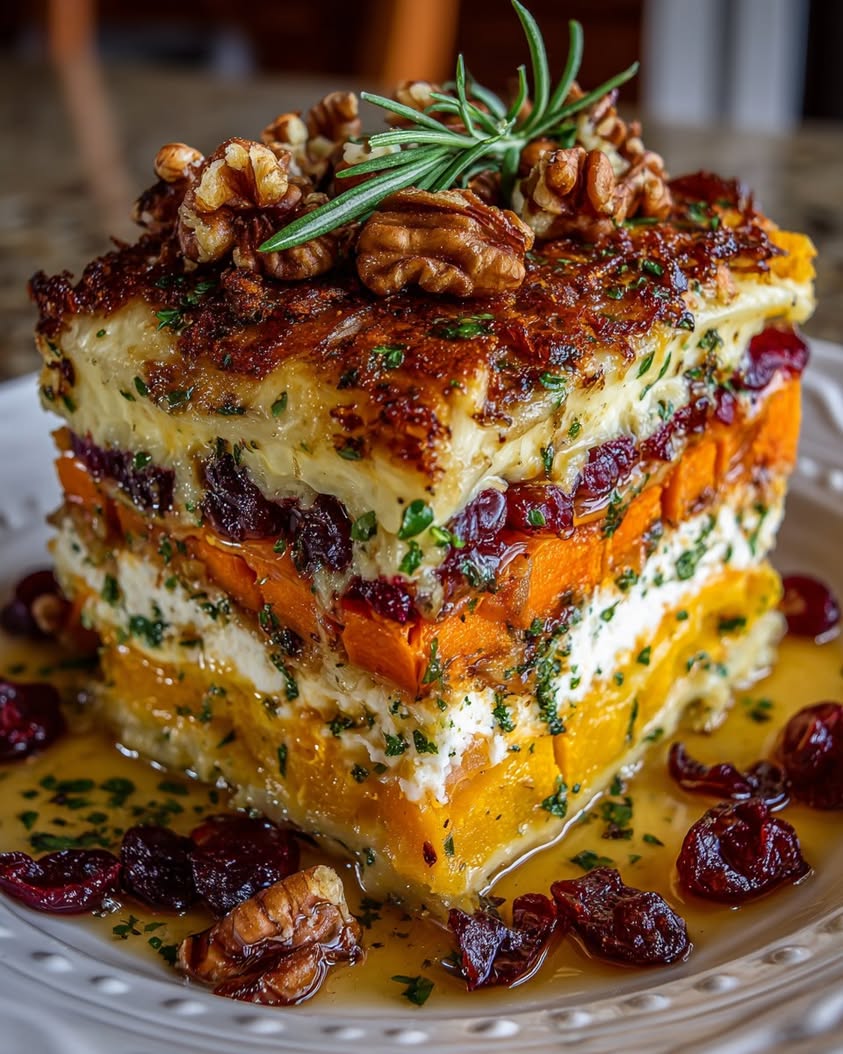
Savory Fall Lasagna Layers: Sweet Potato, Butternut Squash & Carrot with Feta, Walnuts, and a Sweet Cranberry-Honey Glaze
Imagine a dish that captures the very essence of autumn on a plate. This savory fall lasagna layers sweet potato, butternut squash & carrot with feta, walnuts, and a sweet cranberry-honey glaze. It is a stunning vegetarian holiday main dish that promises to be the centerpiece of your table. Consequently, it transforms humble root vegetables into an elegant, layered masterpiece. The aroma alone, with its warm spices and roasting vegetables, will fill your kitchen with an irresistible holiday scent.
This recipe is a celebration of texture and flavor. Each bite offers the creamy softness of roasted vegetables, the satisfying crunch of toasted walnuts, and the delightful tang of crumbled feta. Moreover, the final drizzle of a glossy cranberry-honey glaze adds a burst of sweet-tart complexity that ties everything together beautifully. Ultimately, this dish proves that vegetarian cooking can be deeply satisfying, visually spectacular, and packed with layers of flavor that everyone will adore.
Gathering around the table for a holiday meal is about more than just food. It is about creating memories and sharing something made with care. This savory fall lasagna is designed to inspire that feeling. It is a labor of love that yields impressive results, making it perfect for Thanksgiving, Christmas, or any festive autumn gathering. Therefore, whether you are hosting vegetarians or simply want a vibrant alternative to traditional mains, this recipe delivers on every front.
Quick Recipe Highlights
- Flavor Profile: This dish masterfully balances earthy sweetness from the roasted root vegetables with salty, briny feta and the rich, toasty notes of walnuts. The cranberry-honey glaze introduces a crucial sweet-tart element that brightens the entire plate.
- Texture: Experience a wonderful contrast between the melt-in-your-mouth layers of thinly sliced sweet potato, squash, and carrot and the crunchy walnut topping. The feta adds a pleasant crumbly texture that complements the creamy vegetables perfectly.
- Aroma: As it bakes, your kitchen will fill with the warm, comforting scents of roasting autumn harvest vegetables, fragrant rosemary and thyme, and the caramelized notes of the honey glaze. It is the quintessential smell of the holiday season.
- Visual Appeal: The cross-section reveals stunning, colorful stripes of orange, deep yellow, and bright carrot. Topped with white feta, golden walnuts, and a ruby-red glaze, it is a feast for the eyes before the first bite.
- Skill Level Needed: This recipe requires basic knife skills for slicing vegetables and the patience to layer components neatly. However, clear instructions make it accessible for confident home cooks looking for a rewarding project.
- Special Equipment: A mandoline slicer is highly recommended for achieving uniformly thin vegetable slices that cook evenly. You will also need a good baking dish and parchment paper for easy cleanup.
Recipe Overview
- Difficulty Level: We rate this as an intermediate recipe. The process involves multiple components—preparing the vegetable layers, making the herbed cheese mixture, and crafting the glaze—that require organization. Additionally, achieving perfect, thin vegetable slices is key to the right texture, which demands a bit of care and the right tool.
- Category: This dish firmly sits as a spectacular vegetarian main course. It is substantial enough to be the star of a holiday meal. Furthermore, it can also serve as a luxurious side dish alongside a roast for a larger, meat-inclusive feast.
- Cuisine: While lasagna is Italian in origin, this recipe is a modern, vegetable-forward fusion. It draws inspiration from Mediterranean flavors with the feta and herbs, incorporates classic American holiday ingredients like sweet potato and cranberry, and uses a layered pasta-free technique popular in contemporary health-conscious cooking.
- Cost: The cost is moderate, largely dependent on produce prices. Root vegetables like carrots and sweet potatoes are typically affordable, while butternut squash and fresh herbs may vary. Feta cheese and walnuts are the pricier components, but a little goes a long way in providing big flavor.
- Season: This is the ultimate fall and winter recipe. It features vegetables that are at their peak sweetness and flavor during the autumn harvest. The warm, hearty nature of the dish is ideal for cooler weather and holiday celebrations from October through December.
- Occasion: It is perfect for Thanksgiving, Christmas, Friendsgiving, or a festive Sunday supper. It also makes an impressive dish for a potluck where you want to showcase a beautiful and delicious vegetarian option that will wow a crowd.
Why You’ll Love This Recipe
First and foremost, the taste experience is truly unforgettable. This savory fall lasagna delivers a symphony of flavors in every forkful. The natural sugars in the sweet potato, squash, and carrot caramelize during roasting, creating a deep, earthy sweetness. This base is expertly cut by the salty punch of feta and the sophisticated bitterness of toasted walnuts. Finally, the cranberry-honey glaze adds a pop of fruity acidity that prevents the dish from being too heavy. Consequently, each element plays its part, resulting in a balanced and complex profile that delights the palate.
From a preparation standpoint, this recipe offers immense satisfaction. While it requires some time, the steps are straightforward and therapeutic. Slicing the vegetables, assembling the layers, and watching it transform in the oven is a rewarding process. Moreover, much of the work can be done ahead of time. You can slice the vegetables and prepare the cheese mixture hours in advance, making final assembly before baking a breeze. This makes it an ideal choice for stress-free holiday entertaining where you want to enjoy your own party.
Nutritionally, this dish is a powerhouse. It is packed with vitamins A and C from the orange vegetables, which are essential for immune health—perfect for the colder months. The walnuts contribute healthy omega-3 fats and protein, while the vegetables provide ample dietary fiber. Using the vegetables as the “noodles” also makes this dish naturally gluten-free and lower in carbohydrates than traditional pasta lasagna. Therefore, you can feel good about serving a meal that is as nourishing as it is indulgent.
The social and entertaining value of this lasagna cannot be overstated. It is a guaranteed conversation starter. When you bring this vibrant, layered dish to the table, guests will immediately be intrigued. It demonstrates thoughtfulness and culinary skill, showing vegetarian guests they are specially considered. Furthermore, it holds well for serving, allowing everyone to be served a beautiful portion without last-minute scrambling. It is the kind of dish that makes people ask for the recipe before the meal is even over.
Finally, this recipe is cost-effective and accessible. The primary ingredients are humble root vegetables, which are often some of the most affordable produce items. Even the “splurge” ingredients like feta and walnuts are used judiciously to maximize their impact. You likely already have many of the pantry staples like olive oil, honey, and dried herbs on hand. As a result, you can create a show-stopping centerpiece for your holiday table without breaking the bank, proving that impressive food does not require expensive or exotic components.
Historical Background and Cultural Significance
The concept of layering ingredients is ancient and spans many cultures, but the modern lasagna we know originated in Italy. Traditionally, it involves sheets of pasta, cheese, and a rich meat sauce. This recipe, however, represents a contemporary evolution. It taps into the growing desire for vegetable-centric, gluten-free, and visually creative “main dish” options for holiday tables. The idea of using thinly sliced vegetables as pasta substitutes gained significant traction with the rise of low-carb and paleo diets in the early 2000s. Consequently, this dish is a delicious product of modern culinary innovation meeting timeless comfort food appeal.
Each component carries its own cultural weight. The sweet potato has a profound history in the Americas, being a staple for Indigenous peoples long before colonization. It later became a cornerstone of Southern U.S. and Thanksgiving cuisine. Butternut squash, native to the Americas, is another autumn icon. The carrot has a long Eurasian history but is now a global kitchen staple. Feta cheese roots the dish in the Eastern Mediterranean, while walnuts have been prized from Persia to California for millennia. This savory fall lasagna is a true melting pot of ingredients with deep, diverse histories.
The evolution of this specific recipe follows the trend of “deconstructed” or “reimagined” classic dishes. Chefs and home cooks began experimenting with vegetable lasagnas using zucchini, eggplant, and root vegetables to cater to dietary needs and add nutritional value. The addition of a fruit-based glaze, like the cranberry-honey here, is a nod to classic holiday pairings—think cranberry sauce with turkey. Therefore, this dish did not appear from nowhere; it is a thoughtful amalgamation of culinary trends, seasonal produce logic, and the timeless appeal of a baked, layered casserole.
Regional variations of this concept are endless. In the Mediterranean, one might find a similar layered dish with eggplant, zucchini, and halloumi cheese. In a more Nordic-inspired version, parsnips and rutabaga could replace the sweet potato and squash, with a lingonberry glaze. The beauty of the formula is its adaptability. The core technique—thinly slicing starchy vegetables, layering them with cheese and herbs, and baking until tender—can be a canvas for any season’s harvest. This particular combination, however, with its warm colors and festive flavors, has cemented itself as a modern classic for American autumn holidays.
Ingredient Deep Dive
Let us start with the star: sweet potato. This vibrant tuber is native to tropical Americas and was domesticated over 5,000 years ago. It traveled the globe via European explorers and is now a vital food source worldwide. Nutritionally, it is famous for its high beta-carotene content, which the body converts to vitamin A. It also provides vitamin C, manganese, and fiber. When selecting, choose firm potatoes with smooth, unblemished skin. Avoid any with soft spots or signs of sprouting. Store them in a cool, dark, well-ventilated place—not the refrigerator, as cold temperatures can alter their texture and flavor.
Butternut squash, another autumn hero, is a type of winter squash. Its sweet, nutty flesh becomes incredibly creamy when cooked. It is rich in vitamins A and C, potassium, and magnesium. A good squash should feel heavy for its size and have a hard, matte rind with a uniformly beige color. The stem should be intact and dry. You can store whole squash in a cool, dark place for months. Once cut, wrap the unused portion tightly and refrigerate for up to five days. For this recipe, peeling and seeding are necessary steps to access the perfect flesh for slicing.
Carrots add sweetness and a bright orange hue. Originally purple and yellow in Central Asia, the orange carrot was developed in the Netherlands. They are packed with beta-carotene, antioxidants, and fiber. Look for firm, smooth carrots without cracks or excessive branching. If buying with tops, ensure the greens are vibrant, not wilted. Store them in the crisper drawer of your refrigerator in a plastic bag. For the thin slices required here, try to select carrots that are uniform in width to make your mandoline work easier and more consistent.
Feta cheese brings the essential salty, tangy element. Traditionally, authentic Greek feta is made from at least 70% sheep’s milk, sometimes blended with goat’s milk. This gives it a distinctive crumbly texture and sharp flavor. It is a good source of calcium and protein. For the best flavor and texture, buy feta in a block stored in brine. Pre-crumbled feta often contains anti-caking agents that can affect its melt and texture. If you need a substitute, a firm ricotta salata or even a salty cotija could work, though the flavor profile will shift.
The walnuts provide crucial crunch and richness. Walnuts are among the oldest tree foods, cultivated for thousands of years. They are uniquely high in alpha-linolenic acid, a plant-based omega-3 fat. Always buy walnuts from a source with high turnover, as their high fat content makes them prone to rancidity. For the best flavor, toast them lightly before using. This simple step deepens their nutty taste and improves texture. Store unused walnuts in an airtight container in the refrigerator or freezer to maintain freshness.
Finally, the cranberry-honey glaze is the flavor catalyst. Cranberries, native to North America, were used by Indigenous peoples for food, medicine, and dye. Their intense tartness is a perfect counterpoint to rich dishes. Honey, one of humanity’s first sweeteners, adds floral notes and viscosity. Using fresh or frozen cranberries is ideal for a vibrant, homemade glaze. Avoid canned cranberry sauce, as its texture and sweetness level are wrong for this application. The glaze can be made ahead and gently reheated, making it a simple yet impactful component that elevates the entire dish.
Common Mistakes to Avoid
- Skipping the Mandoline: Hand-slicing vegetables rarely yields the consistent, paper-thin slices needed. Uneven slices lead to some pieces being undercooked and crunchy while others turn to mush. A mandoline ensures even cooking and beautiful, distinct layers.
- Not Salting the Vegetable Layers: Vegetables need seasoning at every stage. Forgetting to lightly salt each layer as you assemble will result in a bland final product. The salt draws out moisture and seasons the vegetables from within.
- Using Wet Vegetables: If you wash your sliced vegetables, you must pat them extremely dry with towels. Excess water will steam in the dish, making the lasagna soggy instead of allowing the layers to caramelize and set firmly.
- Overcrowding the Baking Dish: It is tempting to pack in more layers, but vegetables need space to release steam and cook properly. Follow the recommended number of layers. Overcrowding leads to a watery, steamed texture rather than a defined, baked one.
- Neglecting to Toast the Walnuts: Raw walnuts can taste bitter and have a soft, sometimes rubbery texture. Taking five minutes to toast them in a dry pan or oven awakens their oils, deepens their flavor, and gives them the perfect crunchy finish.
- Adding the Glaze Too Early: The cranberry-honey glaze should be a finishing touch. If added before baking, the sugars will burn. If added immediately after baking, it will sink in and lose its glossy appeal. Let the lasagna rest for 10-15 minutes before drizzling.
- Underseasoning the Feta Mixture: The herbed feta layer is a primary seasoning agent. Do not be shy with the fresh herbs like rosemary and thyme. They infuse the entire dish with aromatic flavor as it bakes.
- Not Letting it Rest: Cutting into the lasagna straight from the oven is a recipe for collapse. The layers need time to set as they cool slightly. This resting period allows the starches to firm up, ensuring you get clean, beautiful slices.
Essential Techniques
Mandoline Slicing: This is the most critical technique for success. A mandoline creates uniformly thin slices that cook evenly and stack neatly. Always use the safety guard to protect your fingers. Position the vegetable firmly and use a consistent, smooth motion. For safety, consider wearing a cut-resistant glove. The goal is slices thin enough to be pliable but not so thin they disintegrate—about 1/8-inch thick is perfect. If you do not have a mandoline, a very sharp chef’s knife and great patience are required.
Layering for Structure: Proper layering ensures each bite has all the components and the final dish holds its shape. Start with a light layer of the herbed feta mixture to prevent sticking. Then, create single, slightly overlapping layers of each vegetable. Lightly season each vegetable layer with salt and pepper. Spread a thin, even layer of the feta mixture over the vegetables. The key is even, moderate distribution. Do not glob too much in one spot, or it will not cook through evenly.
Roasting vs. Baking the Vegetables: In this recipe, the vegetables are not pre-roasted; they bake from raw in the dish. This allows their natural juices to mingle and steam them tender while the top caramelizes. The success of this method hinges entirely on the thinness of the slices. If your slices are too thick, they will remain hard. The covered baking time steams them, and the final uncovered time allows for browning and concentration of flavors.
Making a Reduction Glaze: The cranberry-honey glaze is a simple reduction. Combine cranberries, honey, and a little water or orange juice in a saucepan. As it simmers, the cranberries burst, the liquid reduces, and the natural pectin from the berries thickens the mixture into a syrupy glaze. The visual cue for doneness is when the liquid has thickened enough to coat the back of a spoon and leaves a clear trail when you run your finger through it.
Pro Tips for Perfect Savory Fall Lasagna
First, invest in a good-quality mandoline slicer. It is the single tool that will make this recipe enjoyable and successful. Look for one with adjustable thickness settings and a stable base.
Second, take the time to pat your sliced vegetables completely dry with clean kitchen towels or paper towels. Removing surface moisture is the secret to avoiding a watery final dish.
Third, do not skip toasting the walnuts. Spread them on a baking sheet and toast in a 350°F oven for 8-10 minutes until fragrant. This enhances their flavor and crunch exponentially.
Fourth, use fresh herbs for the feta mixture whenever possible. The aromatic oils in fresh rosemary and thyme are far superior to dried in this application and will perfume the entire lasagna.
Fifth, let the assembled lasagna sit at room temperature for 10-15 minutes before baking. This allows the salt to begin drawing moisture from the vegetables, which helps them start to break down for tenderness.
Sixth, use the “fork tender” test. To check for doneness, insert a fork into the center of the lasagna. It should slide into the vegetable layers with no resistance. If it meets crunch, it needs more time.
Seventh, allow the baked lasagna to rest for a full 15 minutes before slicing and adding the glaze. This resting period is non-negotiable for clean, structural slices that hold their shape on the plate.
Eighth, add the glaze just before serving. Drizzle it over the whole dish or over individual plated portions for the most beautiful, glossy presentation and the perfect balance of sweet and tart.
Variations and Adaptations
For regional variations, consider a Mediterranean twist by swapping the sweet potato for eggplant and the feta for a mixture of ricotta and mozzarella. A French-inspired version could use layers of potato, leek, and Gruyère cheese. The basic formula is wonderfully adaptable to local ingredients and flavor profiles.
Seasonal adaptations are easy. In winter, use parsnips and celery root. For a spring version, try thin layers of potato, asparagus, and zucchini with a lemon-herb cheese and a pea puree drizzle. Summer might bring a tomato, zucchini, and bell pepper version with goat cheese.
Dietary modifications are straightforward. For a vegan adaptation, replace the feta with a firm, crumbled tofu marinated in lemon juice and salt, or use a commercial vegan feta. The honey in the glaze can be substituted with maple syrup or agave nectar.
Flavor variations can personalize the dish. Add a layer of sautéed mushrooms or spinach between the vegetable layers for an earthy depth. Incorporate warm spices like nutmeg or a pinch of cayenne into the feta mixture for a different kind of warmth.
Texture modifications could include adding a layer of cooked lentils or quinoa mixed into the cheese layer for extra heartiness and protein. Alternatively, sprinkle panko breadcrumbs mixed with Parmesan on top for the final 10 minutes of baking for an added crispy topping.
Presentation alternatives include baking the lasagna in individual ramekins for a personalized touch. You could also deconstruct it by roasting the vegetable slices separately, then plating them stacked with the feta and walnuts scattered around, finishing with the glaze as a sauce.
Serving and Presentation Guide
Plating this lasagna is part of the enjoyment. Use a sharp, thin-bladed knife to cut clean portions. A pie server or small spatula helps lift each piece out intact. Place the slice slightly off-center on a warm, white or neutral-colored plate to let the colors pop. Wipe any drips from the plate edge for a clean look.
Garnishing adds the final touch. Beyond the glaze, consider a few extra crumbles of feta, a sprinkle of the toasted walnuts, and a tiny sprig of fresh rosemary or thyme. A few microgreens or arugula leaves add a fresh, green contrast and a slight peppery note.
For traditional accompaniments, serve it with a simple, bright salad to cut the richness. A mixed green salad with a lemony vinaigrette or a shaved fennel and apple salad works beautifully. A side of garlicky sautéed greens like kale or Swiss chard also complements the flavors.
Modern serving suggestions might include a dollop of garlic-infused yogurt or tzatziki on the side. For a heartier meal, pair it with a warm, crusty loaf of sourdough bread and high-quality olive oil for dipping. It also pairs wonderfully with a warm lentil salad.
Temperature is key. Serve the lasagna warm, not piping hot. This allows the flavors to be more discernible and the structure to be firm. If serving buffet-style, keep it covered with foil in a warm oven until ready to serve to maintain its perfect temperature.
Portion control is simple given its richness. An average serving is one of the eight slices. For a larger crowd with more side dishes, you can cut it into twelve smaller, square portions. It is a substantial dish, so a little goes a long way in terms of satisfaction.
Wine and Beverage Pairing
Choosing the right wine enhances this complex dish. A medium-bodied white wine with good acidity is an excellent choice. Consider an Oregon Pinot Gris or an Alsatian Riesling. These wines have the acidity to cut through the richness and complement the sweet vegetables and tangy feta without overpowering them. A French Rosé from Provence, with its dry, crisp character, is another surprising and delightful pairing.
For red wine lovers, opt for a lighter, low-tannin red. A Beaujolais Villages or a Pinot Noir from California or Oregon works beautifully. The fruit-forward, earthy notes in these reds mirror the autumnal flavors in the lasagna. Avoid heavy, high-tannin reds like Cabernet Sauvignon, as they can clash with the sweetness of the vegetables and the tang of the feta.
Non-alcoholic alternatives should offer refreshment and balance. Sparkling water with a twist of orange or a dash of cranberry juice mimics the glaze’s flavors. A tart cherry or pomegranate spritzer provides a festive feel. For a warmer option, a gently spiced apple cider or a herbal tea like rosemary-infused honey tea complements the dish’s seasonal notes.
Temperature considerations are standard: serve white wines and rosés well-chilled, around 45-50°F. Serve red wines slightly cooler than room temperature, around 55-60°F, to keep their fruit flavors bright. Non-alcoholic spritzers should be cold, while warm cider should be served hot but not boiling.
Serving suggestions include offering both a white and a red wine option to cater to different preferences. Place carafes of water and non-alcoholic options on the table for easy access. Always ensure guests have a clean glass for water alongside their beverage of choice to cleanse the palate between bites.
Storage and Shelf Life
Proper storage is essential for leftovers. Once cooled completely to room temperature, cover the baking dish tightly with plastic wrap or aluminum foil. Alternatively, transfer individual portions to airtight containers. Refrigerate for up to 4 days. The flavors often meld and improve after a day, making excellent leftovers.
Reheating requires care to restore texture. The best method is to reheat individual portions in a covered oven-safe dish at 325°F until warmed through, about 15-20 minutes. You can also use a microwave, but cover the portion with a damp paper towel to add steam and prevent drying out. Reheat in short intervals to avoid making the vegetables rubbery.
Freezing is possible but with caveats. The texture of the previously cooked vegetables will soften further upon thawing and reheating. If you must freeze, do so before adding the walnut topping and glaze. Wrap the entire cooled lasagna or portions tightly in plastic wrap and then foil. Freeze for up to 2 months. Thaw overnight in the refrigerator before reheating in the oven. Add fresh toasted walnuts and the glaze after reheating.
Signs of spoilage are typical. Discard the lasagna if you notice any off odors, such as sourness or fermentation. Visible mold, of course, means it must be thrown out. If the texture becomes unpleasantly slimy or excessively watery beyond the normal juiciness of the vegetables, it is best to err on the side of caution and not consume it.
Make Ahead Strategies
A detailed prep timeline can turn this into a stress-free holiday dish. Two days ahead, toast the walnuts and store them at room temperature in an airtight container. One day ahead, prepare the cranberry-honey glaze and refrigerate it. Also, slice all the vegetables using the mandoline. Store them in separate airtight containers or zip-top bags with a paper towel to absorb moisture in the refrigerator.
On the day of serving, you can assemble the entire lasagna in the morning. Cover it tightly with plastic wrap and refrigerate. Remove it from the refrigerator about 30-45 minutes before you plan to bake it to take the chill off. This helps it bake more evenly. Then, bake as directed, adding a few extra minutes to the covered baking time if the center is still cold from the fridge.
The quality impact of make-ahead steps is minimal if done correctly. Pre-sliced vegetables may release a little more liquid, so pat them dry again before assembling. The glaze may thicken in the fridge; simply warm it gently on the stove or in the microwave, adding a teaspoon of water if needed to return it to a drizzling consistency.
For assembly tips when making ahead, build the lasagna directly in the dish you will bake it in. Layering in the cold dish is fine. If you are transporting it, ensure the assembled dish is securely covered and kept level. Add the walnut topping just before baking, as they can become soggy if added ahead and refrigerated.
Scaling Instructions
Halving the recipe is simple for a smaller household. Use an 8×8 inch baking dish. Precisely halve all ingredient quantities. The baking time may be slightly reduced—start checking for doneness at the 50-minute mark (covered) and the 15-minute mark (uncovered). The rest of the technique remains identical.
Doubling or tripling for a crowd requires planning. Double or triple all ingredients. Use two or three separate 9×13 inch dishes rather than one enormous pan, as heat distribution and cooking time become unreliable in a very deep dish. You may need to bake them in sequence or on multiple oven racks, rotating the dishes halfway through baking for even cooking.
Equipment adjustments are necessary when scaling. Ensure you have a large enough bowl for mixing the doubled or tripled feta mixture. Your mandoline will get a workout, so have a large container ready for the mountain of sliced vegetables. You will also need more kitchen towels for drying all those slices.
Timing modifications are minimal when using multiple standard-sized dishes. The bake time per dish should remain roughly the same. The main increase in time will be in the prep work—slicing and assembling multiple lasagnas. Enlist help for assembly to make the process faster and more enjoyable.
Nutritional Deep Dive
This dish offers a favorable macro breakdown. It is relatively high in complex carbohydrates from the vegetables, providing sustained energy. The fats come primarily from the olive oil, feta cheese, and walnuts, offering a mix of monounsaturated and polyunsaturated fats, including omega-3s. The protein content is moderate, sourced from the feta and walnuts. It is a balanced plate that provides satiety without excessive calories from any single macronutrient source.
The micronutrient profile is impressive. The orange vegetables are bursting with beta-carotene (vitamin A), essential for vision and immune function. They also provide vitamin C, potassium, and manganese. Walnuts contribute vitamin E, magnesium, and antioxidants. Feta cheese adds calcium and B vitamins. Together, they create a nutrient-dense meal that supports overall health, particularly during the stress-prone holiday season.
Specific health benefits include support for eye health, reduced inflammation from the omega-3s in walnuts, and improved gut health from the high fiber content. The combination of fiber, healthy fats, and protein also helps regulate blood sugar levels, preventing the sharp spikes and crashes associated with more refined holiday dishes.
For dietary considerations, this dish is naturally gluten-free and vegetarian. It can be adapted to be vegan and dairy-free as mentioned. It is not suitable for a strict keto diet due to the carbohydrate content from the root vegetables, but it aligns well with Mediterranean, vegetarian, and general healthy eating patterns.
Dietary Adaptations
For a gluten-free version, this recipe is already perfect as-is, containing no flour or pasta. Just ensure all packaged ingredients like pre-crumbled feta or dried herbs are certified gluten-free if cross-contamination is a concern.
Creating a dairy-free or vegan version involves replacing the feta. Use a block of firm, extra-firm, or super-firm tofu. Crumble it and marinate it in lemon juice, nutritional yeast, and salt to mimic the tangy, salty flavor. For binding, a tablespoon of tahini or vegan mayonnaise can help the mixture hold. The glaze can be made with maple syrup instead of honey.
A low-carb or keto adaptation would require substituting the high-carb root vegetables. Use layers of zucchini, yellow squash, and eggplant instead. The carb count will drop significantly. The feta and walnuts are already keto-friendly. Be mindful of the honey in the glaze; replace it with a keto-friendly sweetener like monk fruit or erythritol that can be cooked into a syrup.
For a Paleo adaptation, omit the dairy. Use the vegan feta substitute mentioned above, ensuring any binders are Paleo-compliant. The walnuts and glaze (with honey) are Paleo-friendly. The vegetables are all within Paleo guidelines as well.
Troubleshooting Guide
If your lasagna is watery, the most common cause is vegetables that were not dried thoroughly or slices that were too thick, preventing proper evaporation. Next time, pat slices dry and ensure they are mandoline-thin. For salvage, you can carefully pour off excess liquid from a corner of the dish after baking. Let it rest longer before slicing to allow absorption.
If the vegetables are still crunchy after baking, the slices were likely too thick, or the dish was not covered for the initial steaming phase. Cover it tightly with foil and return it to the oven for another 15-20 minutes, checking frequently. Ensure the foil seal is tight to trap steam.
If the top is burning before the center is cooked, your oven temperature may be too high, or the rack is too high. Next time, bake on a center rack and verify oven temperature with a thermometer. If it is happening now, tent the entire dish with foil to protect the top while the center finishes cooking.
If the feta mixture is dry and not creamy, you may have used a very dry, pre-crumbled feta or not mixed in enough olive oil. The mixture should be crumbly but hold together when pressed. To fix it mid-assembly, drizzle a little more olive oil over the layer and use your fingers to gently distribute it.
If the glaze is too thick, thin it with a teaspoon of warm water, orange juice, or even a splash of balsamic vinegar at a time until it reaches a drizzling consistency. If it is too thin, return it to a simmer and cook for a few more minutes to reduce further.
Frequently Asked Questions
Can I use pre-cut butternut squash from the store? Yes, you can. However, pre-cut cubes will not work. You need pre-cut butternut squash “planks” or “spears” that you can then slice thinly on your mandoline. The shape and thickness of pre-cut cubes make them impossible to layer properly.
What can I use instead of a mandoline? A very sharp chef’s knife and a steady hand are the only real substitute. Aim for slices no thicker than 1/8-inch. A food processor with a slicing disc may work for the carrots, but it often struggles with the irregular shape of sweet potato and squash.
Can I make this with no cheese? Absolutely. For a dairy-free version, omit the feta mixture. You can add more herbs and toasted nuts between the layers for flavor. Consider a layer of a vegan “cheese” spread made from blended cashews or a drizzle of vegan pesto for richness.
How do I know when it’s done baking? The top should be nicely browned at the edges. The most reliable test is to insert a sharp knife or fork into the center. It should slide through all the vegetable layers with no resistance, indicating they are fully tender.
Can I use dried herbs instead of fresh? You can, but the flavor will be less vibrant. Use one-third the amount of dried herbs (so 1 teaspoon dried for 1 tablespoon fresh). Rub
Print
Layered Sweet Potato, Butternut Squash & Carrot Lasagna with Feta, Walnuts, and Cranberry-Honey Glaze
Description
A vibrant, savory-sweet vegetarian lasagna featuring layers of roasted root vegetables, tangy feta, crunchy walnuts, and a glossy cranberry-honey glaze.
Ingredients
For the Crust:
- 2 medium sweet potatoes, peeled and thinly sliced
- 1 small butternut squash, peeled and thinly sliced
- 3 large carrots, peeled and thinly sliced
- 1 cup crumbled feta cheese
- 1/2 cup chopped walnuts
- 1 cup fresh cranberries
- 1/4 cup honey
- 2 tablespoons olive oil
- 1 teaspoon dried thyme
- 1 teaspoon garlic powder
- Salt and black pepper to taste
- 1/2 cup vegetable broth
- 9 no-boil lasagna noodles
- 1/4 cup grated Parmesan cheese
Instructions
1. Prepare the Crust:
- Preheat oven to 375°F (190°C). Toss sweet potato, butternut squash, and carrot slices with olive oil, thyme, garlic powder, salt, and pepper. Roast on a baking sheet for 20 minutes until tender.
- In a saucepan, combine cranberries, honey, and vegetable broth. Simmer over medium heat for 10 minutes until cranberries burst and sauce thickens. Set aside.
- In a 9×13 inch baking dish, spread a thin layer of cranberry-honey glaze. Layer 3 lasagna noodles, followed by half the roasted vegetables, half the feta, and half the walnuts. Repeat layers.
- Top with final 3 noodles, remaining glaze, and sprinkle with Parmesan cheese. Cover with foil and bake for 25 minutes. Uncover and bake 10 more minutes until golden. Let rest 10 minutes before serving.
Notes
You can customize the seasonings to taste.

I’m Shaykee—born in Morocco, seasoned across continents. From airplane galleys to home kitchens, I share the flavors and stories that shaped my journey.