
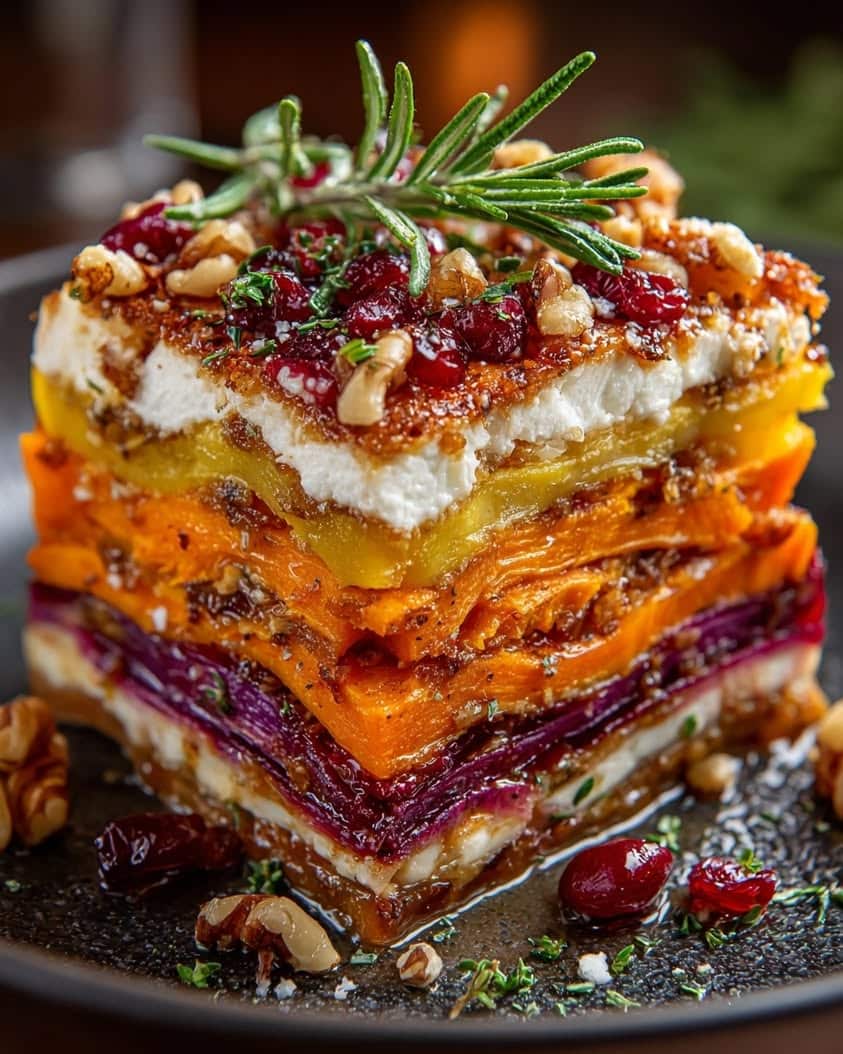
Layered Sweet Potato, Pumpkin, Carrot Lasagna with Feta, Walnuts & Cranberry-Honey Glaze: A Stunning Savory-Sweet Holiday Bake
Imagine a dish that captures the entire essence of the holiday season in one breathtaking bake. This layered sweet potato, pumpkin, and carrot lasagna with feta, walnuts, and a cranberry-honey glaze does exactly that. It is a vegetarian showstopper designed to become the centerpiece of your festive table. Moreover, it masterfully balances earthy roasted vegetables with creamy layers, salty feta, crunchy walnuts, and a glossy sweet-tart glaze. Consequently, every forkful delivers a complex symphony of textures and flavors that will delight your guests.
This recipe moves far beyond traditional pasta-based lasagna. Instead, it utilizes thinly sliced root vegetables as the foundational layers. The result is a naturally gluten-free casserole that feels both comforting and elegantly sophisticated. The process of roasting the vegetables first concentrates their natural sugars, which creates a deeply flavorful base. Then, the assembly allows these components to meld into a cohesive, sliceable masterpiece. Ultimately, this dish proves that holiday sides can be both visually stunning and incredibly delicious.
Furthermore, this layered sweet potato, pumpkin, and carrot lasagna is surprisingly versatile. It shines as the main event for a vegetarian Thanksgiving or Christmas dinner. Alternatively, it serves as an unforgettable side dish alongside a roast turkey or ham. The make-ahead nature of the components reduces day-of stress, allowing you to enjoy the celebration. In short, this recipe is a celebration of seasonal produce, transformed into a dish that is as beautiful as it is tasty.
Quick Recipe Highlights
- Flavor Profile: This dish offers a perfect balance of savory and sweet. Earthy roasted sweet potato, pumpkin, and carrot layers meet the salty tang of feta cheese. Finally, a vibrant cranberry-honey glaze adds a pop of sweet acidity that ties everything together beautifully.
- Texture: Expect a delightful contrast in every bite. Silky, tender vegetable layers provide a creamy base, while toasted walnuts contribute a crucial crunchy element. The feta offers little pockets of soft, crumbly saltiness that enhance the overall mouthfeel.
- Aroma: As it bakes, your kitchen will fill with the warm, comforting scents of roasting root vegetables and aromatic herbs. The cranberry glaze simmers with a festive, tangy-sweet fragrance that signals the holidays have arrived.
- Visual Appeal: This lasagna is a feast for the eyes. Vibrant orange and yellow vegetable stripes are visible between creamy layers, all topped with white feta, golden walnuts, and a deep ruby-red glaze. It presents spectacularly on any table.
- Skill Level Needed: This is an intermediate recipe due to the multiple components and assembly required. However, clear instructions make it achievable for confident home cooks. Basic knife skills for slicing and a bit of patience for layering are the main requirements.
- Special Equipment: A mandoline slicer is highly recommended for achieving uniformly thin vegetable slices, which ensures even cooking. You will also need a good baking dish, parchment paper, and a medium saucepan for the glaze.
Recipe Overview
- Difficulty Level: We classify this as an intermediate recipe. The challenge lies not in complex techniques, but in managing several components simultaneously. You must roast vegetables, prepare a creamy layer, make a glaze, and assemble with care. Therefore, organization and mise en place are key to a smooth process.
- Category: This dish brilliantly straddles multiple categories. It is a stellar vegetarian main course, a spectacular holiday side dish, and a impressive potluck contribution. Its richness and complexity allow it to stand confidently alongside traditional centerpiece meats.
- Cuisine: This recipe is a modern fusion creation with global influences. It draws inspiration from the Italian concept of layered baked dishes, utilizes Mediterranean ingredients like feta, and celebrates classic North American fall and winter produce. The result is a contemporary, plant-forward celebration dish.
- Cost: The cost is moderate, largely dependent on seasonal produce pricing. Sweet potatoes, carrots, and pumpkin are typically affordable in autumn. Feta cheese, walnuts, and fresh cranberries represent the main splurges. Overall, it delivers restaurant-quality presentation at a fraction of the price.
- Season: This is unequivocally a fall and winter recipe. It features the quintessential produce of the harvest season and the warm, comforting flavors ideal for holiday gatherings. The colors alone evoke the feeling of an autumn table.
- Occasion: Perfect for Thanksgiving, Christmas, Hanukkah, or any festive winter potluck. It also makes a wonderful Sunday family dinner or a special dish for entertaining vegetarian friends. Its elegance suits any occasion where you want to impress.
Why You’ll Love This Recipe
First and foremost, the taste and texture appeal of this lasagna is extraordinary. Each layer contributes something unique: the sweet, caramelized depth of the roasted vegetables, the rich and creamy binding element, the sharp saltiness of feta, the nutty crunch of walnuts, and the bright, sticky finish of the glaze. Consequently, every single bite is a complex and satisfying experience. The harmony of savory and sweet is meticulously balanced, ensuring it complements rather than overpowers the rest of your meal. This is not a shy side dish; it is a confident celebration of flavor that will have everyone asking for the recipe.
From a convenience perspective, this recipe offers significant preparation benefits. Crucially, many components can be made ahead of time. You can roast the vegetable slices a day in advance and store them layered between parchment paper in the fridge. Similarly, the cranberry-honey glaze can be cooked and refrigerated, then gently reheated before serving. This strategic prep breaks the work into manageable stages, transforming what seems like a complex project into a streamlined assembly on the day you plan to bake and serve. Therefore, you can enjoy your own party without being stuck in the kitchen.
Nutritionally, this dish is packed with advantages. Sweet potatoes, pumpkin, and carrots are powerhouse sources of beta-carotene, which your body converts to vitamin A for eye and immune health. They also provide substantial dietary fiber, which aids digestion and promotes satiety. Using the vegetables as the “pasta” layers automatically makes the dish gluten-free and lower in refined carbohydrates compared to traditional lasagna. The walnuts add healthy fats and plant-based protein, while the feta offers a calcium boost. Ultimately, you are serving a centerpiece that is as nourishing as it is indulgent.
The social and entertaining value of this layered sweet potato and carrot lasagna cannot be overstated. It is a guaranteed conversation starter. When you bring this stunning, colorful bake to the table, you will see eyes light up. It signals effort, care, and culinary creativity. For vegetarian guests, it provides a substantial and celebratory main course they might rarely experience at large gatherings. It fosters a sense of occasion and makes any meal feel more special. In essence, it is food that creates memories and brings people together.
Finally, consider its cost-effectiveness and accessibility. While it looks and tastes luxurious, the core ingredients are humble root vegetables. Even out of season, sweet potatoes and carrots are widely available and affordable. You control the quality, opting for organic produce or a specific brand of feta as your budget allows. Compared to ordering a pre-made specialty dish or dining out, creating this at home is remarkably economical. Furthermore, it yields generous portions, often with delicious leftovers that reheat beautifully. This recipe delivers maximum impact for a reasonable investment.
Historical Background and Cultural Significance
The origin story of this dish is a modern tale of culinary fusion. Traditional lasagna, with its roots in Italian cuisine, has been adapted globally in countless ways. The concept of using vegetables instead of pasta sheets, however, is a relatively recent innovation driven by dietary trends like gluten-free and low-carb eating. This particular recipe takes that concept and infuses it with the iconic flavors of a North American holiday table. It is less about historical tradition and more about a contemporary celebration of seasonal abundance, merging technique with locally cherished ingredients.
Its cultural importance lies in its role as a modern holiday staple for diverse tables. As more people adopt vegetarian, flexitarian, or gluten-free lifestyles, the traditional holiday menu evolves. This lasagna provides a centerpiece option that feels equally festive and substantial as a roast turkey or ham. It represents inclusivity on the dinner table. Culturally, it taps into the deep-seated autumn tradition of harvesting and enjoying root vegetables, squash, and cranberries—ingredients that have been part of fall feasts in the Americas for centuries.
The evolution of the recipe follows the broader trend of vegetable-forward cooking. Chefs and home cooks alike have been experimenting with vegetable “noodles” and layers for years, from zucchini to eggplant. Using sturdy, sweet root vegetables like sweet potato and carrot is a natural progression, as they hold their shape well during baking. The addition of the cranberry glaze is a direct nod to the cranberry sauce that is ubiquitous on Thanksgiving tables. This evolution showcases how classic flavors can be reimagined in new, structurally creative forms.
Regarding regional variations, the core concept is wonderfully adaptable. In the Southern United States, one might add a touch of bourbon to the glaze or use pecans instead of walnuts. A Mediterranean variation could incorporate spinach layers and use goat cheese or ricotta salata in place of feta. In regions where pumpkin isn’t favored, butternut squash makes an excellent substitute. Some might add a layer of sautéed kale or mushrooms for an earthy depth. This versatility ensures the recipe can be personalized to reflect local tastes and ingredient availability, while maintaining its stunning layered presentation.
Ingredient Deep Dive
Sweet potatoes are a cornerstone of this dish, prized for their vibrant color and natural sweetness. Cultivated for thousands of years in Central and South America, they were a staple long before European contact. Nutritionally, they are exceptionally high in beta-carotene, vitamin C, and manganese. When selecting sweet potatoes, look for firm specimens with smooth, unblemished skin. Avoid any with soft spots or signs of sprouting. Store them in a cool, dark, well-ventilated place—not the refrigerator, as cold temperatures can alter their texture and flavor. For a substitution, garnet yams work perfectly, offering a similar texture and flavor profile.
Fresh pumpkin provides a subtle, earthy sweetness and beautiful color. While pumpkins are culturally synonymous with Halloween, culinary varieties like sugar pumpkins are ideal for cooking. They are rich in fiber, potassium, and antioxidants. Choose a small sugar pumpkin that feels heavy for its size, indicating dense, moist flesh. You can substitute with canned pure pumpkin puree in a pinch, but you will miss the textural element of the sliced layers. Alternatively, butternut squash is an excellent and widely available stand-in, offering a comparable sweetness and ability to hold its shape when sliced and roasted.
Carrots add a necessary earthy note and brilliant color to the vegetable layers. Historically domesticated in Persia, carrots were originally purple or yellow; the orange variety was developed much later. They are packed with beta-carotene, vitamin K1, and potassium. For this recipe, choose large, thick carrots for easier, uniform slicing. Avoid pre-cut “baby” carrots, as they are too small and often lack flavor. Carrots store well in the refrigerator’s crisper drawer. If you cannot find good fresh carrots, parsnips would be a fantastic substitution, adding a slightly spicier, nuttier dimension to the dish.
Feta cheese brings the essential salty, tangy counterpoint to the sweet vegetables. This brined cheese has a history dating back to ancient Greece and is a protected designation of origin (PDO) product. It provides calcium and protein while being lower in fat than many hard cheeses. For the best flavor, seek out authentic Greek feta made from sheep’s milk or a sheep/goat blend. Avoid pre-crumbled feta, as it often contains anti-caking agents and can be dry. Store feta in its brine in the refrigerator. For a dairy-free version, a firm, salted tofu crumbled with a bit of lemon juice can mimic the texture and tang.
Walnuts contribute crucial crunch and a rich, slightly bitter nuttiness. They are one of the oldest tree foods, harvested for thousands of years across Asia and Europe. Walnuts are an excellent source of omega-3 fatty acids and antioxidants. Always toast walnuts before using them to unlock their full flavor and maximize crispness. Store walnuts in an airtight container in the freezer to prevent their oils from turning rancid. If you have a nut allergy, toasted pumpkin seeds (pepitas) make a wonderful, colorful, and crunchy alternative that still fits the autumn theme perfectly.
The cranberry-honey glaze is the sweet, tart, glossy finish that defines the dish. Cranberries are native to North America and have been used by Indigenous peoples for food, medicine, and dye for centuries. They are renowned for their high vitamin C content and proanthocyanidins, which support urinary tract health. Use fresh or frozen cranberries, not dried. Honey, a natural sweetener with ancient roots, adds floral notes and helps create a syrupy consistency. Maple syrup can be used as a vegan substitute for honey. The glaze can be made ahead and reheated, and any leftovers are fantastic on pancakes or yogurt.
Common Mistakes to Avoid
- Slicing Vegetables Too Thick: This is the most common error. Thick slices will not become tender enough during baking, resulting in a crunchy, undercooked lasagna. Always aim for 1/8-inch thick slices using a mandoline for consistency. Uniformity is key to even cooking.
- Skipping the Vegetable Roasting Step: Roasting the slices before assembly is non-negotiable. This step cooks out excess moisture, concentrates flavor, and partially tenderizes the vegetables. If you layer raw slices, they will release too much water, creating a soggy, watery final dish.
- Not Toasting the Walnuts: Raw walnuts can taste somewhat bitter and lack the deep, nutty aroma and crunch of toasted ones. Take the few extra minutes to toast them in a dry skillet or oven until fragrant. This simple step elevates their contribution significantly.
- Overloading the Creamy Layer: The layer between the vegetables should be thin and cohesive, not thick and gloppy. Using too much can make the lasagna heavy and overwhelm the delicate flavor of the roasted vegetables. A light, even spread is the goal.
- Using Watery Fresh Cheese: If you substitute the feta with a fresh mozzarella or ricotta without draining it, you introduce excess moisture. Always drain fresh cheeses thoroughly or stick with drier, crumbly cheeses like feta or goat cheese for the best texture.
- Under-seasoning the Layers: Vegetables need salt to shine. Do not be shy about seasoning each layer of roasted vegetables as you assemble the lasagna. Taste as you go. Remember, the feta adds saltiness, but the vegetable layers themselves need seasoning.
- Baking Without a Cover Initially: Starting the bake covered with foil is essential. It traps steam, which gently finishes cooking the vegetables and melds the layers without over-browning the top. Removing the foil too early can lead to dry edges.
- Adding the Glaze Too Early: The cranberry-honey glaze should be added after the lasagna is fully baked and has rested. Adding it before or during baking can cause it to burn or sink in, losing its vibrant color and sticky texture.
- Skipping the Resting Time: Cutting into the lasagna immediately after it comes out of the oven will cause it to fall apart. Let it rest for at least 15-20 minutes. This allows the layers to set, ensuring you get clean, beautiful slices.
- Not Greasing the Baking Dish: Even with parchment paper, greasing the dish is an insurance policy. It ensures the lasagna releases easily and your beautiful slices come out intact for plating.
Essential Techniques
Mandoline Slicing: Mastering the mandoline is crucial for this recipe. This tool creates perfectly uniform, paper-thin slices that cook evenly and stack neatly. Always use the safety guard to protect your fingers. Position the vegetable at a slight angle and use a firm, consistent pressure. If you do not have a mandoline, a very sharp chef’s knife and patience are required. The goal is slices so thin they are slightly pliable, not rigid chips.
Roasting for Flavor Concentration: Roasting the vegetable slices is not merely a cooking step; it is a flavor-building technique. The high, dry heat of the oven caramelizes the natural sugars in the sweet potato, pumpkin, and carrot. This process intensifies their sweetness and adds complex roasted notes. Spread the slices in a single layer on parchment-lined sheets to ensure they roast, not steam. They are done when pliable and slightly dried at the edges, not browned or crisp.
Building Stable Layers: Proper assembly technique ensures the lasagna holds together when sliced. Start with a thin base layer of your creamy mixture to prevent sticking. Then, shingle the vegetable slices in slightly overlapping rows, like roof tiles. This creates a stable, interconnected layer. Press down gently after adding each vegetable layer to eliminate air pockets. Repeat the pattern consistently for structural integrity and visual appeal.
Creating the Glaze: The cranberry-honey glaze requires a gentle simmer to break down the berries and thicken the liquid. Do not boil rapidly, as this can make the honey taste bitter and cause the cranberries to burst violently. Instead, cook over medium-low heat until the berries pop and the mixture reduces to a syrupy consistency that coats the back of a spoon. It will thicken further as it cools.
Pro Tips for Perfect Layered Vegetable Lasagna
First, pat the roasted vegetable slices dry with a paper towel after they come out of the oven. This removes any excess surface moisture released during roasting, which is the enemy of a crisp top layer and firm structure.
Second, let all components cool to room temperature before assembly. Layering hot vegetables with the creamy mixture can cause it to break or become greasy. Cool assembly is the secret to clean layers.
Third, use the parchment paper as a sling. Line your baking dish with parchment so it overhangs on two sides. After baking and resting, you can use these overhangs to lift the entire lasagna out for easier, cleaner slicing on a cutting board.
Fourth, season every single layer. Lightly sprinkle salt, pepper, and any dried herbs you are using on each set of vegetable slices as you build. Seasoning in stages creates depth, rather than just seasoning the top.
Fifth, reserve some of your best-looking toasted walnut halves for the final garnish. Sprinkle the chopped walnuts into the layers, but save a few elegant halves to place on top after adding the glaze for a professional finish.
Sixth, if the top seems to be browning too quickly during the final uncovered bake, loosely tent it with foil again. You want a golden top, not a burnt one.
Seventh, warm the glaze slightly before drizzling over the rested lasagna. A warm glaze will flow beautifully and soak in just a tiny bit, while a cold glaze might just sit on top.
Eighth, use a sharp, thin-bladed knife to cut servings. Clean the knife between cuts for the prettiest presentation. A serrated knife can tear the tender vegetable layers.
Variations and Adaptations
For regional variations, consider the ingredients local to your area. In the South, add a splash of bourbon to the cranberry glaze and use toasted pecans. A Southwest twist could include a layer of roasted poblano peppers and use cotija cheese instead of feta. In a Mediterranean version, incorporate layers of sautéed spinach and use a mixture of ricotta and lemon zest for the creamy layer.
Seasonal adaptations are straightforward. In late summer, use zucchini and yellow squash slices alongside the carrots. For a deep winter version, add a layer of caramelized onions or roasted mushrooms for umami depth. If fresh cranberries are unavailable, a high-quality whole-berry cranberry sauce can be reduced with a touch of honey to mimic the glaze.
Dietary modifications are easily accommodated. For a vegan version, use a cashew cream or vegan ricotta for the creamy layer, omit the feta or use a vegan alternative, and use maple syrup instead of honey in the glaze. To make it nut-free, replace walnuts with toasted sunflower seeds or crispy roasted chickpeas. For a richer dish, add a layer of béchamel sauce or incorporate grated Gruyère cheese into the creamy mixture.
Flavor variations can personalize the dish immensely. Add warmth with spices like smoked paprika, nutmeg, or cinnamon to the vegetable seasoning. Fresh herbs like thyme, sage, or rosemary can be finely chopped and sprinkled between layers. For a savory twist, add a layer of cooked lentils or a smear of pesto between the vegetable strata.
Texture modifications can cater to different preferences. For a creamier interior, add an extra layer of your chosen creamy mixture. For more crunch, sprinkle toasted breadcrumbs or panko mixed with herbs over the top before the final bake. To highlight the vegetables even more, simplify the creamy layer to just Greek yogurt or sour cream seasoned with salt and pepper.
Presentation alternatives offer creative freedom. Instead of a large rectangular lasagna, assemble individual portions in small oven-safe dishes or mason jars for a personalized touch. You can also deconstruct the elements: serve a stack of the roasted vegetables with the creamy sauce, crumbled feta, walnuts, and glaze drizzled around the plate like a modern restaurant presentation.
Serving and Presentation Guide
Plating techniques start with using a sharp knife to cut clean portions. Lift each slice carefully with a flat spatula. For individual plates, place the slice slightly off-center. Use a spoon to drizzle a little extra cranberry-honey glaze around the plate in an artistic swoosh before placing the lasagna on top. This adds visual drama and allows guests to drag each bite through more glaze.
Garnishing ideas extend beyond the walnuts and glaze. A few fresh microgreens, such as pea shoots or watercress, add a pop of green and a peppery note. A light sprinkle of flaky sea salt like Maldon on top just before serving enhances all the flavors. For a festive touch, a few fresh whole cranberries or a small sprig of rosemary can be placed beside the slice.
Traditional accompaniments for this holiday bake include all your classic sides. It pairs wonderfully with a simple green salad dressed with a bright vinaigrette to cut the richness. Other excellent partners are garlicky sautéed green beans, roasted Brussels sprouts, or a simple cranberry-orange relish. For a full vegetarian feast, start with a butternut squash soup.
Modern serving suggestions might treat this as a standalone main with simpler sides. Consider serving it with a dollop of garlicky yogurt or tzatziki on the side. A grain like farro or wild rice pilaf can be served underneath the slice to soak up any extra glaze and juices. For a brunch option, top a slice with a poached or fried egg.
Temperature considerations are key. This lasagna is best served warm, not piping hot. The resting time allows the flavors to settle and the structure to firm up. If it has been sitting, a brief 10-minute reheat in a covered dish in a warm oven will bring it back to the perfect serving temperature without drying it out.
Portion control tips are helpful given its richness. A single recipe serving 8 yields generous slices. For a larger buffet with many other substantial dishes, you can easily cut it into 12 smaller, more moderate portions. Remember, guests will likely want to try a bit of everything, so a slightly smaller piece ensures they can enjoy it without waste.
Wine and Beverage Pairing
Wine pairings should complement the dish’s sweet, savory, and earthy notes. An off-dry Riesling or Gewürztraminer is a classic and excellent choice. Their slight sweetness mirrors the roasted vegetables and cranberry glaze, while their acidity cuts through the richness. For red wine lovers, a light-bodied, low-tannin red like a Pinot Noir or Gamay (Beaujolais) works beautifully. Their red fruit flavors harmonize with the cranberry, and they will not overpower the vegetables. Avoid heavily oaked Chardonnays or bold, tannic reds like Cabernet Sauvignon, which can clash with the sweetness.
Non-alcoholic alternatives can be just as thoughtful. A sparkling apple cider provides festive bubbles and apple notes that pair naturally with fall flavors. A ginger beer or spicy ginger ale offers a zesty contrast that cleanses the palate. For a more sophisticated option, try a cranberry and rosemary spritzer made with muddled rosemary, cranberry juice, and club soda. Herbal teas, like a warm cinnamon-orange or mint tea, served after the meal, can be a lovely, comforting finish.
Coffee and tea pairings post-meal should be considered. After enjoying this rich dish, a medium-roast coffee with low acidity is a good choice. Alternatively, a black tea like Earl Grey, with its citrusy bergamot notes, can be refreshing. For an herbal option, a rooibos tea, which is naturally sweet and nutty, echoes the flavors in the lasagna without caffeine.
Temperature considerations for beverages are straightforward. White wines and sparkling ciders should be served well-chilled. Red wines should be served slightly cooler than room temperature, around 60-65°F, to keep them fresh. Non-alcoholic spritzers are best over ice, while teas and coffee should be served hot to provide a warming contrast to the meal.
Serving suggestions include offering a choice. Set up a small beverage station with a bottle of the recommended white and red wine, a carafe of the non-alcoholic spritzer, and a thermos of hot water with assorted teas. This allows guests to select what suits their taste and complements the complex flavors of your layered sweet potato and carrot lasagna.
Storage and Shelf Life
Storage methods for leftovers are simple but important. Allow the lasagna to cool completely to room temperature. Do not leave it out for more than two hours. Cover the baking dish tightly with plastic wrap or aluminum foil, or transfer individual portions to airtight containers. Store in the refrigerator for up to 4 days. The flavors often meld and improve on the second day.
Temperature requirements are strictly refrigerator-cold at 40°F or below. This dish contains dairy and cooked vegetables, which are perishable. Never store it at room temperature for extended periods. If you are transporting it to an event, keep it in a cooler with ice packs until it is time to reheat or serve.
Container recommendations depend on the portion. For the whole lasagna, storing it in the original baking dish covered with foil is fine. For individual slices, stack them between layers of parchment paper in an airtight container to prevent them from sticking together. This also makes reheating single servings easier.
Signs of spoilage include an off smell (sour or unpleasant), visible mold growth (often fuzzy spots in white, green, or blue), or a slimy texture on the surface of the vegetables or cheese. If you observe any of these signs, discard the entire portion immediately. Do not taste it.
Reheating instructions are best done in the oven to restore texture. Preheat the oven to 350°F. Place individual slices or the whole dish (covered with foil) in an oven-safe container. Add a tablespoon or two of water or vegetable broth to the bottom of the dish to create steam. Heat for 15-20 minutes for slices, or 25-35 minutes for a whole dish, until warmed through. The microwave can be used in a pinch but will make the top soggy.
Freezing guidelines are possible but with caveats. The assembled, unbaked lasagna freezes best. Wrap the entire dish tightly in plastic wrap and then foil. Freeze for up to 2 months. Thaw overnight in the refrigerator before baking as directed, adding a little extra time if needed. Freezing after baking can cause the vegetable layers to become watery and mushy upon thawing and reheating.
Make Ahead Strategies
Your prep timeline can be spread over two days for maximum ease. On Day 1, focus on the components. Wash, slice, and roast all the vegetables. Let them cool, then store them stacked between sheets of parchment paper in an airtight container in the fridge. Prepare the cranberry-honey glaze and refrigerate it in a jar. Toast and chop the walnuts, storing them at room temperature. Crumble the feta and keep it refrigerated.
Storage between steps is about keeping components separate and dry. The roasted vegetables must be stored properly to prevent sogginess. The parchment paper between layers is crucial. The glaze will thicken when chilled; simply reheat it gently on the stovetop or in the microwave, adding a splash of water if needed to loosen it.
Quality impact assessment is positive. Roasting the vegetables ahead actually improves the dish, as it gives them time to firm up and makes assembly cleaner and easier. The glaze flavors also deepen overnight. The only element best done day-of is the final assembly and baking, though you can assemble the lasagna (without baking) up to 4 hours ahead, cover, and refrigerate.
Assembly tips for make-ahead: If assembling ahead of time, take the chilled roasted vegetables and creamy mixture directly from the fridge. Build the lasagna in your dish, cover tightly, and refrigerate. Let it sit at room temperature for about 30 minutes before baking to take the chill off, which promotes more even cooking.
Reheating guidelines for a fully made-ahead and baked lasagna are as above. For best results, reheat in the oven with a bit of added moisture. The glaze should always be added fresh after reheating, not before storing, to maintain its glossy appearance and fresh flavor.
Fresh element additions are your final touch. Even if you made everything ahead, add the final garnish of toasted walnuts and any fresh herbs after reheating and just before drizzling with the warm glaze. This ensures maximum crunch and vibrant flavor in your finished presentation.
Scaling Instructions
Halving the recipe is straightforward for smaller gatherings. Simply divide all ingredient quantities by two. Use an 8×8 inch baking dish or a similar-sized oval dish. The roasting time for the vegetables may be slightly less due to fewer trays in the oven, so keep a close eye. Baking time for the assembled lasagna may also be reduced by 10-15 minutes; check for bubbling and a golden top as your guide.
Doubling or tripling the recipe is ideal for large potlucks or family reunions. Double or triple all ingredients. You will need to roast the vegetables in multiple batches unless you have several ovens. For assembly, use two separate standard 9×13 dishes, or one very large, deep hotel pan. Baking time will increase; start checking at the 1-hour mark for a doubled recipe in a deeper pan. The center should be hot and the top golden brown.
Equipment adjustments are necessary when scaling. For a double batch, ensure you have enough baking sheets for roasting—you may need to roast in shifts. For a halved recipe, a smaller dish is key to maintaining the proper layer depth. If using a much larger pan, consider using a deeper dish to accommodate the increased volume without spillover.
Timing modifications are mostly relevant for the baking stage. While prep time scales linearly, baking time does not. A doubled recipe in one large pan will take longer because heat must penetrate a greater mass. Use a probe thermometer if unsure; the center should reach at least 165°F. Always rely on visual cues—golden top, bubbling edges—over strict time.
Storage considerations change with scale. A single large lasagna is harder to store than two smaller ones. If making a double batch, consider baking them in two separate dishes. This allows you to serve one and freeze the other unbaked for a future meal, providing excellent future convenience.
Nutritional Deep Dive
The macro breakdown of this dish is favorable for a celebratory meal. It is moderately high in complex carbohydrates from the vegetables, providing sustained energy. The fats come primarily from the walnuts (healthy unsaturated fats) and the feta (saturated fat). The protein content is modest, coming from the cheese, nuts, and to a lesser extent, the vegetables. It is not a low-calorie dish, but the calories are nutrient-dense, coming from whole foods rather than empty sources.
Micronutrient analysis reveals a powerhouse of vitamins and minerals. The orange vegetables are exceptionally high in Vitamin A (as beta-carotene), crucial for vision and immune function. They also provide significant Vitamin C, potassium, and manganese. The walnuts contribute Vitamin E, magnesium, and plant-based omega-3s. Feta cheese adds calcium and phosphorus. Cranberries are famous for their Vitamin C and unique phytonutrients.
Health benefits are numerous. The high fiber content supports digestive health and promotes satiety, helping with portion control. The antioxidants in the colorful vegetables, walnuts, and cranberries combat oxidative stress and inflammation. The healthy fats support heart and brain health. This dish is a testament to how celebratory food can also be genuinely nourishing.
Dietary considerations are mostly positive. It is naturally gluten-free. It is vegetarian but not vegan due to the feta and honey. For those monitoring sodium, you can control the amount of salt added and opt for a lower-sodium feta. The dish contains dairy and tree nuts, which are common allergens, so be mindful when serving guests.
Portion analysis shows that one of eight servings is satisfying as a main course. As a side dish alongside other items, it is quite rich. Listening to your hunger cues is important. The combination of fiber, fat, and protein helps regulate blood sugar response to the carbohydrates, preventing a sharp spike and crash.
Weight management tips include focusing on the portion size. Enjoy a single slice as the center of your plate, surrounded by a large green salad. The fiber will help you feel full. Be mindful of the glaze portion; a little goes a long way. This dish is perfect for special occasions rather than daily eating, fitting into a balanced lifestyle.
Dietary Adaptations

I’m Shaykee—born in Morocco, seasoned across continents. From airplane galleys to home kitchens, I share the flavors and stories that shaped my journey.