
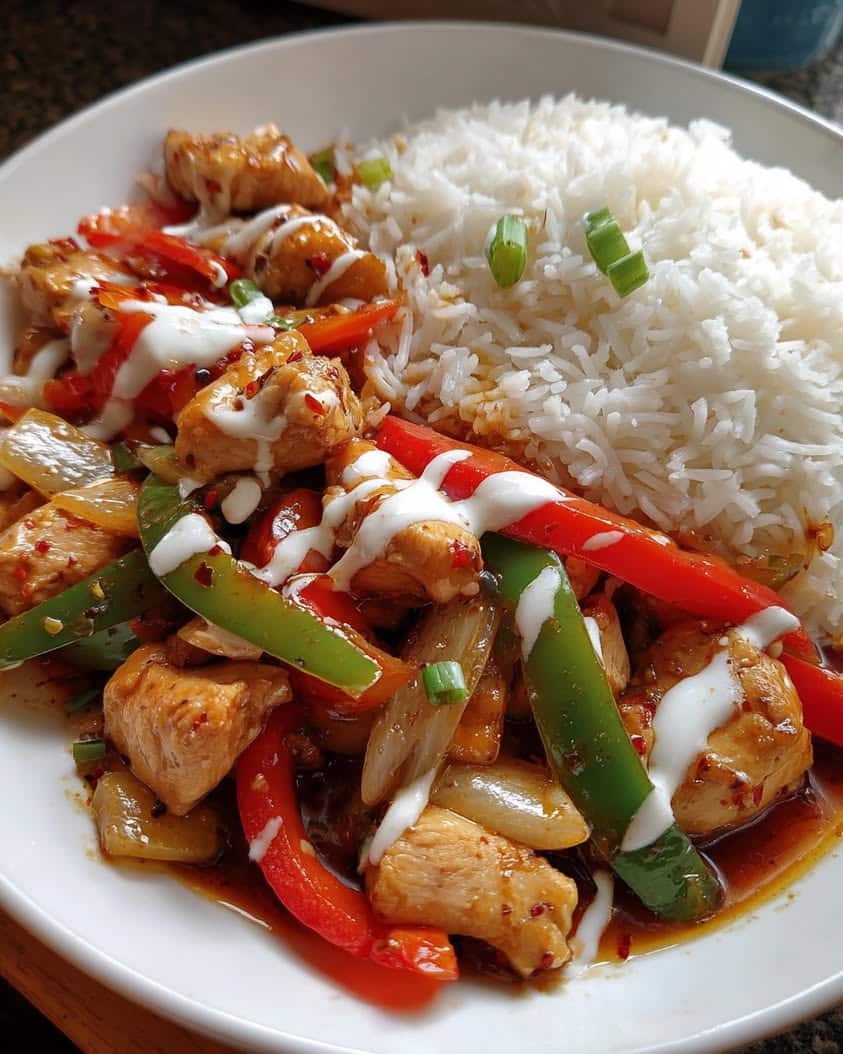
Sweet & Spicy Chicken Stir-Fry with Bell Peppers, Onions & Rice: A Flavor-Packed Weeknight Winner
Craving a dinner that delivers big on flavor without demanding hours in the kitchen? Look no further than this vibrant sweet & spicy chicken stir-fry with bell peppers and onions. This dish masterfully balances the rich, savory notes of soy sauce and chicken with the bright, caramelized sweetness of fresh vegetables. Ultimately, a dynamic sauce ties everything together, creating a meal that is both comforting and exciting. Served over a bed of fluffy rice, it’s the ultimate solution for busy weeknights when you want something wholesome and delicious.
Furthermore, this recipe is incredibly versatile. You can easily adapt it to your spice tolerance or what you have available in the fridge. The key lies in the high-heat cooking method that locks in juices and creates those coveted crispy edges on the chicken and vegetables. As a result, you get a restaurant-quality meal made in your own skillet in about thirty minutes. The aroma that fills your kitchen while cooking is simply irresistible, promising a satisfying dining experience for the whole family.
Quick Recipe Highlights
- Flavor Profile: This sweet & spicy chicken stir-fry offers a perfect harmony. The sauce combines brown sugar and honey for a deep sweetness, which is expertly cut by the tang of rice vinegar and the gentle heat of red pepper flakes. Meanwhile, savory soy sauce and garlic provide a robust umami foundation.
- Texture: Expect a delightful contrast in every bite. Tender, juicy chicken pieces mingle with crisp-tender bell peppers and soft, sweet onions. The sauce clings beautifully to each component, especially when served over rice, which soaks up every last drop.
- Aroma: The cooking process releases an intoxicating scent. First, you’ll smell the savory garlic and ginger sizzling, followed by the caramelizing onions and peppers. Finally, the sweet and spicy sauce bubbles and reduces, filling your home with an aroma that promises a fantastic meal.
- Visual Appeal: This dish is a feast for the eyes with its vibrant color palette. Green and red bell peppers add pops of color against the golden-brown chicken and translucent onions. The glossy, dark sauce coats everything beautifully, making for a stunning presentation on a white plate or bowl.
- Skill Level Needed: This is a beginner-friendly recipe perfect for anyone new to cooking. The techniques are straightforward: chopping, stirring, and simmering. With a bit of organization (mise en place), you can execute this stir-fry like a pro, making it a confidence-building meal.
- Special Equipment: You only need a large skillet or wok and a sturdy spatula. A wok is ideal for its high, sloping sides, which facilitate tossing. However, a large cast-iron or stainless-steel skillet works perfectly well for achieving a good sear on the ingredients.
Recipe Overview
- Difficulty Level: We rate this sweet & spicy chicken stir-fry as “Easy.” The steps are sequential and simple: prep ingredients, cook chicken, cook vegetables, and combine with sauce. There are no advanced techniques like braising or baking required. The most important skill is managing your heat to avoid burning.
- Category: This dish fits perfectly into multiple categories. It’s a quick and easy dinner, a fantastic meal prep option, and a reliable one-pan wonder. Additionally, it serves as a complete protein-and-vegetable entrée when paired with rice, making it a balanced main course.
- Cuisine: While stir-frying is a cornerstone of Chinese cuisine, this recipe takes a more Americanized, fusion approach. The use of bell peppers and a sweet-spicy glaze is common in Western adaptations. Consequently, it draws inspiration from Asian cooking methods while utilizing readily available ingredients.
- Cost: This is a very budget-friendly meal. Chicken thighs are often less expensive than breasts, and bell peppers and onions are affordable year-round. Pantry staples like soy sauce, vinegar, and spices form the sauce base, making the overall cost per serving quite low.
- Season: This stir-fry is truly a year-round dish. In summer, you can use fresh, local peppers. During colder months, it provides a bright, vitamin-packed meal that feels hearty but not heavy. It’s a versatile recipe that transcends seasonal limitations.
- Occasion: Ideal for busy weeknight dinners, casual weekend lunches, or even a simple meal prep for the workweek. It’s also great for feeding a family or a small group of friends. While not formal, it’s absolutely delicious and always a crowd-pleaser.
Why You’ll Love This Recipe
First and foremost, the taste and texture of this sweet & spicy chicken stir-fry are utterly addictive. The combination of savory, sweet, and spicy hits all the right notes on your palate. Each forkful delivers tender chicken, crunchy vegetables, and a sauce that is sticky, glossy, and packed with flavor. The rice acts as the perfect neutral canvas, soaking up the complex sauce and making every bite satisfying. Ultimately, it’s a dish that feels indulgent yet is made from wholesome, recognizable ingredients.
From a convenience standpoint, this recipe is a lifesaver. It comes together in about thirty minutes from start to finish, making it faster than most takeout. The preparation is simple, involving basic chopping and mixing. Moreover, it’s a one-pan meal (plus a pot for rice), which means cleanup is a breeze. For those who practice meal prep, this stir-fry stores and reheats beautifully, providing delicious ready-to-eat lunches for days.
Nutritionally, this dish offers a great balance. Chicken provides lean protein to keep you full, while bell peppers are loaded with vitamins A and C. Onions add fiber and antioxidants. By controlling the sauce ingredients, you can adjust the sodium and sugar levels to your preference. Served with brown rice, it becomes an even more fiber-rich and nutritious meal. Therefore, it’s a choice you can feel good about serving to your family.
This sweet & spicy chicken stir-fry also has fantastic social and entertaining value. It’s easy to double or triple for a larger group. You can set up a “stir-fry bar” with the cooked components and let guests build their own bowls with extra toppings like chopped peanuts, sesame seeds, or extra chili flakes. The vibrant colors and inviting aroma make it a centerpiece dish that encourages sharing and conversation.
Finally, its cost-effectiveness and accessibility are major wins. You don’t need any specialty or expensive ingredients. Everything can be found at a standard grocery store. Chicken thighs, peppers, and onions are some of the most affordable fresh proteins and produce available. This makes it a sustainable go-to recipe that fits any budget, proving that eating well doesn’t have to be complicated or expensive.
Historical Background and Cultural Significance
The technique of stir-frying has a deep history in Chinese cuisine, dating back over 1,500 years. Originally, it was a practical solution for conserving fuel. By cooking food quickly over high heat in a rounded wok, families could prepare meals faster using less wood or coal. This method also preserved the texture, color, and nutrients of vegetables, which was highly valued. Consequently, stir-frying became a fundamental cooking style across many regions of China.
Culturally, the wok is more than just a pan; it’s a symbol of home and family. Stir-frying is often a communal activity, with one person managing the wok while others prep ingredients. The dish that emerges is typically shared family-style from the center of the table. This sweet & spicy chicken stir-fry, while a modern interpretation, carries on that tradition of creating a quick, shared meal that brings people together around the table.
The evolution of stir-fry recipes like this one is a story of global adaptation. As Chinese immigrants brought their culinary techniques worldwide, local ingredients were incorporated. Bell peppers, for example, are native to the Americas and became a common addition in Western versions. The sweet and spicy profile, often using ingredients like ketchup or brown sugar, reflects a fusion of tastes that caters to a broader palate while honoring the stir-fry method.
Regional variations of stir-fry are endless. In Sichuan province, you might find a mouth-numbing mala spice. In Cantonese cuisine, stir-fries are often lighter with cleaner flavors. Our version with bell peppers and a glossy sauce is akin to American Chinese restaurant classics like pepper steak or General Tso’s chicken. It represents a delicious branch on the vast tree of stir-fry cuisine, adapted for the home cook using familiar ingredients.
Ingredient Deep Dive
Chicken Thighs: We prefer boneless, skinless chicken thighs for their flavor and juiciness. Thighs have a slightly higher fat content than breasts, which means they stay tender and moist during high-heat stir-frying and are more forgiving if slightly overcooked. Historically, dark meat was often more prized in many cultures. Nutritionally, they provide high-quality protein, iron, and zinc. For best results, pat them very dry before cooking to ensure a good sear. You can substitute chicken breasts, but be vigilant to avoid drying them out.
Bell Peppers: These colorful vegetables add crucial sweetness, crunch, and vibrancy. Originally from Central and South America, they are now cultivated globally. Red bell peppers are simply ripe green peppers, offering a sweeter flavor and higher vitamin C content. They are rich in antioxidants like beta-carotene and capsaicin (in very mild amounts). Choose peppers that are firm with smooth, glossy skin. Store them in the crisper drawer of your refrigerator. For a variation, try using poblano or mini sweet peppers.
Onions: Yellow onions are our choice for their reliable sweet-and-savory balance when cooked. They have been a staple food for thousands of years, valued for their storage longevity and flavor-building properties. Onions provide quercetin, a flavonoid with anti-inflammatory properties. When sliced and cooked in the stir-fry, they caramelize and release natural sugars, forming the flavor base of the dish. Store whole onions in a cool, dark, dry place. A white or red onion can be used, though yellow offers the best all-purpose flavor for cooking.
The Sauce (Soy Sauce, Vinegar, Brown Sugar, etc.): This combination is the soul of the dish. Soy sauce, originating from China, provides salty umami depth. Rice vinegar adds a necessary tang to balance the sweetness. Brown sugar and honey create a complex, molasses-like sweetness that caramelizes beautifully. Ginger and garlic are the aromatic foundation, while red pepper flakes deliver adjustable heat. This sauce exemplifies the fundamental Chinese culinary principle of balancing sweet, sour, salty, and spicy flavors.
Common Mistakes to Avoid
- Crowding the Pan: Adding all the chicken at once will steam it instead of searing it. You must cook in batches if necessary to ensure each piece has contact with the hot surface. This step is crucial for developing flavor and texture.
- Using Low Heat: Stir-frying requires high heat to quickly cook ingredients and create “wok hei,” or the breath of the wok. If your heat is too low, vegetables will become soggy and the chicken will stew in its own juices.
- Not Prepping Ingredients First (Mise en Place): Once you start cooking, everything happens fast. Have all your vegetables chopped, sauce mixed, and chicken diced before you turn on the stove. Otherwise, you risk burning ingredients while you scramble to prep the next component.
- Overcooking the Vegetables: Bell peppers and onions should remain crisp-tender, not mushy. Add them to the hot pan and stir-fry just until they brighten in color and soften slightly. They will continue to cook slightly from residual heat after you remove the pan.
- Adding the Sauce Too Early: If you add the sauce before the chicken and vegetables have a proper sear, they will boil instead of fry. Always sear your protein and vegetables first, then add the sauce to coat and glaze.
- Using Cornstarch Incorrectly: If your sauce mixture contains cornstarch, make sure to stir it well right before adding it to the pan. Cornstarch settles quickly. Adding it without stirring will result in a lumpy sauce.
- Neglecting to Taste and Adjust: Before serving, always taste your stir-fry. You may need an extra splash of soy sauce for saltiness, a pinch of sugar for balance, or more red pepper flakes for heat. Seasoning at the end is key.
- Stirring Constantly: While it’s called a stir-fry, you don’t need to stir non-stop. Allow the ingredients to sit for 30-45 seconds in contact with the hot pan to develop a sear, then toss and repeat. Constant stirring prevents browning.
Essential Techniques
High-Heat Searing: This is the cornerstone of a successful stir-fry. High heat causes the Maillard reaction, which browns the proteins and sugars on the surface of the chicken and vegetables, creating complex, savory flavors. To master it, ensure your pan is very hot before adding oil, and then add the food in a single layer. Listen for the sizzle. A common pitfall is moving the food too soon; let it sear undisturbed for a minute to develop a crust. Success is visually confirmed by golden-brown edges on your chicken and slight charring on the vegetables.
Velveting (Optional but Recommended): While not used in this specific recipe, velveting is a classic Chinese technique for ensuring incredibly tender chicken. It involves marinating thin slices of chicken in a mixture of egg white, cornstarch, and rice wine, then briefly blanching in oil or water before stir-frying. This creates a protective coating that seals in moisture. It’s important to use very thin, uniform slices and not to overcook during the blanching step. The result is chicken with a silky, smooth texture that is restaurant-quality.
Sauce Reduction and Glazing: After adding your mixed sauce to the pan, the goal is to reduce it slightly so it thickens and coats the ingredients. The cornstarch (if used) will activate with heat, while the sugars will caramelize. Stir constantly during this phase to prevent burning and to ensure an even, glossy coat on every piece. The sauce is ready when it has thickened enough to cling to the back of a spoon and leaves a shiny glaze on the chicken and vegetables.
Pro Tips for Perfect Sweet & Spicy Chicken Stir-Fry
- For deeper flavor, marinate your diced chicken in a tablespoon of soy sauce and a teaspoon of cornstarch for 15-30 minutes before cooking. This simple step adds seasoning and helps tenderize the meat.
- Toast your red pepper flakes. Before adding other sauce ingredients, briefly toast the pepper flakes in the hot oil for 10-15 seconds. This unlocks their aromatic oils and creates a more rounded, infused heat throughout the dish.
- Use a mix of colored bell peppers. Combining red, yellow, and green peppers not only looks stunning but also provides subtle flavor variations, with red being the sweetest and green having a slightly more bitter, vegetal note.
- Finish with a splash of acidity. A final drizzle of unseasoned rice vinegar or a squeeze of fresh lime juice just before serving can brighten the entire dish and lift the rich flavors.
- Garnish generously. Toasted sesame seeds, sliced green onions, and chopped cilantro or peanuts add layers of texture, color, and fresh flavor that elevate the final presentation and taste.
- Let your protein rest. After searing the chicken, remove it to a plate. This prevents it from overcooking while you stir-fry the vegetables, and any accumulated juices can be added back with the sauce.
- If using a non-stick pan, be mindful of high heat. While you still need high heat, non-stick coatings can be damaged by extreme temperatures. Use medium-high heat and watch carefully to avoid overheating the empty pan.
Variations and Adaptations
Regional Variations: For a Sichuan-inspired twist, add a teaspoon of Sichuan peppercorns (toasted and ground) and a tablespoon of chili bean paste (doubanjiang) to the sauce. For a Thai-style version, replace soy sauce with fish sauce, add a spoonful of Thai red curry paste, and finish with Thai basil leaves.
Seasonal Adaptations: In spring, add snap peas and asparagus. Summer is perfect for zucchini and yellow squash. In autumn, try incorporating sliced mushrooms and baby corn. For winter, use heartier vegetables like broccoli florets and carrots, which may need a minute of steaming before stir-frying.
Dietary Modifications: For a gluten-free sweet & spicy chicken stir-fry, use tamari or coconut aminos instead of soy sauce. To make it keto or low-carb, serve over cauliflower rice and replace the brown sugar with a keto-friendly sweetener like erythritol. For a vegetarian version, use extra-firm tofu or tempeh in place of chicken.
Flavor Variations: Experiment with the sauce base. Use hoisin sauce for a sweeter, thicker glaze. Add a tablespoon of smooth peanut butter for a satay-inspired flavor. For a tangier profile, increase the rice vinegar or add a splash of orange juice and a bit of orange zest.
Serving and Presentation Guide
Plating is key for visual appeal. For a restaurant-style look, pack warm rice into a small bowl, then invert it onto the center of a shallow pasta bowl or plate. Spoon the sweet & spicy chicken stir-fry around and over the rice mound, allowing some rice to peek through. This creates height and dimension. Alternatively, for a family-style approach, serve the stir-fry in a large, colorful bowl with the rice on the side.
Garnishing adds the final touch. A generous sprinkle of thinly sliced green onions (both white and green parts) and toasted white sesame seeds is classic. For extra color and freshness, add a few torn cilantro leaves or Thai basil. A final drizzle of chili oil or sriracha around the rim of the plate adds a professional flair and allows diners to control extra heat.
Consider traditional accompaniments. A simple side of steamed edamame or a light cucumber salad with rice vinegar provides a refreshing contrast. Egg drop soup or hot and sour soup makes for a fantastic starter. For a more substantial meal, serve with vegetable spring rolls or potstickers on the side.
Wine and Beverage Pairing
The sweet and spicy elements in this dish call for a beverage that can complement and cool. A slightly sweet white wine like an off-dry Riesling or Gewürztraminer is an excellent choice. Their fruity notes harmonize with the sweetness, while their acidity cuts through the richness. The slight sweetness also helps tame the spice. For red wine lovers, a fruity, low-tannin Beaujolais or Pinot Noir can work well if the spice level is moderate.
For non-alcoholic pairings, consider a sparkling water with a squeeze of lime to cleanse the palate. Iced green tea or jasmine tea offers a refreshing, slightly bitter counterpoint to the sweet and spicy flavors. A ginger beer (non-alcoholic) can also be delightful, as its spicy-sweet profile mirrors the dish itself.
Storage and Shelf Life
Store leftover sweet & spicy chicken stir-fry in an airtight container in the refrigerator for up to 3-4 days. It’s best to store the stir-fry and rice separately to prevent the rice from becoming mushy. The flavors often meld and intensify overnight, making leftovers highly desirable.
For reheating, the stovetop is best to restore texture. Add a small splash of water or broth to a skillet over medium heat, then add the stir-fry. Cover for a minute to steam gently, then uncover and stir until heated through. This method helps rehydrate the sauce and prevents the chicken from drying out. You can also reheat in the microwave in 60-second intervals, stirring between each.
This dish freezes reasonably well for up to 2 months, though the vegetables will lose some crispness. Cool completely, then transfer to a freezer-safe bag or container, pressing out excess air. Thaw overnight in the refrigerator before reheating using the stovetop method, adding a bit more liquid as needed.
Make Ahead Strategies
You can significantly speed up dinner time by prepping components ahead. Dice the chicken and store it in a sealed container in the fridge for up to 24 hours. Chop all vegetables and keep them in separate bags or containers. Mix the sauce in a jar and shake well before using. Having everything ready means you can have this sweet & spicy chicken stir-fry on the table in under 15 minutes of active cooking.
For full meal prep, cook the entire recipe and divide it into portions with rice. Store in the refrigerator for up to 4 days. To maintain the best texture when reheating, add a teaspoon of water to the container before microwaving and cover loosely. The fresh garnishes like green onions and sesame seeds should be added after reheating.
Scaling Instructions
This recipe scales beautifully. To double it for a crowd, use a very large wok or cook in two separate batches to avoid overcrowding. You may need to increase the cooking time slightly for the vegetables. Ensure your sauce ingredients are doubled precisely. For halving the recipe, a medium skillet is perfect, and cooking times will be slightly shorter. Keep a close eye on the sauce as it will reduce faster in a smaller quantity.
When scaling, the most important factor is pan size and heat management. A crowded pan will steam, not fry. If doubling, it’s often better to cook the chicken in three batches instead of two to ensure proper browning. No other equipment adjustments are typically needed beyond ensuring you have a large enough mixing bowl for the increased sauce volume.
Nutritional Deep Dive
This sweet & spicy chicken stir-fry is a balanced meal providing protein, carbohydrates, and healthy fats. The chicken thighs offer high-quality protein essential for muscle repair and satiety. Bell peppers are a powerhouse of Vitamin C (especially red peppers) and Vitamin A, supporting immune function and eye health. Onions provide prebiotic fiber for gut health and antioxidants like quercetin.
The sauce contributes most of the sodium and sugars. Using low-sodium soy sauce and adjusting the brown sugar can tailor this to your dietary needs. Served with brown rice instead of white increases the fiber and micronutrient content significantly. For a lighter version, increase the vegetable-to-chicken ratio and use a light hand with the oil for sautéing.
Dietary Adaptations
Gluten-Free: Use tamari (a gluten-free soy sauce) or coconut aminos instead of regular soy sauce. Double-check that your rice vinegar and other sauce ingredients are certified gluten-free, as cross-contamination can sometimes occur.
Dairy-Free: This recipe is naturally dairy-free. No modifications are needed unless a garnish like a dollop of sour cream is used, which can be omitted or replaced with a dairy-free alternative.
Vegan/Vegetarian: Replace the chicken with extra-firm tofu (pressed and cubed), tempeh, or a plant-based chicken alternative. Use a vegan sweetener like maple syrup or agave in place of honey. Ensure your sugar is vegan (some refined white sugar uses bone char).
Low-Carb/Keto: Omit the cornstarch and brown sugar. Thicken the sauce with a xanthan gum slurry (1/4 tsp mixed with 1 tbsp water) and use a keto-friendly sweetener like monk fruit or erythritol. Serve over cauliflower rice or shirataki noodles.
Troubleshooting Guide
Sauce is Too Thin: If your sauce hasn’t thickened after simmering, create a quick slurry by mixing 1 teaspoon of cornstarch with 1 tablespoon of cold water. Stir this into the simmering stir-fry and cook for another 30-60 seconds until glossy and thickened.
Sauce is Too Thick or Gummy: You may have used too much cornstarch or overcooked the sauce. Immediately stir in a splash of water, chicken broth, or even a bit of orange juice to loosen it to a silky consistency.
Dish is Too Salty: Balance an over-salted stir-fry by adding a bit more sweetness (a teaspoon of honey or sugar) and acidity (a splash of vinegar or lime juice). You can also bulk it up by quickly stir-frying more unprepared vegetables and adding them to the mix.
Vegetables are Soggy: This happens from overcrowding the pan or cooking over too low a heat. Unfortunately, you can’t reverse it, but for next time, ensure your pan is screaming hot and cook in batches if necessary. For now, serve immediately to prevent further softening.
Frequently Asked Questions
Q: Can I use chicken breasts instead of thighs?
A: Absolutely. Chicken breasts will work, but they cook faster and can dry out more easily. Cut them into uniform pieces and reduce the initial searing time by a minute or two. Consider the optional velveting technique for guaranteed juiciness.
Q: My family doesn’t like spicy food. How can I adjust?
A: Simply omit the red pepper flakes entirely. The dish will still be wonderfully sweet and savory. You can always serve chili oil or crushed red pepper on the side for those who want to add heat individually.
Q: What’s the best rice to serve with this?
A: Jasmine or Basmati rice are excellent choices for their fragrant, slightly sticky quality that pairs well with the sauce. For a healthier option, brown rice or quinoa adds nuttiness and extra fiber.
Q: Can I add other vegetables?
A: Definitely! Broccoli, snap peas, carrots, water chestnuts, and baby corn are all fantastic additions. Just be mindful of cooking times; harder vegetables like carrots may need to be added a minute or two before the peppers.
Q: How do I get my sauce really glossy and sticky?
A: The cornstarch in the sauce mixture is key. Also, ensure you let the sauce come to a simmer and cook for 1-2 minutes after adding it. The sugars will caramelize and the cornstarch will activate, creating that perfect restaurant-style glaze.
Q: Is this recipe freezer-friendly?
A: Yes, though with a caveat. The chicken and sauce freeze well for up to 2 months. The bell peppers will soften significantly upon thawing and reheating. If you plan to freeze, you might prefer to use vegetables that hold up better, like carrots or broccoli.
Q: Can I make this in an electric wok?
A: An electric wok is a great tool for this recipe. Preheat it to its highest setting to mimic the high heat of a gas stove. The large, flat cooking surface is ideal for stir-frying without overcrowding.
Q: What can I use instead of rice vinegar?
A: Apple cider vinegar or white wine vinegar are the best substitutes. Use the same amount. Avoid distilled white vinegar as it is harsher. A squeeze of fresh lime juice at the end can also provide the needed acidity.
Additional Resources
If you loved this sweet & spicy chicken stir-fry, explore other quick dinner ideas on our site. We have a fantastic collection of one-pan meals, from sesame ginger beef stir-fry to a vibrant vegetable lo mein. For those looking to master the technique, check out our detailed guide “Stir-Fry 101: How to Achieve Perfect Wok Hei at Home,” which covers heat management, knife skills, and sauce balancing.
For ingredient insights, our deep-dive articles on soy sauces, the science of cornstarch thickening, and a guide to chili varieties can help you customize this and other recipes. If you’re in the market for equipment, we have reviewed the best carbon steel woks and high-BTU outdoor burners for authentic stir-fry results. Finally, browse our seasonal recipe collections for inspiration on adapting this versatile stir-fry with produce from your local farmer’s market.
PrintSweet & Spicy Chicken Stir-Fry with Bell Peppers, Onions & Rice
Description
A quick and flavorful stir-fry featuring tender chicken, crisp bell peppers, and onions in a sweet and spicy sauce, served over fluffy rice.
Ingredients
For the Crust:
- 1 lb boneless, skinless chicken breast, cut into bite-sized pieces
- 1 red bell pepper, sliced
- 1 green bell pepper, sliced
- 1 yellow onion, sliced
- 3 cloves garlic, minced
- 1/4 cup soy sauce
- 2 tbsp honey
- 1 tbsp sriracha
- 1 tbsp rice vinegar
- 1 tsp grated ginger
- 2 tbsp vegetable oil
- Cooked white rice, for serving
- Sesame seeds and green onions for garnish
Instructions
1. Prepare the Crust:
- In a small bowl, whisk together soy sauce, honey, sriracha, rice vinegar, and ginger to make the sauce. Set aside.
- Heat vegetable oil in a large skillet or wok over high heat. Add chicken pieces and cook until browned and cooked through, about 5-7 minutes. Remove chicken from skillet and set aside.
- In the same skillet, add bell peppers and onion. Stir-fry for 4-5 minutes until slightly softened. Add garlic and cook for 1 minute until fragrant.
- Return chicken to the skillet. Pour the sauce over the chicken and vegetables. Stir well and cook for 2-3 minutes until everything is coated and heated through.
- Serve the stir-fry hot over cooked white rice. Garnish with sesame seeds and sliced green onions.
Notes
You can customize the seasonings to taste.

I’m Shaykee—born in Morocco, seasoned across continents. From airplane galleys to home kitchens, I share the flavors and stories that shaped my journey.