
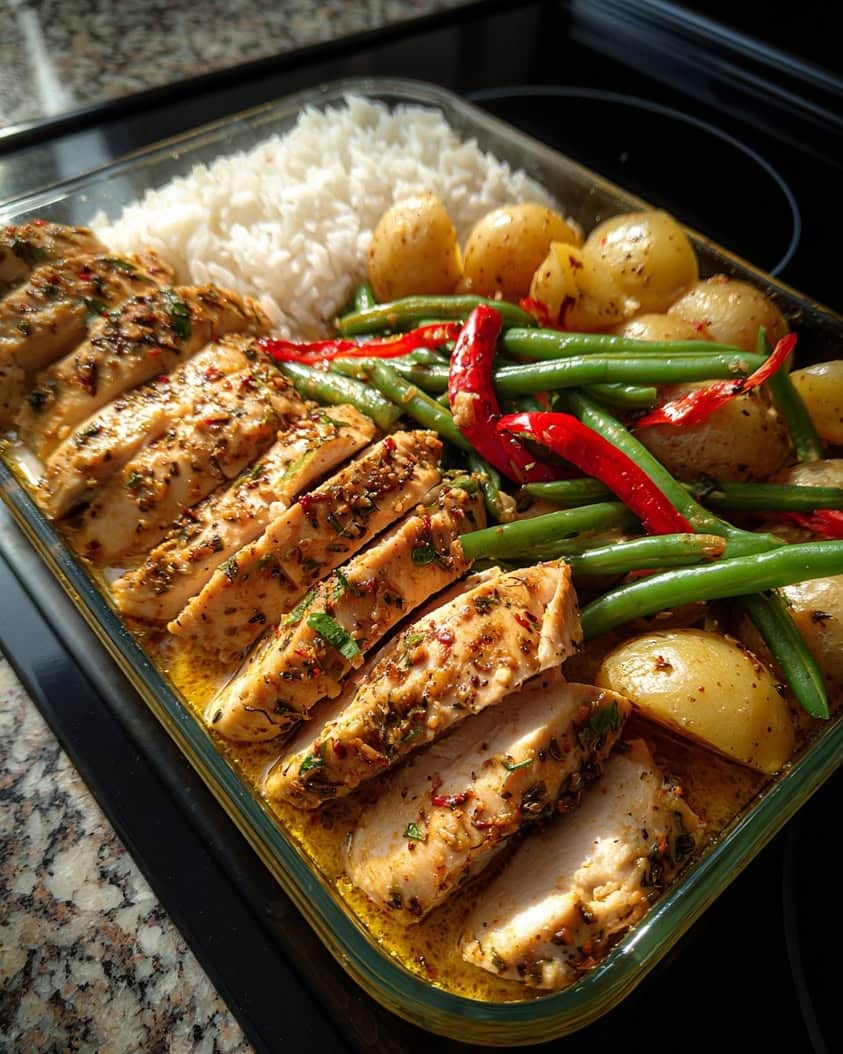
Ultimate Oven-Baked Spicy Chicken with Roasted Veggies & Rice: A One-Pan Flavor Explosion
Imagine a dinner that delivers crispy, spicy oven-baked chicken with tender roasted veggies and fluffy rice all from a single pan. This ultimate recipe is exactly that, a complete meal designed for maximum flavor with minimal cleanup. The chicken emerges from the oven with a beautifully blistered, paprika-hued crust that gives way to incredibly juicy meat. Meanwhile, the vegetables caramelize and sweeten in the rendered juices, and the rice cooks to perfection in a savory broth. Ultimately, this dish is a testament to how simple ingredients can transform into something spectacular with the right technique.
This recipe is a game-changer for busy weeknights, yet impressive enough for casual weekend entertaining. The magic lies in the layering of flavors and the efficient use of your oven. You will coat chicken thighs in a vibrant spice rub featuring smoked paprika, garlic powder, and a touch of cayenne for heat. Then, you will nestle them alongside hearty vegetables like bell peppers and onions. Finally, you will pour in rice and broth, allowing everything to steam together into a cohesive feast. The result is a symphony of textures and tastes that will have everyone asking for seconds.
Furthermore, the beauty of this crispy, spicy oven-baked chicken with tender roasted veggies and fluffy rice extends beyond its taste. It is a highly adaptable formula that welcomes seasonal produce and personal heat preferences. Whether you are feeding a hungry family or prepping lunches for the week, this reliable method delivers consistent, restaurant-quality results. Let us dive into the details of creating this flavor-packed, one-pan wonder that is sure to become a staple in your dinner rotation.
Quick Recipe Highlights
- Flavor Profile: This dish boasts a bold, smoky heat from the paprika and cayenne rub, balanced by the natural sweetness of roasted bell peppers and onions. The rice absorbs all the savory pan juices, creating a deeply flavorful base that ties every component together perfectly.
- Texture: Expect a fantastic contrast: crispy, almost crackly skin on the chicken thighs against their succulent interior. The vegetables become meltingly tender with slightly charred edges, while the rice cooks up separate and fluffy, not mushy.
- Aroma: As it bakes, your kitchen will fill with the warm, smoky scent of paprika and garlic, followed by the sweet, caramelizing notes of roasting vegetables. It is an irresistible fragrance that promises a delicious meal.
- Visual Appeal: The presentation is vibrant with the deep reds of the chicken and peppers, golden brown onions, and bright green herb garnish against the white rice. It is a colorful, rustic dish that looks abundant and inviting straight from the pan.
- Skill Level Needed: This is a fantastic recipe for beginners and seasoned cooks alike. The process is straightforward, involving simple chopping, mixing a spice rub, and layering ingredients in a pan. Success relies more on timing and ingredient placement than advanced techniques.
- Special Equipment: You only need a large, deep oven-safe skillet or a 9×13 inch baking dish. A good set of tongs for handling the chicken is helpful, but not strictly required. No special gadgets are necessary.
Recipe Overview
- Difficulty Level: We rate this recipe as “Easy” because it breaks down into simple, sequential steps. There is no complicated knife work, no finicky sauces to emulsify, and no precision temperature control needed beyond your oven dial. The most challenging part is ensuring the chicken skin gets crispy, which the high-heat bake handles reliably. Even a first-time cook can achieve fantastic results by following the clear instructions.
- Category: This dish firmly sits in the “Main Course” or “Dinner” category, providing a complete protein, vegetable, and starch in one. It is also an excellent candidate for “Meal Prep,” as it reheats beautifully and portions easily. Additionally, it fits “Family Dinners” and “Comfort Food” due to its hearty, satisfying nature.
- Cuisine: While not strictly authentic to one region, the recipe draws inspiration from global “one-pan” or “sheet pan” dinner traditions. The spice profile has roots in American BBQ rubs and Spanish paprika-forward cuisine. It is a modern, fusion-style home cooking recipe designed for convenience and broad appeal, rather than adhering to a specific culinary tradition.
- Cost: This is a very cost-effective meal. Chicken thighs are an affordable cut, and vegetables like bell peppers and onions are inexpensive, especially in season. Rice is a budget-friendly staple. The spices are a one-time investment that will season many meals. Overall, you can expect to feed four people for a fraction of the cost of takeout, making it a smart choice for budget-conscious cooks.
- Season: This recipe shines year-round but is particularly wonderful in late summer and fall. That is when bell peppers and onions are at their peak sweetness and most affordable. The warm, spicy flavors also make it a comforting choice for cooler evenings. Conversely, it is a great way to bring hearty flavor to a spring or winter table when fresh, vibrant meals are desired.
- Occasion: Perfect for busy weeknights due to its simplicity, it also works for casual weekend dinners with friends or family meal prep. It is not overly formal, but its impressive appearance and incredible taste make it suitable for a relaxed gathering. It is the ideal “special but not fussy” dinner for any occasion that calls for delicious, satisfying food.
Why You’ll Love This Recipe
First and foremost, the taste and texture appeal is undeniable. Each bite offers a thrilling contrast: the initial crunch of the well-seasoned chicken skin, followed by the burst of juicy meat. The roasted vegetables provide a sweet, caramelized counterpoint to the spice, and the fluffy rice soaks up every drop of flavor from the pan. This combination creates a deeply satisfying eating experience that engages all your senses. Moreover, the balance of smoky, spicy, and sweet notes ensures the dish is exciting without being overwhelming, appealing to both heat-lovers and those with milder preferences.
Secondly, the convenience factor is a major win. This crispy, spicy oven-baked chicken with tender roasted veggies and fluffy rice is the definition of a one-pan meal, meaning cleanup is a breeze. You will spend more time eating than washing dishes. The preparation is also straightforward, with most of the active work happening in the first 20 minutes. After that, the oven does the heavy lifting, freeing you up to set the table, make a salad, or simply relax. This efficient process makes it a reliable go-to when you are short on time or energy but still want a homemade, nutritious dinner.
From a nutritional standpoint, this meal is a well-rounded powerhouse. Chicken thighs provide high-quality protein and essential nutrients like iron and zinc. Using a mix of colorful bell peppers and onions delivers a dose of vitamins A and C, along with antioxidants and fiber. Cooking the rice in broth with the vegetable and chicken juices minimizes the need for added fats or salt, as the ingredients create their own rich, savory cooking liquid. Consequently, you get a meal that is as wholesome as it is delicious, supporting your health goals without sacrificing flavor.
Furthermore, this dish holds significant social and entertaining value. Serving a beautiful, steaming pan straight from the oven creates a warm, communal dining atmosphere. It is a generous and visually impressive meal that tells your guests you cared enough to cook something special, even though the process was simple. The recipe is also easily doubled to feed a crowd, and its universally appealing flavors are likely to please a variety of palates. Therefore, it builds connection and satisfaction not just through taste, but through the shared experience of a hearty, home-cooked meal.
Finally, the cost-effectiveness and accessibility are unbeatable. As mentioned, the core ingredients are affordable pantry and market staples. You likely have many of the dried spices already. This accessibility means you can whip up this restaurant-quality meal without a special trip to the store or breaking the bank. Additionally, the recipe is forgiving and adaptable; if you do not have a red bell pepper, use orange or yellow. No chicken thighs? Bone-in breasts will work with a slight time adjustment. This flexibility makes it a practical and accessible recipe for home cooks at any budget level, proving that eating well does not have to be expensive or complicated.
Historical Background and Cultural Significance
The concept of cooking meat, vegetables, and starch together in one vessel is ancient and virtually universal. Every culture has its version, from Spanish paella and French pot-au-feu to Moroccan tagines and Cajun jambalaya. These dishes were born from practicality, maximizing flavor and nutrition while conserving fuel and cookware. Our modern take on crispy, spicy oven-baked chicken with tender roasted veggies and fluffy rice is a direct descendant of this timeless cooking philosophy. It updates the principle for the contemporary home kitchen, using the reliable, even heat of a standard oven instead of an open fire or hearth.
Culturally, one-pan meals signify resourcefulness and community. They represent a way to stretch expensive protein with abundant vegetables and filling starches, feeding more people with less. The act of sharing a meal cooked in a single vessel is inherently communal, breaking down barriers and encouraging conversation. While our specific spice blend is a modern American fusion, the spirit of the dish connects to a global tradition of hearty, family-style cooking. It honors the idea that the best meals are often simple, hearty, and meant to be shared straight from the cooking pot.
The evolution of this recipe is tied to the popularity of “sheet pan dinners” and “one-pan wonders” in the last decade. As home cooks sought ways to simplify weeknight cooking without compromising quality, food media responded with countless variations of complete meals baked on a single sheet pan or in a skillet. This recipe refines that concept by incorporating the rice, which cooks in the absorbed flavors, moving beyond simply roasting components side-by-side. It represents an evolution towards more integrated, flavor-layered one-pan meals where components actively enhance each other during the cooking process.
Regional variations of this idea are endless. In the American South, you might find a similar dish with Cajun seasoning and andouille sausage. A Mediterranean version could use lemon, oregano, and olives with chicken and potatoes. An Asian-inspired take might employ ginger, soy, and sesame oil. Our version, with its smoky paprika and garlic base, leans into a broadly appealing American flavor profile that has roots in BBQ culture. This adaptability is the recipe’s greatest strength, allowing it to serve as a template that can be customized to reflect local ingredients and personal taste preferences, continuing the age-old tradition of the one-pot meal in a new form.
Ingredient Deep Dive
Chicken Thighs (Bone-In, Skin-On): This cut is the hero of the dish for good reason. Historically, dark meat chicken was often considered less desirable than breast meat, but modern appreciation for flavor and juiciness has rightfully elevated it. The bone and skin are crucial; the bone insulates the meat, leading to slower, more even cooking and richer flavor. The skin, when seasoned and exposed to high heat, renders its fat and becomes irresistibly crispy. Nutritionally, thighs contain more iron, zinc, and B vitamins than breasts. Select plump thighs with evenly distributed fat under the skin. Store them in the coldest part of your fridge and use within 1-2 days of purchase. For a substitute, bone-in, skin-on chicken breasts can be used, but reduce the cook time by 5-10 minutes to prevent dryness.
Smoked Paprika: This spice is the soul of the rub, providing the characteristic deep red color and a complex, smoky sweetness. Paprika comes from dried and ground Capsicum annuum peppers, with origins in Central Mexico before spreading to Europe, particularly Hungary and Spain. Smoked paprika (pimentón) is traditionally dried over oak fires. It is rich in antioxidants like vitamin A and capsaicinoids. For the best flavor, seek out “pimentón de la Vera” if possible, and always buy it in small quantities as it loses potency quickly. Store it in a cool, dark place. If you only have sweet paprika, you can add a tiny drop of liquid smoke to the rub, but the flavor profile will shift.
Long-Grain White Rice: Rice is a global staple that has sustained civilizations for millennia. In this recipe, it acts as a sponge, absorbing the savory cooking liquid and fat from the chicken and vegetables, transforming into a flavorful pilaf. Nutritionally, it provides easily digestible carbohydrates for energy. For best results, use a standard long-grain rice like Jasmine or Basmati, which stay separate and fluffy when cooked. Avoid short-grain or sushi rice, as they become too sticky. Rinsing the rice before use removes excess surface starch, ensuring fluffier results. Store uncooked rice in an airtight container in a cool, dry pantry. For a whole-grain alternative, brown rice can be used, but it requires more liquid and a longer cook time, which would disrupt the recipe’s timing.
Bell Peppers and Onion: These vegetables form the aromatic base. Bell peppers, native to Central and South America, add sweetness, color, and vitamin C. Onions, one of the oldest cultivated vegetables, provide a savory-sweet depth and sulfur compounds that offer health benefits. Together, they create a natural “sofrito” that flavors the entire dish. Select firm, glossy peppers and heavy, firm onions with dry, papery skins. Store them in a cool, dry place outside the refrigerator for best texture. You can use any color bell pepper; a mix creates visual appeal. Red onions can substitute for yellow, offering a slightly sharper flavor and vibrant color.
Chicken Broth: Broth is the essential cooking liquid that steams the rice and unites the flavors. Using a good-quality, low-sodium broth is key, as it allows you to control the salt level with your spice rub. Homemade broth is ideal, but a reputable store-bought brand works perfectly. It adds moisture, richness, and a layer of savory umami. For a vegetarian adaptation, vegetable broth is a fine substitute, though the flavor profile will be lighter. Always warm your broth before adding it to the pan to maintain the oven temperature and ensure even cooking.
Common Mistakes to Avoid
- Overcrowding the Pan: Placing the chicken thighs too close together will cause them to steam rather than roast, preventing the skin from getting crispy. Ensure there is at least a half-inch of space between each piece to allow hot air to circulate effectively.
- Using Cold Broth: Pouring cold broth into the hot pan will drastically reduce the oven temperature, disrupting the cooking process and potentially leading to unevenly cooked rice. Always warm your broth on the stovetop or in the microwave before adding it to the recipe.
- Not Patting the Chicken Dry: Moisture is the enemy of crispy skin. If you do not thoroughly pat the chicken thighs dry with paper towels before applying the rub, the seasoning will not stick well, and the skin will likely become soggy instead of crackling.
- Stirring the Rice: Once you add the broth and rice to the pan, resist the urge to stir. Stirring releases starch from the rice, making it gummy. Let the oven heat work its magic, allowing the rice to absorb the liquid evenly from the top down.
- Underseasoning the Rub: The spice rub is the primary flavor agent for the chicken. Do not be shy with it. Coat the thighs generously on all sides, especially under the skin if you can gently loosen it, to ensure every bite is packed with flavor.
- Using the Wrong Pan: A pan that is too shallow will cause broth to bubble over. A pan that is not oven-safe is dangerous. Always use a deep skillet or baking dish with high sides that is explicitly rated for oven use to avoid spills or accidents.
- Opening the Oven Door Frequently: Every time you open the oven, you let out heat and steam, which can lower the temperature and extend cooking time unnecessarily. Trust the process and use the oven light to check on progress until near the end of the cook time.
- Skipping the Resting Time: Allowing the dish to rest for 5-10 minutes after baking is crucial. This lets the rice finish absorbing any residual liquid and allows the chicken juices to redistribute throughout the meat, ensuring maximum juiciness when you serve.
Essential Techniques
Patting Chicken Dry: This is the non-negotiable first step for achieving crispy skin. Use several layers of paper towels to firmly blot the surface of the chicken thighs, especially the skin. Removing surface moisture allows the skin to brown and crisp quickly in the oven’s heat instead of steaming. A common pitfall is not being thorough enough; take an extra 30 seconds to ensure the skin is completely matte and dry. The visual cue for success is skin that looks dry and slightly tacky to the touch, not shiny or wet.
Creating and Applying a Spice Rub: A dry rub is a simple but powerful way to layer flavor. Combine your spices in a small bowl thoroughly to ensure even distribution. Then, sprinkle the mixture generously over all surfaces of the dried chicken, using your hands to press it gently into the flesh and under the skin if possible. The technique ensures the seasoning adheres and forms a flavorful crust. The key is to coat evenly but not cakily. You should still see the texture of the chicken skin through the spices.
Layering in a One-Pan Meal: The order of operations is critical. You start by searing or placing the protein (chicken) in the pan first, as it needs the highest, most direct heat. Then, you add sturdy vegetables that can roast alongside. Finally, you add the starch (rice) and liquid, which cook via steaming and absorption. This technique allows each component to cook using the appropriate method without overcooking. The visual cue is a pan where each ingredient has its own space but is close enough to share flavors.
Testing for Doneness in Chicken and Rice: Chicken is safely cooked when a meat thermometer inserted into the thickest part of the thigh, away from the bone, reads 165°F (74°C). The rice should be tender and have absorbed all the visible liquid in the pan. To check, gently push a grain of rice from the top center of the pan with a fork; it should be soft with no hard center. If the rice is done but there is excess liquid, simply return the uncovered pan to the oven for a few more minutes.
Pro Tips for Perfect Ultimate Overn-Baked Spicy Chicken
- For extra-crispy skin, place the seasoned chicken thighs skin-side up on a wire rack set over a plate and refrigerate them, uncovered, for 1-2 hours before cooking. This air-dries the skin even further.
- Loosen the chicken skin gently with your fingers and rub a small amount of the spice mixture directly onto the meat before replacing the skin. This seasons the chicken from the inside out.
- If your vegetables are browning too quickly before the chicken is done, you can tent the pan loosely with aluminum foil to slow down their roasting without affecting the chicken’s crispiness.
- Add a teaspoon of tomato paste to the warm broth before pouring it in. It will dissolve and add a rich, savory depth and a touch of color to the rice.
- After removing the pan from the oven, sprinkle freshly chopped herbs like parsley, cilantro, or chives over the top. The residual heat will wilt them slightly, releasing their fresh aroma.
- Let the finished dish rest for a full 10 minutes before serving. This allows the steam to finish cooking the rice evenly and lets the chicken juices settle, guaranteeing moist meat.
- For a brighter finish, serve with lemon or lime wedges on the side. A squeeze of citrus just before eating cuts through the richness and elevates all the flavors.
Variations and Adaptations
Regional Variations: Transform the dish by changing the spice profile. For a Cajun twist, use a pre-made Cajun seasoning blend and add sliced andouille sausage with the vegetables. For a Mediterranean version, swap paprika for dried oregano and lemon zest, and add kalamata olives and artichoke hearts. An Asian-inspired adaptation could use a rub of ginger, five-spice powder, and white pepper, with bok choy replacing bell peppers and a splash of soy sauce in the broth.
Seasonal Adaptations: Embrace what is fresh. In spring, use asparagus tips and fresh peas, adding them in the last 10 minutes of cooking. Summer calls for zucchini, yellow squash, and cherry tomatoes. For fall, swap in cubed sweet potatoes or butternut squash, which may need a few extra minutes of roasting before adding the rice and broth. Winter versions can include hardy greens like kale or chard, stirred into the hot rice during the resting period to wilt.
Dietary Modifications: For a gluten-free meal, ensure your spice blend and broth are certified gluten-free. To make it dairy-free, the recipe is naturally so as written. For a lower-carb option, omit the rice and increase the quantity of low-carb vegetables like cauliflower, broccoli, and mushrooms. Add an extra 1/4 cup of broth to create steam for cooking the chicken and vegetables through.
Flavor Variations: Adjust the heat level to your liking. For mild flavor, omit the cayenne and use only sweet paprika. For intense heat, add a pinch of crushed red pepper flakes to the rub. Incorporate different umami boosters: a tablespoon of fish sauce or Worcestershire sauce in the broth, or a few grated anchovies mixed into the spice rub.
Texture Modifications: If you prefer ultra-crispy skin, after the chicken is cooked through, you can briefly broil the pan for 1-2 minutes, watching carefully to prevent burning. For softer, fall-off-the-bone chicken, cover the pan with foil after the initial 30 minutes of baking and continue cooking for an additional 15-20 minutes at a slightly reduced temperature.
Presentation Alternatives: Instead of serving family-style from the pan, plate individually. Slice the chicken off the bone, fluff the rice and vegetables, and arrange them neatly on a plate, drizzling any remaining pan juices over the top. Garnish with microgreens or edible flowers for a restaurant-quality look.
Serving and Presentation Guide
Plating Techniques: For a rustic, inviting presentation, bring the entire skillet or baking dish directly to the table. This showcases the beautiful, colorful layers you have created. Provide a large spoon for serving the rice and vegetables and a sturdy spatula or tongs for the chicken. Alternatively, for individual plates, place a generous scoop of the rice and vegetable mixture in the center. Then, top with a chicken thigh, leaning it against the rice pile to show off the crispy skin. Spoon any remaining pan juices over the chicken.
Garnishing Ideas: Fresh herbs are the simplest and most effective garnish. Chopped flat-leaf parsley, cilantro, or fresh dill add a pop of green and freshness. Thinly sliced scallions or chives provide a mild oniony bite. A final sprinkle of flaky sea salt over the chicken skin just before serving enhances texture and flavor. For color and acidity, a scattering of pomegranate arils in the fall or winter, or finely diced fresh tomato in the summer, works beautifully.
Traditional Accompaniments: While this is a complete meal, a simple side salad provides a refreshing contrast. A green salad with a bright vinaigrette, a cucumber salad, or a tangy coleslaw all work well. Crusty bread is also welcome for sopping up any delicious juices left on the plate. For a vegetable-forward spread, roasted broccoli or a quick sauté of green beans are excellent additions.
Modern Serving Suggestions: Serve with a selection of condiments on the side to let guests customize their plate. Offer a creamy garlic-yogurt sauce, a spicy harissa, or a cooling avocado crema. For a fun twist, serve the shredded chicken and rice mixture in bowls as a “burrito bowl” base, topped with salsa, cheese, and lettuce.
Temperature Considerations: This dish is best served hot, immediately after its resting period. Ensure your serving plates are warm to keep the food at an ideal temperature longer. If you must hold it, tent the entire pan loosely with foil and keep it in a warm oven (around 170°F) for no more than 20 minutes to prevent the chicken skin from softening.
Portion Control Tips: A standard serving is one chicken thigh per person with about 3/4 to 1 cup of the rice and vegetable mixture. For lighter appetites, you can serve half a thigh. To stretch the meal further for a larger group, you can add an extra can of drained beans (like cannellini or chickpeas) to the rice layer before pouring in the broth, increasing the volume and fiber content.
Wine and Beverage Pairing
Wine Pairings: The smoky, spicy notes of the chicken call for wines with good fruitiness and low tannins to complement without competing. A Zinfandel or Grenache-based blend (like a Côtes du Rhône) offers ripe berry flavors that stand up to the spice. For white wine lovers, an off-dry Riesling or a Gewürztraminer is fantastic; their slight sweetness and aromatic profile cool the heat and contrast the smokiness beautifully. A rosé with some body, like a Spanish Garnacha Rosado, is also a versatile and refreshing choice.
Non-Alcoholic Alternatives: Sparkling water with a squeeze of lime or a twist of grapefruit peel is a classic, cleansing option. For something more flavorful, try a ginger beer; its sharp, spicy-sweet profile mirrors and enhances the dish’s spices. Iced hibiscus tea (agua de jamaica) provides a tart, cranberry-like flavor that cuts through richness. A simple lemonade, perhaps infused with a few rosemary sprigs, offers sweetness and acidity to balance the meal.
Coffee/Tea Pairings: While not a typical dinner pairing, if serving this for a weekend brunch or lunch, a medium-roast coffee with low acidity would complement the smoky flavors. For tea, a smoky Lapsang Souchong black tea would be an adventurous echo of the paprika, while a soothing cup of peppermint tea after the meal can aid digestion and provide a cool finish.
Temperature Considerations: Serve white wines and non-alcoholic sparkling drinks well-chilled. Red wines should be served slightly cooler than room temperature, around 60-65°F, to keep them fresh against the spicy food. Iced teas and lemonades should be very cold to provide a refreshing counterpoint to the warm, baked dish.
Serving Suggestions: Always offer water as the primary beverage to cleanse the palate. When serving wine, pour modestly to allow guests to appreciate how the beverage interacts with the complex flavors of the food. For non-alcoholic options, consider serving in a pitcher with ice and citrus slices for a festive, self-serve presentation that encourages refills.
Storage and Shelf Life
Storage Methods: Allow the dish to cool completely to room temperature, but do not leave it out for more than two hours. Then, transfer it to an airtight container. You can store the entire mixture together or separate the chicken from the rice and vegetables if preferred. Properly stored, it will last in the refrigerator for 3-4 days.
Temperature Requirements: Refrigerate at 40°F (4°C) or below. For longer storage, freezing is an option (see below). Do not attempt to store the meal at room temperature once it has cooled, as the moist rice and protein create an environment where bacteria can grow rapidly.
Container Recommendations: Use shallow, airtight containers rather than one deep container. This allows the food to cool more quickly and evenly in the fridge, reducing the risk of spoilage. Glass containers are ideal as they do not absorb odors and allow you to see the contents.
Signs of Spoilage: Discard the food if you notice an off or sour smell, a slimy texture on the chicken or vegetables, or if mold is visible. If the rice develops an unusually dry, hard, or crumbly texture beyond normal refrigeration dryness, it is best to err on the side of caution and not consume it.
Reheating Instructions: For best results, reheat in the oven or toaster oven. Preheat to 350°F, place the desired portion in an oven-safe dish, sprinkle with a tablespoon of water or broth to rehydrate, and cover with foil. Heat for 15-20 minutes, or until hot throughout. The microwave can be used in a pinch, but it will soften the chicken skin. Reheat in a microwave-safe container, covered loosely, in 60-second intervals, stirring the rice mixture between intervals.
Freezing Guidelines: This dish freezes reasonably well for up to 2 months. Freeze in individual portions for easy reheating. Note that the texture of the vegetables may become slightly softer upon thawing, and the rice can become a bit grainy. Thaw overnight in the refrigerator before reheating using the oven method above, adding a few extra minutes to the heating time.
Make Ahead Strategies
Prep Timeline: You can prep components 1-2 days in advance. Chop all vegetables and store them in a sealed container or zip-top bag in the refrigerator. Mix the dry spice rub and store it at room temperature in a small jar. Measure out your rice and broth separately. On cooking day, simply pat the chicken dry, apply the rub, and assemble.
Storage Between Steps: Keep pre-chopped vegetables refrigerated. Do not apply the spice rub to the chicken more than an hour before cooking if refrigerated, as the salt will begin to draw out moisture, potentially making the skin wet again. If you want to season ahead for deeper flavor, apply the rub and refrigerate the chicken uncovered on a rack to let the skin air-dry.
Quality Impact Assessment: Pre-chopping vegetables has minimal impact on quality. Pre-mixing the spice rub may actually improve flavor as the spices have time to meld. Pre-seasoning the chicken for a short period (30-60 minutes) can enhance flavor penetration. However, assembling the entire dish and letting it sit before baking is not recommended, as the rice will begin to absorb liquid and become mushy.
Assembly Tips: For the quickest assembly on a busy night, set up a “mise en place” station with all your prepped ingredients: dried chicken, spice rub, chopped veggies, measured rice, and warmed broth. This turns the active cooking time into a simple, efficient layering process that takes just minutes.
Reheating Guidelines: If you fully cook the dish ahead of time, follow the reheating instructions in the storage section. To maintain the best texture, reheat in the oven rather than the microwave. Adding a small splash of broth or water before covering with foil is crucial to prevent the rice from drying out.
Fresh Element Additions: If making ahead, consider adding a fresh component just before serving to brighten the dish. Garnish with freshly chopped herbs, a squeeze of lemon juice, or a dollop of yogurt or sour cream. This restores a note of freshness that can be muted after refrigeration and reheating.
Scaling Instructions
Halving the Recipe: To serve two, simply halve all ingredients. Use a medium oven-safe skillet (about 10 inches) to maintain the proper depth for the rice to cook. The cook time may be reduced by 5-10 minutes, so start checking for doneness at the 35-minute mark. The rest of the technique remains identical.
Doubling or Tripling: For a crowd, double or triple the ingredients. You will need to use multiple pans or one very large roasting pan. Do not pile ingredients deeper than the original recipe intended; spread them out to ensure even cooking and proper crisping of the chicken skin. You may need to rotate pans in the oven for even browning, and the total cook time could increase by 5-10 minutes. Always rely on the internal temperature of the chicken and the tenderness of the rice as your final guides.
Equipment Adjustments: When scaling up, ensure your pan(s) are large enough so the chicken is not crowded. If using a deeper casserole dish, note that it may take longer for the heat to penetrate to the center, potentially requiring a slightly longer cook time. Conversely, if using a very large, shallow sheet pan, the liquid may evaporate more quickly; you may need to add an extra 1/4 cup of broth and tent the dish with foil earlier to prevent drying.
Timing Modifications: Larger volumes require more time for the oven to heat the entire mass. Add ingredients to the oven incrementally if using multiple pans to avoid a significant temperature drop. When doubling in one pan, expect the total time to increase. Start checking at the original 45-minute mark, but be prepared to add up to 15 extra minutes.
Storage Considerations: Scaling up often means more leftovers. Plan your storage containers in advance. Cooling a large quantity of food takes longer, which is a food safety concern. To cool it quickly, divide the finished dish into several smaller, shallow containers before refrigerating. This practice minimizes the time the food spends in the “danger zone” temperature range.
Nutritional Deep Dive
Macro Breakdown: A typical serving provides a balanced mix of macronutrients. The chicken thighs offer high-quality protein and healthy fats, essential for muscle repair and satiety. The rice contributes complex carbohydrates, supplying sustained energy. The vegetables add minimal calories but significant volume and fiber, which aids digestion and promotes fullness. The fats primarily come from the chicken skin and any oil used, providing flavor and helping absorb fat-soluble vitamins from the spices and
Print
Ultimate Oven-Baked Spicy Chicken with Roasted Veggies & Rice
Description
A flavorful one-pan meal featuring juicy, spicy chicken thighs paired with colorful roasted vegetables and fluffy rice, all baked together for an easy, satisfying dinner.
Ingredients
For the Crust:
- 4 bone-in, skin-on chicken thighs
- 1 cup long-grain white rice
- 2 cups chicken broth
- 1 red bell pepper, sliced
- 1 yellow bell pepper, sliced
- 1 zucchini, chopped
- 1 red onion, sliced
- 3 tbsp olive oil
- 2 tsp smoked paprika
- 1 tsp cayenne pepper (adjust for heat)
- 1 tsp garlic powder
- 1 tsp onion powder
- Salt and black pepper to taste
- Fresh parsley for garnish
Instructions
1. Prepare the Crust:
- Preheat oven to 400°F (200°C). In a large bowl, toss chicken thighs with 2 tbsp olive oil, smoked paprika, cayenne pepper, garlic powder, onion powder, salt, and black pepper until evenly coated.
- In a separate bowl, combine sliced bell peppers, zucchini, and red onion with remaining 1 tbsp olive oil, salt, and pepper. Spread rice evenly in a large baking dish and pour chicken broth over it.
- Arrange seasoned chicken thighs on top of the rice, then scatter the vegetable mixture around the chicken. Cover the dish tightly with foil.
- Bake covered for 25 minutes, then remove foil and bake uncovered for another 15-20 minutes until chicken is cooked through and rice is tender. Garnish with fresh parsley before serving.
Notes
You can customize the seasonings to taste.

I’m Shaykee—born in Morocco, seasoned across continents. From airplane galleys to home kitchens, I share the flavors and stories that shaped my journey.