
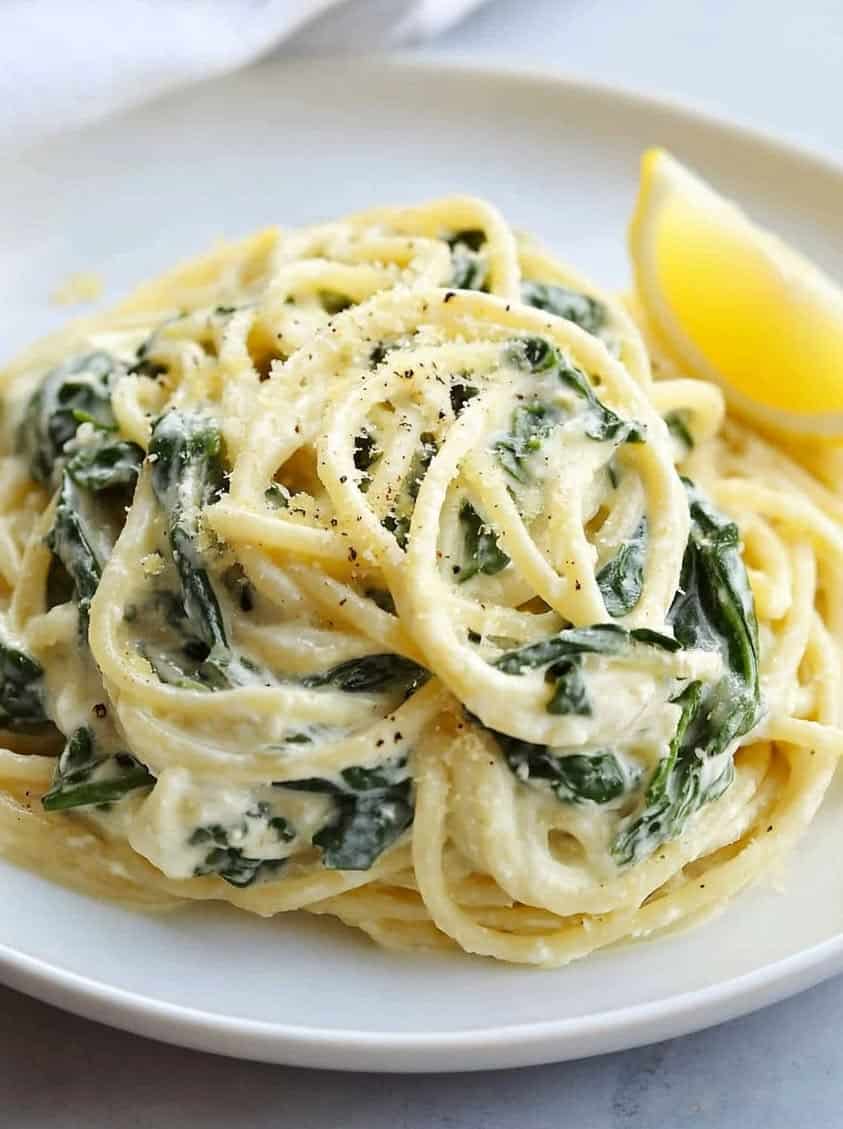
Velvety Lemon-Ricotta Spaghetti with Wilted Spinach and Parmesan: A Quick, Elegant 30-Minute Pasta Dinner That’s Light Yet Luxurious
Imagine a pasta dish that feels like a warm hug yet tastes like a bright spring day. This velvety lemon-ricotta spaghetti with wilted spinach and Parmesan is exactly that. It is a quick, elegant 30-minute pasta dinner that’s light yet luxurious. The sauce clings to every strand of spaghetti in a way that is both creamy and airy. Furthermore, it delivers a beautiful balance of tangy lemon, rich cheese, and earthy greens. This recipe is a weeknight lifesaver that feels special enough for company.
Moreover, this dish masterfully walks the line between indulgence and freshness. The ricotta creates a lush, velvety texture without the heaviness of a traditional cream sauce. Simultaneously, the lemon zest and juice cut through the richness with a vibrant, sunny acidity. The spinach wilts into the warm pasta, adding pops of green color and a nutritional boost. Finally, a generous snowfall of Parmesan cheese adds a salty, umami finish that ties everything together. This is the kind of meal you will want to make on repeat.
Ultimately, this creamy lemon-ricotta spaghetti is more than just a meal. It is a testament to the magic of simple, high-quality ingredients. You need only a handful of pantry staples to create something truly spectacular. The process is straightforward, the result is consistently delicious, and the cleanup is minimal. Consequently, it is perfect for busy evenings when you crave something comforting and gourmet. Let us dive into why this easy dinner recipe deserves a permanent spot in your rotation.
Quick Recipe Highlights
- Flavor Profile: This dish offers a sophisticated harmony of bright, sunny lemon against the mild, milky sweetness of ricotta. The Parmesan adds a deep, savory saltiness, while black pepper provides a gentle warmth. Every bite is a balanced dance between tangy, rich, and savory notes.
- Texture: The sauce is the star, achieving a luxuriously velvety and creamy consistency that coats the spaghetti perfectly. The pasta itself should be al dente, offering a pleasant bite. Meanwhile, the spinach wilts into silky ribbons, adding a delicate contrast without any sogginess.
- Aroma: As you cook, the kitchen fills with the irresistible scent of toasted garlic and fresh lemon zest. The nutty aroma of Parmesan cheese melds with these bright notes. Ultimately, it creates an inviting fragrance that promises a fresh and satisfying meal.
- Visual Appeal: The presentation is stunning with vibrant yellow strands of pasta from the lemon zest and juice. Emerald green spinach flecks throughout add beautiful color contrast. A final garnish of extra Parmesan and lemon zest makes the plate look restaurant-worthy.
- Skill Level Needed: This is a beginner-friendly recipe requiring only basic cooking techniques like boiling pasta and making a simple pan sauce. No advanced skills are necessary. However, attention to timing and ingredient preparation is key for the best results.
- Special Equipment: You only need a large pot for boiling pasta and a large skillet or Dutch oven for the sauce. A microplane or fine grater for the lemon zest and Parmesan is highly recommended. Additionally, a pair of tongs is useful for combining everything.
Recipe Overview
- Difficulty Level: We rate this recipe as “Easy” because it uses straightforward techniques accessible to cooks of all levels. The steps are sequential and logical, with minimal multitasking required. Importantly, the margin for error is small, and the dish is very forgiving. Even a first-time cook can achieve impressive results with careful attention to the instructions.
- Category: This dish fits perfectly into the categories of quick weeknight dinners, elegant pasta recipes, and meatless main courses. It is also an excellent option for a light lunch or a sophisticated supper. The versatility makes it a valuable addition to any meal plan.
- Cuisine: While inspired by the fresh, simple flavors of Italian cooking, this is a modern pasta recipe. It draws on the Italian tradition of using fresh cheese and citrus to create bright, satisfying sauces. However, it is not a traditional regional dish but a contemporary classic born from a love of those flavors.
- Cost: This is a very cost-effective meal, especially when you consider its gourmet appeal. The main expenses are the cheese and fresh lemon. Pantry staples like pasta, garlic, and olive oil keep the cost down. Overall, you can feed a family of four a restaurant-quality meal for a fraction of the price.
- Season: This creamy lemon-ricotta spaghetti shines brightest in the spring and summer when fresh, bright flavors are most desired. Conversely, it is also a wonderful antidote to the heaviness of winter meals. The dish truly works year-round, offering a taste of sunshine whenever you make it.
- Occasion: It is ideal for a speedy weeknight family dinner, a romantic date night at home, or a casual dinner party with friends. The recipe scales easily and feels special without being fussy. Therefore, it is a incredibly versatile choice for almost any gathering.
Why You’ll Love This Recipe
First and foremost, the taste and texture are utterly irresistible. The creamy lemon-ricotta sauce is luxuriously smooth and clings to every strand of pasta. Each forkful delivers a burst of sunny lemon, the gentle richness of cheese, and the savory depth of garlic and Parmesan. The wilted spinach integrates seamlessly, adding an earthy note and vibrant color. This combination creates a complex flavor profile that feels both comforting and sophisticated. You will find yourself going back for seconds every single time.
Next, the convenience factor is a major win. This is a quick, elegant 30-minute pasta dinner that’s light yet luxurious, making it perfect for busy schedules. From start to finish, you can have a gourmet-quality meal on the table in less time than it takes for delivery to arrive. The ingredient list is short and simple, with no hard-to-find items. The cooking process is mostly hands-off once the pasta is boiling. Consequently, you spend less time cooking and more time enjoying a fantastic homemade meal with your loved ones.
Furthermore, this dish offers notable nutritional advantages. Ricotta cheese is a good source of protein and calcium, while spinach packs a powerful punch of iron, vitamins A, C, and K. Using whole wheat spaghetti is an easy swap to add fiber. The sauce relies on the natural creaminess of cheese rather than cups of heavy cream. As a result, you get a meal that feels indulgent but is actually quite balanced. It is a delicious way to incorporate more greens and high-quality protein into your diet.
Additionally, the social and entertaining value of this recipe is high. It is impressive enough to serve to guests but simple enough that you will not be stuck in the kitchen all evening. You can easily double or triple the recipe to feed a crowd. The bright, fresh flavors are universally appealing. Serving this creamy lemon-ricotta spaghetti shows thoughtfulness and care. Your friends and family will be asking you for the recipe after just one bite.
Finally, the cost-effectiveness and accessibility make this a kitchen staple. You likely have many of the ingredients already in your pantry and fridge. It transforms inexpensive basics into something extraordinary. Compared to ordering similar pasta at a restaurant, you save a significant amount of money. This easy dinner recipe proves that eating well does not require a big budget or complicated techniques. It is accessible cooking at its very best.
Historical Background and Cultural Significance
The origin story of this dish is rooted in the Italian culinary philosophy of “cucina povera,” or cooking of the poor. This tradition emphasizes making extraordinary meals from humble, readily available ingredients. Dishes featuring fresh cheese, garden greens, and pasta are staples in many Italian regions. While not a specific historic recipe, our creamy lemon-ricotta spaghetti is a direct descendant of this ethos. It takes simple, affordable components and elevates them through technique and balance.
Culturally, pasta with cheese and greens holds significant importance across Italy. For instance, in Rome, “cacio e pepe” showcases cheese and pepper. In Liguria, pesto features cheese and greens. Our recipe borrows from these traditions but introduces the vibrant, non-traditional element of lemon. The addition of citrus reflects a more modern, global approach to Italian cooking. It represents an evolution where classic foundations are built upon with new, complementary flavors.
The evolution of this specific recipe is a modern tale. Contemporary home cooks and chefs alike constantly seek ways to create luxurious textures without heavy cream. Ricotta, when processed with starchy pasta water, provides the perfect solution. Meanwhile, the demand for brighter, zestier flavors has made lemon a popular partner for rich cheeses. This dish is a product of that culinary innovation. It is a 21st-century classic that answers the call for quick, healthy, and delicious food.
Regarding regional variations, the core concept adapts beautifully. In Southern Italy, one might find a version with ricotta salata and wild bitter greens. A Northern Italian twist could incorporate mascarpone for even more richness. Outside of Italy, adaptations might include different herbs like basil or mint, or a sprinkle of chili flakes for heat. The basic formula of pasta, creamy cheese, greens, and acid is incredibly versatile. This adaptability is a key reason for the recipe’s widespread and enduring appeal.
Ingredient Deep Dive
Let us start with spaghetti, the foundation. Spaghetti is a long, thin, cylindrical pasta that originated in Italy. Its name comes from the Italian word “spago,” meaning string. It is versatile and holds sauces well due to its surface area. For this recipe, choose a high-quality brand made from 100% durum wheat semolina for the best texture and flavor. Cook it in well-salted water until al dente, as it will finish cooking in the sauce. Reserve that starchy pasta water; it is the magical key to creating a velvety, emulsified sauce that clings perfectly.
Next, consider ricotta cheese. Ricotta is a fresh Italian whey cheese with a mild, slightly sweet flavor and a creamy, granular texture. The word “ricotta” means “recooked,” referring to its production from the whey leftover from making other cheeses. It is a fantastic source of protein and calcium. For the creamiest sauce, seek out whole-milk ricotta from the dairy section, not the shelf-stable tubs. If your ricotta seems grainy, you can press it through a fine-mesh sieve or blend it briefly for an ultra-smooth consistency. Do not skip draining any excess liquid from the container.
Now, examine the lemons. Both zest and juice are crucial. The zest contains potent aromatic oils that deliver intense lemon flavor without the sharp acidity of the juice. Always use unwaxed, organic lemons if possible, and wash them thoroughly before zesting. The juice provides the necessary tangy brightness that balances the richness of the cheese. For the best flavor, zest the lemon first, then juice it. Fresh lemon is non-negotiable; bottled juice will not provide the same vibrant, fresh taste that makes this dish sing.
Finally, focus on the Parmesan cheese. Authentic Parmigiano-Reggiano, aged for at least 24 months, is worth the investment for its complex, nutty, umami-rich flavor. It is a hard, granular cheese that grates beautifully. Nutritionally, it is rich in protein, calcium, and vitamins. Always buy a block and grate it yourself right before using; pre-grated cheese contains anti-caking agents that prevent it from melting smoothly. The Parmesan not only seasons the sauce but also helps thicken it. A final garnish of freshly grated cheese adds a salty, savory finish that elevates the entire plate.
Common Mistakes to Avoid
- Overcooking the Pasta: Cooking the spaghetti until it is completely soft in the boiling water is a critical error. It will become mushy when combined with the hot sauce. Always cook it to al dente, meaning it still has a slight bite. Remember, it will continue to cook slightly in the residual heat of the sauce.
- Skipping the Pasta Water: Do not drain all your pasta water down the sink. The starchy, salty water is essential for creating the sauce’s creamy emulsion. It helps bind the ricotta, lemon juice, and cheese into a smooth, velvety consistency that coats the pasta. Have a measuring cup ready to reserve at least one cup before draining.
- Using Cold Ricotta: Adding ricotta straight from the fridge can shock the sauce and make it harder to blend smoothly. Let the ricotta sit at room temperature for 15-20 minutes before starting. Alternatively, you can temper it by whisking in a few spoonfuls of the hot pasta water before adding it to the skillet.
- Burning the Garlic: Garlic cooks incredibly quickly and can turn bitter and acrid if burned. Cook it over medium-low heat just until it becomes fragrant, which usually takes only 30-60 seconds. The moment you smell that toasted garlic aroma, it is time to move to the next step.
- Adding Lemon Juice Too Early: If you add the lemon juice to the empty hot pan, it can cook too harshly and lose its fresh, bright flavor. The best practice is to add it off the heat or directly to the ricotta mixture. This preserves its vibrant acidity, which is the counterpoint to the rich cheese.
- Not Washing the Spinach Properly: Bagged spinach can still harbor grit and sand. Always give it a quick rinse, even if the package says “pre-washed.” Gritty spinach can ruin the luxurious texture of the dish. Use a salad spinner to dry it well, as excess water will dilute your sauce.
- Using Pre-Grated Parmesan: Pre-grated Parmesan contains cellulose to prevent clumping, which prevents it from melting into a smooth sauce. It will leave a grainy texture. Invest in a wedge of real Parmigiano-Reggiano or Grana Padano and grate it fresh with a microplane or box grater.
- Neglecting to Season in Layers: Seasoning only at the end results in a bland dish. Salt the pasta water generously, season the garlic and spinach in the pan, and season the ricotta mixture. Taste and adjust the final dish with salt and plenty of freshly cracked black pepper.
Essential Techniques
Mastering the al dente pasta cook is fundamental. “Al dente” translates to “to the tooth,” meaning the pasta should offer a slight resistance when bitten. This texture is crucial because the pasta will absorb sauce and finish cooking off the heat. To achieve it, follow the package timing but start tasting a minute or two before the minimum time. Additionally, always cook pasta in a large pot of rapidly boiling, generously salted water. The water should taste like the sea. This seasons the pasta from the inside out and is your first layer of flavor.
Next, understand the art of emulsification with pasta water. This is the secret technique that transforms loose ingredients into a velvety, restaurant-quality sauce. The starch released from the pasta into the cooking water acts as a binder. When you add this starchy water to the ricotta and fat in the pan, it helps create a stable, creamy emulsion that clings to the spaghetti. The key is to add the water gradually while tossing the pasta vigorously. The motion helps the sauce thicken and coat each strand evenly. Do not add all the water at once; you can always add more, but you cannot take it out.
Furthermore, wilting spinach properly is a simple but important skill. The goal is to just wilt the leaves until they are tender and bright green, not cook them into a soggy, dark mass. The residual heat from the pasta and sauce is often enough to do this. If adding to the pan, do it off the heat and toss constantly. The spinach will wilt in seconds. This gentle cooking preserves its color, nutrients, and delicate texture. Overcooked spinach becomes slimy and can release too much water, thinning out your beautiful sauce.
Pro Tips for Perfect Velvety Lemon-Ricotta Spaghetti
First, zest your lemon directly over the cooking pasta or sauce. This captures all the precious aromatic oils that would otherwise be lost on the cutting board. Those oils are packed with flavor and will infuse the dish with an incredible lemon essence.
Second, use a pair of kitchen tongs to transfer the spaghetti directly from the pot to the skillet. This method brings along just the right amount of starchy water on the pasta, helping to build the sauce seamlessly.
Third, if your ricotta seems at all grainy, take an extra minute to press it through a fine-mesh sieve or give it a quick blitz with a hand mixer. This extra step guarantees an impossibly smooth, velvety sauce texture.
Fourth, finish the dish with a high-quality extra-virgin olive oil. A drizzle of fruity, peppery oil just before serving adds a layer of richness and complexity that elevates the entire experience.
Fifth, let the finished pasta rest for one minute off the heat before serving. This allows the sauce to thicken slightly and fully adhere to the spaghetti, ensuring every bite is perfectly coated.
Sixth, always use freshly cracked black pepper instead of pre-ground. The volatile oils in freshly cracked pepper provide a brighter, more complex heat that complements the lemon and cheese beautifully.
Variations and Adaptations
For regional variations, consider a Sicilian twist with the addition of toasted pine nuts and raisins for a sweet and savory contrast. A Roman-inspired version might use pecorino Romano cheese instead of Parmesan for a sharper, saltier bite. Alternatively, incorporate a touch of Calabrian chili paste or red pepper flakes for a subtle heat that awakens the other flavors.
Seasonal adaptations are simple and effective. In spring, add fresh peas or asparagus tips along with the spinach. For summer, incorporate fresh basil or mint chiffonade just before serving. In autumn, roasted cubes of butternut squash make a wonderful addition. Winter calls for heartier greens like kale or Swiss chard, just be sure to remove tough stems and chop them finely.
Dietary modifications are straightforward. For a gluten-free version, use your favorite gluten-free spaghetti. To make it dairy-free, substitute the ricotta with blended silken tofu or a vegan ricotta alternative, and use nutritional yeast or a vegan Parmesan. For a protein boost, add grilled shrimp, shredded rotisserie chicken, or white beans directly to the sauce.
Flavor variations can personalize the dish. Stir in a tablespoon of prepared pesto for an herbal note. Add a teaspoon of finely chopped anchovy fillet to the garlic for a deep umami backbone. A splash of white wine added after the garlic can add another layer of acidity and complexity.
Texture modifications can cater to different preferences. For a chunkier sauce, use small-curd cottage cheese instead of ricotta. For added crunch, top with toasted breadcrumbs or chopped walnuts. To make it even creamier, stir in a tablespoon of mascarpone cheese along with the ricotta.
Presentation alternatives can make the meal feel new. Serve the pasta in a large, shallow bowl for a rustic family-style presentation. For individual portions, use a carving fork to twirl neat nests of spaghetti onto each plate. You can also bake the finished pasta in a dish with extra cheese on top for a golden, bubbly gratin.
Serving and Presentation Guide
Plating techniques matter for visual appeal. Use a carving fork or tongs to lift and twist a portion of spaghetti into a neat nest in the center of a warm, shallow bowl. This height adds dimension. Gently tuck a few strands of wilted spinach around the edges for a pop of color. The goal is to create a dish that looks cared for and intentional, not just dumped on a plate.
Garnishing ideas are simple but impactful. A final snowfall of freshly grated Parmesan is essential. Add a few long strips of lemon zest on top for a bright, elegant touch. A light drizzle of your best extra-virgin olive oil adds sheen. Finally, a generous grind of black pepper not only adds flavor but also visual contrast against the creamy yellow pasta.
Traditional accompaniments keep the meal light and Italian-focused. A simple arugula salad with a lemon vinaigrette echoes the main course’s flavors. A side of grilled or roasted vegetables, like zucchini or broccoli, complements the dish well. Crusty, warm bread is perfect for sopping up any remaining sauce left in the bowl.
Modern serving suggestions might include a charcuterie board to start or a light fruit sorbet for dessert. For a more substantial meal, pair it with a simple white bean dip and crostini. Serving family-style from a large, beautiful serving bowl encourages sharing and conversation at the table.
Temperature considerations are key. Serve the pasta immediately after finishing the sauce. Pasta waits for no one, and this dish is at its peak when hot and freshly emulsified. Warm your serving bowls by rinsing them with hot water and drying them just before plating. This small step keeps the pasta hot longer.
Portion control tips are helpful. This recipe yields four generous servings as a main course. If serving as a primi (first course) before a protein, it can easily serve six. Remember, the sauce is rich, so a little goes a long way. You can always serve a smaller portion alongside a larger salad or protein.
Wine and Beverage Pairing
Wine pairings should complement the dish’s bright acidity and creamy texture. A crisp, unoaked Italian white like Pinot Grigio or Vermentino is a classic choice. Their citrus notes mirror the lemon in the pasta. Alternatively, a Sauvignon Blanc with its grassy, herbal qualities pairs beautifully with the spinach. For a more substantial option, a light-bodied Chardonnay with minimal oak can work well. The goal is to choose a wine that refreshes the palate between bites of the rich cheese.
Non-alcoholic alternatives can be just as sophisticated. A sparkling lemonade or limeade mimics the citrus theme. An herbal iced tea, like mint or verbena, provides a refreshing counterpoint. For a more complex option, try a non-alcoholic sparkling wine or a tart cherry juice spritzer with a squeeze of lemon. These drinks cleanse the palate without competing with the meal’s delicate flavors.
Coffee and tea pairings are ideal for after the meal. A light, bright coffee with citrusy notes, like an Ethiopian Yirgacheffe, can be a delightful finish. For tea, choose an herbal infusion like lemon verbena or chamomile with honey. These warm beverages provide a soothing end to the meal without overwhelming the lingering flavors of lemon and Parmesan.
Temperature considerations are crucial for beverages. White wines and non-alcoholic spritzers should be served well-chilled, around 45-50°F. Iced teas and lemonades should be cold but not overly diluted. Conversely, after-dinner coffee and tea should be served hot to provide a comforting contrast. Proper temperature ensures each beverage performs its role in the dining experience.
Serving suggestions enhance the pairing. Pour wine into appropriate stemware to appreciate its aroma. Use tall, elegant glasses for spritzers and iced tea. Offer after-dinner coffee in small cups or mugs. Providing the right vessel not only looks better but also improves the tasting experience by directing the aroma to your nose.
Storage and Shelf Life
Storage methods must be prompt to maintain quality. Allow any leftovers to cool to room temperature, but do not leave them out for more than two hours. Transfer the pasta to an airtight container. It is best to store it in a single layer or in a shallow container to promote even cooling and reheating. Avoid stacking large, dense portions as they will retain heat and steam, becoming mushy.
Temperature requirements are strict for food safety. Refrigerate the leftovers within two hours of cooking. The ideal refrigerator temperature is 40°F or below. Properly stored, the creamy lemon-ricotta spaghetti will keep for up to 3 days. Do not store it at room temperature or in a warm environment, as the dairy and pasta create a perfect breeding ground for bacteria.
Container recommendations include glass or BPA-free plastic containers with tight-fitting lids. Glass is preferable as it does not absorb odors and allows you to see the contents. If using a large batch, consider dividing it into smaller, single-serving containers. This makes reheating easier and prevents you from repeatedly warming and cooling the entire batch.
Signs of spoilage are important to recognize. Discard the pasta if you notice an off or sour smell, significant discoloration (especially a grayish tint), or visible mold. If the texture becomes unpleasantly slimy or the sauce has separated irreversibly, it is past its prime. When in doubt, follow the golden rule: when in doubt, throw it out.
Reheating instructions are key to restoring texture. The best method is on the stovetop. Add the leftover pasta to a skillet with a splash of water, milk, or broth. Gently heat over medium-low, stirring frequently, until warmed through. The added liquid will help re-emulsify the sauce. Avoid the microwave if possible, as it can heat unevenly and make the pasta rubbery.
Freezing guidelines are not generally recommended for this dish. The dairy-based sauce may separate and become grainy upon thawing. The pasta will also become very soft and mushy when reheated from frozen. For best results, enjoy this creamy lemon-ricotta spaghetti fresh or within a few days of refrigeration.
Make Ahead Strategies
Prep timeline can streamline your cooking. You can zest and juice the lemons up to a day in advance; store the zest in an airtight container in the fridge and the juice in a separate container. Grate the Parmesan cheese ahead of time and refrigerate it. Wash and dry the spinach the night before. These small steps cut your active prep time down to mere minutes when you are ready to cook.
Storage between steps is simple. Keep prepped ingredients in separate, labeled containers in the refrigerator. Bring the ricotta to room temperature about 30 minutes before you start cooking to ensure it blends smoothly. Having everything measured and ready to go is the professional chef’s secret for a stress-free cooking experience.
Quality impact assessment is important. Pre-zested lemon may lose some of its potent aromatic oils, so it is best done the same day. Pre-grated Parmesan is acceptable if stored properly, but freshly grated is always superior. The spinach may wilt slightly if washed too far in advance, but it will still cook fine. Overall, most prep-ahead steps have minimal negative impact on the final dish.
Assembly tips for a make-ahead meal are limited due to the nature of fresh pasta. However, you can fully cook the sauce base (garlic, ricotta mixture) and keep it warm on a very low heat. Cook the pasta to just under al dente, drain it, and toss it with a little oil to prevent sticking. When ready to serve, combine the hot pasta with the warm sauce, add the spinach, and finish with pasta water to bring it all together.
Reheating guidelines for pre-assembled portions are the same as for leftovers. Use the stovetop method with added liquid. If you pre-cooked the pasta separately, you can quickly reheat it in the sauce. The goal is to warm everything through while re-activating the creamy emulsion of the sauce.
Fresh element additions are crucial for make-ahead meals. Always add the final garnishes—the extra Parmesan, a fresh grind of pepper, a new drizzle of olive oil, and perhaps a pinch of fresh lemon zest—right before serving. This refreshes the dish’s appearance and aroma, making it taste freshly made.
Scaling Instructions
Halving the recipe is straightforward for one or two people. Simply divide all ingredient quantities by two. Use a medium skillet instead of a large one. The cook times will remain roughly the same, but watch the garlic closely as it will cook faster in a smaller pan. You may need slightly less pasta water to achieve the right sauce consistency, so add it gradually.
Doubling or tripling the recipe for a crowd requires some adjustments. Use a very large pot or Dutch oven for the sauce to accommodate the volume. You may need to cook the pasta in two batches to avoid overcrowding the pot, which leads to uneven cooking. Increase the garlic slightly less than double (e.g., use 3 cloves instead of 4 for a double batch) to prevent it from overpowering the dish.
Equipment adjustments are necessary when scaling. For larger batches, ensure you have a pot large enough to toss the pasta with the sauce effectively. A pair of extra-long kitchen tongs or two regular pairs can be helpful for mixing. Have a heatproof measuring cup ready to reserve more pasta water, as you will need it to achieve the correct sauce consistency for the larger quantity.
Timing modifications are minimal but important. The time to wilt the spinach and combine the sauce may increase slightly due to the larger volume of ingredients. Keep the heat at medium to prevent the bottom from scorching while you work to incorporate everything. It may take an extra minute or two of tossing to get the sauce perfectly creamy and uniform.
Storage considerations change with scale. If you are not serving the entire doubled batch at once, only combine the amount you plan to serve immediately. Store the leftover cooked pasta and sauce separately in the refrigerator, then combine them with a splash of water when reheating. This prevents the pasta from absorbing all the sauce and becoming dry overnight.
Nutritional Deep Dive
Macro breakdown for one serving provides a balanced profile. You can expect a good amount of complex carbohydrates from the spaghetti for sustained energy. The ricotta and Parmesan contribute high-quality protein and fat, which promote satiety. The olive oil adds healthy monounsaturated fats. The spinach contributes minimal calories but significant micronutrients. This balance makes the dish satisfying without being overly heavy.
Micronutrient analysis reveals a wealth of vitamins and minerals. Spinach is loaded with vitamin K for bone health, vitamin A for vision, and iron. Lemon juice provides a boost of vitamin C, which can help with iron absorption from the spinach. Dairy ingredients offer calcium and phosphorus for strong bones and teeth. Garlic contains beneficial compounds like allicin, which has been studied for its potential health benefits.
Health benefits extend beyond basic nutrition. The combination of fiber from the pasta (especially if whole wheat) and protein from the cheese helps regulate blood sugar levels. The healthy fats aid in the absorption of fat-soluble vitamins from the spinach. The dish is also naturally anti-inflammatory thanks to ingredients like garlic, olive oil, and lemon. It is a heart-healthy choice when enjoyed as part of a balanced diet.
Dietary considerations are important for many. This dish is vegetarian, and can be made gluten-free with a simple pasta swap. It contains dairy, so it is not suitable for those with lactose intolerance or a milk allergy without modifications. The recipe is naturally nut-free. For those watching sodium, you can reduce the salt added to the pasta water and use less Parmesan.
Portion analysis shows that a single serving is quite filling due to the protein, fat, and fiber content. It is a complete meal that does not necessarily require a heavy side dish. If you are managing calorie intake, you can increase the ratio of spinach to pasta or use a higher-protein pasta alternative. The sauce is rich, so a moderate portion is very satisfying.
Weight management tips include being mindful of the amount of olive oil and cheese used, though these are healthy fats. You can measure these ingredients instead of eyeballing them. Using a whole-grain or legume-based pasta increases fiber and protein, which enhances fullness. Pairing the pasta with a large side salad filled with non-starchy vegetables can help control overall portion size of the richer main dish.
Dietary Adaptations
For a gluten-free version, substitute regular spaghetti with a high-quality gluten-free pasta made from brown rice, quinoa, or a blend. Be sure to check that your brand holds up well and does not become mushy. Reserve plenty of pasta water, as gluten-free pasta often releases less starch, so you may need to rely on it more for sauce thickening. All other ingredients in the base recipe are naturally gluten-free.
Creating a dairy-free adaptation requires replacing both cheeses. For the ricotta, use a store-bought vegan ricotta or make your own from blended tofu, nutritional yeast, lemon juice, and salt. For the Parmesan, use a commercial vegan Parmesan or a blend of nutritional yeast, ground nuts, and salt. Choose a pasta brand that does not contain dairy. The result will be different but can still be creamy and flavorful.
A vegan version builds on the dairy-free adaptations. Use the dairy-free ricotta and Parmesan substitutes mentioned above. Ensure your pasta is egg-free, as some fresh pasta contains eggs. Use a plant-based butter or extra olive oil for sautéing the garlic. The wilted spinach and lemon remain central, creating a bright, plant-based meal that is both satisfying and nutritious.
For a low-carb or keto adaptation, replace the spaghetti with spiralized zucchini noodles (zoodles) or shirataki noodles. Sauté the zoodles briefly to remove excess moisture before adding the sauce. Increase the amount of ricotta and Parmesan to up the fat and protein content. Be mindful that lemon juice contains some carbs, but the amount used is minimal. This creates a dish that fits within strict carbohydrate limits.
A Paleo adaptation is challenging due to the dairy and grain components. Substitute spaghetti with spiralized sweet potato or butternut squash noodles. For the cheese, you would need to create a “ricotta” from soaked and blended cashews mixed with lemon juice and nutritional yeast. This version strays from the original but captures the essence of creamy, lemony pasta.
For a Low-FODMAP adaptation, omit the garlic entirely or use garlic-infused olive oil for flavor without the fructans. Use lactose-free ricotta cheese, as lactose is a FODMAP. Parmesan is typically low in lactose and should be well-tolerated in moderate amounts. Ensure the spinach is limited to a 75-gram portion per serving to stay within recommended limits. This makes the dish gentle on sensitive digestive systems.
Troubleshooting Guide
If your sauce is too thick or clumpy, the issue is likely insufficient pasta water. The sauce should be loose and creamy when first combined. Immediately add more reserved pasta water, a few tablespoons at a time, while tossing vigorously over low heat. The starch and water will loosen the ricotta and
Print
Velvety Lemon-Ricotta Spaghetti with Wilted Spinach and Parmesan
Description
A creamy, bright pasta dish featuring ricotta and lemon zest tossed with spaghetti, wilted spinach, and grated Parmesan for a quick, elegant meal.
Ingredients
For the Crust:
- 12 oz spaghetti
- 1 cup whole-milk ricotta cheese
- Zest and juice of 1 lemon
- 4 cups fresh spinach
- 1/2 cup grated Parmesan cheese, plus more for serving
- 2 cloves garlic, minced
- 2 tbsp olive oil
- Salt and black pepper to taste
- 1/4 tsp red pepper flakes (optional)
- Fresh basil or parsley for garnish
Instructions
1. Prepare the Crust:
- Cook spaghetti in salted boiling water according to package directions until al dente. Reserve 1 cup of pasta water before draining.
- While pasta cooks, heat olive oil in a large skillet over medium heat. Add minced garlic and sauté for 1 minute until fragrant.
- Add fresh spinach to the skillet and cook until wilted, about 2-3 minutes. Remove from heat.
- In a bowl, mix ricotta, lemon zest, lemon juice, grated Parmesan, salt, black pepper, and red pepper flakes until smooth.
- Drain spaghetti and add to the skillet with spinach. Pour the ricotta mixture over the pasta, tossing to combine. Add reserved pasta water as needed to create a creamy sauce.
- Serve immediately, garnished with extra Parmesan and fresh herbs.
Notes
You can customize the seasonings to taste.

I’m Shaykee—born in Morocco, seasoned across continents. From airplane galleys to home kitchens, I share the flavors and stories that shaped my journey.