
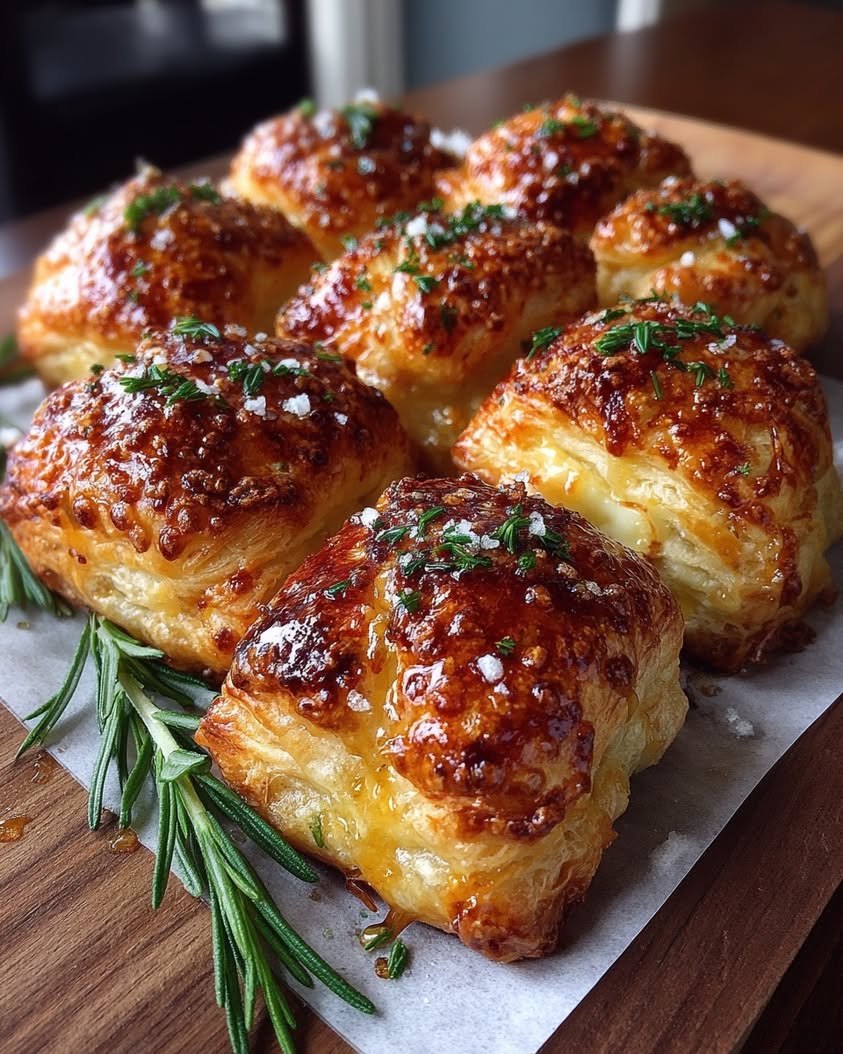
Warm Brie-Stuffed Puff Pastry Bites with Hot Honey & Rosemary: The Ultimate Crowd-Pleasing Appetizer
Imagine pulling a tray of golden, flaky puff pastry bites from the oven, their centers oozing with molten brie cheese. Now, picture drizzling them with a glossy hot honey that carries both sweetness and a gentle, warming spice. Finally, envision the fresh, piney aroma of rosemary completing this perfect bite. These Warm Brie-Stuffed Puff Pastry Bites with Hot Honey & Rosemary are not just an appetizer; they are a guaranteed conversation starter and the star of any gathering.
Consequently, this recipe masterfully combines luxurious ingredients with stunning simplicity. The process is straightforward, requiring minimal hands-on time for a result that looks and tastes professionally crafted. Moreover, the combination of creamy, savory brie encased in buttery, crisp pastry, then elevated by the complex sweet-heat of the honey, creates a symphony of textures and flavors in every single bite. Ultimately, this dish proves that impressive entertaining food doesn’t have to be complicated or time-consuming.
Furthermore, the visual appeal of these bites is undeniable. The golden-brown pastry, the peek of melted white cheese, and the shimmering honey drizzle create an irresistible presentation. They are equally at home on a casual game-day spread as they are on an elegant holiday cocktail table. In short, this recipe is your new secret weapon for effortless, unforgettable hosting.
Quick Recipe Highlights
- Flavor Profile: These bites deliver a sophisticated balance. The rich, creamy brie offers a mild, nutty flavor that perfectly contrasts the sweet and spicy hot honey. Meanwhile, the fresh rosemary adds an essential herbal, aromatic note that cuts through the richness, creating a well-rounded and addictive taste experience.
- Texture: The texture journey is a key part of the appeal. You get an initial crunch from the perfectly baked, shatteringly flaky puff pastry exterior. Then, you encounter the luxuriously soft, almost liquid center of warm brie. Finally, the sticky viscosity of the honey adds a lovely mouth-coating quality that brings everything together.
- Aroma: As these bake, your kitchen will fill with the comforting, buttery scent of puff pastry. Upon removal from the oven, the aromatic notes of toasted pastry and melted cheese dominate. Importantly, the final drizzle of hot honey and sprinkle of rosemary release their warm, spicy, and piney fragrances, signaling that the bites are ready to enjoy.
- Visual Appeal: These appetizers are as beautiful as they are delicious. The golden, layered pastry puffs up dramatically. Strategically, the exposed brie becomes bubbly and lightly browned. The glossy hot honey drizzle adds a professional finish, while the tiny green flecks of rosemary provide a pop of color and a hint of the flavors within.
- Skill Level Needed: This is a beginner-friendly recipe designed for success. Basically, it utilizes store-bought puff pastry, which does all the technical work of creating flaky layers. The assembly involves simple cutting and filling. Therefore, no advanced pastry skills are required, making it an excellent choice for novice cooks wanting to impress.
- Special Equipment: You need only very basic kitchen tools. A baking sheet, parchment paper, a sharp knife or pizza cutter, and a small bowl for the egg wash are essential. Additionally, a small saucepan is helpful for warming the honey, but you can also microwave it. No special or expensive equipment is necessary.
Recipe Overview
- Difficulty Level: We classify this recipe as “Easy” for several compelling reasons. First, it relies on the convenience of pre-made puff pastry, eliminating the most challenging aspect of pastry work. Second, the assembly process is intuitive and quick, involving simple folding and sealing. Finally, the baking time is short and forgiving, with clear visual cues for doneness, ensuring success for cooks of all levels.
- Category: This dish falls squarely into the appetizer or hors d’oeuvre category. It is designed for finger food and social eating. However, it can also beautifully accompany a salad for a light lunch or be served as part of a sophisticated brunch spread alongside fresh fruit and champagne.
- Cuisine: While not tied to one specific tradition, these bites draw inspiration from French culinary techniques (puff pastry, brie) and modern American flavor trends (hot honey). The combination represents a fusion approach, taking classic, high-quality elements and updating them with a contemporary, bold condiment to create something uniquely delicious and current.
- Cost: This is a moderately priced appetizer that delivers luxury perception. Store-bought puff pastry and a wedge of brie are the primary investments. Hot honey can be purchased or inexpensively made by infusing regular honey with chili flakes. Rosemary is often a garden herb or a low-cost purchase. Overall, the cost per impressive bite is very reasonable.
- Season: These Warm Brie-Stuffed Puff Pastry Bites are truly versatile across seasons. They feel cozy and comforting during fall and winter holidays. Conversely, they are light and festive enough for spring gatherings and summer parties. The rosemary and honey combination subtly nods to autumn, but the recipe’s flexibility makes it a year-round favorite.
- Occasion: This recipe is perfect for virtually any social occasion. It excels at holiday parties, cocktail hours, book club meetings, and potlucks. Furthermore, it makes an elegant offering for a dinner party starter. It is also ideal for game day spreads or as a special treat for a cozy night in with a glass of wine.
Why You’ll Love This Recipe
First and foremost, the taste and texture combination is utterly irresistible. The warm, gooey brie melting inside the crisp, buttery pastry creates a comforting and luxurious base. Then, the hot honey introduces a brilliant layer of complexity; the initial sweetness perfectly complements the savory cheese, followed by a slow-building, gentle heat that lingers pleasantly. The rosemary is not just a garnish; its earthy, aromatic quality cuts through the richness and ties all the flavors together into a harmonious and sophisticated bite that will have guests reaching for more.
From a practical standpoint, the convenience factor is a major win. Using store-bought puff pastry is the ultimate shortcut to an elegant result without the fuss of homemade dough. The assembly takes mere minutes, and the bites can be prepared ahead of time and refrigerated until ready to bake. This make-ahead potential is a game-changer for hosts, allowing you to spend time with your guests rather than being stuck in the kitchen. The short bake time means you can have a hot, fresh appetizer on the table in under 20 minutes, perfect for unexpected visitors or last-minute entertaining needs.
While this is an indulgent treat, it offers some nutritional considerations worth noting. Brie cheese provides a good source of protein and calcium. Honey, especially in its raw form, contains antioxidants and trace enzymes. Using fresh rosemary adds not only flavor but also compounds like rosmarinic acid, which has anti-inflammatory properties. Of course, moderation is key, but you can feel good about serving a homemade appetizer with recognizable ingredients, as opposed to processed store-bought alternatives filled with preservatives.
The social and entertaining value of this dish cannot be overstated. Food that is both visually stunning and delicious naturally becomes the centerpiece of any gathering. These bites are designed for sharing and encourage conversation. They are easy to eat while standing and mingling, making them the perfect party food. Serving something this impressive builds your reputation as a thoughtful and capable host. The recipe is scalable, so you can easily make a double batch for a large crowd or a half batch for an intimate dinner for two.
Finally, this recipe is remarkably cost-effective and accessible. The ingredients are easy to find at any standard grocery store. You do not need any specialty kitchen equipment. A single sheet of puff pastry and a small wheel of brie can yield two dozen impressive bites, making it a very economical choice for feeding a group. Compared to ordering similar appetizers from a caterer or restaurant, making these at home saves a significant amount of money while allowing you to control the quality and freshness of every component.
Historical Background and Cultural Significance
The story of this recipe is a modern tale of culinary fusion. Puff pastry, or “pâte feuilletée,” has its origins in France, with its development often credited to the painter Claude Lorrain in the 17th century. The labor-intensive process of laminating dough with butter to create hundreds of flaky layers was a hallmark of classic French patisserie. Brie, famously dubbed the “King of Cheeses,” originates from the Île-de-France region and has been produced since the early Middle Ages, prized for its creamy texture and mild flavor. These two elements form a traditional European foundation.
Hot honey, however, introduces a distinctly New World influence. The practice of infusing honey with chili peppers spans various cultures, from African cuisine to Mexican traditions. In the contemporary American culinary scene, hot honey surged in popularity in the 2010s, particularly associated with pizza shops in Brooklyn, New York. This sweet-heat condiment became a trendy way to elevate everything from fried chicken to cheese boards. The combination of old-world dairy and pastry with this modern, bold condiment reflects today’s globalized food culture, where chefs and home cooks freely blend traditions to create novel and exciting flavors.
The evolution of this specific recipe likely followed the natural progression of appetizer trends. Stuffed puff pastry canapés have long been a staple of catered events. The innovation was swapping typical fillings for a luxurious piece of brie and then cutting through that richness with an acidic or sweet element. Initially, that might have been a fruit compote or balsamic glaze. The adoption of hot honey as that contrasting element is a more recent, trend-driven adaptation. It speaks to a growing public palate that appreciates balance and complex, layered flavors rather than just singular taste notes.
Regional variations of this concept abound, demonstrating its adaptable nature. In the American South, you might find a version with pepper jelly instead of hot honey. In a more Mediterranean-inspired take, the brie could be stuffed with a sun-dried tomato pesto and drizzled with a reduced balsamic glaze. For a holiday twist, cranberry sauce or fig jam makes a wonderful filling or topping. The core concept—melty cheese in flaky pastry with a sweet or tangy accent—is a versatile template. This particular version with hot honey and rosemary has become a modern classic in its own right, beloved for its perfect balance of creamy, flaky, sweet, spicy, and herbal notes.
Ingredient Deep Dive
Puff Pastry: This is the architectural marvel of the recipe. Commercially made puff pastry is a laminated dough, meaning thin layers of dough are separated by layers of butter. During baking, the water in the butter turns to steam, pushing the layers apart and creating the iconic, airy flakiness. For best results, always thaw frozen puff pastry in the refrigerator overnight, not on the counter. This keeps the butter firm and prevents it from melting into the dough, which would compromise the rise. While homemade is an option, the quality of store-bought brands like Dufour or Pepperidge Farm is excellent and saves immense time. For a gluten-free version, several brands now offer gluten-free puff pastry sheets.
Brie Cheese: A soft-ripened cow’s milk cheese with a velvety, edible white rind. The rind is perfectly safe to eat and adds a slight mushroomy flavor that complements the creamy interior. When selecting brie for this recipe, choose a wheel that feels slightly soft to the touch at room temperature, indicating good ripeness. Avoid pre-cut wedges if possible, as a whole small wheel is easier to portion. The gentle heat of the oven transforms the brie into a luscious, molten center. From a nutritional perspective, brie provides protein, calcium, and vitamin B12, though it is also high in saturated fat, so enjoy in moderation.
Hot Honey: This is the flavor catalyst. You can purchase prepared hot honey from brands like Mike’s Hot Honey or make your own easily. To DIY, gently warm half a cup of honey in a small saucepan with one to two teaspoons of crushed red pepper flakes (adjust to taste) for about 5 minutes, then let it steep until cool. The heat level is customizable. The honey’s sweetness counteracts the saltiness of the cheese and pastry, while the capsaicin from the chilies provides a warming, lingering spice that elevates the entire bite. Honey also contains antioxidants and has antimicrobial properties.
Fresh Rosemary: This hardy, woody herb is non-negotiable for its aromatic punch. Its piney, slightly lemony fragrance cuts through the dish’s richness and adds a layer of freshness. Always use fresh rosemary, not dried, for this recipe. Dried rosemary becomes tough and needle-like when baked. To prepare, simply strip the leaves from the woody stem and chop them finely. If you have an abundance, rosemary can be dried or frozen for later use. Rosemary is rich in antioxidants and anti-inflammatory compounds and has been used in traditional medicine for centuries to improve memory and digestion.
Egg Wash (Egg & Water): This is the secret to a deep, golden-brown, glossy finish on the pastry. The egg proteins promote browning (the Maillard reaction), while the fat in the yolk adds shine and richness. A simple egg wash is made by beating one large egg with a tablespoon of water or milk until smooth. Brushing it on just before baking ensures the pastry doesn’t get soggy. It’s a small step with a major visual payoff, making the finished bites look professional and appetizing.
Common Mistakes to Avoid
- Using Puff Pastry That Is Too Warm: This is the most critical error. If the pastry is warm and soft when you work with it, the butter layers will melt and merge. Consequently, you will lose the flaky texture, resulting in a dense, greasy bite. Always work with cold, but pliable, pastry straight from the fridge.
- Overfilling with Brie: While tempting, using too large a piece of brie will cause it to leak out excessively during baking. The leaking cheese can burn on the baking sheet and make the bites messy to eat. A small, half-inch cube is the perfect amount to create a molten center without a major spill.
- Not Sealing the Edges Properly: After placing the brie on the pastry square, you must press the edges firmly with a fork. If the seal is weak, the pastry will puff open during baking, and the cheese will ooze out the sides instead of being contained in a neat package. Take a moment to ensure a good seal.
- Skipping the Egg Wash: The egg wash is not just for color; it helps the pastry achieve a crispier exterior and a beautiful sheen. Skipping it will result in pale, matte pastry that looks underbaked and lacks visual appeal. It takes seconds to apply and makes a significant difference.
- Overbaking or Underbaking: These bites bake quickly. Overbaking will dry out the brie and make the pastry too hard. Underbaking will leave the pastry soggy and the cheese unmelted. Bake just until the pastry is puffed and golden brown all over, typically 14-16 minutes. Oven temperatures vary, so watch them closely after the 12-minute mark.
- Drizzling Honey Before Baking: Hot honey should always be added after the bites come out of the oven. If drizzled before baking, the honey can burn in the high heat, becoming bitter and sticky, and it will lose its fresh, spicy flavor. The warm bites will perfectly absorb the post-bake drizzle.
- Using Dried Rosemary: Fresh rosemary provides a bright, aromatic flavor. Dried rosemary is tough, spiky, and lacks the same vibrant oil content. It will not soften enough during the short bake time and can create an unpleasant texture. Always opt for fresh sprigs.
- Not Using Parchment Paper: Baking directly on a sheet pan risks the leaking cheese or honey sticking and burning, creating a difficult cleanup. Parchment paper guarantees easy release and protects your baking sheets. It also promotes even browning on the bottom of the pastry.
Essential Techniques
Working with Cold Puff Pastry: This technique is paramount for flaky success. Puff pastry must remain cold so the solid butter layers steam apart in the oven’s heat. After thawing in the fridge, unfold the sheet on a lightly floured surface and proceed with cutting while it’s still firm. If it becomes soft and sticky, place it back on the parchment-lined baking sheet and chill in the refrigerator for 10-15 minutes before continuing. Handling it quickly and keeping your work surface cool are the best practices.
Creating a Secure Seal: A proper seal contains the melting cheese and creates a neat, pillowy package. After placing the brie cube in the center of a pastry square, brush a very light amount of egg wash around the edges. This acts as a glue. Fold the pastry over to form a triangle or rectangle, then press the edges together firmly with your fingers. Finally, use the tines of a fork to crimp the sealed edge. This double sealing method—finger press followed by fork crimp—ensures the package stays closed during the dramatic puffing in the oven.
Applying an Even Egg Wash: A good egg wash elevates the appearance. Beat the egg and water thoroughly until no strands of egg white remain. Use a soft-bristled pastry brush. Gently brush a thin, even layer over the top of each assembled bite. Avoid letting pools of egg wash collect in the seams, as this can glue layers together and inhibit rising. The goal is a glossy, uniform coating that will brown beautifully without weighing down the delicate pastry.
Infusing Honey with Heat: Making your own hot honey allows for customization. The key is gentle, low heat to warm the honey just enough to extract flavor from the chili flakes without cooking or degrading the honey’s natural enzymes. Combine honey and chili flakes in a small saucepan over the lowest heat setting for 5-7 minutes. Do not let it simmer or boil. Remove from heat and let it steep as it cools; the longer it steeps, the spicier it becomes. Strain out flakes if desired, or leave them in for extra heat and texture.
Pro Tips for Perfect Warm Brie-Stuffed Puff Pastry Bites
First, for maximum flakiness, chill the assembled bites on the baking sheet for 15 minutes before baking. This re-solidifies the butter in the pastry, leading to a better oven spring and more defined, delicate layers.
Second, use a sharp pizza cutter or bench scraper to cut the puff pastry sheet. A dull knife can drag and compress the layers, hindering their ability to rise properly. Clean, swift cuts preserve the pastry’s structure.
Third, if your brie wheel has a very thick rind, you can trim it down slightly from the portion you cube. While the rind is edible, a very thick rind might not melt as seamlessly into the creamy center.
Fourth, add a tiny pinch of flaky sea salt over the hot honey drizzle just before serving. The salt crystals will provide a delightful crunch and amplify all the other flavors—sweet, spicy, creamy, and savory.
Fifth, for easy cleanup and to catch any minor cheese leaks, always line your baking sheet with parchment paper. Silicone baking mats also work well, but parchment is ideal for this recipe.
Sixth, serve these bites immediately while they are warm and the cheese is luxuriously gooey. They are best enjoyed within an hour of baking for optimal texture and temperature.
Seventh, experiment with the shape. While triangles are classic, you can cut the pastry into circles with a glass or biscuit cutter for a different look, or create simple square pouches.
Eighth, if making hot honey from scratch, consider adding other flavorings to the infusion, such as a strip of orange zest, a smashed garlic clove, or a few black peppercorns for additional complexity.
Variations and Adaptations
Regional Variations: Embrace local flavors by adapting the accent component. In the South, substitute hot honey with a pepper jelly glaze. For a Nordic twist, use lingonberry jam and a sprinkle of dill. A Mediterranean version could feature a filling of chopped olives and sun-dried tomatoes with the brie, finished with a drizzle of oregano-infused olive oil.
Seasonal Adaptations: Tailor the recipe to the calendar. In fall, add a thin slice of pear or apple under the brie cube before sealing. For winter holidays, mix a teaspoon of orange zest into the hot honey. In spring, garnish with edible flowers like nasturtiums. During summer, a fresh basil leaf tucked inside adds a bright, licorice-like note.
Dietary Modifications: This recipe is highly adaptable. For a gluten-free version, use a certified gluten-free puff pastry. To make it dairy-free, seek out a high-quality vegan brie alternative made from cashews or almonds—many melt surprisingly well. For a nut-free version, ensure your vegan cheese is nut-free.
Flavor Variations: The filling and topping possibilities are endless. Add a small dollop of fig jam or cranberry sauce under the brie. Mix chopped toasted walnuts or pecans into the honey. Infuse the honey with thyme or sage instead of chili for an herbal twist. Sprinkle everything bagel seasoning on the egg wash before baking for a savory crunch.
Texture Modifications: For extra textural contrast, sprinkle the tops with sesame seeds or everything bagel seasoning after the egg wash. Alternatively, wrap a half-strip of prosciutto around the brie cube before enclosing it in pastry for a salty, chewy element.
Presentation Alternatives: Instead of individual bites, create a stunning Brie en Croûte appetizer for a centerpiece. Wrap an entire small brie wheel in the puff pastry sheet, bake until golden, and drizzle with hot honey and rosemary for a dramatic, shareable presentation.
Serving and Presentation Guide
Plating Techniques: Arrange the warm bites on a beautiful serving platter or a wooden board. Avoid overcrowding; give them a little space to showcase their individual beauty. Place a small bowl of extra hot honey for dipping in the center of the platter. Alternatively, create a cascading line down a long, narrow board for an elegant effect.
Garnishing Ideas: While rosemary is the star herb, don’t stop there. After drizzling with honey, add a few extra tiny sprigs of fresh rosemary for a pop of green. Scatter edible flower petals, such as pansies, for a special occasion. A light dusting of powdered sugar (sparingly) can create a beautiful sweet-and-savory contrast, especially if using a fruit-based filling.
Traditional Accompaniments: These bites are rich, so pair them with items that offer a palate-cleansing contrast. Fresh, crisp apple slices, pear wedges, or grapes are classic and perfect. Cornichons or other pickled vegetables provide a welcome acidic bite. A simple arugula salad with a lemon vinaigrette served on the side balances the meal.
Modern Serving Suggestions: For a cocktail party, spear each bite with a decorative cocktail pick for easy handling. Serve them as part of a curated appetizer board alongside cured meats, marinated olives, and assorted crackers. For a brunch, pair them with a fruit salad and a sparkling mimosa bar.
Temperature Considerations: These are unequivocally best served warm. The ideal serving temperature is just cool enough to handle but warm enough for the cheese to be delightfully runny. If they sit out and cool, the cheese will solidify. To reheat, place them in a 300°F oven for 5-7 minutes to re-crisp the pastry and re-melt the brie.
Portion Control Tips: The recipe yields about 24 bites, which is perfect for 6-8 people as a substantial appetizer (about 3-4 bites per person). For a larger party with many other food options, plan for 2-3 bites per guest. They are rich, so a little goes a long way, but they are also so delicious that people will likely want more.
Wine and Beverage Pairing
Wine Pairings: The creamy brie and sweet-spicy honey create a versatile pairing canvas. A sparkling wine like Champagne, Prosecco, or Cava is excellent; the bubbles cut through the richness. A slightly sweet white wine, such as a German Riesling (Kabinett or Spätlese) or a Vouvray, complements the honey and tempers the heat. For red wine lovers, choose a light, low-tannin red like a Pinot Noir or Beaujolais Nouveau, which won’t overpower the delicate flavors.
Non-Alcoholic Alternatives: Craft sodas offer a great pairing. A dry ginger ale or ginger beer mirrors the spicy note in the honey. Sparkling apple cider provides a festive, autumnal feel. For a more sophisticated option, try a rosemary-infused sparkling water or a mocktail with muddled berries, lime, and soda water to refresh the palate between bites.
Coffee and Tea Pairings: For a brunch setting, coffee and tea work wonderfully. A medium-roast coffee with nutty or chocolatey notes complements the savory pastry. A black tea like Earl Grey, with its bergamot citrus notes, pairs beautifully with the brie and honey. For an herbal option, a mint or lemon verbena tea offers a clean, refreshing finish.
Temperature Considerations: Serve white and sparkling wines well-chilled, between 45-50°F. Red wines should be served slightly cooler than room temperature, around 55-60°F, to keep them refreshing. Non-alcoholic sparkling beverages should be ice-cold. This contrast between the warm, rich appetizer and a cool, crisp drink is key to a balanced tasting experience.
Serving Suggestions: Always offer a variety of beverage options to cater to different preferences. Set up a small drink station near the appetizer platter. For wines, use proper glassware to enhance the experience—flutes for sparkling, white wine glasses for Riesling, and larger bowls for Pinot Noir. For non-alcoholic options, use attractive tumblers or highball glasses with plenty of ice.
Storage and Shelf Life
Storage Methods: These bites are absolutely best served fresh. However, if you have leftovers, allow them to cool completely to room temperature. Then, transfer them to a single layer in an airtight container. Place parchment paper between layers if you must stack them. Store in the refrigerator for up to 2 days.
Temperature Requirements: Always refrigerate leftovers promptly. The combination of dairy (brie) and moisture (honey) makes them perishable at room temperature. Do not leave them out for more than 2 hours to prevent bacterial growth.
Container Recommendations: A shallow, airtight container is ideal. A glass container with a locking lid works well. Avoid storing them in a bag where they can get crushed. The goal is to protect the delicate pastry from moisture and physical damage while keeping them cold.
Signs of Spoilage: Discard the bites if you notice any off odors, such as a sour or unpleasant smell. Visible mold growth is an obvious sign. If the pastry becomes excessively soggy or the cheese develops an unusual texture, it’s best to err on the side of caution and not consume them.
Reheating Instructions: To restore texture, reheating in an oven or toaster oven is mandatory. Microwaveing will make the pastry soggy. Preheat your oven to 325°F. Place the bites on a parchment-lined baking sheet and warm for 8-10 minutes, or until the pastry is crisp and the cheese is warm. They will not be as perfect as fresh, but this method yields the best possible result.
Freezing Guidelines: You can freeze the unbaked assembled bites. After sealing and placing on a baking sheet, freeze them solid (about 2 hours). Then transfer to a freezer-safe bag or container. They can be baked directly from frozen; just add 3-5 minutes to the baking time. Do not freeze after baking and drizzling with honey, as the texture will suffer greatly upon thawing and reheating.
Make Ahead Strategies
Prep Timeline: This recipe is a make-ahead dream. You can assemble the bites completely up to 24 hours in advance. After placing them on the parchment-lined baking sheet, cover the entire sheet tightly with plastic wrap and refrigerate. The egg wash can be applied just before baking for the best shine, or you can apply it before refrigerating if more convenient.
Storage Between Steps: The key to successful make-ahead is keeping the pastry cold. The assembled bites must stay refrigerated until baking. If your refrigerator is crowded, you can stack the baking sheets, but ensure they are level so the bites don’t get squashed. The cold rest actually benefits the pastry, allowing the gluten to relax and the butter to firm up.
Quality Impact Assessment: Making them ahead has minimal negative impact and can even be positive for the pastry’s texture. The primary consideration is that the pastry might stick slightly to the parchment if refrigerated for a very long time, but this is rare. The flavor will be identical. The only element that must remain fresh is the final garnish of rosemary and hot honey.
Assembly Tips: When assembling ahead, work efficiently to keep the pastry cold. If the kitchen is warm, work in batches, returning the sheet to the fridge as needed. Ensure the sealed edges are very secure, as they may soften slightly in the fridge, and a good initial seal prevents opening.
Reheating Guidelines: This strategy is for unbaked bites. If you have baked them ahead and need to reheat, follow the reheating instructions in the storage section. However, for optimal quality, the “make ahead” refers to the unbaked state. Baking from cold may require an extra minute or two in the oven.
Fresh Element Additions: Regardless of make-ahead steps, always add the hot honey drizzle and fresh rosemary garnish after the bites come out of the oven. Prepare your hot honey and chop your rosemary ahead of time, but combine these elements with the warm pastry just before serving for maximum flavor and aroma impact.
Scaling Instructions
Halving the Recipe: Halving is straightforward. Use half a sheet of puff pastry (fold it gently and re-roll to the original thickness if needed, or just cut the sheet in half and re-wrap the unused portion). Use half a small brie wheel. Halve all other ingredients proportionally. The baking time may be slightly reduced by a minute or two since a smaller batch may heat more efficiently in the oven. Keep a close eye on them.
Doubling or Tripling: For larger crowds, simply multiply the ingredients. You will need multiple baking sheets. It is crucial to bake in batches on the middle oven rack, rotating sheets halfway through, rather than crowding the oven with multiple sheets at once. Crowding leads to uneven heating and steaming, which prevents proper browning and crisping. Allow the oven to reheat fully between batches.
Equipment Adjustments: When scaling up, ensure you have enough baking sheets and parchment paper. You may also need a larger workspace for assembly. Consider using a second bowl for egg wash if doing a very large batch. A pizza cutter becomes even more essential for efficiently cutting multiple sheets of pastry.
Timing Modifications: The prep time will increase linearly as you make more. Assembly for a double batch will take roughly twice as long. The bake time per batch remains the same (14-16 minutes), but you must account for the time to bake in successive batches. Plan accordingly so the first batch is still warm when the last one comes out.
Storage Considerations: If making a huge batch ahead, ensure you have adequate refrigerator space for the baking sheets. You may need to use sheet pans with lids or carefully stack them. For freezing a large quantity, use the flash-freeze method on sheets before transferring to bags to prevent the bites from sticking together in a solid block.
Nutritional Deep Dive
Macro Breakdown: A single bite is a concentrated source of energy. The primary macronutrients are fats and carbohydrates. The puff pastry and butter contribute significant saturated fat, while the brie adds more fat and protein. The honey provides simple carbohydrates (sugars). One bite likely contains around 80-100 calories, with 5-7 grams of fat, 6-8 grams of carbs, and 2-3 grams of protein. These are estimates and vary by specific brands and portion sizes.
Micronutrient Analysis: Despite being an indulgent food, these bites offer some micronutrients. Brie is a good source of Vitamin B12, essential for nerve function, and provides calcium and phosphorus for bone health. Rosemary contains small amounts of iron, calcium, and vitamin B6. Honey offers trace amounts of minerals like zinc and potassium, as well as antioxidants. The white flour in puff pastry provides minimal micronutrients unless it is fortified.
Health Benefits: When enjoyed in moderation as part of a balanced diet, this appetizer can contribute to pleasure and social bonding, which are important for mental health. The calcium from the cheese supports bones. The antioxidants in honey and rosemary can help combat oxidative stress. The protein in the cheese can promote satiety, potentially helping to control overall intake.
Dietary Considerations: This recipe is not suitable for individuals with lactose intolerance or a dairy allergy unless modified. It contains gluten from the wheat flour in puff pastry. It
Print
Warm Brie-Stuffed Puff Pastry Bites with Hot Honey & Rosemary
Description
Flaky puff pastry pockets filled with creamy brie, baked until golden, and drizzled with spicy-sweet hot honey infused with fresh rosemary.
Ingredients
For the Crust:
- 1 sheet frozen puff pastry, thawed
- 8 oz wheel of brie cheese, rind removed and cut into 1-inch cubes
- 1/4 cup honey
- 1 tsp red pepper flakes
- 2 sprigs fresh rosemary, leaves stripped
- 1 egg, beaten (for egg wash)
- Flaky sea salt, for garnish
Instructions
1. Prepare the Crust:
- Preheat oven to 400°F (200°C). Line a baking sheet with parchment paper.
- Roll out puff pastry on a lightly floured surface. Cut into 12 equal squares. Place a brie cube in the center of each square, fold corners to the center, and pinch edges to seal. Arrange on baking sheet, brush with egg wash, and bake for 15-18 minutes until puffed and golden.
- While baking, combine honey, red pepper flakes, and rosemary in a small saucepan. Heat over low until warm and fragrant, about 5 minutes. Remove from heat.
- Transfer baked bites to a serving platter. Drizzle with hot honey, sprinkle with flaky salt, and serve warm.
Notes
You can customize the seasonings to taste.

I’m Shaykee—born in Morocco, seasoned across continents. From airplane galleys to home kitchens, I share the flavors and stories that shaped my journey.