
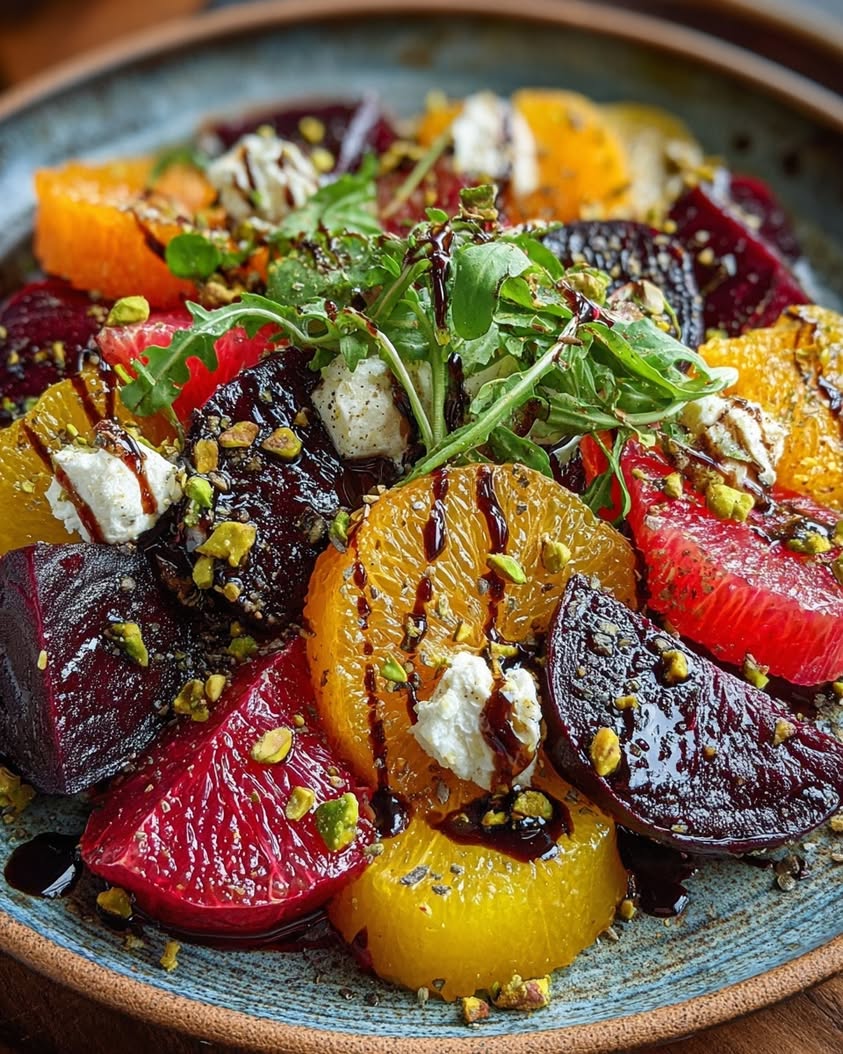
Warm Roasted Beet & Citrus Salad with Goat Cheese, Pistachios & Honey-Balsamic Glaze: A Stunning Winter Salad
This vibrant roasted beets & citrus salad is a true celebration of winter’s bounty. Imagine sweet, earthy beets, warm from the oven, paired with bright segments of juicy orange and grapefruit. Then, picture creamy goat cheese crumbling over the top, adding a tangy richness that perfectly balances the natural sugars. Finally, a generous sprinkle of crunchy pistachios and a drizzle of sweet-tangy honey-balsamic glaze bring everything together in a symphony of texture and flavor. This dish is not just a salad; it’s a stunning centerpiece that will elevate any meal from ordinary to extraordinary.
Moreover, this recipe is a fantastic way to enjoy healthy, seasonal produce at its peak. Roasting the beets concentrates their sweetness and gives them a wonderfully tender, almost caramelized texture. Consequently, the warm beets gently wilt the delicate citrus segments just enough, creating a luxurious, cohesive dish. The combination of warm and cool elements, soft and crunchy textures, and sweet and savory notes makes every bite an exciting experience. Ultimately, this warm roasted beet & citrus salad is a testament to how simple ingredients can create something truly magical and restaurant-worthy in your own kitchen.
Furthermore, this salad is incredibly versatile. It shines as a hearty vegetarian main course for a light lunch, yet it also makes an impressive side dish for a holiday feast or a dinner party. The stunning jewel-toned colors from the deep red beets and bright citrus make it a visual showstopper on any table. Whether you’re looking for a healthy weeknight dinner option or an elegant dish to impress guests, this warm roasted beet & citrus salad with goat cheese and pistachios delivers on every level. It’s a recipe you’ll return to again and again, especially during the cooler months when you crave something both nourishing and spectacular.
Quick Recipe Highlights
- Flavor Profile: This salad masterfully balances sweet, earthy, tangy, and savory notes. The natural sweetness of the roasted beets and citrus plays beautifully against the tangy goat cheese and the sharp, sweet honey-balsamic glaze. Every component has a purpose, creating a complex and satisfying taste experience in every forkful.
- Texture: You get a wonderful contrast of textures that keeps each bite interesting. The roasted beets are tender and almost velvety, while the citrus segments are juicy and soft. Crunchy, salty pistachios add a necessary bite, and the creamy goat cheese provides a rich, smooth counterpoint to all the other elements.
- Aroma: As the beets roast, they fill your kitchen with a warm, earthy, and subtly sweet fragrance. When you toss them with the bright, zesty citrus, the aroma becomes incredibly fresh and inviting. The final drizzle of reduced balsamic glaze adds a deep, caramelized scent that ties the whole aromatic profile together.
- Visual Appeal: This is a visually stunning dish with a painterly palette of deep ruby red, vibrant orange, and pale pink from the beets and citrus. The white goat cheese and green pistachios provide beautiful contrast, making it look as gorgeous on a holiday table as it does on a casual dinner plate.
- Skill Level Needed: This is an accessible recipe for cooks of all levels. The primary skills needed are simple vegetable roasting and making a quick pan sauce for the glaze. There’s no fancy knife work or complex techniques, making it a perfect recipe to build confidence in the kitchen.
- Special Equipment: You only need very basic kitchen tools: a baking sheet, aluminum foil, a small saucepan, and a good chef’s knife. A citrus juicer can be helpful for extracting every last drop of juice for the glaze, but it’s not strictly necessary. A mandoline can speed up beet slicing but requires careful handling.
Recipe Overview
- Difficulty Level: This warm roasted beet & citrus salad is rated “Easy” because it involves straightforward, foundational cooking techniques. The most complex step is segmenting the citrus, which is a simple skill to learn. Otherwise, the recipe relies on oven roasting and reducing a simple glaze, tasks that require minimal active supervision. Even a beginner cook can achieve fantastic results by following the clear instructions.
- Category: This dish beautifully straddles multiple categories. It is a substantial and satisfying vegetarian main course salad, packed with nutrients and fiber. Simultaneously, it serves as an elegant and impressive side dish for roasted meats like chicken, pork, or salmon. It also fits perfectly into the “healthy recipes” and “seasonal cooking” categories, highlighting winter produce at its best.
- Cuisine: While not tied to one specific tradition, this salad draws inspiration from modern American and Mediterranean culinary styles. The use of roasted vegetables, fresh citrus, nuts, and cheese is a hallmark of contemporary, produce-focused cooking. The honey-balsamic glaze adds a touch of Italian-inspired sweetness and acidity that is universally appealing.
- Cost: This is a moderately priced recipe that feels luxurious. Beets, citrus, and onions are typically affordable, especially in season. Goat cheese and pistachios are the “splurge” ingredients, but a little goes a long way in terms of flavor and impact. You can easily prepare this stunning salad for a dinner party without breaking the bank.
- Season: This is the ultimate winter salad. Beets and citrus fruits like oranges and grapefruits are at their peak of sweetness and flavor during the colder months. The combination of warm roasted vegetables and bright fruit is exactly what we crave when the weather turns chilly, offering both comfort and a burst of vitamin C.
- Occasion: This salad is incredibly versatile for entertaining. It’s elegant enough for Thanksgiving, Christmas, or a New Year’s Eve dinner party. Conversely, it’s simple and wholesome enough for a cozy family Sunday supper or a meal-prepped lunch. Its vibrant colors make it a festive choice for any gathering where you want the food to look as good as it tastes.
Why You’ll Love This Recipe
First and foremost, the taste and texture appeal of this warm roasted beet & citrus salad is absolutely irresistible. The sweet, earthy depth of the roasted beets forms a perfect foundation. Then, the bright, acidic punch from the citrus cuts through that richness beautifully. Furthermore, the creamy, tangy goat cheese adds a luxurious mouthfeel, while the crunchy pistachios provide a satisfying contrast. Finally, the sweet-tangy honey-balsamic glaze acts as the unifying conductor, bringing all these distinct flavors into a harmonious and memorable dish that delights all your senses with every single bite.
Another significant benefit is the recipe’s convenience and straightforward preparation. Although the beets require roasting time, the active hands-on work is minimal and mostly involves simple assembly. You can prepare components like the glaze and toasted nuts ahead of time. Consequently, last-minute assembly becomes a quick and stress-free task. This makes the salad an ideal choice for busy weeknights when you want something healthy and special, or for entertaining when you need to manage your time effectively in the kitchen without compromising on a spectacular result.
From a health perspective, this salad is a nutritional powerhouse, making it a fantastic addition to your repertoire of healthy recipes. Beets are loaded with fiber, folate, and beneficial nitrates that support heart health and stamina. Citrus fruits provide a huge dose of immune-boosting vitamin C and antioxidants. Goat cheese offers protein and calcium, while pistachios contribute healthy fats, protein, and fiber. Together, they create a meal that is deeply satisfying, nourishing, and supportive of overall wellness, proving that eating well can also be an indulgent pleasure.
Additionally, this dish holds tremendous social and entertaining value. Its stunning visual presentation—a mosaic of deep reds, bright oranges, and creamy whites—guarantees it will be the center of attention on any table. It sparks conversation and shows your guests that you’ve put thought and care into the meal. Whether served as a shared starter or a plated side, it elevates the entire dining experience. It’s a recipe that makes you look like a culinary pro, even if your cooking skills are still developing.
Finally, this warm roasted beet & citrus salad is remarkably cost-effective and accessible. The core ingredients are humble root vegetables and seasonal fruit, which are often very affordable. While goat cheese and pistachios are premium items, you use them as garnishes, so a small amount has a big impact. You can easily find all ingredients at a standard grocery store. This accessibility means you can enjoy a restaurant-quality, gourmet salad any night of the week without a special trip to a fancy market, making luxurious eating an everyday possibility.
Historical Background and Cultural Significance
The story of combining beets and citrus is a relatively modern chapter in culinary history, reflecting our globalized food culture. Individually, beets have ancient roots in Mediterranean and Middle Eastern cuisine, prized for their sweetness and leaves. Citrus, originating in Southeast Asia, traveled along trade routes to the Mediterranean. However, the pairing of roasted beets with fresh citrus segments is a contemporary innovation from the farm-to-table and New American cuisine movements. Chefs began highlighting seasonal, contrasting ingredients on a plate, leading to this now-classic combination that celebrates texture and temperature play.
Culturally, this salad represents a shift towards vegetable-centric dining and the elevation of salads from a simple side to a main event. In many Western cultures, salads were historically an afterthought. This dish, with its hearty roasted vegetables and substantial toppings, challenges that notion. It embodies a modern culinary philosophy that values plants as the star, using technique like roasting to maximize their natural flavors. Consequently, it has become a staple in restaurants and homes that prioritize fresh, bold, and visually striking food that doesn’t rely on meat for satisfaction.
The evolution of this specific recipe showcases how home cooking adapts professional techniques. The concept of a “warm salad” gained popularity as cooks explored ways to make greens and vegetables more appealing year-round. Roasting beets, a method that intensifies their sugar content, made them a perfect winter ingredient. Adding citrus provided a necessary acidic counterpoint during a season less abundant with fresh produce. The addition of cheese and nuts followed a Mediterranean template for building a complete salad, resulting in the layered, sophisticated dish we know today that feels both rustic and refined.
Regional variations of this warm roasted beet & citrus salad abound, demonstrating its adaptability. In California, you might find avocado added for creaminess or a lime-cilantro vinaigrette. Mediterranean versions could include olives, oregano, and feta cheese instead of goat cheese. Some chefs use different nuts like walnuts or hazelnuts, or swap the balsamic glaze for a pomegranate molasses. These adaptations show how the core formula—sweet roasted vegetable + bright acid + creamy cheese + crunchy nut—is a versatile canvas that can be painted with local flavors and personal preferences, ensuring its place as a modern classic.
Ingredient Deep Dive
Beets: Beets have been cultivated since ancient times, originally for their leafy greens. The root itself gained popularity later. They are nutritional powerhouses, rich in folate, manganese, potassium, and fiber. Their vibrant color comes from betalains, pigments with potent antioxidant and anti-inflammatory properties. When selecting beets, look for firm, smooth bulbs with vibrant greens still attached if possible, a sign of freshness. Smaller beets tend to be sweeter and more tender. Store them unwashed in a plastic bag in the refrigerator crisper for up to two weeks. For a substitution, try roasted carrots or golden beets for a different color and slightly milder flavor.
Citrus (Orange & Grapefruit): Citrus fruits symbolize abundance and celebration in many cultures, often associated with holidays. They are famously packed with vitamin C, a crucial antioxidant for immune function and skin health. They also provide fiber and various phytochemicals. Choose fruits that feel heavy for their size with firm, brightly colored skin; this indicates juiciness. Navel oranges are excellent for easy segmenting. Store citrus at cool room temperature for short-term use or in the refrigerator for longer storage. For a variation, blood oranges add dramatic color, or use tangerines for a sweeter, more delicate flavor profile.
Goat Cheese (Chèvre): Goat cheese is one of the oldest known dairy products, with evidence of production dating back thousands of years. It is often easier to digest than cow’s milk cheese due to different protein structures and fat molecules. It provides protein, calcium, and healthy fats. Look for a fresh, soft log of plain chèvre. A high-quality cheese will have a clean, tangy aroma without any sourness. Keep it tightly wrapped in the refrigerator. For a dairy-free or vegan adaptation, a soft almond-based cheese or a creamy tahini drizzle can mimic the tangy, rich quality. Feta cheese is also a common and delicious substitute.
Pistachios: Pistachios are historically known as the “smiling nut” in the Middle East and are a symbol of wellness and good fortune. They are a great source of protein, fiber, healthy monounsaturated fats, and antioxidants like lutein. They also contain various B vitamins. Purchase raw, unsalted pistachios for this recipe to control seasoning. Toasting them unlocks a deeper, richer flavor and enhances their crunch. Store nuts in an airtight container in a cool, dark place or the refrigerator to prevent their oils from going rancid. Substitute with walnuts, pecans, or almonds for a different but equally satisfying crunch.
Balsamic Vinegar & Honey: Traditional balsamic vinegar, from Modena, Italy, is a lovingly aged, complex condiment. The glaze in this recipe uses a more accessible commercial balsamic, reduced with honey to mimic depth and sweetness. Balsamic contains antioxidants, while honey offers natural sugars and trace enzymes. Use a decent-quality balsamic that you enjoy drinking; avoid anything labeled “balsamic glaze” that is pre-thickened with starches. A good, raw honey will contribute the best flavor. For a vegan version, substitute maple syrup or agave nectar. The reduction process is key, transforming sharp vinegar into a sweet, syrupy, and complex dressing that ties the entire salad together.
Common Mistakes to Avoid
- Underseasoning the Beets: Beets need generous seasoning before roasting. Simply tossing them in oil is not enough. Always season with salt and pepper before they go into the oven. This step builds foundational flavor layers into the vegetable itself, ensuring every bite is seasoned from the inside out.
- Overcrowding the Baking Sheet: If you pack the beet cubes too tightly on the pan, they will steam instead of roast. Consequently, you’ll miss out on the desirable caramelized edges and concentrated flavor. For perfect roasting, ensure the pieces are in a single layer with a little space between them.
- Using Pre-Cooked or Canned Beets: While convenient, pre-cooked beets lack the deep, caramelized sweetness and firm-tender texture of freshly roasted beets. They often come packed in vinegar or water, which can throw off the flavor balance of your entire salad. The extra time to roast fresh beets is non-negotiable for the best result.
- Skipping the Citrus Segmenting Step: It’s tempting to just slice the citrus, but taking the time to supreme or segment them (removing the membrane) is crucial. This eliminates bitter pith and ensures you get pure, juicy bursts of flavor without any tough, chewy bits disrupting the salad’s elegant texture.
- Adding Cheese While Everything is Too Hot: If you crumble the goat cheese onto the piping hot beets, it will melt completely into a gooey mess. Instead, let the beets cool slightly so they are just warm. This gentle warmth will soften the cheese slightly but allow it to maintain its distinct, creamy crumbles.
- Not Toasting the Nuts: Raw pistachios are fine, but toasted pistachios are transformative. Toasting deepens their flavor and maximizes their crunch. Simply toast them in a dry skillet over medium heat for a few minutes until fragrant. This small, quick step adds a major layer of flavor and texture complexity.
- Over-Reducing the Balsamic Glaze: Watch the glaze carefully as it simmers. If reduced too far, it will become thick and sticky like candy, hardening when it cools on the salad. You want a syrup that coats the back of a spoon but is still pourable. It will continue to thicken slightly as it cools.
- Assembling the Salad Too Far in Advance: This salad is best assembled just before serving. If left to sit, the citrus will release too much juice, the nuts will lose their crunch, and the colors may bleed. Prepare all components ahead, but combine them on individual plates at the last minute for the freshest experience.
Essential Techniques
Roasting Root Vegetables: Roasting is the essential technique that transforms hard, earthy beets into sweet, tender gems. The dry, consistent heat of the oven caramelizes the natural sugars on the surface while cooking the interior evenly. To master it, cut your beets into uniform sizes for consistent cooking. Toss them thoroughly in oil to promote browning and prevent drying. Most importantly, do not stir them too often; letting them sit undisturbed on the hot pan is what creates those delicious caramelized edges. A perfectly roasted beet should be easily pierced with a fork but not mushy.
Segmenting Citrus (Supreming): This technique removes the bitter white pith and membrane, leaving only the juicy, tender flesh of the citrus segments. First, slice off the top and bottom of the fruit so it sits flat. Then, using a sharp knife, cut away the peel and pith in a downward motion, following the fruit’s curve. Finally, hold the fruit over a bowl and carefully slice along the membrane walls to release each clean segment. The key is a very sharp knife and taking your time. The result is beautiful, professional-looking citrus that elevates the salad’s texture and presentation.
Reducing a Glaze: Reducing a liquid like balsamic vinegar concentrates its flavor and thickens its consistency through evaporation. Combine the vinegar and honey in a small saucepan and bring to a simmer. The goal is to cook it gently until it reduces by about half and can coat the back of a spoon. A common pitfall is boiling it too vigorously, which can cause it to burn or reduce too quickly. Watch for visual cues: the bubbles will become slower and more syrupy, and the aroma will shift from sharp vinegar to sweet, caramelized notes. Remember, it will thicken further as it cools.
Toasting Nuts: Toasting nuts unlocks their volatile oils, dramatically enhancing their flavor and crunch. The stovetop method offers the most control. Place nuts in a single layer in a dry skillet over medium heat. Shake the pan or stir frequently for even toasting. Listen for a light crackling sound and watch for them to become fragrant and slightly darker in color—this usually takes 3-5 minutes. The moment you smell their nutty aroma, they are done. Immediately transfer them to a plate to stop the cooking process, as they can burn quickly in the hot pan.
Pro Tips for Perfect Warm Roasted Beet & Citrus Salad
Wear Gloves for Beet Prep: Beet juice stains skin and cutting boards intensely. To avoid pink fingers for a day, simply wear disposable kitchen gloves while peeling and cutting. Alternatively, you can roast the beets whole in foil first, then the skins will slip off easily after cooling, minimizing direct handling.
Use Different Colored Beets: For a visually spectacular salad, use a mix of red and golden beets. Keep in mind that you should roast them on separate trays or foil packets, as red beets will bleed their color onto the golden ones. The combination creates a stunning, multi-hued effect on the plate.
Reserve Citrus Juice: After segmenting your oranges and grapefruit, squeeze the remaining membrane “skeleton” over a bowl to capture all the fresh juice. You can add a splash of this juice to the balsamic glaze for an extra layer of citrus flavor, or use it in the dressing for a different salad.
Warm Your Plates: Since this is a warm salad, serving it on chilled plates can cool it down too quickly. For the best experience, briefly warm your serving plates or shallow bowls in an oven (on the warm setting) or with hot water before drying and assembling the salad on them.
Season in Layers: Don’t just season at the end. Season the beets before roasting, season the citrus segments lightly with a pinch of salt, and season the finished salad with flaky sea salt and fresh black pepper. This layered seasoning ensures every component is perfectly seasoned.
Add Fresh Herbs: Introduce a final layer of freshness with a sprinkle of delicate herbs. Fresh mint, dill, or tarragon are fantastic complements to the beets and citrus. Add them just before serving so their bright flavor and color remain vibrant.
Control the Glaze Consistency: If your balsamic glaze becomes too thick after cooling, you can gently re-warm it or whisk in a tiny amount of warm water or orange juice to loosen it back to a drizzling consistency. It should flow off the spoon in a thin, steady stream.
Compose, Don’t Toss: For the most beautiful presentation, arrange the salad components deliberately on individual plates rather than tossing everything in a large bowl. Start with a base of warm beets, artfully place citrus segments around, then sprinkle with cheese, nuts, and finally, drizzle the glaze over the top.
Variations and Adaptations
Regional Variations: This salad template adapts beautifully to regional flavors. For a Mediterranean twist, swap goat cheese for feta, add Kalamata olives, and use a lemon-oregano vinaigrette. A Middle Eastern version could include sumac in the glaze, pomegranate arils, and a sprinkle of za’atar. In the fall, a North American variation might feature roasted apples or pears alongside the beets and a maple-Dijon glaze.
Seasonal Adaptations: While perfect in winter, this salad can be modified year-round. In spring, use tender baby beets and add fresh peas or asparagus tips. Summer calls for adding grilled stone fruits like peaches or nectarines. Autumn adaptations might include roasted squash or sweet potato cubes mixed with the beets, and a cider-based glaze.
Dietary Modifications: For a vegan warm roasted beet & citrus salad, omit the goat cheese. Instead, use a creamy avocado, a dollop of vegan cashew cream, or a crumble of marinated tofu “feta.” Ensure your sweetener in the glaze is maple syrup or agave. For a nut-free version, substitute toasted sunflower or pumpkin seeds for the pistachios.
Flavor Variations: Experiment with different acid profiles. Instead of balsamic, try a pomegranate molasses glaze or a red wine vinegar and shallot reduction. Infuse the olive oil with rosemary or thyme before tossing the beets. Add a pinch of warm spices like cinnamon or cumin to the beet roasting oil for an unexpected, aromatic depth.
Texture Modifications: To add more textural intrigue, include crispy elements. Top the salad with crispy fried shallots or capers. Alternatively, for a softer, more cohesive dish, you can toss the warm beets and citrus in a light vinaigrette before plating, allowing the flavors to meld more thoroughly.
Presentation Alternatives: For individual starter portions, serve the salad on a round of whipped goat cheese spread on a plate. For a family-style centerpiece, arrange all components in concentric circles on a large platter. You can also deconstruct it into a jar for a portable lunch: glaze at the bottom, then beets, citrus, nuts, and cheese on top.
Serving and Presentation Guide
Plating Techniques: For restaurant-quality presentation, think in terms of composition and color contrast. Start by placing a small bed of optional delicate greens like arugula or mâche on the plate. Arrange the warm beet cubes in a loose, off-center pile. Then, strategically place the citrus segments around and partially on top of the beets, allowing their bright color to peek through. This creates visual interest and height.
Garnishing Ideas: The goat cheese and pistachios are functional garnishes. Crumble the cheese with your fingers for an irregular, rustic look. Sprinkle the toasted pistachios last so they stay on top and retain maximum crunch. A final flourish of flaky sea salt (like Maldon) and a few grinds of black pepper add sparkle and flavor. Fresh herb leaves, such as mint or microgreens, provide a final touch of green.
Traditional Accompaniments: As a side dish, this salad pairs classically with simply prepared proteins that don’t compete with its vibrant flavors. Think roasted chicken, seared salmon, grilled pork tenderloin, or a hearty lentil loaf. The salad’s acidity and sweetness cut through the richness of these proteins beautifully.
Modern Serving Suggestions: For a modern, complete meal, serve it as a main course topped with a protein like pan-seared halloumi, grilled shrimp, or flaked smoked trout. You can also bulk it up with a base of farro, quinoa, or wheat berries to add whole grains, making it even more substantial and nutritious.
Temperature Considerations: The magic of this dish is the contrast between the warm beets and the cool citrus and cheese. Aim for the beets to be just warm to the touch, not scalding hot. If you’ve prepped components ahead, briefly reheat the beets in the microwave or a warm oven before assembling. Always add the cheese and nuts at the last second.
Portion Control Tips: This recipe yields four generous side-dish portions or two ample main-course servings. When serving as a starter at a multi-course meal, you can stretch it to six smaller, elegant portions. Use a ring mold to create a neat, stacked tower for a more formal presentation, ensuring each guest gets a perfect, proportional bite of every element.
Wine and Beverage Pairing
Wine Pairings: The sweet earthiness of beets and the bright acidity of citrus create a fun pairing challenge. A dry Rosé, with its berry notes and crisp finish, is a fantastic all-around match. For white wine lovers, a Sauvignon Blanc or Pinot Gris with high acidity and citrusy notes will complement the salad beautifully. If preferring red, opt for a light, low-tannin red like a Pinot Noir or Beaujolais, which won’t clash with the vinegar in the glaze.
Non-Alcoholic Alternatives: Sparkling water with a twist of orange or grapefruit peel is a refreshing, cleansing choice. For something more complex, try a ginger-based mocktail or a tart pomegranate spritzer. A chilled, high-quality apple cider (non-alcoholic) can also mirror the sweet and tangy notes of the dish wonderfully.
Coffee/Tea Pairings: While not a typical pairing for salad, if serving this as a brunch item, a light roast coffee with bright, citrusy acidity would be harmonious. For tea, consider a white tea with subtle floral notes or a green tea like Sencha, which has a vegetal quality that can echo the earthiness of the beets without overwhelming the palate.
Temperature Considerations: Serve white and rosé wines well chilled, between 45-50°F. Light reds like Pinot Noir should be served slightly cooler than room temperature, around 55°F. Non-alcoholic sparkling drinks should be very cold to provide a refreshing contrast to the warm elements of the salad.
Serving Suggestions: Always pour beverages into appropriate glassware to enhance the experience—a wine glass for wine, a highball for spritzers. Provide a water glass as well, as the salty nuts and cheese can make guests thirsty. If offering multiple options, consider a small tasting pour to allow guests to discover their preferred pairing with this complex salad.
Storage and Shelf Life
Storage Methods: Store all components separately for best results. Cooled roasted beets can be kept in an airtight container in the refrigerator for up to 5 days. Citrus segments should be stored in their own juice in a sealed container for 2-3 days. The balsamic glaze can be stored at room temperature in a sealed jar for several weeks. Goat cheese should remain in its original packaging or be tightly wrapped. Pistachios are best stored in an airtight container in a cool, dark pantry.
Temperature Requirements: All components except the glaze require refrigeration below 40°F. The glaze, due to its high sugar and acid content, is shelf-stable. Do not assemble the salad and then refrigerate it, as the textures will degrade quickly. The beets and citrus will become soggy, and the nuts will lose their crunch.
Container Recommendations: Use glass containers with tight-fitting lids for the beets and citrus to prevent odor absorption. A small mason jar is perfect for the glaze. For nuts, a sealed bag with the air pressed out or a dedicated airtight container will keep them fresh and crunchy.
Signs of Spoilage: Discard roasted beets if they develop a slimy texture or an off odor. Citrus segments are past their prime if they become mushy or develop mold. The glaze is fine unless you see visible mold, which is unlikely due to acidity. Nuts that smell rancid or taste bitter should be thrown away.
Reheating Instructions: To recreate the “warm” element, gently reheat the refrigerated beet cubes in a microwave in 30-second intervals or in a 300°F oven until just warmed through. Do not overheat them, or they may become mushy. Always reheat only the portion you plan to use immediately.
Freezing Guidelines: Freezing is not recommended for this salad. The high water content in the beets and citrus causes cell walls to break down during freezing, resulting in a mushy, watery texture upon thawing. The glaze can be frozen, but it’s so quick to make that it’s unnecessary. This is a dish best enjoyed fresh or from fridge-stored components.
Make Ahead Strategies
Prep Timeline: You can prep nearly every component 1-2 days in advance. Day 1: Roast the beets, let them cool, and store them in the fridge. Toast the pistachios and store them at room temperature. Make the balsamic glaze and let it cool. Day of serving: Segment the citrus (this is best done a few hours ahead max). About 30 minutes before serving, take the beets and cheese out of the fridge to take the chill off. Reheat beets gently, then assemble.
Storage Between Steps: As outlined, keep everything separate. The key to successful make-ahead is preventing moisture migration. Ensure the roasted beets are completely cool before sealing their container to prevent condensation. Store the glaze in a jar at room temperature. Keep the toasted nuts in a dry place. This compartmentalization preserves each ingredient’s ideal texture.
Quality Impact Assessment: Pre-roasting beets actually improves their flavor, as it allows the sugars to settle and the flavors to meld. The glaze’s flavor deepens over time. The only component that suffers slightly from prepping ahead is the citrus, as it can dry out or become too soft. Therefore, segmenting the citrus the morning of your event is the ideal compromise for freshness and convenience.
Assembly Tips: When ready to serve, have all your prepped components lined up. Warm the beets gently. On each plate, start with the warm beets, add the citrus segments, then crumble the cheese and sprinkle the nuts. Finally, drizzle the room-temperature glaze over everything. This assembly-line approach makes last-minute service fast and flawless, even for a crowd.
Reheating Guidelines: Reheat only the beets. Spread them on a microwave-safe plate and cover with a damp paper towel to add steam and prevent drying. Microwave in 30-second bursts until warm. Alternatively, spread them on a baking sheet and warm in a 325°F oven for 5-10 minutes. Do not reheat the citrus, cheese, or nuts.
Fresh Element Additions: Even with advanced prep, always add a final “fresh” touch right before serving. This could be a last-minute sprinkle of flaky salt, an extra crack of pepper, a few fresh herb leaves you didn’t use in prep, or a final small drizzle of extra-virgin olive oil. This brightens up the pre-made components and makes the dish taste freshly crafted.
Scaling Instructions
Halving the Recipe: Halving this warm roasted beet & citrus salad is straightforward for a smaller meal. Use one medium beet and one piece of citrus. Halve all other ingredient quantities proportionally. The roasting time for the beets may decrease slightly, so check for doneness 5-10 minutes earlier. The balsamic glaze will reduce much faster in a small saucepan, so watch it carefully to prevent burning. All other techniques and assembly steps remain identical.
Doubling or Tripling: For a crowd, you can easily double or triple the recipe. The key is to roast the beets in a single layer on multiple baking sheets, rotating the sheets in the oven halfway through for even cooking. You may need to roast in batches. Make the glaze in a larger saucepan to allow for proper reduction without boiling over. Segment all citrus ahead of time. Consider setting up a salad assembly station for guests to build their own plates, keeping components separate until serving to maintain texture.
Equipment Adjustments: Scaling up requires planning. Ensure you have enough baking sheets and oven space. A large, heavy-bottomed saucepan is better for making a larger
Print
Warm Roasted Beet & Citrus Salad with Goat Cheese, Pistachios & Honey-Balsamic Glaze
Description
A vibrant and elegant salad featuring sweet roasted beets, tangy citrus segments, creamy goat cheese, crunchy pistachios, and a drizzle of honey-balsamic glaze for a perfect balance of flavors and textures.
Ingredients
For the Crust:
- 3 medium beets, peeled and cut into 1-inch wedges
- 2 tablespoons olive oil, divided
- Salt and black pepper to taste
- 1 orange, peeled and segmented
- 1 grapefruit, peeled and segmented
- 4 cups mixed greens (e.g., arugula, spinach)
- 4 ounces goat cheese, crumbled
- 1/4 cup shelled pistachios, roughly chopped
- 2 tablespoons balsamic vinegar
- 1 tablespoon honey
Instructions
1. Prepare the Crust:
- Preheat the oven to 400°F (200°C). Toss the beet wedges with 1 tablespoon olive oil, salt, and pepper. Spread on a baking sheet and roast for 25-30 minutes until tender and slightly caramelized.
- While the beets roast, prepare the honey-balsamic glaze by combining balsamic vinegar and honey in a small saucepan. Simmer over medium heat for 3-5 minutes until slightly thickened, then set aside to cool.
- In a large bowl, toss the mixed greens with the remaining 1 tablespoon olive oil. Arrange the greens on plates or a platter, then top with warm roasted beets, citrus segments, crumbled goat cheese, and chopped pistachios.
- Drizzle the honey-balsamic glaze over the salad just before serving. Season with additional salt and pepper if desired.
Notes
You can customize the seasonings to taste.

I’m Shaykee—born in Morocco, seasoned across continents. From airplane galleys to home kitchens, I share the flavors and stories that shaped my journey.