
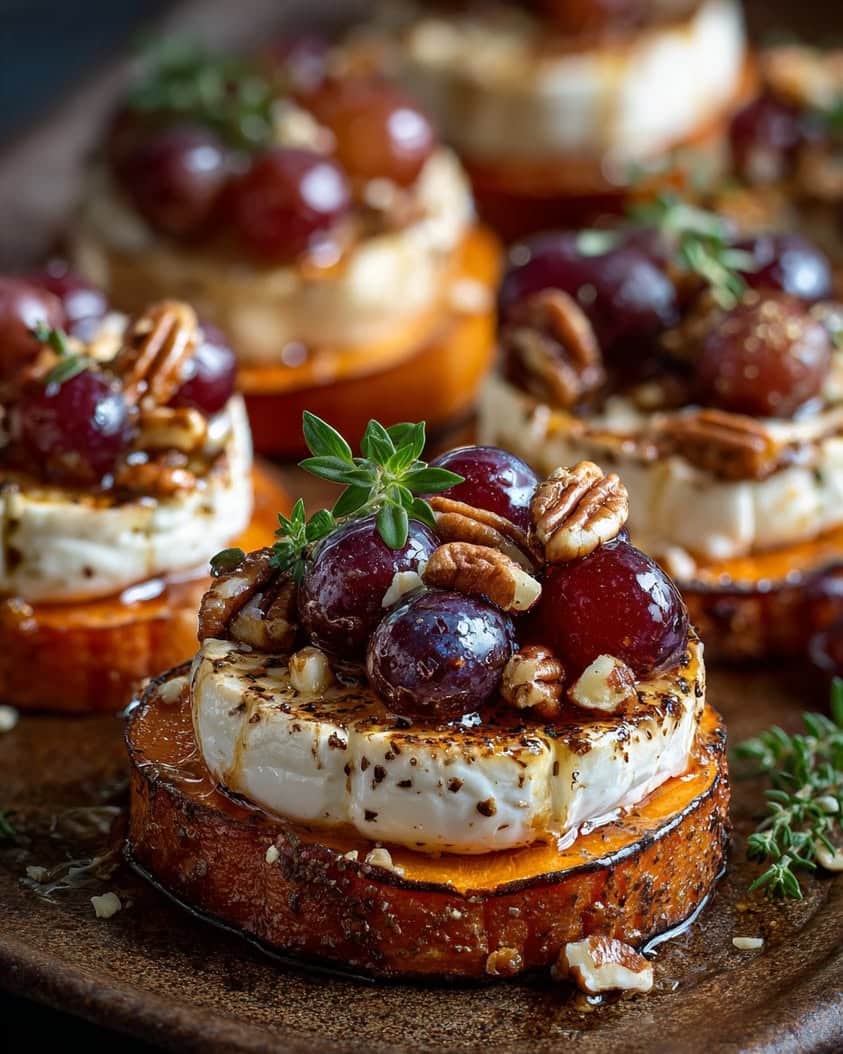
Warm Sweet Potato Rounds with Camembert, Grapes & Honey-Pecan Drizzle: An Elegant Sweet and Savory Appetizer
Imagine a dish that perfectly balances earthy sweetness with rich, creamy decadence. These Warm Sweet Potato Rounds with Camembert, Grapes & Honey-Pecan Drizzle deliver exactly that experience. This stunning appetizer transforms simple, wholesome ingredients into an elegant culinary masterpiece. Furthermore, it combines warm, roasted sweet potato bases with melted, luxurious Camembert cheese. The result is a harmonious blend of flavors and textures that will impress any guest.
This recipe for Warm Sweet Potato Rounds is incredibly versatile. It works beautifully as a holiday appetizer, a sophisticated party snack, or even a light vegetarian main course. The combination of sweet and savory elements creates a complex flavor profile that feels both comforting and gourmet. Each component complements the others perfectly, from the soft sweet potato to the gooey cheese and the juicy burst of grape. Ultimately, this dish proves that impressive food does not require complicated techniques or hard-to-find ingredients.
The visual appeal of these Warm Sweet Potato Rounds is undeniable. The vibrant orange rounds, golden-brown cheese, deep purple grapes, and glossy drizzle create a feast for the eyes. Consequently, this appetizer is a fantastic choice for special occasions where presentation matters. The aroma that fills your kitchen while roasting the sweet potatoes and toasting the pecans is utterly irresistible. This dish engages all the senses, making the eating experience truly memorable and satisfying from start to finish.
Quick Recipe Highlights
- Flavor Profile: This dish masterfully combines the earthy sweetness of roasted sweet potatoes with the rich, funky creaminess of Camembert. Meanwhile, the honey-pecan drizzle adds a sticky, nutty sweetness, and the fresh grapes provide a bright, juicy counterpoint that cuts through the richness.
- Texture: You will experience a wonderful contrast between the tender, almost creamy interior of the sweet potato rounds and the soft, melted cheese. Additionally, the toasted pecans offer a satisfying crunch, and the whole grapes deliver a refreshing pop with each bite.
- Aroma: As the sweet potatoes roast, they release a warm, caramelized scent that is deeply comforting. The Camembert, when warmed, emits a rich, buttery, and slightly earthy aroma that blends beautifully with the toasting nuts and warm honey.
- Visual Appeal: The vibrant orange rounds create a stunning base for the white and golden melted cheese. The deep purple grapes and amber-hued honey drizzle with specks of brown pecan create a beautiful, rustic, and elegant presentation on any platter.
- Skill Level Needed: This is an accessible recipe for cooks of all levels, requiring only basic knife skills for slicing and simple assembly. The techniques involved—roasting, toasting nuts, and melting cheese—are straightforward and forgiving, making it a great choice for beginners and experienced cooks alike.
- Special Equipment: You need only a standard baking sheet, parchment paper, a small skillet for toasting nuts, and a sharp knife. No fancy or specialized kitchen tools are required, which makes this recipe easy to prepare in any home kitchen.
Recipe Overview
- Difficulty Level: We classify this recipe as easy because it involves minimal prep work and uses simple, fundamental cooking techniques like roasting and toasting. The steps are sequential and logical, with very little room for error. Even a novice cook can achieve beautiful, delicious results with this straightforward guide. The assembly is intuitive and does not require any advanced culinary skills.
- Category: This dish fits perfectly into the appetizer and snack categories, ideal for starting a meal or serving at a gathering. It can also function as a light lunch or a elegant side dish alongside a simple green salad or roasted chicken. Its versatility allows it to bridge the gap between casual eating and formal dining with ease.
- Cuisine: While not tied to a single tradition, this recipe draws inspiration from modern American and French farmhouse cooking. The use of Camembert is a nod to French fromagerie, while the sweet potato and pecan combination feels distinctly Southern American. This fusion creates a unique, contemporary dish that celebrates quality ingredients.
- Cost: The cost is moderate, largely dependent on the price of the Camembert cheese. Sweet potatoes and grapes are typically affordable, year-round ingredients. Pecans and honey are pantry staples that can be used in many other recipes, making this a cost-effective dish for entertaining without looking budget-conscious.
- Season: This recipe shines in the autumn and winter months when sweet potatoes are at their peak and hearty, warm appetizers are most desired. However, it is truly a versatile dish suitable for any season, especially since grapes are available year-round. It brings a touch of warmth and comfort to holiday tables but is light enough for a spring gathering.
- Occasion: It is perfect for holiday parties, Thanksgiving appetizers, Christmas Eve nibbles, or sophisticated cocktail parties. Additionally, it makes an impressive offering for a potluck or a book club meeting. This dish elevates any event, from a casual family movie night to a formal dinner party with friends.
Why You’ll Love This Warm Sweet Potato Rounds Recipe
First and foremost, the taste and texture appeal is immediate and profound. The first bite delivers a complex symphony of flavors that dance on your palate. You experience the natural caramelized sweetness of the roasted sweet potato, which is then balanced by the rich, creamy, and slightly tangy Camembert. Subsequently, the honey-pecan drizzle introduces a layer of nutty, floral sweetness, while the fresh grape provides a burst of juiciness that cleanses the palate. The contrast between the warm, soft components and the cool, crisp grape is nothing short of magical. This combination of sweet and savory ensures that each bite is interesting and satisfying, preventing any flavor fatigue.
The convenience and preparation benefits are another major reason to adore this recipe. From start to finish, you can have this elegant appetizer on the table in well under an hour. The hands-on time is minimal; you simply slice, roast, and assemble. This makes it an ideal choice for busy hosts who want to spend more time with their guests and less time stuck in the kitchen. Moreover, the components can be partially prepared ahead of time, reducing last-minute stress. The simple steps are easy to follow, and the recipe is very forgiving, meaning you are almost guaranteed success even if you are not a confident cook.
From a nutritional standpoint, these Warm Sweet Potato Rounds offer significant advantages. Sweet potatoes are a powerhouse of nutrients, packed with beta-carotene, Vitamin A, and fiber. They provide sustained energy and are excellent for digestive health. The grapes contribute antioxidants and hydration, while the pecans add healthy fats, protein, and minerals. Even the Camembert, in moderation, provides calcium and protein. This dish is a more nutrient-dense option compared to many other common appetizers that are deep-fried or heavily processed. You can feel good about serving something that is both indulgent and nourishing.
The social and entertaining value of this dish is incredibly high. Its beautiful, colorful presentation makes it a centerpiece on any appetizer table, guaranteed to draw compliments and curiosity from your guests. It is a fantastic conversation starter and feels much more special and thoughtfully prepared than a standard cheese platter. Because it is served warm, it creates a sense of comfort and hospitality, making people feel welcomed and cared for. This appetizer sets a tone of rustic elegance for any gathering, signaling to your guests that you have put care into the food you are sharing.
Finally, the cost-effectiveness and accessibility of the ingredients make this a go-to recipe. You do not need to hunt for exotic or expensive items at a specialty store. The core components are readily available at any well-stocked supermarket. While Camembert is the star, it is not an overly expensive cheese, and a single wheel goes a long way in this recipe. Sweet potatoes are one of the most affordable vegetables available. This means you can create a dish that looks and tastes luxurious without putting a strain on your grocery budget. It is an accessible way to bring gourmet flair to your everyday cooking or entertaining.
Historical Background and Cultural Significance
The origin story of this specific recipe is modern, born from a contemporary culinary trend that celebrates the combination of sweet and savory flavors on a single bite-sized platform. However, its components have deep, individual histories. The sweet potato, native to the Americas, has been a staple food for thousands of years, cultivated as early as 2500 BCE in Peru. Its journey to Europe and beyond came after Christopher Columbus’s voyages, and it eventually became a cornerstone of Southern American cooking. Using it as a base for toppings is a natural evolution of crostini or bruschetta, substituting bread for a more nutrient-dense and gluten-free alternative.
The cultural importance of the key ingredients tells a rich story. Camembert cheese hails from Normandy, France, and has a protected designation of origin (AOC), meaning true Camembert de Normandie must come from that specific region. It embodies the French passion for terroir and artisan cheesemaking. The pecan is the only major tree nut that originated in North America and has been a vital food source for Indigenous peoples for centuries. Honey, one of the world’s oldest sweeteners, has been revered across ancient civilizations from Egypt to Greece. Combining these elements on an American sweet potato is a beautiful fusion of Old World and New World food histories.
The evolution of this recipe reflects broader shifts in eating habits and party culture. Appetizers have moved away from heavy, complicated canapés towards simpler, more ingredient-driven dishes that highlight freshness and flavor contrast. The rise of vegetarianism and gluten-free diets has also influenced recipe development, making vegetable-based platforms like sweet potato rounds increasingly popular. This dish is a perfect example of that evolution—it feels gourmet but is inherently wholesome. It satisfies the modern desire for food that is both visually appealing for social media and genuinely delicious to eat.
Regional variations of this concept are endless, demonstrating its adaptability. In the American South, one might find a version with pimento cheese and candied pecans. A Mediterranean variation could feature feta cheese, olives, and a drizzle of oregano-infused honey. In the fall, a version with blue cheese, roasted pears, and a walnut drizzle would be exquisite. The basic formula—starchy base, creamy cheese, fresh fruit, and crunchy nut—is a template that can be customized based on local ingredients and cultural preferences. This versatility is a testament to the soundness of the original flavor and texture combination, allowing it to be reinterpreted across different culinary landscapes.
Ingredient Deep Dive
Sweet Potatoes: Sweet potatoes are tuberous root vegetables with a global history spanning over 5,000 years, originally domesticated in Central or South America. They are incredibly nutritious, boasting high levels of beta-carotene (which converts to Vitamin A), Vitamin C, manganese, and fiber. Their complex carbohydrates provide steady energy. When selecting sweet potatoes, look for firm specimens with smooth, tight skins and no soft spots or signs of decay. Avoid refrigerating them, as cold temperatures can negatively alter their texture and flavor; instead, store them in a cool, dark, well-ventilated place. For a different twist, you could substitute with Yukon Gold potato rounds for a less sweet base, or even with thick slices of roasted butternut squash.
Camembert Cheese: Camembert is a soft, creamy, surface-ripened cow’s milk cheese that originated in Normandy, France, in the late 18th century. It is rich in calcium and protein but also contains significant saturated fat, so moderation is key. Its signature bloomy rind is edible and contributes to the complex, mushroomy flavor. When choosing Camembert, gently press the top; it should feel soft and yielding under the rind, indicating perfect ripeness. Store it in the original paper or wax paper inside the refrigerator’s cheese drawer. If Camembert is unavailable, Brie is the closest substitute, offering a similar texture and mild flavor. For a stronger taste, a creamy blue cheese like Gorgonzola Dolce would work wonderfully.
Red Grapes: Grapes are one of the oldest cultivated fruits, with evidence of viticulture dating back to 6000 BCE in the Middle East. They are packed with antioxidants, including resveratrol, which is linked to heart health, and they provide hydration and a quick source of natural energy. Look for plump, firm grapes that are firmly attached to their stems, without any wrinkling or brown spots. Store them unwashed in a perforated plastic bag in the refrigerator to maintain freshness. For a variation, you could use sliced green grapes for a slightly tarter note, or even substitute with other small fruits like pomegranate arils for a jewel-like appearance and burst of tangy juice.
Pecans: Pecans are native to North America and were a vital food source for Native American tribes, who also used the wood for tools and the shells for dyes. They are an excellent source of healthy monounsaturated fats, zinc, manganese, and antioxidants. The key to unlocking their flavor is toasting, which enhances their nutty taste and adds crucial crunch. Store pecans in an airtight container in the refrigerator or freezer to prevent their high oil content from turning rancid. If you do not have pecans, walnuts are the best substitute, offering a similar texture and a slightly more bitter, robust flavor that also pairs beautifully with sweet potatoes and honey.
Honey: Honey has been used as a food and medicine for at least 8,000 years, as evidenced by rock paintings in Spain. Its nutritional profile includes antioxidants and trace enzymes, and it has natural antimicrobial properties. The flavor of honey varies dramatically based on the nectar source, from light and floral to dark and robust. For this recipe, a mild, liquid honey like clover or orange blossom works best, allowing the other flavors to shine. Always store honey at room temperature in a sealed container; crystallization is natural and can be reversed by gently warming the jar in a bowl of warm water. For a vegan adaptation, pure maple syrup is an excellent substitute, providing a similar viscosity and caramel-like sweetness.
Common Mistakes to Avoid
- Cutting the Rounds Too Thin or Thick: Slices thinner than 1/2-inch will become too soft and difficult to top, potentially falling apart. Conversely, slices thicker than 3/4-inch will not cook through evenly, leaving a firm, undercooked center. Aim for consistent thickness to ensure uniform roasting and a stable base for your toppings.
- Overcrowding the Baking Sheet: Placing the sweet potato rounds too close together on the pan will cause them to steam instead of roast. This results in a soggy texture rather than the desired caramelized edges and tender interior. Always leave a little space between each round to allow for proper air circulation and browning.
- Using Cold Camembert Straight from the Fridge: Adding very cold cheese to the warm sweet potatoes will slow down the melting process and can result in uneven heating. For best results, let the Camembert sit at room temperature for about 15-20 minutes before slicing and adding it to the warm rounds. This helps it achieve that perfect, gooey melt.
- Neglecting to Toast the Pecans: Raw pecans lack the deep, nutty flavor and crisp texture that toasted pecans provide. Skipping this quick step in a dry skillet means missing out on a key layer of flavor and crunch. Toasting only takes a few minutes but makes a significant difference in the final dish’s complexity.
- Drizzling the Honey Too Early: If you assemble the entire dish with the honey drizzle too far in advance, the sweet potato rounds can become soggy. The drizzle is best added either just before serving or passed at the table. This preserves the ideal textural contrast between the warm, firm round and the glossy, sweet topping.
- Not Seasoning the Sweet Potatoes: While sweet potatoes are delicious on their own, a light seasoning with salt and pepper before roasting enhances their natural flavor and balances the sweetness. Even a small amount of salt can elevate the entire dish, making the sweet components taste sweeter and the savory cheese taste richer.
- Burning the Pecans While Toasting: Pecans have a high oil content and can go from perfectly toasted to burnt very quickly. They require constant attention and frequent shaking or stirring in a dry pan over medium heat. The moment you smell their fragrant, nutty aroma and see them darken slightly, they are done.
- Choosing an Unripe Camembert: A Camembert that is too young will be firm and chalky in the center and will not melt properly. Look for a wheel that feels soft when you gently press the center, indicating it is ripe and ready to become wonderfully creamy when warmed.
Essential Techniques
Uniform Slicing: Achieving consistently sized sweet potato rounds is arguably the most critical technique for this recipe. Why is it so important? Because even thickness ensures that every piece roasts at the same rate, preventing some rounds from being undercooked while others are overdone. To master this, use a sharp chef’s knife and focus on making straight, perpendicular cuts. A common pitfall is rushing this step, resulting in wedges or uneven disks. For visual success, your rounds should look like identical coins, which also translates to a professional and appealing final presentation on the plate.
Proper Roasting: Roasting is a dry-heat cooking method that caramelizes the natural sugars in the sweet potato, developing deep flavor and a desirable tender-yet-firm texture. The importance lies in transforming the raw, starchy vegetable into a sweet, flavorful base that can support the other ingredients. To master it, ensure your oven is fully preheated and use a light coating of oil to promote browning and prevent sticking. A common mistake is flipping the rounds too often; let them cook undisturbed to develop a good sear. The visual cue for success is golden-brown edges and a surface that is easily pierced with a fork but not mushy.
Toasting Nuts: Toasting pecans is a simple but transformative technique that intensifies their nutty flavor and adds a crucial element of crunch. This step is important because it unlocks volatile oils and compounds, moving the pecans from a bland ingredient to a flavor powerhouse. Master it by using a dry skillet over medium heat and stirring or shaking the nuts constantly for even toasting. The most common pitfall is walking away, as they can burn in seconds. Your visual and olfactory cues are key: the nuts are done when they become fragrant and take on a slightly darker shade of brown.
Balancing Warm Assembly: The technique of assembling the dish while components are at their ideal temperatures is vital for the final experience. The goal is to slightly melt the cheese on the warm potato base without making the grape warm or causing the drizzle to soak in completely. This creates the perfect textural and temperature contrast. Master it by having all your toppings prepped and ready to go the moment the sweet potatoes come out of the oven. The common pitfall is letting the sweet potato rounds cool completely before adding the cheese. For success, the cheese should look soft and slightly glossy, just beginning to lose its shape.
Pro Tips for Perfect Warm Sweet Potato Rounds
For extra-caramelized edges, arrange the sweet potato rounds in a single layer on a preheated baking sheet. This initial blast of heat helps sear the bottom immediately, creating a more robust texture and deeper flavor.
A light brush of olive oil on the cut sides of the sweet potatoes before roasting is crucial. This thin layer promotes even browning, prevents drying out, and helps any seasonings you add adhere to the surface.
If your Camembert wheel is very ripe and soft, consider scooping small portions with a melon baller or a small spoon instead of slicing. This creates beautiful, rustic dollops of cheese that melt elegantly.
Add a pinch of flaky sea salt over the completed dish right before serving. The salt crystals will not fully dissolve, providing tiny bursts of salinity that enhance every other flavor in the bite.
For a more complex drizzle, gently warm the honey with the toasted pecans already in it. This infuses the honey with the nutty flavor, creating a more unified and deeply flavored topping for your appetizer.
If serving at a party, consider creating a “build-your-own” station. Keep the warm sweet potato rounds, cheese, grapes, toasted pecans, and honey in separate bowls, allowing guests to customize their own bites.
Use a mandoline slicer for perfectly uniform sweet potato rounds if you have one. Just be extremely careful and always use the safety guard to protect your fingers from the sharp blade.
For an elegant touch, use a variety of grape colors. A mix of deep red and pale green grapes on the same platter adds visual interest and a subtle variation in flavor.
Variations and Adaptations
Explore regional variations to tailor this dish to different culinary traditions. A Southern-inspired version might feature pimento cheese and a drizzle of bourbon-infused honey. For a taste of the Mediterranean, top the rounds with crumbled feta, chopped Kalamata olives, and a sprinkle of dried oregano. An autumnal twist could include roasted slices of pear instead of grapes and a blue cheese like Stilton, finished with a walnut drizzle. These adaptations show how the core concept is a fantastic canvas for global flavors, allowing you to travel the world one sweet potato round at a time.
Seasonal adaptations keep this recipe exciting all year long. In the spring, substitute the grapes with fresh peas and mint, using a dollop of ricotta cheese. During summer, ripe cherry tomatoes and fresh basil with a balsamic glaze would be delightful. For a deep winter version, use roasted chestnuts in the drizzle and a sprinkle of pomegranate arils for a festive, jewel-toned appearance. Embracing seasonal produce not only enhances flavor but also supports local agriculture and ensures you are cooking with ingredients at their peak freshness and nutritional value.
Dietary modifications are straightforward, making this appetizer inclusive for all your guests. For a vegan adaptation, use a high-quality vegan camembert-style cheese and substitute the honey with agave nectar or maple syrup. A dairy-free version simply omits the cheese altogether, perhaps adding a smear of hummus or a white bean puree for creaminess. To reduce the sugar content, you can lightly brush the sweet potatoes with olive oil and skip the honey drizzle, relying on the natural sweetness of the roasted vegetable and the grapes to provide balance.
Experiment with flavor variations by introducing herbs and spices. A dusting of smoked paprika or cayenne pepper on the sweet potatoes before roasting adds a subtle heat. Finely chopped fresh rosemary or thyme mixed into the honey drizzle introduces an aromatic, savory note. For a more decadent treat, consider adding crumbled cooked bacon or pancetta over the top before serving. A squeeze of fresh lemon juice over the finished dish can brighten all the flavors and cut through the richness of the cheese, adding another layer of complexity.
Texture modifications can alter the eating experience significantly. For extra crunch, double the amount of toasted pecans or mix in some toasted pumpkin seeds. For a smoother, more spreadable cheese element, let the Camembert come to room temperature and whip it lightly with a fork before adding it to the rounds. If you prefer a jammy fruit component, you can quickly roast the grapes alongside the sweet potatoes for the last 5 minutes, which will intensify their sweetness and soften their skin.
Presentation alternatives can elevate the dish for different settings. Instead of assembling everything, serve the components deconstructed on a beautiful board, allowing guests to build their own bites. For a more formal plated appetizer, place two rounds on each small plate and artfully drizzle the honey-pecan mixture around them. Skewering a grape and a small piece of Camembert with a toothpick and placing it on top of each round makes for easy, mess-free eating at a standing cocktail party.
Serving and Presentation Guide
Plating techniques can transform this simple appetizer into a restaurant-quality dish. For a family-style presentation, arrange the Warm Sweet Potato Rounds in a concentric circle on a large, rustic wooden board or a sleek slate platter. Overlap them slightly for a abundant, inviting look. Alternatively, for individual servings, place two or three rounds on small appetizer plates, ensuring each one has a generous portion of each topping. The key is to create height and dimension; avoid laying the components flat. Instead, stack the cheese and grape slightly off-center to make the presentation dynamic and visually engaging.
Garnishing ideas extend beyond the core recipe ingredients. A final flourish of fresh, delicate herb sprigs like thyme, rosemary, or even microgreens adds a touch of color and freshness. Edible flowers, such as nasturtiums or pansies, can make the dish spectacular for a special event. A light dusting of finely chopped chives or parsley provides a vibrant green contrast against the orange and white colors. For a textural garnish, reserve a few whole toasted pecans to place strategically on the platter, signaling the flavor within the drizzle to your guests.
Traditional accompaniments for a dish like this focus on balancing its richness. A simple, bitter green salad with a sharp vinaigrette served on the side can cleanse the palate between bites. For a heartier offering, a warm, spiced soup like butternut squash or carrot ginger soup makes a excellent pairing. If serving as part of a larger cheese board, include other complementary items like sliced prosciutto, fig jam, and a variety of crackers and breads to allow guests to explore different flavor combinations.
Modern serving suggestions often involve interactive elements. Set up a DIY bar where guests can top their own warm sweet potato rounds with an array of options: different cheeses (blue cheese, goat cheese), various nuts (walnuts, almonds), and multiple drizzles (balsamic reduction, hot honey). This not only serves as a fun activity but also caters to various dietary preferences simultaneously. Another contemporary idea is to serve them as a passed hors d’oeuvre on a tray, each round pre-assembled on a small napkin or decorative spoon for easy handling.
Temperature considerations are paramount for the best experience. The sweet potato rounds and melted cheese should be served warm, not piping hot, to allow the flavors to be perceptible. The grapes, however, should be cool and crisp straight from the refrigerator, providing that refreshing contrast. The honey-pecan drizzle can be at room temperature or slightly warmed to make it more fluid. Assembling the dish at the last possible moment ensures that the warm components gently kiss the cool components without fully warming them, preserving the delightful temperature play that is central to this recipe’s appeal.
Portion control tips are helpful for planning. As an appetizer, plan for 2-3 rounds per person if other snacks are available. If this is the main appetizer or part of a light meal, 4-5 rounds per person is more appropriate. Remember that the dish is rich, so a little goes a long way. When scaling the recipe for a crowd, it is better to make multiple batches and keep them warm in a low oven than to overcrowd a single baking sheet, which compromises the texture. Always consider the context of your meal to gauge the perfect quantity to prepare.
Wine and Beverage Pairing
Selecting the right wine pairings can elevate your Warm Sweet Potato Rounds from a great appetizer to an unforgettable culinary experience. The sweet and savory profile of the dish calls for wines with good acidity and a touch of sweetness to complement, not compete. A semi-dry Riesling or Gewürztraminer is a fantastic choice; their floral notes and slight sweetness harmonize with the honey and sweet potato while their acidity cuts through the richness of the Camembert. For red wine lovers, a light-bodied Pinot Noir with its red fruit notes and low tannins works beautifully, as heavy tannins can clash with the sweetness. A sparkling wine like Prosecco or Cava is always a celebratory option, its bubbles and crispness cleansing the palate between each rich, flavorful bite.
Non-alcoholic alternatives should be just as thoughtfully considered. A sparkling apple cider provides the same effervescence and slight sweetness as Prosecco, making it a perfect mirror pairing. For a more sophisticated option, a ginger beer with its spicy kick can stand up to the bold flavors and cut through the creamy cheese. Iced herbal tea, such as peach or passionfruit, offers a fruity, refreshing counterpoint. Even a simple glass of chilled, crisp white grape juice echoes the grape component in the dish, creating a cohesive flavor story from the food to the drink.
While not traditional pairings for an appetizer, coffee and tea can work wonderfully if this dish is served as part of a brunch or lunch. A medium-roast coffee with low acidity and notes of caramel or nut would complement the toasted pecans and roasted sweet potatoes. For tea, consider a smoky Lapsang Souchong, whose intense character can match the earthy notes, or a delicate White Tea with honey notes that will underscore the sweetness in the drizzle. The key is to avoid bitter or overly astringent beverages that would amplify any bitterness and upset the delicate balance of flavors on the plate.
Temperature considerations for your beverages are crucial. White wines, sparkling wines, and all non-alcoholic options should be served well-chilled to provide a refreshing contrast to the warm appetizer. Red wines like Pinot Noir should be served slightly cooler than room temperature, around 55°F (13°C), to keep them tasting fresh and bright. If serving coffee or tea, ensure they are hot but not scalding, allowing their aromas to mingle with the savory scents from the food. The goal is to use the temperature of your drinks as another tool to enhance the overall sensory experience of the meal.
Serving suggestions for your beverage pairings can add to the ambiance. For a casual gathering, serve wines and non-alcoholic options in large, attractive dispensers or pitchers with glasses nearby, encouraging guests to help themselves. For a more formal setting, pre-pour the wine into glasses before guests arrive or have them ready to be passed on a tray alongside the appetizers. Labeling non-alcoholic options with small, elegant tags can make those choices feel special and intentional. Ultimately, presenting your pairings with care shows your guests that every element of their experience has been considered.
Storage and Shelf Life
Understanding proper storage methods is key to maintaining quality and ensuring food safety. Any fully assembled Warm Sweet Potato Rounds are best enjoyed immediately. However, if you have leftovers, store the components separately for the best results. Place the plain, cooled sweet potato rounds in an airtight container in the refrigerator. Store the Camembert in its original wrapping or in a new piece of parchment paper inside a sealed container. Keep the toasted pecans in a separate airtight container at room temperature, and the grapes in their original bag or a perforated bag in the fridge. This separation prevents sogginess and preserves the distinct textures.
Temperature requirements vary by component, which is why separate storage is recommended. The cooked sweet potatoes and cheese must be refrigerated at or below 40°F (4°C) to prevent bacterial growth. The toasted pecans, however, should be kept in a cool, dark pantry; refrigeration can introduce moisture and make them lose their crunch. Honey should always be stored at room temperature to maintain its liquid consistency. When you are ready to enjoy leftovers, you can gently reheat the sweet potato rounds to restore their warmth and texture before re-assembling with the other cool ingredients.
Container recommendations are simple but important. For the sweet potato rounds, a shallow glass or BPA-free plastic container with a tight-fitting lid is ideal, preventing them from getting crushed. You can place a piece of parchment paper between layers if you need to stack them. For the cheese, avoid plastic wrap directly on the surface as it can trap moisture and promote spoilage; parchment or wax paper is better. Use a glass jar or a sturdy plastic container for the pecans to protect them from air and light, which are the enemies of their natural oils.
Recognizing signs of spoilage is a critical part of food safety. Discard the sweet potato rounds if they develop any off odors, a slimy texture, or visible mold. Camembert is a living product, so while a white, bloomy rind is normal, any new or unusual colored mold (like green, black, or pink) indicates it should be thrown out. Spoiled grapes will become mushy, leak juice, and develop a fermented or vinegar-like smell. Pecans that have gone rancid will have a sharp, bitter smell and a noticeably off taste. When in doubt, follow the golden rule: if you are uncertain, it is safest to discard the item.
Reheating instructions apply only to the sweet potato rounds. To restore their warmth and texture, avoid the microwave, which can make them rubbery and steam them. Instead, place them in a single layer on a baking sheet and warm them in a 350°F (175°C) oven for 5-10 minutes, or until heated through. You can also use an air fryer for 3-4 minutes at 350°F for a quicker result that helps re-crisp the edges. The cheese and other toppings should be added fresh after the rounds are reheated to replicate the original textural contrasts.
Freezing guidelines for this dish are not generally recommended. The high water content in the sweet potatoes means they will become watery and mushy upon thawing. The texture of the Camembert will also be irreparably damaged, becoming grainy and separating. The grapes do not freeze well for this application either. The only component that freezes successfully is the toasted pecans. You can freeze them in an airtight freezer bag for up to three months. Thaw them at room temperature before using. For the best experience, this is a recipe to enjoy fresh.
Make Ahead Strategies
A thoughtful prep timeline can turn this recipe into a stress-free option for entertaining. The day before your event, you can wash and thoroughly dry the grapes, storing them in a container in the fridge. You can also toast the pecans and store them at room temperature. The sweet potato rounds can be sliced, tossed in oil, and stored in a covered container in the refrigerator for up to 24 hours before you plan to roast them. This “mise en place” approach breaks the work into manageable steps, leaving you with only the final roasting and assembly on the day of your gathering.
Understanding storage between steps ensures that your pre-prepped ingredients retain their quality. Sliced, raw sweet potatoes can oxidize and turn brown when exposed to air. To prevent this, submerge them in a bowl of cold water
Print
Warm Sweet Potato Rounds with Camembert, Grapes & Honey-Pecan Drizzle
Description
A savory-sweet appetizer featuring roasted sweet potato rounds topped with melted Camembert, fresh grapes, and a warm honey-pecan drizzle.
Ingredients
For the Crust:
- 2 large sweet potatoes, sliced into 1/2-inch rounds
- 1 tablespoon olive oil
- Salt and black pepper to taste
- 1 wheel Camembert cheese, rind removed and cubed
- 1 cup red seedless grapes, halved
- 1/4 cup chopped pecans
- 2 tablespoons honey
- 1 teaspoon fresh thyme leaves
Instructions
1. Prepare the Crust:
- Preheat oven to 400°F (200°C). Toss sweet potato rounds with olive oil, salt, and pepper. Arrange in a single layer on a baking sheet and roast for 20-25 minutes, flipping halfway, until tender and lightly browned.
- Remove sweet potatoes from oven. Top each round with a cube of Camembert. Return to oven for 3-5 minutes, until cheese is melted.
- While sweet potatoes bake, toast pecans in a small skillet over medium heat for 2-3 minutes until fragrant. Stir in honey and warm through.
- Arrange sweet potato rounds on a serving platter. Top with halved grapes, drizzle with honey-pecan mixture, and sprinkle with fresh thyme. Serve warm.
Notes
You can customize the seasonings to taste.

I’m Shaykee—born in Morocco, seasoned across continents. From airplane galleys to home kitchens, I share the flavors and stories that shaped my journey.