
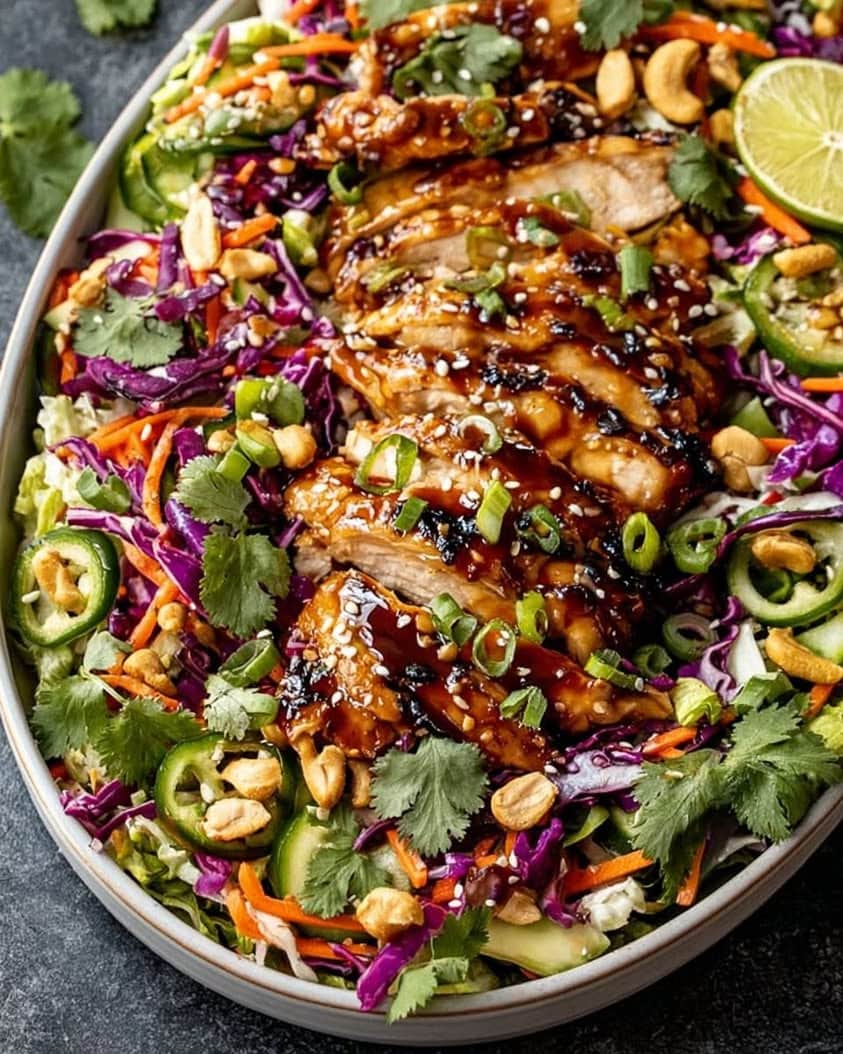
Crunchy Asian Sesame Chicken Salad: A Perfect Harmony of Texture and Flavor
This Asian Sesame Chicken Salad recipe delivers an unforgettable culinary experience that will become a regular in your meal rotation. Imagine tender, perfectly cooked chicken mingling with a symphony of crisp vegetables, all coated in a rich, nutty sesame dressing. Furthermore, every bite offers a delightful contrast of textures and flavors that will keep you coming back for more. This dish truly represents the best of Asian-inspired salads, combining convenience with gourmet taste.
Creating this Asian Sesame Chicken Salad requires minimal effort for maximum reward. The recipe balances sweet, savory, and tangy notes in a way that feels both sophisticated and comforting. Additionally, the vibrant colors from the fresh vegetables make this salad as beautiful to look at as it is delicious to eat. Whether you need a quick weekday lunch or an impressive dish for guests, this salad consistently delivers satisfaction.
Many people struggle to find healthy meals that don’t sacrifice flavor, but this Asian Sesame Chicken Salad solves that problem perfectly. The combination of lean protein and fresh vegetables creates a nutritionally balanced meal that feels indulgent. Moreover, the homemade sesame dressing elevates simple ingredients into something extraordinary without relying on heavy creams or excessive oils. Consequently, you can enjoy a restaurant-quality dish right in your own kitchen.
Quick Recipe Highlights
- Flavor Profile: This Asian Sesame Chicken Salad features a masterful balance of umami-rich soy sauce, nutty sesame, and subtle sweetness. The garlic and ginger add aromatic depth, while the rice vinegar provides a bright, clean finish that cuts through the richness.
- Texture: The salad achieves perfect textural harmony with crisp cabbage, crunchy almonds, and tender chicken. Additionally, the fresh vegetables maintain their satisfying crunch even after tossing with the dressing, creating a delightful mouthfeel.
- Aroma: Toasted sesame oil creates the foundational aroma, complemented by fresh ginger and garlic notes. The scent alone will transport you to your favorite Asian restaurant before you even take the first bite.
- Visual Appeal: Vibrant red cabbage, orange carrots, and green onions create a beautiful color contrast against the golden-brown chicken. The sprinkled sesame seeds and almond slices add the perfect finishing touch for an Instagram-worthy presentation.
- Skill Level Needed: This recipe requires basic cooking skills like chopping vegetables and sautéing chicken. Even beginner cooks can achieve excellent results by following the straightforward instructions and timing guidelines.
- Special Equipment: You only need a sharp knife, cutting board, large skillet, and mixing bowls. A mandoline slicer can speed up vegetable preparation but isn’t necessary for success.
Recipe Overview
- Difficulty Level: This Asian Sesame Chicken Salad earns its easy rating because it involves fundamental cooking techniques most home cooks already know. The steps flow logically from preparation to cooking to assembly, with no complicated procedures. Furthermore, the recipe forgives small mistakes, ensuring good results even for kitchen novices.
- Category: This versatile dish works perfectly as a main course salad for lunch or dinner. It also makes an excellent side dish for grilled meats or part of a larger Asian-inspired meal spread. The recipe adapts well to different dining occasions from casual family meals to elegant entertaining.
- Cuisine: While not authentically traditional, this salad draws inspiration from various Asian culinary traditions, particularly Chinese and Japanese influences. The sesame dressing reflects classic Asian flavor profiles while incorporating accessible ingredients. Modern fusion cuisine often celebrates such creative combinations that honor traditional flavors.
- Cost: Using economical ingredients like cabbage and carrots keeps costs low, while chicken and almonds provide protein value. The dressing ingredients represent the biggest investment but will make multiple batches. Overall, this recipe delivers restaurant-quality taste at a fraction of the price.
- Season: This Asian Sesame Chicken Salad shines brightest during spring and summer when you crave lighter, fresher meals. The cool, crisp vegetables provide refreshment on warm days while the substantial chicken satisfies hunger. That said, the recipe works year-round thanks to the availability of its core ingredients.
- Occasion: Perfect for quick weeknight dinners, meal prep lunches, or casual entertaining. The beautiful presentation makes it suitable for potlucks and picnics where it will impress guests. It also travels well for office lunches or outdoor gatherings.
Why You’ll Love This Asian Sesame Chicken Salad
First and foremost, the taste experience of this Asian Sesame Chicken Salad will captivate your palate from the very first bite. The complex dressing combines five distinct flavor elements that dance across your tongue in perfect harmony. Sweetness from honey or sugar balances the saltiness of soy sauce, while rice vinegar adds brightness. Meanwhile, the nutty sesame oil and toasted seeds provide depth that makes the flavors linger pleasantly. Additionally, the garlic and ginger contribute aromatic warmth that elevates the entire dish beyond ordinary salad territory.
From a practical perspective, this Asian Sesame Chicken Salad offers incredible convenience without compromising quality. You can prepare components ahead of time for quick assembly during busy weekdays. The recipe uses common ingredients that are easy to find at any supermarket, eliminating specialty store trips. Moreover, the cooking process involves simple techniques that don’t require advanced culinary skills or expensive equipment. Consequently, you can create a restaurant-worthy meal in about thirty minutes with minimal cleanup afterward.
Nutritionally speaking, this Asian Sesame Chicken Salad delivers balanced macros and plenty of micronutrients. Lean chicken breast provides high-quality protein to keep you full and support muscle maintenance. The colorful vegetables offer fiber, vitamins, and antioxidants that support overall health. Furthermore, using healthy fats from sesame oil and almonds promotes nutrient absorption and provides sustained energy. Unlike heavy takeout options, this homemade version lets you control sodium and sugar levels while maximizing nutritional benefits.
For social occasions, this Asian Sesame Chicken Salad makes entertaining effortless while impressing guests with its vibrant presentation. The recipe scales easily to feed a crowd without complicated adjustments or extended cooking time. The beautiful color combination of purple cabbage, orange carrots, and green onions creates visual appeal that enhances any table setting. Additionally, the dish accommodates various dietary preferences with simple modifications, making it perfect for mixed groups where food restrictions vary.
Finally, the cost-effectiveness of this Asian Sesame Chicken Salad makes it a smart choice for budget-conscious cooks. Using affordable vegetables like cabbage and carrots stretches more expensive ingredients like chicken and almonds. The homemade dressing costs significantly less than bottled alternatives while delivering superior flavor. Moreover, the recipe utilizes common pantry staples, reducing the need for special purchases. Compared to restaurant salads or takeout, this homemade version provides better quality at a fraction of the price.
Historical Background and Cultural Significance
The origins of chicken salad trace back to early American cuisine, but the Asian-inspired variation represents more recent culinary innovation. Traditional Asian cultures have long incorporated shredded meats with fresh vegetables, particularly in Vietnamese and Thai cuisine. However, the specific combination we know as Asian Sesame Chicken Salad likely emerged from American restaurant culture in the late 20th century. As Asian immigration increased, so did exposure to new flavor profiles that creative chefs began incorporating into familiar Western dishes.
Culturally, this Asian Sesame Chicken Salad reflects the ongoing fusion of Eastern and Western culinary traditions. The dish honors Asian flavor principles like balancing five taste elements while utilizing preparation methods familiar to American home cooks. Interestingly, while not traditional in any specific Asian culture, the salad has become embraced as part of the modern Pan-Asian culinary movement. This evolution demonstrates how food traditions naturally adapt and cross-pollinate across cultures over time.
The recipe has evolved significantly since its probable inception in restaurant kitchens. Early versions may have used bottled dressings, while contemporary recipes emphasize fresh, homemade components. Health consciousness has influenced the evolution toward lighter dressings with reduced sugar and higher-quality oils. Additionally, the vegetable selection has expanded beyond basic cabbage to include more diverse textures and colors. Modern variations might incorporate kale, edamame, or other ingredients that reflect current nutritional understanding and ingredient availability.
Regional variations of Asian Sesame Chicken Salad now appear across the United States and beyond. West Coast versions often include mandarin oranges and won ton strips, while Southern interpretations might add peanuts instead of almonds. Some restaurants offer spicy versions with sriracha or chili oil, while others focus on different protein options like shrimp or tofu. These adaptations show how a fundamentally simple concept can transform to suit local tastes and ingredient preferences while maintaining its core identity.
Ingredient Deep Dive
Chicken breast serves as the protein foundation in this Asian Sesame Chicken Salad, providing lean, versatile meat that absorbs flavors beautifully. Nutritionally, chicken breast offers high-quality protein with minimal fat, supporting muscle maintenance and satiety. When selecting chicken, look for plump, pinkish flesh with no gray discoloration or strong odor. For storage, keep raw chicken in the coldest part of your refrigerator and use within two days, or freeze for longer preservation. If substituting, cooked turkey, shrimp, or firm tofu work well while maintaining the salad’s structural integrity.
Cabbage forms the crisp base of this Asian Sesame Chicken Salad, contributing satisfying crunch and nutritional benefits. Historically, cabbage has been cultivated for over 4,000 years and features prominently in both Asian and European cuisines. Nutritionally, it provides vitamin C, vitamin K, and fiber with very few calories. When selecting cabbage, choose heads that feel heavy for their size with tightly packed, crisp leaves. Store whole cabbage in the refrigerator crisper drawer where it will keep for about two weeks. For substitutions, Napa cabbage offers a more delicate texture while kale provides stronger flavor and additional nutrients.
The sesame dressing represents the flavor heart of this Asian Sesame Chicken Salad, combining multiple elements into a harmonious whole. Sesame oil, pressed from toasted sesame seeds, has been used in Asian cooking for centuries both for flavor and its high smoke point. Nutritionally, sesame oil contains antioxidants and healthy fats that support heart health. When selecting sesame oil, look for versions labeled “toasted” or “dark” for maximum flavor impact. Store sesame oil in a cool, dark place to prevent rancidity. For substitutions, peanut oil or avocado oil can work in a pinch, though the distinctive sesame flavor will be diminished.
Soy sauce contributes the essential umami element to this Asian Sesame Chicken Salad, providing depth and saltiness. This fermented soybean product originated in China over 2,500 years ago and spread throughout Asia via Buddhist monks. Nutritionally, soy sauce contains antioxidants but can be high in sodium, so reduced-sodium versions offer a healthier option. When selecting soy sauce, look for naturally brewed varieties without artificial colors or flavors. Store soy sauce in a cool pantry where it will keep for several years. For gluten-free alternatives, tamari provides similar flavor without wheat, while coconut aminos offer a soy-free option with slightly sweeter profile.
Common Mistakes to Avoid
- Overcooking the chicken results in dry, tough meat that diminishes the salad experience. Chicken breast cooks quickly and continues to cook slightly after removal from heat. Always remove chicken from the pan when it reaches 165°F internally and let it rest before slicing.
- Using raw sesame oil instead of toasted sesame oil misses the essential nutty flavor foundation. Toasted sesame oil provides the characteristic aroma and taste that defines this dressing. Check bottle labels carefully since the two oils are not interchangeable in this recipe.
- Dressing the salad too early causes the vegetables to wilt and lose their appealing crunch. The cabbage particularly suffers from extended contact with the acidic dressing. Always toss the salad just before serving to maintain optimal texture.
- Neglecting to properly toast the sesame seeds and almonds misses an opportunity for flavor development. Toasting nuts and seeds enhances their natural oils and creates deeper, more complex flavors. Watch carefully during toasting as they burn easily.
- Using pre-shredded cabbage from bags often lacks the crispness and freshness of freshly shredded cabbage. The pre-cut varieties tend to dry out and develop off-flavors during storage. Taking the extra minutes to shred fresh cabbage makes a noticeable difference.
- Imprecise vegetable cutting creates inconsistent eating experiences and uneven dressing distribution. Aim for uniform shreds and slices so each forkful contains a balanced mix of ingredients. A sharp knife and little attention to detail solve this issue.
- Skipping the tasting and adjusting step for the dressing risks flavor imbalance. Dressing ingredients vary in intensity, so always taste and adjust seasoning before combining with the salad. Remember you can add more but cannot remove ingredients.
- Overloading the salad with dressing creates a soggy result that overwhelms the other ingredients. Start with about three-quarters of the dressing, toss, then add more if needed. The vegetables should be lightly coated, not swimming in dressing.
Essential Techniques
Proper chicken cooking technique ensures tender, juicy meat for your Asian Sesame Chicken Salad. Begin by patting chicken breasts dry and seasoning evenly before cooking. Use medium-high heat to create a golden-brown sear that locks in juices, then reduce heat to cook through gently. The key visual cue is firmness when pressed – properly cooked chicken should spring back rather than feel soft or hard. Additionally, always let cooked chicken rest for at least five minutes before slicing to allow juices to redistribute throughout the meat.
Vegetable preparation significantly impacts the final texture of your Asian Sesame Chicken Salad. For cabbage, remove outer leaves and quarter the head before slicing thinly across the grain. Carrots benefit from uniform matchstick cuts that provide pleasant crunch without being cumbersome to eat. When cutting green onions, bias-slicing creates more surface area for better flavor distribution. Most importantly, ensure all vegetables are thoroughly dried after washing since excess moisture will dilute the dressing and promote sogginess.
Dressing emulsification creates the smooth, cohesive sauce that defines a great Asian Sesame Chicken Salad. Always combine dry ingredients like sugar and salt with liquid ingredients before adding oil. Whisk continuously while slowly drizzling in the oils to encourage proper bonding between molecules. If the dressing separates, simply re-whisk before using. For best flavor, allow the dressing to rest for at least fifteen minutes before serving so the flavors can meld properly.
Toasting nuts and seeds elevates their flavor contribution to your Asian Sesame Chicken Salad. Spread almonds and sesame seeds in a single layer in a dry skillet over medium heat. Shake the pan frequently to ensure even coloring and prevent burning. The visual cue for doneness is golden brown color and fragrant aroma. Immediately transfer toasted items to a cool plate to stop the cooking process since residual pan heat can quickly turn perfect toasting into burning.
Pro Tips for Perfect Asian Sesame Chicken Salad
For maximum flavor development, prepare the dressing at least thirty minutes before assembling the salad. This resting time allows the garlic and ginger flavors to mellow and integrate fully with the other ingredients. Additionally, taste the dressing again right before using and adjust seasoning if necessary.
When slicing the cooked chicken, cut against the grain to ensure tender bites that easily separate. Identifying the grain direction becomes easier after cooking as the muscle fibers become more visible. Cutting perpendicular to these fibers shortens them, resulting in more tender meat.
For extra-crisp vegetables, soak shredded cabbage and carrots in ice water for fifteen minutes before draining and drying thoroughly. This hydrating technique plumps the vegetable cells while maintaining their structural integrity. The result is exceptionally crisp vegetables that hold up well to dressing.
Add a teaspoon of sesame paste or tahini to the dressing for enhanced creaminess and deeper sesame flavor. This addition helps emulsify the dressing while contributing valuable nutrients like calcium and healthy fats. The resulting dressing will coat the salad ingredients more evenly.
Garnish with additional textural elements just before serving for maximum impact. Quick-pickled red onions, crispy wonton strips, or fresh cilantro leaves all add visual appeal and complementary flavors. These finishing touches elevate the salad from everyday meal to special occasion dish.
For meal prep purposes, store dressing separately from the dry ingredients until ready to eat. This approach maintains optimal texture for several days, making the salad perfect for packed lunches throughout the week. Simply portion the salad components into containers and add dressing when ready to consume.
Variations and Adaptations
Regional variations of Asian Sesame Chicken Salad reflect local ingredient availability and cultural preferences. Korean-inspired versions might include gochujang paste in the dressing for spicy heat and fermented complexity. Thai adaptations often incorporate fish sauce, lime juice, and fresh mint for brighter, more herbaceous notes. Meanwhile, Japanese-style variations frequently use milder rice vinegar and sometimes include daikon radish for additional peppery crunch. These cultural twists maintain the salad’s fundamental appeal while offering distinctive flavor profiles.
Seasonal adaptations keep this Asian Sesame Chicken Salad interesting throughout the year. Spring versions might include sugar snap peas and radishes for fresh crispness. Summer adaptations could incorporate mango or peaches for sweet contrast against the savory elements. Fall variations might feature roasted sweet potatoes or roasted Brussels sprouts for heartier appeal. Winter interpretations could include citrus segments like mandarin oranges or grapefruit to brighten darker months. These seasonal tweaks celebrate produce at its peak while maintaining the recipe’s core structure.
Dietary modifications make this Asian Sesame Chicken Salad accessible to various eating patterns. For vegan versions, replace chicken with baked tofu or tempeh and use maple syrup instead of honey. Gluten-free adaptations simply require substituting tamari for soy sauce. Low-carb versions might increase the cabbage ratio while reducing carrots and using sugar alternatives in the dressing. Keto adaptations could include more high-fat ingredients like avocado and macadamia nuts while eliminating sweet elements from the dressing.
Flavor variations allow customization based on personal preference or ingredient availability. Spicy lovers can add sriracha, chili garlic paste, or fresh chilies to the dressing. For richer flavor, incorporate a tablespoon of peanut butter into the dressing mixture. Umami enthusiasts might add a teaspoon of miso paste or fish sauce for deeper savory notes. Herb-forward versions could include fresh cilantro, Thai basil, or mint for aromatic complexity. These simple adjustments create dramatically different taste experiences from the same basic recipe.
Serving and Presentation Guide
Plating techniques significantly impact the visual appeal of your Asian Sesame Chicken Salad. For individual servings, use a wide, shallow bowl to create an attractive landscape that showcases all ingredients. Begin with a base of shredded cabbage, then artfully arrange chicken slices and other components in distinct sections rather than tossing everything together. This approach allows diners to appreciate each element separately while creating a restaurant-quality presentation. Finally, drizzle additional dressing in a zigzag pattern across the top for professional finishing.
Garnishing provides the final flourish that elevates your Asian Sesame Chicken Salad from homemade to exceptional. Always sprinkle toasted sesame seeds and sliced almonds just before serving to maintain their crunch. Fresh cilantro leaves add vibrant green color and aromatic notes that complement the Asian flavors. Thinly sliced red chili peppers contribute both visual heat indication and actual spicy flavor for those who appreciate it. For additional color, include edible flowers or microgreens that provide subtle flavor while creating stunning visual impact.
Traditional accompaniments for Asian Sesame Chicken Salad include steamed rice, miso soup, or vegetable spring rolls. These complementary dishes create a more complete meal experience while staying true to the Asian inspiration. For modern interpretations, consider serving with seaweed salad, cucumber sunomono, or shrimp chips for textural contrast. The salad also pairs beautifully with grilled vegetables or fresh fruit platters for lighter meal combinations. When entertaining, offering multiple side dishes allows guests to customize their dining experience according to personal preferences.
Temperature considerations dramatically affect the enjoyment of Asian Sesame Chicken Salad. The chicken should be slightly warm or at room temperature when initially combined with the cool vegetables. Chilling the entire salad for more than thirty minutes diminishes both texture and flavor, so avoid extended refrigeration after assembly. If preparing components ahead, bring everything to cool room temperature before combining. Serving plates or bowls can be slightly chilled to maintain optimal eating temperature longer, especially in warm weather.
Wine and Beverage Pairing
Wine pairings for Asian Sesame Chicken Salad require consideration of the dish’s sweet, salty, and umami characteristics. Off-dry Riesling stands as the perfect choice with its slight sweetness balancing the soy sauce saltiness while its acidity cuts through the sesame oil richness. Gewürztraminer offers another excellent option with its lychee and spice notes complementing the ginger and garlic in the dressing. For red wine lovers, a light Pinot Noir with minimal tannins won’t overpower the salad’s delicate flavors while providing complementary cherry and earth notes.
Non-alcoholic alternatives should refresh the palate without competing with the complex flavors of Asian Sesame Chicken Salad. Iced green tea with a hint of honey mirrors the salad’s Asian inspiration while providing antioxidant benefits. Ginger beer offers spicy sweetness that enhances the ginger notes in the dressing without alcohol content. For a more sophisticated option, lychee juice mixed with soda water creates a lightly sweet, fragrant spritzer that cleanses the palate between bites. These beverages provide thoughtful pairing alternatives for all guests regardless of drinking preferences.
Coffee and tea pairings work surprisingly well with Asian Sesame Chicken Salad when selected carefully. Genmaicha (brown rice tea) offers toasty notes that harmonize with the sesame elements while its light body doesn’t overwhelm the dish. Jasmine tea provides floral aroma that complements the fresh vegetables without competing with the dressing flavors. For coffee lovers, a light roast Ethiopian coffee with its tea-like body and floral notes creates an interesting contrast to the savory salad elements. These hot beverage options work particularly well for lunch servings or cooler weather occasions.
Storage and Shelf Life
Proper storage methods preserve the quality and safety of your Asian Sesame Chicken Salad. Always store leftovers in airtight containers in the refrigerator within two hours of preparation. For best results, keep the dressing separate from the dry ingredients until ready to consume. The undressed salad components will maintain optimal texture for up to three days when properly stored. Dressed salad should be consumed within 24 hours as the vegetables will continue to soften and release water into the dressing.
Container recommendations significantly impact how well your Asian Sesame Chicken Salad maintains quality during storage. Glass containers with tight-sealing lids prevent odor transfer while allowing you to see the contents easily. For portion control, consider using divided containers that keep dressing separate from the main salad ingredients. If storing dressed salad, choose shallower containers that allow for quicker chilling and more even temperature distribution. Always label containers with preparation dates to ensure timely consumption.
Freezing guidelines for Asian Sesame Chicken Salad require careful consideration of ingredient properties. The dressed salad does not freeze well as the vegetables become mushy upon thawing and the emulsion breaks. However, you can successfully freeze the cooked chicken separately for up to three months. The dressing can also be frozen in ice cube trays for convenient portioning, though the texture may change slightly upon thawing. For best results, consider freezing components separately rather than the assembled salad.
Make Ahead Strategies
Prep timeline optimization makes enjoying Asian Sesame Chicken Salad convenient even on busy days. Up to three days in advance, you can cook and slice the chicken, storing it in an airtight container in the refrigerator. The dressing can be prepared up to five days ahead and actually improves as flavors meld. Vegetables can be washed, dried, and chopped two days in advance when stored properly in resealable bags with paper towels to absorb excess moisture. This staggered preparation approach means final assembly takes mere minutes when you’re ready to eat.
Storage between steps requires attention to food safety and quality preservation. Cooked chicken must be cooled completely before refrigeration to prevent bacterial growth and condensation. Store dressing in a glass jar with a tight-fitting lid to maintain freshness and prevent odor absorption. Prepared vegetables benefit from being stored in the crisper drawer with slightly open bags to maintain humidity without promoting sogginess. Nuts and seeds should be stored separately at room temperature to maintain their crunch until assembly.
Assembly tips for make-ahead Asian Sesame Chicken Salad focus on preserving optimal texture. When ready to serve, start with the cabbage base in a large bowl, then layer other vegetables followed by the chicken. Add about three-quarters of the dressing and toss gently to combine. Finally, sprinkle with nuts, seeds, and fresh herbs just before serving. This assembly order ensures even distribution of ingredients while maintaining the contrasting textures that make the salad special.
Scaling Instructions
Halving the Asian Sesame Chicken Salad recipe works beautifully for smaller households or fewer servings. Reduce all ingredients by exactly half, paying special attention to measurements like the half-tablespoon of sesame oil. Use a smaller skillet for cooking the chicken to maintain proper searing surface contact. The dressing may require vigorous whisking since smaller volumes can be trickier to emulsify properly. Storage considerations remain similar, though the smaller quantity will be consumed more quickly, potentially extending freshness.
Doubling or tripling the recipe requires slight adjustments beyond simply multiplying ingredients. Cook chicken in batches to avoid steaming and ensure proper browning on all pieces. When tripling, consider using a roasting pan in the oven for the chicken instead of skillet-cooking multiple batches. For the dressing, combine in a blender rather than whisking by hand to ensure proper emulsion of larger volumes. When serving crowds, present the salad components in separate bowls for a build-your-own approach that maintains optimal texture until consumption.
Equipment adjustments become necessary when significantly scaling the Asian Sesame Chicken Salad recipe. For doubled recipes, a large stockpot or extra-large mixing bowl provides sufficient tossing space. When tripling or more, consider using multiple smaller bowls rather than one gigantic container for more manageable tossing and serving. For large-batch dressing preparation, a funnel helps transfer the dressing from blender to storage containers without mess. These practical equipment considerations ensure successful scaling without compromising quality.
Nutritional Deep Dive
Macro breakdown of Asian Sesame Chicken Salad reveals a nutritionally balanced profile suitable for various dietary goals. The chicken provides high-quality protein essential for muscle maintenance and satiety, typically contributing 25-30 grams per serving. Healthy fats from sesame oil and almonds support hormone production and nutrient absorption while providing sustained energy. Complex carbohydrates from vegetables offer fiber for digestive health without blood sugar spikes. This balanced macronutrient distribution makes the salad suitable as a complete meal that sustains energy levels without subsequent crashes.
Micronutrient analysis shows Asian Sesame Chicken Salad delivers impressive vitamin and mineral diversity. Cabbage provides vitamin K for blood clotting and bone health, plus vitamin C for immune function. Carrots contribute significant vitamin A in the form of beta-carotene, supporting vision and skin health. Sesame seeds offer calcium and magnesium for bone strength and muscle function. Meanwhile, ginger and garlic provide various phytonutrients with anti-inflammatory and antioxidant properties. This micronutrient density supports overall health beyond basic nutrition.
Dietary considerations for Asian Sesame Chicken Salad include several adaptable elements for specific eating patterns. The recipe naturally aligns with dairy-free requirements without modification. Gluten-free adaptation simply requires substituting tamari for soy sauce. For low-carb and keto diets, reduce carrot quantity and substitute sugar alternatives in the dressing. Diabetics can benefit from the high fiber and protein content that moderates blood sugar response when portion sizes are controlled. These inherent adaptability features make the salad accessible to diverse nutritional needs.
Dietary Adaptations
Gluten-free adaptation of Asian Sesame Chicken Salad requires just one simple substitution. Replace regular soy sauce with tamari, which is naturally brewed without wheat. Ensure all other packaged ingredients like rice vinegar contain no hidden gluten sources. Cross-contamination concerns can be addressed by using clean utensils and preparation surfaces. The resulting gluten-free version maintains identical flavor and texture to the original recipe while being safe for celiac and gluten-sensitive individuals.
Vegan transformation of Asian Sesame Chicken Salad replaces animal products while maintaining satisfaction. Substitute chicken with baked tofu or tempeh, marinated in a portion of the dressing before cooking. Replace honey with maple syrup or agave nectar to maintain the necessary sweetness without animal products. For additional plant-based protein, include edamame or chickpeas along with the tofu. The vegan version delivers similar texture and flavor complexity while aligning with plant-based ethical and health considerations.
Low-carb and keto modifications focus on reducing sugars and increasing healthy fats. Decrease carrot quantity by half and increase cabbage proportion to maintain volume. Replace sugar in the dressing with monk fruit, stevia, or erythritol to achieve balanced sweetness without carbohydrates. Add avocado slices and increase almond quantity to boost healthy fat content for ketosis support. These adjustments create a salad with approximately 8-10 net carbs per serving, fitting within strict low-carb dietary parameters.
Troubleshooting Guide
Texture issues commonly involve soggy vegetables or tough chicken in Asian Sesame Chicken Salad. For soggy vegetables, ensure all components are thoroughly dried before assembling and dress immediately before serving. If chicken turns out tough, likely it was overcooked or sliced with the grain instead of against it. To rescue over-dressed salad, add more cabbage or lettuce to absorb excess dressing. For future preparations, remember that vegetables continue releasing water after dressing, so slightly under-dressing prevents sogginess.
Flavor balance problems typically involve dressing that’s too sweet, salty, or sharp. If too sweet, add more rice vinegar and a pinch of salt to counterbalance the sweetness. Overly salty dressing benefits from additional oil and vinegar plus a teaspoon of honey to round out flavors. If the dressing tastes too sharp or acidic, incorporate more oil and a small amount of sweetener. Always adjust seasonings gradually, tasting between each addition until achieving harmonious balance.
Equipment challenges might include difficulty achieving proper dressing emulsion or uneven chicken cooking. For broken dressing, start with a fresh bowl and slowly whisk the broken dressing into a new egg yolk or teaspoon of mustard as an emulsifier. If chicken cooks unevenly, ensure pieces are uniform thickness by pounding thicker portions gently before cooking. For insufficient browning, pat chicken completely dry before seasoning and ensure the skillet is properly preheated before adding oil and chicken.
Recipe Success Stories
Community feedback consistently praises this Asian Sesame Chicken Salad for its reliability and crowd-pleasing qualities. Many home cooks report receiving compliments from guests who assume the dish came from a professional restaurant. Several families have incorporated the recipe into their regular meal rotation, with some noting their children now request it specifically. Office workers frequently mention how the salad travels well for lunches and generates envy among coworkers. These real-world experiences confirm the recipe’s practical appeal beyond theoretical kitchen testing.
Variation successes demonstrate the recipe’s adaptability to different tastes and ingredient availability. One cook substituted sunflower seeds for almonds due to allergies and reported equally delicious results. Another added mandarin orange segments for sweetness contrast and found the combination exceptional. Several vegetarian versions using chickpeas instead of chicken have received rave reviews from meat-eaters and vegetarians alike. These successful adaptations prove the recipe’s fundamental soundness while encouraging creative personalization.
Reader suggestions have contributed valuable improvements to the Asian Sesame Chicken Salad recipe over time. Several cooks recommended adding a teaspoon of sesame paste to the dressing for enhanced creaminess, which has now been incorporated as an optional pro tip. Others suggested quick-pickling the red onions briefly in rice vinegar before adding, which provides pleasant tang and beautiful color. The community-generated ideas have enriched the recipe while maintaining its accessible nature for cooks of all experience levels.
Frequently Asked Questions
Can I use rotisserie chicken instead of cooking chicken myself? Absolutely. Rotisserie chicken works wonderfully as a time-saving alternative. Simply shred or chop the cooked chicken and skip the cooking steps. Ensure you remove the skin and excess fat before adding to the salad. The flavor may vary slightly depending on the seasoning used on the rotisserie chicken.
How long does the dressing keep in the refrigerator? The homemade sesame dressing will maintain quality for up to two weeks when stored in an airtight container in the refrigerator. The oil may solidify when chilled, so simply let it come to room temperature and shake well before using. Always check for off odors before using stored dressing.
Can I make this salad ahead for a party? Yes, with proper planning. Prepare all components separately and store appropriately. Combine everything except the nuts and dressing up to four hours ahead. Add these final elements just before serving to maintain optimal texture and freshness.
What’s the best way to shred cabbage for this salad? Remove outer leaves and quarter the cabbage through the core. Place each quarter cut-side down and slice thinly across the grain using a sharp knife. Alternatively, use a mandoline slicer for more uniform results, being careful of your fingers.
Can I use bagged coleslaw mix instead of fresh cabbage? While convenient, pre-shredded coleslaw mix often lacks the crispness of freshly shredded cabbage. The preservatives used in some packaged mixes can also affect flavor. For best results, fresh is superior, though in a pinch, coleslaw mix can work.
Is there a way to make the dressing creamier? Add a tablespoon of tahini (sesame paste) or natural peanut butter to the dressing ingredients. This addition creates a creamier emulsion while enhancing the nutty flavor profile. Alternatively, a teaspoon of mayonnaise will also provide creaminess without significantly altering the flavor.
Can I use other nuts besides almonds? Certainly. Cashews, peanuts, or pecans all work well as almond substitutes. For those with nut allergies, sunflower seeds or pumpkin seeds provide similar crunch without allergy concerns. Toast any substitutes as you would the almonds for maximum flavor.
How can I make this salad spicier? Add sriracha, chili garlic paste, or crushed red pepper flakes to the dressing to taste. For fresh heat, include thinly sliced fresh chili peppers as a garnish. Start with small amounts and adjust according to your preferred spice level.
What’s the best way to reheat leftover chicken for this salad? Gently reheat chicken in a skillet over medium-low heat with a tablespoon of water or broth to prevent drying. Microwave reheating tends to make the chicken rubbery. Alternatively, enjoy the chicken cold in the salad rather than reheating.
Can I freeze the assembled salad? Freezing is not recommended as the vegetables will become mushy upon thawing and the dressing emulsion will break. However, you can freeze the cooked chicken separately for up to three months and prepare fresh vegetables when ready to serve.
Additional Resources
Related recipes that complement Asian Sesame Chicken Salad include various Asian-inspired dishes that share similar flavor profiles. Fresh spring rolls with peanut dipping sauce offer a lighter alternative using many of the same ingredients. Chicken satay with peanut sauce provides a skewered option for outdoor entertaining. For soup lovers, hot and sour soup or miso soup make excellent starters before the salad. These related dishes allow you to create complete Asian-inspired meals that showcase diverse cooking techniques while maintaining flavor coherence.
Technique guides that enhance your Asian Sesame Chicken Salad skills include proper knife skills for uniform vegetable cutting. Mastering the chiffonade technique for herbs and the julienne cut for carrots ensures professional-looking results. Learning proper
Print
Crunchy Asian Sesame Chicken Salad
Description
A vibrant and satisfying salad featuring tender chicken, crisp vegetables, and a savory sesame dressing.
Ingredients
For the Crust:
- 2 cups cooked shredded chicken
- 4 cups shredded cabbage
- 1 cup shredded carrots
- 1/2 cup sliced almonds
- 1/4 cup chopped green onions
- 1/4 cup sesame seeds
- 1/4 cup soy sauce
- 2 tablespoons rice vinegar
- 1 tablespoon sesame oil
- 1 tablespoon honey
- 1 teaspoon grated ginger
- 1 clove garlic, minced
Instructions
1. Prepare the Crust:
- In a large bowl, combine shredded chicken, cabbage, carrots, almonds, and green onions.
- In a small bowl, whisk together soy sauce, rice vinegar, sesame oil, honey, ginger, and garlic to make the dressing.
- Pour the dressing over the salad and toss until everything is evenly coated.
- Sprinkle with sesame seeds and serve immediately.
Notes
You can customize the seasonings to taste.

I’m Shaykee—born in Morocco, seasoned across continents. From airplane galleys to home kitchens, I share the flavors and stories that shaped my journey.