
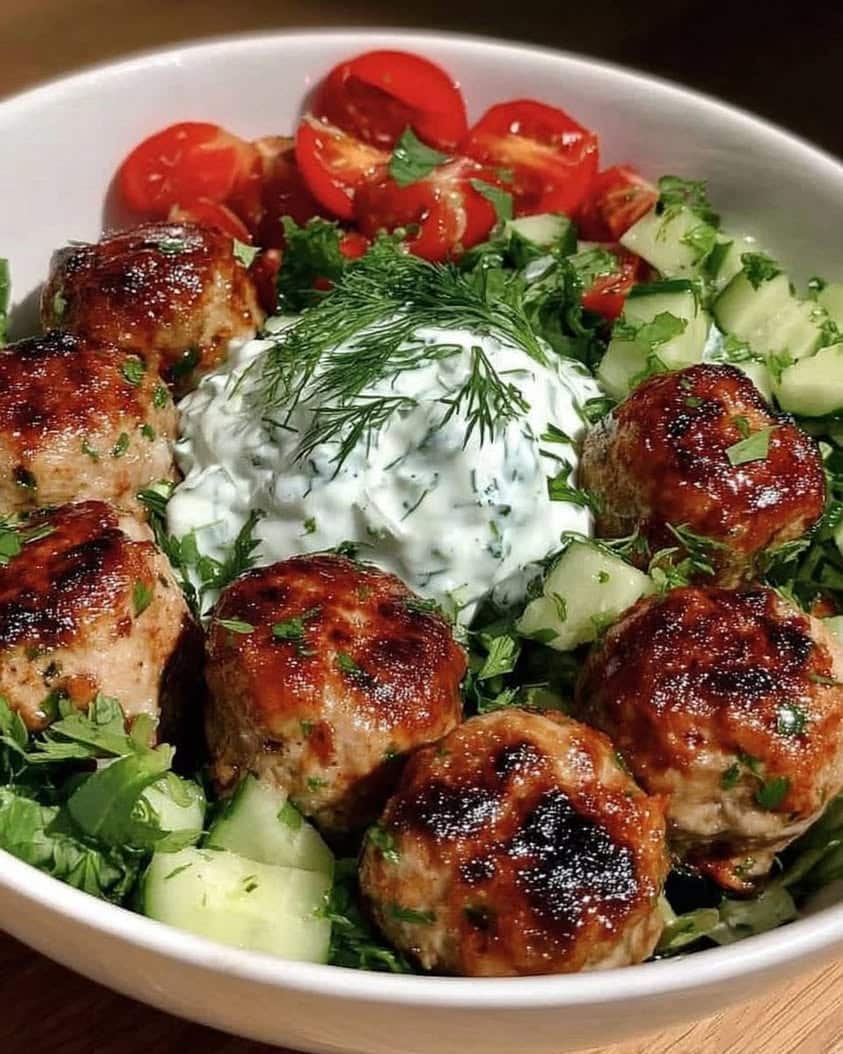
Juicy Greek Chicken Meatballs with Homemade Tzatziki: A Taste of the Mediterranean
Transport your taste buds straight to a sun-drenched Greek taverna with these incredibly flavorful Greek chicken meatballs. This recipe delivers a perfect harmony of lean protein and vibrant Mediterranean flavors, all wrapped up in a tender, juicy bite. Furthermore, the accompanying homemade tzatziki sauce provides a cool, creamy counterpoint that elevates the entire dish. Consequently, you will find yourself making this healthy dinner option again and again.
The magic of these Greek chicken meatballs lies in their simplicity and depth of flavor. Imagine succulent ground chicken infused with fresh herbs like dill and mint, punctuated by the briny pop of feta cheese. Simultaneously, the zesty lemon and aromatic oregano create a symphony of tastes that is both refreshing and deeply satisfying. Ultimately, this dish proves that healthy eating does not have to be boring or bland.
Moreover, this meal is a fantastic gateway into the celebrated Mediterranean diet, known for its health benefits and delicious ingredients. From the protein-packed chicken to the probiotic-rich yogurt in the tzatziki, every component serves a purpose for both your palate and your well-being. Therefore, you can feel good about serving this to your family any night of the week.
Quick Recipe Highlights
- Flavor Profile: These Greek chicken meatballs offer a robust savory taste from the oregano and garlic, balanced by the bright, tangy notes of lemon and feta cheese. The homemade tzatziki sauce then adds a refreshing, cool creaminess that ties all the flavors together beautifully.
- Texture: The interior of the meatballs is remarkably tender and juicy, while the exterior develops a slight, satisfying crispness when baked or pan-seared. Conversely, the tzatziki sauce is luxuriously smooth and creamy with a delightful crunch from the freshly grated cucumber.
- Aroma: As the meatballs cook, your kitchen will fill with the warm, earthy scent of oregano and garlic. Meanwhile, the tzatziki sauce contributes a fresh, herbal aroma from the dill and mint, creating an irresistible olfactory experience.
- Visual Appeal: The golden-brown meatballs look stunning against the bright white of the tzatziki sauce, often garnished with a sprinkle of paprika and fresh dill. Additionally, the vibrant green herbs and red onion within the meatballs themselves add beautiful color and visual interest to the plate.
- Skill Level Needed: This is a beginner-friendly recipe that requires only basic kitchen skills like mixing, shaping, and simple sautéing or baking. Importantly, no advanced techniques are necessary to achieve a restaurant-quality result right at home.
- Special Equipment: You need only standard kitchen tools: a mixing bowl, a baking sheet if baking, or a simple skillet for pan-frying. For the tzatziki, a box grater for the cucumber and a fine-mesh strainer are helpful but not strictly mandatory.
Recipe Overview
- Difficulty Level: We classify this recipe as easy because it involves straightforward steps like combining ingredients in a bowl and shaping meatballs. The techniques are fundamental, and the recipe is forgiving, making it perfect for novice cooks or a quick weeknight dinner for experienced chefs.
- Category: This dish fits perfectly into several categories, including a healthy main course, a fantastic appetizer or meze, and a superb meal prep option. It is versatile enough for a formal dinner party or a casual family meal.
- Cuisine: This recipe is firmly rooted in Greek and broader Mediterranean cuisine, drawing on classic flavor profiles like lemon-oregano and yogurt-cucumber. It celebrates the fresh, wholesome ingredients that are the cornerstone of this beloved culinary tradition.
- Cost: Preparing these Greek chicken meatballs is very budget-friendly, as ground chicken is typically an affordable protein. Furthermore, the other ingredients, like herbs, onion, and cucumber, are inexpensive staples, making this a cost-effective way to enjoy a restaurant-style meal.
- Season: This is an ideal spring or summer recipe because the fresh, bright flavors feel light and refreshing in warmer weather. However, the comforting, savory qualities also make it a wonderful year-round dish that can bring a taste of sunshine to any season.
- Occasion: Serve these meatballs for a casual weeknight dinner, as part of a festive gathering or party spread, or even as a impressive yet simple meal for guests. They are universally appealing and always a crowd-pleaser.
Why You’ll Love This Recipe
First and foremost, the taste and texture of these Greek chicken meatballs are simply outstanding. The combination of savory herbs, tangy feta, and zesty lemon creates a complex flavor profile that is far from ordinary. Meanwhile, the texture is perfectly balanced between a juicy, tender interior and a lightly crisped exterior. Each bite is a delightful experience that will keep you coming back for more.
From a convenience standpoint, this recipe is a true weeknight hero. The preparation is straightforward, and the cooking time is remarkably short. Moreover, you can choose to bake or pan-fry the meatballs based on your preference and what is most convenient for you. Consequently, you can have a wholesome, homemade dinner on the table in well under an hour, making it a practical solution for busy schedules.
Nutritionally, this dish is a powerhouse. Lean ground chicken provides high-quality protein to keep you full and support muscle health. Additionally, the homemade tzatziki sauce is made with yogurt, which offers probiotics for gut health, and cucumber, which adds hydration and vitamins. This meal is a stellar example of how the Mediterranean diet supports overall wellness without sacrificing an ounce of flavor.
For social and entertaining value, these meatballs are a guaranteed hit. They are easy to eat, whether served as a main course with sides or as finger food at a party. Furthermore, their beautiful presentation and gourmet taste will impress your guests, making you look like a culinary expert with minimal effort. They are a versatile dish that adapts effortlessly to any gathering.
Finally, the cost-effectiveness and accessibility of this recipe cannot be overstated. The ingredients are common, affordable, and easy to find at any standard grocery store. You do not need any expensive or exotic items to create this delicious, healthy meal. Therefore, it is an accessible culinary adventure for any home cook, regardless of their budget or shopping resources.
Historical Background and Cultural Significance
The concept of meatballs, or keftedes, is deeply woven into the fabric of Greek culinary history. While the exact origin is debated, these small, seasoned spheres of meat have been a part of Mediterranean and Middle Eastern cuisines for centuries. Traditionally, Greek keftedes were made with lamb or beef, reflecting the pastoral and agricultural resources of the region. The adaptation to chicken is a more modern take, aligning with contemporary preferences for leaner proteins while honoring the classic flavor profile.
Culturally, meatballs hold a significant place in Greek meze culture, which is a style of dining centered around sharing many small plates. Keftedes are a staple at tavernas, family gatherings, and religious festivals. They symbolize hospitality and community, as they are meant to be shared and enjoyed communally. The act of preparing and sharing food like this is a cornerstone of Greek social life, embodying the concept of filoxenia, or love for strangers and guests.
The evolution of the recipe showcases the adaptability of Greek cuisine. Originally, meatballs were a practical way to stretch expensive meat further by adding breadcrumbs or oats and plenty of herbs. Over time, the recipe was refined, and regional variations emerged. The addition of flavors like mint and the specific use of oregano and lemon are distinctly Greek characteristics that set them apart from Italian or Swedish meatballs, for example.
Regional variations within Greece itself are fascinating. On the island of Crete, you might find meatballs enriched with the local, sharp graviera cheese. In other regions, the inclusion of different herbs or a touch of cinnamon might be common. The tzatziki sauce, while now a universal companion, also has roots across the Eastern Mediterranean, with similar yogurt and cucumber dips found in Turkish and Lebanese cuisines. This recipe represents a beautiful, shared culinary heritage.
Ingredient Deep Dive
Ground chicken serves as the lean, protein-rich foundation for these meatballs. Nutritionally, it is an excellent source of high-quality protein and is lower in saturated fat compared to red meats. When selecting ground chicken, look for a package with a pink color and minimal liquid. For the best texture and flavor, many chefs recommend using a mix of ground breast and thigh meat. If you cannot find it pre-ground, you can easily make your own by pulsing chicken chunks in a food processor.
Fresh oregano is the soul of these Greek chicken meatballs, providing an earthy, slightly bitter aroma that is quintessentially Mediterranean. Historically, oregano has been used in Greek cooking for millennia, both for its flavor and its purported medicinal properties. It is rich in antioxidants. For the most potent flavor, always choose fresh oregano over dried if possible. To store it, wrap the stems in a damp paper towel and place it in a plastic bag in the refrigerator.
Feta cheese introduces a salty, tangy complexity and contributes to the meatballs’ moist texture. This brined cheese has a protected designation of origin (PDO) in Greece, meaning authentic feta must be made in specific regions with sheep’s milk or a sheep and goat milk blend. It provides calcium and protein. For the best results, buy a block of feta packed in brine and crumble it yourself, as pre-crumbled feta is often drier. Always add it at the end of mixing to avoid over-working it.
The homemade tzatziki sauce relies on Greek yogurt for its signature thick, creamy base. Greek yogurt is strained to remove whey, resulting in a higher protein content and a richer texture compared to regular yogurt. It is a fantastic source of probiotics, which support gut health. For the best tzatziki, use full-fat Greek yogurt for maximum creaminess and flavor. Be sure to drain the grated cucumber thoroughly; this is the most critical step for preventing a watery sauce.
Common Mistakes to Avoid
- Overmixing the Meatball Mixture: Overworking the ground chicken can activate the proteins too much, resulting in tough, dense meatballs. Instead, mix the ingredients gently with your hands or a fork until they are just combined. The mixture should be cohesive but not pasty.
- Using Watery Tzatziki Ingredients: Failing to properly drain the grated cucumber is the primary reason for a runny tzatziki sauce. After grating, you must squeeze out the excess water using a cheesecloth or clean kitchen towel. Similarly, if your yogurt is watery, strain it through a fine-mesh sieve for a thicker consistency.
- Skimping on Seasoning: Ground chicken is a lean canvas that needs ample seasoning. Do not be shy with the salt, pepper, garlic, and herbs. Always taste-test your mixture by cooking a small patty in a skillet to check the seasoning balance before forming all the meatballs.
- Packing the Meatballs Too Tightly: When shaping, roll the mixture gently between your palms without applying too much pressure. Tightly packed meatballs will become hard and rubbery after cooking. Aim for a light touch to ensure a tender, airy texture.
- Crowding the Pan: Whether baking or pan-frying, ensure the meatballs have enough space around them. Crowding the pan will cause them to steam instead of brown, preventing the development of a delicious caramelized crust. Cook in batches if necessary.
- Using Dried Herbs in the Tzatziki: The fresh, bright flavor of tzatziki comes from using fresh dill and mint. Dried herbs will not provide the same vibrant taste and can make the sauce taste dusty. Always use fresh herbs for the dipping sauce.
- Not Letting the Flavors Meld: The tzatziki sauce tastes significantly better after it has had time to rest. Allowing it to chill in the refrigerator for at least an hour, or even overnight, lets the garlic, dill, and cucumber flavors fully infuse the yogurt.
- Adding Cold Feta: Using feta cheese straight from the refrigerator can make it harder to crumble and incorporate evenly. Let it sit at room temperature for 15-20 minutes before adding it to the meatball mixture for easier handling.
Essential Techniques
The technique of properly draining the cucumber for the tzatziki is non-negotiable for success. After grating the cucumber, you must remove as much water as possible to prevent a diluted, watery sauce. The best method is to place the grated cucumber in a clean kitchen towel or several layers of cheesecloth, then twist and squeeze firmly over the sink until no more liquid runs out. This step ensures your tzatziki will be luxuriously thick and creamy, allowing the other flavors to shine without being washed out.
Gently mixing and shaping the meatball mixture is crucial for achieving a tender texture. Overmixing develops the myosin protein in the chicken, leading to a tight, springy, and tough final product. Instead, combine the ingredients just until they are evenly distributed. When shaping, use a light touch, rolling the mixture loosely into balls without compacting it. This gentle handling creates a more open, tender structure that remains juicy after cooking, whether you bake or pan-fry them.
Developing a good sear on the meatballs, if pan-frying, builds foundational flavor through the Maillard reaction. This chemical process creates new, complex flavor compounds and a desirable brown crust. To achieve this, ensure your skillet is properly preheated with a thin layer of oil before adding the meatballs. Furthermore, avoid moving them around the pan too soon; let them cook undisturbed for a few minutes until they release easily and have formed a golden-brown crust. This technique adds a depth of flavor that baking alone cannot replicate.
Pro Tips for Perfect Greek Chicken Meatballs
Chill your meatball mixture for 15-30 minutes before shaping. This firms up the fat and makes the mixture less sticky, resulting in easier rolling and meatballs that hold their shape better during cooking.
Use an ice cream or cookie scoop to portion the meatball mixture. This ensures all your meatballs are uniform in size, which promotes even cooking. Consequently, you will not end up with some meatballs overcooked and others undercooked.
For exceptionally juicy meatballs, consider adding a panade. A panade is a paste made from breadcrumbs and milk mixed together before being added to the meat. This simple addition helps to retain moisture within the meatballs during the cooking process.
If baking, place the meatballs on a wire rack set over a baking sheet. This allows hot air to circulate around the entire meatball, ensuring they cook evenly and become lightly crisp on all sides without needing to turn them.
Let the cooked meatballs rest for a few minutes before serving. This allows the juices to redistribute throughout the meat. If you cut into them immediately, those precious juices will end up on the plate instead of in your mouth.
For the tzatziki, rub the minced garlic into the salt with the side of your knife before adding it to the yogurt. This technique, called making a paste, helps to mellow the raw garlic’s sharp bite and distributes its flavor more evenly throughout the sauce.
Variations and Adaptations
For regional variations, you can explore different cheese options. While feta is classic, try substituting it with Kefalotyri for a sharper, saltier flavor or Myzithra for a milder, fresher taste. You can also incorporate a tablespoon of finely chopped Kalamata olives into the meatball mixture for an extra burst of briny, salty flavor that is deeply characteristic of Greek cuisine.
Seasonal adaptations are simple and effective. In the summer, add a tablespoon of finely chopped fresh basil to the meatball mixture for a peak-season herbal note. During the cooler months, a pinch of ground cinnamon or allspice can add a subtle warmth that makes the dish feel more comforting and hearty, reflecting the flavors often used in winter Greek stews.
Dietary modifications are straightforward. For a gluten-free version, ensure your breadcrumbs are certified gluten-free or use gluten-free rolled oats pulsed in a food processor. To make it dairy-free, omit the feta cheese from the meatballs and use a dairy-free yogurt alternative, such as coconut or almond-based yogurt, for the tzatziki sauce.
For flavor variations, consider adding a teaspoon of lemon zest directly into the meatball mixture for an even more intense citrus aroma. Alternatively, a tablespoon of sun-dried tomato pesto or harissa can be mixed in to create a spicy, smoky twist on the classic recipe, taking the flavor profile in a completely new direction.
Texture modifications can involve swapping the ground chicken for ground turkey or even a mix of ground lamb and chicken for a richer, more traditional flavor. You can also use panko breadcrumbs instead of traditional breadcrumbs for a lighter, airier texture inside the meatballs.
Presentation alternatives include serving the meatballs as sliders on mini pita buns, skewering them for a fun appetizer, or crumbling them over a large, vibrant Greek salad. You can also flatten the mixture into patties to create delicious Greek-inspired chicken burgers, served with the tzatziki sauce as a condiment.
Serving and Presentation Guide
Plating techniques can elevate this simple dish to restaurant quality. For a family-style presentation, spoon a generous pool of tzatziki sauce onto a large platter and artfully arrange the warm meatballs on top. Alternatively, for individual plates, create a bed of fluffy couscous or orzo, place the meatballs to one side, and drizzle the tzatziki over everything, allowing it to cascade beautifully.
Garnishing is key for visual appeal and added flavor. A final sprinkle of fresh, finely chopped dill or mint over the meatballs and sauce adds a pop of color. A light dusting of paprika or sumac provides a warm red hue and a slight tang. Additionally, a few Kalamata olives and a wedge of lemon on the side not only look beautiful but also allow guests to add an extra squeeze of fresh juice.
Traditional accompaniments are essential for a complete Greek meal. Warm, soft pita bread is a must for scooping up the meatballs and sauce. A classic Horiatiki (Greek village salad) with tomatoes, cucumbers, red onion, and olives provides a fresh, acidic counterpoint. For a heartier meal, lemon-roasted potatoes or a rice pilaf with pine nuts are excellent choices.
Modern serving suggestions include turning the meatballs into a pita wrap or gyro, stuffed with lettuce, tomato, and red onion. They also make a fantastic protein topping for a grain bowl with quinoa, roasted vegetables, and a lemon vinaigrette. For a party, serve them in a slow cooker with a simple tomato sauce to keep them warm.
Temperature considerations are important for the best experience. The Greek chicken meatballs should be served hot, straight from the oven or skillet. Conversely, the tzatziki sauce should be served cold or at a cool room temperature. This contrast between the hot, savory meatballs and the cool, creamy sauce is a fundamental part of the dish’s appeal.
Portion control tips are helpful for meal planning. As a main course, plan for about 4-5 meatballs per person. As an appetizer or part of a meze spread, 2-3 meatballs per person is sufficient. If you are watching your intake, remember that the tzatziki is relatively low in calories but be mindful of the portion of pita bread or other carbohydrates served alongside.
Wine and Beverage Pairing
For wine pairings, the bright acidity and herbal notes of these meatballs call for equally vibrant wines. A crisp, dry Greek white wine like Assyrtiko is a perfect match, as its citrus and mineral notes complement the lemon and oregano beautifully. Alternatively, a Sauvignon Blanc with its grassy, herbal character works wonderfully. If you prefer red wine, choose a light-bodied, low-tannin option like a Greek Xinomavro or a Beaujolais, which will not overpower the delicate flavors of the chicken.
Non-alcoholic alternatives can be just as sophisticated. A sparkling lemonade with a sprig of fresh mint echoes the citrus and herbal themes of the dish. Iced herbal tea, such as peppermint or a lemon verbena tea, provides a refreshing and palate-cleansing effect. For something more unique, a cucumber-mint spritzer made with muddled cucumber, mint, lime, and club soda is incredibly refreshing and directly complements the tzatziki sauce.
While not traditional, coffee and tea can be considered after the meal. A medium-roast Greek coffee, brewed strong and served with a glass of water, would be an authentic way to finish the culinary experience. For tea, a cup of chamomile or peppermint tea would be a soothing, digestif-like end to the meal, aiding digestion after a satisfying dinner.
Temperature considerations are crucial for beverages. White wines and non-alcoholic spritzers should be served well-chilled to provide a refreshing contrast to the warm food. Red wines should be served slightly cooler than room temperature, around 60-65°F, to keep them light and crisp. Iced teas and lemonades must be ice-cold to be most effective at cleansing the palate.
Serving suggestions include offering a variety of drinks to cater to different preferences. Place a bottle of white wine in an ice bucket on the table and have a pitcher of a non-alcoholic option readily available. Encourage guests to take small sips of water between bites and sips of other beverages to fully appreciate the complex flavors of the food.
Storage and Shelf Life
Proper storage methods are essential for maintaining quality. Allow the cooked Greek chicken meatballs to cool completely to room temperature before storing, but do not leave them out for more than two hours. Transfer them to an airtight container. The tzatziki sauce should always be stored in a separate, sealed container in the refrigerator to prevent it from becoming watery and to preserve its fresh flavor.
Temperature requirements are straightforward. Both the meatballs and the tzatziki sauce must be stored in the refrigerator at 40°F (4°C) or below. Never leave either component at room temperature for an extended period, as this can allow harmful bacteria to grow. The meatballs can be kept hot for serving for up to two hours, but any leftovers must be refrigerated promptly.
Container recommendations focus on preventing dryness and odor transfer. For the meatballs, a shallow airtight glass or BPA-free plastic container is ideal. For the tzatziki, a glass jar with a tight-sealing lid works best, as plastic can sometimes absorb the garlic and dill odors. Placing a piece of plastic wrap directly on the surface of the tzatziki before sealing the lid can help prevent a skin from forming.
Signs of spoilage to watch for include an off or sour smell, a slimy texture on the meatballs, or visible mold. For the tzatziki, if it has separated significantly and developed an unpleasant sourness beyond the natural tang of yogurt, it is best to discard it. When in doubt, always follow the rule: if you are unsure, throw it out.
Reheating instructions for the meatballs are important for restoring their texture. The best method is to reheat them in a 350°F (175°C) oven for about 10-15 minutes, or until warmed through. You can also reheat them gently in a skillet with a tiny splash of water or broth to keep them moist. Avoid using the microwave, as it can make the meatballs rubbery.
Freezing guidelines are excellent for long-term storage. The cooked and cooled meatballs freeze beautifully. Spread them in a single layer on a baking sheet to freeze individually, then transfer the frozen meatballs to a freezer bag. They will keep for up to 3 months. The tzatziki sauce does not freeze well, as the yogurt and cucumber will separate and become watery upon thawing.
Make Ahead Strategies
A practical prep timeline can make weeknight dinners effortless. You can prepare the meatball mixture up to 24 hours in advance. Simply mix all ingredients, cover the bowl tightly with plastic wrap, and store it in the refrigerator. The flavors will actually meld and improve. The tzatziki sauce can be made 1-2 days ahead; its flavor deepens wonderfully as it chills.
Storage between steps is simple. If you have prepped the meatball mixture, keep it refrigerated until you are ready to cook. For shaped but uncooked meatballs, you can arrange them on a parchment-lined baking sheet, cover with plastic wrap, and refrigerate for a few hours before cooking. Do not leave raw meatballs in the refrigerator for more than a day after shaping.
The quality impact of make-ahead steps is generally positive. Allowing the meatball mixture to rest in the fridge helps the breadcrumbs fully hydrate and the flavors to marry, resulting in a more cohesive and flavorful meatball. The tzatziki sauce is unequivocally better after resting, as the garlic mellows and the dill infuses the yogurt fully.
Assembly tips for a party or busy night are a game-changer. You can fully cook the meatballs 1-2 days in advance. To serve, reheat them in the oven or a slow cooker with a bit of broth. For the tzatziki, give it a good stir before serving and adjust the seasoning if necessary, as chilling can dull flavors slightly.
Reheating guidelines for pre-cooked meatballs are crucial. To maintain moisture, reheat them in a covered dish in the oven at 325°F (160°C) with a tablespoon or two of chicken broth or water. Alternatively, you can reheat them in a simmering tomato sauce on the stovetop, which will keep them incredibly juicy and add another layer of flavor.
For the freshest element, consider adding a final garnish just before serving. Even if you made the tzatziki a day ahead, sprinkle it with fresh dill and a drizzle of olive oil right before you bring it to the table. Similarly, a final squeeze of lemon juice over the reheated meatballs can brighten them up perfectly.
Scaling Instructions
Halving the recipe is straightforward for smaller households. Simply divide all ingredient quantities by two. The cooking time may be slightly reduced, so start checking for doneness a few minutes earlier than the original recipe suggests. Use a smaller skillet or baking sheet to ensure the pan is appropriately filled, which helps with even browning and cooking.
Doubling or tripling the recipe is ideal for meal prep or feeding a crowd. Multiply all ingredients consistently. When mixing a large batch, be extra careful not to overwork the meat. It is often easier to mix in two separate batches to ensure even distribution of ingredients without overmixing. You will likely need to cook the meatballs in multiple batches to avoid overcrowding the pan, which is essential for proper browning.
Equipment adjustments are necessary when scaling. For a double batch, you may need to use two baking sheets in the oven, rotating them halfway through cooking for even results. If pan-frying, have a second plate lined with paper towels ready for the subsequent batches. For a very large batch, consider baking as the primary method for its hands-off, bulk-cooking efficiency.
Timing modifications are minimal when scaling up. The actual cook time per meatball remains the same, but the overall time to cook all batches will increase linearly. Factor in this extra time when planning your meal. For a party, you can cook all the meatballs ahead of time and keep them warm in a 200°F (95°C) oven on a wire rack set over a baking sheet.
Storage considerations change with volume. A large batch of cooked meatballs is perfect for freezing. Follow the flash-freezing method on a baking sheet before transferring to freezer bags. Label the bags with the date and quantity. Remember that the tzatziki sauce does not scale as well for long-term storage, as it is best consumed within a few days, so only make as much as you will use in that timeframe.
Nutritional Deep Dive
The macro breakdown of this dish is highly favorable for a balanced diet. A serving of four Greek chicken meatballs provides a substantial amount of high-quality protein, essential for muscle repair and satiety. The carbohydrates are relatively low and come primarily from the breadcrumbs and vegetables, offering a slow-release energy source. The fats are a mix of healthy monounsaturated fats from the olive oil and saturated fats from the feta cheese, making it a well-rounded profile when consumed in moderation.
A micronutrient analysis reveals a wealth of vitamins and minerals. The chicken is a great source of B vitamins, particularly B6 and B12, which are crucial for energy metabolism. The oregano, dill, and other herbs are packed with antioxidants. The feta cheese provides calcium and phosphorus for bone health, while the cucumber and lemon in the tzatziki contribute vitamin K and vitamin C, respectively.
The health benefits of this meal are aligned with the principles of the Mediterranean diet. This eating pattern is consistently linked to improved heart health, better weight management, and reduced risk of chronic diseases. The lean protein supports muscle mass, the herbs offer anti-inflammatory properties, and the probiotics in the yogurt promote a healthy gut microbiome, which is connected to overall well-being and immune function.
Dietary considerations are easily addressed. This dish is naturally high in protein and can be made lower in carbohydrates by using almond flour in place of breadcrumbs. It contains dairy from the feta and yogurt, which can be modified for those with intolerances. The sodium content is moderate, primarily from the feta, so those on a strict low-sodium diet can reduce the amount of cheese or use a low-sodium variety.
Portion analysis shows that this is a satisfying yet calorie-conscious meal. A standard serving is filling enough to prevent overeating later. The protein and fat content provide lasting energy, while the volume from the vegetables and meatballs creates a sense of fullness. This makes it an excellent choice for those focused on weight management or maintenance.
Weight management tips include paying attention to the accompaniments. While the meatballs and tzatziki are relatively low in calories, serving them with large portions of pita bread or rice can increase the calorie count significantly. For a lighter meal, pair them with a large Greek salad or a portion of steamed vegetables. Using a cooking spray instead of oil for baking can also reduce the fat content slightly without sacrificing flavor.
Dietary Adaptations
For a gluten-free adaptation, the only ingredient of concern is the breadcrumbs. Simply replace them with an equal amount of certified gluten-free breadcrumbs or gluten-free rolled oats that have been pulsed in a food processor into a coarse meal. Ensure that all other ingredients, such as the feta cheese, are verified to be gluten-free, as some processed brands may contain additives with gluten.
A dairy-free version requires two simple substitutions. Omit the feta cheese from the meatball mixture entirely, or use a store-bought vegan feta alternative. For the tzatziki sauce, use a thick, plain, unsweetened dairy-free yogurt. Coconut yogurt works well, but be aware it may impart a slight coconut flavor. Almond or soy-based yogurts are other excellent options. Add a pinch of salt to compensate for the saltiness lost from omitting the feta.
Creating a vegan version is more involved but entirely possible. For the meatballs, use a base of cooked brown lentils or a plant-based ground “meat” product. Replace the egg with a flax egg (1 tbsp ground flaxseed mixed with 3 tbsp water). Use a vegan feta alternative or omit it. The tzatziki can be made with a plant-based yogurt as described above. The flavor profile will be different but still delicious.
For a low-carb or keto adaptation, replace the breadcrumbs with a mixture of finely grated Parmesan cheese and almond flour. This will bind the meatballs while keeping the carbohydrate count very low. Be mindful that the carb content in the onion and milk can add up, so you may reduce the onion slightly and use unsweetened almond milk in the panade. The tzatziki sauce is naturally low in carbs and perfect for these diets.
A Paleo adaptation follows similar principles to keto. Use almond flour or crushed pork rinds as a binder instead of breadcrumbs. Omit the dairy entirely, so no feta in the meatballs and no yogurt in the sauce. For a Paleo “tzatziki,” you can create a sauce from blended cashews, cucumber, lemon juice, and dill, though the texture and taste will be different from the traditional version.
Troubleshooting Guide
If your meatballs are dry and crumbly, the most common cause is overcooking. Lean chicken breast has little fat, so it is easy to overcook. Next time, use a meat thermometer and cook only to an internal temperature of 165°F (74°C). Another cause could be not enough panade (breadcrumb-milk mixture) or binder. Ensure you are using the correct ratio of breadcrumbs and milk to chicken to retain moisture.
If the meatballs are falling apart during cooking, the mixture is likely too wet or lacks a sufficient binder. The primary binder is the egg and breadcrumbs. If you omitted the egg or reduced the breadcrumbs, this can happen. Also, ensure you are not overloading the mixture with wet ingredients like undrained onion. Finally, chilling the mixture before shaping is critical for helping the meatballs hold their form.
If the flavor is bland, the issue is almost always under-seasoning. Ground chicken needs a generous amount of salt and pepper. Remember to do a test cook of a small patty to taste and adjust the seasoning before forming all the meatballs. Also, ensure your herbs are fresh and potent; old, stale spices will not contribute much flavor.
If the tzatziki sauce is too runny, the cucumber was not drained sufficiently. Unfortunately, this is difficult to fix once mixed. You can try straining the entire sauce through a cheesecloth for a few hours, but it is best to prevent it by thoroughly squeezing the grated cucumber next time. If the yogurt itself was watery, strain it through a fine-mesh sieve lined with a paper towel before making the sauce.
If the meatballs are not browning, your
Print
Greek Chicken Meatballs with Homemade Tzatziki
Description
Juicy, herb-packed chicken meatballs served with a cool, creamy homemade tzatziki sauce for a fresh and flavorful Mediterranean meal.
Ingredients
For the Crust:
- 1 lb ground chicken
- 1/2 cup breadcrumbs
- 1/4 cup finely chopped red onion
- 2 cloves garlic, minced
- 1/4 cup chopped fresh parsley
- 1 tsp dried oregano
- 1/2 tsp salt
- 1/4 tsp black pepper
- 1 large egg, lightly beaten
- 1 cup plain Greek yogurt
- 1/2 cup grated cucumber, squeezed dry
- 1 tbsp lemon juice
- 1 tbsp chopped fresh dill
- 1 small garlic clove, minced
- Salt and pepper to taste
Instructions
1. Prepare the Crust:
- Preheat oven to 400°F (200°C) and line a baking sheet with parchment paper.
- In a large bowl, combine ground chicken, breadcrumbs, red onion, minced garlic, parsley, oregano, salt, pepper, and egg. Mix gently until just combined.
- Shape the mixture into 1-inch meatballs and place on the prepared baking sheet. Bake for 18-20 minutes, or until cooked through.
- For the tzatziki, stir together Greek yogurt, grated cucumber, lemon juice, dill, minced garlic, salt, and pepper in a medium bowl. Refrigerate until ready to serve.
- Serve the meatballs warm with the tzatziki sauce on the side or drizzled over the top.
Notes
You can customize the seasonings to taste.

I’m Shaykee—born in Morocco, seasoned across continents. From airplane galleys to home kitchens, I share the flavors and stories that shaped my journey.