
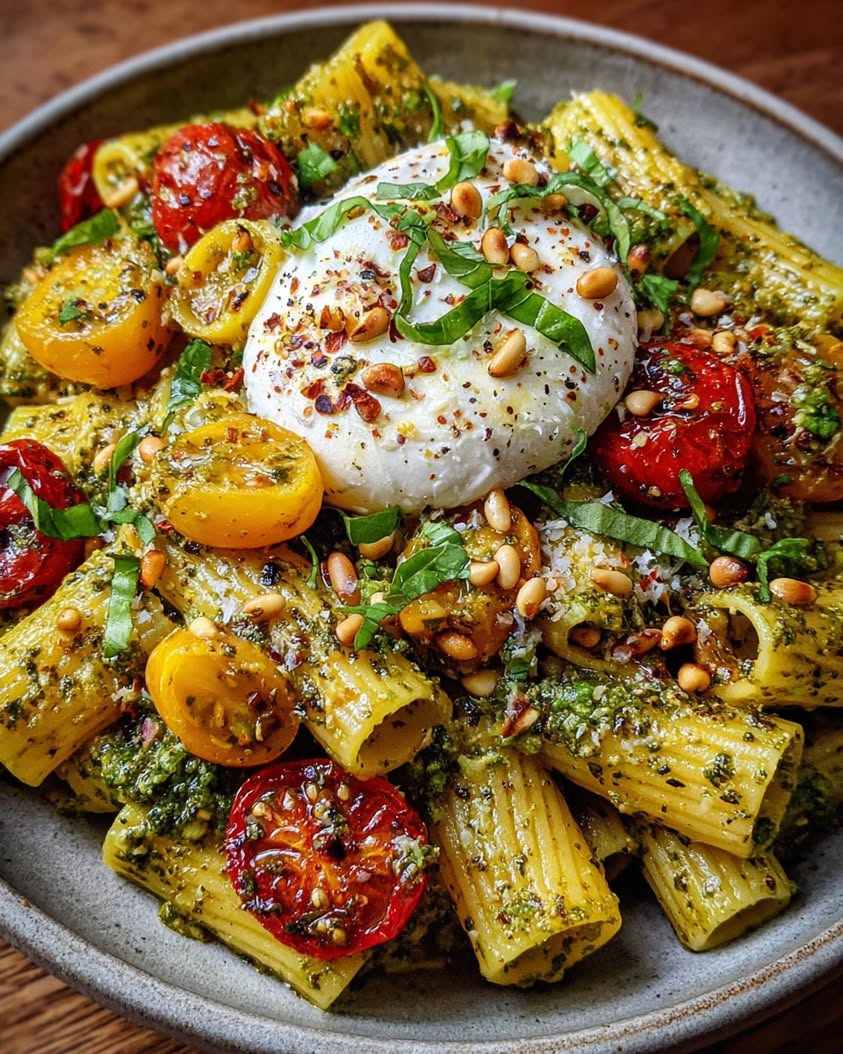
Creamy, dreamy Lemon Pesto Rigatoni! Bursting with bright citrus flavor, topped with rich, creamy burrata and crunchy roasted pine nuts. A restaurant-quality meal made easy.
Imagine twirling your fork into a bowl of perfectly al dente rigatoni, each tube generously coated in a vibrant, herbaceous pesto that sings with the fresh, sunny flavor of lemon. This Lemon Pesto Rigatoni recipe is not just a meal; it is a culinary experience that transforms your kitchen into a cozy Italian trattoria. The star of the show, however, is the luxurious ball of burrata placed right on top, its delicate outer shell giving way to an impossibly creamy, dreamy center that rivers through the pasta. Finally, a sprinkle of golden, roasted pine nuts adds a satisfying crunch, creating a symphony of textures and tastes in every single bite.
Furthermore, this dish masterfully balances rich, creamy elements with bright, acidic notes, making it feel both indulgent and refreshingly light. The beauty of this Lemon Pesto Rigatoni lies in its deceptive simplicity. You can create a gourmet-quality dinner that looks and tastes incredibly sophisticated with just a handful of high-quality ingredients and about thirty minutes of your time. Consequently, it is the perfect answer for a busy weeknight when you crave something special or for a relaxed dinner party where you want to impress your guests without being stuck in the kitchen all evening. This recipe proves that incredible flavor does not have to be complicated.
Moreover, the aroma that fills your home as you zest the lemon and toast the pine nuts is absolutely intoxicating, a promise of the delicious meal to come. This Lemon Pesto Rigatoni is a celebration of fresh, simple ingredients working in perfect harmony. It is a versatile canvas, easily adaptable to what you have on hand, yet always delivering a restaurant-worthy result. Ultimately, this dish is about creating a moment of pure joy around the dinner table, a comforting and elegant pasta that everyone will love.
Quick Recipe Highlights
- Flavor Profile: This Lemon Pesto Rigatoni offers a brilliant balance of flavors. The basil pesto provides a deep, herbal base, which is then lifted and brightened by the fresh zest and juice of lemon. Meanwhile, the rich, milky burrata adds a decadent creaminess that mellows the sharpness, creating a perfectly harmonious and sophisticated taste.
- Texture: The texture journey in this dish is exceptional. You get the satisfying, firm bite of the al dente rigatoni pasta, contrasted with the luscious, smooth creaminess of the burrata cheese. Finally, the roasted pine nuts introduce a delightful, crunchy element that provides a counterpoint to the other soft components, ensuring every mouthful is interesting.
- Aroma: The aroma is an immediate invitation to the table. As you toast the pine nuts, their warm, nutty fragrance fills the air. This is followed by the bright, citrusy scent of fresh lemon zest and the unmistakable herbal perfume of basil from the pesto, creating an olfactory preview of the fresh and vibrant meal ahead.
- Visual Appeal: This dish is a feast for the eyes. The vibrant green of the pesto clings to the tubular rigatoni, making a beautiful base. The pristine white ball of burrata sitting in the center acts as a stunning focal point, while the scattered golden-brown pine nuts and a sprinkle of fresh basil add the final touches of color and elegance.
- Skill Level Needed: This recipe is perfectly suited for cooks of all levels, from complete beginners to seasoned home chefs. The techniques involved are fundamental: boiling pasta, toasting nuts, and combining ingredients. Therefore, no advanced culinary skills are required to achieve a spectacular and impressive result that tastes like it came from a professional kitchen.
- Special Equipment: You need only very basic kitchen tools. A large pot for boiling the pasta, a skillet for toasting the pine nuts, and a microplane or zester for the lemon are the primary items. A food processor can speed up making the pesto from scratch, but you can also use a pre-made high-quality version to save time.
Recipe Overview
- Difficulty Level: We have classified this Lemon Pesto Rigatoni as an easy recipe because it involves straightforward, fundamental cooking techniques. The steps are simple and sequential, with minimal room for error. Essentially, if you can boil water and stir ingredients together, you can successfully create this beautiful and delicious pasta dish with confidence.
- Category: This dish falls squarely into the main course category, providing a satisfying and complete meal. It is also an excellent candidate for a special occasion dinner or a gourmet date night at home. Additionally, it can serve as a stunning side dish for a larger Italian-inspired feast, though it is hearty enough to stand on its own.
- Cuisine: The recipe is rooted in Italian cuisine, drawing on the classic combination of pasta and pesto from the Liguria region. However, the addition of burrata, a more modern Italian cheese, and the prominent use of lemon give it a contemporary twist. This fusion creates a dish that honors tradition while feeling fresh and current.
- Cost: The cost of this meal is moderate and depends largely on your choice of ingredients. Making pesto from scratch with fresh basil, pine nuts, and good olive oil can be an investment. Similarly, a high-quality burrata cheese is a splurge. However, the recipe yields an impressive result that is far more affordable than ordering a similar dish at a restaurant.
- Season: This Lemon Pesto Rigatoni is truly a dish for all seasons, but it shines brightest in the spring and summer. The bright, citrusy flavors are incredibly refreshing on a warm evening. Furthermore, it is the perfect way to utilize an abundance of fresh basil from your garden or the farmer’s market during its peak growing season.
- Occasion: This pasta is incredibly versatile for various occasions. It is quick enough for a simple weeknight family dinner yet elegant enough for a dinner party with friends. It also makes for a fantastic romantic meal for two. Its stunning presentation ensures it always feels a little bit special, no matter the event.
Why You’ll Love This Lemon Pesto Rigatoni
First and foremost, the taste and texture appeal of this Lemon Pesto Rigatoni is absolutely undeniable. The combination of flavors is a masterclass in balance. You experience the rich, herbal depth of the basil pesto, which is immediately brightened by the zesty, sunny punch of fresh lemon. Then, the creamy, cool burrata cheese melts into the warm pasta, creating a luxurious sauce that coats every piece. The final textural element, the crunchy, toasty pine nuts, provides a satisfying contrast that makes each bite exciting and complex. This interplay between creamy, crunchy, tangy, and rich is what makes this dish so incredibly addictive and memorable.
Another significant reason to love this recipe is its sheer convenience and preparation benefits. From start to finish, you can have this gourmet-looking meal on the table in well under an hour. The steps are simple and largely simultaneous; you can toast the pine nuts and make the pesto while the pasta water comes to a boil. Consequently, there is no need for complicated techniques or hours of simmering. This makes it an ideal solution for those busy nights when you want a satisfying homemade dinner without a lengthy cooking process. It is a testament to the fact that incredible food can be both simple and swift.
From a nutritional standpoint, this Lemon Pesto Rigatoni offers several advantages when enjoyed as part of a balanced diet. Basil, the star of the pesto, is rich in antioxidants and vitamin K. The olive oil provides heart-healthy monounsaturated fats. Pine nuts are a good source of protein, magnesium, and zinc. Using a whole-grain or legume-based rigatoni can further boost the fiber and protein content. While it is a indulgent dish, it is packed with real, whole-food ingredients that provide more nutritional value than a heavily processed meal.
The social and entertaining value of this dish cannot be overstated. Presenting a beautiful bowl of Lemon Pesto Rigatoni with a whole burrata ball waiting to be broken open is a surefire way to impress your guests. It looks and tastes like something from a high-end Italian restaurant, creating a special occasion atmosphere right at your dining table. It is a conversation starter and a shared experience, as everyone gathers to dive into the creamy center of the cheese. This pasta fosters a sense of community and celebration, making any meal feel like an event.
Finally, considering cost-effectiveness and accessibility, this recipe delivers exceptional value. While ingredients like burrata and pine nuts can be pricier, the overall cost of preparing this dish at home is significantly lower than ordering a comparable meal at a restaurant. You have full control over the quality of ingredients, allowing you to splurge on key elements while saving on others. Furthermore, the recipe is accessible to cooks of all skill levels and requires no specialized equipment. This combination of gourmet results, manageable cost, and simple execution makes this Lemon Pesto Rigatoni a fantastic addition to your regular cooking repertoire.
Historical Background and Cultural Significance
The story of this dish begins with its foundational component: pesto. Pesto Genovese originates from the Liguria region of Italy, specifically the city of Genoa. Traditionally, it was made with a marble mortar and wooden pestle, which is where its name derives from the Italian verb “pestare,” meaning to crush or pound. The classic recipe includes fresh basil, garlic, pine nuts, coarse salt, Parmigiano-Reggiano, and Pecorino cheese, all emulsified with high-quality olive oil. This vibrant green sauce was a way for Ligurians to preserve the flavor of their abundant basil harvest. The introduction of pasta with pesto became a iconic representation of Ligurian cuisine, celebrated for its fresh, bright flavors that capture the essence of the Mediterranean coast.
Culturally, pesto pasta holds a significant place in Italian food heritage. It is a symbol of “cucina povera” or “poor kitchen,” showcasing the Italian philosophy of creating extraordinary dishes from simple, local, and seasonal ingredients. The combination represents the ingenuity of regional cooking. While traditional pesto pasta is a staple, the addition of burrata is a more modern innovation. Burrata, meaning “buttered” in Italian, was developed in the early 20th century in the Apulia region as a way to use up the scraps from mozzarella production. Its addition to pesto pasta is a contemporary twist that reflects the evolving nature of Italian cuisine, blending regional traditions to create new classics.
The evolution of the recipe for Lemon Pesto Rigatoni demonstrates how culinary traditions adapt and travel. As Italian immigrants brought their food culture around the world, pesto gained international popularity. The specific use of rigatoni, a tube-shaped pasta from central and southern Italy, shows a cross-regional adaptation. The tubes are perfect for capturing chunky sauces and, in this case, the creamy stracciatella from the burrata. The addition of lemon zest and juice is another non-traditional but widely embraced modification that enhances the sauce’s brightness. This evolution highlights a global appreciation for Italian flavors while allowing for personal and creative interpretations that respect the original spirit of the cuisine.
Regional variations of pesto pasta are abundant throughout Italy and beyond. In Sicily, pesto might include tomatoes and almonds. In France, a similar paste called “pistou” omits the nuts and cheese. The modern Lemon Pesto Rigatoni with Burrata itself is a variation that has gained immense popularity in contemporary restaurants and food blogs. It represents a fusion where the creaminess of southern Italian burrata meets the herbal freshness of northern Italian pesto, all unified by the universal appeal of pasta. This dish is a testament to the living, breathing nature of food culture, where recipes are not static but are continually refined and reimagined by each generation of cooks.
Ingredient Deep Dive
Let us start with the star of the sauce: basil. This fragrant herb is the heart of traditional pesto and has been cultivated for thousands of years, originating in India and making its way to Europe via the spice routes. Basil carries cultural significance in many regions, often associated with love and protection in Italian folklore. Nutritionally, it is a powerhouse of vitamin K, essential for bone health and blood clotting, and it contains antioxidants like flavonoids. When selecting basil, look for vibrant green leaves without dark spots or wilting. To store it, treat it like a bouquet of flowers; trim the stems and place them in a glass of water on your counter, covering the leaves loosely with a plastic bag. If you cannot find fresh basil, a high-quality prepared pesto is the best substitution, though the flavor profile will be different.
Next, we have the luxurious burrata cheese. Burrata is a fresh Italian cheese from the Apulia region, a relative newcomer that was invented in the 1920s. Its name means “buttered,” which perfectly describes its rich, creamy interior. Externally, it resembles a ball of fresh mozzarella, but inside it contains a soft, stringy curd and cream mixture called stracciatella. Culturally, it represents Italian cheesemaking ingenuity, created as a way to use up the ritagli (clippings) from mozzarella production. It is a good source of protein and calcium but is also high in saturated fat, so it is best enjoyed in moderation. Select burrata that is swimming in its whey and feels soft and plump. It is highly perishable and should be used within a day or two of purchase. For a substitution, fresh mozzarella can be used, though you will miss the signature creamy center.
The pine nuts, or pinoli, provide the essential crunchy element and a deep, nutty flavor. These edible seeds harvested from certain species of pine trees have been foraged since prehistoric times and are a staple in Mediterranean and Middle Eastern cuisines. They are particularly celebrated in Italian cooking, especially in pesto. From a nutritional standpoint, pine nuts are rich in healthy monounsaturated fats, plant-based protein, and various minerals like magnesium and zinc. When purchasing, look for uniform, creamy-colored nuts and avoid any that look yellowed or shriveled. Due to their high oil content, they can turn rancid quickly, so store them in an airtight container in the refrigerator or freezer. If you need a substitute, walnuts or blanched almonds offer a similar texture and flavor profile in pesto.
Finally, the lemon plays a transformative role in this Lemon Pesto Rigatoni. Citrus fruits like lemons have a long history in the Mediterranean, where they have been cultivated for over a thousand years. They add a crucial burst of acidity and brightness that cuts through the richness of the cheese and oil. Lemons are famously high in vitamin C, a potent antioxidant that supports immune function. When selecting lemons, choose ones that are heavy for their size with bright, firm skin, as these will be the juiciest. You can store them at room temperature for a week or in the refrigerator for longer. The zest, where the potent essential oils reside, is just as important as the juice. If you are out of fresh lemons, a tablespoon of high-quality bottled lemon juice can work in a pinch, but you will lose the aromatic complexity of the fresh zest.
Common Mistakes to Avoid
- Overcooking the Pasta: This is a critical error. Mushy, soft rigatoni will ruin the texture of the entire dish. Always cook your pasta to al dente, which means “to the tooth,” as it will continue to cook slightly when you toss it with the warm pesto sauce. Consequently, you achieve the perfect firm bite that is essential for a great pasta experience.
- Using Stale Pine Nuts: Pine nuts have a high oil content and can go rancid relatively quickly. Using stale or rancid nuts will impart a bitter, off-flavor to your entire Lemon Pesto Rigatoni. Always taste one before using it to ensure it has a sweet, buttery flavor. Store them properly in the fridge or freezer to maintain freshness.
- Not Toasting the Pine Nuts: Skipping the toasting step is a missed opportunity for depth of flavor. Raw pine nuts are mild and soft. Toasting them unlocks their nutty aroma and gives them a firmer, crunchier texture that provides a vital contrast in the final dish. Watch them carefully, however, as they can burn in a matter of seconds.
- Adding Burrata Too Early: The magic of burrata is its cool, creamy center contrasting with the warm pasta. If you mix it in during the cooking process, it will simply melt and disappear. You should always add the whole ball at the end, allowing it to gently warm from the pasta’s heat while retaining its unique textural identity.
- Using Pre-Grated Parmesan Cheese: Pre-grated cheese often contains anti-caking agents like potato starch or cellulose, which can prevent it from melting smoothly into the pesto sauce. For the best flavor and texture, always buy a wedge of Parmigiano-Reggiano or high-quality Parmesan and grate it yourself just before using it.
- Rinsing the Cooked Pasta: Unless you are making a pasta salad, you should never rinse your pasta after draining it. The starchy surface that clings to the noodles is crucial for helping the sauce adhere to the pasta. Rinsing it washes this starch away, resulting in a slippery pasta that the sauce will slide right off of.
- Not Reserving Pasta Water: This is arguably one of the most common mistakes in pasta cookery. The starchy, salty pasta water is liquid gold for saucing. It helps to thin the pesto to the perfect consistency and helps it cling to the rigatoni. Always scoop out at least a cup of water from the pot just before you drain the pasta.
- Overworking the Pesto in a Food Processor: If you are making pesto from scratch, pulse the ingredients instead of running the machine continuously. Over-processing can generate too much heat and oxidize the basil, turning your vibrant green pesto a dull, brownish color. A rough, textured pesto is far superior to a smooth, pureed one.
Essential Techniques
Toasting pine nuts is a simple but vital technique for maximizing flavor. This process is important because it heats the natural oils in the nuts, releasing a deep, nutty aroma and enhancing their inherent sweetness. It also transforms their texture from soft and chewy to firm and delightfully crunchy. To master it, spread the pine nuts in a single layer in a dry skillet over medium heat. Shake the pan frequently to ensure even toasting. The common pitfall is walking away, as they can burn incredibly quickly. The visual cue for success is a uniform light golden-brown color. You will also smell their fragrant, toasted aroma. As soon as they reach this point, immediately transfer them to a plate to stop the cooking process.
Zesting a lemon correctly is crucial for capturing its brightest flavor without bitterness. The zest holds the potent essential oils where the true lemon flavor resides, making it far more aromatic than the juice alone. The technique is important for infusing the pesto with a sunny, citrusy depth. To master it, use a fine microplane zester and gently rub the lemon against it, rotating the fruit as you go. Apply only light pressure to remove the colorful outer zest and avoid the bitter white pith beneath. A common mistake is grating too deeply and including the pith, which will make your dish unpleasantly bitter. The visual cue for success is a pile of fluffy, brightly colored yellow zest without any white specks mixed in.
Emulsifying the pesto sauce is the technique that creates a stable, creamy union between the oil and the other solid ingredients. This process is important because it prevents the sauce from separating and ensures that every component is evenly distributed, coating the pasta perfectly. If you are using a food processor, the technique involves drizzling the olive oil in a slow, steady stream while the machine is running. This slowly breaks down the oil into tiny droplets that become suspended in the paste. The common pitfall is adding the oil too quickly, which can cause it to split. The visual cue for success is a thick, homogenous sauce that has a consistent texture and color throughout, with no pools of oil on the surface.
Pro Tips for Perfect Lemon Pesto Rigatoni
- Bring your burrata to room temperature about 30 minutes before serving. This simple step allows the cheese to soften fully, ensuring that when you break it open over the warm pasta, it oozes beautifully instead of being firm and cold in the center.
- When you drain the rigatoni, shake it well but do not shake it completely dry. Allowing a little bit of the starchy cooking water to cling to the pasta will help the pesto sauce adhere better and create a silkier texture when you toss everything together in the pan.
- For an extra layer of flavor, consider toasting your garlic clove (if making pesto from scratch) along with the pine nuts. Just place the unpeeled clove in the skillet for a few minutes until it becomes fragrant and slightly blackened. This mellows the garlic’s sharp bite and adds a subtle, smoky depth.
- Do not add the pesto sauce to a boiling hot empty pot. Instead, toss the drained, hot pasta with the pesto in a large mixing bowl or a pan that has been taken off the heat. This preserves the fresh, bright flavor of the basil and prevents the oil from overheating and breaking.
- If your pesto seems too thick when you are ready to toss it with the pasta, do not add more olive oil. Instead, use the reserved starchy pasta water, one tablespoon at a time, to thin it to the perfect saucy consistency. The starch in the water helps the sauce cling to the rigatoni.
- For a beautiful presentation, use kitchen shears to snip a few extra fresh basil leaves over the finished dish just before serving. This adds a pop of fresh green color and an additional burst of herbal aroma that elevates the visual and olfactory appeal of the meal.
- Season your pasta water generously. It should taste like the sea. This is your primary opportunity to season the pasta itself from the inside out. Well-salted water is a fundamental secret to restaurant-quality pasta dishes, as it builds a foundation of flavor that permeates the entire dish.
Variations and Adaptations
For regional variations, you can explore different pesto styles from across Italy. A Sicilian-inspired version might use almonds instead of pine nuts and add a handful of sun-dried tomatoes for a sweet and tangy twist. Alternatively, you could create a pesto from the Trapani region, which incorporates fresh tomatoes and ricotta cheese for a smoother, lighter sauce. For a dairy-free version that still feels rich, an avocado pesto provides a wonderfully creamy base without any cheese. These regional twists allow you to travel with your taste buds while maintaining the core structure of this wonderful Lemon Pesto Rigatoni dish.
Seasonal adaptations are a fantastic way to keep this recipe exciting all year round. In the winter, when fresh basil is less vibrant, you can use arugula or spinach as the base for your pesto, which will give it a peppery or mild flavor, respectively. During the summer, try adding fresh, sweet cherry tomatoes, halved and lightly warmed, to the pasta just before serving. In the autumn, roasted cubes of butternut squash would add a wonderful sweetness and heartiness. You can even add grilled shrimp or chicken in the summer for a more substantial al fresco meal. These adaptations ensure your Lemon Pesto Rigatoni never feels repetitive.
Dietary modifications are straightforward with this versatile recipe. For a gluten-free Lemon Pesto Rigatoni, simply substitute your favorite gluten-free pasta; brands made from brown rice or chickpeas work exceptionally well. To make it vegan, omit the burrata and Parmesan, using a vegan pesto recipe made with nutritional yeast for a cheesy flavor. You can also add a sprinkle of vegan breadcrumbs toasted in olive oil for the missing crunch. For a nut-free version, replace the pine nuts with toasted sunflower seeds or pumpkin seeds. These simple swaps ensure that everyone can enjoy this delicious pasta, regardless of dietary restrictions.
Serving and Presentation Guide
Plating techniques can elevate this dish from a simple pasta to a restaurant-worthy presentation. Instead of piling the pasta high in a bowl, use a pair of tongs to create a neat, circular nest of the Lemon Pesto Rigatoni on a warm, shallow plate. Place the whole ball of burrata directly in the center of the pasta nest. This creates a stunning focal point and allows your guests to experience the drama of breaking into the cheese themselves. The visual appeal is immediate and impressive, setting the stage for the delicious meal to come.
Garnishing is the final touch that adds both flavor and visual pop. Beyond the roasted pine nuts, consider a light drizzle of a high-quality, vibrant green extra virgin olive oil over the burrata and around the plate. A final grating of lemon zest over the top just before serving will intensify the citrus aroma. A few small, whole basil leaves scattered around the plate add a fresh, green contrast. You can also add a crack of black pepper or a light dusting of flaky sea salt like Maldon over the burrata for extra texture and seasoning.
Traditional accompaniments for a rich pasta dish like this are often simple and designed to cleanse the palate. A light, crisp arugula salad with a lemon vinaigrette is a perfect pairing. For a more substantial meal, serve it with grilled vegetables like zucchini or asparagus. In terms of modern serving suggestions, consider offering a side of crusty, artisanal bread to scoop up every last bit of the creamy pesto and stracciatella from the plate. A glass of chilled white wine, as discussed in the pairing section, completes the experience beautifully.
Wine and Beverage Pairing
Selecting the right wine pairing will enhance the vibrant and creamy flavors of this Lemon Pesto Rigatoni. The best choices are white wines with good acidity to match the lemon and cut through the richness of the burrata. A crisp, dry Italian white like Vermentino or Pinot Grigio from the Alto Adige region is a classic and perfect match. Alternatively, a Sauvignon Blanc from New Zealand or the Loire Valley, with its herbaceous and citrusy notes, will complement the basil and lemon beautifully. For a more textured option, a lightly oaked Chardonnay can stand up to the creaminess without overpowering the dish. The key is to avoid wines that are too oaky or buttery, as they can clash with the pesto’s freshness.
For non-alcoholic alternatives, there are many sophisticated options that pair wonderfully. A sparkling lemonade or a homemade basil lemonade echoes the core flavors of the dish. An iced herbal tea, such as peppermint or lemongrass, can be very refreshing. For something more complex, a non-alcoholic sparkling wine or a dealcoholized Sauvignon Blanc can provide a similar tasting experience without the alcohol. Simply serving chilled sparkling water with a slice of lemon or a few basil leaves is also an excellent and cleansing choice that allows the flavors of the pasta to remain the star of the show.
Coffee and tea pairings are typically considered for after the meal, but they can be selected to harmonize with the dining experience. Following this lemony, herbal pasta, a light roast coffee with bright, citrusy notes would be a delightful way to finish. An herbal tea like lemon verbena or a gentle green tea would continue the fresh, clean theme of the meal. The goal is to choose a warm beverage that is not too heavy or bitter, providing a soothing and complementary end to a flavorful dinner.
Storage and Shelf Life
Proper storage methods are essential for maintaining the quality and safety of your leftovers. Store any leftover Lemon Pesto Rigatoni in an airtight container in the refrigerator. It is best to store the components separately if possible. Keep the pasta with pesto in one container and any remaining burrata in its original liquid in another. This prevents the burrata from making the entire dish too soggy. The pine nuts are best stored separately at room temperature in a sealed bag to maintain their crunch. When you are ready to eat, you can reassemble the components.
Understanding the shelf life and signs of spoilage is crucial for food safety. The assembled pasta will last for up to 3 days in the refrigerator. The fresh burrata, however, is highly perishable and should be consumed within 1-2 days of opening. Signs that your pasta has gone bad include a sour smell, significant discoloration (the pesto may darken naturally, but it should not turn gray or black), or the presence of mold. If the burrata develops an off, ammonia-like odor or becomes slimy, it should be discarded immediately. Always trust your senses; when in doubt, throw it out.
Reheating instructions require a gentle touch to preserve texture. The best method is to reheat the pasta (without the burrata and pine nuts) in a skillet over low heat. Add a splash of water, broth, or a little more olive oil to prevent it from drying out. Stir frequently until just warmed through. You should avoid using the microwave, as it can make the pasta rubbery and cause the sauce to separate. Once the pasta is warm, transfer it to a bowl and then add fresh, cool burrata and a new sprinkle of toasted pine nuts to restore the intended contrast of temperatures and textures.
Make Ahead Strategies
Creating a prep timeline can make assembling this dish for a dinner party incredibly stress-free. You can toast the pine nuts and make the pesto sauce up to 2 days in advance. Store the pesto in an airtight container in the fridge with a thin layer of olive oil on top to prevent oxidation. The burrata should be purchased as fresh as possible and kept in its packaging in the fridge until the moment of serving. On the day of your dinner, all you need to do is cook the pasta, warm the pesto slightly, and assemble the dish. This timeline ensures maximum freshness with minimal last-minute effort.
Understanding the quality impact of make-ahead steps is important. Making the pesto ahead of time can actually improve its flavor, as it allows the ingredients to meld together. However, the vibrant green color may darken slightly, which is normal. Toasting the pine nuts ahead saves time, but their crunch is best preserved if stored in an airtight container at room temperature. The pasta itself should always be cooked fresh, as refrigerated cooked pasta becomes gummy and loses its ideal texture. The burrata must be added at the very last second to maintain its signature creamy center.
Reheating guidelines for pre-made components are simple. If you made the pesto ahead, let it come to room temperature for about 30 minutes before using it. You can also gently warm it in a saucepan over very low heat, but do not let it bubble or simmer, as this will cook the basil and ruin its fresh flavor. If the pesto has thickened in the fridge, simply stir in a tablespoon of warm water or a little fresh olive oil to loosen it to a saucy consistency. The goal is to have everything ready so that the final assembly of your Lemon Pesto Rigatoni takes just minutes.
Scaling Instructions
Halving the recipe is straightforward for a smaller meal. Simply divide all the ingredient quantities by two. Use a medium saucepan for boiling the pasta to ensure the water still covers it adequately. The cooking time for the pasta will remain roughly the same, as it is dependent on the volume of water and the pasta itself, not the quantity. You will need a smaller skillet for toasting the reduced amount of pine nuts, as they need to be in a single layer to toast evenly. This scaling is perfect for a romantic dinner for two with minimal leftovers.
Doubling or tripling the recipe for a crowd requires some adjustments. Use your largest stockpot to ensure the pasta has enough room to cook properly without sticking together. You may need to toast the pine nuts in multiple batches to avoid steaming them, which prevents proper browning. When making a large batch of pesto, you might need to make it in two batches in your food processor to ensure even emulsification. When tossing the pasta with the sauce, use an extra-large bowl or even a clean, shallow roasting pan to give you plenty of space to mix everything thoroughly without making a mess.
Timing modifications are crucial when scaling up. While the prep time will increase slightly with larger quantities, the active cooking time for the pasta remains constant. However, you must account for the time it takes to bring a larger volume of water to a boil, which can be significant. To manage this, start your water boiling well in advance. You can also keep the first batches of pasta warm by tossing them with a little olive oil and covering them in a low-temperature oven while you finish cooking the rest. Planning your timeline ensures all components are ready to serve at their peak.
Nutritional Deep Dive
A macro breakdown of this Lemon Pesto Rigatoni reveals a balanced profile of carbohydrates, fats, and protein. The rigatoni provides the primary source of complex carbohydrates, offering sustained energy. The pesto sauce and burrata contribute a significant amount of healthy fats, primarily from the olive oil (monounsaturated fats) and the cheese (saturated fats). These fats are essential for nutrient absorption and satiety. The pine nuts and cheese also provide a good amount of plant-based and animal-based protein, respectively. Overall, it is a energy-dense meal, so portion awareness is key, especially if you are mindful of your caloric intake.
The micronutrient analysis shows a dish rich in several essential vitamins and minerals. Basil is an excellent source of Vitamin K, crucial for bone health and blood clotting. The lemon juice provides a burst of Vitamin C, a powerful antioxidant that supports the immune system. Olive oil contains Vitamin E, another antioxidant. The pine nuts offer minerals like magnesium, which is involved in hundreds of biochemical reactions in the body, and zinc, which supports immune function. The burrata provides calcium for strong bones and teeth. Together, these ingredients create a meal that is not only delicious but also nutritionally diverse.
For those with specific dietary considerations, this dish can be adapted. As a vegetarian dish, it is an excellent source of protein and fat. For those monitoring sodium, be mindful of the salt in the pasta water, the Parmesan cheese, and any added to the pesto. Individuals with lactose intolerance may experience discomfort from the burrata and Parmesan, though aged cheeses like Parmesan are often better tolerated. For a heart-healthy focus, the monounsaturated fats from the olive oil are beneficial, but the saturated fat from the cheese should be considered in the context of your overall diet. As always, balance and moderation are the guiding principles.
Dietary Adaptations
For a gluten-free
Print
Lemon Pesto Rigatoni with Burrata & Roasted Pine Nuts
Description
A vibrant and creamy pasta dish featuring fresh basil pesto, zesty lemon, and rich burrata cheese, topped with crunchy roasted pine nuts.
Ingredients
For the Crust:
- 1 lb rigatoni pasta
- 1 cup fresh basil pesto
- 1 lemon, zested and juiced
- 8 oz burrata cheese
- 1/4 cup pine nuts
- 2 cloves garlic, minced
- 1/4 cup extra virgin olive oil
- Salt and black pepper to taste
- Fresh basil leaves for garnish
Instructions
1. Prepare the Crust:
- Cook the rigatoni according to package instructions until al dente. Reserve 1/2 cup pasta water before draining.
- While pasta cooks, toast pine nuts in a dry skillet over medium heat until golden and fragrant, about 3-4 minutes. Set aside.
- In a large bowl, combine pesto, lemon zest, lemon juice, minced garlic, and olive oil. Mix well.
- Add the drained pasta to the pesto mixture, tossing to coat. Add reserved pasta water as needed to loosen the sauce.
- Season with salt and pepper to taste. Transfer to serving plates, top with torn burrata, toasted pine nuts, and fresh basil.
Notes
You can customize the seasonings to taste.

I’m Shaykee—born in Morocco, seasoned across continents. From airplane galleys to home kitchens, I share the flavors and stories that shaped my journey.