
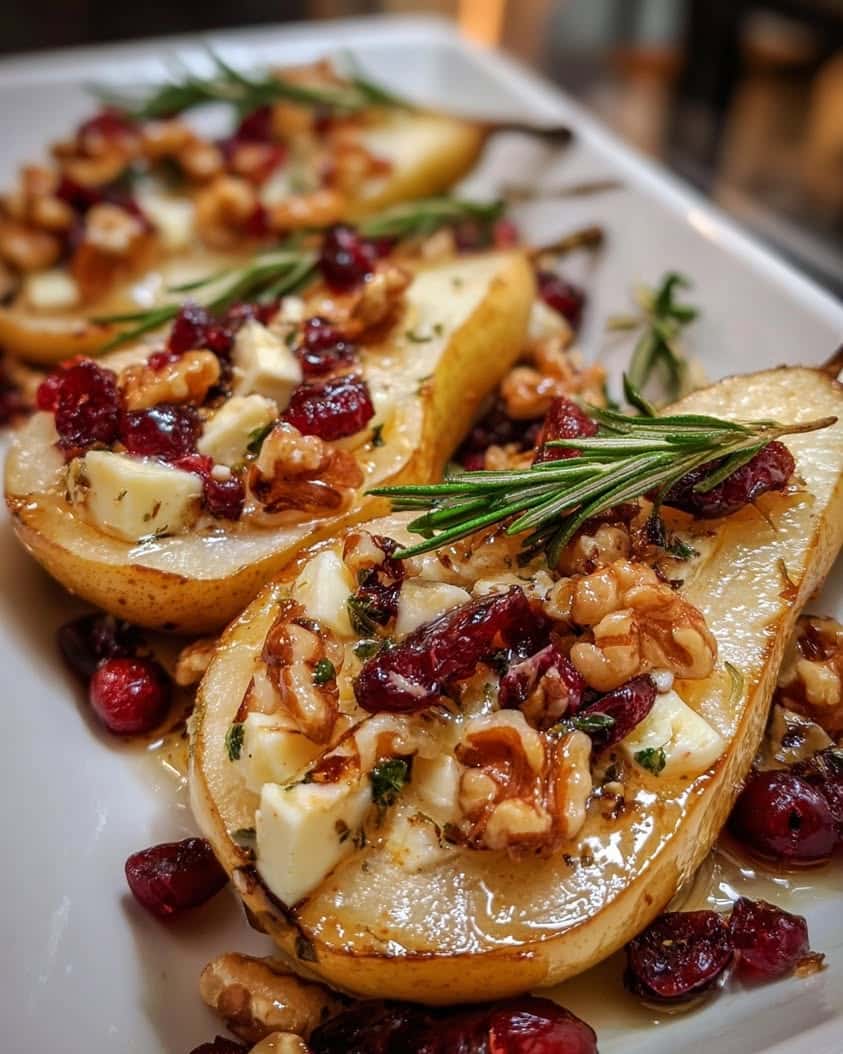
Warm Baked Pears with Brie, Walnuts, and Cranberries: An Elegant Appetizer for Any Occasion
Imagine pulling a tray of warm baked pears from your oven, their sweet aroma filling your kitchen with a sense of comfort and sophistication. These elegant baked pears with brie, walnuts, and cranberries transform simple ingredients into a stunning dish that feels both rustic and refined. The pears become tender and juicy, creating a perfect vessel for the creamy, melted brie. Meanwhile, the toasted walnuts add a satisfying crunch, and the cranberries provide a burst of tart sweetness that ties everything together beautifully.
This recipe for baked pears works equally well as an impressive appetizer to start a dinner party or as a light dessert to conclude a special meal. Furthermore, it requires minimal effort for maximum impact, making it perfect for busy hosts who want to serve something memorable. The combination of flavors and textures creates a harmonious balance that will delight your guests. Additionally, the visual appeal of the golden-brown pears topped with oozing cheese and vibrant red cranberries makes for a gorgeous presentation on any table.
Seasonal cooking reaches its peak with this dish, as it highlights the best of autumn and winter produce. Consequently, these baked pears with brie become a versatile staple in your entertaining repertoire. They pair wonderfully with a crisp white wine or even a sparkling cider for a non-alcoholic option. Ultimately, this dish proves that you do not need complicated techniques or hard-to-find ingredients to create something truly special and delicious for your loved ones.
Quick Recipe Highlights
- Flavor Profile: These baked pears offer a sophisticated balance of sweet, savory, and tangy notes. The natural sweetness of the pear caramelizes during baking, which contrasts beautifully with the rich, creamy brie. Meanwhile, the tart cranberries and earthy walnuts create a complex flavor experience that delights the palate with every bite.
- Texture: You will experience a wonderful textural journey with each mouthful of these baked pears. The soft, yielding flesh of the warm pear contrasts with the creamy melt-in-your-mouth brie. Additionally, the crunchy walnuts provide a satisfying resistance, while the slightly chewy cranberries add another dimension to this harmonious texture combination.
- Aroma: As these pears bake, your kitchen will fill with an irresistible fragrance that promises a delicious treat. The sweet, fruity scent of cooking pears mingles with the nutty aroma of toasting walnuts. Furthermore, the earthy notes of melting brie combine with the sharp tang of cranberries to create an olfactory experience that will have everyone eagerly awaiting the finished dish.
- Visual Appeal: This dish presents beautifully on any plate with its appealing color contrast and elegant composition. The golden-brown pear halves provide a lovely base for the white, melted brie cheese. Moreover, the deep red cranberries and toasted brown walnuts create a festive look that makes these baked pears particularly suitable for holiday entertaining and special occasions.
- Skill Level Needed: This recipe is perfect for cooks of all experience levels, from complete beginners to seasoned chefs. You only need basic knife skills for halving and coring the pears, plus the ability to use an oven safely. Consequently, even someone with minimal cooking experience can create this impressive-looking dish with excellent results every time.
- Special Equipment: You likely already have everything needed to make these elegant baked pears in your kitchen. Essentially, you just require a baking sheet, a small knife for preparing the pears, and a spoon for scooping out the cores. Optionally, a melon baller makes coring even easier, but it is not necessary for success with this simple recipe.
Recipe Overview
- Difficulty Level: This recipe earns its easy rating because it involves straightforward preparation with minimal technical skills required. Essentially, you just need to halve and core the pears, then assemble the toppings before baking. Furthermore, the cooking process is largely hands-off, allowing the oven to do most of the work while you attend to other tasks. The simplicity of preparation combined with the impressive final result makes this an ideal recipe for nervous cooks and busy entertainers alike.
- Category: These versatile baked pears comfortably fit into multiple meal categories, making them wonderfully adaptable. They work beautifully as an elegant appetizer to begin a multi-course meal, particularly during the holiday season. Alternatively, they can serve as a light dessert, especially after a rich main course. Some people even enjoy them as a special breakfast or brunch item alongside yogurt or granola for a luxurious morning treat.
- Cuisine: While this specific combination of ingredients has modern roots, baked fruit dishes appear across many culinary traditions. The French have a long history of baking pears, often with wine or spices. Meanwhile, the combination of fruit and cheese has strong European influences, particularly from France and Italy. The addition of cranberries gives it a slight North American twist, creating a fusion dish that feels both classic and contemporary.
- Cost: This recipe represents excellent value, using affordable ingredients to create a dish that tastes luxurious. Pears are typically inexpensive, especially when in season during autumn and winter months. Brie can be purchased at various price points depending on the quality, while walnuts and cranberries are pantry staples that keep well. Overall, you can create this impressive dish for a fraction of what similar appetizers would cost at a restaurant.
- Season: Autumn and winter are the ideal seasons for making these baked pears, though they can be enjoyed year-round. Pears reach their peak flavor and affordability during the cooler months, making them the perfect base for this warm, comforting dish. Additionally, the festive combination of ingredients makes it particularly suitable for holiday gatherings from Thanksgiving through New Year’s. Nevertheless, with proper ingredient selection, you can enjoy this recipe anytime you crave its unique flavor combination.
- Occasion: This dish shines at dinner parties, holiday gatherings, and other special occasions where you want to impress guests. It makes an elegant starter for Thanksgiving or Christmas meals, setting a sophisticated tone for the feast to follow. Similarly, it works beautifully for romantic dinners, anniversaries, or date nights at home. Even for casual get-togethers, these baked pears elevate the experience without requiring excessive effort from the host.
Why You’ll Love This Recipe
First and foremost, the taste experience of these baked pears will capture your culinary imagination from the very first bite. The natural sweetness of the pear intensifies during baking, creating a caramelized flavor that pairs perfectly with the rich, creamy brie. Meanwhile, the tart cranberries cut through the richness, preventing the dish from feeling too heavy. Additionally, the earthy, toasted walnuts provide a savory counterpoint that balances all the elements. Ultimately, each component complements the others, resulting in a harmonious flavor profile that feels both comforting and sophisticated.
Beyond the exceptional flavors, the convenience factor of this recipe makes it a true winner for busy cooks. With just ten minutes of active preparation, you can have this impressive dish ready for the oven. Furthermore, the ingredients are easy to find at most grocery stores, with no obscure or hard-to-source components. The baking time is flexible too, allowing you to work on other menu items while the pears cook to perfection. Consequently, this recipe eliminates the stress often associated with entertaining, letting you enjoy your own party alongside your guests.
Nutritionally, these baked pears offer several health benefits that might surprise you. Pears provide dietary fiber, vitamin C, and potassium, supporting digestive health and immune function. Walnuts contribute healthy omega-3 fatty acids and protein, while cranberries offer antioxidants and vitamin C. Even the brie provides calcium and protein, though it should be enjoyed in moderation due to its fat content. When balanced as part of an overall healthy diet, this dish represents a treat that nourishes your body while delighting your taste buds.
The social and entertaining value of this dish cannot be overstated, as it consistently impresses guests with its elegant appearance. Serving warm baked pears creates an immediate sense of occasion, making people feel specially cared for. The individual portions allow for beautiful plating, and the aroma that fills your home builds anticipation for the meal to come. Moreover, the conversation-starting quality of this unique dish helps break the ice at gatherings, making it perfect for both intimate dinners and larger parties where you want to create a memorable dining experience.
Finally, the cost-effectiveness and accessibility of this recipe make it suitable for regular enjoyment, not just special occasions. Compared to restaurant appetizers of similar quality, making these baked pears at home represents significant savings. The ingredients have a long shelf life too, particularly the walnuts and dried cranberries, which means you can keep them on hand for spontaneous preparation. This accessibility means you can enjoy a taste of luxury anytime the mood strikes, without requiring extensive planning or a large grocery budget.
Historical Background and Cultural Significance
The practice of baking fruit dates back centuries, with evidence of cooked pear recipes appearing in ancient Roman culinary texts. Early recipes often combined pears with honey and spices, showcasing how even ancient cultures appreciated the transformation that occurs when heat concentrates the fruit’s natural sugars. During medieval times, baked fruits frequently appeared at noble tables, often paired with precious spices that demonstrated wealth and status. The combination of fruit and cheese also has deep historical roots, with records indicating that Europeans have been enjoying this pairing since at least the Middle Ages.
Cultural traditions surrounding baked pears vary significantly across different regions, each adding their own distinctive touches. In France, pears baked in wine represent a classic preparation, often served as a simple yet elegant dessert. Meanwhile, Italian cuisine features baked pears with various cheeses, including gorgonzola and ricotta. The addition of walnuts connects to Mediterranean and Middle Eastern culinary traditions, where nuts frequently appear in both savory and sweet dishes. Similarly, cranberries bring a North American element to the dish, reflecting indigenous foodways that have been incorporated into contemporary cooking.
The evolution of this specific recipe reflects broader trends in modern culinary practices, particularly the fusion of different cultural elements. As global trade made ingredients more accessible, cooks began experimenting with combinations that crossed traditional culinary boundaries. The pairing of brie with pears gained popularity in the late 20th century, often appearing on cheese boards and in gourmet magazines. Creative home cooks then began taking this successful pairing and transforming it into a warm, baked dish that highlighted the textural and flavor contrasts even more effectively.
Regional variations of baked fruit dishes continue to evolve, demonstrating the adaptability of this culinary concept. In the American South, baked pears might include pecans instead of walnuts and a bourbon glaze. Scandinavian versions often feature cardamom and other warming spices, while British recipes might include a crumble topping. Contemporary chefs have further innovated by adding ingredients like bacon, blue cheese, or even balsamic reduction. This ongoing evolution ensures that baked pear dishes remain relevant and exciting, with endless possibilities for customization based on personal preference and ingredient availability.
Ingredient Deep Dive
Pears form the foundation of this dish, and selecting the right variety significantly impacts your final result. Bartlett pears work beautifully because they hold their shape well during baking while becoming tender and juicy. Alternatively, Anjou pears offer a slightly firmer texture with a sweet, mild flavor that complements the other ingredients. When selecting pears, look for fruits that are firm but yield slightly to gentle pressure at the stem end. Avoid overly soft pears, as they will become mushy during baking, and extremely hard pears may not soften properly or develop sufficient sweetness.
Brie cheese contributes the luxurious creamy element that makes this dish so special. This soft-ripened cheese originates from France and features an edible white rind that becomes wonderfully soft when heated. The melting quality of brie creates that beautiful oozy texture that contrasts so perfectly with the firm pear. When selecting brie, opt for a wheel that feels springy to the touch rather than hard or overly soft. Remember that the rind is perfectly edible and helps contain the melted cheese during baking, making it an integral part of the presentation.
Walnuts provide the essential crunchy element and earthy flavor that grounds the dish. Native to the Mediterranean region and Central Asia, walnuts have been cultivated for thousands of years for their nutritional benefits and distinctive taste. Toasting the walnuts before adding them to the pears enhances their flavor dramatically, releasing their natural oils and creating a deeper, more complex taste. Store walnuts in the refrigerator or freezer to prevent them from becoming rancid, as their high oil content makes them susceptible to spoilage. For those with nut allergies, pumpkin seeds make an excellent substitution while maintaining the textural contrast.
Cranberries contribute the tart counterpoint that balances the sweetness of the pear and richness of the brie. While fresh cranberries work well when in season, dried cranberries offer convenience and availability year-round. The vibrant red color of cranberries provides visual appeal that makes the dish particularly festive for holiday tables. If using dried cranberries, consider plumping them in warm water or orange juice before use to restore some moisture. For variation, try using dried cherries or chopped dried apricots, which will provide similar sweet-tart flavor with slightly different fruity notes.
Common Mistakes to Avoid
- Choosing overripe pears represents a common error that can ruin the texture of your final dish. Overly soft pears will become mushy during baking, losing their structural integrity and making them difficult to stuff and serve. Instead, select pears that are firm but yield slightly to gentle pressure near the stem. This ensures they will soften beautifully during baking while maintaining their shape for an attractive presentation.
- Neglecting to toast the walnuts diminishes their flavor impact and misses an opportunity to enhance the dish. Raw walnuts can taste somewhat bitter and lack the deep, nutty aroma that develops during toasting. Simply spread the walnuts on a baking sheet and toast them in a 350°F oven for 5-8 minutes until fragrant. This simple step elevates the entire dish by adding another layer of complex flavor.
- Using cold brie straight from the refrigerator makes it difficult to slice and can affect the melting quality. Cold brie tends to tear rather than slice cleanly, creating messy presentation and uneven distribution. Instead, let the brie sit at room temperature for 15-20 minutes before slicing. This allows it to soften slightly, making it easier to work with and ensuring it melts evenly during baking.
- Overbaking the pears results in a mushy texture that lacks the pleasant firmness that characterizes the perfect baked pear. The pears should be tender when pierced with a knife but still hold their shape nicely. Check them at the minimum baking time and continue cooking only if necessary. Remember that they will continue to soften slightly after removal from the oven due to residual heat.
- Skipping the coring step creates difficulty in eating and prevents the toppings from staying neatly on the pear. The natural hollow created by coring provides the perfect space for the brie and other toppings to nestle. Use a melon baller or small spoon to carefully remove the core and seeds, creating a generous cavity without cutting through the bottom of the pear.
- Arranging the pears too close together on the baking sheet prevents proper air circulation and even cooking. Crowded pears will steam rather than bake, resulting in a soggy texture rather than the desired slight caramelization. Leave at least an inch between each pear half to allow heat to circulate freely around each one. This ensures even cooking and better browning on the cut surfaces.
- Forgetting to drizzle with honey or maple syrup misses an opportunity to enhance both flavor and appearance. The sweet glaze not only adds flavor but also helps the toppings adhere to the pear and creates a beautiful glossy finish. Apply it just before baking so it caramelizes slightly in the oven. For extra flavor, consider adding a pinch of cinnamon or nutmeg to the honey before drizzling.
- Serving the baked pears immediately from the oven can result in burned mouths and missed flavor nuances. The cheese and pear interior become extremely hot during baking and need a few minutes to settle. Let them rest for 5-7 minutes after removing from the oven before serving. This allows the flavors to meld and the temperature to become perfect for eating.
Essential Techniques
Properly coring the pears represents a fundamental technique that ensures successful results with this recipe. Begin by halving the pears lengthwise, then use a melon baller or small spoon to carefully scoop out the core and seeds. Create a generous cavity without cutting through the bottom of the pear, as this helps contain the toppings during baking. The goal is to remove the tough, fibrous core while preserving as much of the tender flesh as possible. Visual cues for success include a smooth, evenly hollowed center that extends from stem to bottom without any breaks in the pear flesh.
Toasting walnuts properly enhances their flavor dramatically and represents a simple but crucial technique. Spread the walnuts in a single layer on a baking sheet and toast at 350°F for 5-8 minutes until fragrant and slightly darkened. Shake the pan halfway through to ensure even toasting. The nuts continue to cook after removal from the oven, so factor in this carryover cooking to prevent burning. Perfectly toasted walnuts should smell nutty and taste rich, without any bitter notes that indicate over-toasting.
Arranging the pears correctly on the baking sheet ensures even cooking and proper caramelization. Place the pear halves cut-side up with at least one inch between each piece to allow for proper air circulation. This spacing prevents steaming and promotes the slight browning that enhances both flavor and appearance. If your pears won’t sit flat, slice a thin piece off the rounded side to create a stable base. This simple trick prevents tipping during baking and ensures the toppings stay neatly in place.
Pro Tips for Perfect Baked Pears
- Select pears of similar size and ripeness to ensure even cooking. Mixed sizes will result in some pieces being overcooked while others remain underdone. Similarly, varying ripeness levels create inconsistent texture throughout the dish. Choosing uniform pears guarantees that every serving reaches perfect tenderness at the same time.
- Add a sprinkle of flaky sea salt just before serving to elevate all the flavors. The salt crystals enhance the sweetness of the pear, richness of the brie, and tartness of the cranberries. This small addition creates a more complex flavor profile that will impress your guests. Use a light hand, as you can always add more but cannot remove excess salt.
- Consider adding fresh thyme leaves for an herbal note that complements the other ingredients. The slight earthiness of thyme pairs beautifully with the sweet pears and rich cheese. Sprinkle a few leaves over the assembled pears before baking, or use as a fresh garnish after baking. Rosemary represents another excellent herbal option, though its stronger flavor requires a lighter touch.
- Brush the cut surfaces of the pears with lemon juice to prevent browning if preparing in advance. The acid in the lemon juice slows oxidation, keeping the pears looking fresh and appetizing. This step becomes particularly important if you need to assemble the pears ahead of time before baking. The slight tartness also complements the other flavors in the dish.
- Experiment with different pear varieties to discover your personal preference. While Bartlett and Anjou work well, Bosc pears offer a firmer texture that holds its shape beautifully. Comice pears provide exceptional sweetness and juiciness for a more luxurious result. Trying different types allows you to customize the dish to your exact taste preferences.
- Create a flavor-packed glaze by warming the honey with complementary spices before drizzling. Gently heat the honey with a cinnamon stick, star anise, or orange zest to infuse it with additional flavor dimensions. Allow the infused honey to cool slightly before brushing onto the pears. This simple technique adds sophistication without complicating the preparation process.
Variations and Adaptations
Regional variations of this dish allow for creative interpretation based on local ingredients and culinary traditions. Mediterranean versions might include figs, dates, or orange blossom water for a Middle Eastern twist. Southern adaptations could feature pecans instead of walnuts and a bourbon-honey glaze. Scandinavian influences might incorporate cardamom or other warming spices in the topping. Asian-inspired versions could include five-spice powder or ginger in the glaze. These regional interpretations demonstrate the versatility of the basic concept while honoring different culinary heritages.
Seasonal adaptations ensure you can enjoy this dish year-round with the best available ingredients. Spring versions might incorporate rhubarb compote instead of cranberries and mint as a fresh garnish. Summer adaptations could use nectarines or peaches instead of pears with fresh berries. Autumn remains the classic season for this recipe as originally written. Winter variations might include warming spices like nutmeg, cloves, or allspice to complement the holiday season. These seasonal shifts keep the dish feeling fresh and appropriate throughout the year.
Dietary modifications make this recipe accessible to people with various nutritional needs and preferences. For a vegan version, use dairy-free cheese alternatives and maple syrup instead of honey. Gluten-free needs are naturally accommodated since the recipe contains no gluten-containing ingredients. Lower-carb adaptations might reduce the amount of honey and increase the nuts while using less-sweet pear varieties. Dairy-free versions can utilize nutritional yeast mixed with olive oil to mimic the savory quality of cheese. These modifications ensure everyone can enjoy this delightful dish regardless of dietary restrictions.
Serving and Presentation Guide
Plating techniques significantly impact the visual appeal of these baked pears and elevate the dining experience. Individual servings create an elegant presentation, with each guest receiving their own pear half arranged attractively on a plate. Consider placing the pear on a small bed of bitter greens like arugula or watercress to add color contrast and a peppery flavor element. Drizzle any accumulated juices from the baking dish around the plate for added flavor and visual interest. Finally, garnish with additional fresh herbs or a few extra cranberries to create a restaurant-quality presentation.
Garnishing ideas provide opportunities to enhance both appearance and flavor with minimal additional effort. Fresh herb sprigs like thyme, rosemary, or mint add color and fragrance that complement the other ingredients. Edible flowers create a stunning visual impact for special occasions, though they should be used sparingly. A light dusting of powdered sugar just before serving adds elegance and highlights the contours of the pear. For textural contrast, sprinkle with additional chopped toasted walnuts or even some pomegranate seeds for extra color and crunch.
Traditional accompaniments balance the rich flavors of the baked pears and create a more complete eating experience. A simple green salad with a sharp vinaigrette provides refreshing contrast to the warm, rich pears. Crusty bread or crackers allow guests to enjoy every bit of the melted cheese and fruit juices. For dessert servings, a scoop of vanilla ice cream or dollop of whipped cream creates a classic combination. Savory additions like prosciutto or serrano ham can transform the dish into a more substantial appetizer or light meal.
Wine and Beverage Pairing
Wine pairings should complement the sweet, savory, and creamy elements of the baked pears without overpowering them. A slightly sweet white wine like Riesling or Gewürztraminer balances the sweetness of the pear and the richness of the brie beautifully. For red wine lovers, a light Pinot Noir with its cherry notes and soft tannins works surprisingly well. Sparkling wines like Prosecco or Cava provide refreshing acidity that cuts through the richness while celebrating the occasion. Ultimately, the best wine pairing depends on whether you are serving the pears as an appetizer or dessert and the preferences of your guests.
Non-alcoholic alternatives ensure all guests can enjoy thoughtful beverage pairings with this dish. Sparkling apple cider mirrors the fruity elements while providing effervescence that cleanses the palate. Ginger beer offers spicy notes that contrast nicely with the creamy cheese and sweet pear. Herbal teas like chamomile or mint provide a warm, soothing accompaniment that doesn’t compete with the delicate flavors. For a special treat, consider a cranberry spritzer made with cranberry juice, club soda, and a twist of lime that echoes the flavors in the dish itself.
Coffee and tea pairings work particularly well when serving these baked pears as a dessert. Medium-roast coffee with its balanced acidity and slight sweetness complements without overwhelming the delicate flavors. Earl Grey tea provides bergamot notes that enhance the fruity elements of the dish. Chai tea with its warming spices mirrors any cinnamon or nutmeg used in the preparation. Herbal teas featuring apple, pear, or cranberry notes create a harmonious flavor experience that extends the fruit theme of the dish.
Storage and Shelf Life
Storage methods for leftover baked pears require careful attention to maintain quality and ensure food safety. Allow any leftovers to cool completely to room temperature before transferring to an airtight container. Separate layers with parchment paper to prevent sticking, and refrigerate for up to three days. The texture will soften considerably upon refrigeration, so expect a different eating experience than freshly baked. For best results, consider removing the toppings and storing components separately if you anticipate having leftovers.
Reheating instructions focus on restoring the pleasant warmth and texture without further overcooking the pears. The oven method works best, reheating at 350°F for 8-10 minutes until warmed through. The microwave can create uneven heating and make the pears mushy, so it is not recommended. If the cheese has solidified, you may need to add a fresh slice before reheating to restore the creamy element. Always check that the internal temperature reaches 165°F to ensure food safety when reheating.
Freezing guidelines for this dish present challenges due to the high water content of pears and the dairy component. Freezing will dramatically alter the texture of both the pears and cheese, resulting in a watery, mushy consistency upon thawing. Consequently, freezing is not recommended for the fully assembled and baked dish. Instead, you can freeze the prepared but unbaked pears on a baking sheet before transferring to an airtight container. When ready to use, bake from frozen, adding 5-10 minutes to the cooking time.
Make Ahead Strategies
Prep timeline options allow you to spread the work over several days, making last-minute preparation much easier. You can wash, halve, and core the pears up to two days in advance if stored properly in an airtight container in the refrigerator. Similarly, toasting the walnuts can be done several days ahead, storing them at room temperature in an airtight container. The cranberries require no advance preparation, though plumping dried cranberries can be done the day before. Finally, slicing the brie can happen several hours ahead if kept covered at room temperature.
Storage between steps requires attention to detail to maintain ingredient quality before final assembly. Treated pears should be brushed with lemon juice and stored in an airtight container with a damp paper towel to prevent browning. Toasted walnuts must be completely cooled before storage to prevent condensation that would make them soggy. Sliced brie should be kept at cool room temperature, covered with plastic wrap to prevent drying. All components should be brought to room temperature before final assembly to ensure even baking.
Assembly tips for make-ahead preparation focus on maintaining the quality of each component until baking time. You can fully assemble the pears on the baking sheet several hours before needed, then cover loosely with plastic wrap and refrigerate. Remove from refrigeration 30 minutes before baking to take the chill off, which promotes even cooking. If the brie has sweated during refrigeration, pat it dry with a paper towel before baking. For best results, add the final drizzle of honey just before baking rather than during advance assembly.
Scaling Instructions
Halving the recipe works beautifully for smaller gatherings or intimate meals for two. Simply use two pear halves rather than four, and reduce all other ingredients by half. The baking time may decrease slightly, so begin checking for doneness at 15 minutes. Use a smaller baking sheet or oven-safe dish to maintain proper air circulation around the pears. This scaling works particularly well for romantic dinners or when testing the recipe for the first time before serving to a larger group.
Doubling or tripling the recipe requires some adjustments to ensure consistent results across all servings. Use multiple baking sheets rather than crowding all pears onto one, and rotate the sheets halfway through baking for even cooking. You may need to extend the baking time by 5-10 minutes when working with larger quantities. Consider staggering the baking if oven space is limited, keeping the first batch warm while the second bakes. This scaling works perfectly for holiday parties or larger gatherings where you want to ensure plenty for everyone.
Equipment adjustments become necessary when scaling the recipe to avoid compromising the final result. For larger batches, ensure your baking sheets have rims to contain any juices that might escape during cooking. Use parchment paper or silicone baking mats to prevent sticking and make cleanup easier with multiple batches. If doubling for a very large crowd, consider using disposable aluminum pans that can be prepared in advance and baked simultaneously in multiple ovens. These practical considerations ensure success regardless of the number of servings needed.
Nutritional Deep Dive
Macro breakdown reveals a balanced nutritional profile that includes healthy fats, complex carbohydrates, and moderate protein. Each serving provides approximately 12 grams of fat, primarily from the walnuts and brie, including beneficial monounsaturated and polyunsaturated fats. Carbohydrates measure around 25 grams per serving, with natural sugars from the pear and cranberries providing energy. Protein content reaches approximately 8 grams per serving, supporting muscle maintenance and creating a satisfying dish. This balance makes the baked pears suitable as part of a meal rather than just a small appetizer.
Micronutrient analysis highlights the vitamin and mineral content that contributes to overall health. Pears provide vitamin C and copper, supporting immune function and iron absorption. Walnuts contribute manganese and copper, essential for bone health and energy production. Brie offers calcium and phosphorus for strong bones, while cranberries provide vitamin C and vitamin E. Together, these micronutrients create a nutrient-dense dish that offers more than just empty calories, supporting various bodily functions with each serving.
Health benefits extend beyond basic nutrition to include specific advantages for different body systems. The fiber in pears and walnuts supports digestive health and helps maintain healthy cholesterol levels. Antioxidants in cranberries and walnuts combat oxidative stress and inflammation throughout the body. The combination of protein, fat, and fiber creates sustained energy release, preventing blood sugar spikes. When enjoyed as part of a balanced diet, these baked pears contribute to overall wellness while satisfying the desire for something special and delicious.
Dietary Adaptations
Gluten-free needs are naturally met with this recipe as written, since it contains no gluten-containing ingredients. However, cross-contamination can occur if using utensils or baking sheets that have contacted gluten. For absolute safety, ensure all equipment is thoroughly cleaned before preparation. When serving with accompaniments like bread or crackers, select certified gluten-free options to maintain the integrity of the meal. This easy adaptation makes the dish suitable for celiacs or those with gluten sensitivity without compromising flavor or texture.
Dairy-free modifications replace the brie with plant-based alternatives that provide similar creaminess when melted. Several brands offer vegan brie-style cheeses made from nuts or soy that melt reasonably well. Alternatively, a thick cashew cream seasoned with nutritional yeast can provide the rich, savory element. For the best results, select a vegan cheese specifically designed for melting rather than those intended for slicing. This adaptation allows those with dairy allergies or lactose intolerance to enjoy the same flavor experience.
Vegan transformations require replacing both the brie and honey with plant-based alternatives. Use vegan brie as mentioned above, and substitute maple syrup or agave nectar for the honey. Ensure the vegan cheese you select doesn’t contain casein or other dairy derivatives that some products include. For added richness, a sprinkle of nutritional yeast over the assembled pears before baking enhances the savory quality. These simple swaps create a completely plant-based version that remains true to the spirit of the original recipe.
Troubleshooting Guide
Texture issues commonly arise from pear selection or baking time miscalculations. If your pears remain too firm, they were likely underripe or needed longer baking time. Conversely, mushy pears indicate overripeness or excessive baking. To salvage undercooked pears, return them to the oven for additional 5-minute intervals until tender. For overcooked pears, embrace the softer texture and consider serving them as a compote rather than intact halves. Learning to select properly ripe pears represents the best prevention for texture problems.
Flavor balance problems typically involve one element overpowering the others. If the cheese dominates, use less next time or select a milder variety. Should the walnuts taste bitter, they may be rancid or over-toasted. Tartness from cranberries can be balanced with a touch more honey or maple syrup. If the overall flavor seems flat, a pinch of salt before serving often brings all elements into harmony. Taste components individually before assembling to identify potential issues in advance.
Temperature concerns usually relate to serving the dish too hot or too cold. Pears straight from the oven can burn mouths and prevent proper flavor perception. If served too cool, the cheese solidifies and loses its appealing creaminess. The ideal serving temperature allows the cheese to remain soft but not runny, and the pear to be warm but not scalding. Letting the baked pears rest for 5-7 minutes after removing from the oven typically achieves the perfect temperature balance for enjoyment.
Recipe Success Stories
Community feedback consistently highlights how this recipe impresses guests despite its straightforward preparation. Many home cooks report receiving compliments and requests for the recipe whenever they serve these baked pears. Several readers have shared how the dish became their signature appetizer for holiday gatherings, with family members expecting it each year. The accessibility of ingredients combined with the elegant result makes it a favorite among cooks of all experience levels. These success stories demonstrate how a simple recipe can become a cherished part of people’s culinary traditions.
Variation successes show the adaptability of this recipe to different tastes and ingredient availability. One reader substituted blue cheese for brie and added a drizzle of balsamic glaze for a more savory version. Another used peaches instead of pears during summer months with excellent results. Several people have reported success with different nuts, including pecans, almonds, and pistachios. These adaptations prove the fundamental soundness of the recipe concept while encouraging personalization based on preference and seasonality.
Reader suggestions have contributed valuable improvements to the recipe over time. Multiple cooks recommended adding a sprinkle of fresh thyme, which has now become a standard option in the recipe. Others suggested serving the pears on a bed of arugula, which adds color and peppery contrast. The idea to brush the pears with lemon juice to prevent browning came from reader feedback. These community contributions enhance the recipe while maintaining its essential character and accessibility.
Frequently Asked Questions
Can I use canned pears instead of fresh? While fresh pears are recommended for optimal texture and flavor, you can use canned pear halves in a pinch. Drain them thoroughly and pat dry before using. Reduce the baking time significantly since canned pears are already cooked. The result will be softer and sweeter than with fresh pears
Print
Baked Pears with Brie, Walnuts, and Cranberries
Description
A warm, elegant dessert featuring sweet baked pears filled with creamy brie, crunchy walnuts, and tart cranberries.
Ingredients
For the Crust:
- 2 ripe but firm pears, halved and cored
- 4 oz brie cheese, cut into small pieces
- 1/4 cup walnuts, chopped
- 1/4 cup dried cranberries
- 2 tbsp honey
- 1 tbsp butter, melted
- 1/4 tsp cinnamon
- Pinch of nutmeg
Instructions
1. Prepare the Crust:
- Preheat oven to 375°F (190°C). Line a baking dish with parchment paper.
- Place pear halves cut-side up in the baking dish. Fill each pear half with brie, walnuts, and cranberries.
- Drizzle with honey and melted butter, then sprinkle with cinnamon and nutmeg.
- Bake for 20-25 minutes, until pears are tender and brie is melted and bubbly.
- Serve warm, optionally drizzled with extra honey.
Notes
You can customize the seasonings to taste.

I’m Shaykee—born in Morocco, seasoned across continents. From airplane galleys to home kitchens, I share the flavors and stories that shaped my journey.