
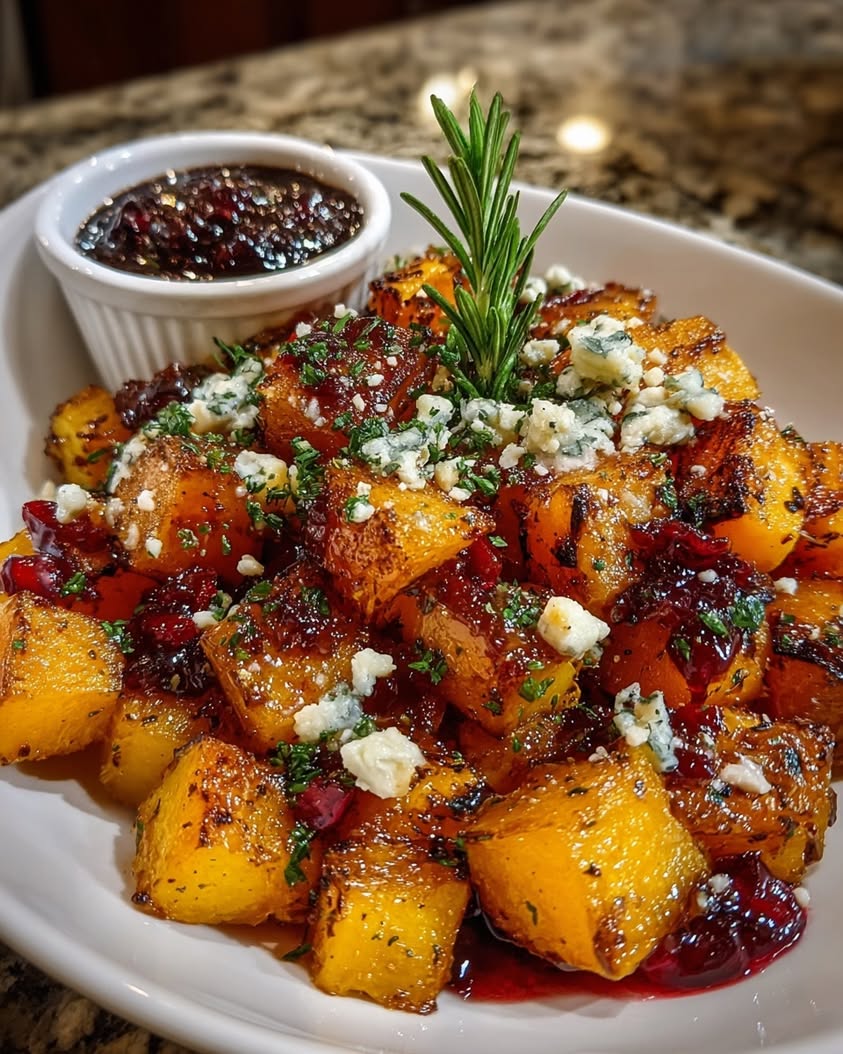
Caramelized Butternut Squash with Gorgonzola and Cranberry-Balsamic Glaze: The Ultimate Savory-Sweet Fall Side Dish
This caramelized butternut squash recipe delivers an unforgettable flavor experience that will become your new favorite fall side dish. Imagine tender, sweet squash cubes with beautifully browned edges, perfectly contrasted by creamy, tangy Gorgonzola crumbles and a vibrant cranberry-balsamic glaze. The combination creates a symphony of sweet, savory, and tangy notes in every single bite. Consequently, this dish not only tastes incredible but also brings a stunning pop of color to your holiday table.
Creating this gourmet food masterpiece is surprisingly straightforward, making it accessible for both weeknight dinners and special occasions. The process involves roasting the squash to caramelized perfection, whipping up a simple yet impressive glaze, and assembling with high-quality cheese. Moreover, the aroma that fills your kitchen as the squash roasts and the glaze reduces is absolutely intoxicating. Ultimately, this recipe proves that with a few quality ingredients and simple techniques, you can create a restaurant-worthy dish right at home.
This caramelized butternut squash stands out because it balances complex flavors with approachable preparation. The natural sweetness of the roasted squash provides a perfect base for the bold Gorgonzola and the tart-sweet glaze. Additionally, the textural contrast between the soft squash, creamy cheese, and sticky glaze creates a truly delightful eating experience. Therefore, whether you are serving it for a casual family meal or a festive holiday gathering, this dish is guaranteed to impress.
Quick Recipe Highlights
- Flavor Profile: This caramelized butternut squash features a masterful balance of sweet, savory, and tangy elements. The natural sweetness of the roasted squash meets the sharp, salty punch of Gorgonzola, while the cranberry-balsamic glaze adds a sophisticated tartness. Ultimately, every component works in harmony to create a complex and memorable taste.
- Texture: You will enjoy a wonderful interplay of soft, creamy, and sticky textures. The squash becomes meltingly tender inside with a slightly crisp, caramelized exterior. Meanwhile, the Gorgonzola offers a creamy crumble, and the glaze provides a lovely, sticky mouthfeel that coats everything beautifully.
- Aroma: As this dish cooks, your kitchen will fill with the warm, sweet scent of roasting squash and maple, followed by the sharp, tangy notes of reducing balsamic and cranberry. The final aroma is a complex blend of sweet, earthy, and acidic notes that signal a gourmet experience.
- Visual Appeal: This dish is a feast for the eyes with its vibrant orange squash, snowy white and blue cheese crumbles, and deep ruby-red glaze. The contrasting colors make it an exceptionally beautiful addition to any table, especially for fall and holiday meals where presentation is key.
- Skill Level Needed: This recipe is perfect for cooks of all levels, from beginners to experts. It requires basic knife skills for cubing the squash and simple stovetop techniques for the glaze. Furthermore, the roasting process is largely hands-off, making it a low-stress, high-reward culinary project.
- Special Equipment: You only need a sturdy baking sheet, a small saucepan, and basic kitchen tools. A sharp chef’s knife is helpful for safely cubing the squash, but pre-cubed squash works perfectly too. No fancy or specialized equipment is required for this impressive fall side dish.
Recipe Overview
- Difficulty Level: We classify this caramelized butternut squash recipe as easy because it involves straightforward techniques like chopping, roasting, and simmering. The steps are simple to follow, and the margin for error is quite small. Even novice cooks can achieve fantastic results by following the clear instructions. Ultimately, the recipe is designed for success without requiring advanced culinary skills.
- Category: This dish fits beautifully into several categories, primarily as a standout fall side dish or a holiday side dish. It can also serve as a vegetarian main course when paired with a hearty grain like farro or quinoa. Its versatility makes it a valuable addition to your recipe repertoire for various meal types.
- Cuisine: This recipe draws inspiration from modern American cuisine with influences from Italian flavors through the use of Gorgonzola and balsamic vinegar. It is a contemporary take on seasonal cooking, emphasizing fresh, high-quality ingredients and balanced flavors. The combination reflects a gourmet food approach to simple, rustic ingredients.
- Cost: Preparing this dish is surprisingly cost-effective, especially when butternut squash is in season. The most significant expenses are the Gorgonzola cheese and pure maple syrup, but a little of each goes a long way. Overall, you can create this impressive gourmet food presentation for a fraction of a restaurant price.
- Season: This is unequivocally a fall recipe, perfect for when butternut squash and cranberries are at their peak. The warm, comforting flavors align perfectly with cooler weather and holiday celebrations. It embodies the essence of autumn on a plate, making it a seasonal favorite.
- Occasion: This caramelized butternut squash is ideal for holiday gatherings like Thanksgiving and Christmas, but it also elevates a simple weeknight dinner. Its elegant appearance makes it suitable for dinner parties, while its comforting nature works for casual family meals. It is a truly versatile dish for any occasion.
Why You’ll Love This Caramelized Butternut Squash
You will adore the incredible taste and texture appeal of this caramelized butternut squash. The roasting process deepens the squash’s natural sugars, creating a sweet, almost nutty flavor with delightfully crisp edges. When you top it with the pungent, creamy Gorgonzola, your palate experiences a perfect savory counterpoint. Then, the sweet-tart cranberry-balsamic glaze ties everything together, creating a complex flavor profile that is both sophisticated and deeply comforting. Each forkful delivers a harmonious blend of soft, creamy, and sticky textures that is utterly irresistible.
The convenience and preparation benefits of this recipe are another major reason to love it. Despite its gourmet appearance, the active hands-on time is minimal. You can easily cube the squash ahead of time, and the glaze comes together in a single saucepan while the squash roasts. This makes it an ideal dish for entertaining, as you are not stuck in the kitchen while your guests arrive. Furthermore, the recipe is forgiving; even if your squash cubes are not perfectly uniform, they will still roast up beautifully and taste fantastic.
From a nutritional standpoint, this caramelized butternut squash offers significant advantages. Butternut squash is packed with vitamins A and C, fiber, and antioxidants, supporting immune health and digestion. Using olive oil and maple syrup as sweeteners is a healthier alternative to refined sugars. Additionally, Gorgonzola cheese provides a boost of calcium and protein, making this side dish more satiating and nutrient-dense. You can feel good about serving a dish that is as wholesome as it is delicious.
The social and entertaining value of this dish cannot be overstated. Its stunning visual presentation, with vibrant orange, white, and deep red hues, makes it a centerpiece on any table. It is a fantastic conversation starter and shows your guests that you have put thought and care into the meal. Because it is a unique twist on a classic vegetable, it often becomes the most talked-about dish at the gathering. It demonstrates that you have gourmet food sensibilities, even if the recipe was simple to execute.
Finally, this recipe is remarkably cost-effective and accessible. Butternut squash is an affordable vegetable, especially in the autumn months. The other ingredients are pantry staples or easy to find at any grocery store. You can create a dish that looks and tastes expensive without the high cost. This accessibility means you can enjoy gourmet food flavors regularly, turning an ordinary dinner into a special occasion. It is a recipe that gives you maximum reward for a minimal investment of time and money.
Historical Background and Cultural Significance
The story of butternut squash in North American cuisine is a long and rich one. Indigenous peoples across the Americas cultivated various squash varieties for thousands of years, valuing them as one of the “Three Sisters” alongside corn and beans. Butternut squash, specifically, is a modern variety developed in the 1940s in Massachusetts. Its sweet, nutty flavor and smooth texture made it an instant favorite. Consequently, it quickly became a staple in fall and holiday cooking, symbolizing the harvest and the changing seasons.
The cultural importance of this dish lies in its embodiment of autumnal and holiday traditions. In the United States, squash and cranberries are intrinsically linked to Thanksgiving, representing the native foods that were likely part of the first harvest celebrations. Combining them in a single dish, especially with an Italian cheese like Gorgonzola, reflects the melting pot of American cuisine. It takes traditional, seasonal ingredients and presents them in a new, sophisticated way that honors their history while looking to the future.
The evolution of this particular recipe is a testament to modern culinary trends. While roasted squash is a timeless technique, the addition of a reduced fruit glaze and a bold cheese is a more contemporary development. This style of cooking emphasizes balancing contrasting flavors and textures to create a more complex eating experience. It moves away from heavy, overly sweet preparations towards dishes that are vibrant, balanced, and highlight the quality of the core ingredients. This caramelized butternut squash is a perfect example of this evolution.
Regional variations of similar dishes abound, which speaks to its versatility. In the American South, you might find roasted squash with pecans and a bourbon glaze. In Italy, one might encounter pumpkin or squash with ricotta salata or other local cheeses. The use of cranberries is particularly North American, while balsamic vinegar hails from Italy. This recipe, therefore, is a beautiful fusion of traditions. It showcases how global ingredients can come together to create something new and exciting that still feels rooted in seasonal, comfort food traditions.
Ingredient Deep Dive
Butternut squash serves as the foundation of this dish, and its quality is paramount. This winter squash has a sweet, nutty flavor that intensifies beautifully through roasting. Cultivated for millennia in the Americas, it is packed with Vitamin A, Vitamin C, and dietary fiber. When selecting a squash, look for one that feels heavy for its size with a firm, matte skin and no soft spots. Store it in a cool, dark place for up to a month. For a substitution, you can use sweet potatoes or acorn squash, though the roasting time may vary slightly.
Gorgonzola cheese provides the essential savory and tangy counterpoint to the sweet squash. This Italian blue cheese, with its creamy texture and sharp, pungent flavor, has been produced in the Piedmont and Lombardy regions for centuries. It offers a good source of calcium and protein. Look for a Gorgonzola Dolce for a milder, creamier experience or a Gorgonzola Piccante for a sharper bite. Crumbled blue cheese or a creamy goat cheese can work as substitutes if you prefer a different tangy profile. Always add the cheese just before serving to prevent it from melting completely.
The cranberry-balsamic glaze is what ties this caramelized butternut squash together. Cranberries, native to North America, bring a vibrant tartness and are rich in antioxidants and Vitamin C. Balsamic vinegar, from Modena, Italy, contributes a complex sweetness and acidity. Using pure maple syrup as the sweetener adds a deep, autumnal flavor without being overly refined. You can use frozen cranberries if fresh are not available, and the glaze can be made ahead of time. The reduction process is key, as it concentrates the flavors and creates a syrupy consistency that clings to the squash and cheese.
Extra virgin olive oil and maple syrup are the supporting actors that make the stars shine. A good quality olive oil helps the squash caramelize and adds a fruity, peppery note. Meanwhile, pure maple syrup enhances the natural sweetness of the squash and balances the tartness of the glaze. Avoid using pancake syrup, as it contains artificial flavors and corn syrup that will not provide the same depth. For a savory twist, you could substitute the maple syrup with a touch of honey, though the flavor profile will change slightly. These ingredients, though simple, are crucial for achieving the perfect balance of flavors.
Common Mistakes to Avoid
- Cutting the squash unevenly is a common error. If your squash cubes are different sizes, they will cook at different rates, resulting in some pieces being burnt while others are still hard. Aim for uniform 1-inch cubes to ensure even roasting and consistent caramelization on every piece.
- Overcrowding the baking sheet prevents proper caramelization. When the squash pieces are too close together, they steam instead of roast. For the best results, use a large enough baking sheet and spread the squash in a single layer with some space between each piece. This allows hot air to circulate and creates those beautifully browned edges.
- Neglecting to toss the squash halfway through cooking can lead to uneven browning. The side facing the hot pan will cook faster. Therefore, taking a moment to flip and stir the squash ensures that all sides get exposed to the direct heat, promoting an all-over caramelization and preventing any pieces from burning on one side.
- Underseasoning the squash before roasting is a missed opportunity. Salt is crucial for enhancing the natural flavors of the squash. Do not be shy with the salt and pepper at the beginning; seasoning the squash before it goes into the oven makes a significant difference in the final taste of the dish.
- Cooking the glaze at too high of a heat is a critical mistake. A rapid boil can cause the sugars in the maple syrup and cranberries to burn, creating a bitter taste. Instead, maintain a gentle simmer to allow the flavors to meld and the liquid to reduce slowly into a thick, syrupy glaze.
- Adding the Gorgonzola cheese too early will cause it to melt into a puddle. The goal is to have distinct, creamy crumbles on top of the warm squash. For the best texture and presentation, always scatter the cheese over the dish just before serving so it softens slightly but maintains its shape.
- Skipping the fresh thyme garnish might seem minor, but it matters. The fresh herb provides a bright, aromatic note that cuts through the richness of the cheese and the sweetness of the squash and glaze. It adds a layer of freshness that elevates the entire dish from great to exceptional.
- Not tasting the glaze before serving is a final misstep. The balance of sweet and tart can vary depending on your cranberries and balsamic vinegar. Always taste the glaze after it has reduced and adjust the seasoning if necessary. A small pinch of salt can often help balance the flavors perfectly.
Essential Techniques
Caramelization is the most important technique in this recipe. This chemical process occurs when the natural sugars in the butternut squash are exposed to high heat, breaking down and creating new, complex flavor compounds and a browned color. To master it, ensure your oven is fully preheated and your squash is in a single layer on the baking sheet. A common pitfall is overcrowding, which leads to steaming. You will know it is working when you see deep golden-brown spots on the edges of the squash and smell a sweet, nutty aroma.
Reduction is the key to creating the perfect cranberry-balsamic glaze. This process involves simmering a liquid to evaporate water, thereby concentrating the flavors and thickening the consistency. For a successful reduction, use a saucepan that is large enough to prevent boiling over and maintain a gentle, steady simmer. Do not rush this process with high heat, as it can scorch the sugars. The visual cue for success is when the glaze coats the back of a spoon and leaves a clear trail when you run your finger through it.
Seasoning in layers is a professional technique that builds depth of flavor. This means adding salt and pepper at different stages of the recipe rather than just at the end. You should season the squash before roasting to draw out its natural flavors. Then, taste and adjust the seasoning of the glaze after it has reduced. Finally, you can add a final flake of sea salt over the finished dish. This approach ensures that every component is perfectly seasoned and that the final dish has a more complex and well-rounded taste profile.
Pro Tips for Perfect Caramelized Butternut Squash
For the most efficient prep, consider using pre-cubed butternut squash from the grocery store. This saves time and effort, especially during busy holiday seasons. The results are just as delicious, making it a fantastic shortcut for this gourmet food dish.
Use a light-colored, heavy-duty baking sheet for roasting. Dark pans can cause the squash to brown too quickly on the bottom before the interior is tender. A good quality sheet pan promotes even heat distribution for perfect caramelization.
Let the roasted squash rest for a few minutes after taking it out of the oven. This allows the sugars to set and makes the squash less likely to turn to mush when you toss it with the glaze and cheese. It is a simple step that improves the final texture.
If your glaze is too tart, balance it with an extra drizzle of maple syrup. Conversely, if it is too sweet, a splash of balsamic vinegar can bring back the necessary acidity. Always taste and adjust the glaze to your personal preference before assembling the dish.
For a beautiful presentation, assemble the dish on a warm platter. Spread the caramelized butternut squash, drizzle the glaze artistically, then scatter the Gorgonzola and thyme. A warm platter keeps the dish at the ideal serving temperature for longer, enhancing the dining experience.
Toast some pecans or walnuts and sprinkle them on top for an added crunch. This introduces another layer of texture and a nutty flavor that complements the squash and cheese beautifully. It is an easy variation that makes the dish even more special.
Variations and Adaptations
Regional variations can inspire new takes on this classic. For an Italian twist, substitute the Gorgonzola with ricotta salata and add a sprinkle of toasted pine nuts. A Southern version might include a bourbon-infused glaze and toasted pecans. Exploring these regional flavors allows you to customize the dish to different culinary traditions while maintaining its core appeal as a fantastic fall side dish.
Seasonal adaptations keep this recipe exciting all year round. In the spring, you could use asparagus and a lemon-herb glaze with feta cheese. For summer, try zucchini and yellow squash with a basil oil and goat cheese. The technique remains the same, but the ingredients shift with the seasons, showcasing the best produce available and maintaining the dish’s status as a versatile gourmet food option.
Dietary modifications are straightforward for this flexible recipe. For a vegan version, omit the Gorgonzola or use a vegan blue cheese alternative and ensure your maple syrup is vegan. A nut-free version simply avoids nut garnishes. To make it lower in sugar, you can reduce the amount of maple syrup in the glaze slightly, relying more on the natural sweetness of the roasted squash and the tartness of the cranberries.
Flavor variations can cater to different palates. If you are not a fan of blue cheese, a creamy goat cheese or sharp feta provides a similar tangy contrast. For a sweeter profile, add a pinch of cinnamon or nutmeg to the squash before roasting. You can also infuse the glaze with fresh rosemary or a strip of orange zest for an aromatic complexity that makes the dish uniquely yours.
Serving and Presentation Guide
Plating techniques can elevate this dish from simple to stunning. For a family-style presentation, pile the caramelized butternut squash onto a large, rustic platter. Drizzle the glaze in zig-zags or swirls rather than pouring it all over, creating visual interest. Then, strategically place small mounds of Gorgonzola crumbles and fresh thyme sprigs, allowing the vibrant colors of each component to shine through. This approach makes the dish look abundant and professionally styled.
Garnishing ideas extend beyond the basic recipe. In addition to fresh thyme, consider microgreens for a peppery note or pomegranate arils for a jewel-like burst of color and tartness. A final drizzle of high-quality extra virgin olive oil adds sheen and richness. For a textural contrast, a sprinkle of toasted pumpkin seeds or walnuts provides a satisfying crunch that complements the soft squash and creamy cheese.
Traditional accompaniments for this fall side dish include roast turkey, honey-glazed ham, or herb-roasted chicken. It also pairs wonderfully with pork tenderloin or seared duck breast. For a vegetarian feast, serve it alongside wild rice pilaf, lentil salad, or stuffed mushrooms. The sweet and savory profile of the squash makes it incredibly versatile with a wide range of main courses.
Modern serving suggestions might include using it as a topping for a gourmet pizza or flatbread alongside caramelized onions and arugula. You can also fold it into a warm grain bowl with farro, kale, and a light vinaigrette. Another creative idea is to serve it in individual ramekins as an elegant starter for a dinner party, showcasing its gourmet food potential in a personalized portion.
Wine and Beverage Pairing
Wine pairings for this caramelized butternut squash should balance its sweet, savory, and tangy elements. A medium-bodied white wine like an off-dry Riesling or Gewürztraminer complements the sweetness of the squash and the tartness of the glaze beautifully. For red wine lovers, a Pinot Noir with its bright acidity and red fruit notes stands up to the dish without overpowering it. The key is to choose wines with good acidity to cut through the richness and sweetness.
Non-alcoholic alternatives can be just as sophisticated. A sparkling apple cider mirrors the autumnal flavors, while a tart cranberry spritzer made with club soda and a splash of cranberry juice echoes the glaze. For a warmer option, a ginger-lemon tea provides a zesty contrast that cleanses the palate between bites. These beverages ensure that all guests can enjoy a perfectly paired drink with this holiday side dish.
Coffee and tea pairings work wonderfully, especially if serving this dish as part of a brunch or lunch. A medium-roast coffee with nutty or chocolatey notes can highlight the caramelized flavors in the squash. An Earl Grey tea, with its bergamot citrus notes, provides a lovely aromatic contrast to the rich Gorgonzola. Ultimately, these warm beverages offer a comforting conclusion to a meal featuring this robust fall recipe.
Storage and Shelf Life
Storage methods for leftovers are straightforward but important for maintaining quality. Allow the dish to cool completely before transferring it to an airtight container. It is best to store the components separately if possible, keeping the roasted squash, glaze, and cheese in their own containers. This prevents the squash from becoming soggy and the cheese from dissolving. Properly stored, the components will keep in the refrigerator for up to four days.
Reheating instructions are crucial for restoring the dish’s texture and flavor. To reheat the squash, spread it on a baking sheet and warm it in a 350°F oven for 10-15 minutes until heated through. This method helps re-crisp the edges. Avoid using the microwave, as it will make the squash soft and mushy. Gently warm the glaze in a small saucepan or the microwave, and always add fresh cheese and herbs after reheating for the best presentation and taste.
Freezing guidelines apply primarily to the roasted squash and the glaze. You can freeze the plain roasted squash in a single layer on a baking sheet before transferring to a freezer bag, which prevents clumping. The glaze also freezes well in an airtight container. However, do not freeze the assembled dish with the cheese, as dairy-based cheeses do not thaw well and will become grainy. The frozen squash and glaze will maintain quality for up to three months.
Make Ahead Strategies
A prep timeline can make holiday cooking significantly less stressful. You can cube the butternut squash up to two days in advance; store it in an airtight container in the refrigerator. The cranberry-balsamic glaze can be made up to five days ahead and kept in the fridge. Simply warm it gently on the stovetop or in the microwave before using, adding a tablespoon of water if it has thickened too much.
Storage between steps is simple with proper planning. If prepping the squash ahead, toss it with the oil, maple syrup, salt, and pepper just before roasting to prevent it from becoming watery. The glaze can be stored in a glass jar or container with a tight-fitting lid. Having these components ready transforms the final assembly into a quick task of roasting the squash and bringing the glaze to the right consistency.
Quality impact assessment for make-ahead components is generally positive. The roasted squash is best served fresh from the oven, but it can be reheated successfully as described. The glaze’s flavor often improves after a day, allowing the flavors to meld. The only element that must be fresh is the Gorgonzola cheese and the thyme garnish. Therefore, this dish is exceptionally well-suited for advanced preparation without sacrificing its gourmet food appeal.
Scaling Instructions
Halving the recipe is simple for smaller gatherings. Use a medium baking sheet to ensure the squash still has room to caramelize properly rather than steaming. Reduce the glaze ingredients proportionally, using a small saucepan for the reduction. The cooking times may be slightly shorter, so start checking for doneness around the 25-minute mark for the squash. This scaling makes the recipe perfect for a cozy dinner for two or three.
Doubling or tripling the recipe for a crowd requires some adjustments. Use multiple baking sheets and rotate them halfway through cooking to ensure even browning. You may need to roast in batches depending on your oven size. For the glaze, use a wider, heavy-bottomed pot to allow for faster evaporation. When assembling, use a very large platter or multiple serving dishes to maintain the beautiful presentation that makes this holiday side dish so special.
Equipment adjustments become necessary when scaling. For larger batches, a commercial-sized half-sheet pan is ideal. If making a significant quantity of glaze, a Dutch oven provides more surface area for efficient reduction. When serving a crowd, consider setting up an assembly line for drizzling the glaze and scattering the cheese to ensure each portion looks beautiful. These small considerations make managing larger quantities of this fall recipe much more manageable.
Nutritional Deep Dive
The macro breakdown of this caramelized butternut squash reveals a well-balanced side dish. Butternut squash provides complex carbohydrates and fiber, offering sustained energy release. The olive oil contributes healthy monounsaturated fats, which aid in the absorption of fat-soluble vitamins from the squash. The Gorgonzola cheese adds protein and additional fats, making the dish more satiating. While the maple syrup adds simple sugars, its amount per serving is modest, especially when balanced with the other nutrient-dense ingredients.
Micronutrient analysis shows this dish is particularly rich in Vitamin A from the beta-carotene in the squash, which supports vision and immune health. It also provides significant Vitamin C, potassium, and manganese. The cranberries contribute additional Vitamin C and various antioxidants. The Gorgonzola offers calcium for bone health. Together, these nutrients make this more than just a tasty side; it is a contributor to a healthy, balanced diet, especially during cold and flu season.
Health benefits extend beyond basic nutrition. The high fiber content supports digestive health and helps maintain stable blood sugar levels. The antioxidants in both the squash and cranberries have anti-inflammatory properties. The healthy fats from the olive oil promote heart health. When enjoyed as part of a varied diet, this dish supports overall wellness while satisfying the palate with its gourmet food flavors and textures.
Dietary Adaptations
For a gluten-free version, this recipe requires no changes as all ingredients are naturally gluten-free. However, always check labels on pre-packaged ingredients like maple syrup to ensure no cross-contamination has occurred if this is a serious concern. This makes the dish an excellent choice for gatherings where gluten-free guests are present, as it loses none of its appeal or flavor.
A dairy-free adaptation is easily achieved by omitting the Gorgonzola or using a vegan cheese alternative. Many brands now offer credible vegan blue cheese or feta-style cheeses that can provide a similar tangy contrast. Alternatively, toasted nuts or seeds can add the textural element and richness that the cheese would normally provide. The dish remains delicious and visually stunning without dairy.
Creating a vegan version involves the dairy-free adaptation mentioned above and ensuring your maple syrup is vegan (most are, but some cheaper brands may use animal-derived filters). The rest of the recipe is naturally plant-based, making it an excellent centerpiece for a vegan holiday meal. The caramelized squash and vibrant glaze provide plenty of flavor and visual appeal on their own.
For lower-carb or keto diets, modifications are possible but more significant. You could reduce the amount of squash and supplement with lower-carb vegetables like cauliflower. The maple syrup in the glaze would need to be replaced with a keto-friendly sweetener, and the cranberries would need to be used sparingly due to their natural sugar content. While the character of the dish changes, it can be adapted to fit these dietary needs while maintaining the sweet-savory balance.
Troubleshooting Guide
If your squash is not caramelizing, the oven temperature may be too low. Ensure your oven is fully preheated and consider using an oven thermometer to verify the accuracy of your thermostat. Another common issue is too much moisture on the squash; pat it dry before tossing with oil. If the pieces are steaming rather than browning, they are likely too crowded on the pan. Spreading them out more will solve this problem and give you those beautifully browned edges that define this fall recipe.
When the glaze is too thin, continue simmering it to reduce further. If it is too thick, whisk in a tablespoon of water at a time until it reaches the desired consistency. If the glaze becomes too sweet, balance it with a splash of balsamic vinegar or a squeeze of lemon juice. If it is too tart, add a bit more maple syrup. Remember that the glaze will thicken slightly as it cools, so aim for a slightly thinner consistency than you want in the final dish.
If the Gorgonzola is too strong for your taste, try a milder variety like Gorgonzola Dolce next time, or use less cheese. You can also substitute with a milder blue cheese or even feta. If the dish feels like it is missing something, a pinch of flaky sea salt sprinkled over the top just before serving can elevate all the flavors. Sometimes, the simplest adjustment makes the biggest difference in achieving the perfect gourmet food balance.
Recipe Success Stories
Community feedback for this caramelized butternut squash recipe has been overwhelmingly positive. Many home cooks report that it has become their go-to holiday side dish, often receiving more compliments than the main course. Several readers have mentioned that even family members who typically dislike squash enjoy this preparation because of the balanced flavors and appealing texture. The combination of sweet, savory, and tangy seems to win over even the most skeptical palates.
Variation successes from readers have been creative and inspiring. One cook added crispy pancetta for a smoky element, while another used pears in the glaze instead of cranberries for a different fruit profile. Several vegetarian readers have served it as a main dish over polenta or quinoa with great success. These adaptations show the recipe’s versatility and how it can serve as a template for culinary creativity while maintaining its core appeal as a fantastic fall recipe.
Reader suggestions have included practical tips that enhance the recipe further. Many recommend using a silicone baking mat to prevent sticking and make cleanup easier. Others suggest making a double batch of the glaze to use on other dishes like roasted Brussels sprouts or pork tenderloin. The most common comment is that the recipe looks far more impressive and complicated than it actually is to make, which is the hallmark of a truly great gourmet food recipe for home cooks.
Frequently Asked Questions
Can I use pre-cubed butternut squash from the store? Absolutely. Pre-cubed squash works perfectly in this recipe and saves significant prep time. The results are nearly identical to cubing it yourself. This is an excellent shortcut, especially during busy holiday seasons when time is limited.
What can I substitute for Gorgonzola cheese? If you are not a fan of blue cheese, creamy goat cheese or feta cheese make excellent substitutes. They provide a similar tangy contrast to the sweet squash. For a milder flavor, you could even use shaved Parmesan or Asiago cheese.
Can I make this recipe ahead of time? You can prepare the components ahead. Roast the squash and make the glaze up to two days in advance. Store them separately in the refrigerator. Reheat the squash in the oven and warm the glaze before assembling with fresh cheese.
Is it possible to make this dish vegan? Yes. Omit the Gorgonzola or use a vegan cheese alternative. Ensure your maple syrup is vegan. The dish will still be delicious with the caramelized squash and the sweet-tart glaze as the stars of the show.
Why is my squash steaming instead of roasting? This happens when the baking sheet is overcrowded. The squash pieces need space between them for the moisture to evaporate. Use a larger pan or roast in batches to ensure proper caramelization and avoid steaming.
Can I use frozen cranberries for the glaze? Yes, frozen cranberries work perfectly. There is no need to thaw them first; simply add them directly to the saucepan. You may need to add a minute or two to the cooking time for the frozen berries to break down completely.
How do I know when the squash is perfectly cooked? The squash is done when it is tender enough to be easily pierced with a fork but still holds its shape. The edges should be caramelized with deep golden-brown spots. The total time is usually 30-40 minutes in a 400°F oven.
Can I use a different type of squash? Certainly. Acorn squash, delicata squash, or even sweet potatoes would work well with this preparation. Adjust the roasting time as needed based on the density and moisture content of the alternative vegetable you choose.
What main dishes pair well with this side? This squash complements
Print
Caramelized Butternut Squash with Gorgonzola and Cranberry-Balsamic Glaze
Description
A savory-sweet side dish featuring tender, caramelized butternut squash topped with creamy Gorgonzola and a tangy cranberry-balsamic glaze.
Ingredients
For the Crust:
- 1 medium butternut squash, peeled and cubed
- 2 tablespoons olive oil
- 1 tablespoon maple syrup
- 1 teaspoon smoked paprika
- Salt and black pepper to taste
- 1/2 cup crumbled Gorgonzola cheese
- 1/4 cup dried cranberries
- 2 tablespoons balsamic vinegar
- 1 tablespoon honey
- 1 teaspoon fresh thyme leaves
Instructions
1. Prepare the Crust:
- Preheat oven to 400°F (200°C). Toss butternut squash cubes with olive oil, maple syrup, smoked paprika, salt, and pepper.
- Spread squash in a single layer on a baking sheet. Roast for 25-30 minutes, flipping halfway, until tender and caramelized.
- Meanwhile, in a small saucepan, combine balsamic vinegar, honey, and dried cranberries. Simmer over medium heat until slightly thickened, about 5-7 minutes.
- Transfer roasted squash to a serving platter. Top with crumbled Gorgonzola, drizzle with cranberry-balsamic glaze, and sprinkle with fresh thyme.
Notes
You can customize the seasonings to taste.

I’m Shaykee—born in Morocco, seasoned across continents. From airplane galleys to home kitchens, I share the flavors and stories that shaped my journey.