
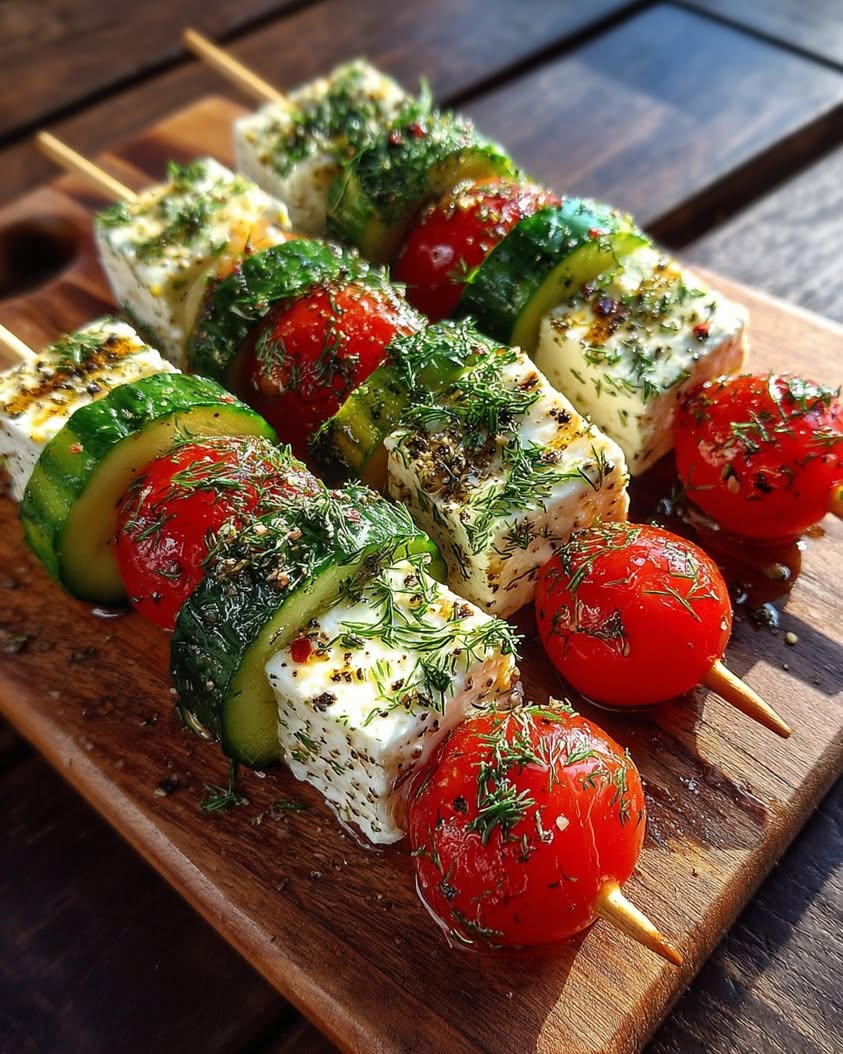
Greek Feta & Cucumber Bite Skewers: A Refreshing Mediterranean Appetizer
Cool, crunchy, and creamy! These easy Greek Feta & Cucumber Bite Skewers are the perfect no-bake appetizer for a refreshing summer party or a healthy snack. Ready in minutes, they capture the vibrant essence of Mediterranean cuisine in a single, elegant bite. Furthermore, they offer a delightful contrast of textures and flavors that will impress your guests without requiring any cooking. Consequently, they are an ideal choice for busy hosts who want to serve something beautiful and delicious.
Imagine biting into a crisp, cool cucumber slice topped with creamy, tangy feta cheese, all brightened with a zesty lemon-herb dressing. These Greek Feta & Cucumber Bite Skewers deliver a burst of freshness that is both satisfying and light. They are the ultimate make-ahead party food, designed to minimize stress and maximize flavor. Additionally, their portable skewer format makes them perfect for standing receptions, picnics, or casual grazing. Ultimately, they prove that the most impressive dishes are often the simplest to prepare.
The beauty of this recipe lies in its versatility and straightforward preparation. You can assemble these flavorful Greek appetizers in under fifteen minutes, allowing you to focus on your guests. They are a fantastic healthy snack option that doesn’t compromise on taste. Moreover, the combination of fresh ingredients creates a visually stunning dish that looks as good as it tastes. Whether you’re hosting a large gathering or a small family dinner, these skewers are guaranteed to be a hit.
Quick Recipe Highlights
- Flavor Profile: These skewers feature a bright, tangy flavor from the feta and lemon dressing, balanced by the cool, mild taste of cucumber. Fresh dill and oregano add an herby, aromatic quality that is quintessentially Greek. The overall taste is refreshing and complex, yet beautifully simple.
- Texture: You will experience a wonderful contrast between the firm, juicy crunch of the cucumber and the soft, crumbly creaminess of the feta cheese. The skewers offer a satisfying mouthfeel that is both light and substantial. This textural interplay is key to their appeal.
- Aroma: The skewers release a fresh, herbaceous scent dominated by dill and oregano, with a bright, citrusy note from the lemon juice. The aroma is clean and inviting, promising a light and healthy eating experience. It immediately evokes the feeling of a sunny Mediterranean coastline.
- Visual Appeal: With their vibrant green cucumber rounds, white feta cubes, and specks of fresh green herbs, these skewers are a feast for the eyes. The presentation on a platter is elegant and colorful, making them a centerpiece for any table. They look professionally made with minimal effort.
- Skill Level Needed: Absolutely no prior cooking skill is required for this recipe, making it perfect for beginners. The process involves simple assembly: slicing, cubing, and skewering. Consequently, anyone can achieve perfect results on their first try.
- Special Equipment: You will need a set of small skewers, such as appetizer picks or toothpicks. A sharp knife and a sturdy cutting board are essential for prepping the vegetables and cheese safely. A small bowl for whisking the dressing is also helpful.
Recipe Overview
- Difficulty Level: This recipe is classified as easy because it involves no cooking and only basic knife skills. The steps are sequential and simple, requiring only assembly and a quick dressing whisk. Therefore, it is virtually impossible to get wrong, making it a foolproof choice for any occasion.
- Category: These skewers fall squarely into the appetizer and snack categories. They are perfect for starting a meal, serving at a party, or enjoying as a light, healthy bite between meals. Their versatility also allows them to function as a side dish for grilled meats.
- Cuisine: This dish is firmly rooted in Greek and broader Mediterranean cuisine, celebrating fresh, high-quality ingredients. It draws inspiration from traditional Greek horiatiki salad, deconstructing its core components into a fun, handheld format. The flavors are authentic and representative of the region’s culinary philosophy.
- Cost: This is an incredibly cost-effective recipe, utilizing a few affordable, high-impact ingredients. A single block of feta and two cucumbers can yield enough skewers for a party. Consequently, it is an excellent way to create an impressive spread on a modest budget.
- Season: These skewers are perfect for spring and summer when temperatures rise and lighter fare is preferred. They utilize fresh, in-season cucumbers and herbs, making them a refreshing counterpoint to the heat. However, their bright flavors can lift spirits during colder months as well.
- Occasion: Ideal for summer parties, potlucks, bridal showers, holiday gatherings, or as a healthy weeknight snack. Their elegant appearance suits formal events, while their easy-eating format is perfect for casual get-togethers. They are a universally appealing option.
Why You’ll Love This Recipe
You will adore the incredible taste and texture appeal of these Greek Feta & Cucumber Bite Skewers. The cool, crisp cucumber provides a juicy base that perfectly complements the rich, salty tang of the feta cheese. Each bite is elevated by the zesty lemon and olive oil dressing, which melds the flavors together harmoniously. The fresh herbs add a final layer of aromatic complexity that makes each skewer taste like a miniature vacation. Ultimately, the combination is so satisfying that you will find yourself reaching for more.
The convenience and preparation benefits are another major reason to love this easy Greek appetizer. With no cooking involved, you can assemble these skewers in just fifteen minutes, freeing up your time for other tasks. They are a fantastic last-minute solution when unexpected guests arrive or when you need a quick dish for a potluck. Furthermore, they can be prepared several hours in advance, with the flavors actually improving as they meld in the refrigerator. This make-ahead quality is a game-changer for stress-free entertaining.
From a health perspective, these skewers offer significant nutritional advantages. Cucumbers are hydrating and low in calories, while feta cheese provides a good source of calcium and protein. The olive oil in the dressing is rich in heart-healthy monounsaturated fats. This combination makes for a snack that is both nourishing and satisfying, supporting a balanced diet. Unlike many party foods, these skewers are light and refreshing, leaving you feeling energized rather than sluggish.
The social and entertaining value of this dish cannot be overstated. These skewers are designed for sharing and are always a conversation starter at gatherings. Their handheld nature encourages mingling and makes them easy to eat while standing. They look incredibly elegant on a platter, giving the impression of a dish that required far more effort than it actually did. Consequently, they will elevate your host status and impress your friends and family with your culinary flair.
Finally, the cost-effectiveness and accessibility of the ingredients make this a go-to recipe. You only need a handful of simple, readily available components from any standard grocery store. A single batch yields a generous number of skewers for a fraction of the cost of store-bought appetizers. This affordability means you can easily double or triple the recipe for a crowd without straining your budget. It is a perfect example of how simple, quality ingredients can create something extraordinary.
Historical Background and Cultural Significance
The origin story of these flavors is deeply intertwined with Greek culinary tradition. While the skewer format is a modern presentation, the core ingredients—cucumber, feta, olive oil, and oregano—are pillars of the Greek diet for centuries. Feta cheese itself has a protected designation of origin (PDO) status in the European Union, meaning authentic feta must be produced in specific regions of Greece using traditional methods. This recipe, therefore, pays homage to a rich heritage by combining these classic elements in a new, accessible way.
The cultural importance of these ingredients in Greece is profound. Feta is often called the “white gold” of Greece and is a staple on every table, from daily meals to festive celebrations. Cucumbers are widely cultivated and enjoyed for their refreshing qualities, especially during the hot Mediterranean summers. Olive oil is not just a cooking fat but a cultural symbol, representing health, prosperity, and history. Together, these components tell a story of a cuisine built on freshness, simplicity, and respect for quality produce.
The evolution of this specific recipe reflects modern trends in entertaining and eating. The move towards finger foods and canapés has inspired chefs and home cooks to reinterpret traditional dishes into handheld formats. These Greek Feta & Cucumber Bite Skewers are a product of this evolution, taking the familiar flavors of a Greek salad and making them party-perfect. This innovation demonstrates how classic cuisines can adapt to contemporary lifestyles while retaining their soul.
Regional variations of this concept exist throughout the Mediterranean. In Turkey, a similar combination might include mint and a sprinkle of pul biber (red pepper flakes). In the Middle East, sumac might be added for a tart, lemony note. Some modern interpretations include a tiny slice of pepperoni or a kalamata olive on the skewer. This versatility shows the universal appeal of the creamy-and-crisp flavor and texture combination. The basic formula is a blank canvas for cultural and personal expression.
Ingredient Deep Dive
Feta Cheese is the star of this recipe, a brined curd cheese with a storied history in Greece. Traditionally made from sheep’s milk or a blend of sheep and goat’s milk, it boasts a tangy, salty flavor and a crumbly yet creamy texture. Nutritionally, it is a good source of calcium, protein, and probiotics. When selecting feta, look for blocks packed in brine, as they tend to be superior in flavor and texture to pre-crumbled varieties. Store it in its brine in the refrigerator, and for a milder taste, you can rinse it briefly under cold water before using.
English Cucumbers provide the cool, crisp base for these skewers. Unlike standard cucumbers, they are often seedless, have a thinner skin, and are less watery, making them ideal for elegant appetizers. They are hydrating, low in calories, and contain vitamins K and C. Select cucumbers that are firm, deeply green, and free of soft spots. For the best texture, avoid peeling them; simply give them a good wash. If you cannot find English cucumbers, Persian cucumbers are an excellent substitute, offering a similar crunch and mild flavor.
Extra Virgin Olive Oil is the backbone of the simple dressing, contributing fruity, peppery notes that tie the dish together. Its cultural significance in the Mediterranean is immense, often referred to as “liquid gold.” It is rich in monounsaturated fats and antioxidants, which are linked to heart health and anti-inflammatory benefits. Always choose a cold-pressed, high-quality extra virgin olive oil for dressings, as its flavor is paramount. Store it in a cool, dark place to prevent rancidity. For a different flavor profile, a robust avocado oil can be used as a substitute.
Fresh Dill and Oregano are the herbal soul of this dish, providing an aromatic, grassy flavor that is quintessentially Greek. Dill offers a slight anise-like sweetness, while oregano delivers a more robust, earthy punch. Both herbs are rich in antioxidants and have been used in traditional medicine for centuries. For the best flavor, always use fresh herbs rather than dried for this recipe. Look for bright green, perky bunches without any wilting or yellowing. To store, wrap them in a damp paper towel and place them in a plastic bag in the refrigerator.
Common Mistakes to Avoid
- Using watery cucumbers can lead to a soggy presentation. Always choose firm English or Persian cucumbers and pat them dry after washing to ensure the dressing adheres properly and the skewers remain visually appealing.
- Skewering the ingredients too forcefully can cause the feta to crumble and fall apart. Use a gentle twisting motion when inserting the skewer to keep the cube of cheese intact for a neat and professional look.
- Neglecting to season the dressing adequately will result in bland skewers. Remember that the feta is salty, but the cucumber and dressing still need a pinch of salt and a generous amount of black pepper to balance the flavors.
- Using pre-crumbled feta cheese often lacks the creamy texture and robust flavor of a block feta stored in brine. For the best results, always buy a block and cube it yourself just before assembling.
- Assembling the skewers too far in advance can make the cucumber soft and the herbs wilt. For optimal texture, assemble no more than 2-3 hours before serving and keep them refrigerated until ready to eat.
- Drizzling the dressing haphazardly can lead to some skewers being over-dressed and others being dry. For even coverage, toss the cucumber slices and feta cubes in the dressing gently in a bowl before skewering.
- Choosing overly thick cucumber slices makes the skewers difficult to eat in one bite. Aim for slices that are about 1/4 to 1/2 inch thick for the perfect balance of crunch and portion size.
- Forgetting to let the skewers sit for 10-15 minutes after dressing them prevents the flavors from melding. This short resting period is crucial for allowing the lemon and herbs to permeate the ingredients.
Essential Techniques
Consistent Slicing is fundamental for both aesthetics and even eating. Using a sharp chef’s knife, aim for cucumber slices of uniform thickness, about 1/4 to 1/2 inch. This ensures each skewer has the same structural integrity and provides a consistent crunch in every bite. A common pitfall is uneven slices, which can cause wobbly skewers and variable flavor distribution. The visual cue for success is a neat stack of identical cucumber rounds that sit flat on the platter.
Proper Cubing of the feta cheese is crucial for structural integrity. Use a sharp knife to cut the block of feta into neat, 3/4-inch cubes. A dull knife will crush the cheese, causing it to crumble and fall off the skewer. The goal is to have firm cubes that can be pierced and held securely. The sign of mastery is a cleanly pierced cube that stays firmly in place from assembly to plating to the final bite.
Emulsifying the Dressing, though simple, requires attention. Vigorously whisk the olive oil, lemon juice, and herbs together until the mixture is slightly thickened and unified. This technique ensures that every component gets coated in a balanced blend of oil and acid, rather than separate, overpowering hits of lemon or oil. A common mistake is a lazy stir, which leads to a separated dressing. Success is achieved when the dressing clings to the ingredients instead of pooling at the bottom of the bowl.
Pro Tips for Perfect Greek Feta & Cucumber Bite Skewers
Chill your ingredients before assembling. Cold cucumber and feta will hold their shape better and provide a more refreshing taste. This is especially important for summer parties.
Use a melon baller to create small, elegant wells in the cucumber slices. This small indentation helps cradle the feta cube, preventing it from sliding off the skewer.
If you have time, let the dressed feta cubes marinate in the refrigerator for 30 minutes before skewering. This deepens the flavor and allows the cheese to absorb the lemon and herbs.
For a gorgeous presentation, alternate the direction of the skewers on the platter. Place half with the feta on the left and half with the feta on the right for a dynamic, professional look.
Add a single, pitted kalamata olive to the top of each skewer for an extra burst of briny flavor and a pop of dark color that enhances visual appeal.
If serving outdoors, consider placing the platter on a bed of ice or in a shallow dish filled with chilled marble chips to keep the skewers cool and crisp.
For a flavor twist, add a tiny pinch of lemon zest to the dressing. The zest contains potent essential oils that will intensify the citrus aroma and taste.
Variations and Adaptations
Regional variations can take your skewers on a culinary tour. For a Turkish twist, substitute the dill and oregano with fresh mint and a sprinkle of pul biber (red pepper flakes). An Italian version could use fresh basil and mozzarella balls (bocconcini) instead of feta, with a balsamic glaze drizzle. For a Middle Eastern flair, add a tiny pinch of sumac to the dressing for its distinctive tart, lemony flavor. These simple swaps demonstrate the versatility of the format while honoring different culinary traditions.
Seasonal adaptations keep this recipe exciting year-round. In the spring, incorporate thinly sliced radishes for a peppery crunch. During summer, a small wedge of ripe watermelon can add a surprising sweetness. For autumn, consider using roasted cubes of sweet potato or beet as a base instead of cucumber. In winter, a sprinkle of pomegranate arils adds a festive jewel-toned color and a burst of tartness. Adapting the ingredients to what is fresh and available ensures peak flavor and sustainability.
Dietary modifications are straightforward and effective. For a vegan version, use a firm, brined tofu or a commercial vegan feta alternative. A dairy-free option can be achieved with marinated artichoke hearts or grilled halloumi for those who can tolerate sheep’s milk. To make it Paleo or Whole30 compliant, omit the cheese and use a compliant protein like grilled chicken or shrimp. For a lower-carb or Keto diet, this recipe is already ideal, but you can increase the fat content by adding an avocado slice.
Serving and Presentation Guide
Plating techniques can transform these simple skewers into a stunning centerpiece. Arrange them in a concentric circular pattern on a large, white platter to maximize visual impact. Alternatively, create a “sunburst” pattern by lining them up with the handles pointing outward. For a rustic feel, use a slate board or a wooden serving tray. The key is to leave a little space between each skewer so they are easy to pick up without disturbing the others. A well-arranged platter invites guests to indulge.
Garnishing ideas add the final touch of elegance. Sprinkle the entire platter with extra freshly chopped dill or oregano just before serving. For a color contrast, add a light dusting of paprika or a few microgreens. Lemon wedges or thin twists of lemon zest placed around the edge of the platter not only look beautiful but also hint at the flavors within. Edible flowers, such as nasturtiums or borage, can elevate the presentation for a special event.
Traditional accompaniments include other Mediterranean staples like kalamata olives, dolmades (stuffed grape leaves), and warm pita bread triangles. A small bowl of tzatziki sauce for dipping complements the flavors perfectly. For a more substantial spread, add hummus, baba ganoush, and a simple lentil salad. These pairings create a cohesive and satisfying culinary experience that transports your guests to the Aegean coast.
Wine and Beverage Pairing
Wine pairings for these skewers should highlight their bright, acidic, and salty characteristics. A crisp, dry white wine like Assyrtiko from Santorini is a classic Greek pairing that mirrors the lemony notes in the dressing. Sauvignon Blanc, with its herbaceous and citrusy profile, is another excellent choice that complements the dill and lemon. For a rosé option, a Provencal rosé offers dry minerality and red fruit notes that contrast beautifully with the salty feta. The goal is to choose a wine that cleanses the palate and enhances the refreshing quality of the food.
Non-alcoholic alternatives can be just as sophisticated. A sparkling lemonade or limeade provides effervescence and acidity that cuts through the richness of the cheese. Iced herbal teas, such as mint or lemon verbena, offer a refreshing and aromatic pairing. For a more complex mocktail, muddle cucumber and mint in a glass, top with soda water and a splash of lemon juice. These beverages ensure all guests can enjoy a perfectly paired drink without alcohol.
Storage and Shelf Life
Storage methods are straightforward but important for maintaining quality. Place assembled skewers in a single layer on a baking sheet or platter, cover tightly with plastic wrap, and refrigerate. Do not stack them, as this will cause them to become soggy and misshapen. The ideal container is a shallow, airtight container with a piece of paper towel at the bottom to absorb any excess moisture. Proper storage is key to preserving the texture of the cucumber.
The shelf life of these skewers is best when they are consumed within 24 hours of assembly. After this time, the cucumbers will begin to release water and lose their crispness, and the herbs will wilt. The flavors, however, will remain delicious for up to two days. For the best texture, aim to serve them on the same day they are made. Signs of spoilage include a slimy texture on the cucumber, an off smell, or discoloration of the herbs or cheese.
Make Ahead Strategies
Prep timeline for stress-free entertaining can begin up to a day in advance. The day before, wash and dry the cucumbers, but do not slice them. Make the dressing and store it in a separate jar in the refrigerator. Cube the feta cheese and store it in an airtight container. On the day of your event, simply slice the cucumbers, toss everything with the dressing, and assemble the skewers. This staged approach locks in freshness while minimizing last-minute tasks.
Storage between steps is crucial for optimal results. Keep the prepared components—dressing, cubed feta, whole cucumbers—in separate containers in the refrigerator. This prevents the cucumbers from becoming soggy and the feta from drying out. Assemble the final skewers no more than 2-3 hours before serving. If you must assemble them earlier, hold back on adding the dressing until 30 minutes before serving, then toss and skewer. This strategy ensures every element is at its peak.
Scaling Instructions
Halving the recipe is simple for smaller gatherings. Precisely divide all ingredient quantities by two. The assembly process remains identical. You may find that a smaller batch comes together even more quickly. Equipment needs do not change, though you will require fewer skewers. The timing remains the same at 15 minutes, making it a swift option for an intimate dinner for two or a small family snack.
Doubling or tripling the recipe for a crowd requires minor adjustments. Multiply all ingredients consistently. To manage the workflow, set up an assembly line: one station for cucumber slicing, one for feta cubing, and one for skewering. Use multiple large bowls for tossing the components with the dressing to ensure even coverage. The prep time will increase linearly, so for a triple batch, allot approximately 45 minutes. Ensure you have enough refrigerator space for the large platters before your guests arrive.
Nutritional Deep Dive
Macro breakdown of these skewers is favorable for a balanced diet. Each skewer provides a mix of healthy fats from the olive oil and feta, a small amount of protein from the cheese, and minimal carbohydrates from the cucumber. The overall calorie count is low, making them a guilt-free choice. The fats are primarily monounsaturated, which support heart health. This macro profile makes them an excellent snack for sustaining energy without causing a heavy feeling.
Micronutrient analysis reveals a good source of several essential vitamins and minerals. Cucumbers contribute vitamin K, which is important for bone health and blood clotting. Feta cheese is rich in calcium and phosphorus, crucial for strong bones and teeth. The fresh herbs provide small amounts of antioxidants like vitamin A and vitamin C. The olive oil adds vitamin E, a powerful antioxidant. Together, they create a nutrient-dense bite that supports overall wellness.
Dietary Adaptations
Gluten-free adaptation is naturally inherent in this recipe, as none of the core ingredients contain gluten. However, always double-check the labels on your dressing ingredients if using pre-made products. For complete assurance, stick to fresh, whole foods as outlined in the recipe. This makes the skewers a safe and delicious option for anyone with celiac disease or gluten sensitivity.
Vegan modification requires a simple swap of the feta cheese for a plant-based alternative. Several high-quality vegan feta cheeses made from tofu, almonds, or coconut oil are available in stores. Alternatively, you can use marinated, cubed firm tofu or roasted chickpeas for a protein-packed version. The dressing remains the same, ensuring the classic Greek flavor profile is maintained without any animal products.
Troubleshooting Guide
Texture issues often stem from watery cucumbers. If your skewers become soggy, you likely used a variety with high water content or assembled them too far in advance. To fix this, always use English or Persian cucumbers and pat them thoroughly dry. For a future batch, consider salting the cucumber slices lightly and letting them drain in a colander for 10 minutes before assembling to draw out excess moisture.
Flavor balance problems usually involve a lack of seasoning. If the skewers taste bland, the dressing likely needs more salt or acid. Remember to taste the dressing and adjust it before adding it to the ingredients. The saltiness of feta can vary between brands, so let that guide your final seasoning. A pinch of sugar can sometimes help balance excessive acidity from the lemon if you’ve been heavy-handed.
Recipe Success Stories
Community feedback for this recipe has been overwhelmingly positive. Many readers report that these skewers have become their go-to potluck dish, earning them rave reviews and recipe requests every time. One home cook shared that she now makes a double batch for every family gathering because they disappear within minutes. Another reader mentioned that her children, who are typically picky eaters, love making and eating these skewers, which has encouraged them to try other healthy foods.
Variation successes from our readers are inspiring. One user added a thin slice of peppercini to each skewer for a spicy kick, which was a huge hit. Another substituted the fresh oregano with finely chopped fresh mint from her garden, creating a wonderfully different flavor profile. A creative reader living a keto lifestyle reported adding a small slice of avocado to each skewer for extra healthy fats, which worked beautifully. These adaptations show how the recipe serves as a fantastic foundation for culinary creativity.
Frequently Asked Questions
Can I make these skewers the night before?
You can prep the components the night before, but for the best texture, assemble the skewers the day you plan to serve them. Store the dressing, cubed feta, and whole cucumbers separately in the refrigerator. Assemble and dress the skewers 2-3 hours before your event for optimal crispness.
What can I use instead of feta cheese?
Excellent substitutes for feta include halloumi cheese, which can be grilled for a different texture, or a firm goat cheese. For a vegan option, use a commercial vegan feta or marinated tofu cubes. The key is to choose a cheese or alternative with a bold flavor and firm enough texture to stay on the skewer.
How do I prevent the feta from crumbling on the skewer?
Use a very sharp knife to cut the feta, which creates clean edges instead of crushing the cheese. Ensure the feta is cold from the refrigerator, as it firms up. When skewering, use a gentle twisting motion rather than pushing straight down. These techniques will help keep the cube intact.
Can I use dried herbs instead of fresh?
Fresh herbs are highly recommended for their bright flavor and aroma. If you must use dried, reduce the quantity by two-thirds, as dried herbs are more potent. For example, use 1/2 teaspoon of dried dill instead of 1 1/2 teaspoons fresh. The flavor will be different but still enjoyable.
Are these skewers suitable for a keto diet?
Yes, these skewers are naturally keto-friendly. Cucumbers are low in carbohydrates, and feta cheese is high in fat and protein. The olive oil in the dressing adds healthy fats. Just be mindful of any additions like fruits or honey that could increase the carb count.
How many skewers count as a serving?
A serving is typically considered 2-3 skewers per person if served as an appetizer before a meal. If these are the main focus of a party or are being served as a light lunch, plan for 4-6 skewers per person. Adjust quantities based on the rest of your menu.
Can I grill these skewers?
Grilling is not recommended for this specific recipe, as the cucumber will become soft and watery, and the feta may melt and fall off the skewer. However, you can create a similar grilled appetizer by using halloumi cheese and chunks of bell pepper or zucchini, which hold up well to heat.
What’s the best way to transport these to a party?
Transport them on a platter covered tightly with plastic wrap. Place the platter on a level surface in your car. If it’s a warm day or a long drive, consider placing the platter in a cooler or insulated bag with an ice pack underneath to keep them chilled and crisp.
Additional Resources
Related recipes that complement these skewers include a classic homemade tzatziki sauce, a vibrant Greek quinoa salad, or flavorful lemon-oregano meatballs. For a sweet finish, a traditional Greek yogurt with honey and walnuts provides a perfect end to a Mediterranean-themed meal. These dishes create a cohesive and memorable dining experience for your guests.
Technique guides that may be helpful include mastering knife skills for efficient and safe vegetable prep, learning the art of making emulsions for salad dressings, and understanding food presentation principles for creating stunning platters. These skills will not only improve this recipe but will elevate your overall cooking and entertaining abilities.
PrintGreek Feta & Cucumber Bite Skewers
Description
Refreshing and easy-to-assemble skewers featuring crisp cucumber, creamy feta, and briny olives, drizzled with a zesty lemon-herb dressing.
Ingredients
For the Crust:
- 1 large cucumber, cut into 1-inch chunks
- 8 oz block feta cheese, cut into 1-inch cubes
- 1 cup cherry tomatoes
- 1/2 cup Kalamata olives, pitted
- 1/4 cup extra virgin olive oil
- 2 tbsp fresh lemon juice
- 1 tsp dried oregano
- Salt and black pepper to taste
- Fresh dill or mint for garnish (optional)
- Wooden or bamboo skewers
Instructions
1. Prepare the Crust:
- In a small bowl, whisk together olive oil, lemon juice, oregano, salt, and pepper to make the dressing.
- Thread one piece each of cucumber, feta, cherry tomato, and olive onto each skewer, repeating until all ingredients are used.
- Arrange skewers on a serving platter and drizzle with the prepared dressing.
- Garnish with fresh dill or mint if desired, and serve immediately or chill until ready to serve.
Notes
You can customize the seasonings to taste.

I’m Shaykee—born in Morocco, seasoned across continents. From airplane galleys to home kitchens, I share the flavors and stories that shaped my journey.