
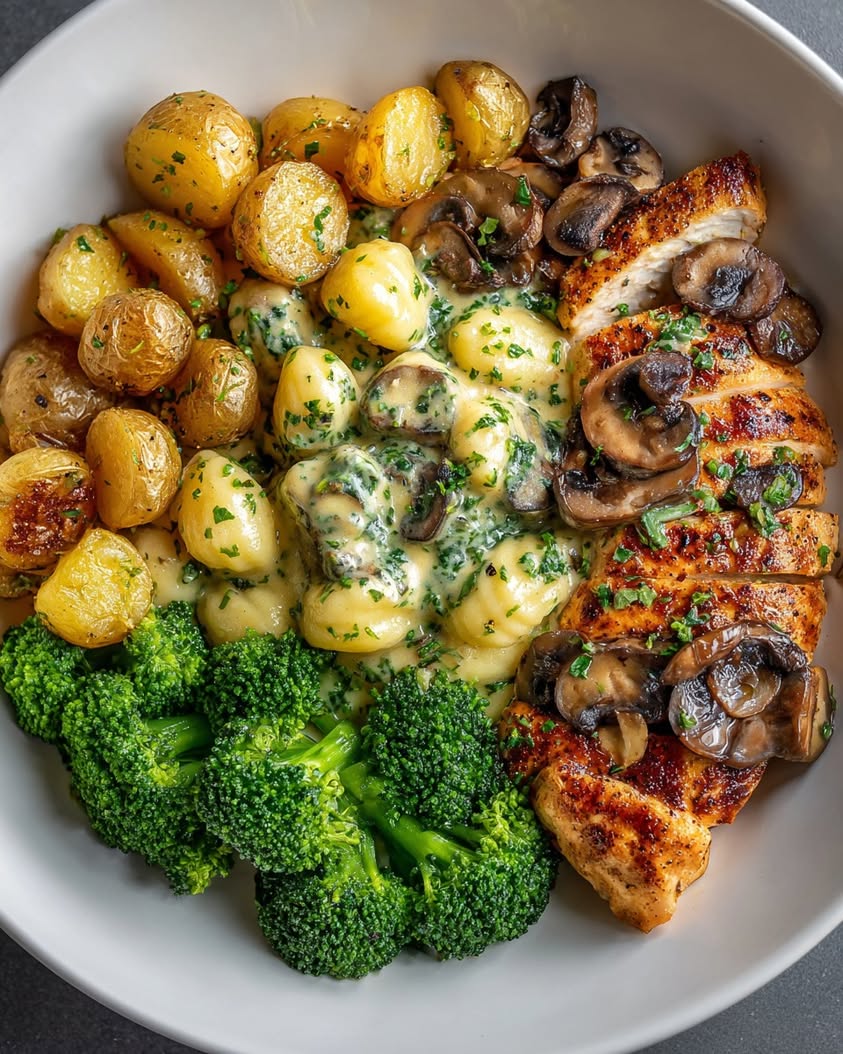
Golden Gnocchi Bowl with Creamy Herb Sauce, Chicken & Roasted Veggies: A Quick, One-Pan Comfort Meal
Imagine a bowl that perfectly captures the essence of cozy comfort food without demanding hours in the kitchen. This Golden Gnocchi Bowl with Creamy Herb Sauce, Chicken & Roasted Veggies is exactly that kind of magic. It’s a complete, satisfying meal where every element harmonizes beautifully. The gnocchi turn golden and slightly crisp, the chicken stays juicy, and the vegetables caramelize to sweet perfection. Ultimately, everything gets enveloped in a luscious, herby cream sauce that ties the whole dish together.
This recipe is a fantastic solution for busy weeknights when you crave something special. It cleverly uses just one sheet pan and one skillet, minimizing cleanup. The process is wonderfully straightforward, making it accessible for cooks of all levels. You’ll love how the simple act of roasting deepens the flavors of the vegetables and chicken. Meanwhile, the creamy herb sauce adds a luxurious touch that feels restaurant-worthy. It’s a guaranteed crowd-pleaser that will have everyone asking for seconds.
Furthermore, this golden gnocchi bowl is incredibly versatile. You can easily swap the vegetables based on what’s in season or hiding in your crisper drawer. The creamy herb sauce, with its fresh and dried herbs, provides a vibrant, aromatic base that complements the other components perfectly. It’s a dish that feels indulgent yet balanced, hearty yet fresh. In short, it’s the ultimate one-pan comfort meal you’ll want to make on repeat.
Quick Recipe Highlights
- Flavor Profile: This dish offers a masterful balance of savory, creamy, and herbaceous notes. The roasted vegetables contribute natural sweetness, while the chicken adds a rich, savory depth. The creamy herb sauce, bright with parsley and chives, ties all the flavors together beautifully.
- Texture: You get a delightful contrast in every bite. The gnocchi develop a golden, slightly crisp exterior while staying pillowy inside. The roasted veggies are tender with caramelized edges, and the chicken is succulent. The sauce adds a smooth, velvety mouthfeel that coats everything perfectly.
- Aroma: As it cooks, your kitchen will fill with the irresistible scent of roasting garlic and herbs. The aroma of caramelizing vegetables mingles with the savory smell of chicken and the fresh, green scent of the herb sauce. It’s a fragrance that promises a delicious meal.
- Visual Appeal: This bowl is a feast for the eyes with its vibrant colors. The golden-brown gnocchi and chicken pop against the green broccoli and red bell peppers. The creamy white sauce drizzled over top makes the entire presentation look elegant and appetizing.
- Skill Level Needed: This is a beginner-friendly recipe designed for success. The steps are simple: chop, season, roast, and simmer a sauce. If you can use a knife and operate an oven, you can absolutely create this impressive golden gnocchi bowl.
- Special Equipment: You only need basic kitchen tools: a large sheet pan, a large skillet, and a mixing bowl. A good chef’s knife will make prep quicker. No fancy gadgets are required, making this an accessible recipe for any home cook.
Recipe Overview
- Difficulty Level: We’ve rated this recipe as “Easy” for several compelling reasons. First, the techniques involved—chopping, seasoning, roasting, and simmering—are fundamental. Second, the timeline is forgiving; a few extra minutes of roasting won’t ruin the dish. Finally, the one-pan method for the main components drastically simplifies both cooking and cleanup.
- Category: This dish comfortably fits into multiple meal categories. Primarily, it’s a hearty and complete main course for dinner. Additionally, it can serve as a fantastic meal prep option for lunches throughout the week. It’s also substantial enough to be the centerpiece of a casual weekend gathering.
- Cuisine: This recipe draws inspiration from rustic Italian-American comfort food, particularly through its use of pillowy potato gnocchi and a creamy, herbed sauce. However, the technique of roasting everything on a sheet pan is a modern, global convenience method. The result is a fusion dish that feels both familiar and fresh.
- Cost: This is a very cost-effective meal to prepare, especially when you consider the yield. Chicken thighs are typically an affordable protein choice. Gnocchi, broccoli, and bell peppers are budget-friendly staples. The cream and Parmesan, while premium, are used in modest amounts that provide maximum flavor impact.
- Season: This golden gnocchi bowl is truly a year-round winner. In cooler months, it provides the warm, hearty comfort we crave. During spring and summer, you can adapt it with seasonal vegetables like zucchini, cherry tomatoes, or asparagus. The fresh herbs in the sauce make it feel light and appropriate for warmer weather, too.
- Occasion: It’s perfect for a simple, satisfying family weeknight dinner. Conversely, it’s impressive enough to serve to guests for a casual dinner party. It also excels as a cozy weekend meal or a reliable option for your weekly meal prep rotation.
Why You’ll Love This Recipe
First and foremost, the taste and texture of this golden gnocchi bowl are utterly irresistible. Each component is cooked to its ideal state, creating a symphony in your mouth. You experience the savory, juicy chicken, the sweet, tender roasted veggies, and the perfectly textured gnocchi all at once. Then, the creamy herb sauce wraps everything in a velvety, aromatic embrace. It’s a comfort food experience that feels both gourmet and deeply satisfying, hitting all the right notes in a single forkful.
From a convenience standpoint, this recipe is a true weeknight hero. The one-pan roasting method is a game-changer, concentrating flavors while minimizing dishes. Prep is straightforward, involving mostly chopping and seasoning. The sauce comes together quickly in a single skillet while the main ingredients roast. Consequently, you get a spectacular, complete meal on the table in about 40 minutes with very little active effort. It simplifies the cooking process without compromising on quality or flavor.
Nutritionally, this bowl offers a well-rounded balance. It provides lean protein from the chicken, complex carbohydrates from the gnocchi and vegetables, and healthy fats from the olive oil and cream. The broccoli and bell peppers add a significant dose of vitamins, fiber, and antioxidants. You can easily adjust the cream-to-broth ratio in the sauce for a lighter version. Ultimately, it’s a meal that fuels your body and satisfies your soul, proving that comfort food can also be thoughtful.
This dish also holds tremendous value for entertaining. It scales up effortlessly to feed a crowd, and the entire meal cooks mostly unattended in the oven. The presentation in a large, family-style bowl is inviting and impressive. Guests will adore the complex flavors and assume you spent far longer in the kitchen. It’s a stress-free option for hosting that allows you to enjoy your company rather than being stuck at the stove.
Finally, its cost-effectiveness and accessibility are major wins. The ingredients are common, affordable, and available at any standard grocery store. There’s no need for expensive or hard-to-find items. Additionally, the recipe is highly adaptable to what you have on hand, reducing food waste. You get a restaurant-quality meal for a fraction of the price, making it a fantastic addition to your regular dinner rotation.
Historical Background and Cultural Significance
Gnocchi, the star of this dish, boasts a long and humble history rooted in peasant cooking across Italy. Their origin is often traced to Roman times, with early versions made from semolina flour. The potato-based gnocchi we know today, however, emerged much later, following the introduction of potatoes to Europe from the Americas in the 16th century. Initially, resourceful cooks in Northern Italy, where potatoes thrived, began incorporating them into dough. This innovation created a more tender, pillowy dumpling that was economical and filling, perfect for stretching meager ingredients into a satisfying meal for families.
The cultural significance of gnocchi is profound, particularly in Italy where it is traditionally associated with comfort, family, and thriftiness. In many regions, Thursday is known as “Gnocchi Day” (Giovedì Gnoccolare), a custom with roots in Catholic tradition where Thursday was a day for a meatless meal before Friday. These soft dumplings, often served with simple tomato or butter sauces, became the perfect hearty yet inexpensive choice. This tradition cemented gnocchi’s role as a weekly culinary ritual, a symbol of home cooking that brings people together around the table.
The evolution of the gnocchi recipe in this bowl reflects modern global cooking trends. While traditional Italian gnocchi are served as a primo (first course) with a light sauce, contemporary recipes like this one reimagine them as the base of a complete meal. The addition of roasted protein and vegetables, all cooked together, speaks to our modern desire for efficiency and balanced nutrition. The creamy herb sauce, while inspired by Italian Alfredo or herb-infused cream sauces, is simplified for the home cook. This evolution shows how classic elements adapt to fit busy, contemporary lifestyles without losing their soul.
Regional variations of gnocchi and their accompaniments are vast throughout Italy. In Rome, “Gnocchi alla Romana” are made with semolina and baked. In Sardinia, “Gnocchetti Sardi” are small, ridged dumplings. The sauces vary from the rich Gorgonzola cream of the north to the simple tomato and basil of the south. This recipe takes inspiration from that spirit of variation. It is not a strictly traditional dish but a celebration of gnocchi’s versatility. By pairing it with roasted chicken and veggies in a creamy sauce, it creates a new, delicious tradition for the modern home kitchen.
Ingredient Deep Dive
Potato Gnocchi: These little potato dumplings are the heart of the dish. Historically, they represent a brilliant use of inexpensive, staple ingredients. Nutritionally, they provide carbohydrates for energy and are typically low in fat. For the best results, look for shelf-stable or refrigerated gnocchi in the pasta aisle; avoid frozen if possible, as they can become mushy. Store unopened packages in a cool, pantry. For substitution, you can use cauliflower gnocchi for a lower-carb option, or even small pasta like orecchiette, though the cooking time will differ.
Chicken Thighs: We prefer boneless, skinless chicken thighs for their superior flavor and juiciness compared to breasts. Thighs have more fat, which keeps them moist during high-heat roasting. They are an excellent source of protein and B vitamins. When selecting, look for thighs that are pinkish-red and firm. Store them in the coldest part of your refrigerator and use within 1-2 days, or freeze for longer storage. For a substitute, chicken breasts can be used but may require less cooking time to avoid drying out.
Broccoli & Bell Pepper: These vegetables add crucial color, texture, and nutrition. Broccoli, a cruciferous vegetable, is packed with vitamins C and K, fiber, and antioxidants. Bell peppers, especially red ones, are rich in vitamin C and carotenoids. Choose broccoli with tight, dark green florets and peppers that feel heavy for their size with smooth, shiny skin. Store them unwashed in your refrigerator’s crisper drawer. You can substitute with almost any roasting vegetable: cauliflower, zucchini, asparagus, or cherry tomatoes all work wonderfully.
Heavy Cream & Parmesan: This duo forms the base of the luxurious creamy herb sauce. Heavy cream provides the rich, velvety body, while Parmesan adds a salty, umami depth. Parmigiano-Reggiano has a protected origin in Italy and is aged for complex flavor. For storage, keep cream tightly sealed and very cold. Grate Parmesan fresh from a block for the best flavor and meltability. For a lighter sauce, you can substitute half the cream with whole milk or broth, though the sauce will be thinner. For a dairy-free version, use full-fat coconut milk and nutritional yeast.
Fresh Herbs (Parsley & Chives): Fresh herbs are non-negotiable for the vibrant, garden-fresh flavor of the sauce. Parsley offers a clean, slightly peppery note, while chives provide a mild onion flavor. They are rich in vitamins and antioxidants. Select bunches that look perky and green, not wilted or yellowed. To store, wrap stems in a damp paper towel and place in a plastic bag in the fridge. If you must substitute, you can use 1 tablespoon of dried herbs for every 3 tablespoons fresh, but the flavor will be less bright.
Common Mistakes to Avoid
- Crowding the Sheet Pan: This is the most common error. If the gnocchi, chicken, and veggies are piled on top of each other, they will steam instead of roast. You need space for hot air to circulate and create that desirable golden, caramelized exterior. Always use a large enough pan and spread ingredients in a single layer.
- Underseasoning the Components: Each element needs its own seasoning before roasting. Don’t just rely on the sauce for flavor. Generously season the chicken and vegetables with salt and pepper before they go in the oven. This builds layers of flavor from the inside out.
- Using Frozen Gnocchi Without Thawing: If using frozen gnocchi, thaw them completely and pat them very dry. Adding frozen gnocchi to the pan will release too much water, causing everything to steam and preventing proper browning. For best results, use shelf-stable or refrigerated gnocchi.
- Overcooking the Cream Sauce: When making the creamy herb sauce, simmer it gently. A rolling boil can cause the cream to separate or become greasy. You just need to heat it through to melt the cheese and infuse the herbs. Remove it from the heat as soon as it’s thickened slightly.
- Adding Fresh Herbs Too Early: The delicate flavor of fresh parsley and chives diminishes with prolonged cooking. Always stir them in at the very end, off the heat. This preserves their bright color and fresh, aromatic quality in the finished sauce.
- Not Preheating the Oven: A properly preheated oven is essential for immediate roasting and browning. If you put the pan in a cold oven, the ingredients will start to stew in their own juices. Always allow your oven to fully reach the specified temperature before adding your food.
- Skipping the Rest for Chicken: After roasting, let the chicken rest for 5 minutes before slicing. This allows the juices, which have been driven to the center by the heat, to redistribute throughout the meat. Slicing immediately will cause all those flavorful juices to run out onto the cutting board.
- Using Pre-Grated Parmesan: Pre-grated cheese often contains anti-caking agents like cellulose, which can prevent it from melting smoothly into the sauce. For the creamiest, most integrated sauce, always grate a block of Parmesan cheese yourself just before using.
Essential Techniques
Sheet Pan Roasting: This technique is the backbone of the recipe, allowing for efficient, hands-off cooking. The high, dry heat of the oven caramelizes the natural sugars in the vegetables and creates a golden crust on the gnocchi and chicken. The key is ensuring everything is cut to a similar size for even cooking and is spread in a single, uncrowded layer. The visual cue for success is seeing browned, crispy edges on the gnocchi and vegetables, and the chicken should reach an internal temperature of 165°F.
Building a Cream Sauce: Creating a simple pan sauce leverages the fond, or browned bits, left from sautéing garlic. After cooking the garlic, you deglaze with broth, scraping up those flavorful bits. Then, adding cream and simmering gently allows the sauce to reduce and thicken slightly. The common pitfall is boiling too vigorously, which can cause the cream to break. The sauce is ready when it coats the back of a spoon and has a velvety consistency, not when it becomes overly thick.
Proper Searing of Chicken: While this recipe roasts the chicken, the principle of achieving a good sear applies to the golden color on the gnocchi and veggies. For a good sear, the surface of the food must be dry, the oil must be hot, and the pan must not be overcrowded. This creates the Maillard reaction—a chemical process that produces complex, savory flavors and appealing color. The visual cue is a uniform golden-brown color, not gray or pale.
Pro Tips for Perfect Golden Gnocchi Bowl
First, pat your gnocchi completely dry with a paper towel before tossing them with oil. Any residual moisture will steam them instead of allowing them to crisp up nicely in the oven. This simple step is crucial for achieving that perfect golden-brown exterior.
Second, use an instant-read thermometer to check your chicken. Remove it from the oven when it reaches 160-162°F. The residual heat will carry it to the safe temperature of 165°F as it rests, ensuring it stays juicy and doesn’t overcook and dry out.
Third, reserve a tablespoon of the starchy pasta water if you boil your gnocchi separately. Adding a splash to your creamy herb sauce helps it emulsify and cling to the gnocchi and vegetables much better, creating a more cohesive dish.
Fourth, roast your vegetables on a preheated sheet pan. Placing them on a hot surface gives an immediate sear, promoting better caramelization and preventing them from sticking. This trick mimics the effect of a very hot skillet.
Fifth, let your cream and cheese come to room temperature before making the sauce. Adding cold cream to a hot pan can sometimes cause it to curdle or separate. Room-temperature dairy incorporates more smoothly and heats evenly.
Sixth, finish the dish with a final flourish. After combining everything, top each bowl with an extra sprinkle of fresh herbs, a crack of black pepper, and a few shavings of Parmesan. This adds a burst of fresh flavor and makes the presentation pop.
Seventh, if your vegetables are done before your chicken, simply remove them and the gnocchi to a bowl, tent with foil, and let the chicken finish roasting. This prevents the veggies from becoming mushy while everything else catches up.
Eighth, taste your sauce for seasoning at the very end, after adding the Parmesan. Parmesan is salty, so you may find you need little to no additional salt. Always season in stages to avoid over-salting.
Variations and Adaptations
Regional Variations: For a Tuscan twist, add a can of drained white beans and sun-dried tomatoes to the roasting pan. A Mediterranean version could include artichoke hearts, kalamata olives, and lemon zest in the sauce. For a flavor reminiscent of the American South, use smoked paprika on the chicken and add sweet corn to the veggie mix.
Seasonal Adaptations: In spring, use asparagus, peas, and fresh mint in the sauce. Summer calls for zucchini, yellow squash, and cherry tomatoes. For autumn, swap in cubed butternut squash, Brussels sprouts, and sage. In winter, hearty root vegetables like carrots, parsnips, and turnips work beautifully and add sweetness.
Dietary Modifications: For a gluten-free bowl, ensure you use certified gluten-free gnocchi. To make it dairy-free, create a sauce with full-fat coconut milk, nutritional yeast, and a teaspoon of miso paste for umami. A vegan version can use chickpeas or seasoned tofu instead of chicken and a cashew-based cream sauce.
Flavor Variations: Infuse the cream sauce with different flavors. Try adding a teaspoon of Dijon mustard, a tablespoon of pesto, or a pinch of red pepper flakes for heat. You could also use different fresh herbs like basil, tarragon, or dill depending on your preference.
Texture Modifications: If you prefer a crunchier texture, toast some pine nuts or walnuts to sprinkle on top. For extra creaminess, stir a spoonful of cream cheese or goat cheese into the sauce. If you want a thinner, brothier dish, increase the amount of chicken broth in the sauce.
Presentation Alternatives: Instead of mixing everything together, serve components separately for a deconstructed bowl. Layer the gnocchi at the bottom, then the veggies, sliced chicken on top, and drizzle sauce over everything. You can also serve it in individual shallow pasta bowls for an elegant touch.
Serving and Presentation Guide
Plating Techniques: For a family-style presentation, transfer the roasted gnocchi and veggies to a large, shallow serving bowl. Arrange the sliced chicken on top, then pour the creamy herb sauce over everything. Gently toss once at the table. For individual plates, use a pair of tongs to create a nest of gnocchi and veggies, lean the sliced chicken against it, and spoon the sauce over the top.
Garnishing Ideas: Fresh herbs are your best friend for garnish. A final sprinkle of chopped parsley or chives adds color. Microgreens or arugula provide a peppery contrast. A light dusting of grated Parmesan or Pecorino Romano adds a salty finish. A drizzle of high-quality extra virgin olive oil or a squeeze of lemon juice can brighten the entire dish just before serving.
Traditional Accompaniments: In a traditional Italian meal, a dish this rich would follow a lighter antipasto, like a simple green salad. A crisp, bitter greens salad with a lemon vinaigrette is the perfect palate cleanser. A side of crusty bread is also welcome for soaking up any remaining creamy sauce on the plate.
Modern Serving Suggestions: Consider serving this bowl as the main event alongside a crisp, cold white wine. For a complete casual feast, pair it with a starter of roasted garlic bruschetta. If serving for lunch, pack it in a container with a separate compartment for the sauce to maintain texture until you’re ready to eat.
Temperature Considerations: This dish is best served immediately while the gnocchi are still slightly crisp on the edges and the sauce is warm and velvety. The components can cool quickly, so warm your serving bowls briefly with hot water before plating. If you must hold it, keep the sauce separate and warm, combining just before serving.
Portion Control Tips: This recipe is designed to serve four hearty portions. To stretch it further for lighter appetites or to include more sides, you can increase the ratio of roasted vegetables. Using a kitchen scale to divide the gnocchi and chicken evenly ensures everyone gets a fair share of the key ingredients.
Wine and Beverage Pairing
Wine Pairings: The rich, creamy sauce and savory chicken call for a white wine with good acidity to cut through the richness. An unoaked Chardonnay from California or a French Chablis is an excellent choice. Alternatively, a light-bodied Pinot Noir with its red fruit notes can complement the roasted vegetables beautifully without overpowering the dish. For a more adventurous pick, a dry Riesling offers a fantastic balance of acidity and slight sweetness that pairs wonderfully with the herbs.
Non-Alcoholic Alternatives: Sparkling water with a twist of lemon or lime provides a refreshing, palate-cleansing effervescence. For a more crafted option, a herbal iced tea, such as lemon verbena or mint, echoes the herbal notes in the sauce. A tart cherry or pomegranate spritzer made with club soda and a splash of juice can also stand up to the dish’s robust flavors.
Coffee/Tea Pairings: While not a typical pairing for dinner, if serving this as a hearty lunch, a medium-roast coffee with low acidity would complement the meal. For tea, a robust black tea like an Assam or a smoky Lapsang Souchong could be interesting after the meal, but their strong flavors are better suited for post-dinner rather than during.
Temperature Considerations: White wines should be served chilled, between 45-50°F. Light reds like Pinot Noir are best slightly cooler than room temperature, around 55°F. Non-alcoholic sparkling drinks should be very cold to maximize refreshment. Always ensure your beverage is at its ideal serving temperature to provide the best contrast and complement to the warm, savory bowl.
Serving Suggestions: Offer wine in appropriate stemware to enhance the aroma. For non-alcoholic options, use tall, elegant glasses with plenty of ice. Encourage guests to take a sip of their beverage between bites to cleanse the palate, especially given the creamy nature of the sauce. This practice allows them to fully appreciate each flavor in the dish anew.
Storage and Shelf Life
Storage Methods: Store leftovers in an airtight container in the refrigerator. For best results, store the creamy components separately from the roasted gnocchi, chicken, and veggies if possible. This prevents the gnocchi from becoming soggy. If already combined, it will still keep but the textures will soften upon reheating.
Temperature Requirements: Refrigerate leftovers within two hours of cooking. The safe refrigerator temperature is 40°F or below. Do not leave the finished dish at room temperature for extended periods, as the dairy-based sauce is perishable.
Container Recommendations: Glass containers with tight-sealing lids are ideal as they don’t absorb odors and allow you to see the contents. If storing combined, use a shallow container to promote rapid, even cooling. For separated components, small containers for the sauce and a larger one for the solids work well.
Signs of Spoilage: Discard the dish if you notice an off or sour smell, significant separation in the sauce (beyond normal), or any signs of mold. If the chicken develops a slimy texture, it has spoiled. When in doubt, follow the golden rule: if you’re unsure, throw it out.
Reheating Instructions: Reheat gently to prevent the sauce from breaking. The best method is on the stovetop over low heat, stirring frequently. Add a splash of broth or milk to loosen the sauce if it has thickened. You can also use a microwave at 50% power, stirring every 30 seconds until heated through.
Freezing Guidelines: Freezing is not highly recommended for this dish because the creamy sauce may separate and the gnocchi can become mushy upon thawing. If you must freeze, freeze the roasted chicken and vegetables only (without sauce). Thaw in the refrigerator overnight and make a fresh batch of sauce when ready to serve.
Make Ahead Strategies
Prep Timeline: You can prep most components 1-2 days in advance. Chop all vegetables and store them in a sealed bag or container in the fridge. Cut the chicken and season it, storing it separately. Measure out your sauce ingredients (cream, broth, grated cheese). You can even mix the dry seasonings for the roasting step in a small bowl.
Storage Between Steps: Keep prepped vegetables and raw chicken in separate airtight containers on the bottom shelf of your refrigerator to prevent cross-contamination. Store herbs wrapped in a damp paper towel inside a plastic bag. Keep grated cheese in a sealed container. This organized mise en place makes assembly lightning-fast.
Quality Impact Assessment: Pre-chopping vegetables has minimal impact on quality. Pre-cutting and seasoning chicken can actually enhance flavor as the salt penetrates the meat. The only element that must be done fresh is the herb sauce, as reheating can cause separation and fresh herbs wilt. The roasting step should also be done fresh for optimal texture.
Assembly Tips: On cooking day, simply pull your prepped containers from the fridge. Toss the veggies and chicken with oil on the sheet pan and roast. While they cook, you have ample time to prepare the fresh creamy herb sauce from your measured ingredients. This streamlined process cuts active cooking time significantly.
Reheating Guidelines: If you’ve pre-roasted the components, reheat them in a 350°F oven on a sheet pan until warmed through and re-crisped slightly, about 10-15 minutes. Make the sauce fresh while they warm. Avoid microwaving pre-roasted gnocchi, as they can become very gummy.
Fresh Element Additions: No matter how much you prep ahead, always add the fresh herbs to the sauce at the very end. Also, consider adding a final garnish of fresh herbs or a new squeeze of lemon juice after reheating to brighten up the flavors that may have muted during storage.
Scaling Instructions
Halving the Recipe: To serve two, simply divide all ingredient quantities by two. Use a standard-sized sheet pan; the smaller amount of food will have plenty of space, promoting even better browning. Cooking time may be reduced by 5-7 minutes, so start checking for doneness early. The sauce can be made in a small saucepan.
Doubling or Tripling: For a crowd, multiply the ingredients accordingly. The key is to use multiple sheet pans and rotate them from top to bottom rack halfway through cooking to ensure even roasting. Do not pile ingredients higher on a single pan. You may need to cook in batches. For the sauce, use a large Dutch oven or pot.
Equipment Adjustments: Scaling up requires more sheet pans and potentially larger skillets or pots for the sauce. Ensure your oven can accommodate multiple pans with proper air circulation. If cooking in batches, keep the first batch warm in a 200°F oven while the second cooks. For very large batches, consider using roasting pans.
Timing Modifications: When doubling, the roasting time may increase slightly, but not double. Add 5-10 minutes and rely on visual cues and the chicken’s internal temperature. Sauce volume will take longer to heat and reduce. Stir it frequently over medium-low heat to prevent scorching on the bottom.
Storage Considerations: A larger batch means more potential leftovers. Plan your storage containers in advance. It’s often helpful to portion the finished dish into meal-sized containers before refrigerating for easy grab-and-go lunches throughout the week.
Nutritional Deep Dive
Macro Breakdown: A serving of this golden gnocchi bowl provides a balanced mix of macronutrients. The chicken and cheese offer high-quality protein essential for muscle repair. The gnocchi and vegetables supply complex carbohydrates for sustained energy. The olive oil and cream contribute healthy fats, which aid in nutrient absorption and satiety. This balance helps keep you full and satisfied for hours after eating.
Micronutrient Analysis: This dish is a micronutrient powerhouse. Broccoli and bell peppers are loaded with Vitamin C, Vitamin K, and folate. The herbs provide trace minerals and antioxidants. Chicken is a good source of B vitamins, particularly B6 and niacin, which support metabolism. Using bone-in, skin-on thighs would also add minerals, but boneless is leaner.
Health Benefits: The combination of protein, fiber from vegetables, and healthy fats supports stable blood sugar levels. The antioxidants in the colorful vegetables combat oxidative stress. The herbs like parsley have anti-inflammatory properties. This meal supports overall wellness by providing a wide spectrum of nutrients in a delicious, comforting format.
Dietary Considerations: For those monitoring sodium, be mindful of the salt in the seasoning and the Parmesan cheese; you can reduce added salt. The dish contains dairy (cream, Parmesan) and gluten (in standard gnocchi), which are common allergens. It is not suitable for a strict paleo or keto diet due to the gnocchi, but adaptations are possible.
Portion Analysis: One serving, as outlined, is a hearty and complete meal. If you are managing calorie intake, you can slightly reduce the amount of gnocchi and increase the volume of non-starchy vegetables like broccoli. You can also use a lighter cream or half-and-half in the sauce for a reduction in fat and calories without sacrificing too much creaminess.
Weight Management Tips: This dish is filling due to its protein, fiber, and fat content, which can aid in weight management by preventing overeating. To make it even more weight-conscious, ensure your portion of gnocchi is about the size of your fist, fill half your bowl with the roasted vegetables, and use the creamy sauce as a flavorful accent rather than a blanket.
Dietary Adaptations
Gluten-Free: This adaptation is simple. Ensure you purchase certified gluten-free gnocchi, which are commonly made from potato starch or rice flour. Also, double-check that your chicken broth is gluten-free, as some brands use additives containing gluten. All other ingredients are naturally gluten-free.
Dairy-Free: Replace the heavy cream with full-fat canned coconut milk for a rich, creamy base. Use a dairy-free Parmesan alternative or a tablespoon of nutritional yeast for the cheesy flavor. For the roasting step, simply use olive oil. The result will be a creamy, flavorful sauce with a slight coconut aroma that pairs surprisingly well with the herbs.
Vegan: Omit the chicken and use a plant-based protein like seasoned chickpeas, cubed extra-firm tofu, or store-bought vegan
Print
Golden Gnocchi Bowl with Creamy Herb Sauce, Chicken & Roasted Veggies
Description
A comforting one-pan meal featuring crispy pan-fried gnocchi, tender chicken, and roasted vegetables, all tossed in a rich, herby cream sauce.
Ingredients
For the Crust:
- 1 lb store-bought potato gnocchi
- 2 boneless, skinless chicken breasts, cubed
- 1 zucchini, chopped
- 1 red bell pepper, chopped
- 1 small red onion, sliced
- 2 tbsp olive oil, divided
- 1 cup heavy cream
- 1/2 cup chicken broth
- 2 cloves garlic, minced
- 1 tbsp fresh parsley, chopped
- 1 tsp fresh thyme leaves
- 1/2 tsp dried oregano
- Salt and black pepper to taste
- 1/4 cup grated Parmesan cheese
Instructions
1. Prepare the Crust:
- Preheat oven to 400°F (200°C). Toss zucchini, bell pepper, and red onion with 1 tbsp olive oil, salt, and pepper. Spread on a baking sheet and roast for 20-25 minutes until tender and slightly charred.
- Meanwhile, heat remaining 1 tbsp olive oil in a large skillet over medium-high heat. Add chicken cubes, season with salt and pepper, and cook for 6-8 minutes until browned and cooked through. Remove chicken and set aside.
- In the same skillet, add gnocchi (no need to boil first) and cook for 5-7 minutes, stirring occasionally, until golden and crispy. Remove gnocchi and set aside with chicken.
- Reduce heat to medium. Add garlic to the skillet and sauté for 30 seconds until fragrant. Pour in heavy cream and chicken broth, stirring to combine. Simmer for 3-4 minutes until slightly thickened.
- Stir in parsley, thyme, oregano, and Parmesan cheese. Season with salt and pepper. Return chicken, gnocchi, and roasted veggies to the skillet. Toss gently to coat in the sauce and heat through for 2 minutes. Serve immediately.
Notes
You can customize the seasonings to taste.

I’m Shaykee—born in Morocco, seasoned across continents. From airplane galleys to home kitchens, I share the flavors and stories that shaped my journey.