
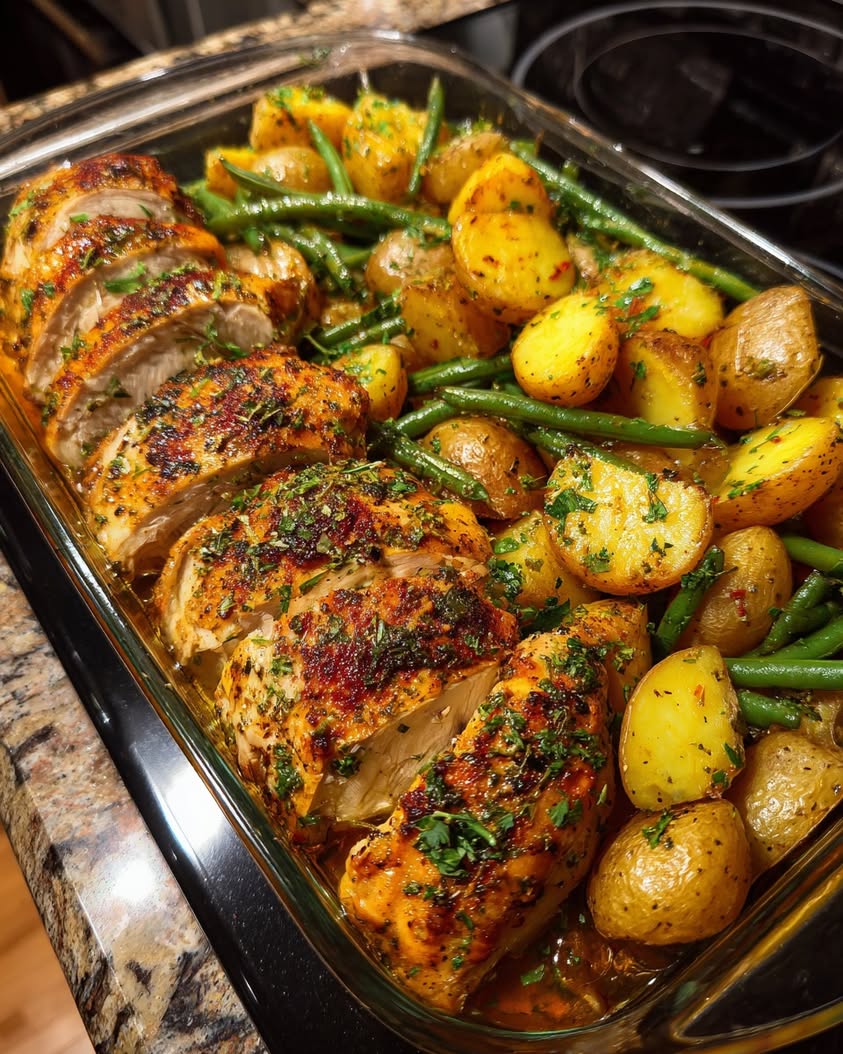
Savory Baked Herb Chicken with Crispy Roasted Potatoes & Tender Green Beans: An Easy, One-Pan Dinner That’s Both Healthy and Delicious!
Imagine a complete, wholesome dinner that fills your kitchen with the most incredible aromas of garlic, rosemary, and thyme, all while requiring minimal hands-on effort. This recipe for savory baked herb chicken with crispy roasted potatoes and tender green beans delivers exactly that. It is the ultimate solution for busy weeknights when you crave something satisfying and homemade without spending hours at the stove. Consequently, this meal brings together protein, starch, and vegetables in a beautifully harmonious way, making it a perfect family dinner.
The magic of this dish lies in its simplicity and robust flavor profile. Juicy chicken breasts soak up a marinade of fresh herbs and olive oil, then roast alongside potatoes that become impossibly crispy on the outside and fluffy within. Meanwhile, fresh green beans are quickly sautéed to retain their vibrant color and snap, adding a bright contrast to the rich, savory components. Ultimately, this recipe proves that a healthy dinner can be incredibly flavorful and utterly comforting, all from a few simple steps.
Furthermore, this baked herb chicken dinner is a fantastic gateway to more confident home cooking. It teaches foundational techniques like marinating, roasting, and sautéing, which you can apply to countless other recipes. The process is straightforward, the ingredients are accessible, and the result is consistently impressive. Whether you are cooking for a casual family meal or impressing last-minute guests, this reliable one-pan wonder is sure to become a staple in your weekly rotation.
Quick Recipe Highlights
- Flavor Profile: This dish features a deeply savory and aromatic core from garlic, rosemary, and thyme, perfectly complementing the natural sweetness of the chicken and potatoes. A hint of lemon zest or juice can brighten the entire plate, adding a necessary note of freshness that cuts through the richness.
- Texture: You will experience a delightful contrast of textures: juicy and tender baked herb chicken, potatoes with a shatteringly crispy exterior and a soft, pillowy interior, and green beans that offer a satisfying, tender-crisp bite. This variety makes every forkful interesting and enjoyable.
- Aroma: As it cooks, the kitchen fills with the warm, earthy scent of roasting herbs and garlic, blended with the comforting smell of golden potatoes. This aromatic promise is a key part of the meal’s appeal, building anticipation before the first bite.
- Visual Appeal: The presentation boasts appealing colors: golden-brown chicken, crispy potatoes with hints of herb, and vibrant green beans. Plated together, it creates a balanced and inviting plate that looks as good as it tastes, perfect for sharing photos or simply enjoying at the table.
- Skill Level Needed: This is an ideal recipe for beginners or anyone seeking a reliable weeknight meal. It requires basic knife skills for chopping and the ability to manage oven temperature, but no advanced techniques are necessary for success.
- Special Equipment: You only need a reliable baking sheet, a skillet for the green beans, and basic kitchen tools like a knife, cutting board, and mixing bowls. A sheet pan with a wire rack can elevate the chicken’s crispiness but is not essential.
Recipe Overview
- Difficulty Level: We classify this baked herb chicken dinner as easy because it involves straightforward techniques like mixing, chopping, and roasting. The steps are sequential and forgiving, and there is minimal multitasking required once the components are in the oven. Even novice cooks can achieve excellent results by following the clear instructions.
- Category: This recipe fits perfectly into several categories: a healthy main course, a reliable family dinner, and an excellent meal prep option. It provides a complete nutritional profile, making it a standalone meal that requires no additional sides unless desired.
- Cuisine: While not tied to one specific tradition, this dish draws inspiration from rustic American and Mediterranean home cooking. The use of olive oil, garlic, and hearty herbs is a hallmark of Mediterranean cuisine, celebrated for its focus on simple, high-quality ingredients.
- Cost: This is a very cost-effective meal. Chicken breasts, potatoes, and green beans are typically affordable, especially in season. The herb and seasoning pantry staples make the per-serving cost low, offering restaurant-quality flavor on a strict home cooking budget.
- Season: This baked herb chicken dinner is truly a year-round recipe. However, it feels particularly comforting in the fall and winter. Conversely, using fresh summer herbs and lighter beans can make it feel bright and suitable for warmer months as well.
- Occasion: It is perfect for busy weeknights, casual weekend family dinners, or even for meal prepping lunches for the week ahead. The elegant yet simple presentation also makes it suitable for serving to guests in a relaxed setting.
Why You’ll Love This Recipe
First and foremost, the taste and texture combination is utterly irresistible. The savory baked herb chicken emerges from the oven juicy and infused with flavor, while the potatoes achieve a crispy, golden perfection that is deeply satisfying. The tender green beans add a necessary fresh and slightly crisp element, creating a balanced plate. Each component supports the others, resulting in a harmonious dining experience that feels both wholesome and indulgent. You will love the way the herbal notes permeate the chicken and potatoes, making every bite aromatic and delicious.
From a convenience standpoint, this recipe is a true weeknight hero. The prep work is minimal and largely involves chopping and mixing. Once the chicken and potatoes are in the oven, you have time to prepare the green beans or simply relax. This streamlined process means you can have a complete, home-cooked dinner on the table in under an hour with minimal cleanup, especially if you use parchment paper on your baking sheet. It is the ultimate answer to the perennial question of what to make for dinner.
Nutritionally, this meal is a powerhouse. It provides lean protein from the chicken, complex carbohydrates and fiber from the potatoes and green beans, and healthy fats from the olive oil. By controlling the ingredients, you avoid the excessive sodium, unhealthy fats, and hidden sugars often found in takeout or frozen meals. This baked herb chicken dinner supports a balanced diet and can easily be adapted to fit specific nutritional goals, such as reducing oil or adjusting portion sizes.
For social and entertaining value, this dish is a quiet star. It is easy to scale up for a crowd, and the presentation on a large platter is naturally beautiful and inviting. Serving a complete, homemade meal like this to friends or family conveys care and effort, even though the process is straightforward. It is a universally appealing menu item that pleases both adults and children, eliminating the need to cook multiple separate dishes.
Finally, its cost-effectiveness and accessibility cannot be overstated. The ingredients are pantry-friendly and readily available at any grocery store. You do not need expensive cuts of meat or exotic produce to create something spectacular. This recipe demonstrates how a few humble ingredients, treated with care and simple techniques, can transform into a restaurant-worthy baked herb chicken dinner that is both healthy and delicious. It is a sustainable choice for your wallet and your weekly meal plan.
Historical Background and Cultural Significance
The concept of roasting meat with herbs and root vegetables is ancient, transcending specific cultures. Essentially, this method of cooking originated from hearth and home cooking traditions worldwide, where families would cook whole meals in a single pot or over a single fire. The combination of protein and starch cooked together for efficiency and flavor infusion is a practice seen from European farmhouses to early American homesteads. Our modern baked herb chicken dinner is a direct descendant of these resourceful, one-pot meals designed to nourish families with available ingredients.
Culturally, the use of rosemary, thyme, and garlic specifically anchors this recipe in the culinary traditions of the Mediterranean region. These herbs are not just flavorings; they are integral to the region’s identity, growing abundantly in its climate and defining its cuisine’s character. Dishes featuring these elements are celebrated for their connection to the land and a lifestyle centered around fresh, simple, and shared food. Therefore, when we cook this meal, we are participating in a long-standing tradition of communal, heart-healthy eating.
The evolution of this recipe into a modern “one-pan dinner” reflects contemporary cooking values: efficiency, health-consciousness, and minimal cleanup. While the core technique is old, the presentation as a complete, balanced plate tailored for the busy home cook is a modern adaptation. The inclusion of a separate, quick-cooked green vegetable component shows an evolution towards valuing varied textures and colors on the plate, a more recent development in everyday home cooking aesthetics.
Regional variations of this concept are endless. In Provence, herbes de Provence would be used; in Italy, oregano and basil might join the party. The potatoes could be swapped for other root vegetables like carrots or parsnips depending on the locale. The green beans might be replaced with asparagus, broccoli, or zucchini. This versatility is a testament to the recipe’s foundational soundness. Our specific version with chicken breasts, russet potatoes, and green beans is a particularly Americanized take, focusing on convenience and widely loved flavors, making this baked herb chicken a global citizen with local roots.
Ingredient Deep Dive
Starting with the chicken, boneless, skinless chicken breasts are a lean and versatile canvas. Historically, chicken has been a global staple protein due to its relatively quick rearing time. Nutritionally, it is an excellent source of lean protein and essential B vitamins. For the best results in this baked herb chicken, select breasts that are similar in size and thickness to ensure even cooking. You can also lightly pound the thicker ends to create a uniform thickness. Store chicken in the coldest part of your refrigerator and use within 1-2 days of purchase, or freeze immediately. For substitution, chicken thighs offer more fat and flavor, while a firm white fish like cod would require a much shorter cooking time.
Russet or Yukon Gold potatoes are ideal for roasting. Russets become incredibly fluffy inside and crisp up nicely, while Yukon Golds offer a buttery flavor and creamy texture. Potatoes were first domesticated in the Andes and revolutionized European agriculture and cuisine. They provide complex carbohydrates, vitamin C, and potassium. Choose firm potatoes without sprouts or green tinges. Store them in a cool, dark, and well-ventilated place—not in the refrigerator. Sweet potatoes make a wonderful, nutrient-dense variation, though they may cook faster. The key is cutting them to a uniform size for consistent roasting alongside the herb chicken.
Fresh green beans bring color and a tender-crisp texture. Also known as string beans, they are the unripe fruit of the common bean plant. They are low in calories and a good source of fiber, vitamin K, and vitamin C. Look for beans that are bright green, snap easily, and are free of brown spots. Store them unwashed in a plastic bag in the refrigerator’s crisper drawer. While fresh is best for this recipe, you can use frozen green beans in a pinch; just add them directly to the hot skillet and adjust cooking time. Asparagus or broccoli florets are excellent seasonal alternatives to pair with your baked herb chicken.
The herb blend of rosemary and thyme is non-negotiable for the signature aroma. Rosemary, with its pine-like fragrance, symbolizes remembrance and has been used medicinally for centuries. Thyme offers a subtle, earthy flavor and has antimicrobial properties. Fresh herbs are superior for this recipe, providing vibrant flavor. If you must use dried, remember the ratio is typically 1:3 (one part dried to three parts fresh). Strip the rosemary leaves from the woody stem and chop finely. For thyme, you can often slide your fingers down the stem to release the tiny leaves. Store fresh herbs like bouquets in a glass of water in the fridge.
Finally, high-quality olive oil and fresh garlic form the flavor foundation. Olive oil, central to Mediterranean life, provides healthy monounsaturated fats and carries the fat-soluble flavors of the herbs and garlic. Use a good extra-virgin olive oil for the marinade. Garlic, used for both culinary and medicinal purposes for thousands of years, adds pungent depth. Always use fresh garlic cloves for the best flavor; pre-minced jarred garlic lacks potency. To easily peel a clove, crush it lightly with the flat side of your knife—the skin will slip right off. This combination ensures your baked herb chicken is deeply flavorful and aromatic.
Common Mistakes to Avoid
- Crowding the Pan: Placing the chicken and potatoes too close together on the baking sheet is a major error. They will steam instead of roast, resulting in soggy potatoes and pale chicken. Ensure there is space between each piece for hot air to circulate and create that essential crispy exterior.
- Underseasoning: Potatoes and chicken need generous seasoning. Do not be shy with salt and pepper, both in the marinade and directly on the potatoes. Remember, some seasoning will be lost during cooking. Taste your marinade; it should be well-seasoned to penetrate the meat.
- Using Cold Chicken: Placing ice-cold chicken directly from the fridge into the oven can lead to uneven cooking. Let the marinated chicken sit at room temperature for about 15-20 minutes before baking. This helps it cook more evenly and stay juicier.
- Neglecting to Preheat the Oven: A properly preheated oven is critical for the initial sear and consistent cooking. If the oven is not hot enough when the food goes in, the ingredients will start to stew and release moisture instead of browning immediately.
- Overcooking the Green Beans: Sautéing the green beans for too long turns them mushy and dulls their vibrant color. They should be cooked just until tender-crisp and bright green. Their residual heat will continue to cook them slightly after you remove them from the pan.
- Not Drying the Potatoes: After washing and cutting the potatoes, it is crucial to pat them completely dry with a kitchen towel. Any excess surface moisture will create steam, preventing them from getting truly crispy in the oven.
- Skipping the Marinade Time: While you can cook immediately, allowing the chicken to marinate for even 30 minutes makes a significant difference in flavor depth. For the best baked herb chicken, plan for this short marinating period to let the herbs and garlic infuse the meat.
- Using a Dull Knife: A dull knife makes chopping herbs and cutting potatoes more dangerous and difficult. It can also crush herbs rather than cutting them cleanly, releasing bitter flavors. Keep your knives sharp for safer, more efficient prep.
- Not Checking for Doneness with a Thermometer: Guessing when chicken is done leads to dry, overcooked meat or unsafe undercooking. Use an instant-read thermometer; the chicken is perfectly done at 165°F (74°C) inserted into the thickest part.
- Cutting the Chicken Immediately After Baking: Let the baked herb chicken rest for 5-10 minutes after removing it from the oven. This allows the juices to redistribute throughout the meat. If you cut into it right away, those precious juices will run out onto the cutting board, leaving the chicken dry.
Essential Techniques
Marinating for Flavor: Marinating is not just about adding surface flavor; it is a tenderizing and infusing process. The acid (like lemon juice) and salt in the marinade begin to break down muscle proteins, allowing the herb and garlic flavors to penetrate. To master it, ensure the chicken is fully coated and use a zip-top bag or shallow dish. A common pitfall is marinating too long in a highly acidic mixture, which can make the texture mushy. For this baked herb chicken, 30 minutes to 2 hours is perfect. Visual success is a chicken breast that looks evenly coated and smells fragrant before it even hits the oven.
High-Heat Roasting: This technique uses dry, intense heat to brown the exterior of food quickly, sealing in juices and creating complex flavors through the Maillard reaction. It is important for achieving crispy potatoes and golden chicken. Master it by preheating your oven fully and using a heavy-duty baking sheet that distributes heat evenly. A common mistake is opening the oven door frequently, which causes temperature fluctuations. The visual cue for success is a golden-brown, crispy crust on the potatoes and beautifully browned edges on the chicken.
Sautéing to Tenderness: Sautéing involves cooking food quickly in a small amount of fat over relatively high heat. For the green beans, this technique preserves their color, texture, and nutrients. The key is to have your pan hot before adding the oil and beans, and to keep them moving. A common pitfall is adding too many beans at once, which lowers the pan temperature and leads to steaming. Success is visible when the beans turn a brighter shade of green, develop a few small browned spots, and bend slightly without breaking—a perfect tender-crisp accompaniment to your baked herb chicken.
Pro Tips for Perfect Savory Baked Herb Chicken
First, for extra-crispy potatoes, soak the cut potatoes in cold water for 15-30 minutes before drying and roasting. This draws out excess starch, which is the secret to the crispiest exterior. Secondly, elevate your chicken off the pan by roasting it on a wire rack set inside the baking sheet. This allows heat to circulate all around, promoting even browning and preventing the bottom from steaming. Third, add a splash of white wine or chicken broth to the skillet after sautéing the green beans. Let it reduce to create a simple, flavorful pan sauce to drizzle over everything.
Fourth, use a microplane to zest a little lemon directly over the cooked chicken and potatoes just before serving. The bright, citrusy aroma will elevate the entire dish. Fifth, if your herbs are drying out, revive them by soaking in ice water for 10 minutes before chopping. This makes them perk up and appear fresher. Sixth, for a deeper flavor, sprinkle a teaspoon of smoked paprika or a pinch of red pepper flakes into the potato seasoning mix. This adds a subtle warmth and complexity to the baked herb chicken dinner.
Seventh, let your baking sheet preheat in the oven. Carefully place the potatoes on the hot sheet pan for an instant sear, which jumpstarts the crisping process. Eighth, reserve a small portion of your fresh chopped herbs. Use them as a vibrant, fresh garnish on the finished plate to add a pop of color and a burst of fresh flavor that cooked herbs lose.
Variations and Adaptations
For regional variations, consider a Mediterranean twist by adding kalamata olives, sun-dried tomatoes, and a sprinkle of feta cheese after baking. An Italian version could use oregano, basil, and marinated artichoke hearts. A French-inspired take might include herbes de Provence and sautéed mushrooms alongside the beans. These adaptations show how the basic framework of a baked herb chicken dinner can travel across culinary borders with simple ingredient swaps.
Seasonal adaptations keep this recipe exciting year-round. In spring, use new potatoes and asparagus. Summer calls for zucchini or yellow squash and cherry tomatoes roasted alongside the chicken. Fall is perfect for sweet potatoes, Brussels sprouts, or cubed butternut squash. In winter, hearty carrots and parsnips make excellent potato substitutes. Each seasonal vegetable brings its own unique sweetness and texture to complement the savory herbs.
Dietary modifications are straightforward. For a gluten-free meal, this recipe is naturally compliant—just ensure any pre-made seasoning blends are certified gluten-free. For dairy-free, it is already perfect. To make it low-carb or keto, replace the potatoes with cauliflower florets tossed in oil and herbs; they will roast beautifully in a similar timeframe. For a Paleo version, ensure your olive oil is high-quality and stick to the basic vegetable choices.
Flavor variations are endless. Swap the rosemary and thyme for tarragon and chives for a more delicate profile. Add a tablespoon of Dijon mustard or pesto to the chicken marinade for a tangy or nutty twist. For an Asian-inspired version, use ginger, soy sauce, and sesame oil in the marinade, and swap the green beans for snap peas or bok choy. A smoky variation can include chipotle powder in the rub and roasted corn as a side.
Texture modifications can cater to different preferences. For ultra-crispy chicken, leave the skin on and increase the initial oven temperature. For softer potatoes, toss them with a little broth or water and cover with foil for part of the roasting time. For melt-in-your-mouth green beans, braise them in a covered skillet with a bit of broth after the initial sauté. Each method alters the final mouthfeel while keeping the core flavors of the baked herb chicken intact.
Presentation alternatives can turn a weeknight meal into something special. Instead of plating separately, arrange everything family-style on a large wooden board or platter. Skewer the chicken and potatoes with rosemary sprigs for a fun, handheld option. For individual servings, use shallow bowls and arrange the components neatly, drizzling any pan juices over the top. For a deconstructed look, slice the chicken and fan it over a bed of beans with potatoes scattered around.
Serving and Presentation Guide
Plating techniques matter for visual appeal. For a classic presentation, place a chicken breast slightly off-center on a warm plate. Arrange a portion of crispy potatoes on one side and a bundle of green beans on the other. This creates height and balance. Alternatively, for a family-style meal, pile the potatoes in the center of a large platter, arrange the chicken pieces over them, and scatter the green beans around the edges. This encourages sharing and looks abundant and inviting.
Garnishing adds the final professional touch. A simple sprinkle of flaky sea salt and freshly cracked black pepper over everything just before serving enhances flavor and texture. Fresh herb sprigs, like whole rosemary or thyme, add color and fragrance. A lemon wedge on the side is both functional and decorative, allowing guests to add a bright note. For a touch of luxury, a drizzle of high-quality extra-virgin olive oil or a small pat of compound herb butter melting over the hot baked herb chicken looks and tastes incredible.
Traditional accompaniments for such a rustic meal include a simple green salad with a vinaigrette to cut the richness, or a crusty loaf of bread to soak up any juices. Modern serving suggestions might include a dollop of garlic aioli or tzatziki for dipping, or a side of quinoa or farro for added whole grains. Consider the beverage as part of the presentation; a glass of wine or sparkling water with lemon completes the picture.
Temperature considerations are crucial. Serve the baked herb chicken dinner immediately after the green beans are done. The chicken and potatoes are best hot from the oven, while the beans should be warm and still crisp. If you must hold components, keep the chicken and potatoes in a warm oven (about 200°F) on a wire rack to prevent sogginess, and quickly reheat the beans in the skillet just before serving. Cold plates can chill food quickly, so warming your serving platter or plates is a pro move.
Portion control is built into the recipe, but you can adjust based on appetite. One chicken breast and a generous scoop of potatoes and beans is a standard serving. For lighter appetites, serve half a breast. For heartier appetites or athletes, add an extra piece of chicken or more potatoes. When serving family-style, provide serving utensils that are appropriately sized to help guests manage their portions intuitively.
Wine and Beverage Pairing
Wine pairings for this baked herb chicken dinner should complement its savory, herbal notes without overpowering it. A medium-bodied white wine like Chardonnay, especially one with a touch of oak, pairs beautifully with the roasted flavors. Alternatively, a Pinot Noir is an excellent red choice; its light body and red fruit notes harmonize with the chicken and earthy potatoes without clashing. For a more adventurous pick, a dry Rosé from Provence, which often carries herbal nuances itself, can be a stunning and refreshing match.
Non-alcoholic alternatives can be just as sophisticated. Sparkling water with a twist of lemon or a cucumber slice cleanses the palate between bites. For a more crafted option, try an herbal iced tea, like mint or lemon verbena, which echoes the dish’s herbal profile. A tart cherry juice spritzer (mix cherry juice with club soda) offers a sweet-tart contrast that works well with the savory elements. These choices ensure everyone at the table has a delightful beverage pairing.
While not traditional, coffee or tea can work as post-meal pairings. A light roast coffee with bright acidity can contrast the meal’s richness pleasantly. For tea, consider an Earl Grey, whose bergamot citrus notes can mirror a squeeze of lemon, or a simple green tea to aid digestion. Serve these after the meal rather than during, as their strong flavors are better suited as a finale than an accompaniment to the baked herb chicken itself.
Temperature considerations for beverages are key. White wines and rosés should be served well-chilled, around 45-50°F. Light reds like Pinot Noir are best slightly cooler than room temperature, around 55°F. Non-alcoholic sparkling drinks should be ice-cold. Serving beverages at their ideal temperature maximizes their flavor and refreshing qualities, enhancing the overall dining experience alongside your carefully prepared meal.
Serving suggestions include offering a choice between a white and a red wine if you have guests. Place water glasses on the table as a standard. For non-alcoholic options, consider serving them in elegant glassware to make them feel special. Always ensure drinks are topped up, as the savory nature of this baked herb chicken dinner naturally encourages sipping. A well-paired beverage turns a simple meal into a complete culinary event.
Storage and Shelf Life
Proper storage methods are essential for food safety and quality. Allow all components of the baked herb chicken dinner to cool completely to room temperature before storing, but do not leave them out for more than two hours. Store the chicken, potatoes, and green beans separately in airtight containers. This prevents moisture from the beans from making the potatoes soggy. Glass containers are ideal as they do not retain odors and allow you to see the contents easily.
Temperature requirements are non-negotiable. Refrigerate the stored components promptly. The refrigerator should be at or below 40°F (4°C). In these conditions, cooked chicken and potatoes will keep safely for 3-4 days. Green beans are best consumed within 2-3 days for optimal texture. Never store large, hot portions of food in the fridge, as they can raise the internal temperature and endanger other items.
Signs of spoilage include an off or sour smell, a slimy texture on the chicken or vegetables, or any visible mold. If the chicken develops a grayish tint or the green beans become excessively limp and dull, it is time to discard them. When in doubt, follow the golden rule: throw it out. It is not worth the risk of foodborne illness over a single meal.
Reheating instructions are crucial for restoring enjoyment. For the chicken and potatoes, reheat in a preheated 350°F oven or toaster oven until warmed through. This method helps re-crisp the potatoes. You can also use an air fryer for excellent results. The microwave is a last resort as it will make the potatoes rubbery and the chicken dry. Reheat green beans quickly in a skillet over medium heat to restore some of their snap. Always ensure reheated food reaches an internal temperature of 165°F.
Freezing guidelines apply primarily to the chicken and potatoes. Portion them into freezer-safe bags or containers, removing as much air as possible. They can be frozen for up to 2-3 months. Note that the potato texture may become slightly grainy upon thawing and reheating. Green beans do not freeze well after cooking; they become very mushy. For best results, freeze the uncooked marinated chicken in its marinade for a ready-to-cook future meal.
Make Ahead Strategies
A smart prep timeline can turn this into a 20-minute weeknight meal. The night before, chop your potatoes and store them submerged in cold water in the fridge. This also helps with crispiness. Prepare the herb marinade and coat the chicken breasts; store them in a zip-top bag in the refrigerator. Trim your green beans. In the morning, drain and dry the potatoes. When you get home, simply toss the potatoes in oil and seasoning, put them and the chicken on a pan, and roast while you quickly sauté the prepped beans.
Storage between steps is simple. The marinating chicken can safely sit in the fridge for up to 24 hours, which only deepens the flavor. The water-submerged potatoes can stay in the fridge for 2 days. Keep prepped green beans in a sealed container lined with a paper towel to absorb moisture. Having these components ready transforms the cooking process from a chore into a simple assembly job, making your baked herb chicken dinner effortlessly achievable on even the busiest nights.
Assessing the quality impact of make-ahead steps is important. Marinating longer than 24 hours, especially with acidic components, can start to break down the chicken’s texture, making it mushy. Pre-cut potatoes left in water for more than 48 hours can begin to lose flavor and become waterlogged. Pre-trimmed green beans may lose a slight amount of crispness after 2 days. For optimal results, aim to prep no more than one day in advance, ensuring your final meal tastes fresh and vibrant.
Assembly tips for make-ahead include keeping components separate until the final cook. Do not combine the potatoes and chicken on the sheet pan until you are ready to roast. Keep the herb garnish separate. This preserves textures and prevents any premature moisture transfer. Having everything measured and ready in small bowls or containers (mise en place) makes the final cooking process smooth and enjoyable, almost like following a television cooking show.
Reheating guidelines for make-ahead meals differ from leftovers. If you fully cook the entire baked herb chicken dinner ahead of time, the best reheating method is the oven. However, for the best texture, consider a hybrid approach: fully cook the chicken and potatoes, but only blanch the green beans (cook for 1-2 minutes in boiling water, then shock in ice water). Store them separately. At mealtime, reheat the chicken and potatoes in the oven, and quickly sauté the blanched beans to finish. This preserves the beans’ perfect texture.
Scaling Instructions
Halving the recipe is straightforward for smaller households. Use two chicken breasts and reduce potatoes and beans proportionally. Keep the marinade quantities roughly the same to ensure adequate coverage; you can scale down herbs and oil by half, but be generous with seasoning. Use a smaller baking sheet to prevent the ingredients from spreading out too thinly and drying out. Cooking times may be slightly reduced, so start checking for doneness 5-10 minutes earlier than the original recipe suggests.
Doubling or tripling the recipe for a crowd requires some adjustments. Use multiple baking sheets and rotate them in the oven halfway through cooking to ensure even browning. You may need to work in batches if your oven cannot accommodate multiple sheets effectively. For the marinade, multiply all ingredients consistently. When sautéing a large volume of green beans, do it in batches to avoid steaming. Consider using a roasting pan for a larger quantity of potatoes, spreading them in a single layer for best results.
Equipment adjustments are necessary when scaling. For larger batches, a commercial-sized half-sheet pan is invaluable. If doubling, you might need two ovens or to cook components sequentially, keeping the first batch warm. For halving, a quarter-sheet pan works perfectly. Ensure you have a skillet large enough to handle the volume of green beans without crowding; otherwise, sauté in batches. Having the right tools makes scaling this baked herb chicken dinner up or down much more manageable.
Timing modifications are minimal but important. When doubling, the total oven time may increase by 5-10 minutes because the added mass lowers the oven temperature slightly when the door is opened. However, do not simply double the cook time. Rely on visual cues (golden brown color) and a meat thermometer for the chicken. For smaller batches, the cook time may decrease slightly. Always use the recommended internal temperature of 165°F for chicken as your true guide, not just the clock.
Storage considerations change with scale. A large batch means more leftovers. Plan your storage containers accordingly. For meal prep, portion the scaled-up recipe into individual containers immediately after cooling for easy grab-and-go lunches. When halving, you may have fewer leftovers, so use smaller containers. Remember that the shelf life does not change with quantity; all components should still be consumed within 3-4 days for safety and quality.
Nutritional Deep Dive
A macro breakdown for one serving of this baked herb chicken dinner is well-balanced. It provides approximately 35-40 grams of high-quality protein from the chicken, essential for muscle repair and satiety. The complex carbohydrates from the potatoes offer around 40-45 grams, providing sustained energy. The green beans add fiber, and the olive oil contributes healthy monounsaturated fats. This balance helps regulate blood sugar levels and keeps you feeling full and satisfied for hours, making it an excellent choice for weight management and overall energy.
The micronutrient analysis reveals a wealth of vitamins and minerals. Chicken is rich in B vitamins, particularly B6 and niacin, which support metabolism and brain function. Potatoes provide a significant amount of potassium, even more than bananas, which is crucial for heart health and muscle function. Green beans are an excellent source of vitamin K for bone health and vitamin C for immunity. The herbs, especially rosemary, contain antioxidants like rosmarinic acid. Together, they make this meal a nutrient-dense powerhouse.
Health benefits extend beyond basic nutrition. The lean protein aids in maintaining muscle mass. The fiber from the vegetables and potatoes supports digestive health. The antioxidants in the herbs and olive oil have anti-inflammatory properties. Cooking with olive oil, a cornerstone of the Mediterranean diet, is linked to improved heart health. This baked herb chicken dinner is not just food; it is fuel that supports a healthy, active lifestyle without sacrificing flavor or satisfaction.
Dietary considerations are easily addressed. This recipe is naturally gluten-free and dairy-free. For those on a low-sodium diet, you can reduce or eliminate added salt and rely more heavily on the herbs and garlic for flavor. For diabetics, the fiber from the beans and the protein from the chicken help moderate the glycemic response from the potatoes. It is a flexible template that can be tweaked to meet various nutritional needs while remaining delicious.
Portion analysis shows that a
Print
Baked Herb Chicken with Roasted Potatoes & Sautéed Green Beans
Description
A comforting, one-pan meal featuring juicy herb-marinated chicken, crispy roasted potatoes, and tender green beans sautéed with garlic.
Ingredients
For the Crust:
- 4 boneless, skinless chicken breasts
- 1 lb baby potatoes, halved
- 1 lb fresh green beans, trimmed
- 3 tbsp olive oil, divided
- 2 tsp dried rosemary
- 2 tsp dried thyme
- 3 cloves garlic, minced
- 1 lemon, juiced and zested
- Salt and black pepper to taste
- 2 tbsp butter
Instructions
1. Prepare the Crust:
- Preheat oven to 400°F (200°C). In a bowl, mix chicken with 2 tbsp olive oil, rosemary, thyme, lemon juice, lemon zest, salt, and pepper. Let marinate for 10 minutes.
- Toss potatoes with 1 tbsp olive oil, salt, and pepper. Spread on a baking sheet with the chicken. Bake for 25-30 minutes until chicken is cooked through and potatoes are golden.
- While baking, heat butter in a skillet over medium heat. Add garlic and sauté for 1 minute, then add green beans. Cook for 5-7 minutes until tender-crisp. Season with salt and pepper.
- Serve chicken and potatoes hot with green beans on the side. Garnish with extra herbs if desired.
Notes
You can customize the seasonings to taste.

I’m Shaykee—born in Morocco, seasoned across continents. From airplane galleys to home kitchens, I share the flavors and stories that shaped my journey.