
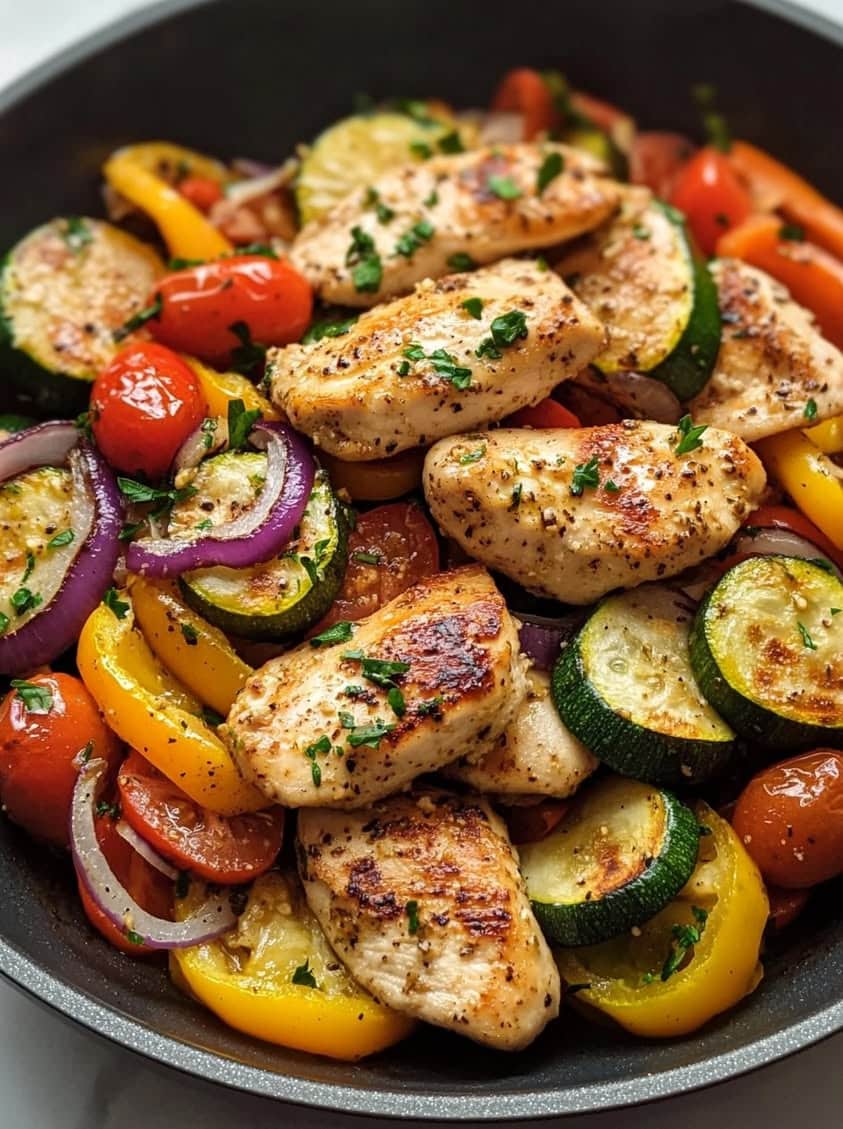
Sun-Kissed Mediterranean Chicken Skillet with Lemon Herb Drizzle: A Vibrant One-Pan Wonder
Imagine the flavors of a sun-drenched Mediterranean coastline, all captured in a single, sizzling skillet. This Sun-Kissed Mediterranean Chicken Skillet is not just a meal; it is a vibrant, aromatic journey to a simpler, healthier way of eating. Furthermore, it brings together juicy chicken, colorful vegetables, and a bright lemon herb drizzle in a symphony of taste that feels both indulgent and nourishing. Ultimately, this recipe is your ticket to a restaurant-quality dinner without the fuss or the pile of dishes.
The magic of this dish lies in its beautiful simplicity and its bold, layered flavors. As the chicken sears, it develops a gorgeous golden crust that locks in tenderness. Meanwhile, the bell peppers, zucchini, and cherry tomatoes roast in the same pan, soaking up the savory juices and becoming wonderfully caramelized. Consequently, every bite is a perfect harmony of savory, sweet, and tangy notes. This Sun-Kissed Mediterranean Chicken Skillet is designed to be a reliable weeknight hero that also impresses guests with its stunning presentation and incredible depth of flavor.
Finally, the crowning glory is the vibrant lemon herb drizzle. This zesty sauce, bursting with fresh parsley, oregano, and garlic, is poured over the finished dish, adding a final punch of freshness that ties everything together. It is a celebration of the Mediterranean diet’s core principles: fresh ingredients, healthy fats, and food that brings joy to the table. Without a doubt, this one-pan wonder will become a staple in your culinary rotation.
Quick Recipe Highlights
- Flavor Profile: This dish delivers a masterful balance of savory, tangy, and herbal notes. The chicken is seasoned with classic Mediterranean spices, while the lemon herb drizzle adds a bright, acidic finish that cuts through the richness. Additionally, the natural sweetness of the roasted vegetables provides a delightful counterpoint.
- Texture: You will experience a wonderful contrast of textures in every forkful. Expect tender, juicy chicken alongside vegetables that are soft yet retain a slight bite. The drizzle adds a light, emulsified texture that coats everything beautifully without being heavy.
- Aroma: As this cooks, your kitchen will fill with an irresistible fragrance. The initial scent of garlic and herbs hitting the warm oil is followed by the savory aroma of searing chicken and finally, the bright, citrusy notes of fresh lemon and parsley.
- Visual Appeal: This skillet is a feast for the eyes with its vibrant color palette. The golden-brown chicken rests against a backdrop of red bell peppers, green zucchini, and bursts of red cherry tomatoes, all finished with a vibrant green drizzle.
- Skill Level Needed: This is a beginner-friendly recipe that teaches foundational skills. You will practice seasoning, pan-searing, and simple vegetable roasting. The drizzle is a basic emulsion that requires only whisking. Overall, it is an excellent recipe for building kitchen confidence.
- Special Equipment: You need only a reliable 12-inch oven-safe skillet or cast-iron pan. A sharp knife and cutting board for prep, along with a small bowl for whisking the drizzle, are the only other essentials. No fancy gadgets are required.
Recipe Overview
- Difficulty Level: We rate this recipe as “Easy” because it uses straightforward techniques accessible to cooks of all levels. The steps are sequential and logical, involving basic chopping, searing, and roasting. Moreover, the one-pan method minimizes complexity and cleanup, making the process feel manageable and rewarding even for a novice.
- Category: This dish perfectly fits into multiple categories: a healthy main course, a quick weeknight dinner, and a fantastic meal prep option. It is substantial enough to stand alone but also pairs wonderfully with simple sides like couscous, quinoa, or crusty bread to soak up the delicious pan juices.
- Cuisine: This recipe is firmly rooted in the broad, sun-soaked traditions of Mediterranean cuisine. It draws inspiration from the coastal cooking of Greece and Southern Italy, emphasizing olive oil, fresh herbs, lemon, and simply prepared vegetables and proteins. It is a modern homage to timeless, health-forward culinary traditions.
- Cost: This is a very cost-effective meal, especially when you consider its restaurant-quality results. Chicken thighs are typically an affordable protein, and the vegetables are common, seasonal produce. The fresh herbs and lemon are the only “splurge” items, but they provide immense flavor value for a small investment.
- Season: While delicious year-round, this recipe truly shines in late spring and summer. This is when zucchini and bell peppers are at their peak sweetness and affordability, and fresh herbs are abundant. The bright, light qualities of the dish also make it ideal for warm-weather dining.
- Occasion: It is incredibly versatile for any occasion. Serve it for a casual family dinner on a busy Tuesday, or plate it elegantly for a weekend gathering with friends. It is also an excellent option for a healthy lunch prep, as the flavors meld and improve overnight.
Why You’ll Love This Recipe
First and foremost, the taste and texture of this Sun-Kissed Mediterranean Chicken Skillet are utterly irresistible. Each component brings something special to the table: the chicken is deeply savory and juicy, the vegetables are sweet and tender, and the lemon herb drizzle is like a burst of sunshine. Together, they create a complex flavor profile that is far greater than the sum of its parts. Furthermore, the contrast between the seared protein and the soft, roasted veggies makes every bite interesting and satisfying. You will find yourself savoring each forkful, appreciating how the bright acidity of the lemon perfectly balances the dish’s richness.
From a practical standpoint, the convenience of this recipe is a major win. As a true one-pan meal, it dramatically reduces cleanup time, which is a gift on any weeknight. The preparation is straightforward, with most of the active time spent on simple chopping. Once everything is in the skillet, the oven does the majority of the work, freeing you up to set the table or simply relax. This efficient cooking method delivers a complete, balanced meal from a single vessel, proving that impressive dinners do not require a mountain of pots and pans.
Nutritionally, this dish is a powerhouse aligned with the celebrated Mediterranean diet. It is packed with lean protein from the chicken, a rainbow of vitamins and antioxidants from the vegetables, and healthy fats from the olive oil. The cooking method requires minimal added fat, as the vegetables roast in their own natural juices and the chicken’s rendered fat. Consequently, you get a meal that is deeply satisfying yet light and health-conscious. It is the perfect answer for anyone seeking delicious food that also fuels the body well.
For entertaining, this Sun-Kissed Mediterranean Chicken Skillet offers tremendous social value. It is visually stunning when brought directly to the table in the skillet, creating a rustic, communal dining experience. Guests will be impressed by the vibrant colors and professional presentation, yet you can prepare it with minimal last-minute fuss. The recipe scales easily to feed a crowd, and its universally appealing flavors cater to diverse palates. It is a dish that encourages sharing and conversation, turning a simple meal into a memorable event.
Finally, its cost-effectiveness and accessibility make it a true kitchen staple. The ingredients are common, affordable, and readily available at any standard grocery store. You likely have many of the dried spices in your pantry already. This recipe demonstrates how a handful of simple, inexpensive ingredients can be transformed into something extraordinary with just a little technique and care. It is an economical way to eat well and break the cycle of expensive takeout, all while enjoying a meal that tastes like a vacation.
Historical Background and Cultural Significance
The origins of this style of cooking are deeply woven into the fabric of Mediterranean life. For centuries, home cooks along the coasts of Greece, Italy, Spain, and the Levant have utilized the “one-pan” method out of both necessity and wisdom. Historically, resources like fuel and cooking vessels were often limited, making efficient, single-pot cooking essential. Furthermore, the diet naturally evolved around what was locally abundant: olives, lemons, wild herbs, summer vegetables, and readily available poultry or fish. This Sun-Kissed Mediterranean Chicken Skillet is a direct descendant of that pragmatic, flavor-focused culinary tradition.
Culturally, this dish represents more than just sustenance; it embodies a philosophy of eating. The Mediterranean diet, recognized by UNESCO as an Intangible Cultural Heritage of Humanity, emphasizes freshness, seasonality, and communal meals. A skillet meal like this one is central to that ethos. It is typically prepared with care but without pretension, designed to be shared from the center of the table. The act of cooking everything together allows the flavors to intermingle, symbolizing the interconnectedness of the ingredients and the people gathered to enjoy them.
The recipe has evolved significantly with global trade and modern kitchen technology. While ancient versions might have used a clay pot over an open fire, today’s adaptation uses a durable oven-safe skillet for consistent, accessible cooking. The specific combination of zucchini, bell pepper, and tomato reflects the New World’s influence on Mediterranean cuisine post-Columbian Exchange. However, the core technique—searing protein and finishing it with aromatics and vegetables in a single vessel—remains timeless. This evolution shows how traditional cooking adapts while preserving its soul.
Regional variations of this concept are endless. In Provence, you might find a similar dish with Herbes de Provence and a splash of pastis. In Greece, it would likely include more oregano and maybe a handful of Kalamata olives. An Italian version might feature capers and a finish of balsamic glaze. Our Sun-Kissed Mediterranean Chicken Skillet draws from these broader traditions, creating a fusion that is accessible and familiar yet deeply rooted in a rich culinary history. It is a celebration of shared culinary heritage across the Mediterranean basin.
Ingredient Deep Dive
Chicken Thighs: We choose bone-in, skin-on chicken thighs for their superior flavor and juiciness. The bone acts as a heat conductor, cooking the meat evenly from the inside, while the skin renders fat to cook the vegetables and becomes irresistibly crispy. Culturally, using the whole bird and appreciating different cuts is a hallmark of resourceful Mediterranean cooking. Nutritionally, thighs contain more iron and zinc than breast meat. For best results, pat the skin very dry before seasoning to ensure a perfect sear. You can substitute boneless thighs or breasts, but adjust cooking time accordingly.
Bell Peppers & Zucchini: These summer vegetables are pillars of Mediterranean cuisine, prized for their versatility and vibrant colors. Peppers, originally from the Americas, were adopted wholeheartedly into the region’s cooking. They provide sweetness, vitamin C, and a satisfying crunch. Zucchini, a type of summer squash, adds a mild, slightly sweet flavor and a tender texture when roasted. Select firm, glossy vegetables without soft spots. Their high water content means they roast beautifully, concentrating in flavor. You can easily swap in eggplant, yellow squash, or asparagus based on the season.
Cherry Tomatoes: These little bursts of sunshine are essential for their intense, sweet-tart flavor and brilliant color. When roasted, their skins blister and their juices release, creating a natural, light sauce in the bottom of the pan. Historically, tomatoes were also a New World introduction that revolutionized Mediterranean cooking. They are rich in lycopene, an antioxidant. Choose tomatoes that are plump and deeply colored. If out of season, use sun-dried tomatoes (rehydrated and chopped) for a more concentrated flavor punch.
Fresh Herbs (Parsley & Oregano): Fresh herbs are the non-negotiable soul of Mediterranean cooking. Flat-leaf parsley offers a clean, grassy brightness, while fresh oregano delivers a pungent, slightly bitter complexity that is unmistakably Greek. Dried oregano can work in the chicken rub, but for the drizzle, fresh is mandatory for that vibrant, living flavor. Historically, these herbs grew wild in the hillsides. They are packed with antioxidants and phytonutrients. Store them stem-down in a glass of water in the fridge, covered with a bag, to maximize freshness.
Extra Virgin Olive Oil: This is the liquid gold of the Mediterranean. It is used both as a cooking medium and a finishing ingredient, showcasing its dual role. A good, fruity EVOO in the drizzle will be perceptible, adding depth and a peppery finish. Its monounsaturated fats are heart-healthy. Always choose a cold-pressed oil for finishing. For cooking, you can use a lighter olive oil or even avocado oil for its higher smoke point during the initial sear. The quality of your oil directly influences the final taste of the dish.
Common Mistakes to Avoid
- Crowding the Pan: Adding all the chicken thighs at once will cause them to steam instead of sear. You must work in batches if your skillet is not large enough. This ensures each piece develops that crucial golden-brown, crispy skin that adds immense flavor and texture.
- Using Cold Chicken: Placing ice-cold chicken directly into the hot pan will shock the meat and cause it to seize up. Additionally, it will lower the pan temperature, preventing a good sear. Always let the seasoned chicken sit at room temperature for about 15-20 minutes before cooking.
- Neglecting to Pat the Chicken Dry: Moisture is the enemy of crispy skin. Any surface water will create steam, hindering the browning process. Thoroughly pat the chicken skin dry with paper towels before applying oil and seasoning. This simple step is the secret to perfect texture.
- Overcooking the Vegetables: Adding the vegetables at the wrong time can turn them to mush. They go in after the chicken has been seared and removed, allowing them to start cooking in the flavorful fat. Since they roast in the oven, they should retain a slight bite for the best texture.
- Skimping on Seasoning: Chicken thighs and vegetables need ample seasoning to shine. Do not be shy with salt and pepper at every stage: on the chicken, on the veggies, and even a pinch in the lemon herb drizzle. Layering seasoning builds a complete flavor profile.
- Using Bottled Lemon Juice: The drizzle depends on the bright, complex flavor of fresh lemon juice. Bottled juice often has a flat, metallic taste that will dull the entire dish. Always use freshly squeezed lemon juice for the best aromatic and flavorful results.
- Adding the Drizzle Too Early: The fresh herb drizzle is a finishing element. If you add it before or during baking, the herbs will wilt and brown, losing their vibrant color and fresh flavor. Always wait to drizzle it over the plated dish or the entire skillet just before serving.
- Not Letting the Chicken Rest: Slicing into the chicken immediately after it comes out of the oven will cause all the precious juices to run out onto the cutting board. Let it rest for 5-10 minutes tented with foil. This allows the juices to redistribute, guaranteeing moist meat.
Essential Techniques
Pan Searing: This high-heat technique is crucial for developing flavor through the Maillard reaction, which creates hundreds of new flavor compounds. To master it, ensure your pan is properly preheated before adding the oil, then the chicken. Listen for a steady sizzle. Do not move the chicken for several minutes to allow a crust to form. A common pitfall is flipping too early; the chicken should release easily from the pan when properly seared. Visual cues for success are a deep golden-brown color and crispy, rendered skin.
Building Fond: Fond is the layer of browned bits stuck to the bottom of the pan after searing. It is pure, concentrated flavor. After removing the chicken, you will deglaze the pan by adding the vegetables and stirring them in the residual fat, scraping up these bits. This technique incorporates those deep, savory flavors into the vegetables. The key is to use the moisture from the veggies and a bit of stirring to lift the fond. If the bits are burning, lower the heat slightly. A successful fond is dark brown, not black.
Oven Roasting in a Skillet: This method combines stovetop searing with even, hands-off oven cooking. It ensures the chicken cooks through gently while the vegetables roast and caramelize. The technique’s importance is twofold: it prevents overcooking the chicken on the stovetop, and it allows all ingredients to finish together. To master it, use an oven-safe skillet (no plastic handles) and preheat your oven fully. The common pitfall is using a pan that is not oven-safe. A visual cue for doneness is juicy chicken (165°F internal temp) and tender, slightly blistered vegetables.
Emulsifying a Drizzle: The lemon herb drizzle is a simple emulsion, where oil and lemon juice are forced to combine into a cohesive sauce. Whisking vigorously while slowly streaming in the oil is the key. The acid and mustard (if using) act as emulsifiers. This technique is important for creating a smooth, luxurious texture that clings to the food. A common pitfall is adding the oil too quickly, causing the sauce to “break” or separate. A successful emulsion will be slightly thickened and uniform in color.
Pro Tips for Perfect Sun-Kissed Mediterranean Chicken Skillet
First, for the crispiest skin, season the chicken under the skin as well as on top. Gently loosen the skin with your fingers and rub a little of the spice mixture directly onto the meat. This infuses flavor deep into the chicken and helps render the fat from the skin more effectively.
Second, preheat your skillet thoroughly before adding the oil. A properly hot pan is non-negotiable for a good sear. You can test it by sprinkling a few drops of water in the pan; if they dance and evaporate immediately, the pan is ready. Then add the oil and immediately add the chicken.
Third, use a mix of colorful bell peppers for maximum visual impact and a subtle variety of flavors. Red, yellow, and orange peppers are sweeter than green ones, which adds a wonderful depth to the vegetable medley. This simple choice makes the dish look professionally prepared.
Fourth, reserve a few fresh herb leaves for garnish. After you make the drizzle, set aside a tablespoon of the chopped parsley or a few small oregano sprigs. Sprinkling these fresh herbs on top of the finished dish just before serving adds a final layer of fragrance and a restaurant-quality finish.
Fifth, let the skillet rest for a minute after removing it from the oven before adding the drizzle. This allows the frantic bubbling to settle and ensures the vibrant green drizzle does not immediately wilt from the intense residual heat. The warm dish will still absorb the flavors perfectly.
Sixth, if your cherry tomatoes are very large, consider halving them. This allows their juices to mingle more readily with the other vegetables in the pan, creating a saucier base. If you prefer them to burst in your mouth whole, keep them intact; both methods work beautifully.
Variations and Adaptations
Regional Variations: To travel through the Mediterranean with your skillet, try these twists. For a Greek vibe, add a handful of pitted Kalamata olives and crumbled feta cheese in the last five minutes of baking. For an Italian version, stir in a tablespoon of capers with the vegetables and finish with torn fresh basil instead of oregano. A Spanish influence could include a pinch of smoked paprika (pimentón) on the chicken and some sliced chorizo added with the veggies.
Seasonal Adaptations: This recipe is wonderfully adaptable. In fall, swap zucchini and peppers for cubed butternut squash, Brussels sprouts halves, and red onion. In winter, use hearty root vegetables like parsnips and carrots, extending the roast time by 10 minutes. For spring, asparagus spears and artichoke hearts are lovely additions. The cooking method remains the same; just adjust vegetable roasting times based on their density.
Dietary Modifications: For a pescatarian option, use firm white fish fillets like cod or halibut. Sear them quickly on one side only, then remove and add back to the top of the veggies for the last 10 minutes of roasting. For a vegetarian main, use large cubes of halloumi or extra-firm tofu, pressing and drying the tofu well first. The cooking process remains largely unchanged.
Flavor Variations: Experiment with the herb profile. Try a drizzle with mint and dill for a more Levantine flavor. Add a teaspoon of harissa paste to the chicken rub for a North African kick. A tablespoon of sun-dried tomato pesto mixed into the vegetable step adds a rich, umami depth. A splash of white wine for deglazing after searing the chicken adds another layer of acidity.
Texture Modifications: If you prefer a thicker, saucier result, after removing the cooked chicken and veggies, place the skillet back on the stove. Add a half cup of chicken broth and a tablespoon of tomato paste, simmer for 5 minutes until slightly reduced, then pour this sauce over the plated dish. For extra crispness, broil the assembled skillet for the final 2-3 minutes of cooking.
Presentation Alternatives: Instead of serving family-style from the skillet, plate individually for a more refined look. Slice the chicken off the bone, fan it over a bed of the roasted vegetables, and artfully drizzle the sauce around the plate. Garnish with microgreens or edible flowers for a special occasion presentation.
Serving and Presentation Guide
Plating Techniques: For the most dramatic effect, bring the entire sizzling skillet directly to the table. Place it on a trivet or heat-resistant pad. This rustic presentation invites sharing and conversation. Arrange the chicken pieces skin-side up and nestled among the vegetables for a bountiful, inviting look. Alternatively, for individual plates, use a slotted spoon to create a bed of vegetables, top with a piece of chicken, and spoon a little of the pan juices over everything.
Garnishing Ideas: The final garnish elevates the dish visually and aromatically. Beyond the reserved fresh herbs, consider a light sprinkle of flaky sea salt (like Maldon) for texture. A few thin slices of fresh lemon on the side of the plate or skillet are both decorative and functional. For a touch of richness, a crumble of creamy goat cheese or feta over the top just before serving adds a beautiful color contrast and tangy flavor.
Traditional Accompaniments: In the Mediterranean, this skillet would often be served with a simple starch to soak up the delicious juices. Warm, crusty bread is a classic and perfect choice. Alternatively, a side of fluffy couscous, lemon-infused orzo, or creamy polenta makes the meal more substantial. A simple arugula salad dressed with lemon and olive oil provides a fresh, peppery contrast to the warm, savory skillet.
Modern Serving Suggestions: For a low-carb or grain-free meal, this dish is complete on its own. To turn it into a hearty bowl, serve it over a base of cauliflower rice or quinoa. For a next-day lunch, chop the leftover chicken and mix it with the vegetables and a scoop of Greek yogurt or hummus for a fantastic salad or wrap filling.
Temperature Considerations: This dish is best served hot or very warm. The flavors and textures are most pronounced when fresh from the oven. If you need to hold it, tent the entire skillet loosely with foil and keep it in a warm oven (around 200°F) for up to 20 minutes. Add the fresh drizzle just before serving to preserve its vibrancy.
Portion Control Tips: This recipe is designed to serve four with a generous piece of chicken and plenty of vegetables. For lighter appetites, one chicken thigh per person is sufficient, and you may have leftover veggies. For heartier appetites, serve with an additional side like bread or a grain. The vegetable portion is non-starchy and voluminous, making it easy to fill up on the healthy components of the meal.
Wine and Beverage Pairing
Wine Pairings: The bright acidity, herbal notes, and savory chicken in this dish call for wines with similar characteristics. A crisp, unoaked Greek Assyrtiko or a Sauvignon Blanc from New Zealand are fantastic choices, as their citrus and herbal notes will mirror the lemon and herbs in the drizzle. For red wine lovers, a light-bodied, low-tannin red like a Pinot Noir or a Grenache-based Côtes du Rhône will complement the dish without overpowering it. The key is to avoid heavily oaked or high-alcohol wines that would clash with the freshness.
Non-Alcoholic Alternatives: Sparkling water with a twist of lemon or a few muddled herbs (like rosemary or basil) makes a refreshing and thematic pairing. For something more substantial, a chilled, lightly sweetened mint iced tea balances the savory notes beautifully. A high-quality lemonade or a cucumber-lemon spa water also enhances the Mediterranean feel of the meal without adding alcohol.
Coffee/Tea Pairings: After the meal, a cup of strong Greek coffee or Turkish coffee would be a traditional and fitting end. The intense, slightly bitter coffee contrasts with the meal’s savory and bright flavors. For tea, an herbal infusion like mint tea or a lemon verbena tea would continue the citrus and herbal theme in a soothing, digestif manner.
Temperature Considerations: White and rosé wines should be served well-chilled, around 45-50°F, to maximize their refreshing quality against the warm, roasted food. Light reds like Pinot Noir are best served slightly cooler than room temperature, around 55°F. Non-alcoholic sparkling drinks should be very cold to provide a palate-cleansing effect.
Serving Suggestions: Pour wines into appropriate glassware to appreciate their aroma—a standard white wine glass for whites and a larger bowl for light reds. For non-alcoholic options, serve in tall glasses with plenty of ice and a garnish that echoes the dish’s ingredients, such as a lemon wheel or a sprig of fresh oregano. Presentation of the beverage adds to the overall sensory experience of the meal.
Storage and Shelf Life
Storage Methods: Allow the skillet contents to cool completely to room temperature before storing, but do not leave out for more than two hours. Separate the chicken from the vegetables if possible for best texture upon reheating. Store all components together in a single airtight container or divide into meal-prep containers for individual portions. Always store the lemon herb drizzle separately in its own small, sealed container to prevent the herbs from wilting and becoming bitter.
Temperature Requirements: This dish must be refrigerated promptly. Store it in the main body of your refrigerator, not in the door, where temperatures fluctuate more. The ideal refrigerator temperature is at or below 40°F. Properly stored, the cooked chicken and vegetables will keep for 3-4 days. The fresh drizzle is best used within 2 days.
Container Recommendations: Use glass containers with tight-fitting lids for optimal freshness and to prevent odor transfer. Glass is also microwave-safe for reheating. If using plastic, ensure it is BPA-free and designed for food storage. For the drizzle, a small glass jar or a container with a pour spout is ideal.
Signs of Spoilage: Discard the food if you notice any off odors, such as a sour or ammonia-like smell. Visible mold, significant sliminess on the chicken or vegetables, or an unnatural color change are clear indicators of spoilage. When in doubt, it is always safer to throw it out.
Reheating Instructions: For best results, reheat in the oven or on the stovetop. Preheat the oven to 350°F. Place the chicken and vegetables in an oven-safe dish, add a tablespoon of water or broth to prevent drying, cover with foil, and heat for 10-15 minutes until warmed through. Alternatively, reheat gently in a covered skillet over medium-low heat. Microwave reheating can make the chicken rubbery and the veggies soggy, but if you must, use a medium power setting and cover the dish.
Freezing Guidelines: This dish can be frozen, but with some texture compromise. The vegetables will become very soft upon thawing. Freeze the chicken and veggie mixture (without the drizzle) in an airtight container for up to 2 months. Thaw overnight in the refrigerator before reheating. Make a fresh lemon herb drizzle when you are ready to serve, as the fresh herbs and emulsion will not freeze well.
Make Ahead Strategies
Prep Timeline: You can significantly speed up dinner time by prepping components up to 24 hours in advance. The day before, chop all vegetables (bell peppers, zucchini) and store them in a sealed container or zip-top bag in the refrigerator. Mix the dry spice rub for the chicken. You can even season the chicken thighs and store them on a plate, covered, in the fridge. This allows the seasoning to penetrate the meat more deeply.
Storage Between Steps: Keep prepped vegetables chilled until ready to cook. The seasoned chicken should be kept on the bottom shelf of your fridge to prevent cross-contamination. Remove both from the refrigerator about 20 minutes before you start cooking to take the chill off. Prepare the lemon herb drizzle up to 2 hours ahead; store it covered at room temperature to let the flavors meld (refrigeration can dull the fresh herb flavors).
Quality Impact Assessment: Pre-chopping vegetables has minimal impact on quality, especially if stored properly. Pre-seasoning the chicken actually improves flavor. The only element that must be absolutely fresh is the final assembly of the drizzle and its application. Making the drizzle too far in advance can cause the herbs to oxidize and turn dark.
Assembly Tips: When ready to cook, follow the recipe as written. Your mise en place will already be done, making the process seamless and fast. Having everything measured and chopped turns the active cooking time into a relaxing, restaurant-style experience rather than a frantic rush.
Reheating Guidelines: This strategy is for pre-cooking, not reheating. However, if you fully cook the dish a day ahead, reheat it gently in a covered skillet in the oven at 325°F until warmed through. Add a splash of broth or water to keep it moist. The skin will lose its crispness, but the flavors will still be excellent.
Fresh Element Additions: No matter how much you prep ahead, always finish with the fresh lemon herb drizzle made that day. You can whisk it together while the skillet is in the oven. Also, any fresh garnishes like extra herbs or lemon wedges should be prepared just before serving to maintain their bright appearance and aroma.
Scaling Instructions
Halving the Recipe: To serve two, simply use two chicken thighs and halve all other ingredients. Use a 10-inch skillet instead of a 12-inch to ensure the vegetables still roast properly and don’t steam in too much empty space. Cooking times will remain very similar, though the vegetables may cook a minute or two faster due to the smaller volume. Keep a close eye on the internal temperature of the chicken, as the primary doneness indicator.
Doubling or Tripling: For a crowd, you can double or triple the ingredients. The key here is to not overcrowd. You must cook the chicken in multiple batches to get a proper sear; crowding will steam it. Use two large skillets or work in batches and then combine everything in a large roasting pan to finish in the oven. The oven time may need to be extended by 5-10 minutes for a much larger volume. Ensure your roasting pan is not piled too high.
Equipment Adjustments: Scaling up requires planning your equipment. For a double batch, two 12-inch skillets are ideal. For triple or more, a large, heavy-duty roasting pan or braiser is best. Ensure whatever vessel you use is oven-safe. You may also need a larger bowl for whisking a bigger batch of the lemon herb drizzle.
Timing Modifications: The searing time will increase linearly as you cook in batches. However, the oven roasting time does not double when you double the ingredients in a appropriately sized, single vessel. It typically only adds 5-10 minutes. Always rely on a meat thermometer to check the chicken (165°F in the thickest part) and the tenderness of the vegetables as your final guide, not just the clock.
Storage Considerations: When scaling up, remember that a large quantity of hot food will take much longer to cool to a safe storage temperature. To prevent bacterial growth, divide the leftovers into several shallow containers instead of one deep one. This allows the food to cool quickly and evenly in the refrigerator.
Nutritional Deep Dive
Macro Breakdown: This Sun-Kissed Mediterranean Chicken Skillet provides a balanced macronutrient profile. A typical serving offers high-quality protein from the chicken (approximately 25-30 grams), which supports muscle maintenance and satiety. The healthy fats come primarily from the olive oil and the chicken skin (if consumed), providing monounsaturated fats that are beneficial for heart health. Carbohydrates are present in a moderate amount, sourced entirely from the fibrous vegetables, making this a lower-carb meal option that is still energizing.
Micronutrient Analysis: This dish is a micronutrient powerhouse. The bell peppers are exceptionally high in Vitamin C and Vitamin A (as beta-carotene), supporting immune function and eye health. Zucchini provides potassium and manganese. Cherry tomatoes add lycopene, a potent antioxidant linked to reduced risk of certain cancers. The fresh herbs, though used in small amounts, contribute trace minerals and unique phytonutrients like apigenin in parsley.
Health Benefits: Following Mediterranean diet principles, this meal supports overall wellness. The combination of lean protein, healthy fats, and high-fiber vegetables promotes stable blood sugar levels and prolonged fullness. The antioxidants combat oxidative stress and
Print
Sun-Kissed Mediterranean Chicken Skillet with Lemon Herb Drizzle
Description
A vibrant one-pan dish featuring tender chicken thighs cooked with colorful vegetables and olives, finished with a zesty lemon-herb drizzle for a fresh Mediterranean flavor.
Ingredients
For the Crust:
- 4 boneless, skinless chicken thighs
- 2 tablespoons olive oil
- 1 red bell pepper, sliced
- 1 yellow bell pepper, sliced
- 1 small red onion, sliced
- 1 cup cherry tomatoes, halved
- 1/2 cup Kalamata olives, pitted
- 3 cloves garlic, minced
- 1 teaspoon dried oregano
- 1/2 teaspoon smoked paprika
- Salt and black pepper to taste
- 1/4 cup fresh parsley, chopped
- 1 lemon, juiced and zested
- 2 tablespoons fresh dill, chopped
Instructions
1. Prepare the Crust:
- Season chicken thighs with salt, pepper, oregano, and smoked paprika.
- Heat olive oil in a large skillet over medium-high heat. Add chicken and cook for 5-6 minutes per side until golden and cooked through. Remove and set aside.
- In the same skillet, add bell peppers, onion, and garlic. Sauté for 5-7 minutes until softened.
- Add cherry tomatoes and olives to the skillet. Cook for another 3-4 minutes until tomatoes start to soften.
- Return chicken to the skillet, nestling it among the vegetables. Reduce heat to low and simmer for 2-3 minutes to combine flavors.
- In a small bowl, mix lemon juice, lemon zest, parsley, and dill to create the drizzle. Pour over the skillet before serving.
Notes
You can customize the seasonings to taste.

I’m Shaykee—born in Morocco, seasoned across continents. From airplane galleys to home kitchens, I share the flavors and stories that shaped my journey.