
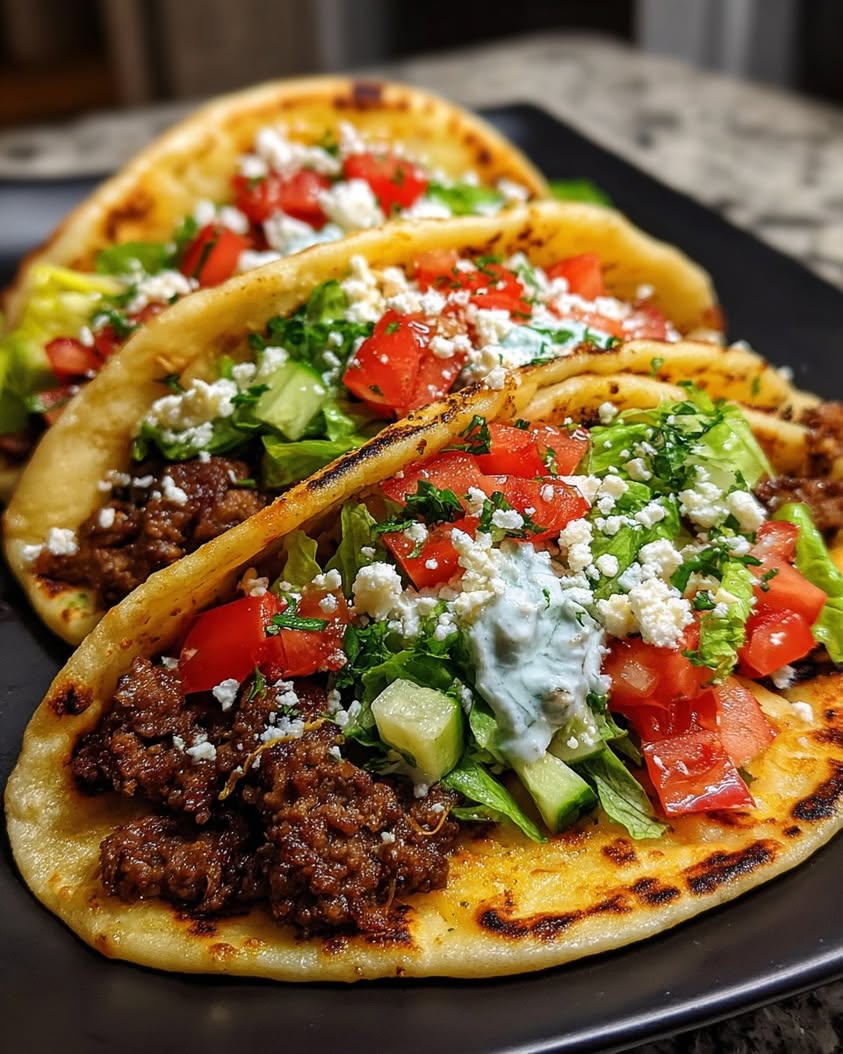
Mediterranean Ground Beef Pita Wraps: A Flavorful 30-Minute Feast
Imagine a meal that brings the vibrant, sun-drenched flavors of the Mediterranean coast directly to your weeknight dinner table. These Mediterranean Ground Beef Pita Wraps do exactly that, offering a perfect harmony of savory, spiced beef, crisp fresh vegetables, and cool, creamy tzatziki sauce, all bundled in a soft, warm pita pocket. This recipe is your ticket to a delicious and satisfying dinner that feels both exotic and comforting, all without requiring a passport or hours in the kitchen.
Furthermore, this dish masterfully balances heartiness with freshness. The rich, warmly spiced ground beef provides a satisfying protein base, while the quick-pickled onions and crunchy cucumbers add a necessary bright and acidic counterpoint. Ultimately, the star of the show is the homemade tzatziki, a garlicky yogurt sauce that ties every element together with its cool, tangy creaminess. Each bite delivers a textural and flavor journey, making these wraps far more exciting than your average ground beef dinner.
Consequently, this recipe has become a staple for busy households seeking a flavorful escape. It transforms simple, affordable ingredients into something truly special. Whether you are feeding a hungry family or looking for impressive yet easy entertaining options, these Mediterranean Ground Beef Pita Wraps deliver on every promise of taste, convenience, and visual appeal.
Quick Recipe Highlights
- Flavor Profile: These wraps deliver a complex and satisfying taste experience. You get the savory, warmly spiced notes from the cumin and oregano-infused beef, balanced by the bright acidity of quick-pickled red onions and the cool, garlicky tang of fresh tzatziki sauce. Every component works in harmony to create a truly Mediterranean flavor profile.
- Texture: The texture combination is a key part of the appeal. Expect tender, juicy ground beef contrasted with the satisfying crunch of fresh cucumber and lettuce. Meanwhile, the soft, slightly chewy pita bread provides the perfect vessel to hold everything together, creating a delightful mix in every single bite.
- Aroma: As the beef cooks with garlic, onion, and Mediterranean spices, your kitchen will fill with an incredibly inviting fragrance. The scent of toasting cumin and oregano is unmistakably warm and savory, perfectly complemented by the fresh, herbal notes of the tzatziki sauce once the wraps are assembled.
- Visual Appeal: These wraps are a feast for the eyes with their vibrant color palette. The deep brown of the spiced beef pops against the white of the tzatziki, the green of lettuce, the red of onions, and the pale green of cucumber. Served open or wrapped, they look fresh, abundant, and incredibly appetizing.
- Skill Level Needed: This is a beginner-friendly recipe designed for success. The techniques involve basic sautéing, simple vegetable chopping, and stirring together a no-cook sauce. If you can brown ground meat and use a knife, you can absolutely master these delicious Mediterranean Ground Beef Pita Wraps.
- Special Equipment: You need only standard kitchen tools. A large skillet for the beef, a mixing bowl for the tzatziki, a sharp knife, and a cutting board are perfectly sufficient. No special gadgets or appliances are required, making this recipe accessible to every home cook.
Recipe Overview
- Difficulty Level: We classify this recipe as “Easy” for several compelling reasons. The steps are sequential and simple, involving fundamental cooking skills like browning meat and chopping vegetables. Additionally, there is no precise baking or finicky techniques required. The margin for error is wide, and the recipe is very forgiving, ensuring a delicious outcome even for novice cooks.
- Category: This dish perfectly fits into multiple meal categories. Primarily, it is a fantastic main course for a quick and easy dinner. Alternatively, the filling can be served as a hearty lunch option. It also works wonderfully as a handheld food for parties or picnics, demonstrating its impressive versatility for different dining occasions.
- Cuisine: The cuisine is firmly rooted in the broader Mediterranean tradition, drawing inspiration from Greek and Levantine flavors. Key indicators are the use of warm spices like cumin and oregano, the inclusion of cucumber and yogurt in the tzatziki, and the pita bread itself. This recipe offers an accessible and delicious interpretation of those classic culinary themes.
- Cost: This is a remarkably cost-effective meal. Ground beef is typically an affordable protein, and the vegetable components like onion, cucumber, and lettuce are inexpensive staples. The spices and yogurt represent a small initial investment that pays off across many meals. Overall, you can create a restaurant-quality feast for a fraction of the price of eating out.
- Season: These wraps are truly a year-round recipe. They feel light and fresh enough for spring and summer meals, especially with the cool tzatziki and crisp veggies. Conversely, the warm, spiced beef filling provides comforting warmth during fall and winter. Their adaptability makes them a perfect seasonal chameleon for your meal planning.
- Occasion: This recipe suits a wide array of occasions. It is ideal for busy weeknights when time is short but taste is paramount. Simultaneously, it is impressive enough for casual weekend gatherings with friends. You can even set up a “wrap bar” with all the components for a fun, interactive dinner party that guests will love.
Why You’ll Love This Recipe
First and foremost, the taste and texture appeal is immediate and undeniable. Each bite of these Mediterranean Ground Beef Pita Wraps delivers a symphony of sensations. You experience the savory, umami-rich beef seasoned with earthy cumin and oregano. Then comes the crisp, cooling contrast of lettuce and cucumber, followed by the sharp, quick-pickled tang of red onion. Finally, everything is brought together by the creamy, garlicky embrace of the tzatziki sauce. This combination is incredibly satisfying and far more exciting than a typical taco or burger, offering a genuine flavor adventure that will have everyone asking for seconds.
Moreover, the convenience and preparation benefits are a major win for any cook. From start to finish, you can have this meal on the table in about thirty minutes. The process is straightforward: cook the beef, chop the veggies, mix the sauce, and assemble. There is no need for marinating or slow cooking. Additionally, many components can be prepared ahead of time. You can make the tzatziki and pickle the onions hours in advance, making the final assembly lightning-fast. This efficiency makes it a perfect solution for those evenings when you want a delicious, homemade meal without a lengthy time commitment.
From a nutritional standpoint, these wraps offer several advantages when compared to other fast meal options. You are incorporating lean protein from the ground beef, a variety of fresh vegetables providing fiber and vitamins, and healthy fats from the olive oil and yogurt. By controlling the ingredients, you can manage sodium levels and avoid the preservatives often found in pre-made sauces or frozen meals. Choosing whole wheat pita adds another layer of nutritional benefit with extra fiber. It is a balanced meal that fuels your body well without sacrificing an ounce of flavor.
Furthermore, the social and entertaining value of this dish is exceptionally high. These wraps are inherently shareable and interactive. You can lay out all the components—the warm beef, the cool tzatziki, the crisp veggies, and the soft pitas—and let everyone build their own perfect creation. This makes dinner fun and engaging, especially for families with kids or when hosting casual guests. It encourages conversation and customization, turning a simple meal into a memorable dining experience. The bright, colorful presentation also looks fantastic on a table, giving the impression of a much more elaborate feast.
Finally, the cost-effectiveness and accessibility of the ingredients cannot be overstated. This recipe utilizes pantry staples and affordable produce to create a meal that feels luxurious. Ground beef is a budget-friendly protein, and spices like cumin and oregano are inexpensive flavor powerhouses that last for many recipes. You likely have many of the ingredients, such as garlic, onion, and lemon, already in your kitchen. This accessibility means you can whip up these delicious Mediterranean Ground Beef Pita Wraps without a special trip to the store or breaking your grocery budget, making it a practical and repeatable favorite.
Historical Background and Cultural Significance
The concept of wrapping spiced meats and fresh ingredients in flatbread is ancient and spans countless cultures around the Mediterranean and Middle East. While this specific recipe for Mediterranean Ground Beef Pita Wraps is a modern, week-friendly interpretation, its soul is deeply connected to traditions like the Greek gyro and the Arab shawarma. Historically, these dishes often featured meat—lamb, beef, or chicken—cooked on a vertical rotisserie, thinly sliced, and served in pita with vegetables and sauce. The use of ground meat is a practical and accessible variation that brings the essence of these street food classics into the home kitchen, preserving the core flavor philosophy of combining savory, spiced protein with cool, crisp accompaniments.
Culturally, food served in bread or wrapped for handheld eating holds significant importance across the Mediterranean region. It represents a style of eating that is communal, practical, and deeply flavorful. Meals like these were often the food of workers, travelers, and busy families—nutritious, portable, and satisfying. The pita bread itself, with its convenient pocket, is a culinary innovation perfect for holding messy, juicy fillings without spillage. This style of eating emphasizes freshness, balance, and the joy of combining multiple textures and tastes in one convenient package, a principle that is central to the culinary identity of the region.
The evolution of this recipe mirrors the global journey of Mediterranean cuisine. As ingredients like cumin, yogurt, and flatbreads became widely available in Western supermarkets, home cooks began adapting traditional formulas to suit local tastes and ingredients. Using readily available ground beef instead of rotisserie meat is a prime example of this adaptation. The tzatziki sauce, with its roots in Greek and Turkish cuisine (where it is known as cacık), has become a globally beloved condiment. This recipe represents a beautiful fusion—it respects the traditional flavor palette while embracing the practicalities of modern, fast-paced home cooking, making an ancient style of eating relevant and delicious for today’s families.
Regional variations of this concept are wonderfully diverse, which speaks to its foundational appeal. In Greece, you would typically find gyros with tzatziki. In Turkey, doner kebabs might be served with a similar yogurt sauce and often sumac onions. Throughout the Levant, shawarma is accompanied by garlic toum and pickled turnips. Our version borrows elements from these traditions, using a spice blend common to the area, the classic cucumber-yogurt sauce, and the quick-pickling technique for onions. This recipe is a celebration of that shared culinary heritage, offering a delicious and accessible point of entry into understanding how different cultures approach the beautiful idea of wrapped, spiced meat and fresh veggies.
Ingredient Deep Dive
Let us begin with the foundation: ground beef. Preferably, choose a 85/15 or 90/10 lean-to-fat ratio for the best balance of flavor and minimal greasiness. Historically, beef is less traditional in the Eastern Mediterranean than lamb, but its widespread availability and mild flavor have made it a popular modern substitute. Nutritionally, it is an excellent source of high-quality protein, iron, and B vitamins. For the best results, do not overcrowd your pan when browning, and allow the beef to develop a nice sear before breaking it up. If you need a substitution, ground lamb is the most authentic alternative, while ground turkey or chicken will offer a lighter, though less rich, result.
Next, consider the pita bread. This leavened flatbread, with its signature pocket, originated in the Middle East thousands of years ago. The pocket forms from steam during high-heat cooking, creating the perfect vessel for fillings. For these wraps, seek out soft, fresh pita bread from the bakery section, not the cracker-like pocketless variety often found in bags. You can warm them briefly in a dry skillet, oven, or microwave to make them pliable and enhance their flavor. As a gluten-free adaptation, you can use large gluten-free wraps or lettuce leaves like romaine hearts to create a low-carb, fresh “wrap.”
The tzatziki sauce is the creamy soul of the dish. Its base is plain Greek yogurt, which is strained to remove whey, resulting in a thick, protein-rich product with a tangy flavor. Historically, yogurt preservation and consumption are central to many Mediterranean and Middle Eastern diets. Combined with grated cucumber (squeezed dry to prevent a watery sauce), fresh garlic, lemon juice, and dill or mint, it creates a cooling condiment that cuts through the richness of the meat. For optimal flavor, make the tzatziki at least 30 minutes before serving to allow the garlic to mellow and the flavors to marry. A dairy-free version can be made with thick, unsweetened coconut or almond-based yogurt.
Finally, the vegetable components provide crucial freshness and crunch. The quick-pickled red onions are a simple game-changer. The brief soak in vinegar and sugar (or honey) softens their sharp bite and gives them a vibrant pink hue and a sweet-tangy flavor that complements the beef perfectly. English or Persian cucumbers are ideal for their thin skin and minimal seeds. Crisp romaine lettuce adds texture and a neutral base. Together, these elements are non-negotiable for achieving the authentic, balanced profile of Mediterranean Ground Beef Pita Wraps. They introduce brightness, acidity, and a variety of vitamins, transforming the dish from a simple meat wrap into a complete, refreshing meal.
Common Mistakes to Avoid
- Using overly fatty ground beef can result in a greasy filling that soaks through the pita and makes the wrap soggy. Instead, opt for a leaner blend and drain any excess fat after cooking to keep the texture perfect.
- Neglecting to properly brown the beef is a missed opportunity for flavor. Avoid steaming the meat by crowding the pan; cook it in batches if necessary to get those delicious caramelized bits that add depth to the entire dish.
- Forgetting to squeeze the grated cucumber for the tzatziki will lead to a watery, diluted sauce that can make your pita bread soggy. Take the extra minute to wring it out in a clean kitchen towel for a thick, creamy consistency.
- Serving cold pita bread straight from the package creates a tough, chewy experience. Always warm your pitas briefly to make them soft and pliable, which prevents tearing and enhances their flavor and texture.
- Overloading the pita pocket is a structural hazard. While it is tempting to pack in as much filling as possible, a moderate amount ensures you can actually hold and eat the wrap without everything falling out the bottom.
- Using stale or weak spices like cumin and oregano will leave your beef tasting bland. Spices lose potency over time, so make sure yours are fresh and fragrant for the most impactful Mediterranean flavor.
- Skipping the quick-pickle step for the red onions means missing out on a key flavor dimension. The raw onion can be too harsh, while pickling mellows it and adds a necessary sweet-and-sour note that balances the dish.
- Adding salt to the beef mixture too early can draw out moisture and prevent proper browning. Season the beef well, but do so after it has started to brown and develop some color for the best texture.
Essential Techniques
Properly browning ground beef is the first essential technique. This is not just cooking until it is no longer pink; it is about developing flavor through the Maillard reaction. To achieve this, start with a hot pan and do not overcrowd it. Let the beef sit undisturbed for a minute to develop a sear before breaking it up. This creates fond—those tasty browned bits on the bottom of the pan—which will then deglaze with the onions and garlic, infusing the entire mixture with a deep, savory taste. The visual cue for success is beef with small areas of deep brown caramelization mixed throughout, not a uniform, gray color.
Mastering the quick-pickle is another simple but transformative skill. The goal is to soften the harsh bite of the raw onion and impart a sweet-sour flavor. The technique involves simply submerging thinly sliced red onions in a hot mixture of vinegar, water, sugar, and salt. The heat helps the liquid penetrate the onion cells quickly. Within 15-30 minutes, the onions will turn a vibrant pink, become pleasantly pliable, and lose their aggressive raw flavor. The key is ensuring the slices are uniform so they pickle evenly. This method can be used for many vegetables and is a fantastic way to add a bright, professional touch to salads, tacos, and sandwiches.
Creating a thick, non-watery tzatziki is crucial for the structural integrity of your wrap. The technique centers on moisture removal. After grating the cucumber, you must aggressively squeeze out the excess water using your hands over a sieve or, even better, wring it in a clean kitchen towel. This step cannot be rushed or skipped. Combining the dry cucumber with thick Greek yogurt, garlic, lemon, and herbs then yields a luxuriously creamy sauce that will coat the ingredients without making the pita soggy. For the best flavor, allow the finished sauce to rest in the refrigerator for at least 30 minutes before serving, letting the garlic mellow and the flavors fully integrate.
Pro Tips for Perfect Mediterranean Ground Beef Pita Wraps
For an extra flavor boost, toast your whole cumin seeds and dried oregano in the dry skillet for about 30 seconds before adding the oil and beef. This quick step wakes up the essential oils in the spices, releasing an incredible aroma and creating a more complex, authentic base flavor for your meat.
Consider adding a tablespoon of tomato paste to the beef after it is browned. Let it cook for a minute until it darkens slightly; this adds a layer of savory sweetness and umami that beautifully complements the Mediterranean spices and makes the filling even more robust.
If you have time, make the tzatziki sauce a few hours ahead or even the night before. The resting time allows the garlic flavor to permeate the yogurt more evenly and mellow out, resulting in a smoother, more harmonious sauce that is far superior to one made just before serving.
Do not just warm your pitas; char them slightly. Hold them with tongs over an open gas flame for a few seconds per side, or place them directly on a hot electric coil. This adds a subtle smokiness and lovely grill marks, elevating the texture and flavor of the bread dramatically.
Layer your wrap strategically for the best eating experience. Start with a smear of tzatziki on the inside of the pita. Then add lettuce, which acts as a moisture barrier. Next, add the warm beef, followed by the cucumbers and pickled onions. This order helps prevent the bottom of the pita from getting soggy from the hot filling.
For a fresher, herbaceous note, mix a handful of chopped fresh parsley or mint directly into the cooked and slightly cooled beef mixture. This adds a burst of color and freshness that cuts through the richness and makes the flavor profile even more vibrant and authentic.
If serving a crowd, set up a “build-your-own-wrap” bar. Keep the beef warm in a slow cooker, the tzatziki chilled in a bowl, and all veggies in separate containers. This not only makes serving easy but also allows guests to customize their wraps to their exact preferences, which is always a hit.
Variations and Adaptations
For regional variations, explore different cultural twists on the core concept. A Greek variation would use ground lamb, add a pinch of cinnamon to the spice mix, and include chopped tomatoes and kalamata olives. A Turkish-inspired version might incorporate a pinch of sumac on the onions and use a mint-heavy tzatziki. A Lebanese-style adaptation could include a spoonful of pomegranate molasses in the beef for sweet-tart depth and serve with a drizzle of tahini sauce alongside the tzatziki. Each variation honors a different corner of the Mediterranean while utilizing the same convenient format.
Seasonal adaptations are simple and effective. In summer, add fresh, diced tomatoes or roasted corn to the vegetable mix. For fall, incorporate roasted eggplant or zucchini into the beef mixture. In winter, a spoonful of harissa paste mixed into the tzatziki adds warming heat. Spring might invite the addition of fresh peas or asparagus tips. The basic recipe is a fantastic canvas for incorporating whatever produce is at its peak, keeping the meal exciting and connected to the time of year.
Dietary modifications are straightforward. For a gluten-free version, use sturdy gluten-free wraps or large lettuce leaves like romaine or butter lettuce. To make it dairy-free, prepare the tzatziki with a thick, unsweetened plant-based yogurt. For a lower-carb or keto option, simply ditch the pita and serve the beef and veggie mixture as a bowl, topped with tzatziki and maybe some crumbled feta. A vegetarian adaptation can replace the beef with cooked lentils or a plant-based ground “meat” alternative, seasoned identically.
Serving and Presentation Guide
Plating techniques can elevate this casual meal. For individual servings, you can present the wraps fully assembled on a plate, perhaps secured with a parchment paper sleeve or a skewer. Alternatively, serve them “open-faced” with the pita laid flat, ingredients artfully arranged on top, and a generous drizzle of tzatziki. For a family-style presentation, place the bowl of warm beef, the plate of fresh veggies, the bowl of tzatziki, and a stack of warm pitas in the center of the table. This encourages interaction and allows everyone to build their perfect wrap.
Garnishing adds the final professional touch. A light sprinkle of paprika or sumac over the assembled wraps adds color and a hint of extra flavor. Fresh herb sprigs like dill, mint, or parsley make the plate look instantly more vibrant. A few extra pickled onions scattered around the plate or a small dish of olives on the side reinforces the Mediterranean theme. A wedge of lemon on each plate is both decorative and functional, allowing diners to add a last-minute bright squeeze of juice.
Traditional accompaniments are simple and complementary. A side of crispy oven-baked Greek lemon potatoes or a simple rice pilaf with vermicelli makes the meal more substantial. A classic Greek village salad (horiatiki) with tomatoes, cucumbers, onions, and feta is a perfect fresh partner. For a lighter option, a simple mixed green salad with a lemon-oregano vinaigrette mirrors the flavors in the wrap beautifully. Don’t forget warm, seasoned pita chips for scooping up any leftover tzatziki and beef that might escape the wrap.
Wine and Beverage Pairing
Wine pairings for these flavorful wraps should focus on wines that can handle the savory spices and creamy tzatziki without being overwhelmed. A Greek Assyrtiko, with its crisp acidity and citrus notes, is a fantastic and authentic choice that cuts through the richness. A Spanish Garnacha or a lighter-style Zinfandel from California, both with juicy red fruit and a touch of spice, complement the warm beef beautifully. For a rosé option, look for a dry Provençal style with herbal notes that will echo the oregano and dill in the dish. Ultimately, avoid heavily oaked wines, as they can clash with the fresh, herbal components.
Non-alcoholic alternatives can be just as thoughtful. A sparkling lemonade or limeade provides refreshing acidity. Iced mint tea is a classic Mediterranean pairing that cleanses the palate between bites. For something more unique, try a cucumber-mint infused water or a pomegranate spritzer. These drinks offer complexity and refreshment that enhance the meal without alcohol, making them perfect for all ages and preferences.
Storage and Shelf Life
Storage methods require separating the components to maintain quality. Store the cooled ground beef mixture, the tzatziki sauce, and the fresh vegetables in separate airtight containers in the refrigerator. The beef and tzatziki will keep well for 3-4 days. The pickled onions can last for up to two weeks in their brine. Assembled wraps do not store well, as the pita becomes soggy quickly. Therefore, always assemble just before eating for the best texture and experience.
Reheating instructions are specific to each component. Reheat the beef mixture gently in a skillet over medium-low heat or in the microwave, adding a splash of water if it seems dry. The tzatziki and vegetables should always be served cold. Pita bread is best re-warmed in a toaster oven, dry skillet, or microwave wrapped in a damp paper towel for a few seconds to restore softness. Never reheat an assembled wrap, as it will become a soggy mess.
Freezing guidelines apply primarily to the cooked and seasoned ground beef mixture. Let it cool completely, then portion it into freezer-safe bags or containers, pressing out excess air. It will keep for 2-3 months. Thaw overnight in the refrigerator before reheating. We do not recommend freezing the tzatziki, as the yogurt will separate and become watery upon thawing. The fresh vegetables also do not freeze well for this application.
Make Ahead Strategies
You can efficiently prep this recipe over a timeline of 1-2 days. The day before, prepare the tzatziki sauce and the quick-pickled onions—both benefit from extended resting time. You can also cook the ground beef mixture, let it cool, and refrigerate it. Chop the lettuce and cucumber, storing them in separate containers with a paper towel to absorb moisture. This leaves only reheating the beef and warming the pitas as last-minute tasks, turning a 30-minute meal into a 10-minute assembly job on a busy weeknight.
Understanding the quality impact of make-ahead steps is key. The tzatziki and pickled onions improve with time, developing deeper flavor. The beef will lose some texture upon reheating, becoming slightly less juicy, but the flavor remains excellent. The fresh vegetables should always be prepped close to serving for maximum crunch. By strategically choosing which elements to prepare in advance, you maximize convenience without a significant sacrifice in the final quality of your Mediterranean Ground Beef Pita Wraps.
Scaling Instructions
Halving the recipe is simple for smaller households. Simply divide all ingredient quantities by two. Use a medium skillet instead of a large one for the beef. The cooking time for the beef will be slightly reduced, so watch it closely to avoid overcooking. All other prep times remain relatively the same. This is a perfect way to avoid leftovers while still enjoying this delicious meal.
Doubling or tripling the recipe for a crowd requires minor adjustments. Use a very large skillet or cook the beef in batches to ensure proper browning—do not crowd the pan. You may need to increase the spice quantities slightly, as bulk cooking can dilute flavors. Consider using a food processor with a grating disk to quickly prepare the cucumber for a large batch of tzatziki. For serving, keep the beef warm in a slow cooker on the “warm” setting and provide plenty of pita bread and extra bowls of toppings.
Nutritional Deep Dive
A macro breakdown of one serving reveals a balanced meal. The ground beef provides a substantial amount of high-quality protein essential for muscle repair and satiety. The pita bread contributes complex carbohydrates for energy, especially if you choose a whole-grain variety. The olive oil and yogurt offer healthy fats. The vegetables add minimal calories but significant volume, fiber, and micronutrients, making these wraps both filling and nutritionally dense. By controlling the amount of tzatziki and cheese, you can easily adjust the fat content to meet your dietary goals.
The micronutrient analysis is impressive. The beef is rich in iron and zinc. The vegetables, particularly the red onions, cucumbers, and lettuce, provide vitamin C, vitamin K, potassium, and various antioxidants. The garlic in the tzatziki offers allicin, a compound with noted health benefits. Greek yogurt contributes calcium and probiotics for gut health. Together, these ingredients create a meal that supports overall wellness, from immune function to bone health and digestion, proving that fast food can indeed be wholesome food.
Dietary Adaptations
For a gluten-free adaptation, simply replace the regular pita bread with a certified gluten-free wrap or flatbread. Many brands now offer excellent options that are soft and pliable. Alternatively, use large, sturdy lettuce leaves like romaine or butter lettuce as a fresh, crunchy wrap. Ensure all other ingredients, like spices and yogurt, are certified gluten-free to avoid cross-contamination.
Creating a dairy-free version centers on the tzatziki. Substitute the Greek yogurt with an unsweetened, plain, and thick plant-based yogurt made from coconut, almond, or soy. The flavor will be different but still deliciously creamy and tangy. Check that the pita bread does not contain dairy (most do not). All other components of the Mediterranean Ground Beef Pita Wraps are naturally dairy-free.
A vegan adaptation requires replacing the beef and the yogurt. Use a plant-based ground “meat” alternative or cooked brown lentils as the protein base, seasoning it identically. For the sauce, use a thick vegan yogurt as described above. Ensure all other ingredients align with a vegan diet, and you will have a completely plant-based version of this flavorful wrap that retains all the signature textures and taste profiles.
Troubleshooting Guide
If your wraps are falling apart, the issue is likely structural. First, ensure you are not overfilling the pita. Second, a torn pita cannot hold anything; warm it gently to make it pliable. Third, if the filling is too wet (from watery tzatziki or undrained beef), it will soak the bread. Always squeeze cucumber dry and drain excess fat from the beef. Using a piece of parchment paper or foil as a sleeve for the bottom half of the wrap can also provide temporary support for especially full creations.
If the flavor tastes bland, diagnose the cause. Are your spices old? Toasting fresh spices can revive them. Did you adequately season the beef with salt? Salt is crucial for making all other flavors pop. Was the tzatziki under-seasoned? It needs enough garlic, lemon, and salt to be a flavor component, not just a cream. Finally, the pickled onions provide necessary acidity; if you skipped them, the dish may lack brightness. Adjusting these elements will quickly bring your Mediterranean Ground Beef Pita Wraps back to life.
If the beef mixture is dry or tough, it was likely overcooked. Ground beef cooks quickly, especially lean blends. Once it is no longer pink and has developed some browning, it is done. Remove it from the heat promptly. If reheating leftovers, add a tablespoon of water or broth to the skillet to create steam and rehydrate the meat gently. For future batches, consider adding a tablespoon of tomato paste or a splash of broth during cooking to add moisture and flavor insurance.
Recipe Success Stories
Community feedback on this recipe consistently highlights its role as a “family dinner savior.” Many readers report that it has become a weekly rotation meal because even picky eaters enjoy the customizable nature of the wraps. Parents love that they can set out the components and let kids build their own, which often leads to them trying new vegetables like the pickled onions or cucumbers without complaint. The universal praise centers on the perfect balance of flavor and the surprisingly short time it takes to achieve a meal that feels special and satisfying.
Variation successes from readers are inspiring. Some have successfully swapped the beef for ground turkey or chicken for a lighter version. Others have added a pinch of cinnamon or allspice to the beef for a warmer note. Many have incorporated different vegetables into the mix, like shredded carrots or bell peppers, with great results. One popular adaptation is adding a sprinkle of crumbled feta cheese inside the wrap for an extra salty, creamy dimension. These stories show how the recipe serves as a fantastic, flexible foundation for personal culinary creativity.
Frequently Asked Questions
Can I use ground turkey or chicken instead of beef? Absolutely. Ground turkey or chicken are excellent leaner alternatives. Because they are milder in flavor, you may want to be slightly more generous with the Mediterranean spices like cumin and oregano to ensure the filling remains robust and flavorful. Just be careful not to overcook them, as they can dry out faster than beef.
How long does the tzatziki sauce last in the fridge? Homemade tzatziki will keep well in an airtight container in the refrigerator for 3-4 days. The flavors actually improve after the first day as the garlic mellows. You may notice a little water separation on top after storage; simply give it a good stir before serving.
Can I make these wraps ahead of time for lunch? It is best to assemble them just before eating. However, you can perfectly prep all the components separately. Pack the cooled beef, the tzatziki, and the chopped veggies in separate containers. Bring a pita bread, and assemble your wrap at lunchtime to avoid a soggy pita pocket.
What can I use if I don’t have Greek yogurt? If you only have regular plain yogurt, strain it through a cheesecloth-lined sieve for 1-2 hours to remove excess whey and thicken it. Alternatively, you can use a thick, plain skyr or labneh. For a dairy-free version, use an unsweetened, thick plant-based yogurt.
Is there a way to make the pickled onions faster? For a quick “cheat,” simply soak your thinly sliced red onions in a small bowl of cold water with a tablespoon of vinegar (red wine or apple cider) for 10-15 minutes. This will slightly soften the bite and take the raw edge off, though it won’t be as flavorful as a true quick-pickle.
My pita bread keeps tearing. What am I doing wrong? You are likely using cold pita straight from the package. Always warm your pitas first. A 15-second zap in the microwave (wrapped in a damp paper towel), 30 seconds per side in a dry skillet, or a minute in a warm oven will make them soft, pliable, and much less likely to tear when you open the pocket.
Can A quick and flavorful wrap featuring seasoned ground beef, fresh vegetables, and a tangy yogurt sauce, all tucked into warm pita bread for a satisfying Mediterranean-inspired meal. You can customize the seasonings to taste.
PrintMediterranean Ground Beef Pita Wraps
Description
Ingredients
For the Crust:
Instructions
1. Prepare the Crust:
Notes

I’m Shaykee—born in Morocco, seasoned across continents. From airplane galleys to home kitchens, I share the flavors and stories that shaped my journey.