
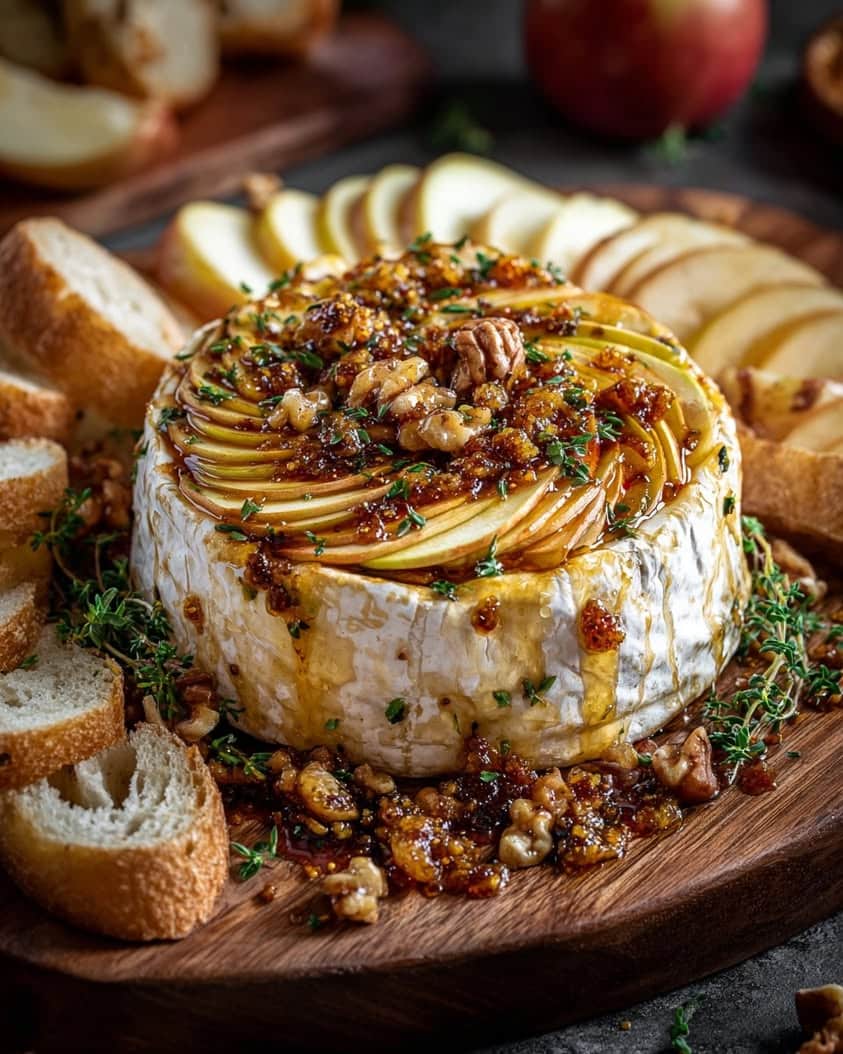
Creamy Baked Brie with Sweet Apple and a Fig Honey Glaze: An Elegant Appetizer for Any Occasion
This creamy baked brie with sweet apple and a fig honey glaze recipe creates an unforgettable appetizer that will impress your guests instantly. Furthermore, the combination of warm, melted cheese with crisp fruit and a sweet, sticky glaze is simply divine. Consequently, this dish has become a favorite for holiday parties and casual gatherings alike. Moreover, its beautiful presentation makes it look like you spent hours in the kitchen, even though it comes together in under thirty minutes.
The magic of this easy appetizer lies in its perfect balance of flavors and textures. For instance, the rich, creamy brie provides a luxurious base, while the tart apples cut through the richness beautifully. Additionally, the fig honey glaze adds a complex sweetness that ties everything together. Ultimately, this creamy baked brie with sweet apple and a fig honey glaze offers a sophisticated taste experience that feels both comforting and elegant. Therefore, it is the perfect starter for any meal or a standout item on your party spread.
Imagine pulling a golden, bubbling wheel of cheese from the oven, its surface glistening with a glossy honey glaze. Subsequently, the aroma of warm cheese and sweet figs fills your kitchen, creating an inviting atmosphere. Meanwhile, the fresh apples provide a refreshing crunch that complements the gooey texture of the cheese. Indeed, this creamy baked brie with sweet apple and a fig honey glaze engages all your senses from the moment it starts baking until the last delicious bite.
Quick Recipe Highlights
- Flavor Profile: This dish masterfully balances sweet and savory notes. The rich, buttery cheese contrasts beautifully with the tart apples and sweet fig glaze. Additionally, a hint of thyme adds an earthy complexity that elevates the entire flavor experience.
- Texture: You will experience a wonderful textural journey with every bite. The creamy, molten brie contrasts with the crisp apple slices and the crunchy toasted bread or crackers. Meanwhile, the sticky glaze adds a lovely mouthfeel that coats everything in sweetness.
- Aroma: As this brie bakes, your kitchen will fill with an irresistible fragrance. The scent of melting cheese blends with the sweet aroma of honey and figs. Furthermore, the subtle herbal notes from thyme create a warm, inviting atmosphere that promises a delicious treat.
- Visual Appeal: This dish presents beautifully with its golden-brown cheese wheel and glossy glaze. The vibrant red apple slices and green thyme sprigs create a stunning color contrast. Consequently, it makes an impressive centerpiece for any table setting or cheese board.
- Skill Level Needed: This is an ideal recipe for beginners and experienced cooks alike. Basically, it requires minimal technical skill and uses simple preparation methods. However, the final result looks and tastes professionally crafted, making it perfect for building kitchen confidence.
- Special Equipment: You only need very basic kitchen tools for this recipe. Specifically, a baking sheet, parchment paper, and a small saucepan are sufficient. Alternatively, you can use a cast iron skillet or small baking dish if you prefer.
Recipe Overview
- Difficulty Level: This creamy baked brie with sweet apple and a fig honey glaze is remarkably simple to prepare. Essentially, it involves minimal chopping, simple assembly, and straightforward baking instructions. Therefore, even novice cooks can achieve perfect results on their first attempt. Moreover, the recipe is forgiving and allows for personal adjustments without compromising the final dish.
- Category: This versatile dish fits multiple culinary categories beautifully. Primarily, it serves as an elegant appetizer or starter course for dinners and parties. Additionally, it works wonderfully as part of a cheese board or tapas spread. Furthermore, it can even function as a decadent dessert when served with sweet accompaniments.
- Cuisine: While brie cheese originates from France, this preparation draws inspiration from global flavors. The honey glaze technique has Mediterranean influences, while the apple pairing feels distinctly American. Ultimately, this fusion creates a universally appealing dish that transcends specific culinary traditions. Consequently, it complements various meal styles and cultural menus.
- Cost: This recipe offers excellent value for its impressive presentation. The main ingredients are reasonably priced, especially when apples are in season. Meanwhile, the brie cheese represents the most significant cost, though many grocery stores offer affordable options. Therefore, you can create a luxurious-tasting appetizer without exceeding your entertainment budget.
- Season: This creamy baked brie with sweet apple and a fig honey glaze shines particularly bright during autumn and winter. The warm, comforting qualities make it ideal for holiday gatherings and cold-weather entertaining. However, using seasonal fruits allows for adaptation throughout the year. For instance, spring berries or summer peaches can create delightful seasonal variations.
- Occasion: This versatile dish suits numerous social situations perfectly. It is ideal for holiday parties, dinner parties, and casual get-togethers alike. Moreover, it makes a romantic appetizer for date nights or a special treat for family gatherings. Consequently, it has become a go-to recipe for hosts seeking an impressive yet manageable dish.
Why You’ll Love This Recipe
The taste and texture appeal of this creamy baked brie with sweet apple and a fig honey glaze is truly remarkable. Each component contributes something unique to the eating experience. The warm, gooey cheese provides rich creaminess that melts in your mouth. Meanwhile, the crisp apple slices offer refreshing contrast and natural sweetness. The sticky fig honey glaze adds depth and complexity that elevates the entire dish. Furthermore, the combination of savory cheese with sweet elements creates a sophisticated flavor profile that delights the palate. Ultimately, every bite delivers a perfect harmony of temperatures, textures, and tastes that keeps you coming back for more.
Convenience and preparation benefits make this recipe exceptionally user-friendly. You can assemble the entire dish in just ten minutes with minimal effort. The baking process requires no supervision, freeing you to attend to other cooking tasks or guests. Moreover, the ingredients are readily available at most grocery stores year-round. This creamy baked brie with sweet apple and a fig honey glaze also travels well if you need to bring an appetizer to someone else’s home. Additionally, it can be partially prepared in advance and baked just before serving. Consequently, it reduces last-minute stress while ensuring a fresh, hot appetizer for your guests.
Nutritional advantages might surprise you in this indulgent-tasting dish. Brie cheese provides protein and calcium, essential for bone health. Apples contribute dietary fiber and vitamin C, supporting digestion and immunity. Honey offers natural sweetness with trace enzymes and antioxidants. Furthermore, using whole ingredients means you avoid processed additives common in store-bought appetizers. While this creamy baked brie with sweet apple and a fig honey glaze is certainly a treat, it contains more nutritional value than many other party foods. Therefore, you can enjoy it knowing you are serving real, recognizable ingredients.
Social and entertaining value cannot be overstated with this impressive appetizer. It creates a natural gathering point as guests serve themselves from the communal cheese wheel. The beautiful presentation sparks conversation and compliments, making you feel like a culinary star. Moreover, the shareable nature encourages interaction and creates a warm, communal dining experience. This creamy baked brie with sweet apple and a fig honey glaze often becomes the talking point of any party. Consequently, it helps break the ice and makes guests feel welcomed and cared for through your thoughtful food preparation.
Cost-effectiveness and accessibility make this recipe practical for regular entertaining. Compared to expensive store-bought appetizers or restaurant cheese boards, this homemade version offers significant savings. The ingredients are accessible regardless of your location or grocery store options. Furthermore, the recipe is easily scalable for different group sizes without complicated calculations. This creamy baked brie with sweet apple and a fig honey glaze delivers restaurant-quality presentation and flavor at a fraction of the cost. Therefore, it allows you to entertain more frequently and generously without straining your budget.
Historical Background and Cultural Significance
The origin story of baked brie begins in the French region of Brie, where this famous cheese has been produced since the Middle Ages. Traditionally, French farmers would warm their cheese during colder months, discovering the delightful transformation that occurred when heat softened the texture and intensified the flavor. Meanwhile, combining fruit with cheese has ancient roots across European culinary traditions. The specific combination of baked brie with fruit preserves likely emerged in the late 20th century as French cuisine gained international popularity. Consequently, this creamy baked brie with sweet apple and a fig honey glaze represents a modern interpretation of these timeless culinary principles.
Cultural importance of cheese in social gatherings spans numerous societies throughout history. In France, cheese courses hold ceremonial significance in formal meals, while in other cultures, cheese often symbolizes prosperity and hospitality. The practice of serving warmed cheese appears in various forms across European countries, from Swiss raclette to Italian fonduta. This creamy baked brie with sweet apple and a fig honey glaze taps into this deep cultural tradition of sharing warmed cheese among friends and family. Moreover, it reflects the contemporary trend of adapting classic techniques to create approachable, crowd-pleasing dishes for modern entertaining.
Evolution of the recipe demonstrates how culinary traditions transform across time and geography. Early versions of baked brie might have involved simply heating the cheese near a fire or wrapping it in pastry. As global trade expanded, ingredients like figs and honey became more accessible, allowing for creative combinations. The addition of fresh fruit represents a more recent development, aligning with modern preferences for balancing rich flavors with fresh elements. This creamy baked brie with sweet apple and a fig honey glaze exemplifies this evolution by combining traditional techniques with contemporary flavor profiles. Therefore, it honors culinary heritage while embracing current tastes.
Regional variations showcase how different cultures interpret the basic concept of warmed cheese. In the United States, baked brie often appears with cranberry sauce during Thanksgiving. Mediterranean versions might include olives, sun-dried tomatoes, or herbs like rosemary. Scandinavian interpretations could feature lingonberry jam or cloudberries. This creamy baked brie with sweet apple and a fig honey glaze draws inspiration from these diverse traditions while creating something uniquely versatile. Consequently, it reflects our increasingly globalized culinary landscape where ingredients and techniques cross cultural boundaries to create new favorites.
Ingredient Deep Dive
Brie cheese forms the foundation of this recipe with its creamy texture and mild, buttery flavor. Originating from the Brie region of France, this soft-ripened cheese has been produced since the 8th century and was historically known as the “King of Cheeses.” Nutritionally, brie provides high-quality protein, calcium, phosphorus, and vitamin B12. When selecting brie, choose a wheel that feels slightly springy to the touch and has a white, edible rind free from brown spots. Store brie in the refrigerator’s cheese drawer and bring it to room temperature before baking for optimal creaminess. For substitutions, Camembert offers a similar texture with a slightly stronger flavor, while triple cream cheeses provide extra richness.
Apples contribute refreshing crunch and natural sweetness that balances the rich cheese. Cultivated since ancient times across Asia and Europe, apples feature prominently in mythological traditions and cultural practices worldwide. Nutritionally, apples provide dietary fiber, vitamin C, and various antioxidants that support heart health and digestion. Select firm, crisp varieties like Honeycrisp or Granny Smith that hold their shape when baked alongside the cheese. Store apples in the refrigerator to maintain freshness and prevent premature softening. For substitutions, pears offer similar texture with a slightly floral note, while firm peaches provide seasonal variation during summer months.
Fig jam creates the base for the sweet glaze that enhances the entire dish. Figs rank among the oldest cultivated fruits, with evidence of domestication dating back over 11,000 years in the Jordan Valley. Nutritionally, figs offer dietary fiber, potassium, calcium, and iron. When selecting fig jam, look for products with high fruit content and minimal added sugars for the best flavor. Store opened jam in the refrigerator to preserve freshness. For substitutions, apricot preserves provide similar texture with a tangier flavor profile, while cherry jam offers deeper color and slight tartness.
Honey serves as the natural sweetener that creates the glossy glaze and enhances the fruit flavors. Humans have harvested honey for over 8,000 years, using it for both culinary and medicinal purposes across numerous civilizations. Nutritionally, honey contains antioxidants, enzymes, and trace minerals, though it should be consumed in moderation due to its high sugar content. Select raw, local honey when possible for superior flavor and potential allergy-fighting properties. Store honey at room temperature in a sealed container to prevent crystallization. For substitutions, maple syrup offers a distinct flavor with similar viscosity, while agave nectar provides a neutral-tasting alternative.
Fresh thyme contributes herbal notes that complement both the sweet and savory elements. This Mediterranean herb has been used since ancient times for culinary and medicinal purposes, with Egyptians employing it in embalming and Romans using it to purify their homes. Nutritionally, thyme contains thymol, an essential oil with antioxidant and antimicrobial properties. Select bunches with vibrant green leaves and flexible stems, avoiding any with brown spots or dried-out appearance. Store thyme in the refrigerator wrapped in damp paper towel. For substitutions, rosemary offers stronger pine notes, while sage provides earthier flavor that pairs well with the apples.
Common Mistakes to Avoid
- Overbaking the brie causes the cheese to separate and become greasy. Instead, watch for the cheese to feel soft when gently pressed and see the surface beginning to bubble. Furthermore, remember that the cheese continues to cook slightly after removal from the oven, so factor in this carryover cooking.
- Using apples that are too soft results in mushy texture that doesn’t contrast properly with the creamy cheese. Always select firm varieties that maintain some crunch after brief heating. Additionally, slice the apples just before assembling to prevent premature browning and texture loss.
- Skipping the resting period after baking leads to messy serving and potential burns. The cheese needs five minutes to set slightly, making it easier to slice or scoop. Meanwhile, this resting time allows the flavors to meld together more completely.
- Overheating the honey glaze can destroy delicate enzymes and create bitter flavors. Warm the glaze gently just until it becomes pourable rather than bringing it to a full boil. Consequently, you preserve the honey’s nuanced flavor and beneficial properties.
- Choosing an underripe brie prevents proper melting and flavor development. The cheese should feel soft at room temperature and may even bulge slightly when ripe. Moreover, the rind should be intact without any ammonia smell, which indicates overripeness.
- Neglecting to score the brie rind limits flavor penetration and attractive presentation. Make shallow cuts in a crosshatch pattern without cutting through the entire wheel. This technique allows the glaze to seep into the cheese while creating visual interest.
- Using thick crackers or bread that overwhelm the delicate cheese and apple balance. Select thin, neutral crackers that complement rather than compete with the main ingredients. Alternatively, sliced baguette provides ideal texture without dominating the flavor profile.
- Adding the apples too early causes them to become unpleasantly soft and lose their refreshing quality. Arrange the apple slices just before serving to maintain their crisp texture. Furthermore, a squeeze of lemon juice prevents browning if you must prepare them in advance.
Essential Techniques
Scoring the brie rind properly ensures optimal flavor absorption and attractive presentation. Use a sharp knife to create shallow cuts about ¼-inch deep in a crisscross or circular pattern across the top surface. This technique allows the glaze to penetrate the cheese while creating visual interest. Avoid cutting through the bottom rind, as this contains the melted cheese during baking. The scored pattern also makes serving easier, as guests can scoop cheese directly from the sections. Practice this technique with light pressure to maintain control and create even, decorative marks.
Creating the perfect fig honey glaze requires careful temperature control and proper ingredient ratios. Combine equal parts fig jam and honey in a small saucepan over low heat. Stir constantly until the mixture becomes smooth and pourable, which typically takes three to five minutes. Avoid boiling the glaze, as high heat can create bitter flavors and destroy honey’s delicate compounds. The ideal glaze consistency should coat the back of a spoon but still drip slowly. If the glaze becomes too thick, whisk in a teaspoon of warm water until it reaches the desired consistency.
Baking the brie at the correct temperature ensures proper melting without separation. Preheat your oven thoroughly to guarantee even cooking from the moment the cheese enters. Place the brie on parchment-lined baking sheet to prevent sticking and simplify cleanup. The cheese is ready when the center feels soft to the touch and the surface appears bubbly. Remember that brie continues to cook after removal from the oven, so slightly underbaking prevents overcooking. Using an oven thermometer verifies accurate temperature, as home ovens often display incorrect readings.
Arranging the apple slices effectively maximizes both presentation and practical serving. Cut uniform slices approximately ¼-inch thick to ensure consistent texture and cooking. Fan the slices around the baked brie just before serving to maintain their crispness. This placement creates a beautiful visual frame while making the apples easily accessible to guests. For additional elegance, alternate apple varieties with different colors. A quick dip in lemon water prevents browning if you need to prepare the apples in advance of your event.
Pro Tips for Perfect Creamy Baked Brie with Sweet Apple and a Fig Honey Glaze
Bring all ingredients to room temperature before assembling to ensure even cooking and proper texture development. Cold cheese takes longer to melt and may heat unevenly, while room temperature honey mixes more easily with the fig jam. Additionally, this practice reduces overall baking time and helps prevent the cheese from breaking. Ideally, remove the brie from refrigeration thirty minutes before preparation.
Experiment with different apple varieties to discover your preferred flavor and texture combinations. Tart Granny Smith apples provide sharp contrast to the rich cheese, while sweeter Honeycrisp or Fuji varieties complement the glaze. Meanwhile, Pink Lady apples offer balanced sweetness with firm texture that holds up well to baking. Using multiple apple types creates visual interest and flavor complexity.
Toast your serving bread or crackers lightly to provide sturdiness against the soft cheese. The slight crunch contrasts beautifully with the creamy brie while preventing sogginess. Furthermore, toasting enhances the flavor of neutral crackers and brings out the nuttiness in whole grain options. Arrange the toasted bases around the platter just before serving to maintain their texture.
Garnish with fresh herb sprigs and additional apple slices for professional presentation. The green thyme leaves provide color contrast against the golden cheese and red apple skins. Meanwhile, extra apple slices signal freshness and allow guests to customize their bites. Edible flowers or microgreens create special occasion elegance with minimal effort.
Drizzle extra glaze over the assembled platter for glossy presentation and added flavor impact. This final touch enhances visual appeal while ensuring each component receives the sweet glaze. Use a spoon or squeeze bottle for controlled application and artistic patterns. Reserve some glaze for serving alongside the brie for guests who prefer extra sweetness.
Serve with small spreading knives or cheese spreaders to facilitate easy serving. These tools allow guests to scoop the perfect amount of cheese onto their chosen base. Providing multiple utensils prevents bottlenecking around the platter and encourages comfortable mingling. Cheese knives with angled blades work particularly well for this application.
Variations and Adaptations
Regional variations allow you to customize this recipe to match different culinary traditions. For a French-inspired version, use herbes de Provence and serve with cornichons. Mediterranean adaptation might include olives, sun-dried tomatoes, and oregano. American Thanksgiving variation could feature cranberry sauce instead of fig jam. Meanwhile, Scandinavian interpretation might use lingonberry jam and caraway seeds. These regional twists maintain the core technique while reflecting local flavor preferences. Consequently, you can tailor the dish to complement specific menu themes or cultural celebrations.
Seasonal adaptations ensure this appetizer remains relevant throughout the year. Spring version could feature strawberry rhubarb compote and fresh mint. Summer adaptation might include grilled peaches and basil. Autumn variation naturally highlights apples and pears with warming spices. Winter interpretation could showcase cranberry orange relish with rosemary. Using seasonal produce maximizes flavor while supporting local agriculture. Furthermore, these adaptations keep the recipe exciting and appropriate for seasonal entertaining occasions.
Dietary modifications make this dish accessible to guests with specific eating requirements. For gluten-free needs, serve with appropriate crackers or vegetable crudités. Vegan adaptation could use plant-based cheese alternatives and maple syrup. Reduced-sugar version might employ sugar-free fruit preserves and monk fruit sweetener. Low-carb option could eliminate crackers entirely in favor of endive leaves or cucumber rounds. These modifications demonstrate thoughtful hosting while ensuring everyone can enjoy the communal dining experience.
Flavor variations provide creative opportunities to personalize this versatile recipe. Savory twist could include caramelized onions and thyme. Spicy adaptation might feature chili-infused honey and jalapeño slices. Nutty version could incorporate toasted walnuts or pecans for added crunch. Herb-forward interpretation might highlight rosemary or sage instead of thyme. These flavor explorations allow you to develop signature versions that reflect your personal taste preferences. Meanwhile, they keep the recipe fresh and exciting through repeated preparations.
Serving and Presentation Guide
Plating techniques significantly impact the visual appeal and serving practicality of this appetizer. Place the baked brie slightly off-center on a large wooden board or decorative platter. Arrange apple slices in a crescent pattern around one side, creating visual movement. Meanwhile, cluster crackers or bread slices on the opposite side for balanced composition. This arrangement creates natural serving flow while allowing all components to shine individually. Furthermore, it prevents overcrowding and makes replenishing ingredients easier as needed.
Garnishing ideas elevate the presentation from simple to spectacular. Fresh thyme sprigs provide color contrast and aromatic enhancement. Toasted walnut halves add rustic elegance and textural variation. Edible flowers like nasturtiums or pansies create special occasion luxury. Meanwhile, additional fig halves or apple fan arrangements reinforce the main ingredients. These garnishes should complement rather than overwhelm the star components. Consequently, they enhance visual interest without complicating the eating experience.
Traditional accompaniments honor the classic cheese course approach to this dish. Crusty baguette slices represent the most authentic base for the melted cheese. Cornichons or other pickled vegetables provide acidic contrast that cuts through the richness. Meanwhile, whole grain mustard offers savory counterpoint to the sweet elements. These traditional pairings create a balanced tasting experience that respects culinary heritage. Furthermore, they appeal to guests who prefer classic flavor combinations over modern interpretations.
Modern serving suggestions reflect contemporary entertaining styles and dietary preferences. Vegetable crudités like endive leaves, radish slices, and bell pepper strips provide low-carb options. Artisan crackers with seeds or unusual grains add textural interest. Meanwhile, fruit pastes or mostardas offer sophisticated sweet-savory complements. These modern accompaniments acknowledge evolving tastes while maintaining the dish’s essential character. Additionally, they provide conversation starters about ingredient origins and preparation methods.
Wine and Beverage Pairing
Wine pairings should complement both the rich cheese and sweet elements of this dish. Sparkling wines like Champagne or Prosecco provide acidity that cuts through the richness while matching the celebratory nature. White wines such as Chardonnay or Viognier have enough body to stand up to the brie without overwhelming the fruit notes. Meanwhile, light red wines like Pinot Noir or Beaujolais offer berry flavors that harmonize with the fig and apple components. These selections create balanced pairings that enhance rather than compete with the food flavors.
Non-alcoholic alternatives ensure all guests can enjoy thoughtful beverage pairings. Sparkling apple cider mirrors the apple component while providing festive bubbles. Herbal teas like chamomile or mint complement the honey notes without adding sweetness. Meanwhile, ginger beer offers spicy contrast that cleanses the palate between rich bites. These non-alcoholic options demonstrate inclusive hosting while maintaining sophisticated flavor partnerships. Furthermore, they prevent designated drivers or non-drinkers from feeling excluded from the tasting experience.
Coffee and tea pairings work surprisingly well with this sweet and savory combination. Light roast coffee highlights the caramel notes in the baked cheese and honey glaze. Chai tea spices complement the warming qualities of the dish. Meanwhile, Earl Grey tea provides bergamot notes that cut through the richness elegantly. These hot beverage options extend the serving occasion into dessert territory. Consequently, they transform the appetizer into a sophisticated course for afternoon entertaining or post-dinner cheese service.
Storage and Shelf Life
Storage methods for leftovers require careful attention to food safety and quality preservation. Transfer any uneaten baked brie to an airtight container and refrigerate within two hours of serving. The apple slices should be stored separately to maintain their texture. Meanwhile, the glaze can be kept at room temperature if used within a week. These practices prevent bacterial growth while maximizing flavor retention. Furthermore, they allow for safe enjoyment of leftovers without quality compromise.
Temperature requirements ensure optimal food safety and eating quality. Refrigerate leftovers promptly at 40°F or below to prevent spoilage. When reheating, ensure the cheese reaches 165°F internally to eliminate potential bacteria. Meanwhile, serve apples at cool room temperature for the best texture experience. These temperature guidelines protect against foodborne illness while delivering the intended sensory characteristics. Consequently, they allow for safe enjoyment while maintaining the dish’s appealing qualities.
Container recommendations impact both storage efficiency and ingredient preservation. Glass containers with tight-fitting lids prevent odor transfer and allow easy visibility of contents. Separate compartments keep components from becoming soggy or blending flavors prematurely. Meanwhile, parchment paper between layers prevents sticking and makes removal easier. These container choices simplify storage while protecting your investment in quality ingredients. Furthermore, they facilitate organized refrigeration and efficient leftover utilization.
Make Ahead Strategies
Prep timeline optimization reduces last-minute stress while ensuring fresh results. The fig honey glaze can be prepared up to one week in advance and stored in the refrigerator. Apples can be sliced and stored in lemon water up to four hours before serving. Meanwhile, the brie can be scored and returned to refrigeration until baking time. These advance preparations distribute the workload across multiple days. Consequently, you can enjoy your own party rather than spending all your time in the kitchen.
Storage between steps maintains ingredient quality while accommodating your schedule. The prepared glaze should be stored in an airtight container in the refrigerator. The sliced apples must be completely submerged in acidulated water to prevent browning. Meanwhile, the scored brie should be rewrapped in its original packaging or parchment paper. These specific storage methods preserve the characteristics essential to the final dish. Furthermore, they demonstrate how proper planning enables impressive results with minimal day-of effort.
Assembly tips for last-minute preparation ensure optimal texture and temperature. Bake the brie just before guests arrive to serve it at peak warmth. Arrange the apple slices while the cheese rests after baking. Meanwhile, gently reheat the glaze to pouring consistency while the brie bakes. These timing considerations guarantee that each component reaches the table at its ideal state. Therefore, you deliver the perfect eating experience that makes all the advance preparation worthwhile.
Scaling Instructions
Halving the recipe works beautifully for intimate dinners or smaller households. Use a small brie wheel or half-wheel rather than trying to cut a full wheel. Reduce all other ingredients proportionally, though you may want to make the full glaze recipe for extra serving flexibility. Adjust baking time downward by approximately five minutes, as smaller cheese quantities heat more quickly. This scaling approach maintains the ingredient balance while accommodating different group sizes. Furthermore, it prevents waste while allowing you to enjoy this treat more frequently.
Doubling or tripling the recipe requires practical adjustments for successful execution. Use multiple small brie wheels rather than one large piece for even cooking and elegant presentation. Arrange the baked cheeses on a large platter with the accompaniments distributed between them. Increase baking time slightly and rotate pans halfway through for consistent results. These modifications ensure that quantity increases don’t compromise quality. Consequently, you can confidently prepare this appetizer for large gatherings without anxiety about uneven results.
Equipment adjustments become necessary when significantly increasing recipe quantities. Use multiple baking sheets rather than overcrowding a single pan, which impedes proper air circulation. Consider preparing the glaze in batches to maintain proper consistency and flavor development. Meanwhile, provide multiple serving utensils and stations to prevent congestion around the food. These equipment considerations address the practical challenges of volume cooking. Therefore, they ensure that both preparation and service proceed smoothly regardless of group size.
Nutritional Deep Dive
Macro breakdown reveals a balanced profile despite the indulgent nature of this dish. The brie provides substantial protein and fat, which promote satiety and carry flavors effectively. The apples and honey contribute carbohydrates that provide immediate energy. Meanwhile, the minimal added sugars come primarily from natural sources. This macro distribution creates sustained energy release rather than blood sugar spikes. Furthermore, it demonstrates how even celebratory foods can fit within balanced eating patterns when enjoyed mindfully.
Micronutrient analysis highlights the valuable vitamins and minerals in this appetizer. Brie cheese delivers calcium, phosphorus, and vitamin B12 for bone health and energy metabolism. Apples provide vitamin C, potassium, and various antioxidants that support immune function and heart health. Meanwhile, honey contains trace enzymes and compounds with potential anti-inflammatory properties. These micronutrients transform this treat into a more nutritionally complete option. Consequently, you can appreciate both the pleasure and nourishment this dish provides.
Health benefits extend beyond basic nutrition when considering the complete eating experience. The combination of protein, fat, and fiber promotes satisfaction that may prevent overeating later. Shared food experiences contribute to psychological well-being and social connection. Meanwhile, the use of whole, recognizable ingredients supports cleaner eating patterns. These broader health considerations acknowledge that nourishment encompasses more than just nutrient content. Therefore, this dish supports holistic wellness through both physical and social nourishment.
Dietary Adaptations
Gluten-free adaptation simply requires appropriate serving vehicles. Replace traditional crackers with gluten-free alternatives made from rice, corn, or nuts. Alternatively, use vegetable crudités like endive leaves, cucumber rounds, or bell pepper strips. These substitutions maintain the interactive serving style while accommodating dietary needs. Furthermore, they often add interesting textural variations that enhance the overall experience.
Dairy-free adaptation utilizes plant-based cheese alternatives with similar melting properties. Several brands now offer credible vegan brie-style cheeses that soften beautifully when heated. Ensure the selected product has adequate fat content for proper texture development. Meanwhile, check that other ingredients like crackers align with dairy-free requirements. These adaptations allow everyone to participate in the shared food experience regardless of dietary restrictions.
Vegan transformation requires comprehensive ingredient evaluation and substitution. Use high-quality vegan brie alternative as the centerpiece. Replace honey with maple syrup or agave nectar to maintain vegan principles. Meanwhile, ensure all accompaniments meet vegan standards, including cracker ingredients. This complete adaptation demonstrates thoughtful inclusivity while delivering similar sensory pleasure.
Troubleshooting Guide
Texture issues typically stem from incorrect cheese selection or baking time. If your brie fails to melt properly, it may be too cold or underripe. Overbaking causes separation and greasiness that compromises the creamy texture. Meanwhile, apples that become mushy were likely too ripe or sliced too thin. These common texture problems have straightforward solutions with practice and attention to ingredient quality.
Flavor balance adjustments address issues of excessive sweetness or richness. If the dish tastes too sweet, reduce the honey in the glaze or add lemon juice for acidity. When the cheese dominates excessively, increase the apple quantity or add tart accompaniments. Meanwhile, herbal elements can bridge flavor gaps between sweet and savory components. These adjustments allow you to tailor the flavor profile to your specific preferences.
Temperature problems typically involve cheese that cools too quickly or apples that warm excessively. Serve baked brie on a warmed platter to maintain ideal eating temperature. Keep apple slices refrigerated until the last possible moment to preserve their refreshing crunch. Meanwhile, consider serving the glaze in a small warmed pitcher for guests to add as desired. These temperature management techniques ensure each component reaches the palate at its optimal state.
Recipe Success Stories
Community feedback consistently highlights the impressive presentation relative to the simple preparation. Home cooks express delight at receiving restaurant-quality compliments for such an manageable recipe. Many report that this dish has become their signature appetizer for various occasions. Meanwhile, numerous readers have shared beautiful photographs of their variations using seasonal fruits and personal touches. This enthusiastic response demonstrates how accessible elegance creates cooking confidence and joyful sharing.
Variation successes illustrate the recipe’s adaptability to different tastes and ingredients. One reader created a holiday version with cranberry orange relish that became family tradition. Another developed a spicy adaptation using chili-infused honey that delighted their adventurous friends. Meanwhile, gluten-free adaptations have allowed those with dietary restrictions to enjoy this communal food experience. These success stories validate the recipe’s versatility while inspiring further creativity.
Frequently Asked Questions
Can I prepare this recipe in advance? Yes, you can score the brie and prepare the glaze up to a day ahead. However, bake the cheese just before serving for optimal texture and temperature. The apples should be sliced no more than a few hours in advance to prevent browning.
What apple varieties work best? Firm, slightly tart apples like Granny Smith provide excellent texture contrast. Sweeter varieties like Honeycrisp or Fuji complement the glaze beautifully. Using multiple types creates interesting flavor complexity and visual appeal.
Can I use a different cheese? Camembert offers similar texture with slightly stronger flavor. Triple cream cheeses provide extra richness, while goat cheese creates tangier variation. Ensure any substitution has similar melting properties for best results.
How do I know when the brie is properly baked? The cheese should feel soft to the touch and appear slightly bulging. The surface may develop small bubbles, and the glaze will become fragrant. Remember that carryover cooking continues after removal from the oven.
What if my brie leaks during baking? Minor leaking is normal and doesn’t affect flavor. To minimize leakage, ensure the rind remains intact on the bottom and sides. Using a slightly underripe brie also reduces this tendency.
Can I make this recipe without honey? Maple syrup or agave nectar work well as honey substitutes. Fruit preserves alone can create a glaze, though the consistency will be thicker. Adjust sweetness to taste with these alternatives.
What serving vessels work best? A wooden board provides rustic appeal, while a ceramic oven-to-table dish offers practical convenience. Parchment paper on any surface simplifies cleanup while maintaining attractive presentation.
How long do leftovers keep? Refrigerated baked brie maintains quality for 2-3 days. Reheat gently in the oven or microwave until warmed through. The texture may be less creamy but remains delicious.
Can I freeze baked brie? Freezing is not recommended as it adversely affects the cheese texture. The high moisture content creates ice crystals that damage the protein structure upon thawing.
What if I don’t have fig jam? Apricot preserves provide similar texture with slightly tangier flavor.
Print
Baked Brie & Apple Tapas with Fig Honey Glaze
Description
An appetizer to impress — sweet, savory, melty, and golden!
Ingredients
For the Crust:
- 1 wheel of brie cheese (8 oz)
- 1 apple, thinly sliced
- 1/4 cup honey
- 2 tbsp fig jam
- 1/4 cup chopped walnuts
- 1 tsp fresh thyme leaves
- Crackers or sliced baguette for serving
Instructions
1. Prepare the Crust:
- Preheat oven to 350°F (175°C). Place brie wheel in a small baking dish.
- In a small bowl, mix honey and fig jam. Spread half of the mixture over the top of the brie.
- Arrange apple slices around the brie and sprinkle with walnuts and thyme.
- Drizzle remaining honey-fig mixture over the apples and walnuts.
- Bake for 15-20 minutes, until brie is soft and golden. Serve warm with crackers or baguette slices.
Notes
You can customize the seasonings to taste.

I’m Shaykee—born in Morocco, seasoned across continents. From airplane galleys to home kitchens, I share the flavors and stories that shaped my journey.