
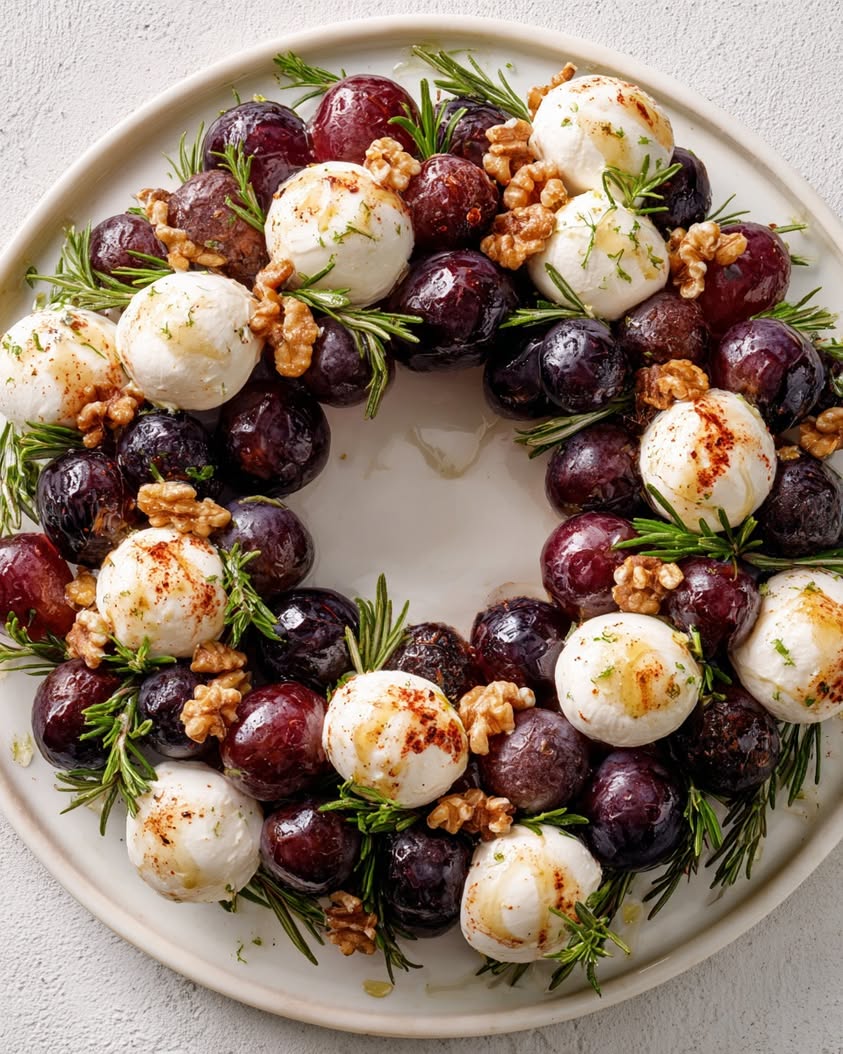
Burrata & Roasted Grape Holiday Wreath: A Show-Stopping Festive Appetizer
This stunning Burrata & Roasted Grape Holiday Wreath is the ultimate festive appetizer, guaranteed to impress your guests from the moment you bring it to the table. Imagine a golden, flaky pastry base topped with creamy burrata and sweet roasted grapes, creating a perfect harmony of flavors and textures. This dish not only tastes incredible but also serves as a beautiful centerpiece for any holiday gathering.
Creating this elegant holiday appetizer is surprisingly simple, requiring minimal effort for maximum impact. The combination of warm, juicy grapes with rich, cool burrata creates a delightful contrast that will have everyone asking for the recipe. Furthermore, this wreath is a versatile dish that works beautifully for everything from an intimate family dinner to a large cocktail party.
The visual appeal of this Burrata & Roasted Grape Holiday Wreath makes it perfect for seasonal entertaining. Its circular shape symbolizes the festive spirit, while the deep purple grapes and white cheese create a stunning color palette. This recipe proves that you don’t need complicated techniques to create something truly special and memorable for your holiday table.
Quick Recipe Highlights
- Flavor Profile: This dish features sweet, caramelized roasted grapes balanced against the rich, milky flavor of fresh burrata. The addition of fresh thyme and a drizzle of honey creates a sophisticated sweet-savory combination that dances on the palate. Every bite offers a complex layering of flavors that feels both indulgent and refreshing.
- Texture: The contrast between the crisp, buttery puff pastry and the juicy burst of warm grapes creates an exciting mouthfeel. Meanwhile, the creamy, luxurious texture of the burrata provides a smooth counterpoint that brings all the elements together beautifully. This combination of crisp, juicy, and creamy textures makes each bite interesting and satisfying.
- Aroma: As this wreath bakes, your kitchen will fill with the comforting scent of roasting grapes and fresh thyme. The aroma of caramelizing fruit mingles with the buttery scent of puff pastry, creating an irresistible fragrance that signals something special is coming. When you break open the burrata, its fresh, milky scent adds the final aromatic note.
- Visual Appeal: The circular wreath presentation makes this dish instantly festive and perfect for holiday tables. Deep purple grapes, golden-brown pastry, and snowy white burrata create a stunning color contrast that looks professionally crafted. Fresh herb garnishes add the final touch of green, making it as beautiful as it is delicious.
- Skill Level Needed: This recipe is accessible to cooks of all experience levels, from beginners to seasoned chefs. The technique involves simple assembly and basic roasting, requiring no special culinary skills. However, the impressive final result will make everyone think you spent hours in the kitchen.
- Special Equipment: You only need basic kitchen tools: a baking sheet, parchment paper, and a sharp knife. A pastry brush can help with egg washing, but you can easily use your fingers. No fancy equipment or hard-to-find tools are necessary for this impressive appetizer.
Recipe Overview
- Difficulty Level: This recipe ranks as easy because it uses store-bought puff pastry and involves simple assembly techniques. The most challenging aspect is ensuring the pastry doesn’t become soggy, which we address with proper baking methods. Even novice cooks can achieve professional-looking results with our step-by-step guidance. The process is straightforward and forgiving, making it perfect for stressful holiday entertaining.
- Category: This dish falls squarely into the appetizer category, perfect for starting any festive meal. It also works beautifully as part of a brunch spread or as an elegant light lunch when served with a simple green salad. The versatility of this recipe means you can adapt it to various dining occasions throughout the holiday season.
- Cuisine: While not tied to any specific traditional cuisine, this recipe draws inspiration from Italian flavors through its use of burrata and Mediterranean ingredients. The combination of fruit, cheese, and herbs reflects modern American entertaining trends that prioritize quality ingredients and beautiful presentation. This fusion approach makes it appealing to contemporary palates while honoring classic flavor combinations.
- Cost: This is a moderately priced appetizer that delivers luxury without the high cost of traditional fancy ingredients. Store-bought puff pastry keeps costs down, while a single ball of quality burrata goes a long way. Grapes are typically affordable, especially during their peak season, making this an accessible showstopper for various budgets.
- Season: This recipe shines during the late fall and winter months when grapes are at their sweetest and holidays call for special dishes. The warm, comforting elements make it perfect for cooler weather, while the bright flavors prevent it from feeling too heavy. That said, you can enjoy this wreath year-round with seasonal fruit variations.
- Occasion: This wreath is perfect for holiday parties, Christmas Eve gatherings, New Year’s celebrations, and any special winter event. It works equally well for formal dinners and casual get-togethers, adapting to your serving style. The festive shape makes it particularly suitable for Christmas, but the flavors are timeless enough for any celebration.
Why You’ll Love This Burrata & Roasted Grape Holiday Wreath
The taste and texture appeal of this holiday wreath is immediately apparent from the first bite. Sweet roasted grapes become intensely flavored and slightly jammy in the oven, creating pockets of fruity goodness throughout the wreath. The creamy burrata provides a cool, rich contrast that balances the sweetness perfectly. Additionally, the buttery, flaky pastry adds a satisfying crunch that completes this textural symphony. Every element works in harmony to create a sophisticated flavor profile that feels both comforting and elegant.
Convenience and preparation benefits make this recipe a lifesaver during busy holiday seasons. Using store-bought puff pastry eliminates the most time-consuming element while still delivering impressive results. The assembly process takes mere minutes, and most of the cooking time is hands-off baking. This means you can prepare other dishes or entertain guests while your beautiful wreath bakes to perfection. The make-ahead potential further enhances its convenience for stress-free entertaining.
Nutritional advantages might surprise you in this indulgent-tasting appetizer. Grapes provide antioxidants and vitamins, while burrata offers protein and calcium. Using whole ingredients without processed additives means you’re serving real food with recognizable components. While this is certainly a treat, it contains more nutritional value than many traditional holiday appetizers. The balance of macronutrients also means it satisfies without leaving guests feeling overly full before the main course.
Social and entertaining value cannot be overstated with this stunning centerpiece. The wreath format encourages sharing and conversation as guests tear off pieces themselves. Its visual impact creates an immediate talking point and sets a celebratory tone for any gathering. The familiar yet elevated flavors appeal to diverse palates, making it a crowd-pleaser that feels special without being intimidating. This dish demonstrates thoughtfulness and care in your hosting, making guests feel truly welcomed.
Cost-effectiveness and accessibility make this recipe practical for various entertaining budgets. Compared to expensive charcuterie boards or seafood platters, this wreath delivers luxury at a fraction of the cost. The ingredients are readily available at most grocery stores, with no hard-to-find specialty items required. This accessibility means you can create this impressive dish even with limited shopping options. The high yield relative to cost makes it an economical choice for feeding groups during expensive holiday seasons.
Historical Background and Cultural Significance
The origin story of this specific recipe combination is relatively modern, emerging from the contemporary trend of elevated, shareable appetizers. Food historians might trace its inspiration to traditional Italian crostata, a free-form tart often filled with seasonal fruits or cheeses. The wreath shape itself has deep roots in holiday traditions across European cultures, symbolizing eternity and the cyclical nature of the seasons. This particular fusion of ingredients represents how modern American cuisine continues to evolve by combining traditional elements in new ways.
Cultural importance of wreath-shaped foods during holidays spans multiple traditions and centuries. Ancient Romans exchanged evergreen wreaths as symbols of health and perseverance during winter festivals. This tradition evolved through Christian celebrations, with the circular shape representing eternal life and God’s unending love. Serving food in this symbolic shape during holiday gatherings connects us to these ancient traditions, whether consciously or not. The act of sharing from a communal wreath also reinforces bonds of friendship and family.
Evolution of the recipe reflects broader trends in entertaining and food presentation. As home cooks seek impressive yet manageable dishes for busy modern lives, recipes like this have gained popularity. The use of store-bought puff pastry acknowledges contemporary time constraints while maintaining quality standards. The combination of savory and sweet elements mirrors the sophisticated flavor profiles now common in restaurant dining. This recipe represents how home cooking has adapted to incorporate professional techniques and presentations.
Regional variations could include using different cheeses, such as camembert or brie for a more pronounced flavor. Mediterranean versions might incorporate olives and rosemary instead of grapes and thyme. Some regions might use local fruits like figs or pears when in season. The pastry base could vary from puff pastry to phyllo or even a polenta crust. These adaptations demonstrate how versatile the basic concept remains across different culinary traditions and ingredient availability.
Ingredient Deep Dive
Burrata cheese forms the luxurious heart of this holiday wreath. This Italian cheese originates from Apulia in the 20th century, created as a way to use up leftover mozzarella scraps. The name “burrata” means “buttered” in Italian, referring to its rich, creamy interior. Nutritionally, it provides protein, calcium, and phosphorus, though it’s high in saturated fat, so moderation is key. When selecting burrata, look for a plump, white ball floating in fresh whey or water, avoiding any with off smells.
Proper burrata storage is crucial for maintaining its delicate texture and flavor. Always keep it submerged in its liquid in an airtight container in the refrigerator, where it will last 2-3 days. For the best texture, bring burrata to room temperature before serving, which takes about 30 minutes. If you cannot find burrata, fresh mozzarella makes an acceptable substitution, though you’ll miss the creamy center. For a stronger flavor, consider a young taleggio or even a creamy goat cheese as alternatives.
Red grapes provide the sweet counterpoint in this savory-sweet combination. Grapes have been cultivated for over 8,000 years, with evidence of their domestication found in ancient Egyptian tombs. They’re rich in antioxidants like resveratrol, which has been linked to heart health benefits, and vitamin K, important for bone health. Choose grapes that are plump, firmly attached to their stems, and without wrinkles or brown spots. For this recipe, seedless varieties work best to avoid interrupting the elegant eating experience.
Store grapes unwashed in a perforated plastic bag in your refrigerator’s crisper drawer, where they’ll keep for 1-2 weeks. Wash them just before using to prevent premature spoilage. If red grapes aren’t available, black grapes work equally well, while green grapes will provide a slightly tarter contrast. For seasonal variations, try substituting with halved figs, pitted cherries, or even sliced pears, adjusting roasting times as needed. The key is using fruit that caramelizes well and provides a juicy burst of flavor.
Puff pastry serves as the foundation that brings all elements together. This laminated dough dates back to 17th century France, with credit often given to chef Marie-Antoine Carême. The hundreds of layers create that characteristic flaky texture when the butter steams during baking. Store-bought puff pastry saves considerable time while delivering excellent results. Look for all-butter varieties for the best flavor, though standard options work well too. Keep it frozen until ready to use, thawing overnight in the refrigerator for easiest handling.
Fresh thyme and honey might seem like supporting players, but they’re essential for balancing flavors. Thyme has been used since ancient times for both culinary and medicinal purposes, valued for its antimicrobial properties. Honey’s history as a sweetener predates written records, with ancient Egyptians using it in both food and embalming practices. Together, they bridge the gap between the savory cheese and sweet fruit. If you don’t have fresh thyme, rosemary makes a wonderful substitute, while maple syrup can replace honey if preferred.
Common Mistakes to Avoid
- Using frozen puff pastry without proper thawing leads to cracking and difficult handling. Always thaw pastry slowly in the refrigerator overnight rather than at room temperature or in the microwave. Rushed thawing causes the butter layers to melt unevenly, compromising the flaky texture. Properly thawed pastry should be pliable but still cold to the touch.
- Overcrowding the baking sheet prevents proper air circulation and even browning. Ensure your wreath has at least two inches of space around all sides on the baking sheet. Crowding creates steam that makes the pastry soggy rather than crisp. Using a large enough baking sheet is crucial for achieving that golden, flaky base.
- Skipping the egg wash results in pale, less appealing pastry. The egg wash creates beautiful golden color and helps herbs adhere to the surface. For the best shine, use just the yolk rather than the whole egg. Brush gently to avoid deflating the layers you worked so hard to create.
- Roasting grapes at too low a temperature prevents proper caramelization. The high heat is necessary to burst the grapes and concentrate their sugars. If your oven runs cool, consider increasing the temperature slightly. Properly roasted grapes should be slightly collapsed and swimming in their own juices.
- Adding burrata before baking causes it to melt completely and lose its creamy texture. The cheese should always be added after the wreath comes out of the oven. The residual heat will warm it gently without causing it to disappear into the pastry. This timing ensures you get those beautiful pockets of creamy cheese.
- Not scoring the pastry properly leads to uneven rising and potential tearing. Make sure your cuts are decisive and go about halfway through the pastry dough. The scoring guides the expansion during baking and creates the wreath’s beautiful segmented appearance. Use a sharp knife or even a pizza cutter for clean lines.
- Using cold burrata straight from the refrigerator creates unpleasant temperature contrast. Always let your cheese come to room temperature for about 30 minutes before serving. This allows the creamy interior to achieve its proper texture and full flavor. Cold cheese can make the entire dish feel less cohesive.
- Neglecting to let the wreath rest briefly before serving causes structural issues. The 5-minute rest allows the pastry to set slightly, making it easier to slice or tear. Serving immediately can lead to collapsed sections and messy presentation. This short wait is worth it for clean serving.
Essential Techniques
Proper puff pastry handling is crucial for achieving that light, flaky base that makes this wreath special. The key is keeping the pastry cold while working with it, as warm butter creates greasy, dense results. When unfolding thawed pastry, if cracks appear, simply press them together gently with your fingers. Avoid overworking the dough, as this develops gluten and can make it tough. Use a light touch when brushing with egg wash to preserve the delicate layers that create the flakiness.
Scoring the pastry requires confidence and the right tools for clean, attractive results. Use a sharp paring knife or pizza cutter, and make decisive cuts without dragging the blade. The cuts should go about halfway through the pastry—too shallow and they won’t open properly, too deep and the structure weakens. The scoring not only creates the wreath segments but also controls where the pastry rises, ensuring an even appearance. Practice makes perfect with this technique, but even imperfect scoring adds rustic charm.
Roasting grapes transforms them from simple fruit into deeply flavored, complex components. The high heat causes the grape skins to split and the natural sugars to caramelize, intensifying their flavor. Arrange grapes in a single layer without overcrowding to ensure even roasting and proper evaporation. The grapes are ready when they appear slightly collapsed and have released some of their juices. This technique works with many fruits, making it a valuable skill for both savory and sweet applications.
Timing the burrata addition is the final technique that makes this dish exceptional. Adding the cheese at the perfect moment—after the wreath comes out of the oven but while it’s still hot—creates the ideal temperature contrast. Tear the burrata with your hands rather than slicing for a more rustic, appealing appearance and varied texture. Distribute the pieces evenly, allowing some to nestle into the warm grapes. The residual heat will gently warm the cheese without causing it to lose its distinctive creamy center.
Pro Tips for Perfect Burrata & Roasted Grape Holiday Wreath
Chill your assembled wreath for 15 minutes before baking to ensure the pastry layers remain distinct. This extra step prevents the butter from melting too quickly and guarantees maximum puff. If your kitchen is particularly warm, this chilling period becomes even more important. The cold pastry hitting the hot oven creates the steam that separates the layers beautifully.
Use a pizza stone or baking steel if you have one to ensure a crisp, well-baked bottom crust. Preheat it with the oven for the best results. The thermal mass provides consistent, intense heat that prevents soggy pastry. If you don’t have these tools, placing your baking sheet on the oven’s lowest rack can help achieve similar results.
Experiment with different herb combinations to customize the flavor profile to your preference. While thyme is classic, rosemary, sage, or even lavender work beautifully with the sweet grapes. Fresh herbs always provide the best flavor, but in a pinch, high-quality dried herbs can work. Consider mixing herbs for more complex aromatic notes that will perfume your entire kitchen.
Create a flavor-packed base by brushing the pastry with a thin layer of whole grain mustard before adding other ingredients. The sharpness cuts through the richness and adds another dimension to the flavor profile. Alternatively, a light smear of caramelized onion jam provides wonderful sweetness that complements the grapes. These small additions can elevate the wreath from great to extraordinary.
Add texture contrast with toasted nuts scattered over the finished wreath. Toasted walnuts, pecans, or pine nuts provide crunch that contrasts beautifully with the creamy burrata. Toast them lightly in a dry skillet until fragrant, then sprinkle over just before serving. This addition not only improves texture but adds nutritional value and visual interest.
Consider a flavored honey drizzle to finish the wreath with extra sophistication. Infuse honey with thyme, rosemary, or even chili flakes for a custom touch. Warm the honey slightly to make drizzling easier and more decorative. The final glossy drizzle adds professional presentation and intensifies the sweet-savory balance.
Prepare components in advance to streamline holiday meal preparation. Roast grapes up to two days ahead and store in the refrigerator. The pastry can be scored and shaped hours before baking, then kept refrigerated. This advance work means you can assemble and bake quickly when guests arrive.
Variations and Adaptations
Regional variations allow this wreath to reflect different culinary traditions while maintaining its essential character. Mediterranean versions might include Kalamata olives, sun-dried tomatoes, and oregano instead of the sweet elements. French-inspired adaptations could feature brie, caramelized onions, and herbes de Provence. For a Middle Eastern twist, consider using labneh, pomegranate seeds, and za’atar seasoning. These regional interpretations demonstrate the recipe’s incredible versatility across flavor profiles and ingredient availability.
Seasonal adaptations ensure this dish remains relevant throughout the year with available produce. Spring versions might feature asparagus tips, fresh peas, and lemon zest with goat cheese. Summer adaptations could include heirloom tomatoes, basil, and fresh corn with mozzarella. Autumn variations might highlight roasted squash, apples, and sage with fontina cheese. Each seasonal interpretation brings its own character while maintaining the beautiful wreath presentation that makes this recipe special.
Dietary modifications make this recipe accessible to those with specific nutritional needs or preferences. For vegan versions, use dairy-free puff pastry and replace burrata with cashew cheese or vegan mozzarella. Gluten-free adaptations simply require using gluten-free puff pastry, now readily available in most grocery stores. Lower-carb versions might use a cauliflower crust base, though the texture will differ significantly. These modifications ensure everyone can enjoy this beautiful centerpiece regardless of dietary restrictions.
Flavor variations can transform the character of the wreath while keeping the preparation method consistent. Savory versions might include cooked sausage, caramelized onions, and gruyere cheese. Seafood adaptations could feature smoked salmon, capers, and dill with cream cheese. Vegetarian options might highlight roasted mushrooms, leeks, and thyme with ricotta. The basic wreath structure accommodates countless flavor combinations, making it a template for culinary creativity.
Texture modifications allow you to customize the mouthfeel based on personal preference or ingredient availability. For extra crunch, add toasted nuts or seeds to the topping. For creamier results, incorporate additional soft cheeses like ricotta or goat cheese alongside the burrata. For crispier pastry, brush with olive oil instead of egg wash and bake at a slightly higher temperature. Understanding how to manipulate textures helps you perfect the wreath to your exact preferences.
Presentation alternatives maintain the spirit of the recipe while adapting to different serving situations. Individual mini wreaths create elegant personal portions for formal dinners. A straight tart version works better for buffet service where space is limited. Free-form galette styling offers a more rustic appearance that’s equally beautiful. These presentation options provide flexibility for various entertaining scenarios while delivering the same wonderful flavors.
Serving and Presentation Guide
Plating techniques should highlight the wreath’s beautiful circular form while making it accessible to guests. Place the entire wreath on a large wooden board or decorative platter as a centerpiece. Provide a small server or pizza cutter for guests to help themselves, encouraging interaction. For more formal service, pre-slice the wreath into portions before bringing to the table. Either approach showcases the beautiful presentation while ensuring practical serving.
Garnishing ideas should enhance both visual appeal and flavor without overwhelming the main ingredients. Fresh herb sprigs tucked throughout the wreath add color and fragrance. Edible flowers like nasturtiums or pansies provide elegant sophistication for special occasions. A final dusting of flaky sea salt just before serving enhances flavors and adds subtle sparkle. Microgreens scattered over the top contribute fresh flavor and restaurant-style presentation.
Traditional accompaniments balance the richness of the cheese and pastry with contrasting elements. A simple arugula salad with lemon vinaigrette cuts through the richness beautifully. Marinated olives and other antipasti items complement the Italian-inspired flavors. crusty bread for scooping up any escaped burrata and roasted grapes ensures nothing goes to waste. These accompaniments create a more complete appetizer course without requiring significant additional work.
Modern serving suggestions might include deconstructed elements for interactive dining experiences. Serve the wreath alongside individual bowls of additional burrata for guests to add as desired. Small cups of reduced balsamic glaze for drizzling allow personalization of sweetness and acidity. Herb-infused oils in decorative cruets let guests add their preferred aromatic notes. These interactive elements make the dining experience more engaging and memorable.
Temperature considerations significantly impact the overall enjoyment of this dish. The wreath should be served warm but not piping hot to appreciate all the flavors and textures. Burrata should be at room temperature to showcase its creamy texture fully. If the wreath cools too much during serving, briefly warm it in a low oven for 2-3 minutes. Proper temperature management ensures every bite is as delicious as the first.
Portion control tips help manage serving sizes for different types of gatherings. For cocktail parties where guests sample multiple items, plan for smaller portions per person. For appetizer courses before a multi-course meal, moderate portions prevent filling up too quickly. When serving as a main course with salad, larger portions are appropriate. Understanding your event’s flow helps determine how many people one wreath will serve.
Wine and Beverage Pairing
Wine pairings should complement both the creamy burrata and the sweet roasted grapes without overwhelming either element. A crisp, acidic white wine like Sauvignon Blanc cuts through the richness beautifully. Light-bodied reds such as Pinot Noir work well with the earthy notes from the roasted grapes and herbs. Sparkling options like Prosecco or Cava provide celebratory effervescence that cleanses the palate between bites. The key is choosing wines with good acidity to balance the dish’s richness.
Non-alcoholic alternatives can be just as sophisticated and thoughtfully paired as their alcoholic counterparts. Sparkling grape juice mimics the celebratory feel of champagne while complementing the grape elements. Herbal teas like rosemary or thyme-infused iced tea echo the herbal notes in the wreath. Craft sodas with botanical flavors provide complexity without alcohol. These options ensure all guests can enjoy thoughtful beverage pairing regardless of their drinking preferences.
Coffee and tea pairings work surprisingly well with this savory-sweet combination, especially for brunch servings. Lightly roasted coffee with bright acidity complements rather than conflicts with the flavors. Earl Grey tea’s bergamot notes provide an elegant counterpoint to the rich cheese. Herbal chai offers warming spices that enhance the festive feeling. These pairings expand serving opportunities beyond traditional cocktail hours.
Temperature considerations for beverages ensure they enhance rather than detract from the eating experience. White and sparkling wines should be properly chilled but not ice-cold to preserve their aromas. Red wines should be slightly cooler than room temperature to maintain freshness. Non-alcoholic options should be served at temperatures that make them refreshing against the rich, warm wreath. Proper serving temperatures maximize both the food and beverage experience.
Serving suggestions for beverages include offering multiple options to accommodate different preferences. A wine pairing flight allows guests to compare how different wines interact with the flavors. Signature mocktails and cocktails themed to the event create a special touch. Self-serve stations with tasting notes encourage exploration and conversation. Thoughtful beverage service elevates the entire dining experience beyond simply eating and drinking.
Storage and Shelf Life
Storage methods must account for the different components to maintain quality and food safety. Store any leftovers in an airtight container in the refrigerator for up to two days. Place parchment paper between layers if stacking pieces to prevent sticking. The pastry will lose its crispness but still tastes delicious when gently reheated. Proper storage ensures you can enjoy leftovers without compromising flavor or safety.
Temperature requirements are crucial for both food safety and quality maintenance. Always refrigerate leftovers within two hours of serving to prevent bacterial growth. When reheating, ensure the internal temperature reaches 165°F to eliminate any potential pathogens. Never leave the wreath at room temperature for extended periods, as the dairy components are perishable. Following temperature guidelines protects both your health and the dish’s quality.
Container recommendations include shallow airtight containers that prevent crushing the delicate pastry. Glass containers won’t absorb odors and allow you to see contents easily. If using plastic, ensure it’s food-grade and BPA-free. For partial wreaths, storing on the original baking sheet covered with foil works temporarily. The right containers preserve texture and prevent flavor transfer from other refrigerator items.
Signs of spoilage include off odors, visible mold, or significant texture changes in the cheese. The burrata should remain white and creamy-looking, not yellow or watery. The grapes should not appear excessively shriveled or develop unusual spots. If any component smells sour or unpleasant, discard the entire portion. When in doubt, follow the golden rule: when uncertain, throw it out.
Reheating instructions should restore some of the original texture without overcooking components. Use a conventional oven or toaster oven at 350°F for 5-8 minutes until warmed through. Avoid microwaving, which makes the pastry soggy and can cause the burrata to separate. For single servings, an air fryer works wonderfully to recrisp the pastry. Proper reheating techniques make leftovers nearly as enjoyable as freshly made.
Freezing guidelines allow for longer storage but with some texture compromise. Freeze individual portions on a baking sheet before transferring to freezer bags. The pastry may become slightly soggy upon thawing but still tastes good. Add fresh burrata after reheating frozen portions since frozen-thawed burrata loses its texture. Frozen components keep for up to three months when properly packaged.
Make Ahead Strategies
Prep timeline planning transforms this recipe from last-minute stress to effortless entertaining. Roast grapes up to three days in advance and store in an airtight container in the refrigerator. The pastry can be scored and shaped the day before, kept covered in the refrigerator. Herb mixtures can be prepared and refrigerated in small containers. This advance work means assembly takes mere minutes when you’re ready to bake.
Storage between steps requires understanding how each component holds up over time. Roasted grapes improve in flavor when made ahead, as the juices concentrate further. Scored pastry must be kept cold to prevent the butter from melting into the layers. Pre-measured ingredients in separate containers streamline the assembly process. Proper interim storage ensures each element remains at its peak when finally combined.
Quality impact assessment helps determine which steps genuinely benefit from advance preparation. Roasting grapes ahead actually enhances their flavor, making this an ideal make-ahead step. Scoring pastry ahead saves time but doesn’t affect quality either way. Adding herbs to the egg wash can be done hours ahead without issue. Understanding these impacts guides efficient preparation without sacrificing final quality.
Assembly tips for make-ahead preparation focus on maintaining the pastry’s integrity. If assembling completely ahead, freeze rather than refrigerate to prevent sogginess. For partial assembly, keep components separate until baking time. Have all elements measured and ready near your workspace for efficient last-minute assembly. Strategic assembly approaches accommodate various timelines and stress levels.
Reheating guidelines for make-ahead versions ensure the finished dish tastes freshly made. For fully assembled and frozen wreaths, bake from frozen, adding 5-7 minutes to the cooking time. For refrigerated assembled wreaths, bake as directed, checking for doneness a few minutes early. Always add room temperature burrata after baking, never before. These guidelines preserve quality regardless of how far ahead you prepare.
Fresh element additions are the final touch that makes make-ahead dishes taste freshly prepared. Always use freshly torn herbs for garnish rather than those that have been refrigerated. Add delicate components like microgreens or edible flowers just before serving. A final drizzle of high-quality oil or honey at service time adds brightness. These last-minute touches elevate pre-prepared dishes to fresh-made quality.
Scaling Instructions
Halving the recipe works beautifully for smaller gatherings or more intimate meals. Use one sheet of puff pastry instead of two, arranging it on a standard baking sheet. Reduce all other ingredients proportionally, though you might want to keep the egg quantity the same for easier brushing. Baking time may decrease by 3-5 minutes, so watch carefully for doneness. This scaling works perfectly for dinners for two to four people.
Doubling or tripling the recipe requires some adjustments to ensure consistent results. Use multiple baking sheets rather than overcrowding, and rotate them halfway through baking. Consider staggering baking times if oven space is limited to ensure everything finishes at once. Increase ingredients proportionally, though herbs and seasonings might need slightly less than double to avoid overpowering. This scaling works well for large parties where you want multiple wreaths for different serving areas.
Equipment adjustments become necessary when significantly increasing or decreasing recipe size. For doubled recipes, ensure you have enough large baking sheets with adequate space between them. For halved recipes, a quarter sheet pan works better than a half sheet to maintain the wreath’s proportions. Consider your serving platters when scaling—multiple small wreaths might need different presentation than one large one. Proper equipment planning ensures success regardless of quantity.
Timing modifications account for how different quantities behave in the oven. Smaller wreaths bake faster, so reduce time and watch for visual cues rather than relying solely on the timer. Larger quantities might require slightly longer baking times, but be cautious not to overbake. When making multiple wreaths, consider whether you want them all ready simultaneously or prefer staggering for continuous fresh servings. Timing adjustments preserve quality across different batch sizes.
Storage considerations change with recipe scaling, as larger quantities create more leftovers. Plan adequate refrigerator space for storing multiple wreaths or their components. Consider whether guests might take leftovers home, and have appropriate containers available. For smaller batches, leftovers might be minimal, requiring different storage approaches. These practical considerations ensure successful scaling from planning through cleanup.
Nutritional Deep Dive
Macro breakdown reveals a balanced profile that includes carbohydrates, protein, and fats in reasonable proportions. The puff pastry contributes carbohydrates and fats, while the burrata provides protein and additional fats. Grapes add natural sugars and fiber, creating a more complex carbohydrate profile. The overall balance makes this suitable as an appetizer that satisfies without overwhelming the palate. Understanding this breakdown helps with meal planning and portion control.
Micronutrient analysis shows significant contributions from several vitamins and minerals. Grapes provide vitamin K and antioxidants like resveratrol, linked to heart health benefits. Burrata offers calcium for bone health and phosphorus for energy metabolism. Herbs contribute various phytonutrients with anti-inflammatory properties. While not a health food, the dish contains valuable micronutrients alongside its indulgent elements.
Health benefits include the satisfaction factor that comes from eating balanced, real food combinations. The protein and fat content promotes satiety, potentially preventing overeating later. Antioxidants from grapes and herbs support cellular health and inflammation reduction. The psychological benefits of enjoying beautiful, thoughtfully prepared food contribute to overall wellbeing. These benefits remind us that nourishment encompasses more than just nutritional numbers.
Dietary considerations help individuals with specific health needs enjoy this dish appropriately. Those monitoring sodium intake should note that cheese and pastry contain significant sodium. People with blood sugar concerns can appreciate that the natural fruit sugars come with fiber that moderates impact. Anyone with dairy sensitivities can explore modification options. Understanding these considerations enables informed choices based on individual health circumstances.
Portion analysis suggests that one-sixth of the wreath represents a reasonable appetizer serving for most adults. This portion provides satisfaction without excessive calories before the main course. For lighter appetites or multi-course meals, smaller portions work perfectly. As a main dish with salad, larger portions are appropriate. This flexibility makes the recipe adaptable to various dining situations and hunger levels.
Weight management tips focus on mindful enjoyment rather than restriction when including this dish in your eating pattern. Savor each bite slowly to increase satisfaction from smaller portions. Balance richer courses with lighter vegetable-based dishes throughout the meal. Remember that special occasion foods are part of life’s pleasures, not something to feel guilty about. This balanced approach supports both physical health and joyful eating.
Dietary Adaptations
Gluten-free adaptation simply requires using gluten-free puff pastry, now widely available in freezer sections. Check labels carefully, as some brands may process in facilities that also handle wheat. The texture might differ slightly from traditional puff pastry but still delivers excellent results. All other components are naturally gluten-free, making this an easy modification. This adaptation allows those with celiac disease or gluten sensitivity to enjoy the full experience.
Dairy-free modification
Print
Burrata & Roasted Grape Holiday Wreath
Description
A creamy, golden wreath that tastes like winter sunshine and indulgence!
Ingredients
For the Crust:
- 1 lb red seedless grapes
- 2 tbsp olive oil
- 1 tbsp honey
- 1 tsp fresh thyme leaves
- 1 large pre-made pizza dough
- 8 oz burrata cheese
- Salt and black pepper to taste
- Balsamic glaze for drizzling
Instructions
1. Prepare the Crust:
- Preheat oven to 400°F (200°C). Toss grapes with olive oil, honey, thyme, salt, and pepper on a baking sheet.
- Roast grapes for 15-20 minutes until softened and slightly caramelized. Let cool slightly.
- Roll pizza dough into a large circle and cut a hole in the center to form a wreath shape.
- Arrange roasted grapes and torn burrata pieces around the wreath, leaving space between.
- Bake for 12-15 minutes until dough is golden and cheese is melted. Drizzle with balsamic glaze before serving.
Notes
You can customize the seasonings to taste.

I’m Shaykee—born in Morocco, seasoned across continents. From airplane galleys to home kitchens, I share the flavors and stories that shaped my journey.