
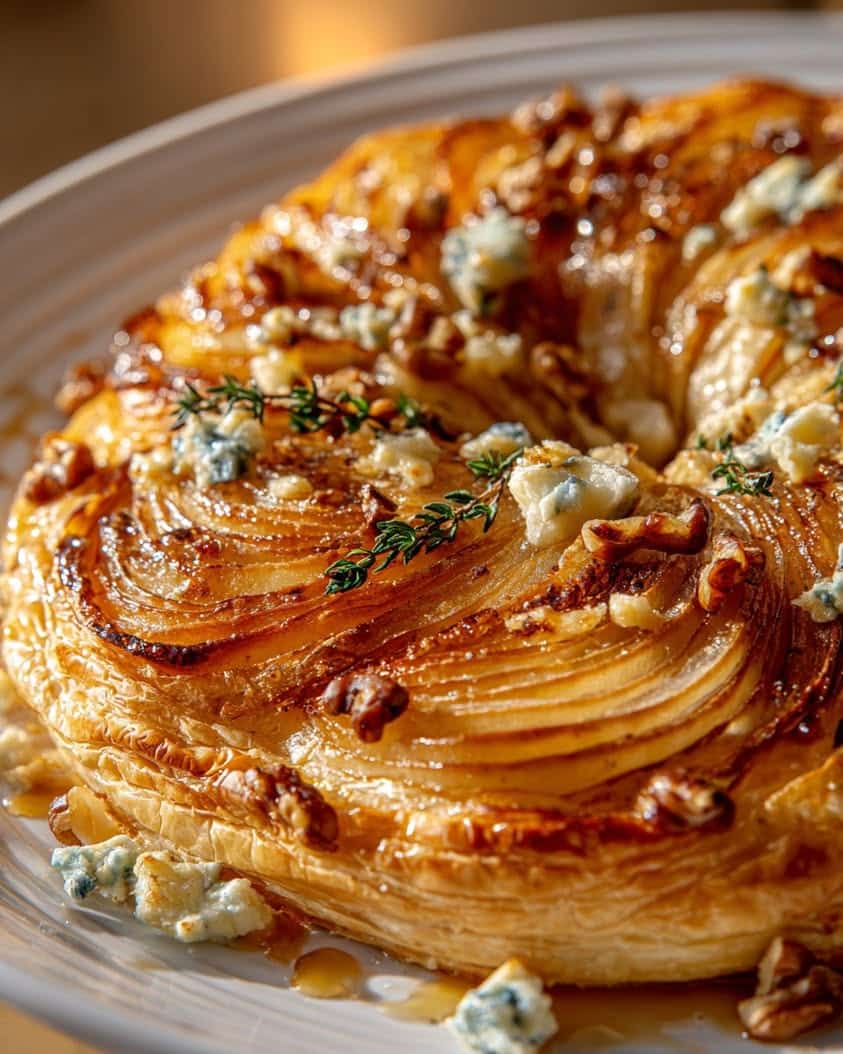
Caramelized Pear & Blue Cheese Tart Wreath: An Elegant Appetizer for Any Occasion
This stunning caramelized pear and blue cheese tart wreath combines sweet and savory flavors in a truly spectacular presentation. Imagine tender, caramelized pears nestled on a flaky puff pastry base, all topped with creamy, tangy blue cheese and a drizzle of honey. This elegant appetizer looks like it came from a professional bakery, yet it’s surprisingly simple to create at home. The beautiful wreath shape makes it perfect for holiday gatherings, dinner parties, or any special occasion where you want to impress your guests with minimal effort.
The magic of this pear and blue cheese tart lies in its perfect balance of flavors and textures. Each bite offers the buttery crunch of puff pastry, the sweet softness of caramelized pears, and the sharp creaminess of blue cheese. Furthermore, the aromatic thyme and honey drizzle elevate this dish from simple to sublime. This impressive appetizer will have your guests wondering about your secret culinary training, while you’ll know the truth about how straightforward this beautiful creation really is to prepare.
Creating this caramelized pear and blue cheese tart requires just a few quality ingredients and some basic kitchen techniques. The process begins with selecting ripe but firm pears that will hold their shape during cooking. Subsequently, you’ll work with store-bought puff pastry to save time while still achieving that professional, flaky result. The assembly is surprisingly meditative and creative, allowing you to build the beautiful wreath pattern that makes this dish so visually striking. Ultimately, this recipe proves that impressive entertaining food doesn’t need to be complicated or time-consuming.
Quick Recipe Highlights
- Flavor Profile: This pear and blue cheese tart delivers a sophisticated balance of sweet caramelized pears against the sharp, salty tang of quality blue cheese. The combination creates a complex flavor experience that dances across your palate, while the honey drizzle and fresh thyme add floral and herbal notes that tie everything together beautifully.
- Texture: Expect delightful textural contrasts with every bite of this pear tart. The flaky, buttery puff pastry provides a crisp foundation, while the tender caramelized pears offer soft sweetness. Meanwhile, the creamy blue cheese adds richness that melts in your mouth, creating a truly satisfying mouthfeel.
- Aroma: As this pear and blue cheese tart bakes, your kitchen will fill with the warm, comforting scent of caramelizing fruit and toasting pastry. The aromatic thyme releases its herbal fragrance, while the blue cheese contributes a subtle pungent note that promises complex flavors to come.
- Visual Appeal: The wreath presentation of this pear tart makes it a true showstopper on any table. The spiral pattern of pear slices creates a beautiful floral effect, while the crumbled blue cheese and thyme sprigs add visual interest and color contrast that looks both rustic and elegant.
- Skill Level Needed: This pear and blue cheese tart requires basic kitchen skills like slicing fruit and working with pastry. While the presentation looks professional, the techniques are accessible to confident beginners who can follow instructions carefully. The most important skill is patience during assembly to create the beautiful wreath pattern.
- Special Equipment: You’ll need a baking sheet, parchment paper, a sharp knife, and a rolling pin for this pear tart recipe. A pastry brush helps with egg washing, and a skillet is useful for caramelizing the pears. Otherwise, no special equipment is required, making this an accessible recipe for most home cooks.
Recipe Overview
- Difficulty Level: This pear and blue cheese tart falls into the intermediate category due to the assembly technique required for the wreath shape. While the individual steps are simple, creating the beautiful spiral pattern takes patience and attention to detail. The caramelization process also requires careful monitoring to prevent burning, making this recipe best for cooks with some kitchen experience.
- Category: This versatile pear tart works beautifully as an elegant appetizer, a stunning first course, or even a light main dish when paired with a simple salad. The combination of fruit, cheese, and pastry bridges the gap between savory and sweet, making it appropriate for brunch, lunch, or dinner occasions.
- Cuisine: This pear and blue cheese tart draws inspiration from French pastry techniques combined with modern American entertaining sensibilities. The use of puff pastry and fruit with cheese has European roots, while the wreath presentation and approachable method reflect contemporary American cooking trends that prioritize both flavor and visual appeal.
- Cost: Creating this impressive pear tart is surprisingly affordable, especially considering the visual impact it delivers. The most expensive components are the blue cheese and puff pastry, but both are available at various price points. Overall, this recipe provides gourmet results without gourmet pricing, making it an excellent value for entertaining.
- Season: While this pear and blue cheese tart shines during autumn when pears are at their peak, it works year-round with proper fruit selection. Fall and winter holidays particularly suit this warm, comforting dish, though it also makes a beautiful addition to spring brunches or summer parties when served at room temperature.
- Occasion: This stunning pear tart elevates any gathering from casual to special. It’s perfect for holiday entertaining, dinner parties, bridal or baby showers, and celebratory meals. The beautiful presentation makes it ideal for occasions where you want the food to make a statement without requiring professional-level cooking skills.
Why You’ll Love This Recipe
The flavor combination in this pear and blue cheese tart creates an unforgettable taste experience that will have your guests requesting the recipe. The sweet caramelized pears provide a beautiful contrast to the sharp, creamy blue cheese, while the flaky pastry adds buttery richness that ties everything together. Each component complements the others perfectly, resulting in a sophisticated flavor profile that feels both comforting and elegant. Furthermore, the hint of fresh thyme and drizzle of honey add complexity that makes each bite interesting and satisfying.
Preparation convenience makes this pear tart an excellent choice for busy hosts who want to serve impressive food. Using store-bought puff pastry saves considerable time without compromising quality or flavor. Additionally, you can prepare components in advance, then assemble and bake shortly before serving. The recipe requires minimal active cooking time, allowing you to focus on other party preparations or simply enjoy your guests’ company. This approachable method delivers professional-looking results that belie the straightforward process.
Nutritional considerations make this pear and blue cheese tart a relatively balanced choice for entertaining. Pears provide dietary fiber and vitamin C, while blue cheese offers calcium and protein. Using puff pastry sparingly as a base means the dish isn’t overly heavy, and the vegetable and fruit components provide more nutritional value than many traditional appetizers. When served in appropriate portions as part of a varied menu, this dish contributes to a well-rounded eating experience.
Social and entertaining value represents one of the strongest assets of this beautiful pear tart. The wreath presentation creates an immediate visual impact that sparks conversation and admiration. The combination of familiar ingredients in an elegant format makes it accessible to various tastes, while the sophisticated flavor profile impresses more adventurous eaters. This dish serves as a fantastic centerpiece for any appetizer spread and photographs beautifully for social media sharing.
Cost-effectiveness and accessibility make this recipe a practical choice for regular entertaining. The ingredients are readily available at most supermarkets year-round, and none require special sourcing or excessive expense. Compared to similar purchased appetizers from bakeries or caterers, this homemade version costs significantly less while often tasting better. The recipe scales easily for larger gatherings, and leftovers maintain their quality for enjoyable next-day eating.
Historical Background and Cultural Significance
The combination of fruit and cheese in pastry has deep roots in European culinary traditions, particularly in France where both sweet and savory tarts feature prominently in regional cooking. The French have long embraced the concept of fruit and cheese pairings, recognizing how each enhances the other’s best qualities. This pear and blue cheese tart represents a modern interpretation of these classic flavor marriages, updated with contemporary presentation techniques. The wreath shape particularly reflects current food styling trends that prioritize visual appeal alongside taste.
Cultural importance of fruit and cheese pairings spans numerous societies that have historically valued both preservation methods. Cheese making and fruit cultivation represent some of humanity’s oldest food technologies, and combining them makes practical sense beyond mere flavor considerations. The acidity in fruit cuts through the richness of cheese, while the fat in cheese helps balance fruit’s natural sugars. This pear tart honors this ancient culinary wisdom while presenting it in a format suited to modern entertaining preferences and aesthetic sensibilities.
Evolution of the fruit and cheese tart has seen numerous variations across different regions and time periods. Medieval European cooks often combined seasonal fruits with local cheeses in pastry coffins, primarily as a preservation method. As refrigeration became available, the emphasis shifted from preservation to flavor enhancement and visual presentation. This particular pear and blue cheese tart represents the current pinnacle of this evolution, where aesthetic considerations receive equal attention to taste, and convenience factors acknowledge contemporary time constraints.
Regional variations of fruit and cheese tarts appear throughout culinary traditions worldwide. From Italian crostatas to British ploughman’s lunch-inspired pastries, the combination appears in numerous cultural contexts. French tarte tatin inspired the caramelized fruit component, while Danish pastry techniques influenced the wreath presentation. This pear tart synthesizes these international influences into a cohesive recipe that respects its culinary heritage while establishing its own unique identity through specific ingredient choices and assembly methods.
Ingredient Deep Dive
Pears form the sweet foundation of this tart, and selecting the right variety significantly impacts your final result. Choose firm, slightly underripe Bartlett or Anjou pears that will maintain their structure during cooking while still developing sweet flavor. Historically, pears symbolize immortality in Chinese culture and were sacred to Greek goddesses, reflecting their long-standing culinary importance. Nutritionally, pears provide substantial dietary fiber, vitamin C, and copper while being low in calories. Store unripe pears at room temperature until they yield slightly to pressure near the stem, then refrigerate to slow further ripening.
Blue cheese contributes the savory counterpoint that makes this tart so memorable. The blue mold cultures in these cheeses developed accidentally in caves where cheeses were aged, creating the distinctive veining and pungent flavor. Roquefort, Gorgonzola, or Stilton all work beautifully, each offering slightly different characteristics from sharp to creamy. Nutritionally, blue cheese provides complete protein, calcium, phosphorus, and vitamin B12. Store wrapped in parchment paper inside an airtight container in your refrigerator’s cheese drawer. For those who find blue cheese too strong, feta or goat cheese make excellent milder alternatives.
Puff pastry provides the flaky foundation that supports the other ingredients while adding rich, buttery flavor. This laminated dough technique originated in France and Austria, where bakers created hundreds of thin layers through repeated folding and rolling. While homemade puff pastry offers superior flavor, quality store-bought versions work excellently and save considerable time. The pastry contains minimal nutritional value beyond carbohydrates and fats, but serves primarily as a textural vehicle for the more nutrient-dense toppings. Keep frozen until ready to use, then thaw in the refrigerator overnight for best results.
Fresh thyme may seem like a minor component, but its herbal notes tie all the other flavors together beautifully. This ancient herb has been used for thousands of years for both culinary and medicinal purposes, with Egyptians employing it in embalming and Romans using it to purify their homes. Nutritionally, thyme contains thymol, an essential oil with antioxidant properties, along with vitamin C and vitamin A. The hardy herb stores well wrapped in damp paper towels in a plastic bag in the refrigerator. Rosemary or sage can substitute if necessary, though their stronger flavors require more careful application.
Common Mistakes to Avoid
- Using overripe pears will result in mushy texture and excessive moisture that can make your pastry soggy. Always select firm fruit that will hold its shape during the caramelization process and baking. Test for ripeness by applying gentle pressure near the stem – it should yield slightly but not feel soft throughout.
- Rolling puff pastry too thin compromises the structural integrity needed to support the pear arrangement. Maintain an even thickness of about ¼ inch to ensure proper rising and a sturdy base. Conversely, dough that’s too thick won’t cook through properly, resulting in raw, doughy sections beneath the toppings.
- Overcrowding the pear slices disrupts the beautiful wreath pattern and can prevent even cooking. Arrange the slices with slight overlap, but ensure each piece has contact with the pastry base. Proper spacing allows heat circulation that ensures every slice caramelizes properly without steaming.
- Skipping the egg wash diminishes both color and texture in the finished tart. The egg creates a golden, glossy finish while helping the pastry achieve maximum flakiness. For best results, beat the egg thoroughly and apply a thin, even layer using a pastry brush.
- Using blue cheese that’s too cold makes crumbling difficult and can result in uneven distribution. Remove cheese from refrigeration about 30 minutes before using to allow it to reach a workable temperature. This simple step makes the crumbling process cleaner and more precise.
- Neglecting to caramelize the pears before assembling the tart misses an opportunity for flavor development. The preliminary cooking step intensifies the fruit’s natural sweetness and ensures proper texture. Rushing this process or cooking at too high temperature can cause burning rather than proper caramelization.
- Cutting the pastry before baking disrupts the structural integrity needed for clean serving portions. Instead, score lightly with a sharp knife to mark serving sizes without cutting completely through the dough. This technique maintains the wreath’s visual unity while ensuring easy separation after baking.
- Baking on an improperly prepared sheet often leads to sticking or uneven browning. Always use parchment paper or a silicone baking mat to prevent adhesion and promote even heat distribution. Additionally, a light preheating of the baking sheet can help crisp the bottom crust.
Essential Techniques
Caramelizing pears properly forms the flavor foundation of this tart. This process involves cooking sliced pears in butter and sugar until they develop golden-brown color and intensified sweetness. The technique requires medium heat and occasional stirring to ensure even coloring without burning. Visual cues for perfect caramelization include translucent pear slices with golden edges and a fragrant, buttery aroma. Common pitfalls include rushing the process with high heat, which creates bitter burnt spots, or overcrowding the pan, which steams rather than caramelizes the fruit.
Working with puff pastry demands understanding of its unique laminated structure. The dough contains hundreds of paper-thin layers of butter and flour that create flakiness when the butter melts and releases steam during baking. Proper handling means working quickly to keep the butter cold and using minimal flour during rolling to prevent sticking. Success requires thawing frozen pastry gradually in the refrigerator rather than at room temperature, which maintains proper texture. The most common mistake involves overworking the dough, which compresses the layers and reduces flakiness.
Creating the wreath pattern involves strategic arrangement of pear slices in concentric circles. This technique begins by leaving a border around the pastry edge, then overlapping pear slices slightly as you work toward the center. The arrangement should resemble flower petals radiating outward, with each slice angled consistently for visual harmony. Proper execution requires patience and attention to spacing – too close together creates crowding, while too far apart looks sparse. The finished pattern before baking should clearly show the wreath formation with even distribution of ingredients.
Egg washing provides both aesthetic and functional benefits to the finished tart. This technique involves brushing beaten egg over exposed pastry surfaces to create golden color and shine during baking. Proper application uses a pastry brush to apply a thin, even layer without pooling or dripping down the sides. The egg proteins promote browning through the Maillard reaction while helping the pastry achieve maximum flakiness. Common errors include using too much egg, which can weigh down delicate layers, or missing edges, which results in uneven coloring.
Pro Tips for Perfect Caramelized Pear and Blue Cheese Tart
Chill your assembled tart for 15 minutes before baking to ensure the pastry maintains its structure and rises properly. This simple step solidifies the butter in the puff pastry, resulting in superior flakiness and preventing the wreath from losing its shape in the oven’s initial heat.
Create a flavor-enhanced honey drizzle by warming the honey gently with fresh thyme sprigs before applying. This infusion process allows the herbal notes to permeate the sweetener, creating a more complex finishing element that complements both the pears and blue cheese beautifully.
Rotate your baking sheet halfway through cooking to compensate for any hot spots in your oven. Most home ovens have uneven heat distribution, and this simple rotation ensures uniform browning and cooking throughout your beautiful pear and blue cheese tart.
Allow the baked tart to rest for at least 10 minutes before slicing to let the components set properly. This resting period allows the cheese to firm up slightly and the pear juices to redistribute, resulting in cleaner slices that maintain their structural integrity.
Experiment with different blue cheese varieties to customize the flavor profile to your preferences. Creamier varieties like Cambozola create a milder result, while sharper options like Roquefort deliver more pronounced tang that contrasts dramatically with the sweet pears.
Add textural interest by sprinkling chopped walnuts or pecans over the tart during the last five minutes of baking. The nuts toast lightly in the oven, adding crunch that contrasts beautifully with the soft pears and creamy cheese.
Variations and Adaptations
Regional variations can transform this pear tart to reflect different culinary traditions. For a French-inspired version, use Roquefort cheese and add caramelized shallots beneath the pear layer. Italian adaptation might feature Gorgonzola dolce with a balsamic glaze reduction instead of honey. Scandinavian interpretation could incorporate cardamom in the pastry and lingonberry preserves as an accompaniment. These regional touches honor traditional flavor combinations while maintaining the beautiful wreath presentation that makes this recipe special.
Seasonal adaptations allow this tart to shine throughout the year with appropriate fruit substitutions. Spring versions might feature caramelized apples with aged cheddar and rosemary. Summer adaptation could use nectarines or peaches with goat cheese and basil. Autumn naturally suits the pear version, while winter might incorporate persimmons with brie and sage. Each seasonal variation maintains the sweet-savory balance while showcasing the best produce available during different times of year.
Dietary modifications make this recipe accessible to various eating preferences and restrictions. Gluten-free puff pastry works perfectly for those avoiding wheat, while vegan versions can utilize plant-based butter in the pastry and vegan blue cheese alternatives. Lower-carb adaptation might feature a almond flour crust with reduced honey. Dairy-free versions can substitute the blue cheese with seasoned tofu crumble or nutritional yeast mixture that mimics the tangy flavor profile.
Flavor variations can dramatically change the character of this tart while maintaining the same technique. Savory options might include caramelized onions and gruyere instead of the fruit and blue cheese. Sweet interpretations could feature apples with brie and cinnamon for a dessert-like result. Mediterranean-inspired version might incorporate figs with manchego cheese and rosemary. Each flavor combination offers a unique experience while utilizing the same beautiful wreath assembly method.
Serving and Presentation Guide
Plating techniques should highlight the beautiful wreath shape that makes this tart so visually striking. Serve the entire tart on a large wooden board or decorative platter that provides contrast to the golden pastry. Use a sharp serrated knife or pizza cutter for clean slices that maintain the structural integrity of each portion. Consider placing the whole tart at the center of the table for dramatic presentation before slicing, allowing guests to admire your handiwork.
Garnishing ideas should enhance rather than overwhelm the tart’s natural beauty. Fresh thyme sprigs placed strategically around the wreath add color and reinforce the herbal notes in the dish. Microgreens or edible flowers scattered lightly over the surface provide elegant restaurant-style presentation. Additional honey drizzled in artistic patterns just before serving adds shine and visual interest. Remember that garnishes should be edible and complement the existing flavors rather than introducing conflicting elements.
Traditional accompaniments balance the rich flavors of the pear and blue cheese tart. A simple green salad with bitter greens like arugula or radicchio provides refreshing contrast to the rich pastry. Pickled vegetables like cornichons or pickled onions cut through the fat with their acidity. Fresh fruit such as grapes or apple slices continue the fruit theme while offering palate-cleansing freshness between bites of the richer tart.
Wine and Beverage Pairing
Wine pairings should complement both the sweet pears and pungent blue cheese in this tart. Off-dry white wines like Riesling or Gewürztraminer provide enough sweetness to balance the salty cheese while matching the fruit’s natural sugars. Light-bodied reds such as Pinot Noir offer sufficient acidity to cut through the richness without overwhelming the delicate pear flavor. For those who prefer richer wines, oaked Chardonnay stands up well to the bold flavors while complementing the buttery pastry.
Non-alcoholic alternatives can be equally sophisticated when carefully selected. Sparkling apple cider mirrors the fruit elements while providing cleansing bubbles that cut through the richness. Ginger beer offers spicy notes that complement both the sweet and savory components. Herbal teas like chamomile or mint served iced provide refreshing counterpoints that don’t compete with the complex flavors of the pear and blue cheese tart.
Coffee and tea pairings work beautifully when selecting complementary flavor profiles. Medium-roast coffee with low acidity enhances the caramel notes in the pears without bitterness. Earl Grey tea’s bergamot notes provide aromatic complexity that highlights the thyme in the recipe. Chai tea’s warm spices create a cozy pairing perfect for autumn or winter occasions when this tart often appears.
Storage and Shelf Life
Storage methods vary depending on whether the pear tart is fully assembled, baked, or contains leftovers. Unbaked assembled tart can be covered tightly and refrigerated for up to 8 hours before baking with minimal quality loss. Baked tart should be cooled completely before storage to prevent condensation that would make the pastry soggy. Always store in a single layer rather than stacking slices, which preserves the flaky texture of the puff pastry.
Temperature requirements ensure optimal quality and food safety for your pear and blue cheese creation. Never leave the tart at room temperature for more than two hours, as the dairy components create food safety concerns. Refrigerated leftovers maintain best quality for 2-3 days when properly stored in an airtight container. For longer storage, freezing provides the best option, though texture will suffer slightly upon thawing.
Reheating instructions focus on restoring crispness to the pastry without overcooking the delicate toppings. Conventional ovens at 350°F for 8-10 minutes work far better than microwaves, which create soggy texture. For individual slices, toaster ovens provide excellent results with minimal energy use. Always reheat until just warmed through rather than piping hot, which preserves the quality of the pears and cheese.
Make Ahead Strategies
Prep timeline can be stretched over two days for maximum convenience when entertaining. Day one can include shopping, pear caramelization, and cheese crumbling, with all components stored separately in airtight containers. Day two involves pastry thawing, assembly, and baking shortly before serving. This staggered approach minimizes last-minute tasks while ensuring the freshest possible result.
Storage between steps requires understanding how each component maintains quality. Caramelized pears should be cooled completely before refrigeration in a sealed container with any cooking juices. Puff pastry must be thawed gradually in the refrigerator, never at room temperature where the butter can separate. Blue cheese should be crumbled just before assembly to prevent excessive drying, though measuring can be done in advance.
Assembly tips for make-ahead preparation focus on maintaining the pastry’s integrity. The fully assembled unbaked tart can be refrigerated for several hours, but should be covered loosely with plastic wrap that doesn’t touch the surface. For longer advance preparation, freeze the assembled unbaked tart solid on the baking sheet before wrapping tightly for storage up to one month.
Scaling Instructions
Halving the recipe works beautifully for smaller gatherings or household consumption. Use one sheet of puff pastry instead of two, and arrange the pear slices in a single circle rather than concentric rings. Baking time may decrease by 3-5 minutes due to the smaller mass, so begin checking for doneness earlier. All other ingredient quantities should be reduced by approximately half, though the honey drizzle might require slightly less reduction.
Doubling or tripling the recipe requires practical considerations about oven space and baking sheets. Multiple tarts should be baked on separate racks with rotation halfway through cooking to ensure even browning. Staggered baking might be necessary if oven space is limited, with the first tart kept warm while the second bakes. Ingredient measurements scale linearly, though the pear caramelization might need to be done in batches to prevent steaming.
Equipment adjustments become necessary when significantly scaling this pear tart recipe. Larger baking sheets or multiple standard sheets are essential for doubled or tripled batches. Consider using convection oven settings if available, which promote even browning when baking multiple items simultaneously. For very large batches, commercial sheet pans and professional ovens provide the most consistent results, though home kitchens can produce excellent outcomes with careful management.
Nutritional Deep Dive
Macro breakdown of this pear and blue cheese tart reflects its status as a special occasion dish rather than everyday fare. Each serving provides approximately 280 calories with 18 grams of fat from the pastry and cheese, 24 grams of carbohydrates primarily from the pears and pastry, and 6 grams of protein mostly from the cheese. The fat content comes mainly from the puff pastry’s butter and the cheese, creating the rich mouthfeel that makes this dish so satisfying.
Micronutrient analysis reveals several beneficial components beyond the macronutrients. Pears contribute vitamin C and copper, while blue cheese provides significant calcium and phosphorus. The egg wash adds minimal but complete protein and various B vitamins. Thyme contributes small amounts of vitamin A and vitamin C along with various antioxidants. While not a nutritional powerhouse, the dish offers more micronutrient diversity than many similar pastry-based appetizers.
Health benefits derive primarily from the fruit and cheese components rather than the pastry. Pears offer dietary fiber that supports digestive health, while blue cheese provides probiotics that contribute to gut microbiome balance. The combination offers more nutritional value than many traditional pastry appetizers, though it should still be considered an occasional treat rather than everyday nutrition.
Dietary Adaptations
Gluten-free adaptation simply requires using quality gluten-free puff pastry, which has become increasingly available. The texture may differ slightly from traditional wheat-based pastry, but the flavor profile remains excellent. Ensure all other ingredients are certified gluten-free, particularly checking blue cheese varieties, as some use wheat-based cultures during production.
Dairy-free modification involves substituting the butter for pear caramelization with olive oil and using vegan blue cheese alternatives. Nutritional yeast can help replicate the tangy flavor if commercial vegan blue cheese isn’t available. Vegan puff pastry uses plant-based fats instead of butter, creating a similar flaky texture without dairy components.
Low-carb and keto adaptations focus on replacing the puff pastry with a fat-based crust. Almond flour or coconut flour combined with cheese and egg can create a serviceable base, though the texture will differ significantly. Sugar-free sweeteners can replace the honey drizzle, and the natural sugars in pears make them less suitable for strict keto, requiring substitution with lower-carb fruits like berries.
Troubleshooting Guide
Soggy bottom crust typically results from insufficient oven heat or overloading with moist ingredients. Solutions include preheating the baking sheet, ensuring proper pear caramelization to reduce moisture, and baking on the oven’s lower rack. If your oven runs cool, increase the temperature by 25°F or extend the baking time slightly until the bottom is golden and crisp.
Uneven browning often stems from oven hot spots or improper rack positioning. Rotate the baking sheet halfway through cooking and ensure adequate space around the tart for air circulation. If certain areas brown too quickly, create foil shields to protect them while the rest catches up. Convection baking settings can promote more even browning if available.
Blue cheese melting excessively into the pastry rather than maintaining its form usually indicates the cheese was too warm during application or the pieces were too small. Chill the cheese thoroughly before crumbling, and use larger pieces that will soften without completely disappearing. Sprinkling the cheese during the final few minutes of baking rather than at the beginning can also help maintain its definition.
Recipe Success Stories
Community feedback consistently highlights how this pear and blue cheese tart impresses guests despite its straightforward preparation. Home cooks report receiving compliments that far exceed the actual effort invested, with many guests assuming the dish came from a professional bakery. The beautiful presentation particularly resonates with those entertaining for special occasions where food aesthetics matter as much as flavor.
Variation successes demonstrate the recipe’s adaptability to different tastes and ingredient availability. Cooks have successfully substituted apples, peaches, and even mangoes for the pears with excellent results. Cheese variations span from feta to brie to aged cheddar, each creating a distinct flavor profile while maintaining the recipe’s essential character. These adaptations prove the technique’s versatility beyond the specific ingredient combination.
Reader suggestions have improved the recipe through collective kitchen wisdom. Notable contributions include adding a light sprinkle of flaky sea salt before serving to enhance all the flavors, and brushing the pear slices with the caramel pan juices for intensified flavor. Some cooks recommend scoring the pastry border more deeply than initially instructed to ensure clean separation after baking.
Frequently Asked Questions
Can I make this pear tart completely ahead and reheat it? While best served fresh, you can bake the tart earlier in the day and reheat it in a 350°F oven for 8-10 minutes before serving. The pastry will lose some crispness but still taste delicious. For optimal texture, assemble the tart ahead and refrigerate unbaked, then bake just before serving.
What’s the best pear variety for this recipe? Firm, slightly underripe Bartlett or Anjou pears work best as they hold their shape during cooking. Avoid overly ripe pears that will become mushy. The caramelization process softens the fruit perfectly, so starting with fruit that’s too ripe results in texture issues.
My family doesn’t like blue cheese – what can I substitute? Goat cheese provides similar tanginess with milder flavor, while feta offers saltiness without the distinctive blue cheese character. For a completely different profile, aged white cheddar creates a beautiful pairing with the caramelized pears while maintaining the sweet-savory balance.
Can I freeze the assembled unbaked tart? Yes, assemble the tart completely, freeze solid on the baking sheet, then wrap tightly in plastic and foil. Bake directly from frozen, adding 5-8 minutes to the cooking time. The texture may differ slightly from fresh, but results remain excellent.
Why did my pastry not puff properly? Several factors can inhibit puff pastry rising: butter was too warm during handling, the pastry was overworked compressing the layers, or the oven temperature was too low. Ensure cold ingredients, gentle handling, and proper oven preheating for optimal puff.
How do I prevent the honey from making the tart too sweet? Use a light hand with the honey drizzle, and consider balancing it with a sprinkle of flaky sea salt before serving. The salt enhances all flavors while cutting perceived sweetness. Alternatively, reduce the honey quantity and supplement with fresh thyme leaves for aromatic complexity.
Can I use phyllo dough instead of puff pastry? Phyllo creates a different texture – crisper and flakier rather than buttery and layered. If substituting, brush each phyllo sheet with melted butter and stack several layers to create sufficient structure. The baking time may decrease, so watch carefully for doneness.
What’s the best way to transport this tart to a party? Bake the tart at your destination if possible. If transporting baked, cool completely and carry on a baking sheet covered loosely with foil. Avoid plastic wrap, which creates condensation that softens the pastry. Reheat briefly upon arrival if possible.
How do I achieve perfectly even pear slices? Use a mandoline slicer for uniformly thin slices that cook evenly. If cutting by hand, choose pears of consistent width and use a sharp knife, rotating the fruit as you slice to maintain even thickness throughout.
Can I add protein to make this a main dish? Crispy pancetta or prosciutto scattered over the tart before baking adds protein and salty contrast. For vegetarian protein, toasted walnuts or pecans provide substance and textural interest while complementing the existing flavors.
Additional Resources
Related recipes that complement this pear and blue cheese tart include simple green salads with bright vinaigrettes that cut through the richness. A bitter greens salad with citrus dressing provides particularly excellent balance. For dessert, consider light fruit-based options that continue the seasonal theme without overwhelming guests after the rich appetizer course.
Technique guides for working with puff pastry can elevate your results beyond this specific recipe. Understanding proper thawing methods, rolling techniques, and egg wash application improves all your pastry-based creations. laminated dough principles apply to numerous baked goods from palmiers to vol-au-vents, making this knowledge broadly useful in home baking.
Ingredient information resources help you select the best components for optimal flavor. Learning about pear varieties and their best uses ensures perfect fruit selection for any recipe. Cheese education helps you understand flavor profiles and texture characteristics that inform successful pairings with fruits and other ingredients.
PrintCaramelized Pear & Blue Cheese Tart Wreath
Description
A savory-sweet tart wreath featuring caramelized pears and tangy blue cheese, wrapped in flaky puff pastry for an elegant appetizer or main course.
Ingredients
For the Crust:
- 1 sheet puff pastry, thawed
- 2 ripe pears, thinly sliced
- 2 tbsp butter
- 2 tbsp brown sugar
- 1/4 tsp cinnamon
- 1/2 cup crumbled blue cheese
- 1 egg, beaten (for egg wash)
- 1 tbsp fresh thyme leaves
- Salt and pepper to taste
Instructions
1. Prepare the Crust:
- Preheat oven to 400°F (200°C). Line a baking sheet with parchment paper.
- In a skillet over medium heat, melt butter and brown sugar. Add pear slices and cinnamon, cooking until pears are tender and caramelized, about 5-7 minutes. Set aside to cool.
- Roll out puff pastry on the prepared baking sheet. Cut slits around the edges, leaving the center intact. Arrange caramelized pears and blue cheese over the center.
- Fold pastry edges over the filling, overlapping to form a wreath shape. Brush with egg wash and sprinkle with thyme, salt, and pepper.
- Bake for 20-25 minutes, until pastry is golden brown and puffed. Let cool slightly before serving.
Notes
You can customize the seasonings to taste.

I’m Shaykee—born in Morocco, seasoned across continents. From airplane galleys to home kitchens, I share the flavors and stories that shaped my journey.