
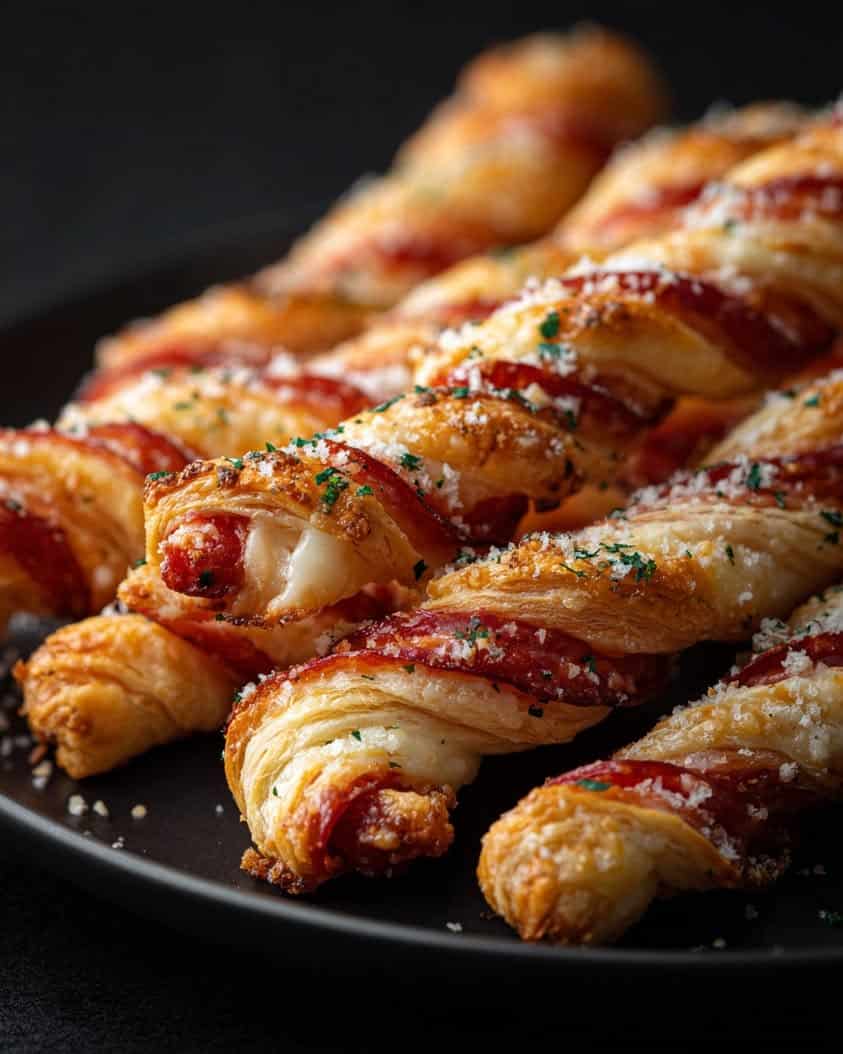
Candy Cane Puff Pastry Twists: An Easy Holiday Delight
Creating festive holiday treats should be a joyful experience, not a stressful kitchen marathon. These Candy Cane Puff Pastry Twists perfectly capture the spirit of the season with minimal effort. They combine the flaky, buttery layers of puff pastry with the classic peppermint sweetness of candy canes. Furthermore, they transform simple ingredients into an impressive dessert that looks like it came from a professional bakery.
The magic of these Candy Cane Puff Pastry Twists lies in their elegant simplicity. You only need three main ingredients to create a treat that will have your guests asking for the recipe. Consequently, you can spend less time baking and more time enjoying holiday moments with family and friends. The process is straightforward, making it an ideal project for novice bakers or a fun activity to do with children.
Imagine the aroma of baking pastry filling your kitchen, mingling with the refreshing scent of peppermint. Visually, these twists are stunning with their iconic red and white swirls reminiscent of traditional candy canes. They offer a delightful crunch followed by a melt-in-your-mouth texture that is utterly addictive. Ultimately, this recipe proves that the most memorable holiday treats are often the simplest ones to prepare.
Quick Recipe Highlights
- Flavor Profile: These Candy Cane Puff Pastry Twists deliver a perfect balance of rich, buttery pastry and cool, refreshing peppermint. The sweetness is present but not overwhelming, allowing the quality of the puff pastry to shine through. Additionally, a subtle saltiness from the pastry enhances the overall flavor complexity.
- Texture: Experience an incredible textural contrast starting with a shatteringly crisp exterior that gives way to hundreds of delicate, airy layers inside. The crushed candy cane topping provides a satisfying crunch and a slight melt-on-the-tongue quality. This combination creates a truly sophisticated mouthfeel.
- Aroma: As these Candy Cane Puff Pastry Twists bake, they release a warm, comforting scent of butter and toasted flour. The peppermint adds a bright, festive note that fills your kitchen with holiday cheer. This aromatic blend is unmistakably Christmas.
- Visual Appeal: The twisted shape and red-and-white color scheme make these treats instantly recognizable as a holiday specialty. They have a beautiful, rustic elegance that looks wonderful on any dessert platter. The sparkling sugar and candy cane pieces add a festive touch that catches the light.
- Skill Level Needed: This recipe is exceptionally beginner-friendly, requiring no advanced baking techniques or special skills. Essentially, if you can use a rolling pin and twist dough, you can create perfect Candy Cane Puff Pastry Twists. It is a fantastic confidence-builder for those new to holiday baking.
- Special Equipment: You need only basic kitchen tools: a baking sheet, parchment paper, a rolling pin, and a knife or pizza cutter. A food processor or plastic bag with a rolling pin works perfectly for crushing the candy canes. No fancy equipment is necessary for success.
Recipe Overview
- Difficulty Level: We classify these Candy Cane Puff Pastry Twists as easy because they utilize store-bought puff pastry, eliminating the most challenging aspect of pastry making. The techniques involved—brushing, sprinkling, and twisting—are fundamental and require no prior expertise. Therefore, bakers of all levels can achieve beautiful, professional-looking results with minimal stress.
- Category: These delightful twists fall squarely into the holiday desserts and Christmas cookies category. They also function wonderfully as a sweet breakfast pastry or an afternoon treat with coffee or tea. Their versatility makes them suitable for various dining occasions throughout the festive season.
- Cuisine: While puff pastry has French origins, this specific application is a modern American holiday creation. It embodies the festive, convenience-oriented approach that characterizes much of contemporary American holiday cooking. The recipe celebrates tradition while embracing practical, time-saving solutions.
- Cost: This is an incredibly budget-friendly recipe, with the primary cost being the package of puff pastry. Candy canes are inexpensive, especially after the holiday season, and an egg is a minimal expense. You can create an impressive platter of treats for a fraction of the cost of store-bought alternatives.
- Season: These twists are quintessentially a winter holiday recipe, specifically designed for the Christmas season. The peppermint flavor and candy cane aesthetic directly connect to traditional December celebrations. They are less suitable for other seasons where peppermint is not as culturally relevant.
- Occasion: Perfect for Christmas parties, cookie exchanges, holiday brunches, or as edible gifts for neighbors and teachers. They also make a fun baking project for family gatherings or a cozy weekend activity during the Advent season. Their festive appearance enhances any holiday table setting.
Why You’ll Love This Recipe
The taste and texture of these Candy Cane Puff Pastry Twists are genuinely exceptional. Firstly, the buttery, flaky layers of the puff pastry create a luxurious base that practically dissolves in your mouth. Meanwhile, the crushed candy canes provide a refreshing peppermint zing and a delightful crystalline crunch. This combination of sophisticated pastry and festive flavor is utterly irresistible. Additionally, the subtle sweetness allows the quality of the ingredients to shine without being cloying.
Convenience is another significant advantage of this recipe. Since you start with store-bought puff pastry, you bypass the most time-consuming part of pastry making. The assembly process is quick and straightforward, taking mere minutes from start to oven-ready. Consequently, you can whip up a batch spontaneously when unexpected guests arrive or when the holiday baking urge strikes. This accessibility means you can enjoy homemade treats without a full-day kitchen commitment.
From a social perspective, these Candy Cane Puff Pastry Twists are fantastic conversation starters at holiday gatherings. Their beautiful appearance suggests hours of labor, yet you know the simple truth behind their creation. They make wonderful edible gifts when packaged in cellophane bags with festive ribbons. Furthermore, baking them with children creates cherished holiday memories and introduces young chefs to the joys of cooking. The recipe’s simplicity ensures a positive, successful experience for bakers of all ages.
Cost-effectiveness is another compelling reason to love this recipe. Gourmet-looking pastries from bakeries command premium prices, especially during the holiday season. By making your own Candy Cane Puff Pastry Twists, you achieve similar results at a fraction of the cost. This economy allows you to create generous quantities for gift-giving or party platters without straining your holiday budget. Essentially, you get maximum visual and flavor impact for minimal financial investment.
Finally, the versatility of this recipe adds to its appeal. While delicious as written, the basic method serves as a canvas for countless variations throughout the year. You can adapt the concept with different spices, extracts, and toppings to suit any season or occasion. This adaptability makes it a valuable addition to your recipe repertoire. Ultimately, these twists offer a perfect blend of tradition, convenience, and creativity that epitomizes joyful holiday baking.
Historical Background and Cultural Significance
The candy cane itself has a rich history dating back to 17th-century Europe. Originally, they were simple white sugar sticks created to keep children quiet during lengthy Christmas church services. The iconic hook shape emerged later, supposedly to represent a shepherd’s crook, connecting to the Nativity story. The peppermint flavoring became popular in the 20th century, establishing the classic flavor profile we recognize today. Meanwhile, red stripes were added, enhancing their visual appeal and solidifying their status as a Christmas symbol.
Puff pastry has an entirely different lineage, with roots in French culinary tradition. The technique of laminating dough with butter to create hundreds of flaky layers was perfected by French chefs in the 17th century. This labor-intensive process was a mark of haute cuisine and professional skill. However, the commercial availability of frozen puff pastry in the mid-20th century democratized this luxurious ingredient. Consequently, home cooks could easily incorporate its sophisticated texture into their baking.
The fusion of these two elements into Candy Cane Puff Pastry Twists is a relatively modern innovation. It represents the late 20th-century trend of simplifying classic techniques while maintaining impressive results. This recipe perfectly captures the contemporary desire for homemade authenticity without excessive time investment. It also reflects the popular practice of creating festive, thematic foods that visually represent holiday symbols. Essentially, it is a treat born from convenience culture and holiday nostalgia.
Culturally, these twists have become part of the modern Christmas baking canon, frequently appearing on food blogs and social media. They embody the spirit of holiday sharing and gifting that defines the season. Their visual connection to the candy cane makes them immediately recognizable and emotionally resonant. Furthermore, they represent how food traditions evolve, blending old-world techniques with new-world convenience and creativity. They are a delicious example of living culinary tradition.
Ingredient Deep Dive
Puff pastry forms the foundation of this recipe, and its quality directly impacts your final result. This laminated dough consists of hundreds of alternating layers of dough and butter. When baked, the water in the butter creates steam, pushing the layers apart to achieve that characteristic flakiness. While making puff pastry from scratch is rewarding, high-quality store-bought versions work excellently. Look for brands that use real butter for the best flavor, and always thaw it properly in the refrigerator for optimal performance.
Candy canes provide the signature flavor and festive appearance in these twists. Traditionally, candy canes are made from sugar, corn syrup, peppermint oil, and coloring. When crushed and baked, they melt slightly, creating delightful crispy pockets and distributing peppermint flavor throughout. For the best results, use traditional peppermint candy canes rather than fruity varieties. You can easily crush them by placing them in a sealed plastic bag and rolling with a rolling pin until you achieve a mix of fine and coarse pieces.
The egg wash is a crucial component that should not be overlooked. Simply whisk one egg with a tablespoon of water or milk until smooth. Brushing this onto the pastry before adding the candy cane pieces serves multiple functions. Primarily, it acts as an edible glue, ensuring the topping adheres during baking. Additionally, it promotes beautiful golden-brown coloration and adds a subtle shine to the finished twists. This small step significantly enhances the professional appearance of your final product.
Common Mistakes to Avoid
- Using thawed but cold puff pastry is essential. If the pastry becomes too warm, the butter will melt out during baking instead of creating steam for lift. Consequently, you will lose the flaky layers that define quality puff pastry. Always work quickly to maintain the dough’s temperature.
- Rolling the pastry too thin can compromise the structural integrity of your twists. The layers need sufficient thickness to expand properly during baking. Aim for about 1/8 to 1/4 inch thickness for the ideal balance of crispness and layered texture.
- Overloading with candy cane pieces may seem like a good idea but can lead to issues. Excessive sugar can cause burning during baking and make the twists overly sweet. A light, even sprinkling provides perfect flavor and visual appeal without compromising the pastry.
- Twisting the strips too tightly can inhibit the pastry’s ability to puff up in the oven. A gentle, loose twist allows room for expansion and creates a more open, flaky structure. Think of creating a relaxed spiral rather than a tight rope.
- Not using parchment paper is a common error that can lead to sticking and difficult cleanup. The melting candy canes can create a sticky residue on your baking sheet. Parchment paper ensures easy removal and protects your pans.
- Baking at the wrong temperature will affect your results. An oven that is too cool won’t create enough steam for proper lift, while one that is too hot may burn the candy pieces before the pastry cooks through. Always preheat your oven properly.
- Skipping the egg wash reduces both visual appeal and topping adhesion. The egg wash provides the necessary surface for the candy cane pieces to stick to during baking. Without it, your topping may slide off the finished twists.
- Cutting the pastry with a dull knife can compress the edges, preventing proper rising. Use a sharp knife or pizza cutter for clean cuts that preserve the layered structure. This attention to detail ensures maximum puff.
Essential Techniques
Proper thawing of puff pastry is the first critical technique for success. Remove the pastry from the freezer and place it in the refrigerator for several hours or overnight. This slow thawing keeps the butter layers firm and distinct. If you try to thaw it at room temperature or in the microwave, the butter will soften unevenly and leak during baking. The pastry should be pliable but still cool to the touch when you unroll it.
The twisting technique itself requires a gentle touch. After cutting your pastry strips and applying the candy cane topping, lift both ends and twist in opposite directions two or three times. The key is to create a loose, relaxed twist rather than a tight spiral. This approach allows room for the pastry to expand dramatically in the oven. If you twist too tightly, you will constrain the layers and reduce the flakiness of your final product.
Egg washing is a simple but vital technique for professional-looking results. Beat one egg with a tablespoon of water until completely combined. Using a pastry brush, apply a thin, even layer across the surface of the pastry. Avoid letting pools of egg wash collect in the crevices, as this can create uneven browning. The egg wash not only helps the candy cane pieces adhere but also gives the baked twists an attractive golden color and slight shine.
Pro Tips for Perfect Candy Cane Puff Pastry Twists
Chill your twisted pastries for 10-15 minutes before baking. This final rest helps the butter firm up again after handling, which results in better oven spring and flakier layers. It is a simple step that makes a noticeable difference in the final texture.
Create a festive sparkling effect by sprinkling the twists with coarse or sanding sugar after the egg wash but before the candy cane pieces. The sugar adds extra crunch and a beautiful sparkle that catches the light, making your treats even more visually appealing for holiday presentations.
Experiment with different candy cane flavors for unique variations. While traditional peppermint is classic, try using cinnamon, watermelon, or even sour apple candy canes for a surprising twist. This approach allows you to customize the flavor profile to your personal preference or to surprise your guests.
For uniform baking, make sure your twists are similar in size and shape. Use a ruler or measuring tape to ensure your pastry strips are cut to equal dimensions. Consistent sizing means all your twists will bake evenly, preventing some from being underdone while others are overbrowned.
If your candy cane pieces are melting excessively and spreading too much during baking, try placing the baking sheet in the freezer for 5 minutes before putting it in the oven. The colder start helps set the pastry before the candy canes fully liquefy, containing them better on the surface.
For an extra flavor dimension, add a light sprinkle of flaky sea salt over the candy cane pieces before twisting. The contrast between sweet peppermint and salty notes elevates the sophistication of this simple treat and keeps the sweetness from becoming one-dimensional.
Variations and Adaptations
For chocolate lovers, create a decadent version by sprinkling mini chocolate chips along with the crushed candy canes. The chocolate melts during baking, creating pockets of rich flavor that complement the peppermint beautifully. You can also drizzle melted chocolate over the cooled twists for an extra indulgent finish. Alternatively, use chocolate puff pastry if you can find it for a double chocolate experience.
Seasonal adaptations allow you to enjoy this technique throughout the year. For Valentine’s Day, use pink and white candy canes or heart-shaped sprinkles. During spring, try pastel-colored candy melts crushed and used in place of candy canes. For a non-holiday version, sprinkle with cinnamon sugar instead of candy canes for a classic pastry twist. The basic method is wonderfully adaptable to any celebration.
Dietary modifications make these treats accessible to more people. For a gluten-free version, use gluten-free puff pastry, which is increasingly available in freezer sections. To make them dairy-free, select a puff pastry made with vegetable shortening instead of butter. While traditional candy canes are vegan, always check labels if this is a concern, as some brands may contain confectioner’s glaze or other animal products.
Presentation alternatives offer creative ways to serve these pastries. Instead of twisting, you can braid three strips together for a more elaborate look. Alternatively, form them into wreath shapes by connecting the ends of the twists. For individual servings, create mini twists using narrower strips of pastry. You can also form them into sticks rather than twists for a simpler, still-elegant presentation.
Serving and Presentation Guide
Plating techniques can elevate your Candy Cane Puff Pastry Twists from simple to spectacular. Arrange them in a circular pattern on a round platter to mimic a wreath, garnishing the center with fresh rosemary sprigs and whole candy canes. For a modern look, line them up in parallel rows on a rectangular slate or wooden board. Varying the direction of the twists creates visual interest and movement on the plate.
Garnishing ideas extend beyond the twists themselves. A light dusting of powdered sugar just before serving creates a beautiful snowy effect. Drizzles of white or dark chocolate add elegance and another flavor dimension. Fresh mint leaves provide a natural green accent that complements the peppermint flavor. For a festive touch, tie a small ribbon around one end of each twist before arranging them on your serving platter.
Traditional accompaniments include hot beverages that complement the peppermint flavor. Hot chocolate, coffee, or tea are classic choices. For a more decadent dessert presentation, serve with a scoop of vanilla ice cream or a dollop of whipped cream. The contrast between warm pastry and cold cream is particularly delightful. During holiday brunches, these twists pair wonderfully with fruit compotes or yogurt parfaits.
Wine and Beverage Pairing
Wine pairings for these sweet treats should focus on complementary flavors. A sparkling Moscato d’Asti with its gentle bubbles and peach notes contrasts beautifully with the peppermint. Ice wine or late-harvest Riesling offer honeyed richness that stands up to the sweetness. For red wine lovers, a light-bodied Brachetto d’Acqui provides berry flavors and slight effervescence that won’t overwhelm the pastry.
Non-alcoholic alternatives abound for this festive treat. Peppermint hot chocolate is an obvious but perfect pairing, amplifying the minty notes. Herbal teas like chamomile or rooibos provide a soothing counterpoint to the sweetness. For a refreshing option, sparkling water with a squeeze of lime cleanses the palate between bites. During holiday gatherings, a cranberry spice punch makes a beautiful and flavorful companion.
Coffee and tea pairings should consider balance rather than competition. A medium-roast coffee with chocolatey notes complements both the pastry and the peppermint. Chai tea’s warm spices create an interesting flavor dialogue with the candy cane. For something unique, try a mint tea that echoes the peppermint flavor but in a more herbal, less sweet expression. Always consider serving temperature to ensure hot beverages remain hot throughout your gathering.
Storage and Shelf Life
Storage methods for Candy Cane Puff Pastry Twists depend on your timeline for consumption. For short-term storage of 1-2 days, place them in an airtight container at room temperature. Avoid refrigeration, as this can cause the pastry to become soggy. Place parchment paper between layers to prevent sticking if you need to stack them. The candy cane pieces may soften slightly but will still provide texture and flavor.
Freezing guidelines allow you to enjoy these treats with advance preparation. After baking and completely cooling, arrange the twists in a single layer on a baking sheet and freeze until solid. Then transfer them to a freezer-safe bag or container, separating layers with parchment paper. They will keep for up to 2 months frozen. To serve, reheat directly from frozen in a 350°F oven for 5-8 minutes until crisp and warm.
Reheating instructions are simple but important for restoring texture. Always use an oven or toaster oven rather than a microwave, which will make the pastry soft. Heat at 350°F for 3-5 minutes until warm and crisp. If the twists have been frozen, add a few extra minutes to the heating time. The direct dry heat of an oven will recrisp the pastry beautifully while gently warming the interior.
Make Ahead Strategies
Prep timeline for these twists can be stretched over several days for convenience. You can crush the candy canes and store them in an airtight container at room temperature up to a week ahead. The puff pastry can be thawed in the refrigerator for 1-2 days before use. For ultimate convenience, assemble the twists completely, then freeze them unbaked on a baking sheet before transferring to a freezer bag.
Storage between steps is straightforward with proper planning. If you need to pause after cutting the pastry strips, you can refrigerate them on the parchment-lined baking sheet covered with plastic wrap for up to 4 hours. For longer pauses, freezing is better to prevent the pastry from proofing or the butter from softening too much. Always bring chilled pastry back to a workable temperature before attempting to twist.
Quality impact assessment reveals that these twists are best served freshly baked. However, the unbaked frozen option produces excellent results nearly identical to fresh preparation. Fully baked and frozen twists lose some crispness upon reheating but remain delicious. For the absolute best texture, baking from frozen unbaked state is superior to reheating previously baked twists. Plan your preparation method based on when you need to serve them.
Scaling Instructions
Halving the recipe is simple for smaller households or gatherings. Use one sheet of puff pastry instead of two, and reduce the candy canes and egg wash proportionally. The baking time may decrease slightly, so begin checking for doneness a few minutes earlier. All other instructions remain the same. This scaled-down version is perfect when you want a festive treat without excessive leftovers.
Doubling or tripling the recipe works well for large parties or gift-giving. Use multiple baking sheets and rotate them halfway through baking for even cooking. You may need to work in batches unless you have multiple ovens. Consider crushing all your candy canes at once in a food processor for efficiency. When twisting large quantities, work quickly to keep the pastry cool, returning unused portions to the refrigerator if necessary.
Equipment adjustments become necessary when scaling up. For double batches, ensure you have two baking sheets that fit in your oven with proper air circulation. If making a triple batch, you might need to bake in successive rounds. For massive quantities, consider using a commercial-sized baking sheet that fits your home oven dimensions. Having multiple rolling pins and pastry brushes streamlines the process when working with helpers.
Nutritional Deep Dive
Macro breakdown of these treats reflects their indulgent nature. Each twist provides carbohydrates from both the pastry and candy cane topping, with minimal protein and fiber. The puff pastry contributes significant fat, primarily from butter, which creates the flaky texture. While not a health food, enjoying them in moderation as part of holiday celebrations is perfectly reasonable. The small portion size helps with natural portion control.
Health benefits, while limited, do exist primarily in the form of enjoyment and social connection. The psychological benefits of sharing homemade treats during the holidays contribute to overall wellbeing. Additionally, peppermint oil in candy canes may offer mild digestive benefits for some individuals. The primary health consideration is mindful consumption—savoring one or two twists fully rather than eating mindlessly.
Dietary considerations include the high refined carbohydrate and sugar content, making these unsuitable for low-carb or diabetic diets without modification. The traditional butter-based puff pastry contains dairy, and the wheat flour contains gluten. Always check ingredient labels on both puff pastry and candy canes if serving people with specific allergies or dietary restrictions. Several modification options exist for common dietary needs.
Dietary Adaptations
Gluten-free adaptation requires sourcing gluten-free puff pastry, which is increasingly available in specialty grocery stores and online. Alternatively, you can use gluten-free pie crust in the same way, though the texture will be more short and crumbly than flaky. Ensure your candy canes are certified gluten-free, as some brands may process them in facilities with wheat products.
Dairy-free versions are achievable by selecting puff pastry made with vegetable shortening instead of butter. Several brands offer this option, though the flavor profile will differ slightly. Traditional candy canes are typically dairy-free, but always verify ingredients since some specialty flavors might contain milk products. The egg wash can be replaced with plant-based milk or aquafaba for adhering the candy cane pieces.
Vegan adaptation combines the dairy-free adjustments with an egg-free solution. Use vegetable-based puff pastry and replace the egg wash with plant milk, maple syrup, or aquafaba (the liquid from canned chickpeas). Most standard candy canes are accidentally vegan, but check for confectioner’s glaze (which contains shellac) or other animal-derived ingredients. With these simple swaps, you can create vegan Candy Cane Puff Pastry Twists that everyone can enjoy.
Troubleshooting Guide
Texture issues often stem from pastry temperature. If your twists didn’t puff properly, the pastry was likely too warm during handling, causing the butter layers to merge. Conversely, if the pastry cracked during twisting, it may have been too cold. The ideal temperature is cool but pliable. If the candy canes burned before the pastry cooked through, your oven temperature was too high, or the candy pieces were too fine.
Flavor balance problems usually involve sweetness levels. If the twists are too sweet, try using less crushed candy cane or a combination of candy cane and chopped nuts for texture contrast. If the peppermint flavor is overwhelming, mix the crushed candy canes with coarse sugar to dilute the intensity while maintaining the festive appearance. Remember that the pastry itself is not sweet, so the topping needs to provide all the sweetness.
Equipment challenges typically involve baking sheet selection. Dark baking sheets can cause overbrowning on the bottom, while insulated sheets may prevent proper browning. If using dark sheets, reduce oven temperature by 25°F. For uneven baking, rotate your baking sheet halfway through the cooking time. If twists stick despite using parchment paper, you may have applied too much topping that melted and adhered to the paper.
Recipe Success Stories
Community feedback on this recipe consistently highlights its reliability and impressive results. Many home bakers report that these twists became an instant family tradition after their first attempt. Parents particularly appreciate how child-friendly the process is, with little hands able to help with sprinkling and twisting. Several readers have shared that they now make multiple batches for holiday gifting, packaging them in decorative tins for teachers, neighbors, and colleagues.
Variation successes demonstrate the recipe’s adaptability. One baker created a “Christmas in July” version using fruit-flavored candy canes for a summer party. Another substituted crushed gingerbread cookies for the candy canes for a different holiday flavor profile. Several gluten-free bakers have successfully used alternative puff pastries with excellent results. These adaptations show how a simple concept can inspire creativity while maintaining the recipe’s core appeal.
Photography tips from successful bakers emphasize natural lighting and festive backgrounds. Shooting near a Christmas tree or with holiday decorations in the background enhances the seasonal appeal. Some recommend sprinkling a few whole candy canes and some crushed pieces around the plate for context. The best time to photograph is immediately after baking when the twists are at their flakiest and most visually appealing.
Frequently Asked Questions
Can I make these twists ahead of time and bake them later? Yes, you can assemble the twists completely, then freeze them on a baking sheet before transferring to a freezer bag. Bake directly from frozen, adding 2-3 minutes to the baking time. This make-ahead option is perfect for busy holiday mornings when you want fresh-baked treats with minimal effort.
What if I can’t find puff pastry? You can substitute crescent roll dough in a pinch, though the texture will be different—more bread-like than flaky. Phyllo dough would create a different but delicious crispy texture. Pie crust will work but won’t provide the characteristic puff pastry layers. The recipe is most successful with proper puff pastry.
How do I prevent the candy canes from melting too much? Use a mix of fine and coarse candy cane pieces rather than all powder. The larger pieces hold their shape better during baking. Also, ensure your oven is fully preheated so the pastry begins cooking immediately. Chilling the twisted pastries before baking also helps set the structure before the candy canes liquefy.
Can I use candy cane crumbs instead of crushing whole candy canes? Pre-crushed candy cane pieces work perfectly and save time. Just ensure the pieces aren’t too uniformly fine—a variety of sizes provides better texture and visual appeal. If using very fine crumbs, mix them with coarse sugar to prevent them from melting into a solid sheet on the pastry.
Why did my twists untwist during baking? This usually happens if the twists weren’t pressed firmly enough at the ends before baking. After twisting, gently press both ends onto the baking sheet to anchor them. Also, avoid over-twisting, which creates tension that wants to release during baking. A simple two-turn twist typically holds best.
Can I add other flavors to the twists? Absolutely! A sprinkle of cinnamon or nutmeg complements the peppermint nicely. You could add orange zest to the egg wash for a citrus note. Almond extract brushed on the pastry before adding toppings creates a different flavor profile. Feel free to experiment with complementary flavors.
How do I get the twists to be more red? The color comes primarily from the candy cane pieces. Using candy canes with vibrant red stripes helps. You can also add a drop or two of red food coloring to your egg wash, though this will tint the entire pastry lightly pink rather than creating distinct red stripes.
Are these suitable for mailing as gifts? They mail reasonably well if packaged carefully in a rigid container with cushioning. However, the candy cane pieces may soften during transit, and the pastry can break if handled roughly. For shipping, slightly underbake them by a minute to maintain a firmer texture upon arrival.
Can I make mini twists for a party? Definitely! Simply cut your pastry strips narrower—about 1/2 inch wide instead of 1 inch. Reduce the baking time by 2-4 minutes, watching carefully as the smaller size means they bake faster. Mini twists are perfect for cocktail parties or when serving multiple dessert options.
What’s the best way to crush candy canes? Place whole candy canes in a sturdy plastic bag, remove excess air, and seal. Use a rolling pin or meat mallet to crush them against a hard surface. For more uniform pieces, pulse them briefly in a food processor. A mix of fine and coarse pieces provides the best texture and appearance.
Additional Resources
Related recipes that complement these twists include other holiday pastries like cranberry orange scones, gingerbread muffins, and spiced apple turnovers. If you enjoy working with puff pastry, explore savory applications like cheese straws or pesto pinwheels for holiday appetizers. Sweet and savory puff pastry recipes share many techniques, so skills developed here transfer to other culinary creations.
Technique guides for working with puff pastry are widely available online. Look for video tutorials demonstrating proper rolling, cutting, and shaping methods. Understanding the science behind laminated doughs will help you troubleshoot any issues that arise. Many culinary schools and baking blogs offer free resources that deepen your pastry knowledge and skills.
Equipment recommendations for holiday baking include investing in a good quality rolling pin, silicone baking mats as reusable alternatives to parchment paper, and cooling racks that allow air circulation. A pizza cutter makes clean, straight cuts in pastry dough. For frequent bakers, a marble or granite pastry board helps keep the dough cool during warm weather baking.
PrintCandy Cane Puff Pastry Twists
Description
Festive, flaky puff pastry twists with a sweet peppermint glaze and crushed candy canes for a holiday treat.
Ingredients
For the Crust:
- 1 sheet puff pastry, thawed
- 1/4 cup granulated sugar
- 1 teaspoon peppermint extract
- 1 large egg, beaten
- 1/2 cup powdered sugar
- 1–2 tablespoons milk
- 2 candy canes, crushed
Instructions
1. Prepare the Crust:
- Preheat oven to 400°F (200°C) and line a baking sheet with parchment paper.
- Unfold puff pastry sheet and brush with beaten egg. Sprinkle with granulated sugar and peppermint extract.
- Cut pastry into 1-inch wide strips. Twist each strip and shape into a candy cane on the baking sheet.
- Bake for 12-15 minutes until golden and puffed. Let cool completely.
- Whisk powdered sugar and milk to make a glaze. Drizzle over twists and sprinkle with crushed candy canes.
Notes
You can customize the seasonings to taste.

I’m Shaykee—born in Morocco, seasoned across continents. From airplane galleys to home kitchens, I share the flavors and stories that shaped my journey.