
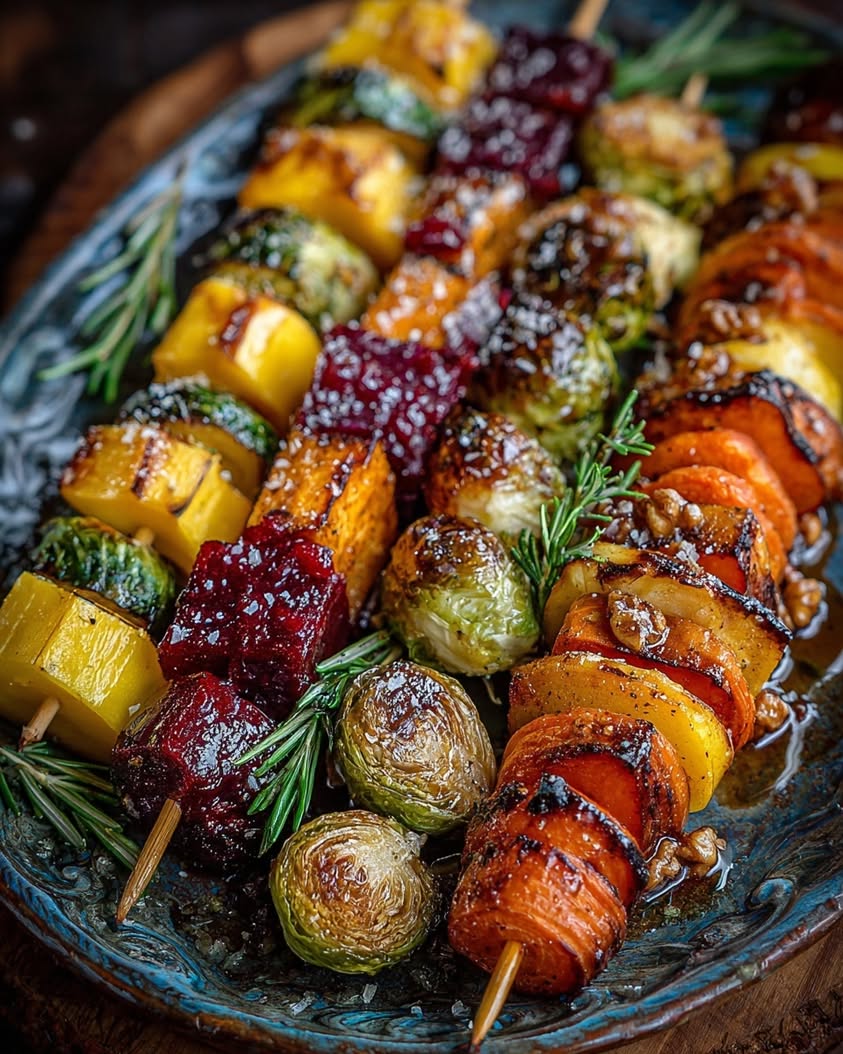
Caramelized Brussels Sprouts, Sweet Potato, Butternut Squash, Carrot & Beet Skewers with Walnuts & Cranberry-Honey Glaze: A Festive Holiday Masterpiece
Elevate your holiday table with these stunning Caramelized Brussels Sprouts, Sweet Potato, Butternut Squash, Carrot & Beet Skewers. This recipe transforms humble root vegetables and winter greens into an unforgettable culinary centerpiece. Moreover, the sweet-tart cranberry-honey glaze adds a glossy, festive finish that will have your guests reaching for seconds. Ultimately, this dish proves that healthy sides can be the star of any celebration.
The magic of these veggie skewers lies in the beautiful caramelization that occurs during roasting. Consequently, each bite offers a delightful contrast: crispy, charred edges give way to tender, sweet interiors. The addition of toasted walnuts provides a crucial crunch, while the vibrant glaze ties every element together with its complex flavor profile. This recipe is not just food; it’s an edible decoration that brings warmth and color to your holiday spread.
Creating these skewers is a joyful process that fills your kitchen with the most inviting aromas of roasting vegetables and simmering fruit. The scent of caramelizing squash and Brussels sprouts mingling with the tangy-sweet cranberry glaze is the very essence of the holiday season. Furthermore, this dish is incredibly versatile, serving beautifully as a show-stopping side for a festive dinner or even as a hearty vegetarian main course. Let’s dive into how you can master this beautiful recipe.
Quick Recipe Highlights
- Flavor Profile: These skewers deliver a masterful balance of savory, sweet, and tart notes. The natural sugars in the roasted vegetables caramelize beautifully, creating a deep, rich base. Meanwhile, the cranberry-honey glaze introduces a bright, fruity acidity that cuts through the richness, resulting in a perfectly harmonious bite.
- Texture: Expect a wonderful symphony of textures in every mouthful. The roasted vegetables become tender and creamy inside while developing crispy, caramelized exteriors. Additionally, the toasted walnuts scattered on top provide a satisfying, crunchy contrast that elevates the entire eating experience.
- Aroma: As these skewers roast, your kitchen will fill with an irresistible fragrance. The earthy scent of roasting root vegetables blends with the subtle nuttiness of the Brussels sprouts. Finally, the warm, spiced aroma of the simmering cranberry-honey glaze adds the final, festive note to this sensory delight.
- Visual Appeal: These skewers are a feast for the eyes, boasting a stunning array of autumnal colors. The deep orange of the squash, vibrant red of the beets, and green of the Brussels sprouts create a visually striking presentation. The glossy, ruby-red glaze adds a professional, festive sheen that makes the dish look as good as it tastes.
- Skill Level Needed: This recipe is accessible to intermediate home cooks. It requires basic knife skills for chopping vegetables and a bit of patience for assembling the skewers. However, the roasting and glazing techniques are straightforward, making it an excellent project for cooks looking to impress without overly complex methods.
- Special Equipment: You will need metal or wooden skewers (if using wooden, soak them first) and a sturdy baking sheet. A good chef’s knife and cutting board are essential for prepping the vegetables uniformly. Furthermore, a small saucepan is necessary for reducing the simple yet transformative cranberry-honey glaze.
Recipe Overview
- Difficulty Level: We rate this recipe as medium difficulty. The challenge lies not in complex techniques, but in the organization and timing of prepping multiple vegetables to similar sizes for even cooking. Assembling the skewers requires a mindful approach to create both aesthetic appeal and practical cooking results. With careful preparation, however, even a confident beginner can achieve excellent results.
- Category: This dish falls squarely into the category of spectacular holiday side dishes. It can also serve as a robust vegetarian main course when paired with a grain like quinoa or farro. Its versatility extends to being a beautiful appetizer for a cocktail party or a standout item on a seasonal brunch buffet.
- Cuisine: While not tied to a single tradition, this recipe draws inspiration from modern American farm-to-table cuisine and the global tradition of kebabs. It utilizes classic winter ingredients celebrated in North American and European holiday cooking. The use of a fruit-based glaze has roots in both contemporary gastronomy and historical preservation methods.
- Cost: This is a cost-effective recipe, especially when root vegetables are in season during the fall and winter months. The most significant cost comes from the fresh cranberries and walnuts, but these are used judiciously. Overall, you can create this impressive dish for a fraction of the cost of a premium meat centerpiece, making it both beautiful and budget-friendly.
- Season: This recipe is perfect for late fall through winter, aligning with the peak harvest of Brussels sprouts, squash, and root vegetables. Cranberries are also a quintessential autumn fruit, making the glaze seasonally appropriate. The warm, hearty nature of the dish provides comfort during colder weather, though it can be enjoyed year-round.
- Occasion: These skewers are ideal for Thanksgiving, Christmas, Hanukkah, or any festive holiday gathering. They also make an elegant offering for a dinner party or a special weekend family meal. Because of their visual impact, they are perfect for occasions where presentation is as important as taste.
Why You’ll Love This Recipe
You will adore the incredible taste and texture appeal of these roasted vegetable skewers. Each component brings its unique character to the ensemble: the sweet potato and squash become luxuriously soft and sweet, the carrots offer a slight bite, and the Brussels sprouts provide a wonderful, slightly bitter counterpoint that is mellowed by roasting. The caramelized edges achieved in the oven create layers of flavor that are deep and complex. Finally, the sweet-tart cranberry-honey glaze adds a glossy, vibrant finish that makes every bite exciting and memorable.
The convenience and preparation benefits of this dish are significant, especially for busy holiday hosts. You can chop all the vegetables ahead of time and store them in the refrigerator, streamlining the assembly process on the day of your event. The skewers themselves cook on a single baking sheet, minimizing cleanup. Furthermore, the glaze can be made up to three days in advance and gently reheated, allowing you to focus on other menu items. This make-ahead flexibility is a game-changer for stress-free entertaining.
From a nutritional standpoint, these veggie skewers are a powerhouse. They are packed with fiber, vitamins A and C from the orange vegetables, and antioxidants from the beets and cranberries. Brussels sprouts are renowned for their cancer-fighting compounds and high vitamin K content. Using heart-healthy olive oil and a glaze sweetened naturally with honey and fruit juice makes this a side dish you can feel genuinely good about serving. It’s indulgence that nourishes your body.
The social and entertaining value of this recipe cannot be overstated. These skewers are conversation starters, their colorful presentation inviting compliments and curiosity. They cater beautifully to diverse dietary needs, being naturally vegetarian and easily adaptable for vegan and gluten-free guests. Serving food on skewers also has a fun, interactive element that encourages sharing and adds a dynamic visual element to your buffet or dinner table. It’s a dish that shows thoughtfulness and care.
Cost-effectiveness and accessibility are key advantages. Root vegetables and winter squash are typically inexpensive, especially in season. This recipe allows you to create a stunning, restaurant-quality presentation with very humble, accessible ingredients. You likely have many of the pantry staples like olive oil, honey, and basic spices on hand. Consequently, you can prepare an impressive dish for a crowd without straining your grocery budget, proving that elegant eating doesn’t require expensive ingredients.
Historical Background and Cultural Significance
The concept of cooking food on skewers is ancient, with roots tracing back to prehistoric times when meat was cooked over fire on pointed sticks. The Greek “souvlaki” and Middle Eastern “kebab” traditions refined this method. This recipe modernizes that universal technique by applying it to a medley of roasted vegetables, a reflection of contemporary culinary trends that celebrate plant-based eating and vegetable-centric plates. It’s a fusion of ancient cooking wisdom and modern dietary preferences.
Culturally, this dish speaks to the North American tradition of the holiday feast, where a bounty of seasonal produce takes center stage. The use of cranberries directly references Thanksgiving, a holiday built around native ingredients. Similarly, roasted root vegetables and Brussels sprouts have become staples on winter holiday tables across Europe and North America. This recipe honors those traditions while presenting them in a fresh, visually engaging format that feels both familiar and novel.
The evolution of this recipe mirrors broader food trends. Chefs and home cooks have moved vegetables from the side of the plate to the starring role, seeking ways to make them exciting and centerpiece-worthy. The practice of glazing vegetables with fruit reductions is a technique borrowed from gourmet kitchens, now made accessible for home cooking. This dish represents the democratization of restaurant-level presentation and flavor pairing, allowing anyone to create a visually stunning and delicious vegetable dish.
Regional variations of this concept are endless. In the Mediterranean, similar skewers might feature zucchini, eggplant, and bell peppers with an oregano-lemon glaze. Asian-inspired versions could include a soy-ginger glaze and shiitake mushrooms. The beauty of the skewer format is its adaptability. This specific version, with its winter produce and cranberry focus, is a celebration of the seasonal bounty found in temperate climates during the holiday season, making it a perfect festive dish.
Ingredient Deep Dive
Brussels Sprouts are miniature cabbages with a long history in Europe, particularly Belgium, from which they get their name. They are packed with vitamins C and K, fiber, and antioxidants like kaempferol. Select firm, bright green sprouts with tightly packed leaves; avoid those that are yellowing or soft. Store them unwashed in a plastic bag in the refrigerator for up to a week. For a different flavor, you could substitute with broccolini or even cauliflower florets.
Sweet Potatoes are native to Central and South America and are a superb source of beta-carotene, vitamin A, and complex carbohydrates. Choose firm potatoes with smooth, unblemished skin. Their natural sweetness intensifies beautifully when roasted. Store in a cool, dark, well-ventilated place—not the refrigerator. Garnet yams can be used as a direct substitute, offering a similar texture and sweetness profile.
Butternut Squash, a winter squash native to the Americas, has sweet, orange flesh rich in vitamins A, C, and E. Look for squash that feels heavy for its size with a hard, matte rind. A whole squash can be stored for months in a cool place. Pre-cut cubes are a great time-saver. Acorn or delicata squash make excellent alternatives, though cooking times may vary slightly.
Carrots have been cultivated for thousands of years and were originally purple or white. They are famous for their beta-carotene content. For best roasting results, choose medium-sized carrots that are firm and smooth. Bagged “baby carrots” are often just whittled-down larger carrots and work well for uniform roasting. Rainbow carrots add spectacular color. Store them in the fridge in a plastic bag.
Beets have a deep, earthy sweetness and have been used both culinarily and as a dye since ancient times. They are rich in folate, manganese, and blood-pressure-regulating nitrates. Choose beets that are firm with smooth skin and vibrant greens (if attached). To prevent staining, you can wear gloves when peeling. Golden beets are a wonderful, less-staining alternative. Store beets in the refrigerator crisper drawer.
The Cranberry-Honey Glaze is the crowning jewel. Cranberries are one of North America’s native fruits, celebrated for their high vitamin C and antioxidant content. Honey, used since ancient times, adds natural sweetness and viscosity. Simmering the cranberries with a touch of orange juice and warming spices like cinnamon creates a complex, tart-sweet sauce that beautifully complements the savory roasted vegetables. Maple syrup can replace honey for a vegan version.
Common Mistakes to Avoid
- Cutting Vegetables Unevenly: Inconsistent sizes lead to uneven cooking. Some pieces will burn while others remain hard. Always aim for uniform 1-inch chunks to ensure everything roasts perfectly at the same time.
- Overcrowding the Baking Sheet: Piling vegetables too close together steams them instead of roasting them. For proper caramelization, leave space between the skewers so hot air can circulate freely around each piece.
- Neglecting to Soak Wooden Skewers: Using dry wooden skewers in a hot oven is a fire hazard. Always soak them in water for at least 30 minutes before assembling to prevent them from burning or catching fire.
- Skipping the Pre-Roast Toss in Oil: Coating the vegetables thoroughly in oil is non-negotiable. Oil conducts heat, promotes browning, and prevents sticking. An uneven coat will result in patchy, dry spots instead of all-over caramelization.
- Adding the Glaze Too Early: Brushing the sweet-tart cranberry-honey glaze on at the beginning of cooking will cause it to burn due to its sugar content. Always apply it in the last 10-15 minutes of roasting to achieve a shiny, set glaze without bitterness.
- Underseasoning the Vegetables: Salt is crucial for drawing out natural flavors. Season the oiled vegetables generously with salt and pepper before roasting. Remember, you are seasoning a large volume of relatively bland vegetables, so don’t be shy.
- Using Old, Soft Cranberries: For the glaze, fresh or frozen cranberries work best. Avoid using cranberries that are shriveled or mushy, as they lack the necessary pectin and bright tartness needed for a vibrant, well-set glaze.
- Not Toasting the Walnuts: Raw walnuts can taste slightly bitter. Taking the extra minute to toast them in a dry pan or the oven unlocks their rich, nutty flavor and improves their crunch, elevating the final garnish significantly.
Essential Techniques
Uniform Chopping is the foundational technique for success. Why is it important? Consistently sized pieces ensure even cooking, so you don’t end up with some vegetables raw and others burnt. To master it, use a sharp chef’s knife and take your time. A common pitfall is rushing and making pieces too large, which extends cooking time. The visual cue for success is a baking sheet filled with vegetables that all look roughly the same size, promising synchronized roasting.
Proper Skewer Assembly is key for both cooking and presentation. This technique is important because it creates a stable structure that allows heat to reach all sides of the vegetables. To master it, thread pieces firmly but not too tightly, leaving a tiny gap between them for heat circulation. A common pitfall is overloading the skewer, which makes it heavy and difficult to flip. Visual success looks like a balanced, colorful skewer where each vegetable piece is secure and has a bit of breathing room.
High-Heat Roasting is what creates the coveted caramelization. This technique is crucial because it uses dry heat to concentrate the vegetables’ natural sugars, creating deep, complex flavors and appealing texture contrasts. Master it by preheating your oven fully and using a heavy-duty baking sheet. The common pitfall is roasting at too low a temperature, which steams the vegetables. Look for visual cues like browned, slightly blistered edges and a tender interior when pierced with a fork.
Reducing a Glaze requires patience and attention. This technique is important because it concentrates flavors, thickens the sauce, and gives it a glossy, clingy consistency perfect for brushing. To master it, simmer the cranberry mixture over medium-low heat, stirring occasionally. The pitfall is boiling too rapidly, which can scorch the sugars. Success is visually indicated when the glaze coats the back of a spoon and leaves a clear trail when you run your finger through it.
Pro Tips for Perfect Veggie Skewers
Par-cook denser vegetables like beets and sweet potatoes for 5-7 minutes in the microwave before skewering. This ensures they will be perfectly tender at the same time as quicker-cooking veggies like Brussels sprouts.
Use two baking sheets if necessary to avoid overcrowding. Proper air circulation is the secret to achieving crispy, caramelized edges instead of steamed, soggy vegetables.
Make a double batch of the cranberry-honey glaze. It’s fantastic as a condiment for leftover turkey, a spread for sandwiches, or a drizzle over baked brie or goat cheese.
Let the roasted skewers rest for 5 minutes after removing them from the oven. This allows the vegetables to reabsorb some of their internal juices, making them even more flavorful and easier to handle.
If using wooden skewers, consider wrapping the exposed ends in a small piece of foil to prevent them from charring in the oven, especially if they extend beyond the vegetables.
For extra flavor, toss the chopped vegetables with a tablespoon of balsamic vinegar along with the olive oil before roasting. The acidity balances the sweetness and adds another layer of complexity.
Toast the walnuts in the oven during the last few minutes of the skewers’ cooking time. Watch them closely, as they can burn quickly. This saves time and maximizes their nutty flavor.
Use a pastry brush to apply the glaze evenly during the final roasting stage. This gives you more control than drizzling and ensures every vegetable gets a beautiful, glossy coat.
Variations and Adaptations
For regional variations, consider a Mediterranean twist with zucchini, red onion, and cherry tomatoes, glazed with a lemon-oregano vinaigrette. An Asian-inspired version could feature shiitake mushrooms, bok choy, and red bell pepper with a soy sauce, ginger, and sesame oil marinade. The basic skewer method is a canvas for global flavors, allowing you to travel the world from your kitchen using seasonal produce.
Seasonal adaptations are simple. In spring, use asparagus, radishes, and new potatoes with a lemon-herb glaze. For summer, skewer bell peppers, eggplant, zucchini, and red onion with a basil pesto drizzle. The cranberry glaze is perfect for fall and winter, but the concept shines year-round by simply swapping in the best produce each season has to offer.
Dietary modifications are straightforward. For a vegan version, replace the honey in the glaze with maple syrup or agave nectar. To make it nut-free, omit the walnuts and use toasted pumpkin seeds (pepitas) for crunch. For a lower-sugar option, reduce the honey in the glaze by half and rely on the natural sweetness of the roasted vegetables.
Flavor variations can keep this recipe exciting. Add warmth with a sprinkle of smoked paprika or chili powder on the vegetables before roasting. Infuse the oil with crushed garlic or fresh rosemary. Add a tablespoon of Dijon mustard to the glaze for a tangy kick. A dash of orange zest in the glaze brightens the entire dish beautifully.
Texture modifications can cater to different preferences. For extra crispiness, use the broiler for the final 2-3 minutes of cooking (watch closely!). For a softer texture, cover the skewers with foil for the first half of the roasting time, then uncover to finish. Adding a crumble of goat cheese or feta after roasting introduces a creamy element.
Presentation alternatives include deconstructing the skewers. Roast all the vegetables separately on a sheet pan for a simpler “harvest roast.” Alternatively, serve the components in a large platter with the glaze on the side for a DIY skewer station at a party, which is interactive and fun for guests.
Serving and Presentation Guide
For plating techniques, arrange the skewers slightly fanned out on a long, rectangular platter or a large round plate. Drizzle any remaining glaze over the top and around the plate for a professional touch. Alternatively, you can carefully slide the vegetables off the skewers onto a bed of creamy polenta or quinoa for a composed dish. The goal is to showcase the beautiful colors and glossy finish.
Garnishing ideas extend beyond the toasted walnuts. Fresh pomegranate arils add a brilliant red pop and a juicy crunch. A sprinkle of finely chopped fresh parsley, thyme, or chives adds color and freshness. For a festive touch, a few edible flowers or delicate microgreens can elevate the presentation to restaurant level with minimal effort.
Traditional accompaniments for these holiday skewers include a classic roast turkey, honey-glazed ham, or herb-crusted pork loin. They also pair wonderfully with other classic sides like creamy mashed potatoes, savory stuffing, or a simple green salad. They help balance a rich holiday meal with their vibrant, vegetable-forward profile.
Modern serving suggestions position these skewers as a main course for a vegetarian feast. Serve them over a lemony lentil salad, with a side of garlicky white beans, or alongside a rich wild mushroom risotto. They can also be chopped and folded into warm grain bowls for a hearty lunch the next day, demonstrating their versatility.
Temperature considerations are important. These skewers are best served warm, straight from the oven. However, they are also delicious at room temperature, making them excellent for buffets where food sits out. If you must reheat, do so gently in a 300°F oven to avoid overcooking the vegetables and burning the glaze.
Portion control tips are simple: plan for one to two skewers per person as a side dish. As a main course, three skewers per person is a generous serving. If serving on a buffet, you can cut the skewers in half to allow guests to sample smaller portions alongside other offerings, which reduces waste and encourages variety.
Wine and Beverage Pairing
Wine pairings should complement the sweet, earthy, and tart notes of the dish. A medium-bodied Pinot Noir with its red fruit flavors and earthy undertones is a classic and excellent choice. Alternatively, a dry Riesling or Gewürztraminer can handle the sweetness of the vegetables and the tartness of the cranberry glaze beautifully. For a richer option, an oaked Chardonnay with notes of butter and vanilla provides a lovely contrast to the caramelized vegetables.
Non-alcoholic alternatives can be just as sophisticated. A sparkling apple cider mirrors the autumnal flavors. A tart cranberry spritzer made with club soda and a splash of cranberry juice echoes the glaze. For a warm option, a mulled apple cider with cinnamon and orange pairs perfectly with the holiday spirit of the dish and the warming spices in the glaze.
Coffee and tea pairings work well if serving these skewers for a brunch or late holiday breakfast. A medium-roast coffee with low acidity won’t compete with the food’s flavors. A spiced chai tea latte complements the warm spices, while a simple green tea can provide a clean, palate-cleansing finish after the rich, sweet, and savory notes of the meal.
Temperature considerations for beverages are standard: serve white wines and sparkling drinks chilled, red wines slightly below room temperature, and warm drinks hot. The goal is to have the beverage enhance the eating experience without distracting from the complex flavors on the plate. A cold drink can refresh the palate between bites of the rich, caramelized vegetables.
Serving suggestions include offering a selection to cater to all guests. Place bottles of recommended wine on the table alongside a pitcher of a signature non-alcoholic spritzer. Clearly label each option so guests can choose their perfect pairing. Encouraging guests to take a sip of water between bites of the skewers and their drink also helps cleanse the palate and appreciate the full spectrum of flavors.
Storage and Shelf Life
For storage methods, allow leftover skewers to cool completely to room temperature. Carefully slide the vegetables off the skewers and place them in a single layer in a shallow, airtight container. Alternatively, you can store them still on the skewers if you have a container long enough to accommodate them without bending. Placing a paper towel in the container can help absorb excess moisture and keep the vegetables from getting soggy.
Temperature requirements are straightforward: always refrigerate leftovers. Do not leave roasted vegetables at room temperature for more than two hours. The ideal refrigerator temperature is below 40°F. Stored properly, the cooked vegetable mixture will maintain best quality for 3-4 days. The cranberry glaze can be stored separately in its own jar in the fridge for up to one week.
Container recommendations include glass or BPA-free plastic containers with tight-fitting lids. Avoid storing in metal containers, as the acidity from the glaze and vegetables can react with the metal. For the best preservation of texture, avoid stacking the vegetables too high; use multiple containers if necessary to prevent crushing the softer pieces like the squash and sweet potato.
Signs of spoilage to watch for include an off or sour smell, visible mold growth (often fuzzy white or green spots), or a slimy texture on the surface of the vegetables. If the glaze develops bubbles or an alcoholic smell, it has likely begun to ferment and should be discarded. When in doubt, remember the old adage: when in doubt, throw it out.
Reheating instructions are crucial for restoring texture. The best method is to spread the vegetables in a single layer on a baking sheet and warm them in a 350°F oven for 10-15 minutes. This will re-crisp the edges. Avoid using the microwave, as it will make the vegetables soft and steamy. You can also reheat them in a dry skillet over medium heat, stirring occasionally.
Freezing guidelines are not generally recommended for this specific dish. The high water content in the vegetables, particularly the squash and zucchini if used, causes them to become mushy and watery upon thawing. The texture loss is significant. However, you can successfully freeze the cranberry-honey glaze in an airtight container for up to 3 months. Thaw in the refrigerator overnight and reheat gently before using.
Make Ahead Strategies
For a prep timeline, you can chop all the vegetables 1-2 days in advance. Store them separately in airtight containers or resealable bags in the refrigerator. The cranberry-honey glaze can be made up to 3 days ahead. On the day of serving, simply toss the vegetables in oil and seasonings, assemble the skewers, roast, and apply the warmed glaze during the final minutes. This splits the work effectively.
Storage between steps is simple. Keep pre-cut vegetables chilled until you are ready to use them. If you assemble the skewers a few hours ahead, cover the baking sheet tightly with plastic wrap and refrigerate. Remove them from the fridge about 20 minutes before roasting to take the chill off, which promotes more even cooking. Store the pre-made glaze in a jar in the fridge.
Quality impact assessment shows that pre-chopping vegetables has minimal negative effect, especially for root vegetables. In fact, some argue the flavors meld slightly. The glaze often tastes better after a day, allowing the flavors to marry. The only step that must be done just before serving is the final roasting and glazing to ensure optimal texture and temperature.
Assembly tips for make-ahead include threading the vegetables on the skewers but waiting to brush them with oil until just before they go in the oven. This prevents the oil from soaking into the vegetables and making them soggy during refrigeration. You can also set up a “skewer assembly line” with all your pre-cut ingredients for quick, last-minute construction.
Reheating guidelines for components are different. Do not reheat pre-cooked vegetables; roast them fresh. The glaze, however, should be gently reheated on the stovetop or in the microwave until it is fluid again before brushing it on the skewers. A cold, thick glaze will not spread evenly and can cool down the hot vegetables.
Fresh element additions are key for make-ahead meals. Always add the final garnishes like toasted walnuts and fresh herbs after the skewers come out of the oven and just before serving. This ensures maximum crunch and vibrant color. If you’ve made the glaze ahead, a final squeeze of fresh orange juice after reheating can brighten its flavor perfectly.
Scaling Instructions
Halving the recipe is straightforward for a smaller household. Simply divide all ingredient quantities by two. You may need to use a smaller baking sheet, but still ensure the skewers are not crowded. The roasting time may decrease by 5-7 minutes, so start checking for doneness earlier. The glaze can be halved, but consider making a full batch as it keeps well and is useful for other dishes.
Doubling or tripling the recipe for a crowd requires some adjustments. Use multiple baking sheets and rotate them from top to bottom oven racks halfway through cooking to ensure even browning. You may need to roast in batches if your oven cannot accommodate multiple sheets with proper air circulation. For the glaze, use a larger saucepan to prevent boil-overs when doubling or tripling the liquid.
Equipment adjustments when scaling up are important. Ensure you have enough skewers. For very large batches, consider using disposable aluminum baking sheets. You might also need a larger mixing bowl for tossing all the vegetables in oil. A kitchen scale becomes invaluable for accurately scaling vegetable weights, ensuring consistent results regardless of batch size.
Timing modifications are minimal when scaling. The prep time will increase linearly with the amount of vegetables to chop. The actual roasting time, however, may increase slightly if the oven is very full, as it can lower the ambient temperature. Add an extra 5-10 minutes and rely on visual cues (caramelization, tenderness) rather than a strict timer when cooking large quantities.
Storage considerations for large batches are crucial. If you have many leftovers from a doubled recipe, divide them into smaller, meal-sized portions before refrigerating. This makes reheating easier and prevents the entire batch from being subjected to temperature fluctuations every time you open the container. Clearly label containers with the date to track freshness.
Nutritional Deep Dive
The macro breakdown of these skewers is favorable. They are primarily a complex carbohydrate source from the root vegetables and squash, providing sustained energy. The olive oil and walnuts contribute healthy monounsaturated and polyunsaturated fats. While not a significant source of protein, the dish contains small amounts from the vegetables and walnuts. It is naturally low in saturated fat and cholesterol-free, making it a heart-healthy choice.
Micronutrient analysis reveals a wealth of vitamins and minerals. Sweet potatoes and butternut squash are exceptionally high in Vitamin A (as beta-carotene), crucial for vision and immune function. Brussels sprouts and beets provide Vitamin C and folate. Carrots add more beta-carotene and potassium. The cranberries contribute Vitamin C and manganese. Together, they create a nutrient-dense side dish that supports overall health.
Health benefits are extensive. The high fiber content promotes digestive health and helps regulate blood sugar. The antioxidants in the deeply colored vegetables and cranberries combat oxidative stress and inflammation. The healthy fats from olive oil and walnuts support brain health and help absorb fat-soluble vitamins from the vegetables. This dish is a powerful example of food as medicine.
Dietary considerations are largely positive. The recipe is naturally vegetarian and can be made vegan. It is gluten-free and dairy-free as written. For those on lower-carb diets, the root vegetables and glaze do contain natural sugars, so portion control would be advised. For low-FODMAP diets, the garlic (if added) and large amounts of certain vegetables might need modification, but the core concept is adaptable.
Portion analysis shows that one skewer as part of a balanced meal is a reasonable serving. It provides substantial volume and satiety due to the fiber and water content of the vegetables, which can help prevent overeating of richer foods. As a main course, 2-3 skewers provide a filling, plant-based meal that is satisfying without being overly heavy.
Weight management tips include using this dish to fill half your plate, following healthy eating guidelines. The fiber keeps you full, reducing the likelihood of reaching for second servings of higher-calorie items. You can also slightly reduce the amount of oil used for roasting if you are closely monitoring fat intake, though some fat is necessary for nutrient absorption and flavor.
Dietary Adaptations
For a gluten-free adaptation, this recipe is naturally compliant as written. Always check labels on pre-made ingredients like broth or cranberry juice if used in the glaze to ensure no hidden gluten-containing additives. Use tamari instead of soy sauce if making an Asian-inspired variation. This dish is a safe and delicious option for those with celiac disease or gluten sensitivity.
Dairy-free adaptation is simple because the original recipe contains no dairy. No substitutions are needed. For variations that add cheese as a garnish, simply omit it or use a plant-based cheese alternative. The creamy texture of the roasted squash and sweet potatoes provides a satisfying richness that often makes people forget dairy was ever a consideration.
Vegan adaptation requires one key change: replacing the honey in the glaze. Use an equal amount of maple syrup, agave nectar, or even a vegan brown rice syrup. Ensure the sugar used is not processed with bone char if that is a concern. All other ingredients are plant-based. This adaptation makes the dish suitable for a vegan holiday table.
For a low-carb or keto adaptation, focus on the Brussels sprouts and limit the higher-carb root vegetables. Make skewers primarily with Brussels sprouts, maybe adding mushrooms and bell peppers. Create a glaze using a sugar-free sweetener and unsweetened cranberry juice or puree, thickened with a pinch of xanthan gum instead of reduction. The walnuts are a perfect keto-friendly fat source.
Paleo adaptation is similar to gluten-free and dairy-free. Ensure the honey is raw and unprocessed if strictly Paleo. Some Paleo followers avoid peanuts and legumes, so the walnuts are a great choice. The dish is made from whole, unprocessed foods, aligning perfectly with Paleo principles of eating vegetables, healthy fats, and natural sweeteners in moderation.
For a Low-FODMAP adaptation, omit the garlic and be cautious with quantities. A small serving of the vegetables might be tolerated, but large amounts of sweet potato, butternut squash, and beet could be problematic for some. The glaze made with cranberries and a limited amount of honey or maple syrup is generally Low-FODMAP friendly in small servings. Always tailor to individual tolerance levels.
Troubleshooting Guide
If your vegetables are soggy instead of caramelized, the issue is likely overcrowding or insufficient oven heat. Solution: Ensure pieces are spaced out on the baking sheet and your
Print
Caramelized Brussels Sprouts, Sweet Potato, Butternut Squash, Carrot & Beet Skewers with Walnuts & Cranberry-Honey Glaze
Description
A colorful and festive vegetarian skewer dish featuring roasted seasonal vegetables, caramelized to perfection, and topped with a sweet-tart cranberry-honey glaze and crunchy walnuts.
Ingredients
For the Crust:
- 1 lb Brussels sprouts, trimmed and halved
- 1 large sweet potato, peeled and cubed
- 1 small butternut squash, peeled and cubed
- 2 large carrots, peeled and sliced into rounds
- 2 medium beets, peeled and cubed
- 1/2 cup walnuts, roughly chopped
- 2 tbsp olive oil
- 1 tsp salt
- 1/2 tsp black pepper
- 1/2 tsp smoked paprika
- For the glaze: 1/2 cup cranberry sauce
- 2 tbsp honey
- 1 tbsp balsamic vinegar
- Wooden or metal skewers, soaked if wooden
Instructions
1. Prepare the Crust:
- Preheat oven to 400°F (200°C). Line a baking sheet with parchment paper.
- In a large bowl, toss Brussels sprouts, sweet potato, butternut squash, carrots, and beets with olive oil, salt, pepper, and smoked paprika until evenly coated.
- Thread the vegetables onto skewers, alternating varieties for color. Place skewers on the prepared baking sheet.
- Roast for 25-30 minutes, turning halfway, until vegetables are tender and caramelized at the edges.
- Meanwhile, in a small saucepan, combine cranberry sauce, honey, and balsamic vinegar. Heat over medium-low, stirring until smooth and slightly thickened, about 5 minutes.
- Remove skewers from oven. Brush generously with the cranberry-honey glaze and sprinkle with chopped walnuts. Return to oven for 3-5 minutes to warm the walnuts.
- Serve immediately, drizzled with any remaining glaze.
Notes
You can customize the seasonings to taste.

I’m Shaykee—born in Morocco, seasoned across continents. From airplane galleys to home kitchens, I share the flavors and stories that shaped my journey.