
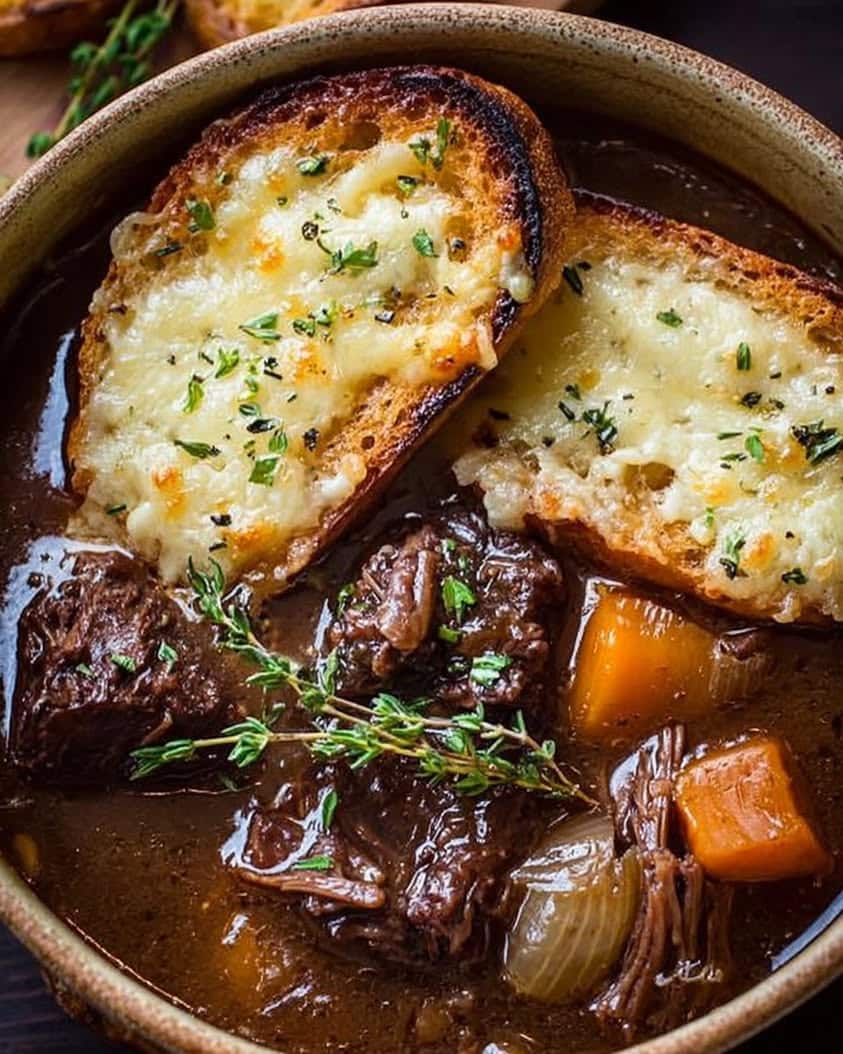
Savory French Onion Soup with Short Ribs and Cheesy Gruyère Toast: The Ultimate Comfort Food
Imagine the most decadent, soul-warming bowl of French onion soup you have ever tasted. Now, elevate that experience with fall-off-the-bone beef short ribs that melt in your mouth. This French Onion Short Rib Soup is not just a meal; it is a culinary event that transforms classic comfort food into a luxurious dining experience. The rich, deeply caramelized onion broth, the tender shredded beef, and the iconic cheesy Gruyère toast create a symphony of flavors and textures that will have everyone asking for seconds.
Furthermore, this recipe achieves its incredible depth of flavor without a single drop of wine, making it accessible for all cooks and diners. Instead, we rely on the magic of slow-caramelized onions, high-quality beef broth, and the savory richness of the short ribs themselves to build a complex and satisfying base. The result is a deeply savory, umami-packed soup that feels both rustic and elegant, perfect for a cozy family dinner or a impressive meal for guests.
Ultimately, this dish is the ultimate project for a lazy weekend or a blustery afternoon. The long, slow cooking time is mostly hands-off, filling your home with an incredible aroma that promises a spectacular reward. The final presentation, with the bubbling, golden-brown Gruyère toast floating on top, is pure comfort food magic. This is the kind of recipe that creates lasting memories around the dinner table.
Quick Recipe Highlights
- Flavor Profile: This soup delivers a powerful umami punch from the slow-caramelized onions and rich beef short ribs. The broth is deeply savory with a subtle sweetness from the onions, perfectly balanced by the nutty, salty Gruyère cheese.
- Texture: You will experience a wonderful contrast of textures. The broth is silky and rich, the shredded short ribs are incredibly tender and melt-in-your-mouth, and the cheesy toast provides a satisfying crunch that soaks up the flavorful liquid.
- Aroma: As this soup cooks, your kitchen will fill with the unmistakable, comforting scent of caramelizing onions, roasting beef, and aromatic herbs like thyme and bay leaf. It is the quintessential aroma of home-cooked comfort food.
- Visual Appeal: The presentation is stunning, with a deep, mahogany-colored broth topped with a golden-brown, bubbly blanket of melted Gruyère cheese on a crusty bread raft. It is a visually rustic and incredibly inviting dish.
- Skill Level Needed: This recipe is intermediate, requiring patience for caramelizing onions and comfort with braising meat. However, the steps are straightforward and mostly involve waiting, making it a great project for a confident beginner looking to level up.
- Special Equipment: A heavy-bottomed Dutch oven or large soup pot is essential for even heat distribution during the long cooking process. You will also need a rimmed baking sheet for toasting the bread.
Recipe Overview
- Difficulty Level: This recipe is classified as intermediate due to the time commitment and specific techniques involved. Successfully caramelizing onions to a deep, sweet brown without burning them requires attention. Additionally, properly braising the short ribs to achieve that fall-apart tenderness is a key skill that this recipe helps you master.
- Category: This dish fits perfectly into several categories. It is a hearty main course soup, a luxurious comfort food dish, and an impressive offering for a dinner party. It blurs the line between a soup and a stew, making it a substantial and satisfying meal.
- Cuisine: The recipe is firmly rooted in French bistro cuisine, drawing direct inspiration from the classic Soupe à l’Oignon Gratinée. The addition of braised short ribs is a modern, hearty twist that adds a new dimension of flavor and texture to the traditional preparation.
- Cost: This is a premium dish due to the cost of beef short ribs and Gruyère cheese. However, it yields a generous six servings, making the cost per portion reasonable for a special meal. Using a good-quality store-bought broth can help manage expenses without sacrificing flavor.
- Season: This soup is truly a cold-weather champion. It is ideal for autumn and winter when you crave warm, hearty, and rib-sticking meals. The long cooking time also helps to warm up your kitchen on a chilly day.
- Occasion: It is perfect for a cozy weekend family dinner, a holiday gathering, or a casual dinner party with friends. Its make-ahead nature also makes it excellent for meal prepping a luxurious lunch for the week.
Why You’ll Love This French Onion Short Rib Soup
First and foremost, the taste and texture of this soup are simply unparalleled. The slow-caramelized onions create a foundational sweetness and deep, complex flavor that forms the soul of the dish. Meanwhile, the braised short ribs contribute an intense beefy richness and a melt-in-your-mouth tenderness that elevates the soup from a simple starter to a decadent main course. Finally, the contrast of the crunchy, cheesy Gruyère toast against the silky broth is a textural masterpiece that makes every single bite an event.
From a convenience perspective, this recipe is surprisingly manageable. While the total time is long, the active cooking time is relatively short. You can easily prepare the entire soup earlier in the day or even the day before, allowing the flavors to meld and deepen even further. Simply reheat and add the cheesy toast just before serving. This make-ahead flexibility makes it a stress-free option for entertaining, as all the hard work is done beforehand.
Nutritionally, this dish is a robust source of high-quality protein from the beef short ribs, which are also rich in collagen. This collagen breaks down during the long braising process into gelatin, which is wonderful for joint health and gives the broth its characteristically luxurious, silky mouthfeel. Onions are packed with antioxidants and prebiotic fibers that support gut health. Of course, this is a rich dish to be enjoyed in moderation, but it is made from whole, recognizable ingredients.
The social and entertaining value of this French Onion Short Rib Soup is incredibly high. Presenting individual crocks or a large pot with the bubbling, golden cheese topping is a dramatic and welcoming sight for guests. It feels special and indulgent, showing that you have put care and effort into the meal. The communal nature of breaking through the cheesy crust to get to the savory soup underneath is a fun and interactive dining experience that encourages conversation and connection.
Considering cost-effectiveness and accessibility, this recipe makes excellent use of a tougher, more flavorful cut of meat. Short ribs become extraordinarily tender and luxurious through slow cooking, offering a high-end dining experience at a fraction of the cost of using premium steak cuts. By omitting wine, the recipe becomes more accessible for families, those who avoid alcohol, or cooks who simply do not keep wine on hand, without compromising an ounce of flavor.
Historical Background and Cultural Significance
The story of French onion soup is a tale of humble beginnings and royal transformation. Its origins are often traced back to Roman times, but it gained prominence in 18th-century Paris as a staple of the working-class diet. Street vendors would sell it as a restorative, early-morning meal for laborers and market workers. The onions were cheap, plentiful, and filling, providing the necessary energy for a long day’s work. Its reputation as a hangover cure also began during this era.
The soup’s cultural significance is deeply woven into the fabric of French bistro culture. It evolved from a simple street food into a classic menu item in the bistros of Les Halles, the former central market of Paris. After a long night, people would gather in these bistros for a steaming bowl of “Soupe à l’Oignon” to warm themselves and recover. Consequently, it became a symbol of Parisian nightlife and comfort, a dish that transcended social classes.
The evolution of the recipe saw a significant upgrade with the addition of the gratinéed cheese toast. This is believed to have been popularized in the 1960s, transforming the soup from a simple broth into the decadent, recognizable dish we know today. The introduction of beef broth and the slow caramelization process further refined its flavor profile. Our version with short ribs is a modern, hearty interpretation that builds on this classic foundation, adding a layer of substantial protein and richness.
Regional variations of onion soup exist across Europe, but the French version is distinguished by its beef broth and caramelized onion base. In other regions, you might find versions made with white wine, chicken broth, or different types of cheese. Our “No Wine” adaptation makes it uniquely accessible while staying true to the deep, savory soul of the original. This recipe honors that history while embracing a contemporary twist that makes it a complete, satisfying meal.
Ingredient Deep Dive
Beef Short Ribs are the star protein that elevates this soup. This cut comes from the rib section of the cow and is known for its rich marbling and connective tissue. When braised low and slow, this tissue breaks down into unctuous gelatin, making the meat incredibly tender and enriching the broth. Look for ribs with good marbling and a thick layer of meat. You can use either English-cut (single bone) or flanken-style (cross-cut). For the best flavor, choose well-marbled, bone-in short ribs. Store them in the coldest part of your refrigerator for up to three days before use. A good substitute would be beef chuck roast, cut into large chunks.
Yellow Onions are the foundational vegetable, responsible for the soup’s deep, sweet, and savory flavor base. Their high sugar content allows them to caramelize beautifully, developing complex flavors through the Maillard reaction. Onions are rich in vitamin C, B vitamins, and potassium, and they contain the antioxidant quercetin. Choose firm, heavy onions with dry, papery skins and no soft spots. Store them in a cool, dark, well-ventilated place. There is no true substitute for the flavor of caramelized yellow onions, though a mix of yellow and sweet onions can work.
Gruyère Cheese is the classic choice for the gratinéed topping. This Swiss cheese is known for its complex, nutty, and slightly salty flavor, and its excellent melting qualities. It forms a beautiful, stringy, golden-brown crust when broiled. Gruyère is a good source of calcium and protein. Look for Gruyère that is aged for at least 5 months for the best flavor. Store it wrapped in parchment paper in the cheese drawer of your refrigerator. Excellent substitutes include Comté, Emmental, or a mix of Swiss and Parmesan cheese.
Beef Broth forms the liquid base of the soup. A high-quality broth is crucial here, as its flavor will be concentrated. Look for a low-sodium broth so you can control the salt level, and ideally one that is rich and gelatinous when chilled. Homemade beef stock is ideal, but a good store-bought brand works well. You can also use a combination of beef and chicken broth for a slightly lighter flavor. Store unopened boxes in your pantry; once opened, refrigerate and use within a week.
Common Mistakes to Avoid
- Rushing the Onions: The most common error is not caramelizing the onions slowly enough. If you crank up the heat, they will burn and taste bitter instead of sweet. Patience is the key ingredient here; allow a full 30-45 minutes for them to turn a deep, golden-brown color.
- Skimping on Fond: After searing the short ribs, those dark, stuck-on bits at the bottom of the pot (the “fond”) are packed with flavor. Make sure to deglaze the pot thoroughly with broth, scraping all of this goodness up. This step builds the foundational flavor of your soup.
- Overcrowding the Pot When Searing: When browning the short ribs, do not crowd the pot. If you add too many at once, they will steam instead of sear. Sear them in batches to ensure each piece develops a deep, brown, flavorful crust.
- Using the Wrong Bread: A flimsy, pre-sliced sandwich bread will disintegrate into mush on top of the soup. You need a sturdy, crusty bread like a baguette or a sourdough boule that can hold up to the broth and become toasted, not soggy.
- Adding Cheese to Wet Bread: If you place the cheese on the bread before toasting it, the bread will steam and become soft. Always toast the bread slices dry first to create a barrier, then add the cheese and broil.
- Not Seasoning in Layers: Do not wait until the end to add all your salt and pepper. Season the short ribs before searing, taste the broth after adding the liquids, and adjust again before serving. This builds a more complex and well-rounded seasoning profile.
- Using Pre-Shredded Cheese: Pre-shredded cheese contains anti-caking agents like potato starch that prevent it from melting smoothly. For the best, gooey, melted texture, always shred your Gruyère cheese from a block just before using it.
- Broiling Unattended: The line between perfectly golden and tragically burnt cheese is very thin. Never walk away from the broiler. Stay and watch it carefully, as it can go from bubbly to blackened in a matter of seconds.
Essential Techniques
Caramelizing Onions is the soul of this dish. This process involves slowly cooking sliced onions over medium-low heat to break down their natural sugars. The key is patience; rushing with high heat will burn the sugars, creating bitterness. Stir occasionally, but not constantly, to allow for browning. Use a heavy-bottomed pot to prevent hot spots. The onions are done when they are a uniform deep golden-brown, have reduced significantly in volume, and taste sweet and complex. This can take 30 to 45 minutes, but it is non-negotiable for authentic flavor.
Braising the Short Ribs is a cooking method that uses both dry and moist heat. First, you sear the meat (dry heat) to develop a flavorful crust via the Maillard reaction. Then, you cook it submerged in broth (moist heat) at a low temperature for a long time. This slow, gentle cooking breaks down the tough collagen in the connective tissues into soft, rich gelatin. The visual cue for success is meat that pulls away from the bone easily and can be shredded with a fork with little effort. The result is exceptionally tender and flavorful meat.
Deglazing the Pot is a simple but critical step for building flavor. After searing the meat, you will find dark, stuck-on bits at the bottom of your pot. This “fond” is concentrated flavor. By adding a liquid (in this case, beef broth) and scraping the bottom with a wooden spoon over heat, you dissolve these bits into the liquid. This incorporates all the savory, caramelized flavors back into your dish, creating a much more complex and deeply flavored broth than if you had skipped this step.
Creating the Gruyère Toast is about mastering the broiler. Toasting the bread dry first creates a sturdy base that resists sogginess. Shredding your own cheese ensures a smooth, even melt. Arranging the cheese-covered toasts on the soup and placing it under a high, direct heat source quickly melts and browns the cheese, creating that iconic bubbly, golden crust. The key is vigilance; broilers vary in intensity, so watch it closely to achieve perfect browning without burning.
Pro Tips for Perfect French Onion Short Rib Soup
- Use a mix of onions for a more complex flavor base. Try combining standard yellow onions with one or two sweet onions like Vidalias. The different sugar contents will caramelize at slightly different rates, adding depth to the final flavor.
- For an even richer broth, use homemade beef stock if you have it. Alternatively, you can boost store-bought broth by simmering it with the spent onion skins and thyme stems from prepping your ingredients for 20 minutes before straining.
- After braising, let the short ribs cool slightly in the broth before shredding. This allows the meat to reabsorb some of the juices, keeping it incredibly moist and flavorful in the final soup.
- Skim the fat from the braising liquid after it has cooled. The fat will rise to the top and solidify, making it easy to remove with a spoon. This results in a cleaner, less greasy soup while preserving all the flavor.
- If your soup broth seems a bit thin after everything is combined, you can create a quick slurry. Mix a tablespoon of cornstarch with two tablespoons of cold water and stir it into the simmering soup to thicken it slightly.
- For individual presentations, use oven-safe soup crocks. Ladle the soup in, top with the toast and cheese, and broil until bubbly. This creates a dramatic and personalized serving that keeps the cheese crust intact for each person.
- Let the soup rest for 10-15 minutes after adding the shredded meat back in. This allows the flavors to marry and the meat to fully integrate into the broth, resulting in a more harmonious final product.
Variations and Adaptations
For regional variations, you can explore different culinary traditions. A Provençal twist could include a pinch of herbes de Provence and a tomato paste base. For an Alsatian influence, you might use Munster cheese instead of Gruyère. An American diner-style version could incorporate a splash of Worcestershire sauce and use provolone cheese for the topping. Each region offers a unique take on the core concept of a rich, onion-based soup.
Seasonal adaptations are easy to implement. In the spring, garnish the finished soup with fresh chives or parsley for a bright, fresh contrast. During the height of summer, this soup is likely too heavy, but you can prepare the broth and meat ahead and freeze it for autumn. In the heart of winter, add root vegetables like parsnips or turnips to the braise for an extra layer of earthy sweetness and heartiness.
Dietary modifications are straightforward. For a gluten-free version, use a certified gluten-free beef broth and serve the soup with a slice of gluten-free bread for the topping. To make it dairy-free, omit the cheese toast altogether or use a high-quality vegan mozzarella-style cheese that melts well. For a lower-carb option, simply skip the bread and sprinkle the shredded cheese directly over the soup in individual bowls before broiling to create a cheesy crust.
Flavor variations can personalize the dish. Add a tablespoon of tomato paste to the onions during the last few minutes of caramelizing for a touch of acidity and sweetness. A dash of soy sauce or fish sauce added with the broth will amplify the umami depth. For a hint of smokiness, use a smoked Gruyère or add a very small piece of a smoked ham hock to the pot while the soup simmers.
Serving and Presentation Guide
Plating techniques are crucial for this dish’s visual impact. For the most dramatic effect, use individual, oven-safe crocks. Ladle the hot soup and shredded meat into each crock, place them on a baking sheet, top with the toasted bread and a generous handful of Gruyère, and broil until golden and bubbly. The presentation of each person’s individual crock with its own cheesy crust is a classic and impressive sight. Alternatively, for a family-style meal, you can use a large, oven-safe Dutch oven or casserole dish.
Garnishing ideas should be simple to not compete with the rich flavors. A final sprinkle of freshly chopped flat-leaf parsley or chives adds a pop of color and a fresh, herbal note that cuts through the richness. A light drizzle of a high-quality extra virgin olive oil over the melted cheese just before serving can add a fruity, peppery dimension. Avoid wet garnishes that could make the cheese topping soggy.
Traditional accompaniments for a hearty soup like this are simple and rustic. A crisp, green salad with a sharp vinaigrette is the perfect counterbalance to the soup’s richness. A side of cornichons (small French pickles) also provides a delightful tangy and crunchy contrast. For a truly French bistro experience, serve with a glass of cold, dry cider or a robust red beer, as this is a no-wine recipe.
Temperature considerations are key. The soup must be piping hot when it goes under the broiler to ensure the cheese melts properly and the entire dish is served at a consistent, warm temperature. Similarly, the soup bowls or crocks should be warmed beforehand to keep the soup hot longer. A cold bowl will quickly cool down your carefully prepared meal. Preheating your bowls in a warm oven or by filling them with hot water for a minute is a simple pro step.
Wine and Beverage Pairing
Since this recipe contains no wine, pairing a beverage with it is all about complementing its rich, savory, and slightly sweet profile. A classic pairing would be a medium-bodied, malty beer like a Belgian Dubbel or a Brown Ale. The caramel and toasty notes in these beers mirror the flavors of the caramelized onions and the seared meat beautifully. The carbonation also helps cut through the richness of the broth and cheese.
For non-alcoholic alternatives, consider a tart cherry juice or a sparkling pomegranate beverage. The acidity and fruitiness provide a refreshing contrast to the umami-heavy soup. Another excellent option is a chilled, dry apple cider (non-alcoholic). Its crisp apple flavor and slight sweetness are a traditional pairing with pork and rich cheeses, making it a natural fit for this dish as well.
If you are a coffee drinker, a dark roast coffee or a single-origin espresso can be a surprising and delightful pairing after the meal. The bitter notes of the coffee can help cleanse the palate after the rich and fatty components of the soup. Similarly, a strong, black English Breakfast tea can serve the same purpose, its astringency balancing the lingering richness.
Serving suggestions for beverages are simple. Serve beers and ciders well-chilled, around 45-50°F. Non-alcoholic sparkling juices should be served similarly cold. Coffee and tea, of course, should be served hot. The goal is to have a beverage that provides a contrasting temperature and flavor profile to the hot, savory soup, creating a more dynamic and enjoyable dining experience.
Storage and Shelf Life
Proper storage methods are essential for maintaining quality. Allow the soup to cool completely to room temperature before storing. Do not leave it out for more than two hours to prevent bacterial growth. Store the soup (without the bread and cheese topping) in an airtight container. Glass containers are ideal as they do not absorb odors. The soup can be refrigerated for up to 4 days.
For freezing, this soup is an excellent candidate. Again, freeze only the soup base without the bread or cheese. Portion it into freezer-safe bags or containers, leaving some headspace for expansion. The soup will keep its best quality for about 3 months in the freezer. The texture of the onions and meat may soften slightly upon thawing, but the flavor will remain excellent.
Signs of spoilage to watch for include an off or sour smell, visible mold, or a bubbly or fizzy texture in the liquid. If you see any of these signs, discard the soup immediately. When in doubt, throw it out. The high protein and moisture content make it perishable.
Reheating instructions are straightforward. Thaw frozen soup overnight in the refrigerator. Reheat gently in a pot on the stove over medium-low heat, stirring occasionally, until steaming hot. Avoid boiling vigorously, as this can make the meat tough. Once the soup is hot, you can then proceed with adding the fresh cheesy toast and broiling as directed.
Make Ahead Strategies
You can prep this soup entirely over a timeline that suits your schedule. The full soup base (with the shredded meat added back in) can be made up to 3 days in advance. In fact, many argue it tastes even better the next day as the flavors have more time to meld. Simply cool, cover, and refrigerate. This makes it a perfect dinner party entrée, as all the work is done beforehand.
For storage between steps, you can also break the recipe into phases. You can caramelize the onions and store them in the fridge for up to 2 days before continuing. You can also braise the short ribs, shred the meat, and strain the broth, storing them separately in the refrigerator for 2-3 days before combining them with the onions and finishing the soup.
The quality impact of making this soup ahead is overwhelmingly positive. The flavors deepen and become more harmonious. The one element that does not hold well is the cheesy toast, which must be prepared fresh just before serving. The bread will become soggy if stored with the soup, and the cheese will not have the same fresh, bubbly quality if reheated.
Assembly tips for a make-ahead meal are simple. Reheat the pre-made soup thoroughly on the stovetop until it is bubbling. While it heats, prepare your bread and cheese. Ladle the hot soup into bowls, top with the dry-toasted bread, cover with cheese, and broil. This final step takes only minutes, transforming your pre-made soup into a fresh, restaurant-quality presentation.
Scaling Instructions
Halving the recipe is simple and works well for smaller households. Use a medium-sized Dutch oven instead of a large one. Reduce all ingredient quantities by half. The cooking times for caramelizing the onions and braising the short ribs will remain roughly the same, as these processes are dependent on the physics of heat and moisture, not volume. Just ensure your pot is appropriately sized so the ingredients are not too spread out or too crowded.
Doubling or tripling the recipe is perfect for feeding a crowd or for extensive meal prepping. You will need a very large stockpot or divide the recipe between two large Dutch ovens. When searing the short ribs, it is especially important to work in batches to avoid steaming the meat. The braising time may need to be extended by 15-30 minutes to ensure the larger volume of meat becomes fully tender. Taste and adjust seasoning carefully at the end, as scaling up spices and salt is not always a direct 1:1 ratio.
Equipment adjustments are necessary when scaling. A standard 5-7 quart Dutch oven is perfect for the recipe as written. For a doubled recipe, you will need a pot that is at least 10-12 quarts. If you do not have a pot that large, cooking in two separate pots is a perfectly good solution. For serving a crowd, consider using disposable aluminum hotel pans for both reheating the soup and for the final broiling step, as they are large and oven-safe.
Nutritional Deep Dive
This French Onion Short Rib Soup is a robust and nutrient-dense meal. A typical serving provides a significant amount of high-quality protein from the beef short ribs, which is essential for muscle repair and satiety. The dish is also a source of healthy fats, including monounsaturated fats and, from the bone-in ribs, a beneficial amount of collagen-derived gelatin, which supports joint, skin, and gut health. The carbohydrates come primarily from the onions and the bread topping, providing energy and dietary fiber.
The micronutrient profile is impressive. Onions are a good source of vitamin C, B vitamins, and potassium. Beef provides highly bioavailable iron, zinc, and selenium, which are crucial for immune function and energy metabolism. The Gruyère cheese contributes a substantial amount of calcium and phosphorus for bone health, along with vitamin A and vitamin B12. This makes the soup a well-rounded source of essential vitamins and minerals.
From a health perspective, the slow-cooked nature of this dish makes the nutrients highly accessible. The collagen and connective tissues from the bones and meat break down into gelatin, which is easier to digest and beneficial for the digestive tract. The soluble fiber from the onions acts as a prebiotic, feeding the beneficial bacteria in your gut. While it is a rich dish, its composition of whole foods provides lasting energy and nutritional benefits.
For dietary considerations, this soup is naturally low in sugar, as the onions’ sugars are caramelized. It is, however, moderately high in sodium and saturated fat, so those monitoring their intake of these should be mindful of portion size. For weight management, a single serving is very filling due to its high protein and fat content, which can promote satiety and prevent overeating. Enjoying it as a complete meal with a side salad is a balanced approach.
Dietary Adaptations
For a gluten-free adaptation, this soup is very easy to modify. The soup base itself is naturally gluten-free, as it relies on onions, beef, and broth. The only change needed is to use a certified gluten-free beef broth, as some brands may contain hidden gluten, and to substitute the bread for the toast with a thick slice of a sturdy gluten-free bread. Ensure all other ingredients, like mustard, are certified gluten-free.
Creating a dairy-free version is also straightforward. The soup base contains no dairy. For the topping, simply omit the Gruyère cheese. You can still add the dry-toasted bread for texture, or for a “cheesy” flavor, sprinkle the toast with a mixture of nutritional yeast, a pinch of garlic powder, and a sprinkle of smoked paprika before broiling. Many high-quality vegan melty cheeses also work well for this application.
For a low-carb or keto adaptation, the main adjustments involve the onions and the bread. While you cannot eliminate the onions, you can slightly reduce the quantity. The more significant change is to skip the bread entirely. Instead, place the shredded cheese directly on top of the hot soup in an oven-safe bowl and broil until melted and bubbly, creating a delicious cheese crust without the carbohydrates from the bread.
A Paleo adaptation would follow similar rules to the low-carb version, focusing on whole, unprocessed foods. Omit the bread and the cheese. The soup itself—the rich broth, caramelized onions, and tender beef—is completely Paleo-friendly. You can garnish with fresh herbs for a finishing touch. The result is a deeply flavorful and satisfying soup that aligns with Paleo dietary principles.
Troubleshooting Guide
If your soup broth is too thin or watery, the issue is likely a lack of reduction or insufficient gelatin. To fix it, simply simmer the finished soup (without the meat initially) uncovered for an additional 15-20 minutes to allow some liquid to evaporate and concentrate the flavors. Alternatively, you can create a quick slurry with one tablespoon of cornstarch and two tablespoons of cold water, then stir it into the simmering soup to thicken it slightly.
If the short ribs are tough after the recommended cooking time, they need more time. Connective tissue breakdown is a function of both time and temperature. Simply return the pot to the oven or stovetop and continue to braise, checking for tenderness every 20-30 minutes. The meat should be fork-tender and shred easily. Tough meat almost always means it has not cooked long enough, not that it is overcooked.
If your soup tastes bland, the problem is almost always under-seasoning. The solution is to season in layers. Add salt and pepper to the short ribs before searing, taste the broth after adding it, and do a final seasoning at the end. If it still lacks depth, try adding a splash of Worcestershire sauce, a teaspoon of Dijon mustard, or a small pinch of sugar to help balance and enhance the existing flavors.
If the cheese topping is burning before the cheese melts, your broiler is too hot or the rack is too close to the heating element. Move the rack down one level to create more distance from the heat source. You can also try using the high bake function (around 450°F) instead of the broiler. It will take longer for the cheese to melt and bubble, but it gives you more control and reduces the risk of burning.
Recipe Success Stories
Community feedback on this recipe has been overwhelmingly positive, with many home cooks expressing delight at achieving a restaurant-quality dish at home. One reader shared that it has become their signature meal for impressing new in-laws, noting that the dramatic presentation and deep flavors never fail to elicit compliments. Another mentioned that their family now requests it for every birthday and special occasion, replacing the traditional pot roast.
Variation successes have been creative and inspiring. A reader from Wisconsin reported using local cheese curds instead of Gruyère for a fun, squeaky twist. Another successfully adapted it for a slow cooker, searing the meat and caramelizing the onions on the stove before transferring everything to the crockpot for an 8-hour low cook. This hands-off method yielded equally tender meat and was perfect for a busy weekday.
Adaptation stories from those with dietary restrictions have been particularly rewarding. Several gluten-free followers have made it with great success using their favorite gluten-free bread for the toast. A reader who avoids dairy simply enjoyed the rich soup without the cheese topping and reported it was still one of the most flavorful meals they had ever made, a testament to the strength of the base recipe.
Reader suggestions have also improved the recipe. One astute cook recommended adding a parmesan rind to the pot during the final simmer of the soup, which added an incredible layer of savory, umami depth. Another suggested serving the soup with a small side of cornichons (tiny French pickles) to cut through the richness, which has now become a standard recommendation for serving.
Frequently Asked Questions
Can I make this soup in a slow cooker?
Yes, you can adapt this for a slow cooker. First, sear the short ribs and caramelize the onions in a skillet on the stove as directed. Then, transfer everything to your slow cooker, add the broth and herbs, and cook on LOW for 7-8 hours or on HIGH for 4-5 hours, until the meat is fork-tender. The results are excellent and very convenient.
What can I use instead of Gruyère cheese?
If you cannot find Gruyère, several other cheeses work wonderfully. Comté is a very close relative with a similar flavor profile. Swiss or Emmental cheese are good alternatives that melt well. For a stronger flavor, a combination of Mozzarella (for melt) and Parmesan (for flavor) can be used. The key is to choose a cheese that melts smoothly and has a robust flavor.
A rich and savory twist on classic French onion soup, featuring tender braised short ribs and topped with a cheesy Gruyère toast. You can customize the seasonings to taste.
PrintFrench Onion Short Rib Soup with Cheesy Gruyère Toast (No Wine)
Description
Ingredients
For the Crust:
Instructions
1. Prepare the Crust:
Notes

I’m Shaykee—born in Morocco, seasoned across continents. From airplane galleys to home kitchens, I share the flavors and stories that shaped my journey.