
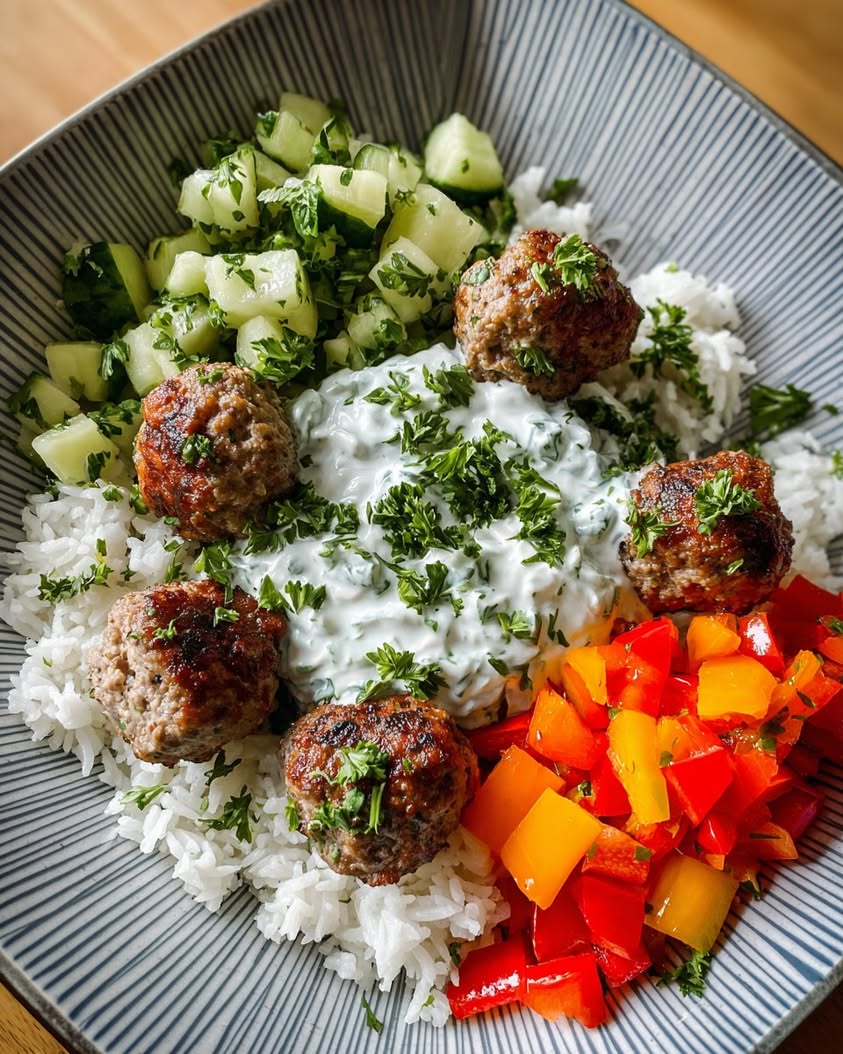
Greek Meatball Bowl with Tzatziki, Cucumber Salad & Rice: A Vibrant Mediterranean Feast
This Greek Meatball Bowl with Tzatziki, Cucumber Salad & Rice is a complete Mediterranean dinner that brings the vibrant flavors of Greece directly to your kitchen. Imagine juicy, herb-infused meatballs nestled on a bed of fluffy rice, topped with a crisp cucumber salad and generously drizzled with cool, creamy tzatziki sauce. Each component works in perfect harmony, creating a meal that is both satisfying and refreshingly light. Furthermore, this dish is a fantastic introduction to Mediterranean cooking, offering a wonderful balance of protein, fresh vegetables, and complex carbohydrates.
Creating this Greek Meatball Bowl is surprisingly straightforward, making it an ideal choice for a busy weeknight or a relaxed weekend meal. The aroma of oregano, garlic, and lemon filling your kitchen is an experience in itself, promising a delicious outcome. This recipe is also incredibly versatile; you can easily customize the ingredients to suit your dietary preferences or what you have available in your pantry. Ultimately, it delivers restaurant-quality flavor with the comfort and satisfaction of a home-cooked meal.
For anyone seeking a healthy dinner option, this bowl is a perfect choice. It aligns beautifully with the principles of the Mediterranean diet, emphasizing whole foods, lean protein, and healthy fats. The combination of textures and temperatures—from the warm, savory meatballs to the cool, crunchy salad and creamy sauce—makes every bite exciting. This Greek Meatball Bowl is more than just a meal; it is a colorful, flavorful, and nourishing experience that will quickly become a family favorite.
Quick Recipe Highlights
- Flavor Profile: This Greek Meatball Bowl delivers a bright and savory taste, featuring the classic Mediterranean trio of lemon, oregano, and garlic. The creamy tzatziki adds a cool, tangy contrast that perfectly complements the rich, herby meatballs.
- Texture: You will enjoy a wonderful interplay of textures, from the tender and juicy interior of the meatballs to the fluffy rice and the satisfying crunch of the fresh cucumber salad. The smooth, creamy tzatziki sauce brings everything together.
- Aroma: As the meatballs cook, your kitchen will fill with the unmistakable, inviting scent of sautéed garlic, onion, and earthy oregano. This aromatic promise is a hallmark of authentic Greek recipes and healthy dinner cooking.
- Visual Appeal: The bowl presents a stunning array of colors, with the white tzatziki, red onion, green cucumbers, and golden-brown meatballs creating a feast for the eyes. This vibrant presentation makes it ideal for social sharing or entertaining guests.
- Skill Level Needed: This is an easy recipe designed for home cooks of all experience levels. The steps are simple, involving basic mixing, shaping, and pan-frying, making it a very approachable Mediterranean dinner.
- Special Equipment: You need no special tools beyond a large bowl for mixing, a baking sheet or skillet for cooking the meatballs, and a standard box grater for the cucumber in the tzatziki sauce.
Recipe Overview
- Difficulty Level: We classify this Greek Meatball Bowl as an easy recipe because it uses straightforward techniques like mixing and pan-frying. The most complex step is making the tzatziki from scratch, which is simply a matter of grating and stirring. Consequently, even novice cooks can achieve fantastic results with this healthy dinner.
- Category: This dish fits perfectly into several meal categories, including main course, healthy dinner, and meal prep. It is a complete, balanced meal with protein, grains, and vegetables, making it a versatile option for any dining occasion.
- Cuisine: This recipe is firmly rooted in Greek and broader Mediterranean cuisine. It features hallmark ingredients like oregano, lemon, cucumber, and yogurt, which are staples in authentic Greek recipes and the celebrated Mediterranean diet.
- Cost: Preparing this Greek Meatball Bowl is very cost-effective, especially when compared to dining out. Ground meat, rice, and cucumbers are typically affordable, and the herbs and spices are pantry staples. Therefore, you can create a restaurant-quality Mediterranean dinner on a reasonable budget.
- Season: This bowl is particularly wonderful in the spring and summer months when cucumbers are at their peak and a lighter, refreshing meal is most appealing. However, its comforting elements also make it suitable for a healthy dinner year-round.
- Occasion: It is perfect for a casual family weeknight dinner, an impressive yet easy meal for guests, or as a make-ahead option for weekly meal prep. Its vibrant presentation also makes it great for potlucks and picnics.
Why You’ll Love This Greek Meatball Bowl
First and foremost, the taste and texture appeal of this Greek Meatball Bowl is undeniable. Each component is designed to complement the others, creating a symphony of flavors in every single bite. You get the savory, herby punch from the warm meatballs, the cool and tangy creaminess from the homemade tzatziki, and the bright, acidic crunch from the cucumber salad. This combination is incredibly satisfying and keeps your palate interested from the first mouthful to the last. Ultimately, it is a dish that feels both indulgent and refreshingly light.
From a convenience standpoint, this recipe is a true weeknight hero. The preparation is straightforward, and you can often multitask by cooking the rice while you prepare the meatball mixture and salad. Additionally, the entire meal comes together in one bowl, which means minimal cleanup after you have enjoyed your feast. This Greek Meatball Bowl is also an excellent candidate for meal prep; you can easily assemble the components in advance for quick, grab-and-go lunches or dinners throughout a busy week.
Nutritionally, this bowl is a powerhouse that aligns perfectly with a healthy lifestyle. It is packed with lean protein from the meatballs, complex carbohydrates from the rice, and a generous serving of fresh vegetables. The tzatziki sauce, made from yogurt, provides gut-healthy probiotics and a dose of calcium. Following the principles of the Mediterranean diet, this meal supports heart health, provides sustained energy, and is full of antioxidants and anti-inflammatory ingredients.
For social and entertaining value, this dish is a guaranteed crowd-pleaser. Its vibrant, colorful presentation is visually stunning and looks far more impressive than the effort required. You can easily scale the recipe up to feed a larger group, and the build-your-own-bowl concept is always fun for guests. Serving this Greek Meatball Bowl allows you to offer a healthy, flavorful, and memorable dining experience that feels both special and approachable.
Finally, this recipe is remarkably cost-effective and accessible. The ingredients are common and can be found at any standard grocery store, without the need for expensive or exotic items. By cooking this Mediterranean dinner at home, you save a significant amount of money compared to ordering similar dishes at a restaurant. Furthermore, you have complete control over the quality of ingredients, allowing you to choose organic, lean, or locally-sourced options as you prefer.
Historical Background and Cultural Significance
The origins of the meatball, or keftedes, in Greek cuisine are ancient and widespread, reflecting a practical use of minced meat stretched with breadcrumbs or oats. These small, spiced meat patties were a clever way to make precious meat go further while infusing it with the bold flavors of the Mediterranean landscape—oregano, mint, and garlic. The concept of serving them with yogurt-based sauces also has deep roots, as yogurt has been a staple in the Eastern Mediterranean and Middle Eastern diets for thousands of years. Consequently, the Greek Meatball Bowl is a modern interpretation of these timeless, rustic traditions.
Culturally, this dish embodies the core principles of the Greek and Mediterranean way of eating. Meals are often centered around sharing, with a variety of small dishes, or meze, creating a complete and social dining experience. This bowl captures that spirit by combining several distinct elements—the meatballs, the salad, the sauce, and the rice—into one harmonious plate. It represents a lifestyle that values fresh, seasonal ingredients, communal eating, and a balanced approach to nutrition, which is the very foundation of the celebrated Mediterranean diet.
The evolution of this specific recipe into a “bowl” format is a more recent phenomenon, aligning with contemporary global food trends that prioritize convenience, visual appeal, and balanced nutrition. While traditional keftedes might be served as part of a larger spread, the bowl presentation makes the meal self-contained and perfect for modern, on-the-go lifestyles. This adaptation demonstrates the dynamic nature of culinary traditions, showing how they can evolve while still honoring their fundamental flavors and ingredients. The Greek Meatball Bowl is a perfect example of a classic dish meeting modern convenience.
Regional variations of meatballs exist all around the Mediterranean, from Turkish kofta to Italian polpette. The Greek version is typically characterized by the use of oregano, mint, and sometimes a splash of ouzo for an anise note. The tzatziki sauce is uniquely Greek, setting it apart from other yogurt and cucumber sauces with its specific use of dill, garlic, and lemon juice. This particular combination of flavors in the Greek Meatball Bowl is a direct reflection of Greece’s culinary identity, showcasing its love for fresh herbs, bright acidity, and creamy, cooling accompaniments.
Ingredient Deep Dive
Ground Meat is the foundation of your Greek meatballs. Traditionally, a blend of pork and beef is used for its balance of flavor and fat, but lean ground turkey or chicken works wonderfully for a lighter option. From a nutritional standpoint, it is an excellent source of high-quality protein, iron, and B vitamins. When selecting ground meat, look for a pink, fresh color with minimal liquid in the package. For the best flavor and texture, choose meat with a moderate fat content, around 85-90% lean. You can store it in the refrigerator for 1-2 days or freeze it for several months.
Greek Yogurt is the star of the creamy tzatziki sauce. Its historical use in Greek cuisine dates back centuries, valued for its probiotic properties and versatility. Nutritionally, it is a powerhouse, offering a rich source of protein, calcium, and live active cultures that support gut health. When selecting yogurt for tzatziki, always opt for plain, full-fat Greek yogurt for the thickest, creamiest results and the most authentic flavor. Avoid any varieties with added sugars or flavors. Store it tightly sealed in the refrigerator and always use it by the expiration date for food safety.
Cucumber brings essential freshness and crunch to both the salad and the tzatziki. This hydrating vegetable has been cultivated for over 3,000 years and is a staple in Mediterranean climates. It is low in calories and high in water content, providing vitamin K, potassium, and antioxidants. For the best texture in your Greek Meatball Bowl, choose firm, dark green cucumbers without soft spots. English or Persian cucumbers are ideal as they have thinner skins and fewer seeds. Store them in the crisper drawer of your refrigerator and use within a week for peak crispness.
Fresh Dill and Mint are the herbal soul of this dish. These herbs have been used in Greek cooking since antiquity, not only for their flavor but also for their digestive properties. They are rich in antioxidants and vitamins, contributing to the overall health profile of this Mediterranean dinner. For the brightest flavor, always choose fresh, vibrant green bunches without any wilting or yellowing. You can store them in the refrigerator with their stems in a glass of water, covered loosely with a plastic bag. If you must substitute, fresh parsley can work for dill in a pinch, but the flavor profile will shift.
Common Mistakes to Avoid
- Overmixing the Meatball Mixture: Handling the meat too much will cause the proteins to tighten, resulting in tough, dense meatballs. Gently combine the ingredients until they are just incorporated; this ensures your Greek meatballs stay tender and juicy.
- Using Watery Tzatziki: Failing to drain the grated cucumber thoroughly is a common error that leads to a runny, diluted sauce. Always salt the grated cucumber and let it sit in a strainer for 10-15 minutes, then squeeze out the excess liquid firmly with your hands.
- Skimping on Resting Time: Not allowing the meatball mixture to rest in the refrigerator for at least 15-30 minutes before cooking is a missed opportunity. This chilling step helps the flavors meld and makes the mixture firmer, which prevents the meatballs from falling apart in the pan.
- Crowding the Pan: When browning the meatballs, avoid overcrowding the skillet. If the pan is too full, the meatballs will steam instead of developing a beautiful, caramelized crust. Cook them in batches to ensure each one gets proper contact with the hot surface.
- Underseasoning the Components: Each element of the bowl—the meatballs, the rice, the salad, and the tzatziki—needs to be properly seasoned on its own. Do not be shy with salt, pepper, and lemon juice; layering seasoning at each stage builds a more complex and delicious final dish.
- Using Hot Meatballs Immediately: Placing piping hot meatballs directly onto the cool tzatziki and cucumber salad can cause the sauce to break and the salad to wilt. Let the meatballs rest for a few minutes after cooking to allow their juices to redistribute and their temperature to slightly cool.
- Choosing the Wrong Rice: Using a quick-cook or instant rice can result in a mushy, gluey texture that does not hold up well in the bowl. Opt for a long-grain rice like basmati or jasmine, which stays fluffy and distinct, providing a better base for your Greek Meatball Bowl.
- Adding Garlic to Tzatziki Too Early: If you mince the garlic and mix it into the tzatziki hours in advance, its flavor can become overpoweringly sharp and bitter. For a mellower taste, prepare the tzatziki closer to serving time or rub the bowl with a garlic clove instead of mincing it in.
Essential Techniques
Properly Draining Cucumbers is the most critical technique for achieving a thick, creamy tzatziki. After grating the cucumber, toss it with a pinch of salt and let it rest in a fine-mesh strainer for at least 10 minutes. The salt will draw out the excess water through osmosis. Then, use your hands or a clean kitchen towel to squeeze the grated cucumber firmly, removing as much liquid as possible. This step prevents your sauce from becoming watery and ensures it clings beautifully to the meatballs and rice in your Greek Meatball Bowl.
Pan-Searing Meatballs correctly is key to developing flavor and texture. Heat a neutral oil like avocado or light olive oil in a skillet over medium-high heat until it shimmers. Carefully place the chilled meatballs in the pan, ensuring they are not touching. Let them cook undisturbed for 2-3 minutes to form a deep golden-brown crust on one side before turning. This Maillard reaction creates complex, savory flavors. Then, you can finish cooking them through by turning them frequently or transferring them to a preheated oven, resulting in juicy meatballs with a perfect sear.
Fluffing Cooked Rice is a simple but vital step for the perfect base to your Mediterranean dinner. As soon as the rice is finished cooking, remove the lid and gently fluff it with a fork. This action separates the grains, releases steam, and prevents the rice from becoming gummy or compacting at the bottom of the pot. Let the rice sit for a few minutes after fluffing to allow any residual moisture to evaporate. This technique guarantees light, fluffy rice that will absorb the flavors of the tzatziki and meatball juices without turning mushy.
Pro Tips for Perfect Greek Meatball Bowl
For incredibly moist meatballs, consider adding a panade, which is a paste made from breadcrumbs and milk, to your meat mixture. This simple addition helps to retain moisture during cooking, ensuring your Greek meatballs stay tender and never dry out.
Toast your rice in the pot with a little olive oil before adding the water. This extra step enhances the nutty flavor of the rice and helps the grains remain separate and fluffy, creating a superior base for your healthy dinner bowl.
Let your tzatziki sauce rest in the refrigerator for at least an hour before serving. This resting period allows the flavors of the garlic, dill, and lemon to fully meld and permeate the yogurt, resulting in a much more cohesive and delicious sauce for your Mediterranean dinner.
Use a cookie scoop or a small ice cream scoop to portion out your meatball mixture. This tool ensures that all your meatballs are uniformly sized, which promotes even cooking and gives your Greek Meatball Bowl a professional, consistent appearance.
Do not dress the cucumber salad until you are ready to serve. Adding the vinegar and oil too early will draw out more water from the cucumbers, making them soft and diluting the dressing. Toss it at the last minute for maximum crunch.
If you have time, brown the meatballs in an oven-safe skillet and then finish them in a 375°F (190°C) oven for 8-10 minutes. This method is hands-off and guarantees that the meatballs cook through evenly without the outside burning.
Variations and Adaptations
For regional variations, you can explore different flavor profiles within the Mediterranean. For a Turkish twist, add a pinch of cumin and red pepper flakes to the meatballs and serve the bowl with a spoonful of spicy harissa. An Italian-inspired version could use a blend of Parmesan, parsley, and basil in the meatballs, with a lemony arugula salad on the side. These adaptations show the versatility of the bowl format while staying true to the healthy, flavorful principles of the region’s cuisines.
Seasonal adaptations are easy to implement. In the summer, add juicy cherry tomatoes and fresh sweet corn to the cucumber salad. During the fall, you might roast cubed sweet potatoes or butternut squash to serve alongside or underneath the meatballs. In the winter, a warm, braised leafy green like kale or chard can replace the cool cucumber salad. These changes keep your Greek Meatball Bowl feeling fresh and exciting throughout the year.
Dietary modifications are straightforward for this recipe. For a gluten-free version, use certified gluten-free oats or breadcrumbs in the meatballs. To make it dairy-free, substitute the yogurt in the tzatziki with a thick, plain coconut or almond-based yogurt. For a vegetarian or vegan Greek “meatball” bowl, use a base of cooked lentils, mashed chickpeas, or a plant-based ground meat alternative, adjusting the binding agents as needed. This adaptability makes it an inclusive healthy dinner option for almost any diet.
Serving and Presentation Guide
Plating techniques can elevate your Greek Meatball Bowl from a simple meal to a restaurant-quality presentation. Start by creating a neat bed of fluffy rice at the bottom of a wide, shallow bowl. Artfully arrange the warm meatballs on one side of the rice, allowing some to nestle into the grains. Then, spoon the crisp cucumber salad on the opposite side, creating a vibrant color contrast. Finally, generously drizzle the creamy tzatziki over the meatballs and rice, allowing it to pool enticingly. This method ensures each component is visible and easily accessible.
Garnishing adds the final touch of freshness and visual appeal. A sprinkle of finely chopped fresh dill or mint over the entire bowl brightens the dish both in flavor and color. You can also add a few Kalamata olives and a wedge of lemon on the side for a traditional Greek touch. A light drizzle of high-quality extra virgin olive oil over the tzatziki and a crack of black pepper just before serving enhances the flavors and adds a professional finish to your Mediterranean dinner.
Consider traditional and modern accompaniments to complement your bowl. A warm, grilled pita bread wedge served on the side is a classic and practical addition for scooping up every last bit of tzatziki and rice. For a more substantial meal, a side of roasted lemon-oregano potatoes would be perfectly thematic. A simple glass of dry white wine or a chilled glass of retsina would complete the authentic Greek experience. These additions turn the meal into a more expansive and celebratory feast.
Wine and Beverage Pairing
Selecting the right wine can enhance the flavors of your Greek Meatball Bowl beautifully. A crisp, dry white wine like Assyrtiko from Santorini is a classic Greek pairing; its high acidity and citrus notes cut through the richness of the meatballs and complement the creamy tzatziki. Alternatively, a Sauvignon Blanc or a dry Rosé would also work wonderfully, as their bright, fruity profiles balance the herbal and garlicky notes. For red wine lovers, a light-bodied, low-tannin red like a Pinot Noir or a Greek Xinomavro will not overpower the dish but will instead highlight the savory meat flavors.
For non-alcoholic alternatives, there are many refreshing options that pair well with this Mediterranean dinner. Homemade lemonade, especially one infused with fresh mint or basil, mirrors the citrus and herbal notes in the food. Sparkling water with a squeeze of lemon or lime and a few cucumber slices is a light and hydrating choice. A chilled, unsweetened iced tea, such as mint tea or a subtle green tea, can also be a fantastic companion, cleansing the palate between bites of the flavorful meatballs and rich tzatziki.
When considering temperature, always serve white wines and non-alcoholic beverages well-chilled, between 45-50°F (7-10°C). This coolness is refreshing against the warm elements of the bowl and helps to balance the overall sensory experience. Red wines should be served slightly cooler than room temperature, around 55-60°F (13-15°C), to keep them feeling fresh. Ultimately, the goal is to choose beverages that refresh the palate and highlight the bright, herby, and savory characteristics of your Greek Meatball Bowl without overwhelming them.
Storage and Shelf Life
Proper storage is key to maintaining the quality and safety of your Greek Meatball Bowl components. Store the meatballs, rice, cucumber salad, and tzatziki in separate airtight containers in the refrigerator. The meatballs and rice will keep for up to 3-4 days. The cucumber salad is best consumed within 1-2 days as it will continue to release water and become softer. The tzatziki sauce, if well-drained, should also last 3-4 days. Always look for signs of spoilage like an off smell, significant liquid separation, or mold, and discard any component that appears questionable.
For reheating, gently warm the meatballs and rice in the microwave or in a skillet over low heat with a splash of water to prevent drying out. It is crucial to only reheat the portion you plan to eat immediately. The cucumber salad and tzatziki should always be served cold and never reheated. If you have a fully assembled bowl that has been refrigerated, it is best to scrape off the tzatziki and salad, reheat the rice and meatballs separately, and then reassemble with the cold components to preserve their fresh texture and flavor.
Freezing is an excellent option for the meatballs alone. After cooking and cooling them completely, arrange the meatballs in a single layer on a baking sheet to freeze them solid. Then, transfer the frozen meatballs to a freezer-safe bag or container. They will keep for up to 3 months. The rice can be frozen but may become slightly grainy upon thawing. We do not recommend freezing the tzatziki or the cucumber salad, as the textures will be irreparably damaged upon thawing, becoming watery and mushy.
Make Ahead Strategies
You can efficiently prepare nearly every component of this Greek Meatball Bowl in advance, making it a meal prep superstar. The meatball mixture can be mixed, shaped, and stored covered in the refrigerator for up to 24 hours before cooking. Alternatively, you can fully cook the meatballs and store them for 3-4 days. The tzatziki sauce actually benefits from being made a day ahead, as the flavors have more time to develop. The rice can also be cooked 2-3 days in advance. This staged approach turns a 45-minute active cooking session into a simple 10-minute assembly on a busy weeknight.
When storing components between steps, keep the cucumber salad completely separate and do not dress it until the moment you are ready to serve. This is the most critical step for maintaining its crispness. The meatballs and rice should be cooled completely to room temperature before being sealed in containers and refrigerated to prevent condensation, which can make the rice soggy. The tzatziki should always be kept tightly covered in the coldest part of your refrigerator. Following these guidelines ensures that your prepped ingredients retain their quality.
For final assembly, we recommend a “deconstructed” approach for make-ahead meals. Portion the cold rice into the bottom of your meal prep containers. Place the cooled meatballs on one side. Keep the undressed cucumber salad (the chopped cucumbers and red onions) in a separate small container or compartment. Store the tzatziki in its own small container. When you are ready to eat, you can gently reheat the rice and meatballs if desired, then combine everything, dressing the cucumber salad at the last second. This method preserves the ideal texture of each component for your healthy dinner.
Scaling Instructions
Halving this Greek Meatball Bowl recipe is simple for smaller households or fewer servings. Precisely divide all the ingredient quantities in half. The cooking times for the meatballs and rice will remain roughly the same, but you may need to use a smaller skillet for browning the meatballs. Be extra vigilant with seasoning when halving a recipe, as it can be easy to undersalt. A helpful tip is to mix the half-batch of meatball ingredients without salt, then cook a tiny tester patty to check the seasoning before shaping and cooking the entire batch.
Doubling or tripling the recipe is perfect for meal prepping or feeding a crowd. Simply multiply all ingredient amounts by two or three. For the meatballs, it is best to cook them in batches to avoid overcrowding the pan and ensure proper browning. You may need to cook the rice in separate pots or a very large Dutch oven to prevent it from steaming unevenly. When scaling up, taste and adjust the seasoning of the tzatziki and the meatball mixture as you go, as large batches can sometimes require slightly more salt and acid to achieve a balanced flavor.
Consider equipment and timing modifications when scaling. For a doubled recipe, ensure you have a large enough mixing bowl for the meatball mixture and enough sheet pans or skillets to cook them efficiently. The total active prep time will increase, but not necessarily double, as tasks like mincing garlic and herbs can be done once for the larger quantity. If serving a crowd, you can keep the first batches of meatballs warm in a 200°F (95°C) oven while you finish cooking the rest. Planning ahead makes scaling this Mediterranean dinner a smooth and successful process.
Nutritional Deep Dive
This Greek Meatball Bowl offers an excellent macronutrient balance, making it a truly healthy dinner. The lean ground meat provides a high-quality source of protein, essential for muscle repair and satiety. The rice serves as a complex carbohydrate, offering sustained energy release throughout the day. The cucumbers and onions contribute dietary fiber, which aids in digestion and helps maintain stable blood sugar levels. The healthy fats from the olive oil in the dressing and the natural fats in the yogurt support nutrient absorption and contribute to a feeling of fullness. This balanced profile makes the bowl ideal for weight management and active lifestyles.
From a micronutrient perspective, this meal is rich in essential vitamins and minerals. The cucumbers and fresh herbs are good sources of Vitamin K and antioxidants. The yogurt provides a significant amount of calcium and probiotics for bone and gut health. The lemon juice and olive oil dressing contribute Vitamin C and healthy monounsaturated fats, which are cornerstones of the heart-healthy Mediterranean diet. The onions and garlic contain compounds like allicin, which have anti-inflammatory and immune-boosting properties. Consistently eating meals like this can contribute to long-term health and wellness.
For those monitoring their intake, this bowl is naturally adaptable. To reduce carbohydrates, you can serve the meatballs and salad over a bed of leafy greens or cauliflower rice instead of traditional rice. To lower the fat content, opt for a leaner ground meat (93% or higher) and use low-fat Greek yogurt for the tzatziki. The portion size is also easily adjustable; the recipe as written provides a satisfying and balanced meal, but you can slightly reduce the rice and increase the cucumber salad for a lighter option. This flexibility ensures the recipe can fit into various nutritional plans.
Dietary Adaptations
For a gluten-free version of this Greek Meatball Bowl, ensure that the breadcrumbs or oats used in the meatball mixture are certified gluten-free. Many standard brands contain hidden gluten, so careful label reading is essential. All other core ingredients—meat, rice, cucumbers, yogurt, and herbs—are naturally gluten-free. This simple swap makes the entire dish safe for those with celiac disease or gluten sensitivity, allowing everyone to enjoy this flavorful Mediterranean dinner without compromise.
Creating a dairy-free adaptation is also straightforward. The key is to replace the Greek yogurt in the tzatziki sauce. The best substitutes are thick, plain, unsweetened plant-based yogurts, such as those made from coconut, almond, or cashew. Be sure to drain these as you would regular yogurt if they appear watery. The resulting sauce will have a slightly different flavor profile but will still provide the cool, creamy contrast that is essential to the bowl. This modification opens up the recipe for those with lactose intolerance or a vegan diet.
For a fully vegan Greek “Meatball” Bowl, replace the ground meat with a plant-based alternative. A mixture of cooked brown lentils or mashed chickpeas combined with breadcrumbs, finely chopped mushrooms, and the same Greek herbs and spices works wonderfully. Use a flax egg (1 tbsp ground flaxseed mixed with 3 tbsp water) to help bind the mixture. Pair this with the dairy-free tzatziki mentioned above and your favorite rice. This adaptation proves that you can still capture the vibrant, hearty spirit of the original dish while adhering to a plant-based diet.
Troubleshooting Guide
If your meatballs are falling apart during cooking, the most common cause is insufficient binding agents or overhandling. First, ensure you have used the correct amount of breadcrumbs or oats and egg. If the mixture still feels too wet, add a tablespoon more of the binder. Conversely, if it is too dry and crumbly, a splash of milk or water can help. Always chill the mixture before shaping, as this firms up the fat and makes the meatballs more cohesive. Handle the mixture as little as possible when rolling to keep the texture light.
When your tzatziki sauce turns out too runny, it is almost always due to excess moisture from the cucumbers. Fortunately, you can fix this even after the fact. Transfer the watery tzatziki to a fine-mesh strainer lined with cheesecloth or a clean coffee filter and let it drain in the refrigerator for 30-60 minutes. For future batches, remember to salt, drain, and squeeze the grated cucumber thoroughly. Adding a tablespoon of olive oil can also help emulsify the sauce and improve its consistency.
If the flavors of your bowl taste flat or bland, the issue is likely underseasoning. The Mediterranean diet relies heavily on bold, bright flavors from herbs, acid, and salt. Taste each component individually and adjust. The meatball mixture may need more salt and oregano. The tzatziki might need another pinch of salt, a squeeze of lemon juice, or more garlic. The cucumber salad often benefits from a touch more vinegar. Do not be afraid to season in layers; salting each component as you prepare it builds a much more complex and satisfying final dish.
Recipe Success Stories
We have received wonderful feedback from our community of home cooks who have tried this Greek Meatball Bowl. One reader, Sarah from Colorado, shared that it has become her family’s favorite “Meatless Monday” meal after she successfully adapted it using lentils. She reported that even her picky eaters asked for seconds, and the vibrant colors made the dish a hit on her Instagram feed. Another home cook, Mark, mentioned that the make-ahead tips were a game-changer for his weekly lunch prep, saving him time and money while keeping his meals exciting and healthy.
Many readers have enjoyed experimenting with variations. A common success story involves adding feta cheese crumbles directly into the meatball mixture for an extra burst of salty, tangy flavor. Others have shared their success with using different grains like quinoa or couscous as the base, which work beautifully and add their own unique nutritional profiles. These adaptations show the recipe’s fantastic flexibility and how it can inspire creativity in the kitchen while still delivering a delicious and reliable Mediterranean dinner every time.
Frequently Asked Questions
Can I bake the meatballs instead of pan-frying them? Absolutely. Baking is a great, hands-off method. Preheat your oven to 400°F (200°C). Arrange the meatballs on a parchment-lined baking sheet, drizzle with a little oil, and bake for 15-20 minutes, turning halfway through, until cooked through and browned. This method is excellent for a lighter version and for cooking larger batches.
What can I use if I don’t have fresh dill? While fresh dill is ideal for tzatziki, you can substitute it with 1 teaspoon of dried dill. Alternatively, fresh mint or even fresh parsley can provide a different but still delicious herbal note. The flavor will shift, but it will remain a refreshing sauce for your Greek meatballs.
How can I tell when the meatballs are fully cooked? The safest way is to use an instant-read thermometer. The internal temperature should reach 165°F (74°C). Visually, they should be browned on the outside and no longer pink in the center. You can also cut one open to check; the juices should run clear.
Can I use regular yogurt instead of Greek yogurt? You can, but the tzatziki will be much thinner. To mimic the thickness of Greek yogurt, place regular plain yogurt in a fine-mesh strainer lined with cheesecloth over a bowl and let it drain in the
Print
Greek Meatball Bowl with Tzatziki, Cucumber Salad & Rice
Description
A fresh and flavorful bowl featuring seasoned Greek meatballs, creamy tzatziki, a crisp cucumber salad, and fluffy rice.
Ingredients
For the Crust:
- 1 lb ground lamb or beef
- 1/2 cup breadcrumbs
- 1 egg
- 2 cloves garlic, minced
- 1 tsp dried oregano
- 1/2 tsp salt
- 1/4 tsp black pepper
- 1 cup Greek yogurt
- 1 cucumber, grated and drained
- 1 tbsp lemon juice
- 1 tbsp fresh dill, chopped
- 1 cup rice, cooked
- 1/2 red onion, thinly sliced
- 1 tomato, diced
- 1 tbsp olive oil
Instructions
1. Prepare the Crust:
- Preheat oven to 400°F (200°C). In a bowl, mix ground meat, breadcrumbs, egg, minced garlic, oregano, salt, and pepper. Form into 1-inch meatballs and place on a baking sheet. Bake for 20 minutes or until cooked through.
- For the tzatziki, combine Greek yogurt, grated cucumber, lemon juice, and dill in a bowl. Stir well and refrigerate until ready to serve.
- In another bowl, toss sliced red onion, diced tomato, and olive oil to make the cucumber salad. Season with salt and pepper if desired.
- Assemble bowls by dividing cooked rice among four bowls. Top with meatballs, cucumber salad, and a generous dollop of tzatziki.
Notes
You can customize the seasonings to taste.

I’m Shaykee—born in Morocco, seasoned across continents. From airplane galleys to home kitchens, I share the flavors and stories that shaped my journey.