
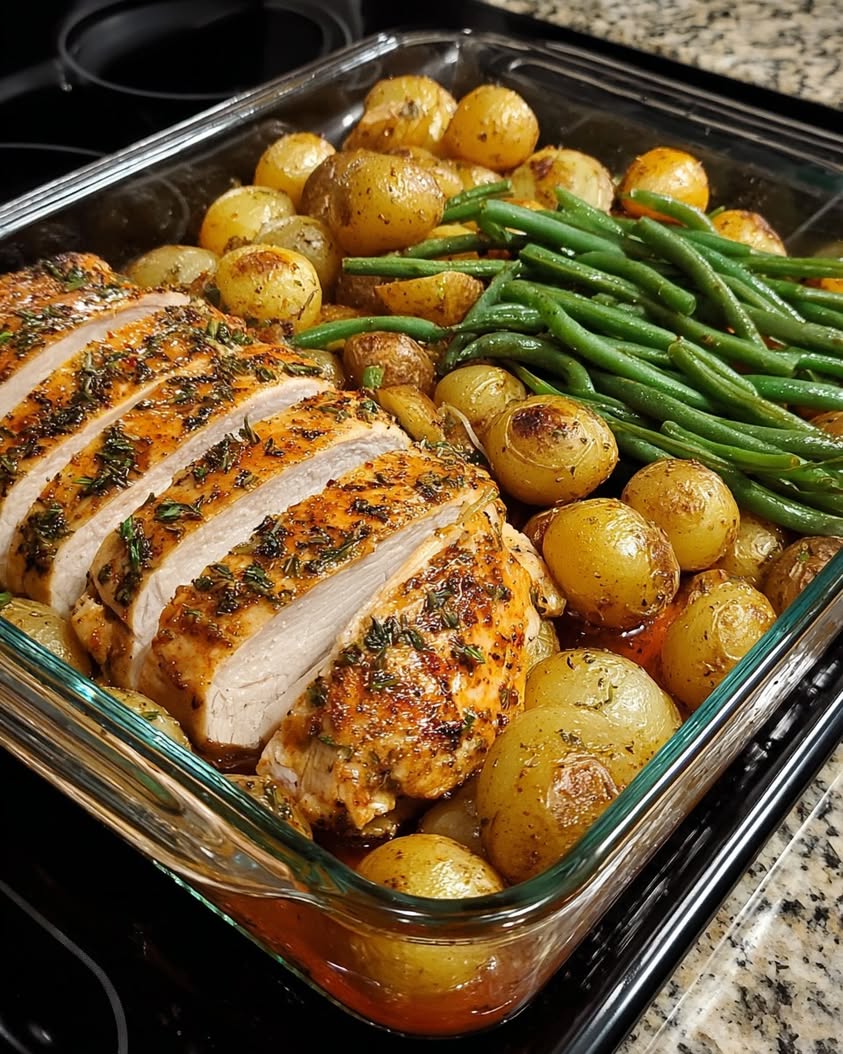
Herb-Roasted Chicken Breast with Baby Potatoes & Green Beans: An Easy One-Pan Family Feast
Imagine pulling a sizzling pan from your oven filled with a complete, gourmet-worthy dinner. This recipe for herb-roasted chicken breast with baby potatoes and green beans delivers exactly that experience. The aroma of garlic and rosemary will fill your kitchen, promising a meal that is both comforting and impressively delicious. Furthermore, this dish proves that you do not need complicated techniques or a mountain of dirty pans to create something truly special for your family.
This particular recipe stands out because it is a complete one-pan meal. You get perfectly cooked protein, starch, and vegetables all from a single sheet pan. Consequently, cleanup becomes an absolute breeze, which is a major win for any busy weeknight. The chicken breast turns out incredibly juicy and flavorful, while the potatoes become crispy on the outside and fluffy on the inside. The green beans add a fresh, vibrant crunch that balances the entire plate beautifully.
Ultimately, this dish is a testament to the power of simple, high-quality ingredients. With just a handful of pantry staples, you can transform chicken and vegetables into a restaurant-quality dinner. The method is straightforward and reliable, making it a perfect go-to recipe for both novice cooks and seasoned chefs. You will love how this meal brings everyone to the table with minimal effort and maximum flavor.
Quick Recipe Highlights
- Flavor Profile: This dish features a savory and aromatic blend of earthy rosemary, pungent garlic, and bright lemon. The herbs create a deeply flavorful crust on the chicken, while the lemon juice cuts through the richness, resulting in a perfectly balanced bite every time.
- Texture: You will enjoy a wonderful contrast of textures. The chicken breast has a crispy, golden-brown skin and a tender, juicy interior. Meanwhile, the baby potatoes are creamy inside with a slightly crisp exterior, and the green beans offer a satisfying snap.
- Aroma: As it roasts, the combination of fresh herbs, garlic, and lemon will perfume your entire home with an incredibly inviting and comforting scent. This aroma is a classic sign of a wholesome, home-cooked meal that everyone anticipates.
- Visual Appeal: The final plate is a feast for the eyes with golden-brown chicken, vibrant green beans, and rustic roasted potatoes. This colorful presentation makes the dish look as good as it tastes, perfect for serving to guests.
- Skill Level Needed: This is an ideal recipe for beginners because it requires minimal knife work and simple techniques like tossing and roasting. Even if you are new to cooking, you can achieve fantastic results by following the straightforward steps provided.
- Special Equipment: You only need a reliable sheet pan or large roasting dish to make this entire meal. A good pair of tongs is helpful for turning the vegetables, but otherwise, no fancy kitchen gadgets are required for this easy recipe.
Recipe Overview
- Difficulty Level: We classify this recipe as easy because it involves fundamental cooking techniques like chopping, mixing, and roasting. The process is linear and forgiving; for instance, even if your vegetable pieces are not perfectly uniform, they will still cook through beautifully. This accessibility makes it a fantastic starting point for anyone building their culinary confidence.
- Category: This dish fits perfectly into the categories of a healthy family dinner and a simple one-pan meal. It provides a well-rounded plate with lean protein, complex carbohydrates, and fibrous vegetables. Consequently, it is a nourishing option for a weekday meal that satisfies both taste and nutritional needs.
- Cuisine: The flavor profile is rooted in rustic American and Mediterranean home cooking traditions. The use of rosemary, garlic, and lemon is classic in these cuisines, celebrated for creating bright, herbaceous, and satisfying dishes that feel both familiar and special.
- Cost: This is a very cost-effective meal to prepare. Chicken breast, potatoes, and green beans are all affordable, readily available ingredients. The herb and seasoning components are pantry staples, making the overall cost per serving quite low, which is great for family meal planning.
- Season: This recipe is truly versatile across all seasons. It is particularly comforting in the fall and winter, but the bright, fresh flavors also make it suitable for spring and summer, especially when paired with a light salad.
- Occasion: It is perfect for a casual weeknight family dinner, yet elegant enough for a relaxed weekend gathering with friends. The effortless presentation and crowd-pleasing flavors make it suitable for almost any informal occasion.
Why You’ll Love This Recipe
First and foremost, the taste and texture of this one-pan meal are utterly irresistible. The herb-roasted chicken breast develops a savory, crispy crust that gives way to succulent, moist meat. Simultaneously, the baby potatoes soak up the pan juices, becoming incredibly flavorful and tender. The green beans retain a slight crunch, providing a fresh contrast that makes every forkful interesting. This harmonious combination of flavors and textures is what keeps people coming back for more.
From a practical standpoint, the convenience of this recipe is a major selling point. Since everything cooks together on a single sheet pan, your prep and cleanup time are dramatically reduced. You simply chop the vegetables, season everything, and let the oven do the work. This streamlined process is a lifesaver on busy evenings when you want a wholesome dinner without the hassle of multiple pots and pans. It is the ultimate easy recipe for a stress-free cooking experience.
Nutritionally, this meal is a powerhouse. Chicken breast provides lean protein essential for muscle maintenance, while the potatoes offer energizing complex carbohydrates. The green beans are packed with fiber, vitamins, and antioxidants. Cooking everything in one pan with olive oil also means you control the fat content, making this a genuinely healthy eating choice for you and your family. You can feel good about serving this balanced plate.
For social and entertaining value, this dish is a true winner. It is a complete meal that serves a family of four perfectly, and it is easy to double for a larger crowd. The beautiful, colorful presentation looks like you spent hours in the kitchen, making it ideal for a casual family dinner or impressing guests. Its universal appeal ensures that even picky eaters will find something to love on the plate.
Finally, the cost-effectiveness and accessibility of the ingredients cannot be overstated. Chicken, potatoes, and green beans are budget-friendly and available at any grocery store. You do not need any expensive or hard-to-find items. This accessibility makes it a go-to recipe that you can whip up anytime without a special shopping trip, proving that delicious, healthy eating does not have to be complicated or expensive.
Historical Background and Cultural Significance
The concept of roasting meat with root vegetables over a fire is one of humanity’s oldest cooking methods. While the specific combination of chicken, potatoes, and green beans is a modern American classic, its roots lie in rustic peasant cooking from Europe and the Mediterranean. Families would cook what they had available from their gardens or farms in a single pot or pan over a hearth, making efficient use of ingredients and fuel. This tradition of one-pot cooking is the direct ancestor of our convenient one-pan meals today.
In American culinary culture, the roasted chicken dinner holds a place of honor as a symbol of home, family, and comfort. It evokes images of Sunday suppers and holiday gatherings. The addition of potatoes and green beans creates a familiar “meat and potatoes” plate that is deeply satisfying and universally loved. This dish represents a practical evolution, adapting the grand feast of a whole roasted chicken into a quicker, weeknight-friendly format using chicken breasts.
The recipe has evolved significantly with changes in kitchen technology and lifestyle. The invention of the reliable home oven replaced the open hearth, and the widespread availability of baking sheets made the one-pan method accessible to everyone. As families became busier, the need for efficient, minimal-cleanup recipes grew. This led to the popularization of sheet-pan dinners, which maximize flavor and simplicity, perfectly encapsulating the modern desire for healthy eating without sacrificing time or taste.
Regional variations of this concept are endless. In Provence, you might find chicken roasted with herbes de Provence and olives. In Italy, it could be seasoned with oregano and served with bell peppers. The American version often features rosemary, garlic, and green beans, reflecting a preference for bright, straightforward flavors. This adaptability is a testament to the formula’s strength: a protein and vegetables, roasted together with local seasonings, will always be a beloved family dinner.
Ingredient Deep Dive
Chicken breast is the lean protein star of this dish. Culturally, chicken is one of the most universally consumed meats, prized for its mild flavor and versatility. From a nutritional standpoint, it is an excellent source of high-quality protein and essential B vitamins, particularly niacin and B6, which are crucial for energy metabolism. When selecting chicken, look for plump, pinkish flesh with no gray tones and a minimal amount of liquid in the package. For the best results, store chicken in the coldest part of your refrigerator and use it within 1-2 days of purchase, or freeze it immediately. If you need a substitution, boneless, skinless chicken thighs will work wonderfully, offering a richer flavor and more forgiving, juicy texture.
Baby potatoes are the hearty foundation of this one-pan meal. These small potatoes have been cultivated for thousands of years in the Andes and became a global staple after their introduction to Europe. They are packed with potassium, vitamin C, and fiber, especially when you leave the nutrient-rich skin on. Choose baby potatoes that are firm, smooth, and free of sprouts or green spots. Store them in a cool, dark, and well-ventilated place, but not in the refrigerator, as cold temperatures can convert their starch into sugar. You can easily substitute with larger potatoes cut into 1-inch chunks or use other small, waxy varieties like fingerlings or red potatoes for a similar creamy texture.
Fresh green beans bring a vibrant color and crisp-tender texture to the plate. Also known as string beans, they are the unripe fruit of various bean cultivars and are enjoyed worldwide. They are a fantastic source of vitamins A, C, and K, as well as fiber and folate. Look for beans that are bright green, crisp enough to snap when bent, and free of brown spots or visible wilting. Store them in a plastic bag in your refrigerator’s crisper drawer, where they will keep for about a week. For a variation, you can substitute with asparagus spears, broccoli florets, or sliced zucchini, adjusting the roasting time as needed since these vegetables may cook faster.
Extra virgin olive oil is more than just a cooking fat; it is a key flavor component. Central to Mediterranean cuisine for millennia, it is celebrated for its heart-healthy monounsaturated fats and antioxidants. Its fruity, peppery notes enhance the other ingredients without overpowering them. Always choose a cold-pressed oil for the best flavor and health benefits. Store it in a cool, dark place to prevent rancidity. If you need a substitute, avocado oil is excellent for high-heat roasting, while a neutral oil like grapeseed will work well, though it will lack the distinctive flavor of olive oil.
The fresh herbs and garlic are the aromatic soul of this recipe. Rosemary, with its pine-like fragrance, has a long history of use in both culinary and medicinal applications around the Mediterranean. Garlic, originating in Central Asia, is a fundamental flavor base in countless cuisines and is known for its potential cardiovascular benefits. Together, they create the iconic scent that defines this herb-roasted chicken. For the best flavor, always choose fresh, vibrant herbs over dried if possible, and select firm, plump garlic heads. You can substitute dried rosemary in a pinch, but use only one-third the amount, as it is more potent. Thyme or oregano can also be used alongside or in place of rosemary for a different herbal profile.
Common Mistakes to Avoid
- Overcrowding the Pan: If you pack the ingredients too tightly on the sheet pan, they will steam instead of roast. This results in pale, soggy chicken skin and soft, rather than crispy, potatoes. Always use a large enough pan to allow for some space between the pieces, which ensures proper air circulation and browning.
- Using Skinless Chicken Breast: While skinless chicken is healthy, the skin acts as a natural barrier during roasting. It bastes the meat from the outside, keeping it incredibly moist and juicy. Without it, the chicken breast can easily dry out in the hot oven, so we highly recommend using skin-on breasts for this recipe.
- Not Preheating the Oven: Placing your pan into an oven that has not reached the correct temperature is a critical error. A properly preheated oven is essential for immediately searing the outside of the food, which locks in juices and creates that desirable crispy, golden-brown texture from the start.
- Cutting the Vegetables Inconsistently: If your potato pieces are all different sizes, they will cook unevenly. Some will be mushy while others remain hard. Aim to cut them into similar-sized halves or quarters so they all reach that perfect tender interior and crispy exterior at the same time.
- Adding the Green Beans Too Early: Green beans cook much faster than potatoes and chicken. If you add them at the beginning, they will become burnt and shriveled by the time everything else is done. Adding them partway through the cooking process is the key to preserving their vibrant color and crisp-tender bite.
- Skipping the Resting Time for Chicken: It is very tempting to cut into the chicken right away. However, slicing immediately causes the precious juices to run out onto the cutting board, leaving the meat dry. Letting it rest for a few minutes allows the fibers to relax and reabsorb those juices, ensuring every bite is moist.
- Underseasoning: Do not be shy with salt and pepper. Potatoes, in particular, need a generous amount of seasoning to taste their best. Season each component adequately before roasting to build layers of flavor throughout the entire dish, not just on the surface.
- Using a Dull Knife: A dull knife makes prepping vegetables more dangerous and difficult. It requires more force, which increases the chance of the knife slipping. A sharp chef’s knife will glide through potatoes and trim green beans safely and efficiently, making your prep work a pleasure.
Essential Techniques
Patting the chicken dry is a simple but crucial first step. Using paper towels to thoroughly dry the chicken skin removes surface moisture that would otherwise create steam. This steam prevents the skin from becoming crispy and golden brown. The goal is to achieve a completely dry surface so that the hot oven air can immediately begin crisping the skin. A common pitfall is rushing this step; take your time to ensure the skin is truly dry for the best textural results.
Proper vegetable cutting ensures even cooking. When you cut the baby potatoes into uniform halves or quarters, you create consistent surface areas and volumes. This means all the pieces will heat through and caramelize at the same rate. Inconsistent pieces lead to a mix of undercooked and overcooked potatoes on the same pan. The visual cue for success is a sheet pan where every potato piece has a similar golden-brown color and can be easily pierced with a fork.
Coordinating the cooking stages is the secret to a perfect one-pan meal. You start the heartier ingredients—the chicken and potatoes—first because they require more time to cook through. Adding the more delicate green beans later prevents them from burning. This technique allows you to cook everything to perfection simultaneously. The key is understanding the different cooking times of your ingredients and using a timer to remind you when to add the next component to the pan.
Pro Tips for Perfect Herb-Roasted Chicken Breast
Bring your chicken to room temperature for about 20 minutes before roasting. This simple step helps the meat cook more evenly from edge to center, preventing a scenario where the outside is overcooked while the inside is still cold. Consequently, you will achieve a uniformly juicy chicken breast every single time.
Do not toss the green beans in the same bowl as the potatoes. The potatoes need a longer cooking time and more oil. Instead, toss the green beans separately with a little oil, salt, and pepper right before you add them to the pan. This prevents them from becoming greasy and ensures they cook perfectly alongside the other ingredients.
Use a meat thermometer to eliminate guesswork. The safest and most accurate way to check for doneness is to insert an instant-read thermometer into the thickest part of the chicken breast. You are looking for an internal temperature of 165°F (74°C). This guarantees that the chicken is both safe to eat and perfectly moist, not overdone.
For extra crispy potato edges, make sure they are in a single layer and cut-side down on the hot pan. This maximizes contact with the hot surface, promoting superior browning and a delightful crispy texture that contrasts with the fluffy interior. Avoid piling them on top of each other.
After removing the pan from the oven, squeeze fresh lemon juice over everything. The bright acidity of the lemon just before serving will lift all the rich, savory flavors and cut through the richness of the olive oil and chicken. This final touch makes the entire dish taste fresher and more balanced.
Let the chicken rest on a clean cutting board, not on the hot sheet pan. The residual heat from the pan will continue to cook the chicken, potentially leading to dry meat. Transferring it to a board stops the cooking process and allows the juices to redistribute properly throughout the meat.
Variations and Adaptations
For regional variations, you can easily take this basic formula around the world. A Mediterranean version might include kalamata olives, artichoke hearts, and a sprinkle of oregano and feta cheese after roasting. For an Italian twist, use a blend of basil and oregano, and add cherry tomatoes and sliced red onion to the pan. A French-inspired adaptation could feature herbes de Provence and shallots, finished with a drizzle of Dijon vinaigrette.
Seasonal adaptations keep this recipe exciting all year round. In the spring, use asparagus and new potatoes. Summer calls for zucchini, yellow squash, and cherry tomatoes added in the last 15 minutes of cooking. For a hearty fall or winter meal, swap the green beans for chunks of sweet potato, parsnips, or Brussels sprouts, which can handle the longer roasting time and pair beautifully with the herbs.
Dietary modifications are straightforward. For a gluten-free meal, this recipe is naturally perfect as written. To make it dairy-free, simply ensure your olive oil is the only fat used. For a lower-carb or keto option, replace the potatoes with cauliflower florets and increase the amount of green beans or add mushrooms. A paleo adaptation would follow similar guidelines, focusing on vegetables allowed within that framework.
Flavor variations can customize the dish to your palate. Create a smoky profile by adding paprika to the herb rub. For a spicy kick, include a pinch of red pepper flakes with the seasonings. A lemony-herb version can be amplified by adding thin slices of lemon to the pan, which will caramelize and become edible. Alternatively, an umami-rich version can include a splash of soy sauce or balsamic glaze drizzled over the finished dish.
Serving and Presentation Guide
Plating techniques can elevate this homey meal. For a family-style presentation, bring the entire sheet pan directly to the table on a trivet, allowing everyone to serve themselves from the beautiful, rustic pan. For individual plates, place a portion of the baby potatoes and green beans in the center of each warm plate. Then, slice the rested chicken breast on a bias and fan the slices over the vegetables, showcasing the juicy interior and crispy skin.
Garnishing adds the final touch of freshness and color. A light sprinkle of finely chopped fresh parsley or chives just before serving introduces a bright green accent and a fresh flavor. You can also add a few whole sprigs of the rosemary used in cooking for an aromatic garnish. A final drizzle of high-quality extra virgin olive oil or a squeeze of lemon wedge served on the side enhances both flavor and visual appeal.
Traditional accompaniments for a roasted chicken dinner are simple and comforting. A side of classic gravy made from the pan drippings is always welcome. Alternatively, a dollop of whole-grain mustard or a homemade cranberry sauce can provide a tangy contrast. For a modern twist, serve it with a side of arugula salad dressed lightly with lemon vinaigrette to add a peppery, fresh element that cuts through the richness of the roasted components.
Wine and Beverage Pairing
Selecting the right wine can enhance your dining experience significantly. A crisp, medium-bodied white wine like Chardonnay is an excellent pairing. An unoaked or lightly oaked Chardonnay complements the herbal notes without overpowering the chicken. If you prefer red wine, a light Pinot Noir with its low tannins and red fruit notes pairs beautifully with the white meat and earthy potatoes without dominating the plate. Ultimately, the goal is to choose a wine that mirrors the dish’s balance of savory and herbal flavors.
For non-alcoholic alternatives, consider options with complexity and brightness. Sparkling water with a twist of lemon or lime cleanses the palate between bites. A homemade rosemary-lemonade, made by muddling fresh rosemary sprigs in lemonade, elegantly echoes the dish’s core flavors. Iced herbal tea, such as a peppermint or chamomile blend, can also be a soothing and complementary beverage that does not compete with the meal’s savory profile.
Storage and Shelf Life
Proper storage is key to maintaining quality and safety. Allow the leftovers to cool completely to room temperature within two hours of cooking. Then, store the chicken, potatoes, and green beans together in a single airtight container in the refrigerator. This method prevents the meal from drying out and protects it from absorbing other odors. Properly stored, your leftovers will remain fresh and safe to eat for 3 to 4 days.
Reheating instructions are crucial for restoring texture. To reheat, spread the components on a baking sheet and warm them in a 350°F (175°C) oven for about 10-15 minutes, or until hot. This method helps re-crisp the chicken skin and potatoes. Avoid using the microwave, as it will make the chicken rubbery and the potatoes and green beans unpleasantly soft. The oven method best preserves the original textures of this one-pan meal.
Make Ahead Strategies
You can significantly speed up your dinner preparation with some simple make-ahead steps. The day before, you can chop the baby potatoes and store them submerged in cold water in the refrigerator to prevent browning. Similarly, trim the green beans and keep them in a sealed bag or container. You can also mix the olive oil, minced garlic, chopped rosemary, salt, and pepper in a small bowl. Consequently, when you are ready to cook, you simply need to drain the potatoes, pat them dry, toss everything together, and roast.
For the best quality, we do not recommend fully cooking the entire dish ahead of time and reheating it. However, you can roast the chicken and potatoes a few hours in advance. Just before serving, gently reheat them in the oven and add the green beans for the final 10-15 minutes of reheating to ensure they stay crisp-tender. This strategy works well for dinner parties, allowing you to spend more time with your guests.
Scaling Instructions
Scaling this recipe up or down is straightforward, but requires attention to pan size and timing. To serve two people, simply halve all the ingredients. Use a smaller sheet pan or quarter sheet pan to ensure the components are not too spread out, which could lead to drippings burning. The cooking time may be slightly reduced, so start checking for doneness around the 25-minute mark for the chicken and potatoes.
For a larger crowd, doubling or tripling the recipe is easy. The key is to use multiple sheet pans rather than overcrowding a single one. Rotate the pans between the upper and lower oven racks halfway through the cooking time to promote even browning and cooking. You may need to add a few extra minutes to the total cooking time. Ensure your chicken breasts are in a single layer on each pan with a little space between them for the best results.
Nutritional Deep Dive
This meal offers a well-balanced macronutrient profile. A single serving provides a substantial amount of high-quality protein from the chicken breast, which is essential for muscle repair and satiety. The baby potatoes contribute complex carbohydrates, offering sustained energy release without spiking blood sugar, especially when consumed with their fiber-rich skins. The green beans add dietary fiber, which aids digestion and promotes a feeling of fullness. The olive oil provides heart-healthy monounsaturated fats, making this a balanced plate that supports overall health and weight management.
From a micronutrient perspective, this dish is a powerhouse. Chicken breast is rich in B vitamins, particularly B6 and niacin, which are crucial for energy production and neurological health. Potatoes are an excellent source of potassium, which helps regulate blood pressure, and vitamin C, an important antioxidant. Green beans contribute significant amounts of vitamin K for bone health, vitamin A for vision and immunity, and folate for cell growth and function. Together, these ingredients create a nutrient-dense meal that supports a healthy lifestyle.
Dietary Adaptations
This recipe is naturally gluten-free, as none of the core ingredients contain gluten. Simply ensure that any pre-made seasonings or broths you might consider adding are certified gluten-free. For a dairy-free version, the recipe works perfectly as written, using only olive oil. There are no dairy components to substitute, making it an ideal choice for those avoiding dairy.
For a lower-carb or keto adaptation, replace the baby potatoes with low-carb vegetables like cauliflower florets, broccoli, or sliced mushrooms. These vegetables will roast beautifully alongside the chicken and green beans. Increase the amount of olive oil slightly to ensure adequate fat intake for the keto diet. The chicken and green beans are already excellent choices for a low-carb lifestyle, making this swap simple and effective.
Troubleshooting Guide
If your chicken is cooking too quickly and browning before the inside is done, the oven temperature may be too high. Verify your oven’s accuracy with an independent oven thermometer. If the skin is getting too dark, loosely tent the pan with aluminum foil for the remainder of the cooking time. This will slow down the browning while allowing the heat to penetrate and cook the chicken through without burning the exterior.
If your potatoes are not crispy, the likely culprit is overcrowding on the pan. When potatoes are too close together, they steam instead of roast. For a solution, ensure they are in a single layer with some space between them. Also, make sure you pat them dry after cutting and that they are adequately coated in oil, which promotes browning. If needed, you can broil them for the last 2-3 minutes of cooking, watching carefully to prevent burning.
Frequently Asked Questions
Can I use chicken thighs instead of breasts?
Absolutely, chicken thighs are a fantastic substitute. They are more forgiving and often remain juicier. However, because they have a higher fat content, you may need to add a few extra minutes to the cooking time. Always check for doneness with a meat thermometer, looking for an internal temperature of 165°F (74°C) in the thickest part.
My green beans are always soggy. What am I doing wrong?
The most common mistake is adding the green beans at the same time as the potatoes. Green beans have a much shorter cooking time. For perfect crisp-tender beans, add them to the pan during the last 15 minutes of roasting. This ensures they cook through without losing their vibrant color and pleasant snap.
Do I have to use fresh herbs?
While fresh herbs provide the best, brightest flavor, you can use dried herbs in a pinch. The general rule is to use one-third the amount of dried herbs compared to fresh. For example, if the recipe calls for 1 tablespoon of fresh rosemary, use 1 teaspoon of dried. Remember that dried herbs are more potent but lack the fresh aromatic quality.
Can I prepare this with frozen green beans?
You can, but the results will be different. Frozen green beans contain more water and will release it during roasting, which can make them and the surrounding potatoes softer. We recommend thawing them completely and patting them very dry with paper towels before adding them to the pan to minimize sogginess.
How do I know when the potatoes are done?
The best test is to pierce a potato piece with a fork or the tip of a sharp knife. If it slides in and out with little to no resistance, the potatoes are perfectly cooked. They should also have a golden-brown, slightly crispy exterior. The total time is usually around 30-35 minutes in a hot oven.
Is it necessary to use a wire rack on the sheet pan?
Using a wire rack is not necessary for this recipe, but it can be beneficial. Elevating the chicken allows hot air to circulate underneath, which can lead to slightly crispier skin all over. However, cooking everything directly on the pan creates delicious caramelization on the potatoes as they cook in the chicken drippings, which is also desirable.
Additional Resources
If you loved this herb-roasted chicken breast recipe, you might enjoy exploring other one-pan wonders. Consider a lemon-herb salmon with asparagus or a sausage and vegetable roast for a different flavor profile. Our website features a complete guide to sheet pan cooking that covers different proteins, vegetables, and cooking times to help you create your own custom one-pan meals with confidence.
For those looking to master fundamental techniques, we have detailed guides on how to properly season food, the science of roasting, and how to use a meat thermometer accurately. Understanding these core principles will not only improve this recipe but all of your cooking endeavors. Check out our “Cooking Fundamentals” section for videos and step-by-step articles that build essential kitchen skills.
PrintHerb-Roasted Chicken Breast with Baby Potatoes & Green Beans
Description
A simple yet elegant one-pan meal featuring tender, juicy chicken breasts roasted with baby potatoes and crisp green beans, all seasoned with fresh herbs and garlic.
Ingredients
For the Crust:
- 4 boneless, skin-on chicken breasts
- 1 lb baby potatoes, halved
- 8 oz fresh green beans, trimmed
- 3 tbsp olive oil
- 4 cloves garlic, minced
- 1 tbsp fresh rosemary, chopped
- 1 tbsp fresh thyme, chopped
- 1 tsp salt
- 1/2 tsp black pepper
- 1 lemon, sliced
Instructions
1. Prepare the Crust:
- Preheat oven to 400°F (200°C).
- In a large bowl, toss potatoes and green beans with olive oil, garlic, rosemary, thyme, salt, and pepper.
- Arrange potatoes and green beans on a baking sheet. Place chicken breasts on top, skin-side up, and season with additional salt and pepper. Top with lemon slices.
- Roast for 25-30 minutes, or until chicken is cooked through and potatoes are tender.
- Let rest for 5 minutes before serving. Drizzle with pan juices if desired.
Notes
You can customize the seasonings to taste.

I’m Shaykee—born in Morocco, seasoned across continents. From airplane galleys to home kitchens, I share the flavors and stories that shaped my journey.